SNAKE BITESNAKE BITE
Dr.N.Vinay kumar
under the guidance of
Dr.Ingale sir and Dr.JM
Pawar sir
INTRODUCTION
•India estimates approx 2,00,000 bites and
35-50,000 snake bite deaths/year
•No reliable national statistics are available.
•Males bitten almost twice as often as
females
•Majority of the bites being on the lower
extremities.
•50% of bites by venomous snakes are dry
bites,result in negligible envenomation
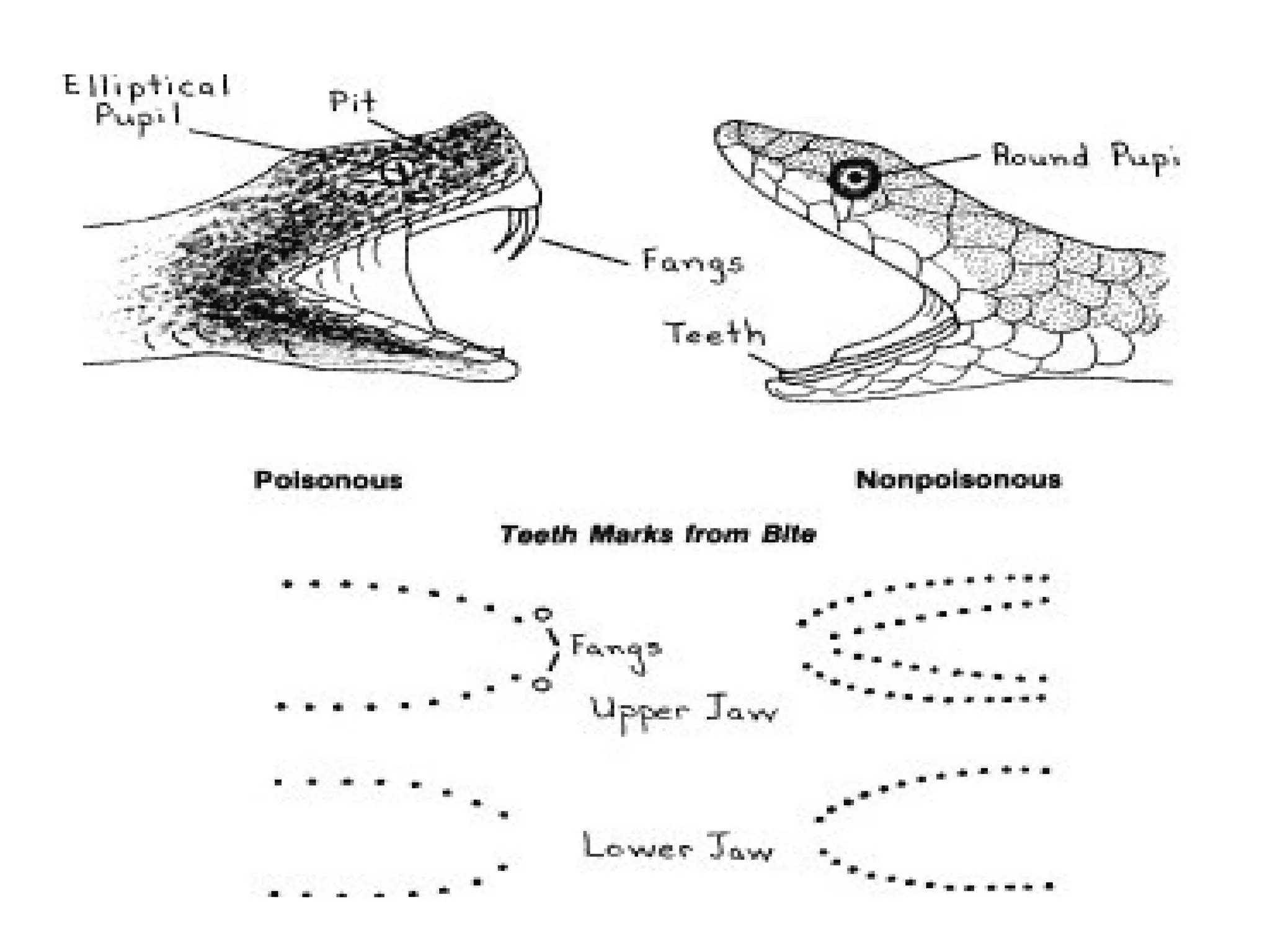
The venom apparatus
• Venomous snakes of
medical importance have
a pair of enlarged teeth,
the fangs, at the front of
their upper jaw. These
fangs contain a venom
channel or groove, along
which venom can be
introduced deep into the
tissues of their natural
prey. If a human is bitten,
venom is usually injected
subcutaneously or
intramuscularly.
SNAKES IN INDIA
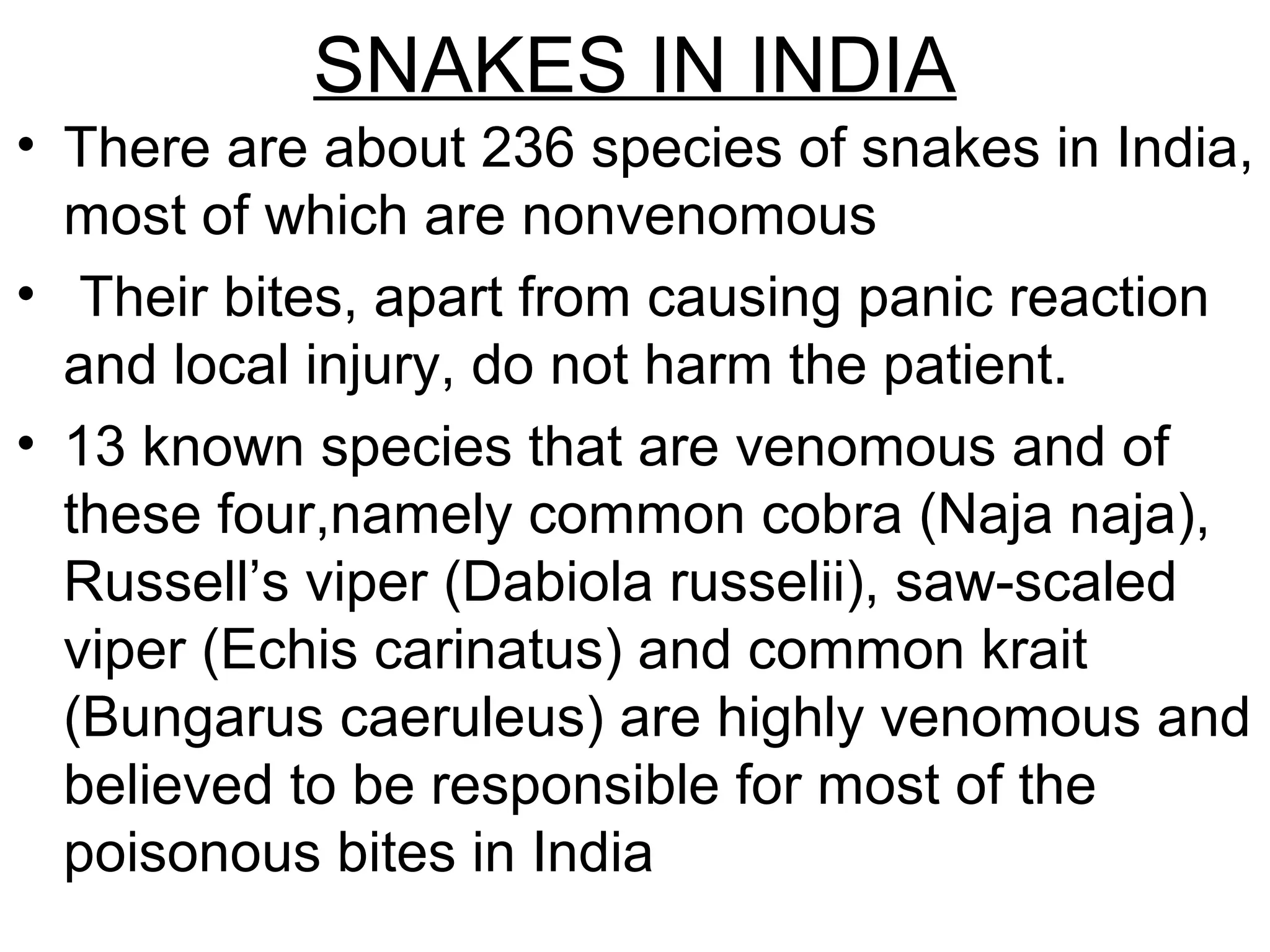
• There are about 236 species of snakes in India,
most of which are nonvenomous
• Their bites, apart from causing panic reaction
and local injury, do not harm the patient.
• 13 known species that are venomous and of
these four,namely common cobra (Naja naja),
Russell’s viper (Dabiola russelii), saw-scaled
viper (Echis carinatus) and common krait
(Bungarus caeruleus) are highly venomous and
believed to be responsible for most of the
poisonous bites in India
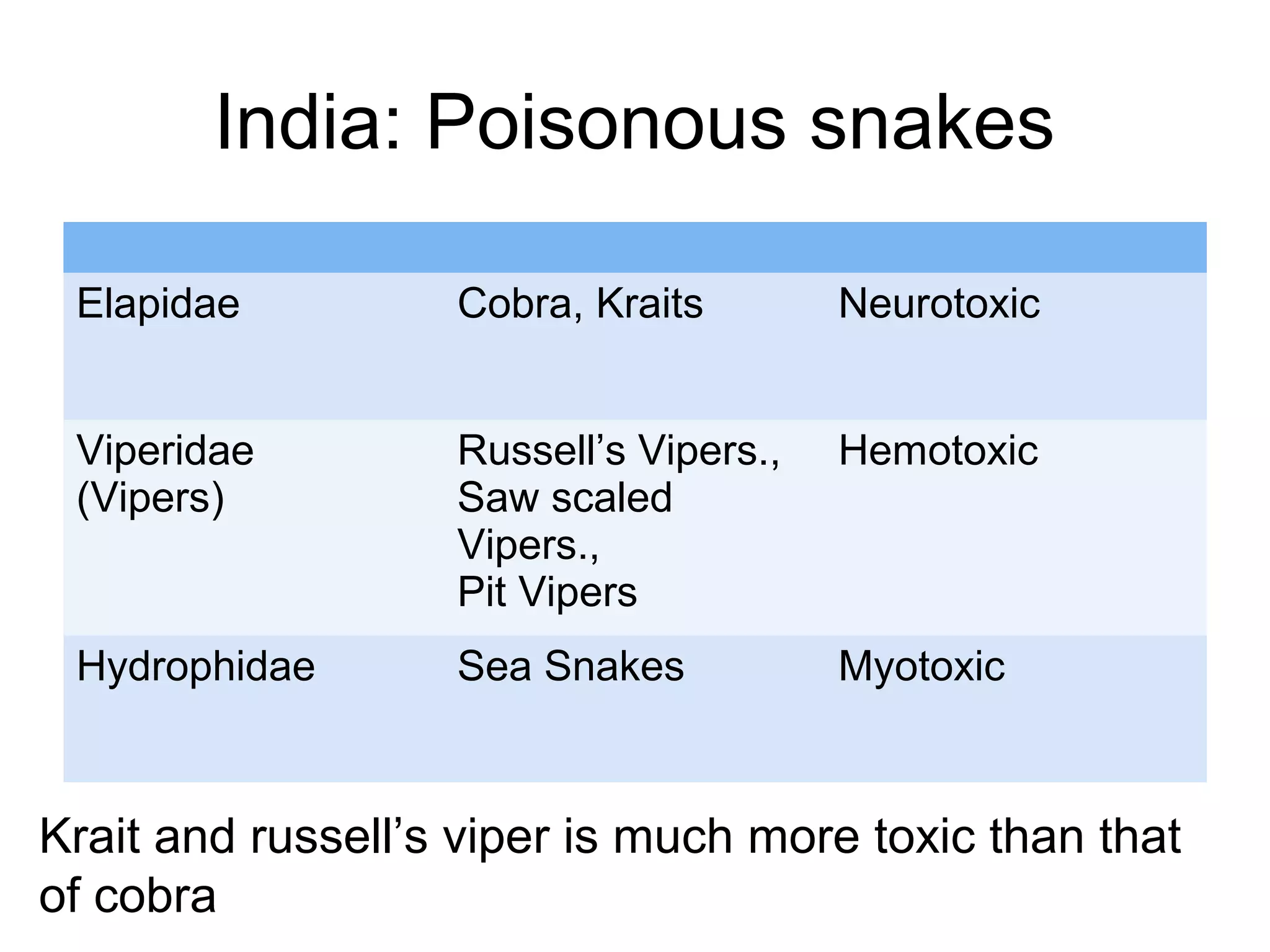
India: Poisonous snakes
Elapidae Cobra, Kraits Neurotoxic
Viperidae
(Vipers)
Russell’s Vipers.,
Saw scaled
Vipers.,
Pit Vipers
Hemotoxic
Hydrophidae Sea Snakes Myotoxic
Krait and russell’s viper is much more toxic than that
of cobra
COMMONEST INDIAN venomous snakes
• The venom is synthesized by the modified salivary glands and
injected through special channeled or grooved teeth called
fangs.
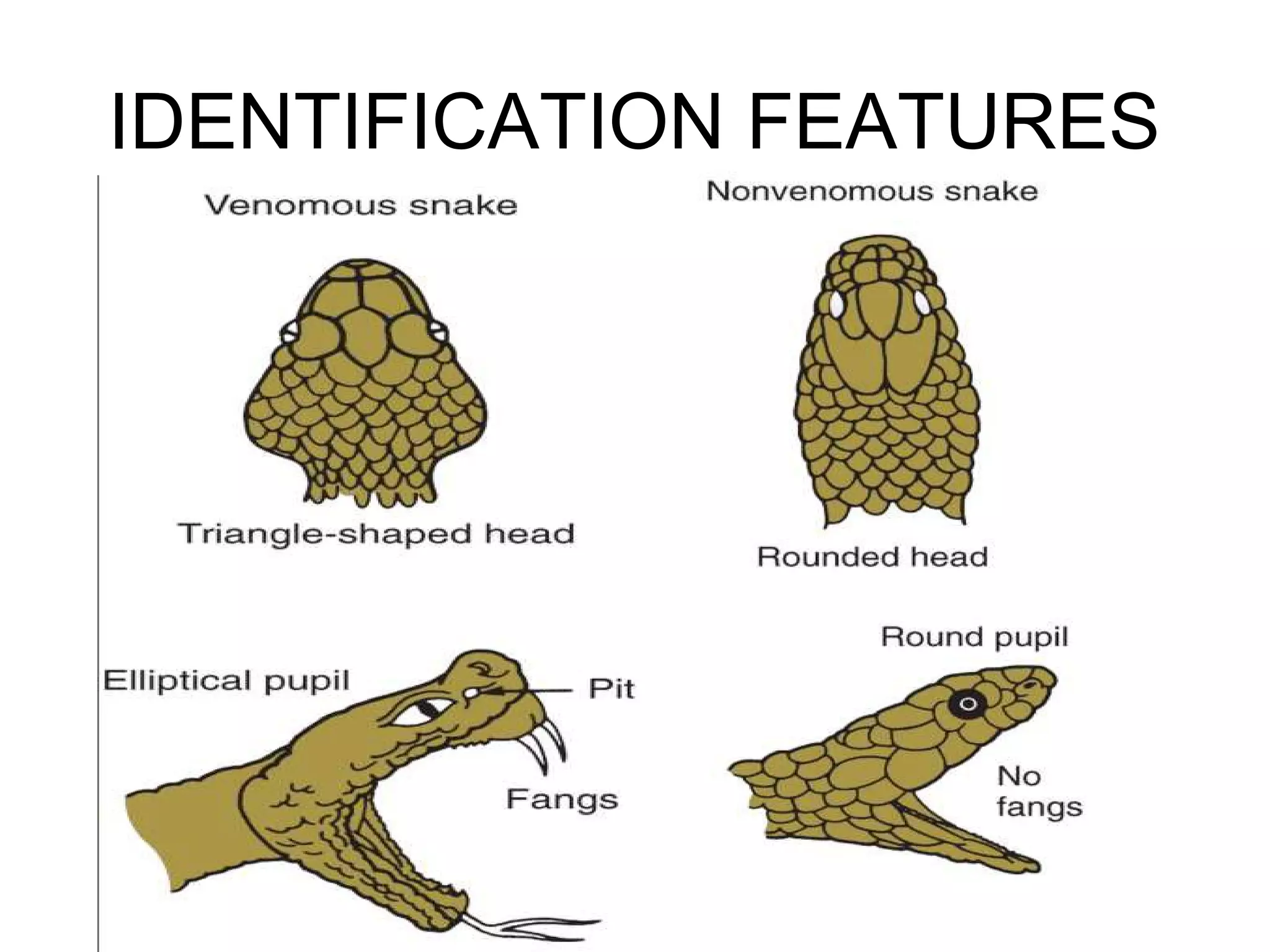
IDENTIFICATION FEATURES
• Complex mixture of proteins includingLarge enzymes-
local tissue destruction.
• Low molecular weight polypeptides-lethal systemic
effects
-Acidic.
-Sp Gravity: 1.030-1.070
-On drying Fine needle like crystals.
-Water Soluble.
-Lethal Dose:
• Cobra-0.12gm, Krait-0.06gm- Russell’s V-0.15gm
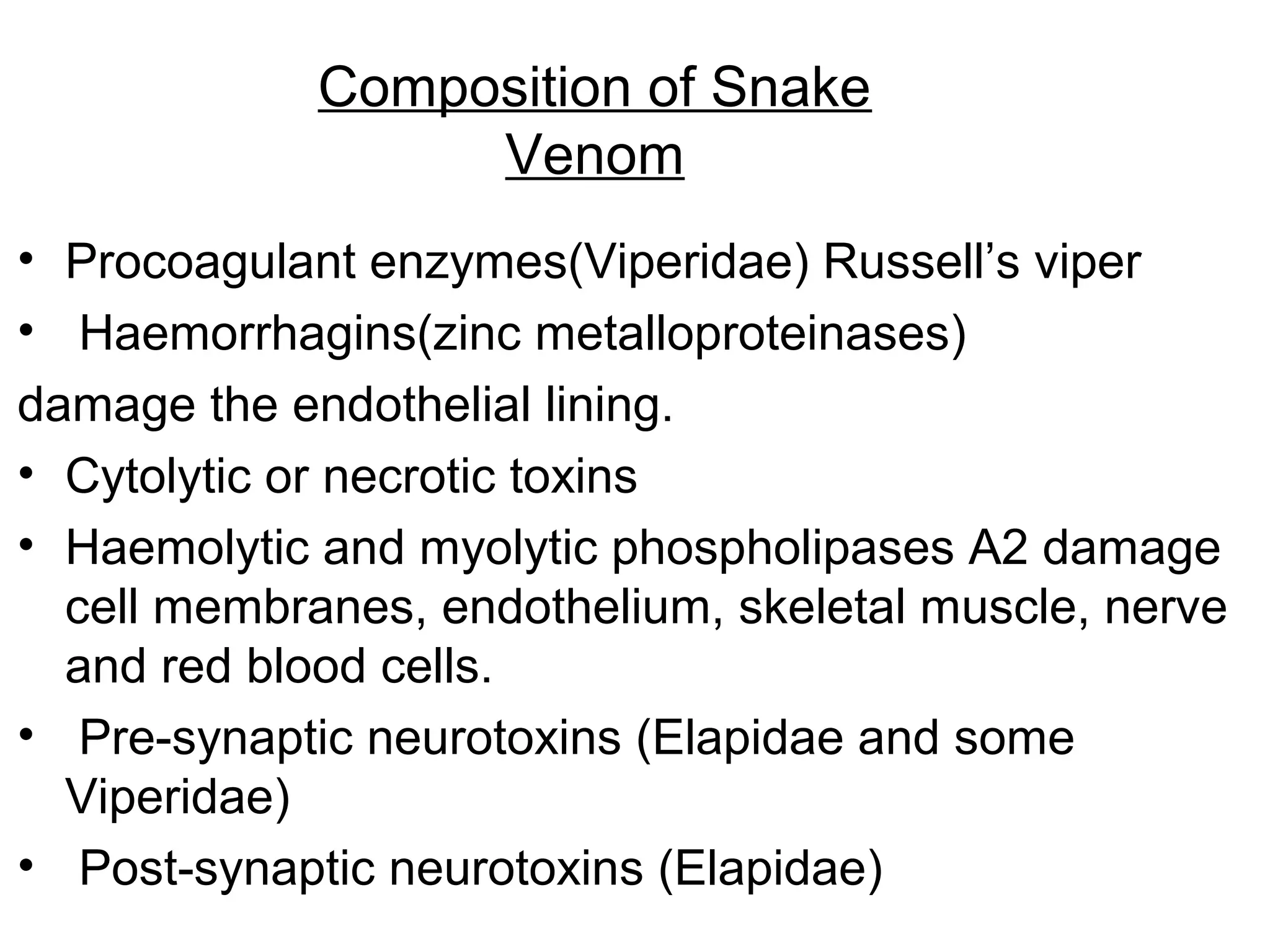
Composition of Snake
Venom
• Procoagulant enzymes(Viperidae) Russell’s viper
• Haemorrhagins(zinc metalloproteinases)
damage the endothelial lining.
• Cytolytic or necrotic toxins
• Haemolytic and myolytic phospholipases A2 damage
cell membranes, endothelium, skeletal muscle, nerve
and red blood cells.
• Pre-synaptic neurotoxins (Elapidae and some
Viperidae)
• Post-synaptic neurotoxins (Elapidae)
• Due to the venom, there is cell function
degeneration and the final outcome
depends on the type of venom injected.
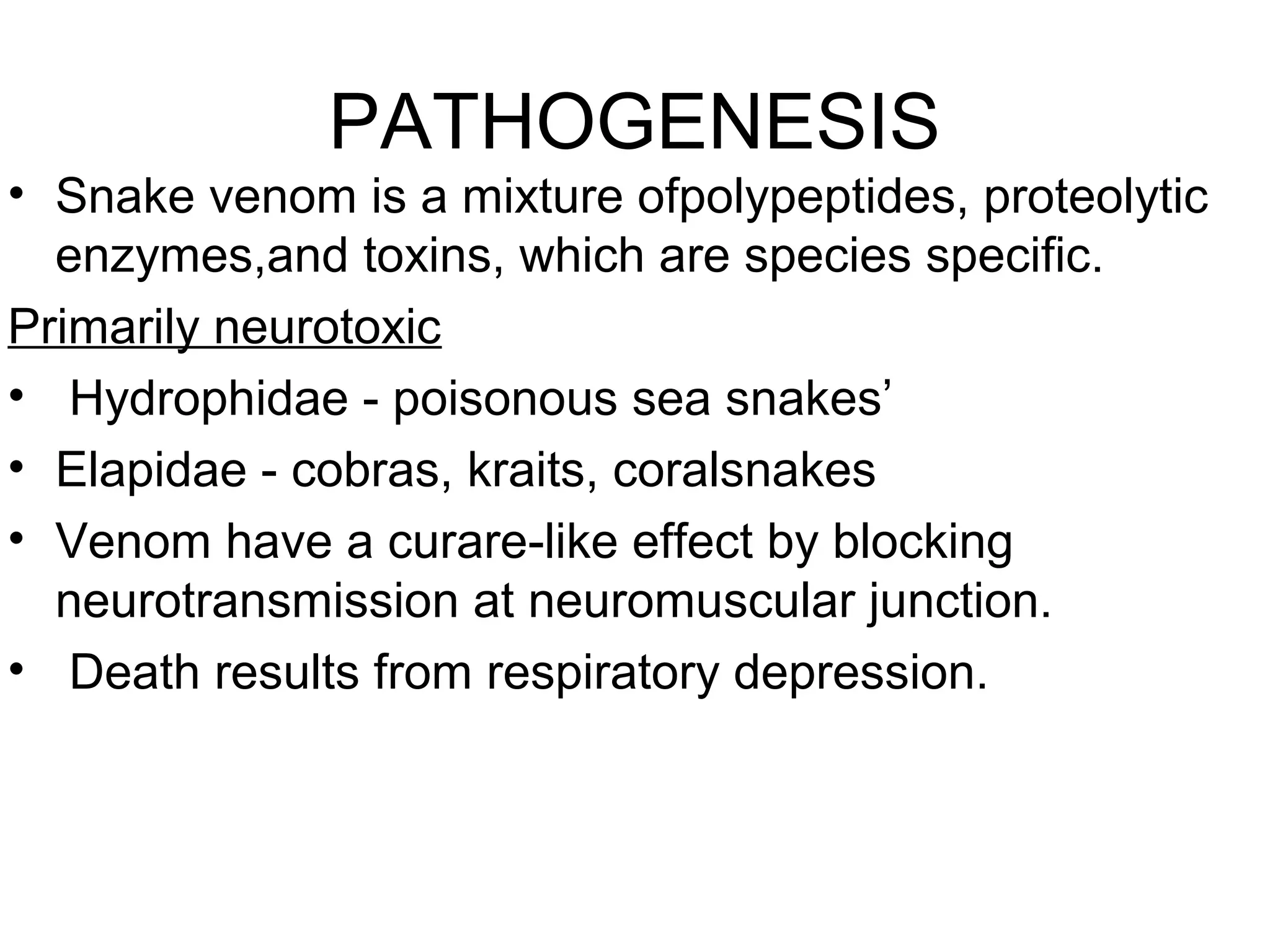
PATHOGENESIS
• Snake venom is a mixture ofpolypeptides, proteolytic
enzymes,and toxins, which are species specific.
Primarily neurotoxic
• Hydrophidae - poisonous sea snakes’
• Elapidae - cobras, kraits, coralsnakes
• Venom have a curare-like effect by blocking
neurotransmission at neuromuscular junction.
• Death results from respiratory depression.
Neurotoxic venom
• Venoms with neurotoxic activity produce paralysis and
respiratory distress by binding the nicotinic
acetylcholine receptors, and preventing the
depolarizing action of acetylcholine.
• The most important effect of neurotoxins is to prevent
the transmission of nerve impulses in cholinergic
synapses.
• neurotoxins interfere with neurotransmitter release
and cause muscle paralysis, respiratory failure and
death by asphyxiation.
Neuroparalytic Manifestations
Study
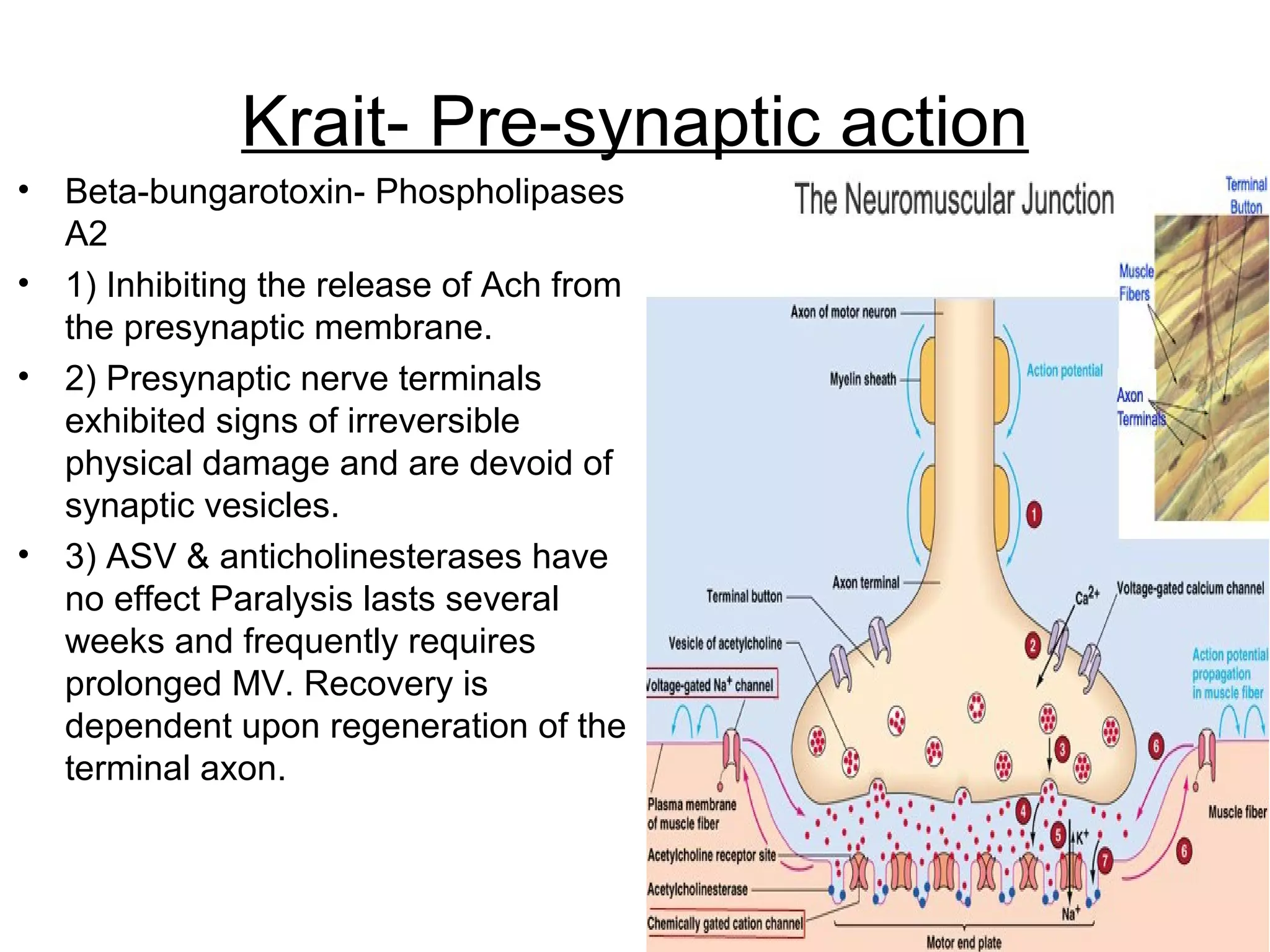
Krait- Pre-synaptic action
• Beta-bungarotoxin- Phospholipases
A2
• 1) Inhibiting the release of Ach from
the presynaptic membrane.
• 2) Presynaptic nerve terminals
exhibited signs of irreversible
physical damage and are devoid of
synaptic vesicles.
• 3) ASV & anticholinesterases have
no effect Paralysis lasts several
weeks and frequently requires
prolonged MV. Recovery is
dependent upon regeneration of the
terminal axon.
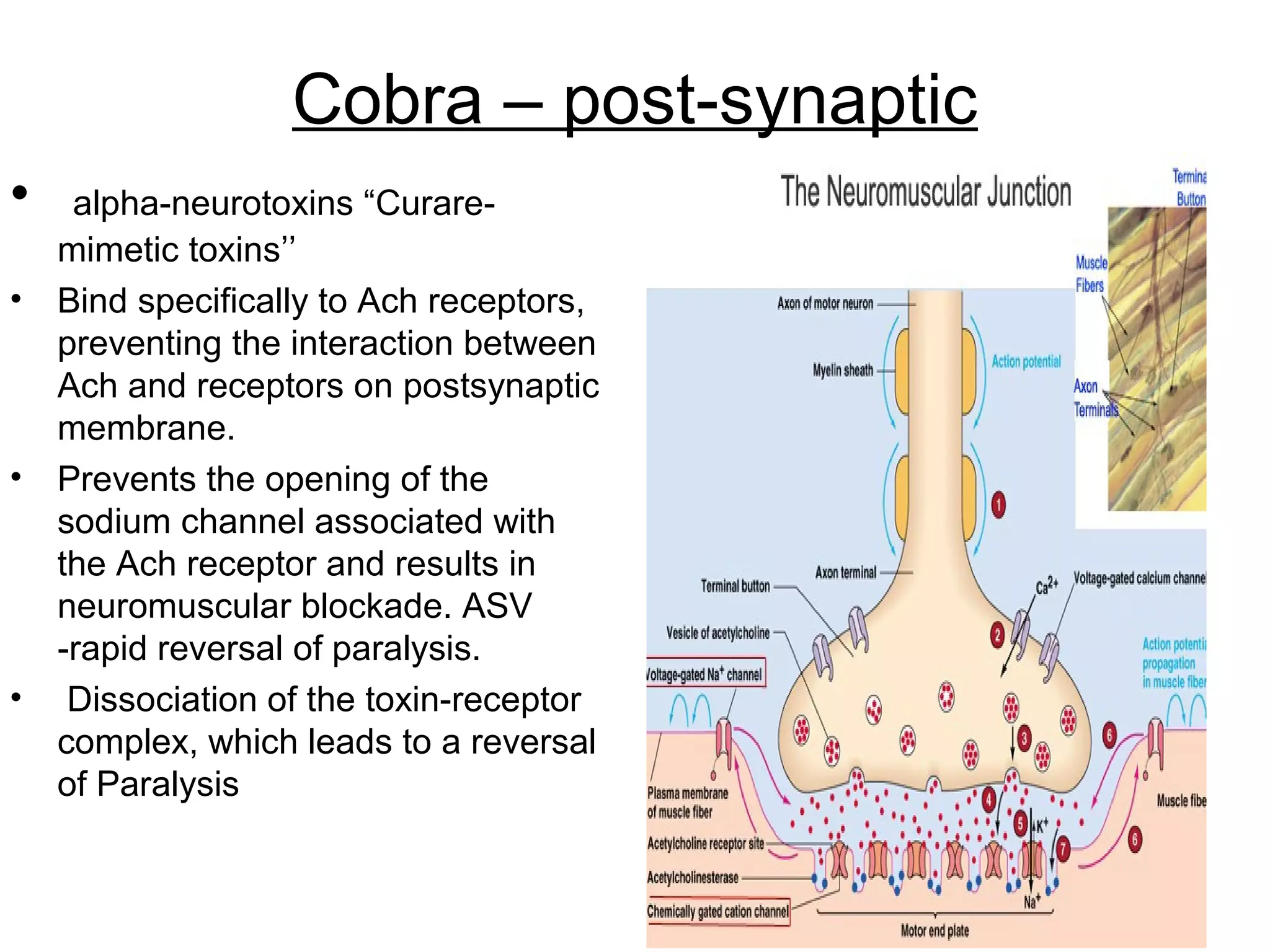
Cobra – post-synaptic
• alpha-neurotoxins “Curare-
mimetic toxins’’
• Bind specifically to Ach receptors,
preventing the interaction between
Ach and receptors on postsynaptic
membrane.
• Prevents the opening of the
sodium channel associated with
the Ach receptor and results in
neuromuscular blockade. ASV
-rapid reversal of paralysis.
• Dissociation of the toxin-receptor
complex, which leads to a reversal
of Paralysis
HEMOTOXIC VENOM
• A hemotoxic venom that acts by lysing erythrocytes.
Venoms of this kind have a proteolytic action. They
produce swelling, cardiovascular damage, and
eventual necrosis. They also disrupt blood clotting
and, in the process of destroying the blood's
functionality, severely damage internal organs and
other body tissues, which can be extremely painful.
The immediate cause of death in such cases is
usually hypovolemic shock.
• envenomation increases capillary permeability
that results in blood and plasma loss from the
intravascular to the extracellular space,
creating edema, which, in case of being
sufficiently important, may cause circulatory
compromise and hypovolemic shock.
Cytotoxic venom
• snake venom has cytolytic properties, which
cause local necrosis and secondary
infection, which could result in sepsis and
death.
CLINICAL FEATURES
• Following the immediate pain of the bite-increasing
local pain (burning, bursting, throbbing) at the site of
the bite
• Local swelling that gradually extends proximatelly up
the bitten limb and tender, painful enlargement of the
regional lymph nodes draining the site of the bite
• Bites by kraits, sea snakes may be virtually painless
and may cause negligible local swelling.
• Someone who is sleeping may not even wake up
when bitten by a krait and there may be no detectable
fang marks or signs of local envenoming
Local symptoms and signs in the
bittenpart
• Fang marks
• Local pain
• Local bleeding
• Bruising
• Lymphangitis
• Lymph node enlargement
• Inflammation (swelling, redness, heat)
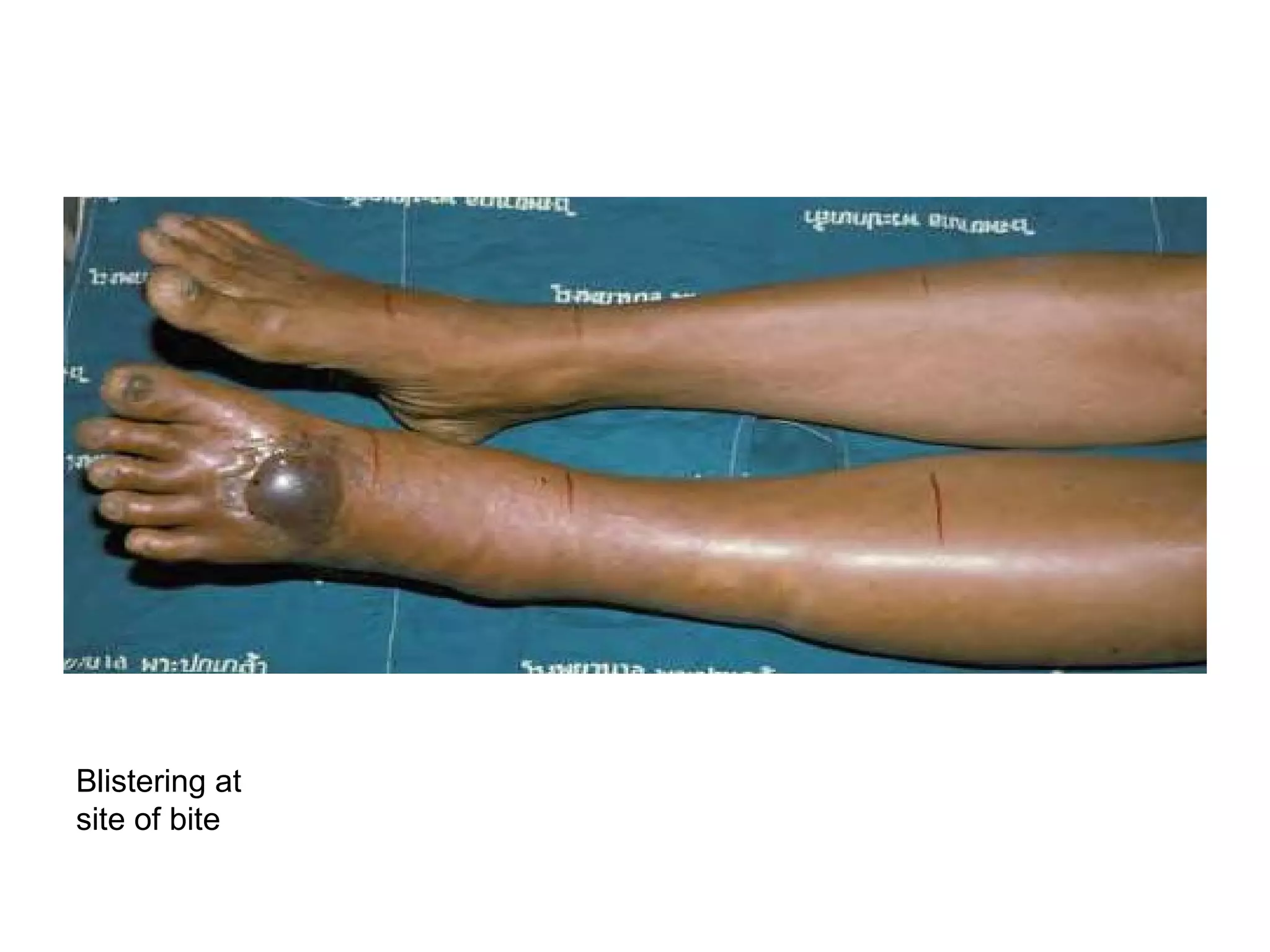
• Blistering
• Local infection, abscess formation
• Necrosis
Fang marks
Persistent bleeding from
fang marks 40min after
bite of pit viper
Blistering at
site of bite
SYSTEMIC SYMPTOMS & SIGNS
Generalised (systemic) symptoms and signs
•Nausea, vomiting, malaise, abdominal pain,
weakness, drowsiness, prostration
Cardiovascular (Viperidae)
• Dizziness, faintness, collapse, shock,
hypotension, cardiac arrhythmias, pulmonary
oedema, cardiac arrest
Bleeding and clotting disorders (viperidae)
Bleeding from recent wounds (including fang
marks,venepunctures etc) and from old partly-healed
wounds.
• Spontaneous systemic bleeding – from gums,
epistaxis,bleeding into the tears, haemoptysis,
haematemesis,rectal bleeding or melaena,
haematuria,bleeding into the skin (petechiae,
purpura, ecchymoses) and mucosae.
Neurotoxic Envenoming-
Examination
• Ask the patient to look up and observe whether the
upper lids retract fully.
• Test eye movements for evidence of early external
ophthalmoplegia .
• Check the size and reaction of the pupils.
• The muscles flexing the neck may be paralysed,
giving the “broken neck sign
Neurotoxic Envenoming-Examination
• Krait can cause fixed, dilated non reactive
pupils simulating brain stem death – however,
it can recover fully.
• Ask the patient to open their mouth wide and
protrude their tongue; early restriction often
due to paralysis of pterygoid muscles.
Bulbar & Resp Paralysis
• Can the patient swallow or are secretions
accumulating in the pharynx- an early sign of bulbar
paralysis.
• Ask the patient to take deep breaths in and
out.“Paradoxical respiration”.
• Objective measurement of ventilatory capacity is
veryuseful. Use a peak flow metre, spirometer (FEV1
and FVC)
• Ask the patient to blow into the tube of a
sphygmomanometer to record the maximum expiratory
pressure (mmHg).
Paradoxical Respiration
• This is an abnormal pattern of breathing in
which the abdominal wall is sucked in during
inspiration (it is usually pushed out).
• Paradoxical respiration is due to paralysis of
the diaphragm.
Species: Signs and Symptoms
FIRST AID
• The first aid recommended is based around the mnemonic:
• "Do it R.I.G.H.T."
• It consists of:
• R. = Reassure the patient. Seventy per cent of all snakebites
arefrom non venomous species. Only 50% of bites by
venomous species actually enveno-mate the patient
• I = Immobilize in the same way as a fractured limb. Children
can be carried. Use bandages or cloth to hold the splints, not to
block the blood supply or apply pressure. Do not apply any
compression in the form of tight ligatures, they do not work and
can be dangerous!
• G.H. = Get to Hospital immediately. Traditional remedies have
NO PROVEN benefit in treating snakebite.
• T = Tell the doctor of any systemic symptoms such as ptosis
that manifest on the way to hospital.
PRESSURE IMMOBILISATION
• Its purpose is to
retard the
movement of
venom from bite
site into circulation,
thus buying time
for the patient to
reach medical
care.
Cont.
• Be prepared to treat the shock and provide
cardiopulmonary resuscitation (CPR).
• Get the victim to the nearest secondary or
tertiary care hospital where antivenom can be
provided
DON'T S IN FIRST AID
• Do not apply a tourniquet.
• Do not wash the bite site with soap or any other
solution to remove the venom.
• Do not make cuts or incisions on or near the bitten
area.
• Do not use electrical shock.
• Do not freeze or apply extreme cold to the area of
bite.
• Do not apply any kind of potentially harmful herbal or
folk remedy.
Cont.
• Do not attempt to suck out venom with your
mouth.
• Do not give the victim drink, alcohol or other
drugs.
• Do not attempt to capture, handle or kill the
snake and patients should not be taken to
quacks.
SNAKE BITE TREATMENT PROTOCOL
• The initial management includes dealing
with airway, breathing and treatment of
shock.
• Administer tetanus toxoid.
MEDICOLEGAL
• 39 Code of Criminal Procedure under
Constitution of India Article 21.
• MLC to be initiated.
Emergency care
• Try to identify the snake responsible.
• Snake colouration, its pupil shape and bitemarks
• Ask the victim relatives to carefully bring the snake
to hospital if it has been killed and then use the
snake identification material in protocol to identify it.
• Determine if any traditional medicines have been
used as they can sometimes lead to confusing
symptoms.
• Determine the exact time of bite which helps in
determining progression of signs and symptom.
Cont.
• Iv access established in unaffected extremity
• CBC, coagulation profile, fibrinogen concentration,
should be assessed.
• Tourniquets placed in field should be carefully
removed.
• The bitten extremity should be marked at 2 or more
sites proximal to the bite and the circumference at
these locations should be assessed every 15min to
monitor for progressive edema-indicative of
ongoing venom effects.
Cont.
• All the patients should be kept under
observation for a minimum of 24 hours.
• Many species, particularly the Krait and the
hump-nosed pit viper are known for delayed
appearance of symptoms whichcan develop
after 6–12 hours
Investigations
• Twenty-minute whole blood clotting test (20WBCT)Twenty-minute whole blood clotting test (20WBCT)
reliable test of coagulation which can be carried out by bedside
and is considered to be superior to ‘capillary tube’ method for
establishing clotting capability in snake bite.
• A few milliliters of fresh venous blood should be placed in a
fresh, clean and dry glass vessel preferably test tube and left
undisturbed at ambient temperature for 20 minutes.
• After that tube should be gently tilted to detect whether blood is
still liquid and if so then blood is incoagulable.The test should
be carried out every 30 minutes from admission for 3 hours and
then hourly after that.
Other Useful Tests (If Facilities Available)
• Hb/platelet count/peripheral smear prothrombin time
(PT)/activated partialthromboplastin time
• Urine examination for proteinuria/RBC/hemoglobinuria
Myoglobinuria
• Biochemistry for serum creatinine/Urea/Potassium
• ECG/X-ray/CT/Ultrasound(The use of X-ray and ultrasound,
area of unproven benefit, apart from identification of clot in
viperine bite)
• Oxygen saturation/arterial blood gas (ABG)
• Enzyme-linked immunosorbent assay (ELISA) to confirm
Treatment Phase
• Pain can be relieved with oral paracetamol or
tramadol.
• Aspirin or nonsteroidal anti-inflammatory
drugs (NSAIDs) should not be administered
Severity of envenomation.
Anti-snake venom (ASV)
• Anti-snake venom (ASV)is the mainstay of treatment.
Antivenom is immunoglobulin [usually pepsin-refined F(ab’)2
fragment of whole IgG] purified from the plasma of a horse,
mule or donkey (equine) or sheep (ovine) that has been
immunized with the venoms of one or more species of snake.
• In India, polyvalent ASV, i.e. effective against all the four
common species; Russell’s viper, common cobra, common
Krait and saw-scaled Viper and no monovalent ASVs are
available
• ASV is produced both in Liquid and Lyophilized
forms.
• There is no evidence to suggest which form is
more effective.
• Liquid ASV requires a reliable cold chain and
has 2-year shelf life.
• Lyophilized ASV in powder form,has 5-year
shelf life and requires only to be kept cool.
• Only free unbound fraction of venom can be
neutralized by anti snake venom
Freeze-dried (lyophilised) ASV is reconstituted with 10 ml of sterile DW per vial.
• Average dry weight of venom injected = 63 +/-
7mg by Russell’s Viper or Cobra.
Each vial neutralises venoms of
6 mg Cobra.
6 mg Russell's Viper.
4.5 mg of Krait.
4.5 mg of Saw Scaled Viper.
• Snake inject same amount of venom into
children, dose of ASV is same as adult .
HOW LONG ASV CAN BE GIVEN?
• Antivenom treatment should be given as soon
as it is indicated. It may reverse systemic
envenoming even when this has persisted for
several days or, in the case of haemostatic
abnormalities, for two or more weeks. It
is,therefore, appropriate to give antivenom for
as long as evidence of the coagulopathy
persists.
ROUTE?
• Freeze-dried (lyophilized) antivenoms are reconstituted, usually
with 10ml of sterile water for injection per ampoule.Two methods
of administration are recommended:
(1) Intravenous “push” injection : Reconstituted freeze-dried
antivenom is given by slow intravenous injection(not more than
2 ml/minute).
(2) Intravenous infusion : Reconstituted freeze-dried
antivenom is diluted in approximately 5-10 ml of isotonic fluid
per kg body weight) and is infused at a constant rate over a period
of about one hour Patients must be closely observed for at least
one hour
after starting intravenous antivenom administration, so that earlyafter starting intravenous antivenom administration, so that early
anaphylactic antivenom reactions can be detected and treatedanaphylactic antivenom reactions can be detected and treated
early with epinephrine(adrenaline)early with epinephrine(adrenaline)
Cont.
• Local administration of ASV is not recommended as it is
extremely painful and can raise the intracompartmental
pressure.
• Intramuscular inj are not recommended .Antivenoms are
large molecules (F(ab’)2 fragments or sometimes whole
IgG) which, after intramuscular injection, are absorbed
slowly via lymphatics. Bioavailability is poor, especially
after intragluteal injection, and blood levels of antivenom
never reach those achieved rapidly by intravenous
administration. Other disadvantages are the pain of
injection of large volumes of antivenom and the risk of
haematoma formation
Anti-snake Venom Administration
• INDICATIONSINDICATIONS
• Evidence of systemic toxicity.
• Hemodynamic or respiratory instability
• Hypotension, respiratory distress
• Hemotoxicity
• Clinically significant bleeding or abnormal coagulation
studies
• Neurotoxicity
• Any evidence of toxicity usually beginning with CN
abnormalities and progressing to descending paralysis
including diaphragm
• Evidence of local toxicity
• Progressive soft tissue swelling
TEST DOSE
• Anti-snake Venom Test Dose
• Test doses have not been shown to have
predictive value in predicting anaphylactic
reaction or late serum sickness and not
recommended
INTIAL DOSE.
• The recommended dose is often the amount of
antivenom required to neutralize the average venom
yield when captive snakes are milked of their venom.
In practice, the choice of an initial dose of antivenom
is usually empirical.
• Each vial is 10 ml of reconstituted ASV Initial dose is
8-10 vials for both adults and children.
• Common krait- 100ml ASV
• Russell’s viper-100ml
• Saw scaled viper-50 ml
• Indian cobra-100ml
Response to intial dose of ASV
• If an adequate dose of appropriate antivenom has been
administered, the following responses may be observed.
• (a) General : The patient feels better. Nausea, headache
and generalisedaches and pains may disappear very
quickly.
• (b) Spontaneous systemic bleeding (e.g. from the gums):
This usually stops within 15-30 minutes.
• (c) Blood coagulability (as measured by 20WBCT): This
is usually restored in 3-9 hours.
• (d)In shocked patients : Blood pressure may
increase within the first 30-60 minutes and
arrhythmias such as sinus bradycardia may
resolve.
• (e) Neurotoxic envenoming (cobra bites) may
begin to improve as early as 30 minutes after
antivenom, but usually takes several hours.
• (f) Active haemolysis may cease within a few
hours and the urine returns to its normal colour.
REPEAT DOSES
• Criteria for giving more antivenom
• Persistence or recurrence of blood
incoagulability after 6 hours(measured by
20WBCT) or of bleeding after 1-2 hours.
• Deteriorating neurotoxic or cardiovascular
signs after 1-2 hours of administering intial
dose of ASV.
• Range of venom injected is about 5mg-147mg
Maximum dose of ASV is around 25 vials.ASVMaximum dose of ASV is around 25 vials.ASV
should be administered over a period of 1hour.should be administered over a period of 1hour.
In hemotoxic envenomation;
• Once initial dose has been administered over one
hour, no further ASV is given for 6 hours.
• Twenty WBCT test every 6 hours will determine if
additional ASV is required. If the blood remains
incoagulable (as measured by 20WBCT) six hours
after the initial dose of antivenom, the same dose
should be repeated. This is based on the
observation that, if a large dose of antivenom
(more than enough to neutralize the venom
procoagulant enzymes) is given initially, the time
taken for the liver to restore coagulable levels of
fibrinogen and other clotting factors is 3-9 hours
• This reflects the period the liver requires to
restore clotting factors.
In Neurotoxic envenomation
• Antivenom treatment alone cannot be relied upon
to save the life of a patient with bulbar and
respiratory paralysis
• Death may result from aspiration, airway
obstruction or respiratory failure.A clear airway must
be maintained.
• Once there is loss of gag reflex and pooling of
secretions in the pharynx, failure of the cough reflex
or respiratory distress,a cuffed endotracheal tube or
laryngeal mask airway should be inserted.
Neostigmine test.
• A trial of anticholinesterase (eg “Tensilon test”) should be
performed in every patient with neurotoxic envenoming.
• Atropine sulphate (0.6 mg for adults; 50 μg/kg for children) or
glycopyrronium is given by intravenous injection followed by
neostigmine bromide . in appropriate doses) by intramuscular
injection 0.02 mg/kg for adults, 0.04 mg/kg for Children.
• The patient is observed over the next 30-60 minutes
(neostigmine) or 10-20 minutes (edrophonium) for signs of
improved neuromuscular transmission. Ptosis may
disappearand ventilatory capacity (peak flow, FEV-1 or
maximum expiratory pressure) may improve.
• If positive institute regular atropine & neostigmine.
Treatment of hypotension and
shock
• Snake bite causes of hypotension and shock.
• Anaphylaxis
• Vasodilatation
• Cardiotoxicity
• Hypovolaemia
• Antivenom reaction
• Respiratory failure
• Acute pituitary adrenal insufficiency
• Septicaemia
• Treatment- a selective vasoconstrictor such as
dopamine.
Adverse reactions to anti-snake venom
• At the first sign of any of the following:
• Urticaria, itching, fever, shaking chills,
nausea, vomiting,diarrhea, abdominal
cramps, tachycardia, hypotension,
bronchospasm and angio-oedema.
• 1. ASV should be discontinued
• 2. 0.5 mg. of 1:1000 adrenaline should be
givenIM
• The pediatric dose is 0.01 mg/kg body
weight of adrenaline IM.
• Evidence shows that adrenaline reaches
necessary blood plasma levels in 8 minutes via
the IM route, but up to 34 minutes in the
subcutaneous route.
• 100 mg of hydrocortisone and 10 mg of H1
antihistamine will be administered IV.
• The dose for children is 0.2 mg/kg of antihistamine
IV and 2 mg/kg.
• If after 10 to 15 minutes the patient’s condition
has not improved or is worsening, second dose of
0.5 mg of adrenaline 1:1000 IM is given.
• This can be repeated for a third and final
occasion but in the vast majority of
reactions, 2 doses of adrenaline will be
sufficient.
• ASV test doses have been abandoned:
• Have no predictive value in anaphylactoid or
late serum reactions.
• May pre-sensitise the patient to the protein.
FOLLOW-UP
• After discharge from hospital, victim should be
followed.
• If discharged within 24 hours, patient should
be advised to return if there is any worsening
of symptoms such as bleeding, pain or
swelling at the site of bite, difficulty in
breathing, altered sensorium, etc.
• The patients should also be explained about
serum sickness which may manifest after 5–
10 days
PROGNOSIS.
• Despite the potential for mortality and severe
morbidity with poisonous snakebites, both can
be minimized by early and judicious use of
appropriate antivenin.
• Even extremities with marked tissue necrosis
from rattlesnake bites will return to full function
with the resolution of swelling.
THANK YOUTHANK YOU

Snake bite in pediatrics

  • 1.
    SNAKE BITESNAKE BITE Dr.N.Vinaykumar under the guidance of Dr.Ingale sir and Dr.JM Pawar sir
  • 2.
    INTRODUCTION •India estimates approx2,00,000 bites and 35-50,000 snake bite deaths/year •No reliable national statistics are available. •Males bitten almost twice as often as females •Majority of the bites being on the lower extremities. •50% of bites by venomous snakes are dry bites,result in negligible envenomation
  • 3.
    The venom apparatus •Venomous snakes of medical importance have a pair of enlarged teeth, the fangs, at the front of their upper jaw. These fangs contain a venom channel or groove, along which venom can be introduced deep into the tissues of their natural prey. If a human is bitten, venom is usually injected subcutaneously or intramuscularly.
  • 6.
    SNAKES IN INDIA •There are about 236 species of snakes in India, most of which are nonvenomous • Their bites, apart from causing panic reaction and local injury, do not harm the patient. • 13 known species that are venomous and of these four,namely common cobra (Naja naja), Russell’s viper (Dabiola russelii), saw-scaled viper (Echis carinatus) and common krait (Bungarus caeruleus) are highly venomous and believed to be responsible for most of the poisonous bites in India
  • 7.
    India: Poisonous snakes ElapidaeCobra, Kraits Neurotoxic Viperidae (Vipers) Russell’s Vipers., Saw scaled Vipers., Pit Vipers Hemotoxic Hydrophidae Sea Snakes Myotoxic Krait and russell’s viper is much more toxic than that of cobra
  • 8.
    COMMONEST INDIAN venomoussnakes • The venom is synthesized by the modified salivary glands and injected through special channeled or grooved teeth called fangs.
  • 9.
  • 12.
    • Complex mixtureof proteins includingLarge enzymes- local tissue destruction. • Low molecular weight polypeptides-lethal systemic effects -Acidic. -Sp Gravity: 1.030-1.070 -On drying Fine needle like crystals. -Water Soluble. -Lethal Dose: • Cobra-0.12gm, Krait-0.06gm- Russell’s V-0.15gm
  • 13.
    Composition of Snake Venom •Procoagulant enzymes(Viperidae) Russell’s viper • Haemorrhagins(zinc metalloproteinases) damage the endothelial lining. • Cytolytic or necrotic toxins • Haemolytic and myolytic phospholipases A2 damage cell membranes, endothelium, skeletal muscle, nerve and red blood cells. • Pre-synaptic neurotoxins (Elapidae and some Viperidae) • Post-synaptic neurotoxins (Elapidae)
  • 14.
    • Due tothe venom, there is cell function degeneration and the final outcome depends on the type of venom injected.
  • 15.
    PATHOGENESIS • Snake venomis a mixture ofpolypeptides, proteolytic enzymes,and toxins, which are species specific. Primarily neurotoxic • Hydrophidae - poisonous sea snakes’ • Elapidae - cobras, kraits, coralsnakes • Venom have a curare-like effect by blocking neurotransmission at neuromuscular junction. • Death results from respiratory depression.
  • 16.
    Neurotoxic venom • Venomswith neurotoxic activity produce paralysis and respiratory distress by binding the nicotinic acetylcholine receptors, and preventing the depolarizing action of acetylcholine. • The most important effect of neurotoxins is to prevent the transmission of nerve impulses in cholinergic synapses. • neurotoxins interfere with neurotransmitter release and cause muscle paralysis, respiratory failure and death by asphyxiation.
  • 17.
  • 18.
    Krait- Pre-synaptic action •Beta-bungarotoxin- Phospholipases A2 • 1) Inhibiting the release of Ach from the presynaptic membrane. • 2) Presynaptic nerve terminals exhibited signs of irreversible physical damage and are devoid of synaptic vesicles. • 3) ASV & anticholinesterases have no effect Paralysis lasts several weeks and frequently requires prolonged MV. Recovery is dependent upon regeneration of the terminal axon.
  • 19.
    Cobra – post-synaptic •alpha-neurotoxins “Curare- mimetic toxins’’ • Bind specifically to Ach receptors, preventing the interaction between Ach and receptors on postsynaptic membrane. • Prevents the opening of the sodium channel associated with the Ach receptor and results in neuromuscular blockade. ASV -rapid reversal of paralysis. • Dissociation of the toxin-receptor complex, which leads to a reversal of Paralysis
  • 20.
    HEMOTOXIC VENOM • Ahemotoxic venom that acts by lysing erythrocytes. Venoms of this kind have a proteolytic action. They produce swelling, cardiovascular damage, and eventual necrosis. They also disrupt blood clotting and, in the process of destroying the blood's functionality, severely damage internal organs and other body tissues, which can be extremely painful. The immediate cause of death in such cases is usually hypovolemic shock.
  • 21.
    • envenomation increasescapillary permeability that results in blood and plasma loss from the intravascular to the extracellular space, creating edema, which, in case of being sufficiently important, may cause circulatory compromise and hypovolemic shock.
  • 22.
    Cytotoxic venom • snakevenom has cytolytic properties, which cause local necrosis and secondary infection, which could result in sepsis and death.
  • 23.
    CLINICAL FEATURES • Followingthe immediate pain of the bite-increasing local pain (burning, bursting, throbbing) at the site of the bite • Local swelling that gradually extends proximatelly up the bitten limb and tender, painful enlargement of the regional lymph nodes draining the site of the bite • Bites by kraits, sea snakes may be virtually painless and may cause negligible local swelling. • Someone who is sleeping may not even wake up when bitten by a krait and there may be no detectable fang marks or signs of local envenoming
  • 24.
    Local symptoms andsigns in the bittenpart • Fang marks • Local pain • Local bleeding • Bruising • Lymphangitis • Lymph node enlargement • Inflammation (swelling, redness, heat) • Blistering • Local infection, abscess formation • Necrosis
  • 25.
    Fang marks Persistent bleedingfrom fang marks 40min after bite of pit viper
  • 26.
  • 27.
    SYSTEMIC SYMPTOMS &SIGNS Generalised (systemic) symptoms and signs •Nausea, vomiting, malaise, abdominal pain, weakness, drowsiness, prostration Cardiovascular (Viperidae) • Dizziness, faintness, collapse, shock, hypotension, cardiac arrhythmias, pulmonary oedema, cardiac arrest
  • 28.
    Bleeding and clottingdisorders (viperidae) Bleeding from recent wounds (including fang marks,venepunctures etc) and from old partly-healed wounds. • Spontaneous systemic bleeding – from gums, epistaxis,bleeding into the tears, haemoptysis, haematemesis,rectal bleeding or melaena, haematuria,bleeding into the skin (petechiae, purpura, ecchymoses) and mucosae.
  • 30.
    Neurotoxic Envenoming- Examination • Askthe patient to look up and observe whether the upper lids retract fully. • Test eye movements for evidence of early external ophthalmoplegia . • Check the size and reaction of the pupils. • The muscles flexing the neck may be paralysed, giving the “broken neck sign
  • 31.
    Neurotoxic Envenoming-Examination • Kraitcan cause fixed, dilated non reactive pupils simulating brain stem death – however, it can recover fully. • Ask the patient to open their mouth wide and protrude their tongue; early restriction often due to paralysis of pterygoid muscles.
  • 33.
    Bulbar & RespParalysis • Can the patient swallow or are secretions accumulating in the pharynx- an early sign of bulbar paralysis. • Ask the patient to take deep breaths in and out.“Paradoxical respiration”. • Objective measurement of ventilatory capacity is veryuseful. Use a peak flow metre, spirometer (FEV1 and FVC) • Ask the patient to blow into the tube of a sphygmomanometer to record the maximum expiratory pressure (mmHg).
  • 34.
    Paradoxical Respiration • Thisis an abnormal pattern of breathing in which the abdominal wall is sucked in during inspiration (it is usually pushed out). • Paradoxical respiration is due to paralysis of the diaphragm.
  • 35.
  • 37.
    FIRST AID • Thefirst aid recommended is based around the mnemonic: • "Do it R.I.G.H.T." • It consists of: • R. = Reassure the patient. Seventy per cent of all snakebites arefrom non venomous species. Only 50% of bites by venomous species actually enveno-mate the patient • I = Immobilize in the same way as a fractured limb. Children can be carried. Use bandages or cloth to hold the splints, not to block the blood supply or apply pressure. Do not apply any compression in the form of tight ligatures, they do not work and can be dangerous! • G.H. = Get to Hospital immediately. Traditional remedies have NO PROVEN benefit in treating snakebite. • T = Tell the doctor of any systemic symptoms such as ptosis that manifest on the way to hospital.
  • 38.
    PRESSURE IMMOBILISATION • Itspurpose is to retard the movement of venom from bite site into circulation, thus buying time for the patient to reach medical care.
  • 39.
    Cont. • Be preparedto treat the shock and provide cardiopulmonary resuscitation (CPR). • Get the victim to the nearest secondary or tertiary care hospital where antivenom can be provided
  • 40.
    DON'T S INFIRST AID • Do not apply a tourniquet. • Do not wash the bite site with soap or any other solution to remove the venom. • Do not make cuts or incisions on or near the bitten area. • Do not use electrical shock. • Do not freeze or apply extreme cold to the area of bite. • Do not apply any kind of potentially harmful herbal or folk remedy.
  • 41.
    Cont. • Do notattempt to suck out venom with your mouth. • Do not give the victim drink, alcohol or other drugs. • Do not attempt to capture, handle or kill the snake and patients should not be taken to quacks.
  • 42.
    SNAKE BITE TREATMENTPROTOCOL • The initial management includes dealing with airway, breathing and treatment of shock. • Administer tetanus toxoid.
  • 43.
    MEDICOLEGAL • 39 Codeof Criminal Procedure under Constitution of India Article 21. • MLC to be initiated.
  • 44.
    Emergency care • Tryto identify the snake responsible. • Snake colouration, its pupil shape and bitemarks • Ask the victim relatives to carefully bring the snake to hospital if it has been killed and then use the snake identification material in protocol to identify it. • Determine if any traditional medicines have been used as they can sometimes lead to confusing symptoms. • Determine the exact time of bite which helps in determining progression of signs and symptom.
  • 45.
    Cont. • Iv accessestablished in unaffected extremity • CBC, coagulation profile, fibrinogen concentration, should be assessed. • Tourniquets placed in field should be carefully removed. • The bitten extremity should be marked at 2 or more sites proximal to the bite and the circumference at these locations should be assessed every 15min to monitor for progressive edema-indicative of ongoing venom effects.
  • 46.
    Cont. • All thepatients should be kept under observation for a minimum of 24 hours. • Many species, particularly the Krait and the hump-nosed pit viper are known for delayed appearance of symptoms whichcan develop after 6–12 hours
  • 47.
    Investigations • Twenty-minute wholeblood clotting test (20WBCT)Twenty-minute whole blood clotting test (20WBCT) reliable test of coagulation which can be carried out by bedside and is considered to be superior to ‘capillary tube’ method for establishing clotting capability in snake bite. • A few milliliters of fresh venous blood should be placed in a fresh, clean and dry glass vessel preferably test tube and left undisturbed at ambient temperature for 20 minutes. • After that tube should be gently tilted to detect whether blood is still liquid and if so then blood is incoagulable.The test should be carried out every 30 minutes from admission for 3 hours and then hourly after that.
  • 48.
    Other Useful Tests(If Facilities Available) • Hb/platelet count/peripheral smear prothrombin time (PT)/activated partialthromboplastin time • Urine examination for proteinuria/RBC/hemoglobinuria Myoglobinuria • Biochemistry for serum creatinine/Urea/Potassium • ECG/X-ray/CT/Ultrasound(The use of X-ray and ultrasound, area of unproven benefit, apart from identification of clot in viperine bite) • Oxygen saturation/arterial blood gas (ABG) • Enzyme-linked immunosorbent assay (ELISA) to confirm
  • 49.
    Treatment Phase • Paincan be relieved with oral paracetamol or tramadol. • Aspirin or nonsteroidal anti-inflammatory drugs (NSAIDs) should not be administered
  • 50.
  • 51.
    Anti-snake venom (ASV) •Anti-snake venom (ASV)is the mainstay of treatment. Antivenom is immunoglobulin [usually pepsin-refined F(ab’)2 fragment of whole IgG] purified from the plasma of a horse, mule or donkey (equine) or sheep (ovine) that has been immunized with the venoms of one or more species of snake. • In India, polyvalent ASV, i.e. effective against all the four common species; Russell’s viper, common cobra, common Krait and saw-scaled Viper and no monovalent ASVs are available
  • 52.
    • ASV isproduced both in Liquid and Lyophilized forms. • There is no evidence to suggest which form is more effective. • Liquid ASV requires a reliable cold chain and has 2-year shelf life. • Lyophilized ASV in powder form,has 5-year shelf life and requires only to be kept cool. • Only free unbound fraction of venom can be neutralized by anti snake venom
  • 53.
    Freeze-dried (lyophilised) ASVis reconstituted with 10 ml of sterile DW per vial.
  • 54.
    • Average dryweight of venom injected = 63 +/- 7mg by Russell’s Viper or Cobra. Each vial neutralises venoms of 6 mg Cobra. 6 mg Russell's Viper. 4.5 mg of Krait. 4.5 mg of Saw Scaled Viper. • Snake inject same amount of venom into children, dose of ASV is same as adult .
  • 55.
    HOW LONG ASVCAN BE GIVEN? • Antivenom treatment should be given as soon as it is indicated. It may reverse systemic envenoming even when this has persisted for several days or, in the case of haemostatic abnormalities, for two or more weeks. It is,therefore, appropriate to give antivenom for as long as evidence of the coagulopathy persists.
  • 56.
    ROUTE? • Freeze-dried (lyophilized)antivenoms are reconstituted, usually with 10ml of sterile water for injection per ampoule.Two methods of administration are recommended: (1) Intravenous “push” injection : Reconstituted freeze-dried antivenom is given by slow intravenous injection(not more than 2 ml/minute). (2) Intravenous infusion : Reconstituted freeze-dried antivenom is diluted in approximately 5-10 ml of isotonic fluid per kg body weight) and is infused at a constant rate over a period of about one hour Patients must be closely observed for at least one hour after starting intravenous antivenom administration, so that earlyafter starting intravenous antivenom administration, so that early anaphylactic antivenom reactions can be detected and treatedanaphylactic antivenom reactions can be detected and treated early with epinephrine(adrenaline)early with epinephrine(adrenaline)
  • 57.
    Cont. • Local administrationof ASV is not recommended as it is extremely painful and can raise the intracompartmental pressure. • Intramuscular inj are not recommended .Antivenoms are large molecules (F(ab’)2 fragments or sometimes whole IgG) which, after intramuscular injection, are absorbed slowly via lymphatics. Bioavailability is poor, especially after intragluteal injection, and blood levels of antivenom never reach those achieved rapidly by intravenous administration. Other disadvantages are the pain of injection of large volumes of antivenom and the risk of haematoma formation
  • 58.
    Anti-snake Venom Administration •INDICATIONSINDICATIONS • Evidence of systemic toxicity. • Hemodynamic or respiratory instability • Hypotension, respiratory distress • Hemotoxicity • Clinically significant bleeding or abnormal coagulation studies • Neurotoxicity • Any evidence of toxicity usually beginning with CN abnormalities and progressing to descending paralysis including diaphragm • Evidence of local toxicity • Progressive soft tissue swelling
  • 59.
    TEST DOSE • Anti-snakeVenom Test Dose • Test doses have not been shown to have predictive value in predicting anaphylactic reaction or late serum sickness and not recommended
  • 60.
    INTIAL DOSE. • Therecommended dose is often the amount of antivenom required to neutralize the average venom yield when captive snakes are milked of their venom. In practice, the choice of an initial dose of antivenom is usually empirical. • Each vial is 10 ml of reconstituted ASV Initial dose is 8-10 vials for both adults and children. • Common krait- 100ml ASV • Russell’s viper-100ml • Saw scaled viper-50 ml • Indian cobra-100ml
  • 61.
    Response to intialdose of ASV • If an adequate dose of appropriate antivenom has been administered, the following responses may be observed. • (a) General : The patient feels better. Nausea, headache and generalisedaches and pains may disappear very quickly. • (b) Spontaneous systemic bleeding (e.g. from the gums): This usually stops within 15-30 minutes. • (c) Blood coagulability (as measured by 20WBCT): This is usually restored in 3-9 hours.
  • 62.
    • (d)In shockedpatients : Blood pressure may increase within the first 30-60 minutes and arrhythmias such as sinus bradycardia may resolve. • (e) Neurotoxic envenoming (cobra bites) may begin to improve as early as 30 minutes after antivenom, but usually takes several hours. • (f) Active haemolysis may cease within a few hours and the urine returns to its normal colour.
  • 63.
    REPEAT DOSES • Criteriafor giving more antivenom • Persistence or recurrence of blood incoagulability after 6 hours(measured by 20WBCT) or of bleeding after 1-2 hours. • Deteriorating neurotoxic or cardiovascular signs after 1-2 hours of administering intial dose of ASV. • Range of venom injected is about 5mg-147mg Maximum dose of ASV is around 25 vials.ASVMaximum dose of ASV is around 25 vials.ASV should be administered over a period of 1hour.should be administered over a period of 1hour.
  • 64.
    In hemotoxic envenomation; •Once initial dose has been administered over one hour, no further ASV is given for 6 hours. • Twenty WBCT test every 6 hours will determine if additional ASV is required. If the blood remains incoagulable (as measured by 20WBCT) six hours after the initial dose of antivenom, the same dose should be repeated. This is based on the observation that, if a large dose of antivenom (more than enough to neutralize the venom procoagulant enzymes) is given initially, the time taken for the liver to restore coagulable levels of fibrinogen and other clotting factors is 3-9 hours • This reflects the period the liver requires to restore clotting factors.
  • 65.
    In Neurotoxic envenomation •Antivenom treatment alone cannot be relied upon to save the life of a patient with bulbar and respiratory paralysis • Death may result from aspiration, airway obstruction or respiratory failure.A clear airway must be maintained. • Once there is loss of gag reflex and pooling of secretions in the pharynx, failure of the cough reflex or respiratory distress,a cuffed endotracheal tube or laryngeal mask airway should be inserted.
  • 66.
    Neostigmine test. • Atrial of anticholinesterase (eg “Tensilon test”) should be performed in every patient with neurotoxic envenoming. • Atropine sulphate (0.6 mg for adults; 50 μg/kg for children) or glycopyrronium is given by intravenous injection followed by neostigmine bromide . in appropriate doses) by intramuscular injection 0.02 mg/kg for adults, 0.04 mg/kg for Children. • The patient is observed over the next 30-60 minutes (neostigmine) or 10-20 minutes (edrophonium) for signs of improved neuromuscular transmission. Ptosis may disappearand ventilatory capacity (peak flow, FEV-1 or maximum expiratory pressure) may improve. • If positive institute regular atropine & neostigmine.
  • 67.
    Treatment of hypotensionand shock • Snake bite causes of hypotension and shock. • Anaphylaxis • Vasodilatation • Cardiotoxicity • Hypovolaemia • Antivenom reaction • Respiratory failure • Acute pituitary adrenal insufficiency • Septicaemia • Treatment- a selective vasoconstrictor such as dopamine.
  • 69.
    Adverse reactions toanti-snake venom • At the first sign of any of the following: • Urticaria, itching, fever, shaking chills, nausea, vomiting,diarrhea, abdominal cramps, tachycardia, hypotension, bronchospasm and angio-oedema. • 1. ASV should be discontinued • 2. 0.5 mg. of 1:1000 adrenaline should be givenIM • The pediatric dose is 0.01 mg/kg body weight of adrenaline IM.
  • 70.
    • Evidence showsthat adrenaline reaches necessary blood plasma levels in 8 minutes via the IM route, but up to 34 minutes in the subcutaneous route. • 100 mg of hydrocortisone and 10 mg of H1 antihistamine will be administered IV. • The dose for children is 0.2 mg/kg of antihistamine IV and 2 mg/kg. • If after 10 to 15 minutes the patient’s condition has not improved or is worsening, second dose of 0.5 mg of adrenaline 1:1000 IM is given.
  • 71.
    • This canbe repeated for a third and final occasion but in the vast majority of reactions, 2 doses of adrenaline will be sufficient.
  • 72.
    • ASV testdoses have been abandoned: • Have no predictive value in anaphylactoid or late serum reactions. • May pre-sensitise the patient to the protein.
  • 73.
    FOLLOW-UP • After dischargefrom hospital, victim should be followed. • If discharged within 24 hours, patient should be advised to return if there is any worsening of symptoms such as bleeding, pain or swelling at the site of bite, difficulty in breathing, altered sensorium, etc. • The patients should also be explained about serum sickness which may manifest after 5– 10 days
  • 74.
    PROGNOSIS. • Despite thepotential for mortality and severe morbidity with poisonous snakebites, both can be minimized by early and judicious use of appropriate antivenin. • Even extremities with marked tissue necrosis from rattlesnake bites will return to full function with the resolution of swelling.
  • 75.