Downloaded 188 times



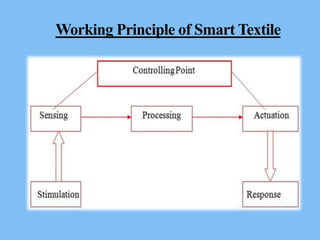


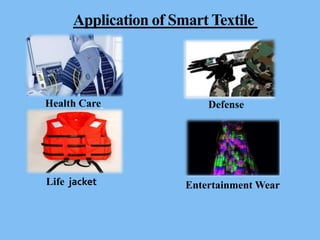
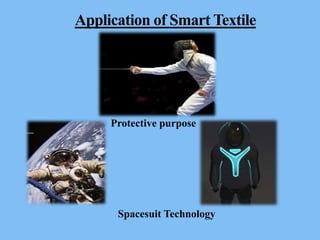


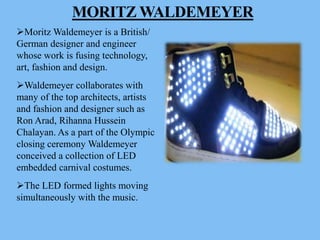


This presentation discusses smart textiles, which are textiles that can sense and react to environmental stimuli. It defines three types of smart textiles - passive, active, and ultra smart - and describes their key characteristics. The document outlines the working principles of smart textiles and their five main functions: sensors, data processing, actuators, stimulation, and response. Examples of applications for smart textiles include healthcare, defense, life jackets, entertainment wear, and protective clothing. Several companies that produce smart textiles are profiled, including Hovding, Moon Berlin, Utope, WarmX, and Moritz Waldemeyer.


