Downloaded 327 times


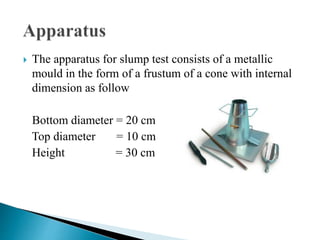


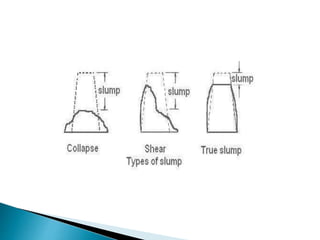
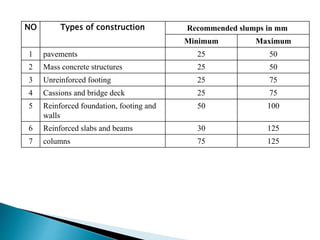


The slump test is commonly used to measure the workability of concrete by determining the amount it subsides after a standardized cone-shaped mold is removed. The test involves filling the mold with concrete in layers and tamping it, then removing the mold and measuring the subsidence. There are three types of slump results: true slump is an even subsidence, shear slump is uneven with one side sliding down more, and collapse slump indicates a lean mix. Recommended slump ranges are provided for different types of construction.


