COMPRESSIVE STRENGTH
TEST ON CONCRETE
COMPRESSIVE STRENGTH
 Compressive strength is the capacity of a
material or structure to withstand axially
directed pushing forces.
 When the limit of compressive strength is
reached, brittle materials are crushed.
COMPRESSIVE STRENGTH
 It depends up on cement,aggregate,bond, w/c ratio,
curing temperature, and size of specimen.
 The cube specimen is of the size 15 x 15 x 15 cm. If
the largest nominal size of the aggregate does
not exceed 20 mm, 10 cm size cubes may also be
used as an alternative.
TEST PROCEDURE
It consists of applying a compressive axial load to
molded cubes at a rate which is within a prescribed
range until failure occurs.
compressive strength = maximum load/cross
sectional area
PROCEDURE
Prepare a concrete mix with the proportions.
Make sure that specimens are clean and greased or
oiled thinly.
Metal molds should be sealed to their base plates to
prevent loss of water.
 Fill the cubes in three layers, tamping each layer
with (25) strokes using a tamper.
 Fill the molds completely, smooth off the tops evenly,
and clean up any concrete outside the cubes.
 Leave the specimens in the curing room for 24 hours.
 After that the specimens are immersed water for 7
days or 28 days.
 Before testing, ensure that all testing machine bearing
surfaces are wiped clean.
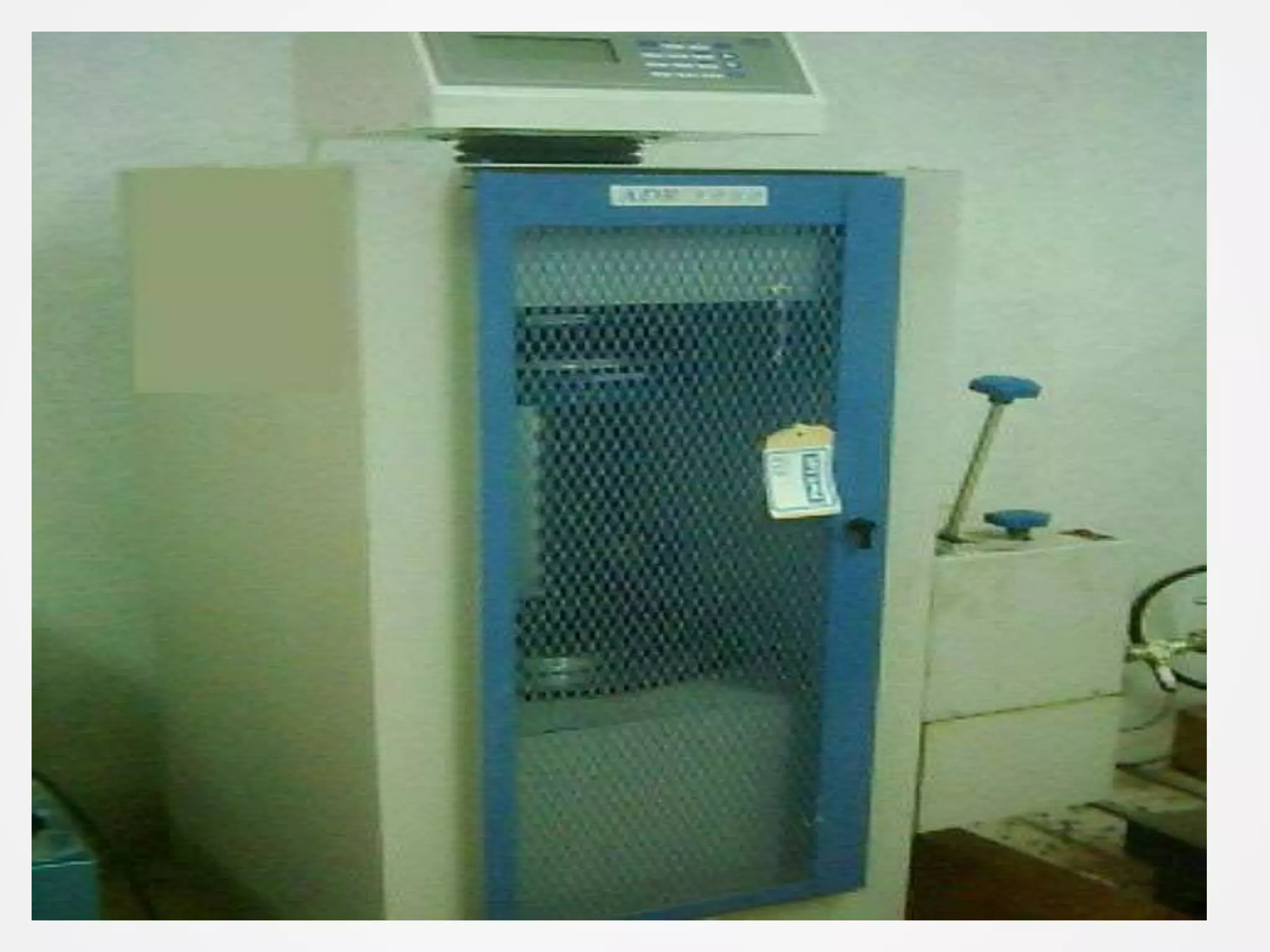
 Carefully center the cube on the lower plate and
ensure that the load will be applied to two
opposite cast faces of the cube.
 Without shock, apply and increase the load
continuously at a nominal rate within the range of
( 0.2 N/mm2.s to 0.4 N/mm2.s ) until no greater load
can be sustained.
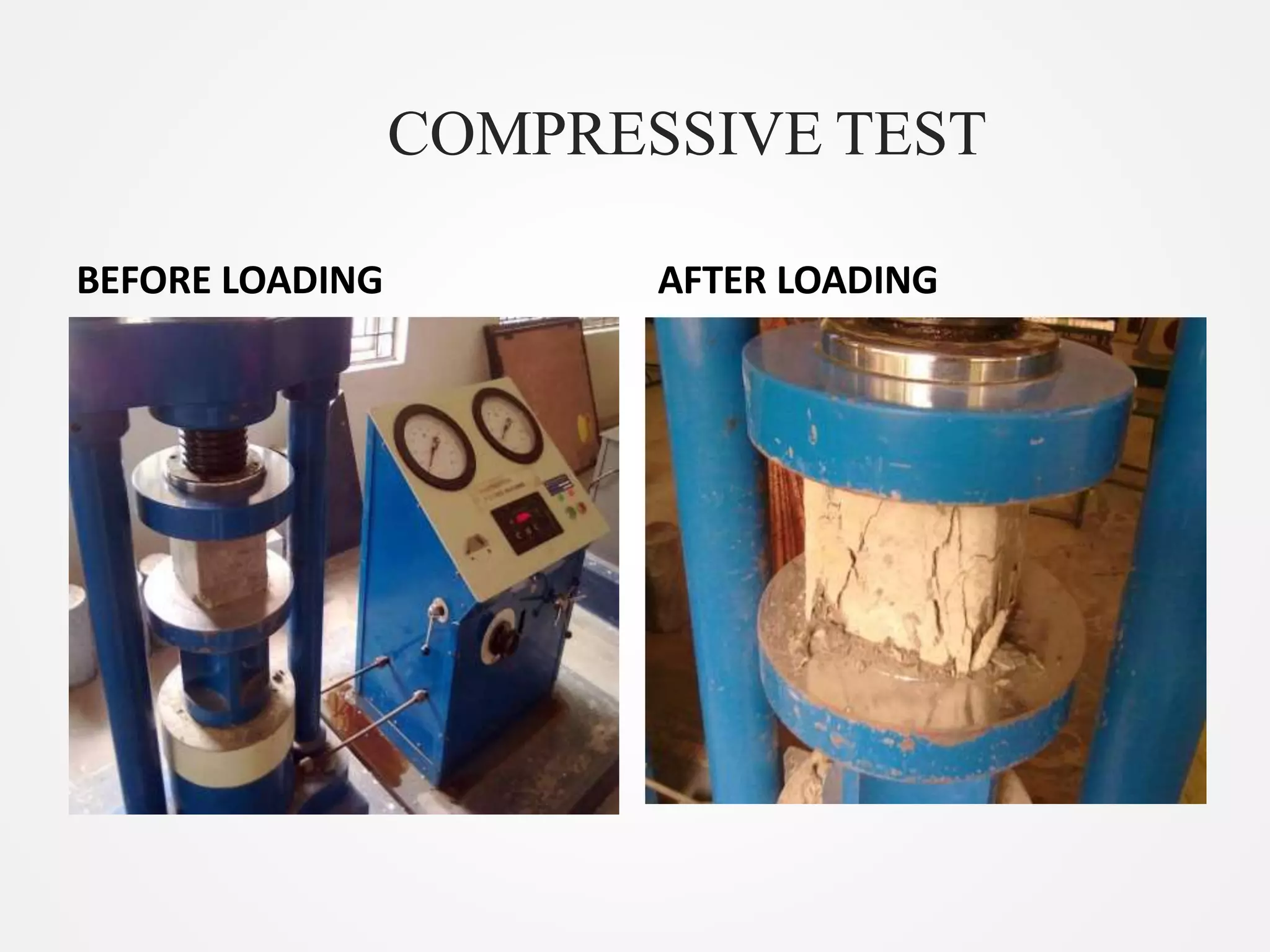
COMPRESSIVE TEST
BEFORE LOADING AFTER LOADING
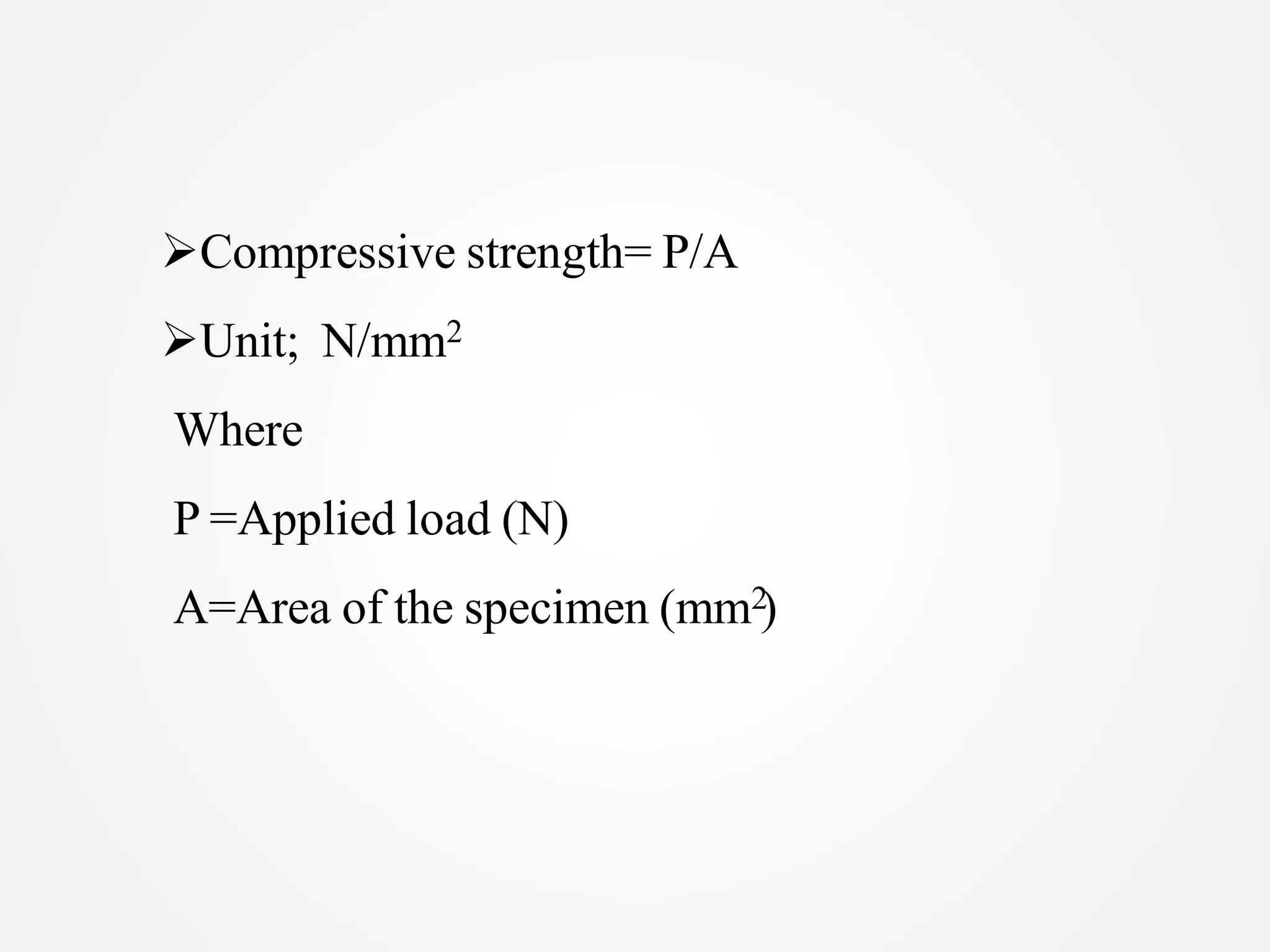
Compressive strength= P/A
Unit; N/mm2
Where
P =Applied load (N)
A=Area of the specimen (mm2)
Thank you

Compressive strength test on concrete

  • 1.
  • 2.
    COMPRESSIVE STRENGTH  Compressivestrength is the capacity of a material or structure to withstand axially directed pushing forces.  When the limit of compressive strength is reached, brittle materials are crushed.
  • 3.
    COMPRESSIVE STRENGTH  Itdepends up on cement,aggregate,bond, w/c ratio, curing temperature, and size of specimen.  The cube specimen is of the size 15 x 15 x 15 cm. If the largest nominal size of the aggregate does not exceed 20 mm, 10 cm size cubes may also be used as an alternative.
  • 4.
    TEST PROCEDURE It consistsof applying a compressive axial load to molded cubes at a rate which is within a prescribed range until failure occurs. compressive strength = maximum load/cross sectional area
  • 5.
    PROCEDURE Prepare a concretemix with the proportions. Make sure that specimens are clean and greased or oiled thinly. Metal molds should be sealed to their base plates to prevent loss of water.  Fill the cubes in three layers, tamping each layer with (25) strokes using a tamper.
  • 6.
     Fill themolds completely, smooth off the tops evenly, and clean up any concrete outside the cubes.  Leave the specimens in the curing room for 24 hours.  After that the specimens are immersed water for 7 days or 28 days.  Before testing, ensure that all testing machine bearing surfaces are wiped clean.
  • 7.
     Carefully centerthe cube on the lower plate and ensure that the load will be applied to two opposite cast faces of the cube.  Without shock, apply and increase the load continuously at a nominal rate within the range of ( 0.2 N/mm2.s to 0.4 N/mm2.s ) until no greater load can be sustained.
  • 9.
  • 10.
    Compressive strength= P/A Unit;N/mm2 Where P =Applied load (N) A=Area of the specimen (mm2)
  • 11.