Sleeping sickness
Anukrity
M.Sc. Previous (Zoology)
Bareilly College , Bareilly
Introduction
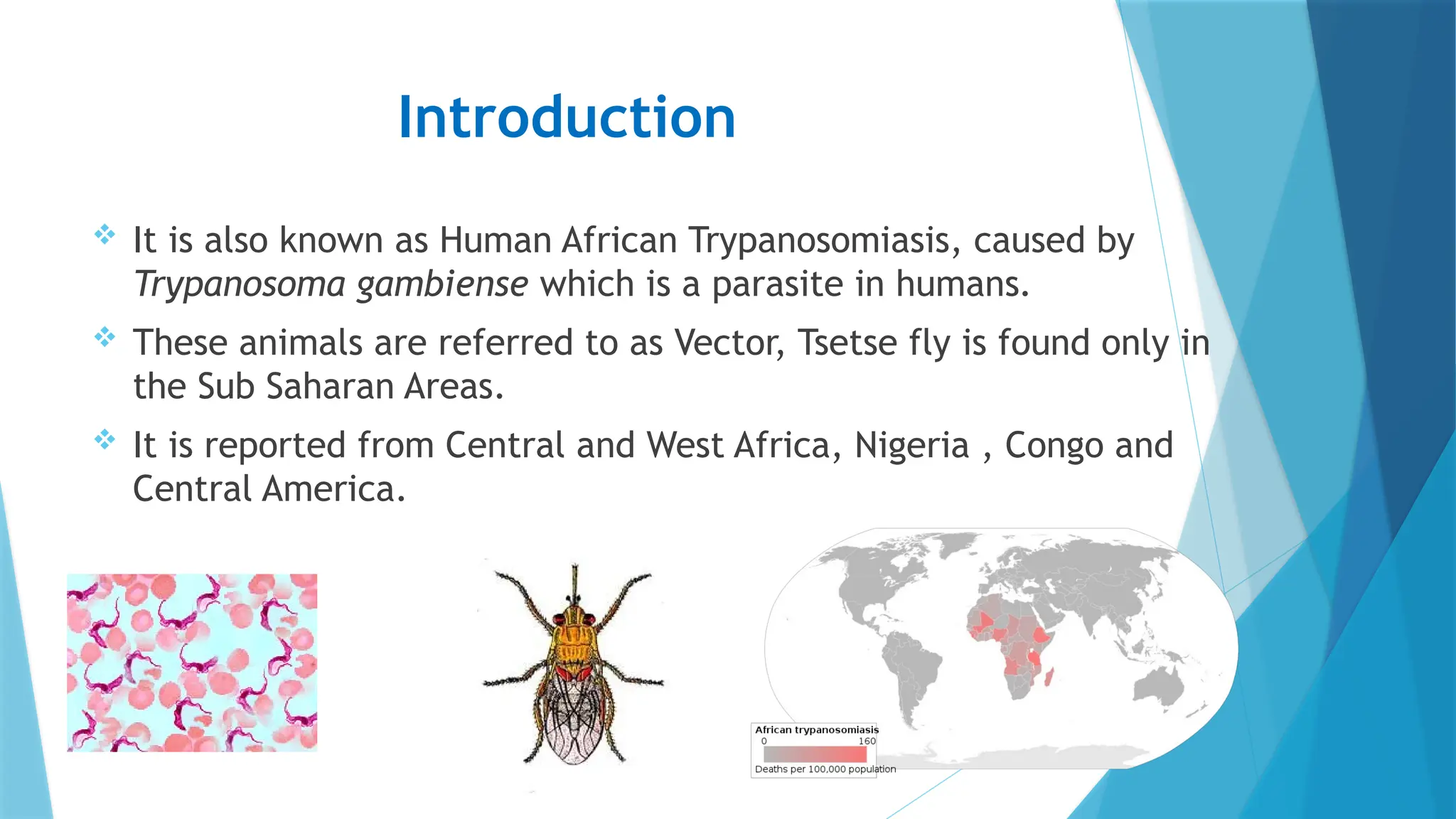
 It is also known as Human African Trypanosomiasis, caused by
Trypanosoma gambiense which is a parasite in humans.
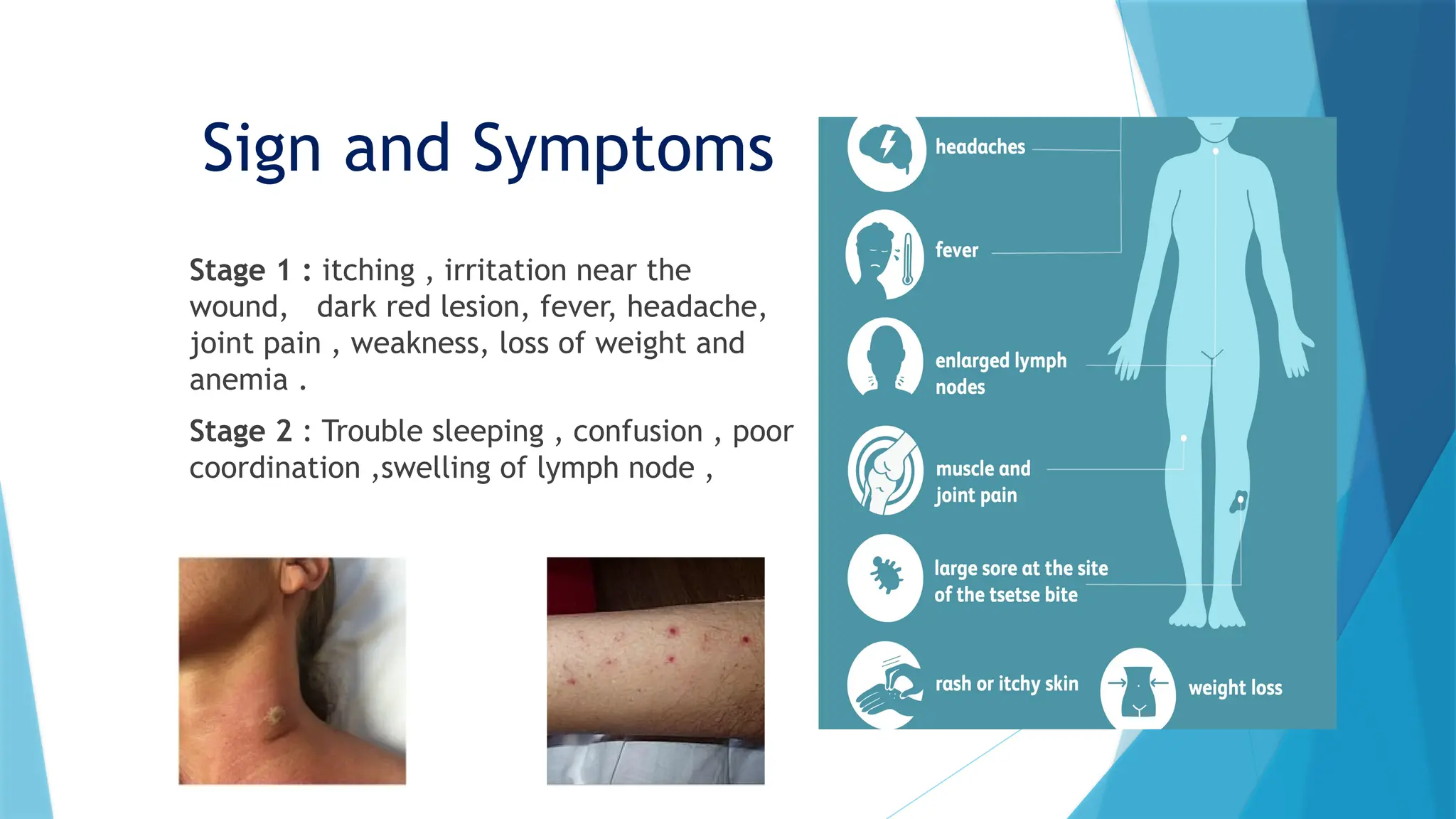
 These animals are referred to as Vector, Tsetse fly is found only in
the Sub Saharan Areas.
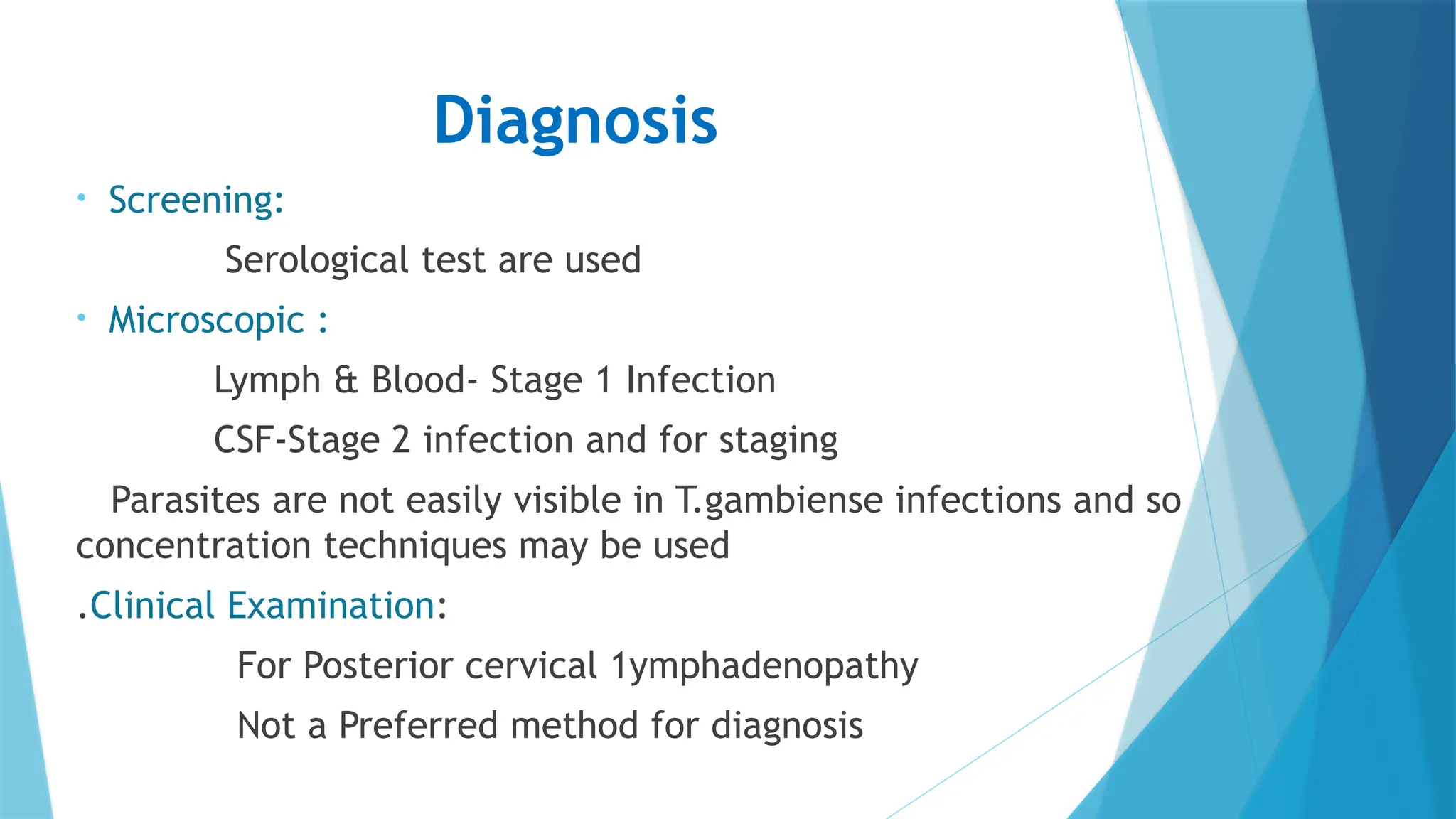
 It is reported from Central and West Africa, Nigeria , Congo and
Central America.
Historical background
 Valentine was the first to report Trypanosoma in the
blood of a Trout.
 Gruby established the genus and Lewis reported it from
the blood of rat.
 Forde (1901) first observed this parasite in the blood of
man. It was again confirmed by Dutton (1902).
 Castellani reported this parasite in the cerebrospinal
fluid of man. Then, Bruce and Nabarro established the
relationship of the disease sleeping sickness with this
parasite.
 Bruce also discovered that the disease is transmitted by
tsetse fly.
David Bruce
Gabriel Valentine
Life cycle and disease
 The life cycle is digenetic, a primary vertebrate and secondary invertebrate
host. The vertebrate host is man and the invertebrate host is blood sucking fly,
Glossina palpalis (Tsetse fly).
 Part of Life Cycle in Man: The parasites first live in the blood of the infected
man, but later find their way into the cerebrospinal fluid. The parasites multiply
by longitudinal binary fission in the blood and produce three forms of individuals,
(i) Long and thin form’s with a free flagellum,
(ii) Short and stumpy forms with a reduced flagellum and
(iii) Intermediate forms.
It has been observed that the parasites number periodically fluctuate in the
blood of man. During the period of decrease, the short and stumpy forms survive
the period of depression and the rest die. These short and stumpy forms are
capable of development in the intermediate host, Glossina palpalis (Testse fly).
Trypanosoma gambiense lives as a
parasite in the blood, lymph,
lymph node, spleen and
cerebrospinal fluid of man and in
the intestine of blood sucking fly
Glossina palpalis(Tsetse fly).
Part of Life Cycle in Tsetse Fly:
 When a tsetse fly sucks the blood of an infected man,
parasites enter into the midgut of the fly. These
parasites remain there for a few days and start
multiplying by longitudinal binary fission.
 After several more days, parasite ways to fly’s salivary
gland. In the salivary glands they develops into crithidial
forms.
 The crithidial forms are characterized by a shorter
flagellum and undulating membrane. After the
development for 2-5 days, the crithidial forms proceeds
into metacyclic forms (infective). These metacyclic
forms pass down through the ducts and hypopharynx.
When the fly bites a man, the metacyclic forms enter
the blood of man along with the saliva of the fly. The
whole cycle in the fly usually takes 2-30 days.
As the parasite crosses blood-brain barrier, the sleep/wake cycle become
reversed hence the common name is “African Sleeping sickness” with
day time somnolence, nocturnal insomnia & sudden urge to sleep.
Pathogenicity
Sign and Symptoms
Stage 1 : itching , irritation near the
wound, dark red lesion, fever, headache,
joint pain , weakness, loss of weight and
anemia .
Stage 2 : Trouble sleeping , confusion , poor
coordination ,swelling of lymph node ,
Diagnosis
• Screening:
Serological test are used
• Microscopic :
Lymph & Blood- Stage 1 Infection
CSF-Stage 2 infection and for staging
Parasites are not easily visible in T.gambiense infections and so
concentration techniques may be used
.Clinical Examination:
For Posterior cervical 1ymphadenopathy
Not a Preferred method for diagnosis
 Arsenic and antimony compounds were
until recently the drugs for treatment of
Sleeping sickness, but now they are rarely
used except for late stages when the
parasites have invaded the central nervous
system.
Two drugs, Bayer 205 (also called Antrypol,
Germanin or Suramin), and Lomidine are
now widely used for treatment human
infections. These drugs are low in toxicity,
effective in treatment and prevent
reinfection for several months.
TREATMENT
Prevention
 Wear protective clothing
 Use bed net while sleeping
 Eradication vector( Tse Tse fly)
 Stay away from bushes
 Complete health check up at regular time
 Use insect repellant such as spray
THANK
YOU

Sleeping sickness by RaghuvanshiS.K..pptx

  • 1.
    Sleeping sickness Anukrity M.Sc. Previous(Zoology) Bareilly College , Bareilly
  • 2.
    Introduction  It isalso known as Human African Trypanosomiasis, caused by Trypanosoma gambiense which is a parasite in humans.  These animals are referred to as Vector, Tsetse fly is found only in the Sub Saharan Areas.  It is reported from Central and West Africa, Nigeria , Congo and Central America.
  • 3.
    Historical background  Valentinewas the first to report Trypanosoma in the blood of a Trout.  Gruby established the genus and Lewis reported it from the blood of rat.  Forde (1901) first observed this parasite in the blood of man. It was again confirmed by Dutton (1902).  Castellani reported this parasite in the cerebrospinal fluid of man. Then, Bruce and Nabarro established the relationship of the disease sleeping sickness with this parasite.  Bruce also discovered that the disease is transmitted by tsetse fly. David Bruce Gabriel Valentine
  • 4.
    Life cycle anddisease  The life cycle is digenetic, a primary vertebrate and secondary invertebrate host. The vertebrate host is man and the invertebrate host is blood sucking fly, Glossina palpalis (Tsetse fly).  Part of Life Cycle in Man: The parasites first live in the blood of the infected man, but later find their way into the cerebrospinal fluid. The parasites multiply by longitudinal binary fission in the blood and produce three forms of individuals, (i) Long and thin form’s with a free flagellum, (ii) Short and stumpy forms with a reduced flagellum and (iii) Intermediate forms. It has been observed that the parasites number periodically fluctuate in the blood of man. During the period of decrease, the short and stumpy forms survive the period of depression and the rest die. These short and stumpy forms are capable of development in the intermediate host, Glossina palpalis (Testse fly).
  • 6.
    Trypanosoma gambiense livesas a parasite in the blood, lymph, lymph node, spleen and cerebrospinal fluid of man and in the intestine of blood sucking fly Glossina palpalis(Tsetse fly).
  • 7.
    Part of LifeCycle in Tsetse Fly:  When a tsetse fly sucks the blood of an infected man, parasites enter into the midgut of the fly. These parasites remain there for a few days and start multiplying by longitudinal binary fission.  After several more days, parasite ways to fly’s salivary gland. In the salivary glands they develops into crithidial forms.  The crithidial forms are characterized by a shorter flagellum and undulating membrane. After the development for 2-5 days, the crithidial forms proceeds into metacyclic forms (infective). These metacyclic forms pass down through the ducts and hypopharynx. When the fly bites a man, the metacyclic forms enter the blood of man along with the saliva of the fly. The whole cycle in the fly usually takes 2-30 days.
  • 8.
    As the parasitecrosses blood-brain barrier, the sleep/wake cycle become reversed hence the common name is “African Sleeping sickness” with day time somnolence, nocturnal insomnia & sudden urge to sleep. Pathogenicity
  • 9.
    Sign and Symptoms Stage1 : itching , irritation near the wound, dark red lesion, fever, headache, joint pain , weakness, loss of weight and anemia . Stage 2 : Trouble sleeping , confusion , poor coordination ,swelling of lymph node ,
  • 10.
    Diagnosis • Screening: Serological testare used • Microscopic : Lymph & Blood- Stage 1 Infection CSF-Stage 2 infection and for staging Parasites are not easily visible in T.gambiense infections and so concentration techniques may be used .Clinical Examination: For Posterior cervical 1ymphadenopathy Not a Preferred method for diagnosis
  • 11.
     Arsenic andantimony compounds were until recently the drugs for treatment of Sleeping sickness, but now they are rarely used except for late stages when the parasites have invaded the central nervous system. Two drugs, Bayer 205 (also called Antrypol, Germanin or Suramin), and Lomidine are now widely used for treatment human infections. These drugs are low in toxicity, effective in treatment and prevent reinfection for several months. TREATMENT
  • 12.
    Prevention  Wear protectiveclothing  Use bed net while sleeping  Eradication vector( Tse Tse fly)  Stay away from bushes  Complete health check up at regular time  Use insect repellant such as spray
  • 13.