In The Name Of ALLAH
The Most Beneficent
And
Merciful.
1
Submitted To:-
Dr. Shahid Hanif
Submitted By:-
Shehzad Pervaiz (AGL-15-27)
Taha Yaseen (AGL-15-40)
Entomology 5th Semester
COLLEGE OF AGRICULTURE
BHAUDIN ZIKRIYA UNIVERSITY, MULTAN
SUB-CAMPUS LAYYAH
2
3
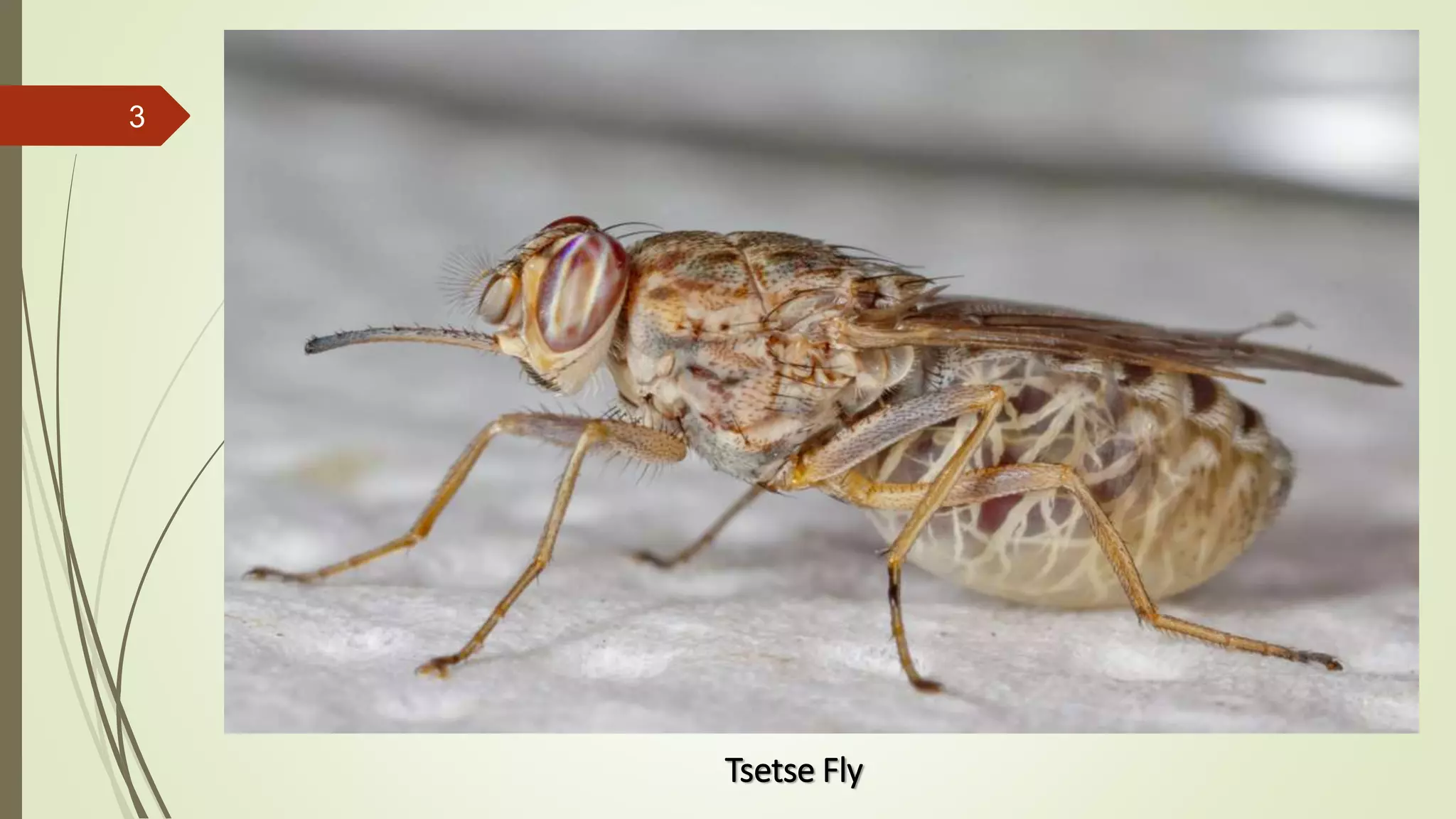
Tsetse Fly
Topic Contents:
 Scientific Classification
 Introduction
 Life Cycle
 Host And Disease
 Symptoms
 Prevention
 Control
4
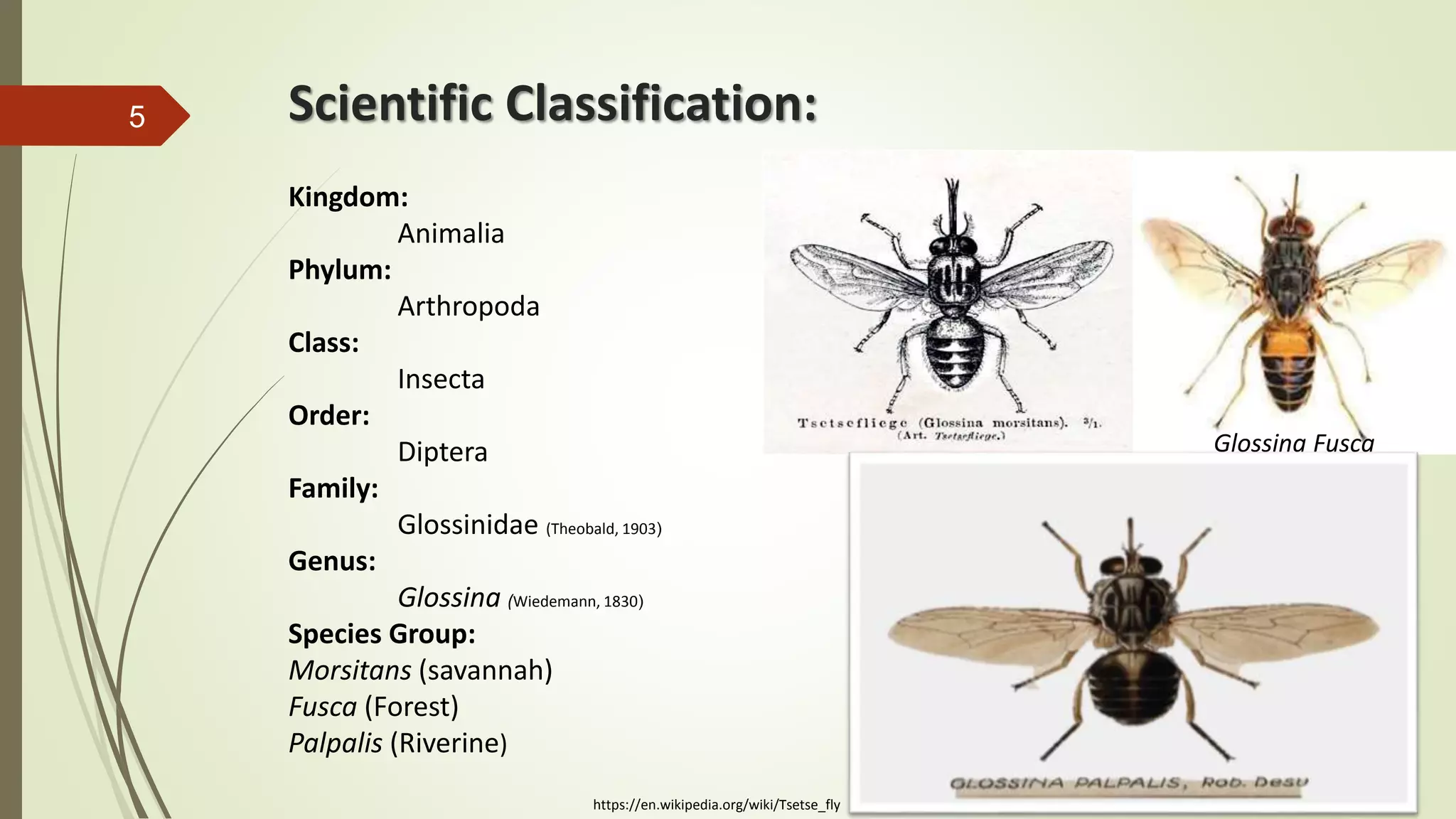
Scientific Classification:5
Kingdom:
Animalia
Phylum:
Arthropoda
Class:
Insecta
Order:
Diptera
Family:
Glossinidae (Theobald, 1903)
Genus:
Glossina (Wiedemann, 1830)
Species Group:
Morsitans (savannah)
Fusca (Forest)
Palpalis (Riverine)
Glossina Fusca
https://en.wikipedia.org/wiki/Tsetse_fly
Introduction:
 Also known as tik-tik flies. Having size of 6–15mm
in length.
 They occur only in tropical Africa and are important
as vectors of African trypanosomiasis(protozoa) in
both humans and animals.
 The tsetse are obligate parasites that live by feeding
on the blood of vertebrate animals.
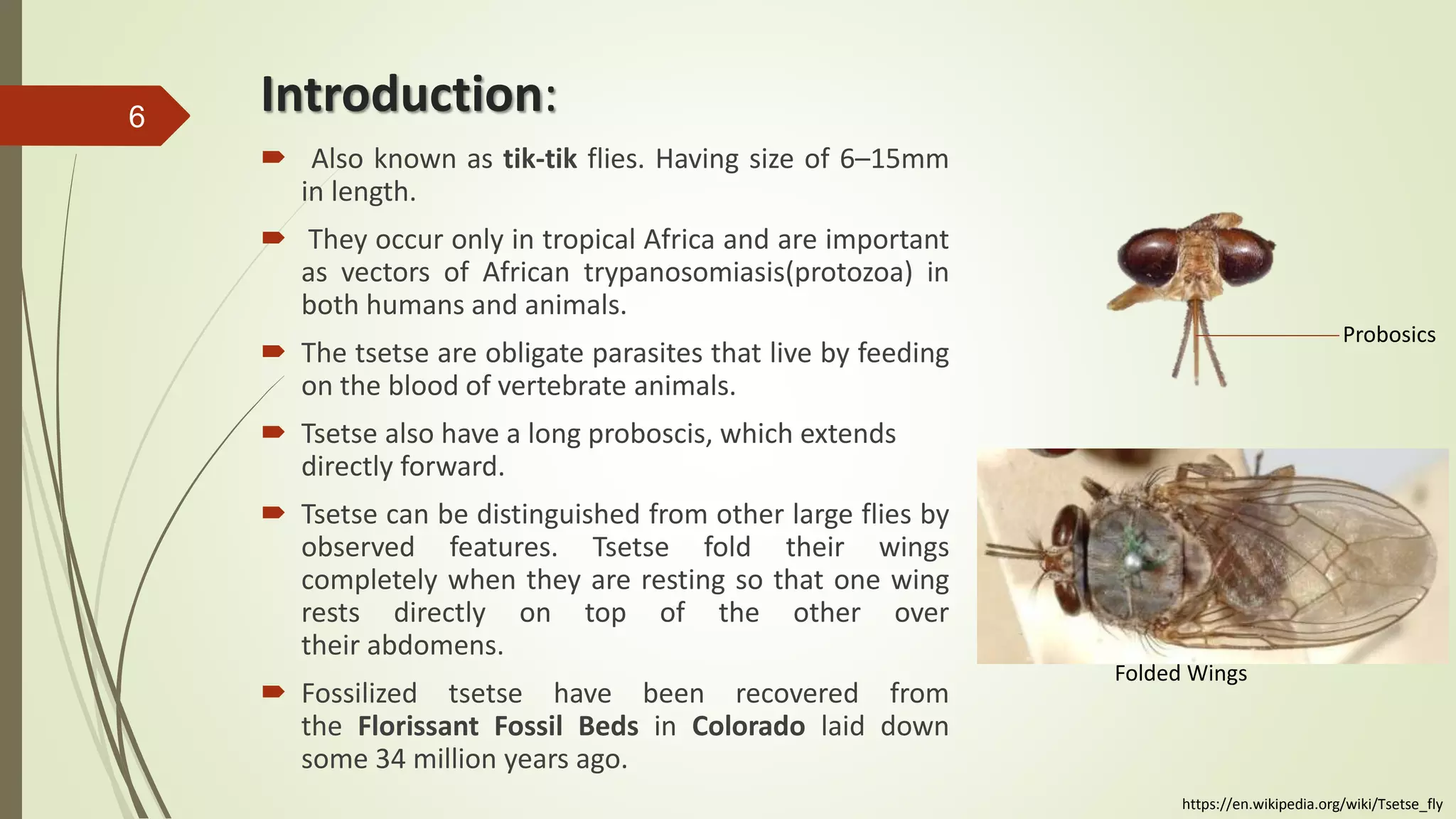
 Tsetse also have a long proboscis, which extends
directly forward.
 Tsetse can be distinguished from other large flies by
observed features. Tsetse fold their wings
completely when they are resting so that one wing
rests directly on top of the other over
their abdomens.
 Fossilized tsetse have been recovered from
the Florissant Fossil Beds in Colorado laid down
some 34 million years ago.
6
Folded Wings
Probosics
https://en.wikipedia.org/wiki/Tsetse_fly
Life Cycle:
 Tsetse have an unusual lifecycle which may be due to
the richness of their food source.
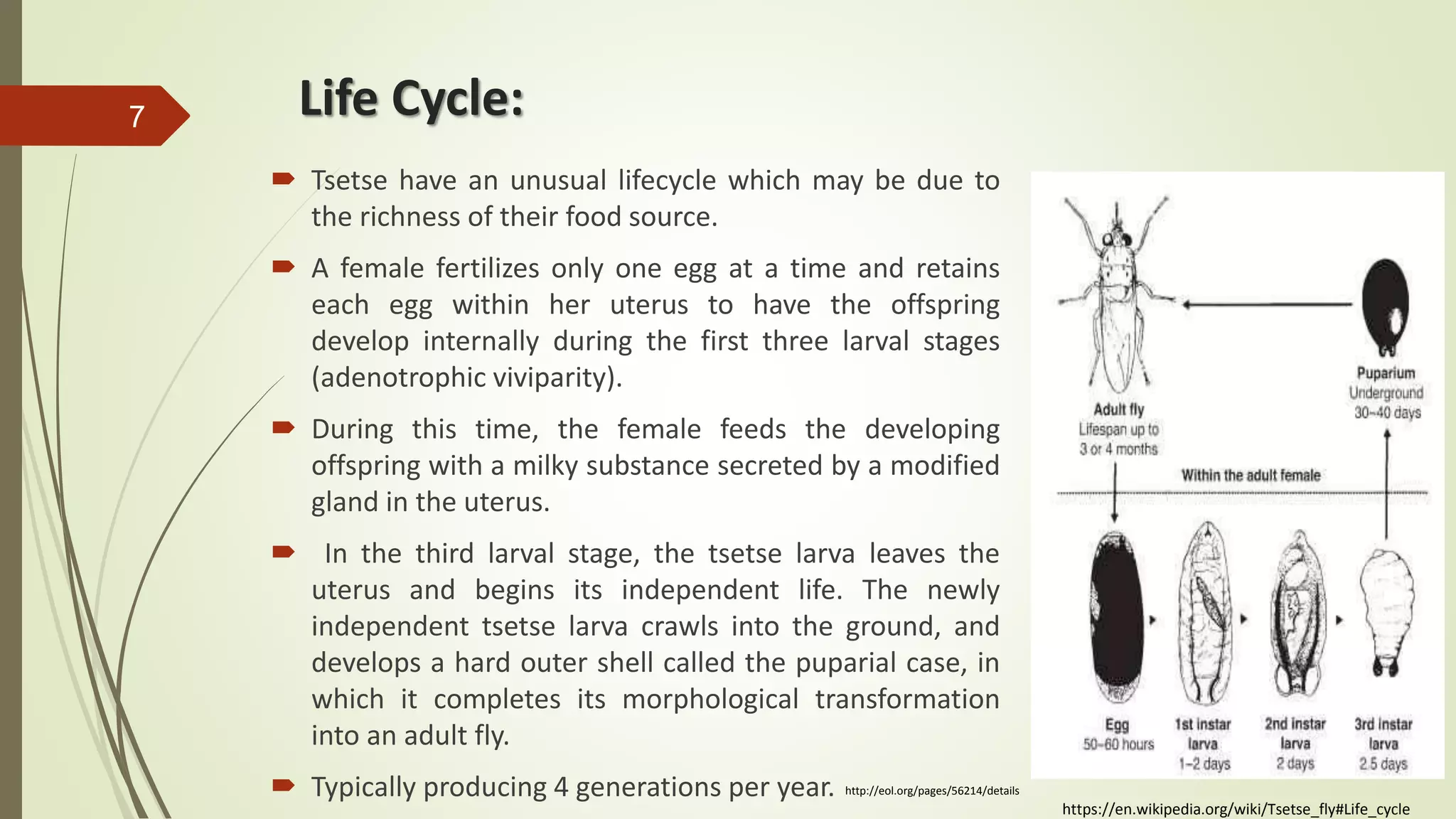
 A female fertilizes only one egg at a time and retains
each egg within her uterus to have the offspring
develop internally during the first three larval stages
(adenotrophic viviparity).
 During this time, the female feeds the developing
offspring with a milky substance secreted by a modified
gland in the uterus.
 In the third larval stage, the tsetse larva leaves the
uterus and begins its independent life. The newly
independent tsetse larva crawls into the ground, and
develops a hard outer shell called the puparial case, in
which it completes its morphological transformation
into an adult fly.
 Typically producing 4 generations per year.
7
https://en.wikipedia.org/wiki/Tsetse_fly#Life_cycle
http://eol.org/pages/56214/details
Host And Disease:
The tsetse-vectored trypanosomiases affect various vertebrate species including
humans, antelopes, bovine cattle, camels, horses, sheep, goats, and pigs.
Sleeping sickness:
Two different types of human sleeping sickness are caused by different subspecies
of trypanosome parasites.
 Gambiense sleeping sickness (Trypanosoma brucei gambiense) is generally
considered to be a chronic disease and is found mostly in West and Central Africa
 Hodesiense sleeping sickness (Trypanosoma brucei rhodesiense) is an acute
disease that occurs mainly in East Africa.
In domestic animals:
Animal trypanosomiasis, it occurs in cattle or horses. These diseases reduce the
growth rate, milk productivity, and strength of farm animals, generally leading to the
eventual death of the infected animals.
8
Symptoms:
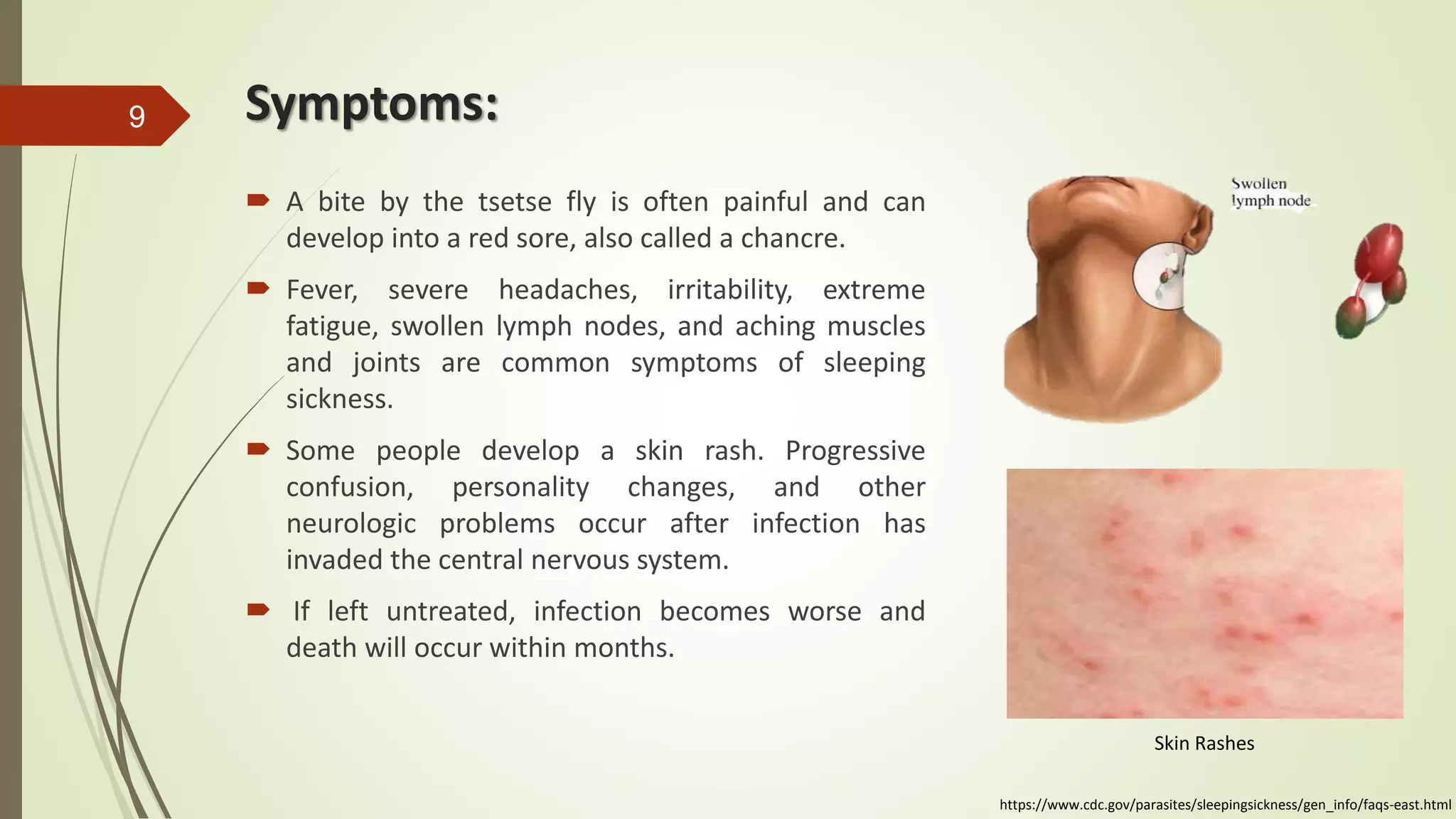
 A bite by the tsetse fly is often painful and can
develop into a red sore, also called a chancre.
 Fever, severe headaches, irritability, extreme
fatigue, swollen lymph nodes, and aching muscles
and joints are common symptoms of sleeping
sickness.
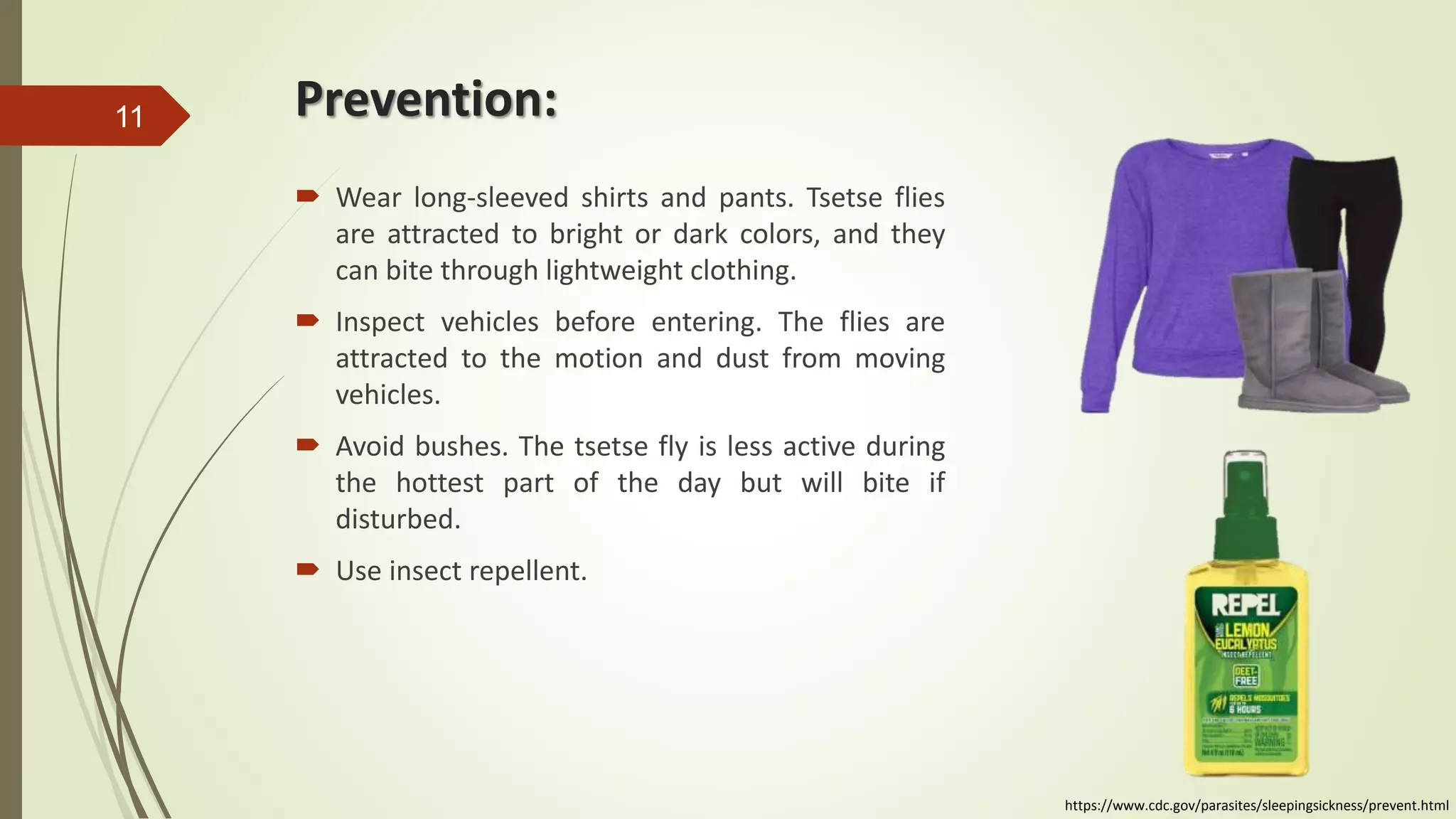
 Some people develop a skin rash. Progressive
confusion, personality changes, and other
neurologic problems occur after infection has
invaded the central nervous system.
 If left untreated, infection becomes worse and
death will occur within months.
9
https://www.cdc.gov/parasites/sleepingsickness/gen_info/faqs-east.html
Skin Rashes
Human Disease Cycle:10
Prevention:
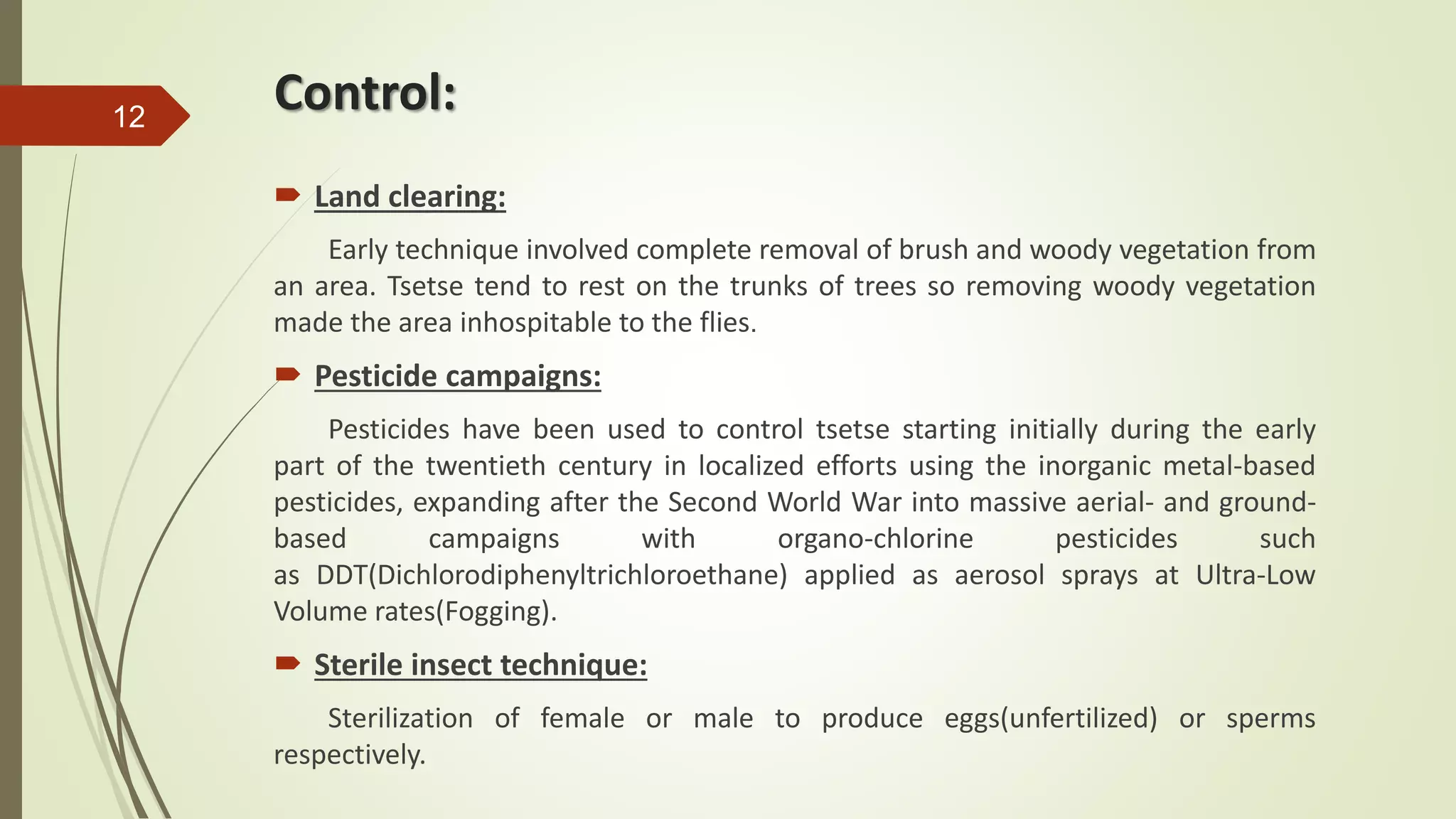
 Wear long-sleeved shirts and pants. Tsetse flies
are attracted to bright or dark colors, and they
can bite through lightweight clothing.
 Inspect vehicles before entering. The flies are
attracted to the motion and dust from moving
vehicles.
 Avoid bushes. The tsetse fly is less active during
the hottest part of the day but will bite if
disturbed.
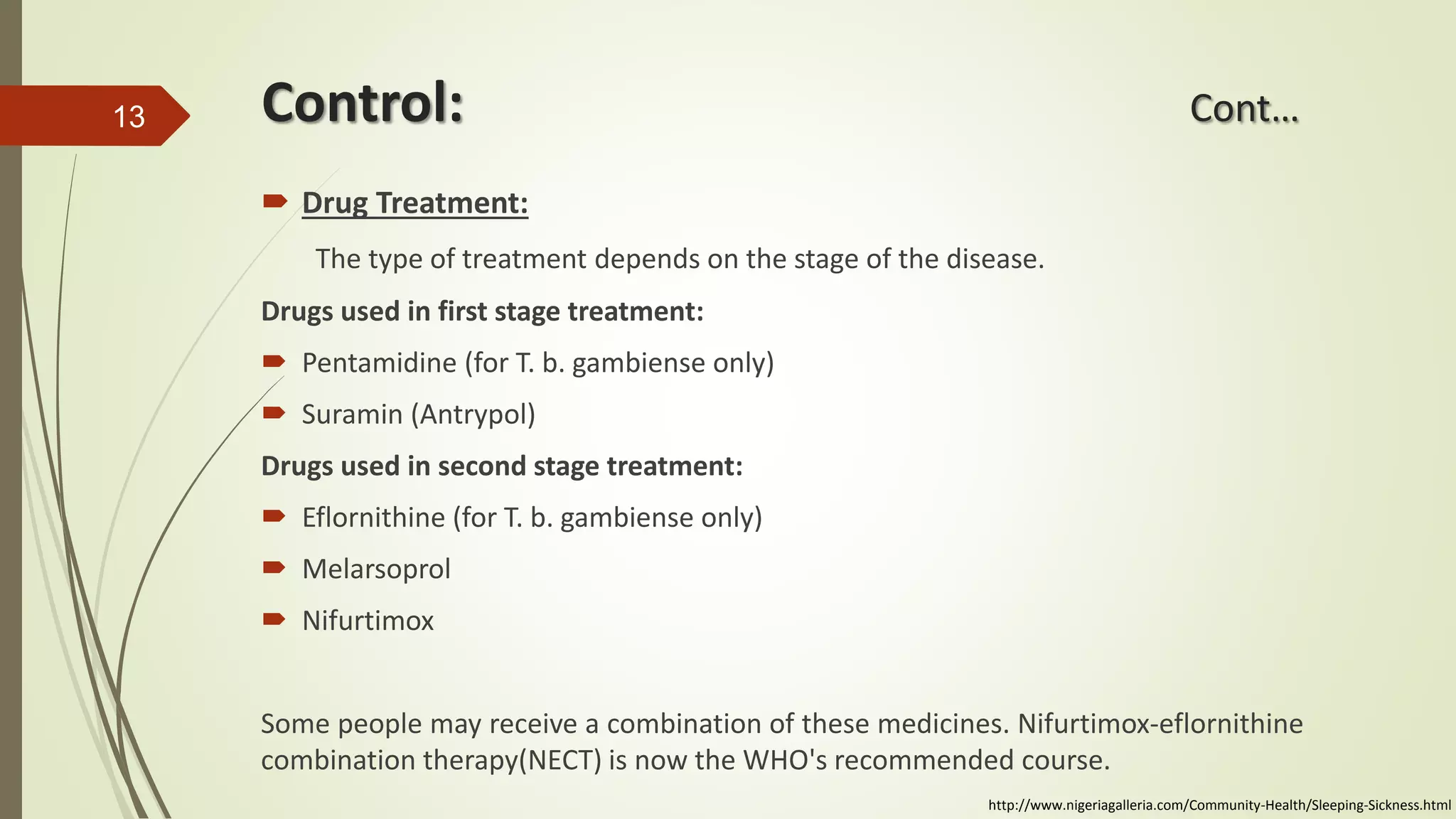
 Use insect repellent.
11
https://www.cdc.gov/parasites/sleepingsickness/prevent.html
Control:
 Land clearing:
Early technique involved complete removal of brush and woody vegetation from
an area. Tsetse tend to rest on the trunks of trees so removing woody vegetation
made the area inhospitable to the flies.
 Pesticide campaigns:
Pesticides have been used to control tsetse starting initially during the early
part of the twentieth century in localized efforts using the inorganic metal-based
pesticides, expanding after the Second World War into massive aerial- and ground-
based campaigns with organo-chlorine pesticides such
as DDT(Dichlorodiphenyltrichloroethane) applied as aerosol sprays at Ultra-Low
Volume rates(Fogging).
 Sterile insect technique:
Sterilization of female or male to produce eggs(unfertilized) or sperms
respectively.
12
Control: Cont…
 Drug Treatment:
The type of treatment depends on the stage of the disease.
Drugs used in first stage treatment:
 Pentamidine (for T. b. gambiense only)
 Suramin (Antrypol)
Drugs used in second stage treatment:
 Eflornithine (for T. b. gambiense only)
 Melarsoprol
 Nifurtimox
Some people may receive a combination of these medicines. Nifurtimox-eflornithine
combination therapy(NECT) is now the WHO's recommended course.
13
http://www.nigeriagalleria.com/Community-Health/Sleeping-Sickness.html
14
Thank You…

Tsetse flies

  • 1.
    In The NameOf ALLAH The Most Beneficent And Merciful. 1
  • 2.
    Submitted To:- Dr. ShahidHanif Submitted By:- Shehzad Pervaiz (AGL-15-27) Taha Yaseen (AGL-15-40) Entomology 5th Semester COLLEGE OF AGRICULTURE BHAUDIN ZIKRIYA UNIVERSITY, MULTAN SUB-CAMPUS LAYYAH 2
  • 3.
  • 4.
    Topic Contents:  ScientificClassification  Introduction  Life Cycle  Host And Disease  Symptoms  Prevention  Control 4
  • 5.
    Scientific Classification:5 Kingdom: Animalia Phylum: Arthropoda Class: Insecta Order: Diptera Family: Glossinidae (Theobald,1903) Genus: Glossina (Wiedemann, 1830) Species Group: Morsitans (savannah) Fusca (Forest) Palpalis (Riverine) Glossina Fusca https://en.wikipedia.org/wiki/Tsetse_fly
  • 6.
    Introduction:  Also knownas tik-tik flies. Having size of 6–15mm in length.  They occur only in tropical Africa and are important as vectors of African trypanosomiasis(protozoa) in both humans and animals.  The tsetse are obligate parasites that live by feeding on the blood of vertebrate animals.  Tsetse also have a long proboscis, which extends directly forward.  Tsetse can be distinguished from other large flies by observed features. Tsetse fold their wings completely when they are resting so that one wing rests directly on top of the other over their abdomens.  Fossilized tsetse have been recovered from the Florissant Fossil Beds in Colorado laid down some 34 million years ago. 6 Folded Wings Probosics https://en.wikipedia.org/wiki/Tsetse_fly
  • 7.
    Life Cycle:  Tsetsehave an unusual lifecycle which may be due to the richness of their food source.  A female fertilizes only one egg at a time and retains each egg within her uterus to have the offspring develop internally during the first three larval stages (adenotrophic viviparity).  During this time, the female feeds the developing offspring with a milky substance secreted by a modified gland in the uterus.  In the third larval stage, the tsetse larva leaves the uterus and begins its independent life. The newly independent tsetse larva crawls into the ground, and develops a hard outer shell called the puparial case, in which it completes its morphological transformation into an adult fly.  Typically producing 4 generations per year. 7 https://en.wikipedia.org/wiki/Tsetse_fly#Life_cycle http://eol.org/pages/56214/details
  • 8.
    Host And Disease: Thetsetse-vectored trypanosomiases affect various vertebrate species including humans, antelopes, bovine cattle, camels, horses, sheep, goats, and pigs. Sleeping sickness: Two different types of human sleeping sickness are caused by different subspecies of trypanosome parasites.  Gambiense sleeping sickness (Trypanosoma brucei gambiense) is generally considered to be a chronic disease and is found mostly in West and Central Africa  Hodesiense sleeping sickness (Trypanosoma brucei rhodesiense) is an acute disease that occurs mainly in East Africa. In domestic animals: Animal trypanosomiasis, it occurs in cattle or horses. These diseases reduce the growth rate, milk productivity, and strength of farm animals, generally leading to the eventual death of the infected animals. 8
  • 9.
    Symptoms:  A biteby the tsetse fly is often painful and can develop into a red sore, also called a chancre.  Fever, severe headaches, irritability, extreme fatigue, swollen lymph nodes, and aching muscles and joints are common symptoms of sleeping sickness.  Some people develop a skin rash. Progressive confusion, personality changes, and other neurologic problems occur after infection has invaded the central nervous system.  If left untreated, infection becomes worse and death will occur within months. 9 https://www.cdc.gov/parasites/sleepingsickness/gen_info/faqs-east.html Skin Rashes
  • 10.
  • 11.
    Prevention:  Wear long-sleevedshirts and pants. Tsetse flies are attracted to bright or dark colors, and they can bite through lightweight clothing.  Inspect vehicles before entering. The flies are attracted to the motion and dust from moving vehicles.  Avoid bushes. The tsetse fly is less active during the hottest part of the day but will bite if disturbed.  Use insect repellent. 11 https://www.cdc.gov/parasites/sleepingsickness/prevent.html
  • 12.
    Control:  Land clearing: Earlytechnique involved complete removal of brush and woody vegetation from an area. Tsetse tend to rest on the trunks of trees so removing woody vegetation made the area inhospitable to the flies.  Pesticide campaigns: Pesticides have been used to control tsetse starting initially during the early part of the twentieth century in localized efforts using the inorganic metal-based pesticides, expanding after the Second World War into massive aerial- and ground- based campaigns with organo-chlorine pesticides such as DDT(Dichlorodiphenyltrichloroethane) applied as aerosol sprays at Ultra-Low Volume rates(Fogging).  Sterile insect technique: Sterilization of female or male to produce eggs(unfertilized) or sperms respectively. 12
  • 13.
    Control: Cont…  DrugTreatment: The type of treatment depends on the stage of the disease. Drugs used in first stage treatment:  Pentamidine (for T. b. gambiense only)  Suramin (Antrypol) Drugs used in second stage treatment:  Eflornithine (for T. b. gambiense only)  Melarsoprol  Nifurtimox Some people may receive a combination of these medicines. Nifurtimox-eflornithine combination therapy(NECT) is now the WHO's recommended course. 13 http://www.nigeriagalleria.com/Community-Health/Sleeping-Sickness.html
  • 14.