Dr.Sandra Mosses
JR1M3
APPROACH TO THE
PATIENT:
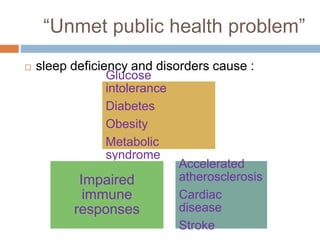
“Unmet public health problem”
 sleep deficiency and disorders cause :
Glucose
intolerance
Diabetes
Obesity
Metabolic
syndrome
Impaired
immune
responses
Accelerated
atherosclerosis
Cardiac
disease
Stroke
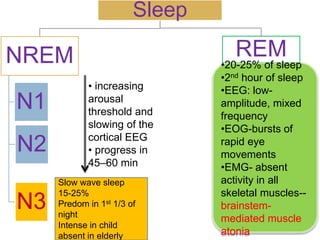
Sleep
NREM
N1
N2
N3
REM
•20-25% of sleep
•2nd hour of sleep
•EEG: low-
amplitude, mixed
frequency
•EOG-bursts of
rapid eye
movements
•EMG- absent
activity in all
skeletal muscles--
brainstem-
mediated muscle
atonia
Slow wave sleep
15-25%
Predom in 1st 1/3 of
night
Intense in child
absent in elderly
• increasing
arousal
threshold and
slowing of the
cortical EEG
• progress in
45–60 min
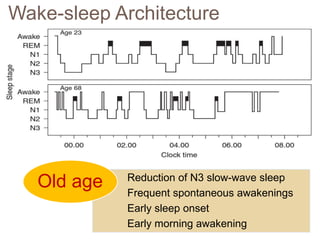
Wake-sleep Architecture
Reduction of N3 slow-wave sleep
Frequent spontaneous awakenings
Early sleep onset
Early morning awakening
Old age
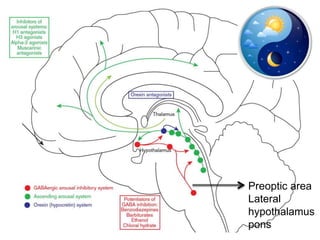
Preoptic area
Lateral
hypothalamus
pons
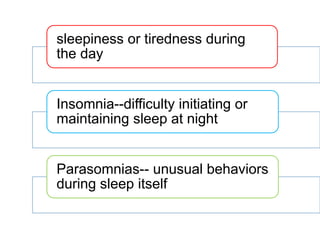
sleepiness or tiredness during
the day
Insomnia--difficulty initiating or
maintaining sleep at night
Parasomnias-- unusual behaviors
during sleep itself
Obtain careful history
 Duration, severity and consistency of symptoms
 When the patient typically goes to bed, fall asleep and
wake up, awaken during sleep, feel rested in the
morning and nap during the day
 Daily sleep log for 1–2 weeks to define the timing and
amounts of sleep, work time, drug/alcohol use
 Ask for snoring, witnessed apneas, restless sensations
in the legs, movements during sleep, depression,
anxiety
 Seizures– GTCS with urinary incontinence or tongue
biting or stereotyped movements in partial complex
epilepsy in NREM-sl
 O/E-- small airway, large tonsils or a neurologic or
Evaluation of daytime
sleepiness
INSUFFICIE
NT SLEEP
OBSTRUCT
IVE SLEEP
APNOEA
NARCOLEP
SY
RESTLESS
LEG
SYNDROM
E/PLMD
DRUG OR
MEDICAL
CONDITION
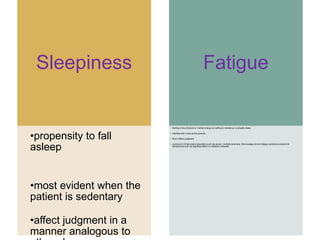
Sleepiness
•propensity to fall
asleep
•most evident when the
patient is sedentary
•affect judgment in a
manner analogous to
Fatigue
• feeling of low physical or mental energy but without a tendency to actually sleep
• interfere with more active pursuits
• Won’t affect judgment
• common in inflammatory disorders such as cancer, multiple sclerosis, fibromyalgia,chronic fatigue syndrome,endocrine
deficiencies such as hypothyroidism or Addison’s disease
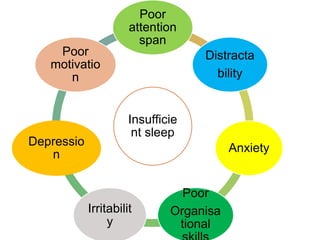
Insufficie
nt sleep
Poor
attention
span
Distracta
bility
Anxiety
Poor
Organisa
tional
Irritabilit
y
Depressio
n
Poor
motivatio
n
difficulty
sustaining
wakefulness
poor
regulation of
REM sleep
disturbed
nocturnal
sleep
excessive
daytime
sleepiness
feel well
rested on
awakenin
g
feel tired
throughou
t day
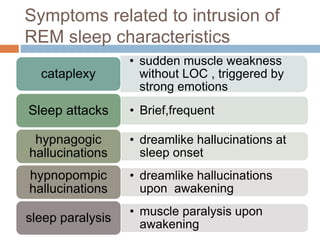
Symptoms related to intrusion of
REM sleep characteristics
• sudden muscle weakness
without LOC , triggered by
strong emotions
cataplexy
• Brief,frequentSleep attacks
• dreamlike hallucinations at
sleep onset
hypnagogic
hallucinations
• dreamlike hallucinations
upon awakening
hypnopompic
hallucinations
• muscle paralysis upon
awakening
sleep paralysis
 typically begins between age 10 and 20
 If established,disease persists for life
 loss of the hypothalamic neurons that produce the
orexin –hypocretins
 Autoimmune process -- HLA DQB1*06:02 (90%)
 Tumors,stroke
 Consistent emotional triggers such as heartfelt
mirth when laughing at a great joke, happy surprise
at unexpectedly seeing a friend, or intense anger
 polysomnogram followed by an MSLT
 Polysomnogram -- rule out other possible causes of
sleepiness such as sleep apnea
 MSLT
 essential, objective evidence of sleepiness plus REM
sleep dysregulation
 consists of five 20-min nap opportunities every 2 h
across the day
 patient is instructed to try to fall asleep
 average sleep latency across the naps of less than 8
min is considered objective evidence of excessive
daytime sleepiness
 occurrence of REM sleep in two or more of the MSLT
 adequate sleep each night and 15- to 20-min nap in the
afternoon
 Modafinil (200–400 mg OD)
 relatively long half life ,fewer S/E
 Methylphenidate (10mg BD) /dextroamphetamine (10
mg BD)
 sympathomimetic side effects, anxiety,potential for
abuse
 Sodium oxybate (gamma hydroxybutyrate)
•NARCOLEPSYTreatment
Treating cataplexy
 Antidepressants--Venlafaxine (37.5–150 mg
each morning) fluoxetine (10–40 mg each
morning)
 TCAs-protriptyline (10–40 mg/d) or
clomipramine (25–50 mg/d)
 Sodium oxybate-given at bedtime and 3–4 h
later
Obstructive sleep apnea/hypopnea
syndrome (OSAHS)
Risk factors
Obesity
Male sex
Mandibular retrognathia and micrognathia
Positive family history
Genetic syndromes that reduce upper airway patency (Down
syndrome, Treacher-Collins syndrome), adenotonsillar
hypertrophy,menopause (in women), acromegaly,
Health Consequences and
Comorbidities
 Daytime sleepiness
 Hypertension
 Coronary Artery Disease
 Heart failure
 Arrythmias
 Stroke
 IR and Diabetes mellitus
 Depression
Treatment:OSAHS
 reduce weight
 optimize sleep duration (7–9 hours) and regulate sleep
schedules (with similar bedtimes and wake times across
the week)
 treat nasal allergies, eliminate alcohol ingestion within 3
h of bedtime and minimize use of sedatives
 CPAP is the standard medical therapy --works as a
mechanical splint to hold the airway open, thus
maintaining airway patency during sleep
 Oral appliances --advancing the mandible, thus opening
the airway by repositioning the lower jaw and pulling the
tongue forward
 Upper airway surgery--Uvulopalatopharyngoplasty
Restless leg syndrome
 RLS is very common / 5–10% of adults /
more common in women and older adults
Diagnostic
criteria
Causes
•Idiopathic
•Genetic factors --polymorphisms
in a variety of genes (BTBD9,
MEIS1, MAP2K5/LBXCOR, and
PTPRD)
Primary
• Iron deficiency
• Peripheral neuropathies
• Uremia
• Pregnancy
• Varicose veins
• Parkinsons disease
• Caffeine,alcohol,antidepressants,
lithium,neuroleptics and
Secondary
Treatment
 Symptomatic
 Treat underlying disorder
 dopamine agonists :pramipexole or ropinirole
 Opioids, benzodiazepines, pregabalin, and
gabapentin may also be of therapeutic value
PERIODIC LIMB MOVEMENT
DISORDER
 rhythmic twitches of the legs that disrupt sleep
 triple flexion reflex with extensions of the great toe
and dorsiflexion of the foot for 0.5 to 5.0 s, which
recur every 20–40 s during NREM sleep, in
episodes lasting from minutes to hours
 polysomnogram -- includes recordings of the
anterior tibialis and sometimes other muscles
 EEG - brief arousals that disrupt sleep and can
cause insomnia and daytime sleepiness
 PLMD can be caused by the same factors that
cause RLS
 Rx:dopamine agonists
INSOMNIA
 difficulty initiating or maintaining sleep
• 30% of adults
• precipitated by stressful life events
• increased nocturnal light exposure, frequently
checking the clock, or attempting to sleep more
by napping, it can lead to chronic insomnia
Acute or short-
term insomnia
•>3 months
•10% of adults
• more common in women, older adults,
individuals with medical, psychiatric,
substance abuse disorders
Chronic
insomnia
• negative expectations
• worry about their insomnia
during the day and have
increasing anxiety as
bedtime approaches
• frequently check the clock,
which only heightens anxiety
and frustration
Psychophysiologic
Factors
• daytime napping
• irregular sleep-wake schedule
• use of wake-promoting substances
(caffeine, tobacco) too close to
bedtime
• engaging in alerting or stressful
activities close to bedtime
• using the bedroom for activities
other than sleep (e.g., TV, work)
Inadequate Sleep
Hygiene
•Depression--early
morning awakening,
interfere with the
onset and
maintenance of sleep
•Mania and
hypomania
•Anxiety disorders
•Panic attacks can
occur during sleep
•schizophrenia and
other psychoses--
fragmented sleep,
less deep NREM
sleep,reversal of the
day-night sleep
Caffeine
Theophylline
Stimulants
Antidepressants
Glucocorticoid
Withdrawal of
alcohol,
narcotics,BZD
Psychiatric
Conditions Medications and
Drugs of Abuse
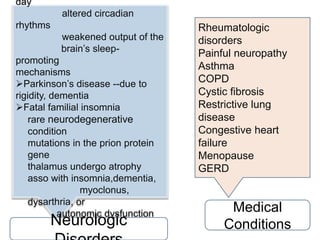
day
altered circadian
rhythms
weakened output of the
brain’s sleep-
promoting
mechanisms
Parkinson’s disease --due to
rigidity, dementia
Fatal familial insomnia
rare neurodegenerative
condition
mutations in the prion protein
gene
thalamus undergo atrophy
asso with insomnia,dementia,
myoclonus,
dysarthria, or
autonomic dysfunction
Rheumatologic
disorders
Painful neuropathy
Asthma
COPD
Cystic fibrosis
Restrictive lung
disease
Congestive heart
failure
Menopause
GERD
Neurologic
Medical
Conditions
•INSOMNIATREATMENT
TREATMENT OF MEDICAL AND
PSYCHIATRIC DISEASE
• Treat pain
• Improving breathing
• Adjust timing of medications
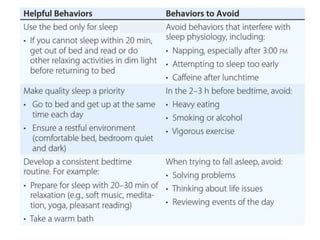
IMPROVE SLEEP HYGIENE
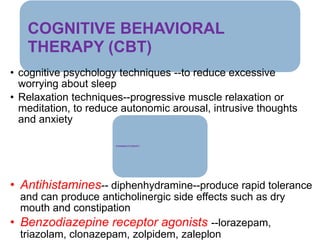
COGNITIVE BEHAVIORAL
THERAPY (CBT)
• cognitive psychology techniques --to reduce excessive
worrying about sleep
• Relaxation techniques--progressive muscle relaxation or
meditation, to reduce autonomic arousal, intrusive thoughts
and anxiety
PHARMACOTHERAPY
• Antihistamines-- diphenhydramine--produce rapid tolerance
and can produce anticholinergic side effects such as dry
mouth and constipation
• Benzodiazepine receptor agonists --lorazepam,
triazolam, clonazepam, zolpidem, zaleplon
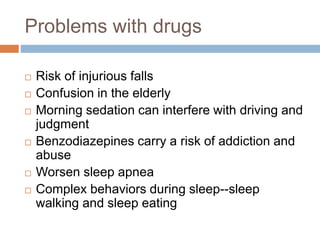
Problems with drugs
 Risk of injurious falls
 Confusion in the elderly
 Morning sedation can interfere with driving and
judgment
 Benzodiazepines carry a risk of addiction and
abuse
 Worsen sleep apnea
 Complex behaviors during sleep--sleep
walking and sleep eating
PARASOMNIAS
 abnormal behaviours or experiences that
occur during sleep
• Brief confusional arousals
• Sleep walking
• Sleep terrors
• Sleep bruxism
• Sleep enuresis
NREM
• REM sleep behavior disorder
(RBD)
• Nightmares
REM
Sleepwalking (Somnambulism)
 carry out automatic motor activities that range from
simple to complex:walk, urinate inappropriately, eat, exit the
house, or drive a car with minimal awareness
 NREM:N3 sleep, usually in the first few hours of the
night,children and adolescents
 EEG usually shows the slow cortical activity of deep NREM
sleep even when the patient is moving about
 worsened by insufficient sleep, alcohol, stress
 Treatment:
antidepressants and benzodiazepines hypnosis
home safety relaxation techniques
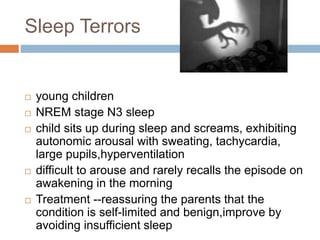
Sleep Terrors
 young children
 NREM stage N3 sleep
 child sits up during sleep and screams, exhibiting
autonomic arousal with sweating, tachycardia,
large pupils,hyperventilation
 difficult to arouse and rarely recalls the episode on
awakening in the morning
 Treatment --reassuring the parents that the
condition is self-limited and benign,improve by
avoiding insufficient sleep
Sleep Bruxism
 involuntary, forceful grinding of teeth during
sleep t
 10–20% of the population
 age of onset is 17–20 years, and spontaneous
remission usually occurs by age 40.
 tooth guard is necessary to prevent tooth injury
 Stress management /biofeedback can be
useful when bruxism is a manifestation of
psychological stress
Sleep Enuresis
 Before age 5 or 6 years, nocturnal enuresis should be
considered a normal feature of development
 Important causes of nocturnal enuresis in patients who were
previously continent for 6–12 months -- urinary tract
infections or malformations, cauda equina lesions, emotional
disturbances, epilepsy, sleep apnea, and certain medications
 The condition usually improves spontaneously by puberty,
has a prevalence in late adolescence of 1–3%, and is rare in
adulthood
 Treatment
 blAdder training exercises
 Behavioral therapy
 Pharmacotherapy --desmopressin (0.2 mg qhs), oxybutynin
REM Sleep Behavior Disorder
(RBD)
 patient or the bed partner usually reports agitated or
violent behavior during sleep, and upon awakening, the
patient can often report a dream that accompanied the
movements
 movements can be dramatic, and it is not uncommon for
the patient or the bed partner to be injured
 polysomnogram --limb movements during REM sleep,
lasting for seconds to minutes
 older men, synucleinopathy such as Parkinson’s
disease, dementia with Lewy bodies or occasionally
multiple system atrophy ,antidepressants
 Synucleinopathies -- cause neuronal loss in brainstem
regions that regulate muscle atonia during REM sleep
CIRCADIAN RHYTHM SLEEP
DISORDERS
 disorder of sleep timing
ORGANIC
abnormality of
circadian pacemakers
ENVIRONMENTAL/BEHAVI
ORAL
disruption of environmental
synchronizers
Delayed Sleep-Wake
Phase Disorder
• young adults
• sleep onset and wake times
intractably later than desired
• normal sleep on
polysomnography (except for
delayed sleep onset)
• Dim-light melatonin onset
(DLMO) typically occurs later in
the evening than normal, which is
about 8:00–9:00 pm (1–2 h
before habitual bedtime)
• Treatment :
• phototherapy with blue-enriched
light during the morning
• melatonin administration in the
evening hours
Advanced Sleep-
Wake Phase
Disorder
• older people
• cannot sleep past 5:00 am
• wake up too early at least several
times per week
• sleepy during the evening hours
• normal sleep on
polysomnography (except for
early sleep onset)
• early onset of dim-light melatonin
secretion
• Treatment:
• bright-light and/or blue enriched
phototherapy during the evening
hours to reset the circadian
pacemaker to a later hour
Jet Lag Disorder
 excessive daytime sleepiness, sleep-onset insomnia, and
frequent arousals from sleep, particularly in the latter half of
the night
 transient, typically lasting 2–14 d depending on the number of
time zones crossed, the direction of travel, and the traveler’s
age and phase-shifting capacity
 Travelers who spend more time outdoors at their destination
reportedly adapt more quickly than those who remain in hotel
rooms, presumably due to brighter (outdoor) light exposure
 Laboratory studies suggest that low doses of melatonin can
enhance sleep efficiency, but only if taken when endogenous
melatonin concentrations are low (i.e., during the biologic
daytime).
SHIFTWORK DISORDER
 Night shift workers :decreased alertness &
performance, increased reaction time, increased
risk of performance lapses, resulting in greater
safety hazards among night workers
 Motor vehicle operators: accidents
 Resident physicians: impairs psychomotor
performance, increases the risk of serious medical
errors in ICUs, including a fivefold increase in the
risk of serious diagnostic mistakes
Treatment
 Postural changes, exercise, and strategic placement of
nap opportunities
 Properly timed exposure to blue-enriched light or bright
white light --enhance alertness and facilitate more rapid
adaptation to night-shift work
 Modafinil (200 mg) or armodafinil (150 mg) 30–60 min
before the start of each night shift -
 Work schedules should be designed to minimize: (1)
exposure to night work (2) the frequency of shift
rotations (3) the number of consecutive night shifts (4)
MEDICAL IMPLICATIONS OF
CIRCADIAN RHYTHMICITY
 Platelet aggregability is increased in the early morning hours-
-peak incidence of acute myocardial infarction, sudden
cardiac death and stroke
 Recurrent circadian disruption combined with chronic sleep
deficiency(nightshift work) --increased plasma glucose
concentrations after a meal due to inadequate pancreatic
insulin secretion
 Night shift workers with elevated fasting glucose have an
increased risk of progressing to diabetes
 Blood pressure of night workers with sleep apnea is higher
than that of day workers
 Diagnostic and therapeutic procedures may also be
affected by the time of day at which data are collected
(BP, Temp, dexamethasone suppression test, and
plasma cortisol)
 The timing of chemotherapy administration has been
reported to have an effect on the outcome of treatment
 both the toxicity and effectiveness of drugs can vary with
time of day(Anesthetic agents)
 Finally, the physician must be aware of the public health
risks associated with the ever-increasing demands made
by the 24/7 schedules in our round-the-clock society.
Sleep disorders

Sleep disorders

  • 1.
  • 2.
    “Unmet public healthproblem”  sleep deficiency and disorders cause : Glucose intolerance Diabetes Obesity Metabolic syndrome Impaired immune responses Accelerated atherosclerosis Cardiac disease Stroke
  • 3.
    Sleep NREM N1 N2 N3 REM •20-25% of sleep •2ndhour of sleep •EEG: low- amplitude, mixed frequency •EOG-bursts of rapid eye movements •EMG- absent activity in all skeletal muscles-- brainstem- mediated muscle atonia Slow wave sleep 15-25% Predom in 1st 1/3 of night Intense in child absent in elderly • increasing arousal threshold and slowing of the cortical EEG • progress in 45–60 min
  • 4.
    Wake-sleep Architecture Reduction ofN3 slow-wave sleep Frequent spontaneous awakenings Early sleep onset Early morning awakening Old age
  • 5.
  • 6.
    sleepiness or tirednessduring the day Insomnia--difficulty initiating or maintaining sleep at night Parasomnias-- unusual behaviors during sleep itself
  • 7.
    Obtain careful history Duration, severity and consistency of symptoms  When the patient typically goes to bed, fall asleep and wake up, awaken during sleep, feel rested in the morning and nap during the day  Daily sleep log for 1–2 weeks to define the timing and amounts of sleep, work time, drug/alcohol use  Ask for snoring, witnessed apneas, restless sensations in the legs, movements during sleep, depression, anxiety  Seizures– GTCS with urinary incontinence or tongue biting or stereotyped movements in partial complex epilepsy in NREM-sl  O/E-- small airway, large tonsils or a neurologic or
  • 8.
    Evaluation of daytime sleepiness INSUFFICIE NTSLEEP OBSTRUCT IVE SLEEP APNOEA NARCOLEP SY RESTLESS LEG SYNDROM E/PLMD DRUG OR MEDICAL CONDITION
  • 9.
    Sleepiness •propensity to fall asleep •mostevident when the patient is sedentary •affect judgment in a manner analogous to Fatigue • feeling of low physical or mental energy but without a tendency to actually sleep • interfere with more active pursuits • Won’t affect judgment • common in inflammatory disorders such as cancer, multiple sclerosis, fibromyalgia,chronic fatigue syndrome,endocrine deficiencies such as hypothyroidism or Addison’s disease
  • 10.
  • 11.
  • 12.
    Symptoms related tointrusion of REM sleep characteristics • sudden muscle weakness without LOC , triggered by strong emotions cataplexy • Brief,frequentSleep attacks • dreamlike hallucinations at sleep onset hypnagogic hallucinations • dreamlike hallucinations upon awakening hypnopompic hallucinations • muscle paralysis upon awakening sleep paralysis
  • 13.
     typically beginsbetween age 10 and 20  If established,disease persists for life  loss of the hypothalamic neurons that produce the orexin –hypocretins  Autoimmune process -- HLA DQB1*06:02 (90%)  Tumors,stroke  Consistent emotional triggers such as heartfelt mirth when laughing at a great joke, happy surprise at unexpectedly seeing a friend, or intense anger
  • 14.
     polysomnogram followedby an MSLT  Polysomnogram -- rule out other possible causes of sleepiness such as sleep apnea  MSLT  essential, objective evidence of sleepiness plus REM sleep dysregulation  consists of five 20-min nap opportunities every 2 h across the day  patient is instructed to try to fall asleep  average sleep latency across the naps of less than 8 min is considered objective evidence of excessive daytime sleepiness  occurrence of REM sleep in two or more of the MSLT
  • 15.
     adequate sleepeach night and 15- to 20-min nap in the afternoon  Modafinil (200–400 mg OD)  relatively long half life ,fewer S/E  Methylphenidate (10mg BD) /dextroamphetamine (10 mg BD)  sympathomimetic side effects, anxiety,potential for abuse  Sodium oxybate (gamma hydroxybutyrate) •NARCOLEPSYTreatment
  • 16.
    Treating cataplexy  Antidepressants--Venlafaxine(37.5–150 mg each morning) fluoxetine (10–40 mg each morning)  TCAs-protriptyline (10–40 mg/d) or clomipramine (25–50 mg/d)  Sodium oxybate-given at bedtime and 3–4 h later
  • 17.
    Obstructive sleep apnea/hypopnea syndrome(OSAHS) Risk factors Obesity Male sex Mandibular retrognathia and micrognathia Positive family history Genetic syndromes that reduce upper airway patency (Down syndrome, Treacher-Collins syndrome), adenotonsillar hypertrophy,menopause (in women), acromegaly,
  • 18.
    Health Consequences and Comorbidities Daytime sleepiness  Hypertension  Coronary Artery Disease  Heart failure  Arrythmias  Stroke  IR and Diabetes mellitus  Depression
  • 19.
    Treatment:OSAHS  reduce weight optimize sleep duration (7–9 hours) and regulate sleep schedules (with similar bedtimes and wake times across the week)  treat nasal allergies, eliminate alcohol ingestion within 3 h of bedtime and minimize use of sedatives  CPAP is the standard medical therapy --works as a mechanical splint to hold the airway open, thus maintaining airway patency during sleep  Oral appliances --advancing the mandible, thus opening the airway by repositioning the lower jaw and pulling the tongue forward  Upper airway surgery--Uvulopalatopharyngoplasty
  • 20.
    Restless leg syndrome RLS is very common / 5–10% of adults / more common in women and older adults Diagnostic criteria
  • 21.
    Causes •Idiopathic •Genetic factors --polymorphisms ina variety of genes (BTBD9, MEIS1, MAP2K5/LBXCOR, and PTPRD) Primary • Iron deficiency • Peripheral neuropathies • Uremia • Pregnancy • Varicose veins • Parkinsons disease • Caffeine,alcohol,antidepressants, lithium,neuroleptics and Secondary
  • 22.
    Treatment  Symptomatic  Treatunderlying disorder  dopamine agonists :pramipexole or ropinirole  Opioids, benzodiazepines, pregabalin, and gabapentin may also be of therapeutic value
  • 23.
    PERIODIC LIMB MOVEMENT DISORDER rhythmic twitches of the legs that disrupt sleep  triple flexion reflex with extensions of the great toe and dorsiflexion of the foot for 0.5 to 5.0 s, which recur every 20–40 s during NREM sleep, in episodes lasting from minutes to hours  polysomnogram -- includes recordings of the anterior tibialis and sometimes other muscles  EEG - brief arousals that disrupt sleep and can cause insomnia and daytime sleepiness  PLMD can be caused by the same factors that cause RLS  Rx:dopamine agonists
  • 24.
    INSOMNIA  difficulty initiatingor maintaining sleep • 30% of adults • precipitated by stressful life events • increased nocturnal light exposure, frequently checking the clock, or attempting to sleep more by napping, it can lead to chronic insomnia Acute or short- term insomnia •>3 months •10% of adults • more common in women, older adults, individuals with medical, psychiatric, substance abuse disorders Chronic insomnia
  • 25.
    • negative expectations •worry about their insomnia during the day and have increasing anxiety as bedtime approaches • frequently check the clock, which only heightens anxiety and frustration Psychophysiologic Factors • daytime napping • irregular sleep-wake schedule • use of wake-promoting substances (caffeine, tobacco) too close to bedtime • engaging in alerting or stressful activities close to bedtime • using the bedroom for activities other than sleep (e.g., TV, work) Inadequate Sleep Hygiene
  • 26.
    •Depression--early morning awakening, interfere withthe onset and maintenance of sleep •Mania and hypomania •Anxiety disorders •Panic attacks can occur during sleep •schizophrenia and other psychoses-- fragmented sleep, less deep NREM sleep,reversal of the day-night sleep Caffeine Theophylline Stimulants Antidepressants Glucocorticoid Withdrawal of alcohol, narcotics,BZD Psychiatric Conditions Medications and Drugs of Abuse
  • 27.
    day altered circadian rhythms weakened outputof the brain’s sleep- promoting mechanisms Parkinson’s disease --due to rigidity, dementia Fatal familial insomnia rare neurodegenerative condition mutations in the prion protein gene thalamus undergo atrophy asso with insomnia,dementia, myoclonus, dysarthria, or autonomic dysfunction Rheumatologic disorders Painful neuropathy Asthma COPD Cystic fibrosis Restrictive lung disease Congestive heart failure Menopause GERD Neurologic Medical Conditions
  • 28.
    •INSOMNIATREATMENT TREATMENT OF MEDICALAND PSYCHIATRIC DISEASE • Treat pain • Improving breathing • Adjust timing of medications IMPROVE SLEEP HYGIENE
  • 30.
    COGNITIVE BEHAVIORAL THERAPY (CBT) •cognitive psychology techniques --to reduce excessive worrying about sleep • Relaxation techniques--progressive muscle relaxation or meditation, to reduce autonomic arousal, intrusive thoughts and anxiety PHARMACOTHERAPY • Antihistamines-- diphenhydramine--produce rapid tolerance and can produce anticholinergic side effects such as dry mouth and constipation • Benzodiazepine receptor agonists --lorazepam, triazolam, clonazepam, zolpidem, zaleplon
  • 31.
    Problems with drugs Risk of injurious falls  Confusion in the elderly  Morning sedation can interfere with driving and judgment  Benzodiazepines carry a risk of addiction and abuse  Worsen sleep apnea  Complex behaviors during sleep--sleep walking and sleep eating
  • 32.
    PARASOMNIAS  abnormal behavioursor experiences that occur during sleep • Brief confusional arousals • Sleep walking • Sleep terrors • Sleep bruxism • Sleep enuresis NREM • REM sleep behavior disorder (RBD) • Nightmares REM
  • 33.
    Sleepwalking (Somnambulism)  carryout automatic motor activities that range from simple to complex:walk, urinate inappropriately, eat, exit the house, or drive a car with minimal awareness  NREM:N3 sleep, usually in the first few hours of the night,children and adolescents  EEG usually shows the slow cortical activity of deep NREM sleep even when the patient is moving about  worsened by insufficient sleep, alcohol, stress  Treatment: antidepressants and benzodiazepines hypnosis home safety relaxation techniques
  • 34.
    Sleep Terrors  youngchildren  NREM stage N3 sleep  child sits up during sleep and screams, exhibiting autonomic arousal with sweating, tachycardia, large pupils,hyperventilation  difficult to arouse and rarely recalls the episode on awakening in the morning  Treatment --reassuring the parents that the condition is self-limited and benign,improve by avoiding insufficient sleep
  • 35.
    Sleep Bruxism  involuntary,forceful grinding of teeth during sleep t  10–20% of the population  age of onset is 17–20 years, and spontaneous remission usually occurs by age 40.  tooth guard is necessary to prevent tooth injury  Stress management /biofeedback can be useful when bruxism is a manifestation of psychological stress
  • 36.
    Sleep Enuresis  Beforeage 5 or 6 years, nocturnal enuresis should be considered a normal feature of development  Important causes of nocturnal enuresis in patients who were previously continent for 6–12 months -- urinary tract infections or malformations, cauda equina lesions, emotional disturbances, epilepsy, sleep apnea, and certain medications  The condition usually improves spontaneously by puberty, has a prevalence in late adolescence of 1–3%, and is rare in adulthood  Treatment  blAdder training exercises  Behavioral therapy  Pharmacotherapy --desmopressin (0.2 mg qhs), oxybutynin
  • 37.
    REM Sleep BehaviorDisorder (RBD)  patient or the bed partner usually reports agitated or violent behavior during sleep, and upon awakening, the patient can often report a dream that accompanied the movements  movements can be dramatic, and it is not uncommon for the patient or the bed partner to be injured  polysomnogram --limb movements during REM sleep, lasting for seconds to minutes  older men, synucleinopathy such as Parkinson’s disease, dementia with Lewy bodies or occasionally multiple system atrophy ,antidepressants  Synucleinopathies -- cause neuronal loss in brainstem regions that regulate muscle atonia during REM sleep
  • 38.
    CIRCADIAN RHYTHM SLEEP DISORDERS disorder of sleep timing ORGANIC abnormality of circadian pacemakers ENVIRONMENTAL/BEHAVI ORAL disruption of environmental synchronizers
  • 39.
    Delayed Sleep-Wake Phase Disorder •young adults • sleep onset and wake times intractably later than desired • normal sleep on polysomnography (except for delayed sleep onset) • Dim-light melatonin onset (DLMO) typically occurs later in the evening than normal, which is about 8:00–9:00 pm (1–2 h before habitual bedtime) • Treatment : • phototherapy with blue-enriched light during the morning • melatonin administration in the evening hours Advanced Sleep- Wake Phase Disorder • older people • cannot sleep past 5:00 am • wake up too early at least several times per week • sleepy during the evening hours • normal sleep on polysomnography (except for early sleep onset) • early onset of dim-light melatonin secretion • Treatment: • bright-light and/or blue enriched phototherapy during the evening hours to reset the circadian pacemaker to a later hour
  • 40.
    Jet Lag Disorder excessive daytime sleepiness, sleep-onset insomnia, and frequent arousals from sleep, particularly in the latter half of the night  transient, typically lasting 2–14 d depending on the number of time zones crossed, the direction of travel, and the traveler’s age and phase-shifting capacity  Travelers who spend more time outdoors at their destination reportedly adapt more quickly than those who remain in hotel rooms, presumably due to brighter (outdoor) light exposure  Laboratory studies suggest that low doses of melatonin can enhance sleep efficiency, but only if taken when endogenous melatonin concentrations are low (i.e., during the biologic daytime).
  • 41.
    SHIFTWORK DISORDER  Nightshift workers :decreased alertness & performance, increased reaction time, increased risk of performance lapses, resulting in greater safety hazards among night workers  Motor vehicle operators: accidents  Resident physicians: impairs psychomotor performance, increases the risk of serious medical errors in ICUs, including a fivefold increase in the risk of serious diagnostic mistakes
  • 42.
    Treatment  Postural changes,exercise, and strategic placement of nap opportunities  Properly timed exposure to blue-enriched light or bright white light --enhance alertness and facilitate more rapid adaptation to night-shift work  Modafinil (200 mg) or armodafinil (150 mg) 30–60 min before the start of each night shift -  Work schedules should be designed to minimize: (1) exposure to night work (2) the frequency of shift rotations (3) the number of consecutive night shifts (4)
  • 43.
    MEDICAL IMPLICATIONS OF CIRCADIANRHYTHMICITY  Platelet aggregability is increased in the early morning hours- -peak incidence of acute myocardial infarction, sudden cardiac death and stroke  Recurrent circadian disruption combined with chronic sleep deficiency(nightshift work) --increased plasma glucose concentrations after a meal due to inadequate pancreatic insulin secretion  Night shift workers with elevated fasting glucose have an increased risk of progressing to diabetes  Blood pressure of night workers with sleep apnea is higher than that of day workers
  • 44.
     Diagnostic andtherapeutic procedures may also be affected by the time of day at which data are collected (BP, Temp, dexamethasone suppression test, and plasma cortisol)  The timing of chemotherapy administration has been reported to have an effect on the outcome of treatment  both the toxicity and effectiveness of drugs can vary with time of day(Anesthetic agents)  Finally, the physician must be aware of the public health risks associated with the ever-increasing demands made by the 24/7 schedules in our round-the-clock society.