Presenter: Dr Kaushik Nandi
OVERVIEW
⚫Introduction
⚫Neurobiology of Sleep & Wakefulness
⚫Stages of Sleep
⚫Assessment
⚫Classification of sleep disorder
⚫Common Sleep disorders and management
⚫References
INTRODUCTION
⚫Sleep is a regularly recurring, rapidly reversible
neurobehavioral state characterized by quiescence,
postural recumbence, and reduced awareness of the
environment
⚫Sleep is considered to be a psychiatric “vital sign,”
requiring routine evaluation and treatment whenever
sleep disorders are encountered.
⚫Sleep is required for proper brain function
NEUROBIOLOGY OF SLEEPAND
WAKEFULNESS
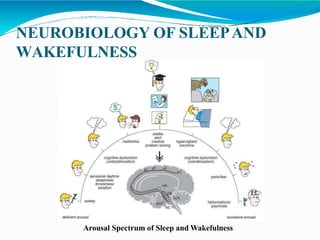
Arousal Spectrum of Sleep and Wakefulness
AROUSAL SPECTRUM OF SLEEP
AND WAKEFULNESS
⚫Influenced in by five key neurotransmitters:
1. Histamine (HA)
2. Dopamine (DA)
3. Norepinephrine (NE)
4. Serotonin (5HT)
5. Acetylcholine (Ach).
⚫When there is good balance between ‘too much’ and
‘too little’ arousal, one is awake, alert, and able to
function well.
THE SLEEP/WAKE SWITCH
⚫The hypothalamus is a key control center for sleep
and wake
⚫The “off” setting or sleep promoter, is localized
within the Ventrolateral preoptic nucleus (VLPO) of
the Hypothalamus
⚫The “on” setting – the wake promoter – is localized
within the Tuberomammillary nucleus (TMN) of the
hypothalamus
⚫Two key neurotransmitters regulate the sleep/wake
switch: Histamine from the TMN and GABA from
the VLPO
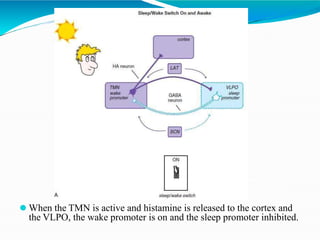
⚫ When the TMN is active and histamine is released to the cortex and
the VLPO, the wake promoter is on and the sleep promoter inhibited.
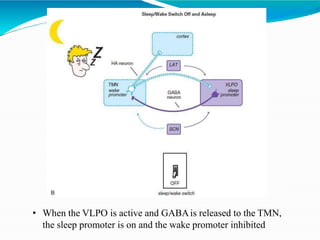
• When the VLPO is active and GABAis released to the TMN,
the sleep promoter is on and the wake promoter inhibited
switch
⚫The sleep/wake
orexin/hypocretin neurons
is also regulated by
in the lateral
hypothalamus (LAT) which stabilize wakefulness.
PROCESSES REGULATING SLEEP
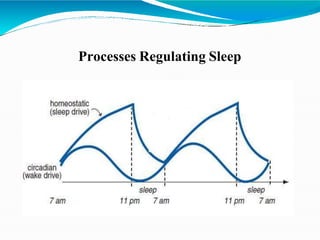
⚫The circadian wake drive is a result of input (light,
melatonin, activity) to the Suprachiasmatic nucleus
(SCN).
⚫The longer one is awake – Homeostatic sleep drive
increases and it decreases with sleep.
⚫As the day progresses, circadian wake drive
diminishes and homeostatic sleep drive increases until
a tipping point is reached and the Ventrolateral
preoptic sleep promoter (VLPO) is triggered to release
GABA in the Tuberomammillary nucleus (TMN) and
inhibit wakefulness
Processes Regulating Sleep
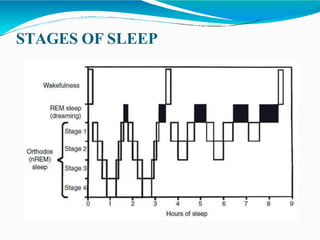
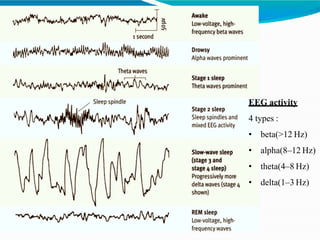
STAGES OF SLEEP
EEG activity
4 types :
• beta(>12 Hz)
• alpha(8–12 Hz)
• theta(4–8 Hz)
• delta(1–3 Hz)
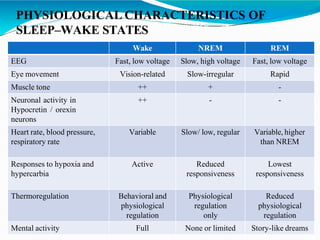
PHYSIOLOGICAL CHARACTERISTICS OF
SLEEP–WAKE STATES
Wake NREM REM
EEG Fast, low voltage Slow, high voltage Fast, low voltage
Eye movement Vision-related Slow-irregular Rapid
Muscle tone ++ + -
Neuronal activity in
Hypocretin / orexin
neurons
++ - -
Heart rate, blood pressure,
respiratory rate
Variable Slow/ low, regular Variable, higher
than NREM
Responses to hypoxia and
hypercarbia
Active Reduced
responsiveness
Lowest
responsiveness
Thermoregulation Behavioral and
physiological
regulation
Physiological
regulation
only
Reduced
physiological
regulation
Mental activity Full None or limited Story-like dreams
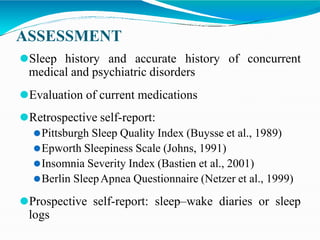
ASSESSMENT
⚫Sleep history and accurate history of concurrent
medical and psychiatric disorders
⚫Evaluation of current medications
⚫Retrospective self-report:
⚫Pittsburgh Sleep Quality Index (Buysse et al., 1989)
⚫Epworth Sleepiness Scale (Johns, 1991)
⚫Insomnia Severity Index (Bastien et al., 2001)
⚫Berlin SleepApnea Questionnaire (Netzer et al., 1999)
⚫Prospective self-report: sleep–wake diaries or sleep
logs
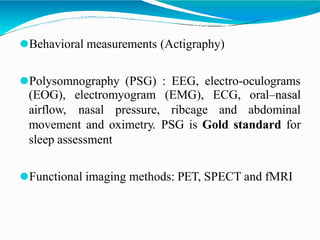
⚫Behavioral measurements (Actigraphy)
⚫Polysomnography (PSG) : EEG, electro-oculograms
(EOG), electromyogram (EMG), ECG,
airflow, nasal pressure, ribcage and
oral–nasal
abdominal
movement and oximetry. PSG is Gold standard for
sleep assessment
⚫Functional imaging methods: PET, SPECT and fMRI
SLEEP DISORDER CLASSIFICATIONS
⚫Diagnostic & Statistical Manual of Mental Disorders
(DSM 5)
⚫International Classification of Diseases (ICD 10)
⚫International Classification of Sleep Disorders
(ICSD-3)
DSM-5 CLASSIFICATION
⚫Insomnia Disorder
⚫Hypersomnolence Disorder
⚫Narcolepsy
⚫Breathing-Related Sleep Disorders
⚫ Obstructive SleepApnea Hypopnea
⚫ Central SleepApnea
⚫ Sleep Related Hypoventilation
⚫Circadian Rhythm Sleep–Wake Disorders
⚫Parasomnias
⚫ Non-REM SleepArousal Disorders
⚫ Nightmare Disorder and REM Sleep Behavior Disorder
⚫Restless Legs Syndrome
⚫Substance/Medication-Induced Sleep Disorder
ICD 10 CLASSIFICATION
⚫G47 Sleep disorders
 G47.0 Disorders of initiating and maintaining
sleep [insomnias]
 G47.1 Disorders of excessive somnolence
[hypersomnias]
 G47.2 Disorders of the sleep-wake schedule
 G47.3 Sleep apnoea
 G47.4 Narcolepsy and cataplexy
 G47.8 Other sleep disorders
 G47.9 Sleep disorder, unspecified
of Sleep
International Classification
Disorders (ICSD 3)
Major diagnostic section:
⚫Insomnia
⚫Sleep-related breathing disorders
⚫Central disorders of hypersomnolence
⚫Circadian rhythm sleep-wake disorders
⚫Parasomnias
⚫Sleep-related movement disorders
⚫Other sleep disorders
INSOMNIA DISORDER
⚫Diagnosis: The essential feature of Insomnia Disorder
is dissatisfaction with sleep, characterized by
difficulty falling asleep, difficulty maintaining sleep,
or difficulty returning to sleep after awakenings
during the night (American Psychiatric Association,
2013).
⚫Quantitative criteria for Insomnia Disorder include
frequency (at least 3 nights per week) and duration (at
least 3 months).
⚫Insomnia Disorder is diagnosed when the sleep
problem is not better explained by, and does not occur
exclusively during the course of, another mental,
medical, or sleep disorder, and is not attributable to
the physiologic effects of a drug or medication.
⚫Often accompanied by symptoms of physical or
cognitive “hyperarousal” at bedtime, such as muscle
tension, inability to relax, or feeling more awake after
going to bed.
Epidemiology:
⚫most common sleep disorder.
⚫~ 30–50% of the adult population may experience
insomnia symptoms during the course of a year
⚫M:F = 1.5:1
⚫Age effect is not universally observed
⚫Medical disorders and conditions associated with
insomnia:
1. Congestive heart failure
2. COPD, asthma
3. Chronic renal failure, prostatic hypertrophy
4. Gastroesophageal reflux disease
5. Fibromyalgia, osteoarthritis, rheumatoid arthritis
6. Hyperthyroidism, diabetes
7. Parkinson’s disease, cerebrovascular disease
8. Menopause
⚫Psychiatric disorders and conditions associated
with insomnia:
1. Major depression, dysthymic disorder, Bipolar
disorder
2. Generalized anxiety disorder, panic disorder, PTSD
3. Schizophrenia
4. Substance use disorders
⚫Medications and Substances Associated With
Insomnia: Alcohol (acute use, withdrawal), Caffeine,
Nicotine, Cannabis, Antidepressants, Corticosteroids,
𝛽 agonists, theophylline derivatives, 𝛽 antagonists,
Statins, Stimulants, Dopamine agonists
Etiology and Pathophysiology
⚫Genetic Factors: Increased prevalence of insomnia
has been observed among monozygotic twins and
first-degree family members.
⚫Neurobiological Factors: associated with
physiological hyperarousal. Patients with insomnia
have increased whole body metabolic rate, increased
cortisol and ACTH (particularly in the evening and
early sleep hours), altered heart rate variability, and
altered secretion of norepinephrine and cytokines
⚫Psychological Factors: Individuals with insomnia
often have minor elevations in depressive and anxiety
symptoms
⚫Social/Environmental Factors: Insomnia is often
precipitated by social or environmental stressors
Treatment
⚫Treatment Goals: to improve qualitative and
quantitative aspects of sleep, to reduce sleep-related
distress, and to improve daytime function.
⚫Somatic Treatments: Currently approved drugs
include benzodiazepine receptor agonists, tricyclic
drug, melatonin receptor agonist, antihistamines, and
barbiturates
⚫Psychosocial Treatments: Stimulus control, Sleep
restriction therapy, Relaxation training, Cognitive
restructuring of irrational sleep-related beliefs and
sleep hygiene.
Sleep hygiene: Promote behaviors that improve sleep;
limit behaviors that harm sleep:
⚫Avoid naps
⚫Get regular exercise
⚫Maintain a regular sleep schedule
⚫Avoid stimulants (caffeine, nicotine)
⚫Limit alcohol intake
⚫Do not look at the clock when awake in bed
NARCOLEPSY
⚫The hallmark of Narcolepsy is
sleepiness, marked by recurrent
extreme daytime
episodes of an
irresistible need to sleep, unintentional sleep episodes,
or napping. (at least 3 times per week for at least 3
months)
⚫In addition, Narcolepsy requires one of three
additional findings:
1. Episodes of cataplexy : Sudden and bilateral loss of
muscle tone with preserved consciousness, and often
precipitated by strong emotions such as laughter
2. Hypocretin (orexin) deficiency in cerebrospinal fluid
3. Specific PSG findings: reduced latency to REM
sleep during nocturnal PSG (15 minutes or less)
⚫Narcolepsy is associated with sleep-related
hallucinations at sleep onset (hypnagogic) or sleep
offset (hynpnopompic) in 20–60% of patients.
⚫Sleep paralysis at sleep onset or offset is also typical
of narcolepsy, and consists of episodes of alertness
with an inability to move skeletal muscles
⚫Nightmares and vivid dreams also occur frequently
⚫Prevalence: 0.02–0.04% of the general population
⚫Narcolepsy follows chronic persistent courses.
Etiology and Pathophysiology:
Genetic Factors
⚫Strong association with HLA marker DQB 1*0602
Neurobiological Factors:
⚫Narcolepsy is associated with deficiency of
Hypocretin (orexin) in central nervous system
⚫Postmortem studies of humans with narcolepsy show
loss of orexinergic cells and reduced orexin immuno-
reactivity in the lateral hypothalamus
Treatment:
⚫Treatment Goals: to reduce daytime sleepiness and
to manage the symptoms of cataplexy, sleep paralysis,
and sleep-related hallucinations when present
⚫Somatic Treatments: Monoaminergic stimulants
(Methylphenidate, Dextroamphetamine, and mixed
Amphetamine salts), Modafinil and Armodafinil,
Atomoxetine, Bupropion, Anti-cataplectic drugs
(Venlafaxine, Desmethylvenlafaxine, Duloxetine, or
Fluoxetine, TCAs)
⚫Psychosocial Treatments: Scheduling regular brief
nap
HYPERSOMNOLENCE DISORDER
⚫Main feature of Hypersomnolence Disorder is
excessive sleepiness despite a normal sleep duration at
night.
⚫Repeated episodes of sleep during daytime hours;
prolonged night time sleep, typically 9 hours or
longer; and/or difficulty transitioning from sleep to
wakefulness, often called sleep inertia.
⚫Must be present at least 3 days per week for at least 3
months.
⚫Significant distress or impairment in important
daytime functions
⚫Prevalence: 0.005–0.06% of Western populations
⚫Comorbidity: Autonomic dysfunction such as
orthostatic hypotension. Depression is also common
⚫Equal distribution among men and women
⚫Insidious onset in the second or third decade with a
chronic persistent courses.
Types of Hypersomnia:
⚫Kleine-Levin Syndrome
⚫Menstrual-Related Hypersomnia
⚫Idiopathic Hypersomnia
⚫Behaviorally Induced Insufficient Sleep Syndrome
⚫Hypersomnia Due to a Medical Condition
⚫Hypersomnia Due to Drug or Substance Use
Etiology and Pathophysiology
Genetic Factors:
⚫Familial aggregation in approximately 50% of cases,
with a suggestion of autosomal dominant inheritance
⚫20-fold risk in first-degree family members
Neurobiological Factors:
⚫Dysfunction of monoaminergic arousal systems have
been suggested by studies showing reduced CSF
dopamine and/or norepinephrine metabolites
Treatment:
⚫Treatment Goals: to reduce the impact of long night
time sleep and excessive daytime sleepiness
⚫Somatic Treatments: Monoaminergic stimulants
(methylphenidate, dextroamphetamine, and mixed
amphetamine salts), Modafinil and armodafinil,
Atomoxetine, Bupropion.
⚫Psychosocial Treatments: setting regular sleep–wake
schedules and using multiple alarms (including social
interactions or bright light) may help to ease the
sleep–wake transition.
BREATHING-RELATED SLEEP
DISORDERS
1. Obstructive SleepApnea Hypopnea (OSAH)
2. Central SleepApnea (CSA)
3. Sleep-Related Hypoventilation (SRH).
⚫All are associated with impaired ventilation during
sleep, often associated with intermittent or sustained
hypoxemia, as well as with sleep disruption that may
result in awakenings as well as daytime sleepiness or
fatigue
⚫Reductions in airflow lasting at least 10 seconds are
classified as either apnea (absent airflow) or
hypopnea (reduced airflow), and the frequency of
these events per hour of sleep, termed the apnea
hypopnea index (AHI)
⚫AHI is an important measure of the severity of OSAH
and CSA
OBSTRUCTIVE SLEEPAPNEA
HYPOPNEA (OSAH)
⚫Most common
⚫Characterized by repetitive pharyngeal airway
obstruction during sleep
⚫Diagnosis: In the absence of symptoms, PSG
documenting at least anAHI of 15
Or
⚫AHI > 5 with predominantly obstructive respiratory
events, accompanied by symptoms of
1. nocturnal breathing disturbances: snoring,
snorting/gasping, or breathing pauses, or
2. daytime sleepiness, fatigue, or unrefreshing sleep
despite sufficient sleep opportunity
⚫Habitual snoring is a sensitive indicator
⚫Increasing loudness of snoring is associated with
higher risk
⚫Snoring may be interrupted by silent periods (apneas),
which are often terminated by resuscitative breathing.
⚫Memory disturbances, poor concentration, irritability,
and personality changes
⚫OSAH affects multiple organs and may cause
hypertension, heartburn, nocturia, morning headaches,
and sexual dysfunction
⚫Age (>55), gender (male), BMI (>30) and neck
circumference (>16 inches women, >17 inches men)
identify higher risk groups.
⚫Male: Female = 2:1 to 4:1
Treatment:
⚫Treatment Goals: to improve symptoms and quality
of life and minimize risks of comorbidity
Treatments: Continuous positive airway
⚫Somatic
pressure
devices
(CPAP)
(MAD)
and Mandibular advancement
and surgical procedures like
uvulopalatopharyngoplasty.
⚫Psychosocial Treatments: Weight loss, avoiding the
supine sleep position, reducing evening alcohol
consumption, and getting adequate sleep duration.
CENTRAL SLEEPAPNEA
⚫Characterized by variability in respiratory effort that
leads to episodes of apnea and hypopnea during sleep
⚫Diagnostic criteria require at least five central apneas
per hour
⚫Subtypes:
1. Cheyne–Stokes Breathing (CSB) - heart failure,
stroke, or renal failure
2. Central Sleep Apnea Comorbid with Opioid Use -
Chronic use of long-acting opioid medications, such
as methadone
3. Idiopathic Central Sleep Apnea
Treatment:
⚫The goals of treatment are to improve symptoms and
quality of life and minimize cardiopulmonary risks
⚫CPAP therapy is effective
⚫Adaptive servo-ventilation (ASV)
⚫Low-flow oxygen therapy
⚫CSA comorbid with opioid use may improve with
reduction in opioid dosage
SLEEP RELATED HYPOVENTILATION
⚫Characterized by inadequate ventilation during sleep
⚫Diagnosis is made by PSG, which demonstrates
abnormal elevation of CO2 levels, unassociated with
apneas or hypopneas
⚫Patients may report fatigue, sleepiness, awakenings
during sleep, morning headaches, or insomnia
⚫Most commonly SRH is seen with medical or
neurological disorders or medications that depress
ventilation
⚫Rarely, SRH can occur independently (Idiopathic
Sleep-Related Hypoventilation or Congenital
CentralAlveolar Hypoventilation)
⚫Obesity Hypoventilation Syndrome requires the
presence of obesity (BMI > 30 kg/m2), awake
hypercapnia (pCO2 > 45 mmHg) and the exclusion of
other causes of hypoventilation.
⚫Severity is determined by the amount of blood gas
abnormalities measured during sleep (elevation of
CO2 and decrease in SpO2) and evidence of end
organ dysfunction, which may include pulmonary
hypertension, cor pulmonale, polycythemia, and
neurocognitive abnormalities.
⚫Congenital CentralAlveolar Hypoventilation is
caused by mutations of PHOX2B
Treatment:
⚫The goal of therapy is to provide adequate ventilation
in order to normalize blood gases during sleep and
wakefulness.
⚫Bi-level positive airway pressure: provides higher
inspiratory pressures relative to expiratory pressures
to augment tidal volume of spontaneous breaths.
CIRCADIAN RHYTHM SLEEP–WAKE
DISORDERS
⚫The essential feature is a persistent or recurrent
pattern of sleep–wake disturbance characterized by
abnormal timing of sleep or sleep propensity relative
to the physical environment.
⚫Manifest as insomnia, excessive sleepiness, or some
combination of both.
Delayed Sleep Phase Type:
⚫Individuals exhibit a sleep–wake cycle that is delayed
by around 3 hours when compared to the general
population
⚫If allowed to sleep at times that are consistent with
their endogenous biological night, sleep duration and
quality are typically normal
Advanced Sleep Phase Type:
⚫Individuals exhibit a stable sleep–wake cycle that is
advanced in relation to conventional times.
⚫Patients present with symptoms of difficulty staying
awake in the evening and early morning awakening,
typically with a history of falling asleep between 6
and 9 p.m., and waking up between 2 and 5 a.m.
Irregular Sleep–Wake Type:
⚫Characterized by an irregular pattern of sleep, with at
least three distinct sleep periods occurring during a
24-hour period.
⚫Patients or their caregivers report symptoms of
insomnia, excessive sleepiness, or both.
Non-24-Hour Sleep–Wake Disorder:
⚫This results when an individual’s sleep–wake pattern
is no longer entrained to the 24-hour physical
environment, instead following the endogenous
circadian rhythm that is usually slightly more than 24
hours
⚫Daytime napping is common, and is associated with
impairment of function, particularly in blind
individuals.
Shift Work Disorder:
⚫Characterized by sleep and wake disturbances for at
least 3 months in the context of chronic shift work
⚫Complaints include excessive sleepiness while at
work, or of difficulty falling asleep during the time
allowed for rest
Jet Lag Type:
⚫With the advent of highspeed air travel, an induced
desynchrony between circadian and environmental
clocks became possible. Thus, the term jet lag came
into use
⚫When an individual rapidly travels across many time
zones, either a circadian phase advance or a phase
delay is induced, depending on the direction of travel.
⚫Normally, healthy individuals can easily adapt to one
to two time zone changes per day; therefore, natural
adjustment to an 8-hour translocation may take 4 or
more days
Assessment:
⚫Sleep logs and/or actigraphy measurements for 7–14
days
⚫Biological markers of circadian phase: Dim-light
melatonin onset (DLMO) or core body temperature
Treatment :
⚫Both light and melatonin, when given at specific
times, can act to reset the circadian clock.
⚫Modafinil is FDA-approved for use in shift workers
with excessive daytime sleepiness
⚫Behavioural interventions (regular sleep scheduling)
PARASOMNIAS
⚫Parasomnias are unpleasant or undesirable behavioral
or experiential phenomena which occur predominately
or exclusively during the sleep period.
⚫Contrary to popular belief, most parasomnias are not
the manifestation of underlying psychiatric disease
⚫Two broad categories: those occurring in association
with Non-REM sleep, and those occurring in
association with REM sleep.
NON-REM SLEEPAROUSAL
DISORDERS
Diagnosis:
⚫They are a set of parasomnias with varying clinical
manifestations, linked by a common mechanism of
arousal from Non-REM sleep.
⚫The essential feature of these disorders is recurrent
episodes of partial arousals from sleep, usually during
the first third of the night.
⚫Regardless of the specific behavioral manifestation,
the individual recalls little, if any dream imagery, and
has little or no recall for the event.
Sleepwalking:
⚫Characterized by repeated episodes of rising from bed
during sleep and walking about.
⚫The individual’s eyes are open with a blank, staring
face.
⚫The sleepwalker is relatively unresponsive to the
efforts of others to communicate with him or her, and
can be awakened only with great difficulty.
Sleep Terrors:
⚫Initiated by a loud scream associated with extreme
panic and signs of intense fear.
⚫The individual may have signs of autonomic arousal,
such as mydriasis, tachycardia, tachypnea, and
diaphoresis.
⚫This is followed by prominent motor activity such as
hitting the wall, or running around or out of the
bedroom, occasionally resulting in personal injury or
property damage
⚫Complete amnesia for the activity is typical
Confusional Arousals:
⚫Often seen in children
⚫Characterized by movements in bed, occasionally
thrashing about, or inconsolable crying.
Sleep-Related Eating Disorder:
⚫DSM-5 – subtype of sleepwalking.
⚫It is characterized by frequent episodes of nocturnal
eating, generally without full conscious awareness.
Sleep-Related Sexual Behavior (Sexsomnia):
⚫Asubtype of Sleepwalking.
⚫Consists of inappropriate sexual behaviors occurring
during the sleep state without conscious awareness
⚫Such behaviors may result in feelings of guilt, shame,
or depression and may have medico-legal implications
Treatment:
⚫Treatment Goals: environmental safety: heavy
curtains over windows, alarms at bedroom doors, and
sleeping on the ground floor.
⚫Somatic Treatments:
Tricyclic antidepressants such as imipramine, and
benzodiazepines such as clonazepam, may be
effective.
Dopaminergic agents, opiates, or topirimate has been
reportedly effective in sleep-related eating disorder
Sleep-related sexual behaviors may respond to
clonazepam
REM-SLEEP RELATED PARASOMNIAS
⚫Nightmare Disorder and REM Sleep Behavior
Disorder (RBD)
⚫Normal REM sleep is characterized by increased
physiological activation, active mentation (dreams),
and muscle atonia
⚫Nightmare Disorder and RBD are characterized by
heightened mental activity and, in the case of RBD,
absence of usual muscle atonia
NIGHTMARE DISORDER
⚫Bad dreams and nightmares are normal
⚫What differentiates Nightmare Disorder from normal
bad dreams or nightmares is the frequency of events,
degree of dysphoria, and the extent of distress or
impairment in social, occupational, or other important
areas of functioning.
⚫Usually remembered in great detail, and immediately
upon awakening, the individual is completely alert
and oriented
⚫More commonly seen in the setting of physical/sexual
abuse and posttraumatic stress disorder (PTSD)
⚫May be comorbid with a number of medical or
antagonists
conditions, and may be induced by
or
notably beta-adrenergic
from alcohol or other sedating
psychiatric
medication,
withdrawal
medications.
Treatment:
Somatic Treatments:
⚫Prazosin 10–16mg reduces nightmare frequency in
PTSD
⚫Cyproheptadine, Guanfacine, and Clonidine have
been reportedly helpful
Psychosocial Treatments:
⚫Dream rehearsal therapy - scripting and rehearsal of a
new dream scenario to replace a common dream.
REM SLEEP BEHAVIOR DISORDER
⚫Defined by repeated episodes of awakening from
sleep accompanied by agitated or violent behaviors,
such as shouting, screaming, kicking, and punching.
⚫Commonly occur in the second half of the sleep
period and usually accompany vivid, action-packed
dreams.
⚫Following an event, arousal from sleep to alertness
and orientation is usually rapid and accompanied by
complete dream recall
⚫Patient may have repeated injury, including
ecchymosis, lacerations, and fractures.
⚫The resulting injuries to the patient or bed partner may
result in legal issues, such as charges for assault
⚫Many patients adopt self-protection measures such as
tethering themselves to the bed, using sleeping bags or
pillow barricades, or sleeping on a mattress in an
empty room
⚫RBD is a frequent harbinger of neurodegenerative
disorders
⚫Upto 70% of affected individuals will eventually
develop a neurodegenerative disorders (most
commonly Parkinson’s disease)
Treatment:
Somatic Treatments:
⚫About 90% of patients respond well to clonazepam 0.5–
2.0mg
⚫Melatonin at doses up to 12 mg at bedtime or Pramipexole
may also be effective.
Psychosocial Treatments:
⚫Environmental safety - Potentially dangerous objects
should be removed from the bedroom, cushions put
around the bed or the mattress placed on the floor, and
windows protected.
RESTLESS LEGS SYNDROME (RLS)
⚫Neurological sensorimotor disorder characterized by
uncomfortable leg sensations described as aching,
grabbing, burning, tingling, creeping, crawling, or
electric sensations that occur deep in the leg.
⚫Symptoms occur in one or both of the legs, most often
between the ankle and the knee, but may also extend
to the arms or even trunk
⚫Typically worse in the evening, may occur prior to
sleep onset, and are exclusively present at rest
⚫Generally relieved by motor activity, such as walking,
pacing, shaking, stretching, or simply standing and
bearing weight.
⚫Associated features include sleep disturbance, daytime
fatigue/sleepiness, and involuntary, repetitive, and
jerking limb movements
⚫Several medications can either evoke or aggravate
RLS, including Antihistamines, Lithium, Tricyclic
antidepressants, Serotonin reuptake inhibitors, and
Monoamine oxidase inhibitors
⚫Sleep
caffeine
deprivation/fatigue,
use, lack of or
alcohol,
excessive
tobacco and
exercise, and
exposure to extremes of temperature (either hot or
cold) may also worsen symptoms
Assessment:
⚫Neurological examination, including peripheral nerve
function and peripheral vascular examination.
⚫Laboratory studies - a complete blood count with
RBC indices, iron binding capacity, ferritin, B12,
folate, thyroid function tests, electrolytes and renal
and liver function tests
⚫Prevalence - between 5% and 15% in the general
population
⚫Slightly more common in women
⚫Differential diagnosis
Hypnic myoclonus (sleep starts)
Phasic twitches (normal muscle twitches that occur
during REM sleep)
Nocturnal leg cramps
Akathisia (neuroleptic-induced)
Treatment:
⚫Dopamine precursors, such as regular or sustained-release
carbidopa/levodopa.
⚫Dopamine agonists Pergolide, Pramipexole, and
Ropinirole.
⚫Benzodiazepines decrease nocturnal arousals and improve
the quality of sleep.
⚫When nutritional deficiencies are present, replacement
with iron, folate, B12, or magnesium may be indicated.
SUBSTANCE/MEDICATION-INDUCED
SLEEP DISORDER
⚫This is a prominent sleep disturbance associated with
use, intoxication, or withdrawal from a medication or
substance.
⚫May be associated with Mood symptoms ranging
from depression and anxiety to irritability and
excitement.
⚫Physical symptoms may also be present
⚫Medications and Substances Associated With
Insomnia: Alcohol (acute use, withdrawal), Caffeine,
Nicotine, Cannabis, Antidepressants, Corticosteroids,
𝛽 agonists, theophylline derivatives, 𝛽 antagonists,
Statins, Stimulants, Dopamine agonists
REFERENCES
⚫Sadock BJ, Sadock VA, Ruiz P. Kaplan and Sadock’s
Comprehensive textbook of Psychiatry. 9th edition.
Philadelphia: Lippincott Williams and Wilkins; 2009.
⚫DavidAS, Fleminger S, et al. Lishman’s Organic Psychiatry.
4th edition. John Wiley & Sons Ltd. Publication; 2009.
⚫Stahl SM. Stahl’s Essential Psychopharmacology. 4th edition.
Cambridge University Press; 2014.
⚫Tasman A, Kay J, Lieberman JA, First MB, Riba MB.
Psychiatry. 4th ed. West Sussex: John Wiley & Sons Ltd; 2015
REFERENCES
⚫American PsychiatricAssociation, Diagnostic and Statistical
Manual of Mental Disorders. 5th ed. Washington DC: New
School Library; 2013
⚫World Health Organisation. The International Classification of
Diseases, 10th edition. Geneva. WHO; 1996.
⚫Satela MJ. International Classification of Sleep Disorders. 3rd
Edition.AmericanAcademy of Sleep Medicine; 2014.
THANK YOU

sleepdisorders-181127145343.pptx

  • 1.
  • 2.
    OVERVIEW ⚫Introduction ⚫Neurobiology of Sleep& Wakefulness ⚫Stages of Sleep ⚫Assessment ⚫Classification of sleep disorder ⚫Common Sleep disorders and management ⚫References
  • 3.
    INTRODUCTION ⚫Sleep is aregularly recurring, rapidly reversible neurobehavioral state characterized by quiescence, postural recumbence, and reduced awareness of the environment ⚫Sleep is considered to be a psychiatric “vital sign,” requiring routine evaluation and treatment whenever sleep disorders are encountered. ⚫Sleep is required for proper brain function
  • 4.
    NEUROBIOLOGY OF SLEEPAND WAKEFULNESS ArousalSpectrum of Sleep and Wakefulness
  • 5.
    AROUSAL SPECTRUM OFSLEEP AND WAKEFULNESS ⚫Influenced in by five key neurotransmitters: 1. Histamine (HA) 2. Dopamine (DA) 3. Norepinephrine (NE) 4. Serotonin (5HT) 5. Acetylcholine (Ach). ⚫When there is good balance between ‘too much’ and ‘too little’ arousal, one is awake, alert, and able to function well.
  • 6.
    THE SLEEP/WAKE SWITCH ⚫Thehypothalamus is a key control center for sleep and wake ⚫The “off” setting or sleep promoter, is localized within the Ventrolateral preoptic nucleus (VLPO) of the Hypothalamus ⚫The “on” setting – the wake promoter – is localized within the Tuberomammillary nucleus (TMN) of the hypothalamus ⚫Two key neurotransmitters regulate the sleep/wake switch: Histamine from the TMN and GABA from the VLPO
  • 7.
    ⚫ When theTMN is active and histamine is released to the cortex and the VLPO, the wake promoter is on and the sleep promoter inhibited.
  • 8.
    • When theVLPO is active and GABAis released to the TMN, the sleep promoter is on and the wake promoter inhibited
  • 9.
    switch ⚫The sleep/wake orexin/hypocretin neurons isalso regulated by in the lateral hypothalamus (LAT) which stabilize wakefulness.
  • 10.
    PROCESSES REGULATING SLEEP ⚫Thecircadian wake drive is a result of input (light, melatonin, activity) to the Suprachiasmatic nucleus (SCN). ⚫The longer one is awake – Homeostatic sleep drive increases and it decreases with sleep. ⚫As the day progresses, circadian wake drive diminishes and homeostatic sleep drive increases until a tipping point is reached and the Ventrolateral preoptic sleep promoter (VLPO) is triggered to release GABA in the Tuberomammillary nucleus (TMN) and inhibit wakefulness
  • 11.
  • 12.
  • 13.
    EEG activity 4 types: • beta(>12 Hz) • alpha(8–12 Hz) • theta(4–8 Hz) • delta(1–3 Hz)
  • 14.
    PHYSIOLOGICAL CHARACTERISTICS OF SLEEP–WAKESTATES Wake NREM REM EEG Fast, low voltage Slow, high voltage Fast, low voltage Eye movement Vision-related Slow-irregular Rapid Muscle tone ++ + - Neuronal activity in Hypocretin / orexin neurons ++ - - Heart rate, blood pressure, respiratory rate Variable Slow/ low, regular Variable, higher than NREM Responses to hypoxia and hypercarbia Active Reduced responsiveness Lowest responsiveness Thermoregulation Behavioral and physiological regulation Physiological regulation only Reduced physiological regulation Mental activity Full None or limited Story-like dreams
  • 15.
    ASSESSMENT ⚫Sleep history andaccurate history of concurrent medical and psychiatric disorders ⚫Evaluation of current medications ⚫Retrospective self-report: ⚫Pittsburgh Sleep Quality Index (Buysse et al., 1989) ⚫Epworth Sleepiness Scale (Johns, 1991) ⚫Insomnia Severity Index (Bastien et al., 2001) ⚫Berlin SleepApnea Questionnaire (Netzer et al., 1999) ⚫Prospective self-report: sleep–wake diaries or sleep logs
  • 16.
    ⚫Behavioral measurements (Actigraphy) ⚫Polysomnography(PSG) : EEG, electro-oculograms (EOG), electromyogram (EMG), ECG, airflow, nasal pressure, ribcage and oral–nasal abdominal movement and oximetry. PSG is Gold standard for sleep assessment ⚫Functional imaging methods: PET, SPECT and fMRI
  • 17.
    SLEEP DISORDER CLASSIFICATIONS ⚫Diagnostic& Statistical Manual of Mental Disorders (DSM 5) ⚫International Classification of Diseases (ICD 10) ⚫International Classification of Sleep Disorders (ICSD-3)
  • 18.
    DSM-5 CLASSIFICATION ⚫Insomnia Disorder ⚫HypersomnolenceDisorder ⚫Narcolepsy ⚫Breathing-Related Sleep Disorders ⚫ Obstructive SleepApnea Hypopnea ⚫ Central SleepApnea ⚫ Sleep Related Hypoventilation ⚫Circadian Rhythm Sleep–Wake Disorders ⚫Parasomnias ⚫ Non-REM SleepArousal Disorders ⚫ Nightmare Disorder and REM Sleep Behavior Disorder ⚫Restless Legs Syndrome ⚫Substance/Medication-Induced Sleep Disorder
  • 19.
    ICD 10 CLASSIFICATION ⚫G47Sleep disorders  G47.0 Disorders of initiating and maintaining sleep [insomnias]  G47.1 Disorders of excessive somnolence [hypersomnias]  G47.2 Disorders of the sleep-wake schedule  G47.3 Sleep apnoea  G47.4 Narcolepsy and cataplexy  G47.8 Other sleep disorders  G47.9 Sleep disorder, unspecified
  • 20.
    of Sleep International Classification Disorders(ICSD 3) Major diagnostic section: ⚫Insomnia ⚫Sleep-related breathing disorders ⚫Central disorders of hypersomnolence ⚫Circadian rhythm sleep-wake disorders ⚫Parasomnias ⚫Sleep-related movement disorders ⚫Other sleep disorders
  • 21.
    INSOMNIA DISORDER ⚫Diagnosis: Theessential feature of Insomnia Disorder is dissatisfaction with sleep, characterized by difficulty falling asleep, difficulty maintaining sleep, or difficulty returning to sleep after awakenings during the night (American Psychiatric Association, 2013). ⚫Quantitative criteria for Insomnia Disorder include frequency (at least 3 nights per week) and duration (at least 3 months).
  • 22.
    ⚫Insomnia Disorder isdiagnosed when the sleep problem is not better explained by, and does not occur exclusively during the course of, another mental, medical, or sleep disorder, and is not attributable to the physiologic effects of a drug or medication. ⚫Often accompanied by symptoms of physical or cognitive “hyperarousal” at bedtime, such as muscle tension, inability to relax, or feeling more awake after going to bed.
  • 23.
    Epidemiology: ⚫most common sleepdisorder. ⚫~ 30–50% of the adult population may experience insomnia symptoms during the course of a year ⚫M:F = 1.5:1 ⚫Age effect is not universally observed
  • 24.
    ⚫Medical disorders andconditions associated with insomnia: 1. Congestive heart failure 2. COPD, asthma 3. Chronic renal failure, prostatic hypertrophy 4. Gastroesophageal reflux disease 5. Fibromyalgia, osteoarthritis, rheumatoid arthritis 6. Hyperthyroidism, diabetes 7. Parkinson’s disease, cerebrovascular disease 8. Menopause
  • 25.
    ⚫Psychiatric disorders andconditions associated with insomnia: 1. Major depression, dysthymic disorder, Bipolar disorder 2. Generalized anxiety disorder, panic disorder, PTSD 3. Schizophrenia 4. Substance use disorders ⚫Medications and Substances Associated With Insomnia: Alcohol (acute use, withdrawal), Caffeine, Nicotine, Cannabis, Antidepressants, Corticosteroids, 𝛽 agonists, theophylline derivatives, 𝛽 antagonists, Statins, Stimulants, Dopamine agonists
  • 26.
    Etiology and Pathophysiology ⚫GeneticFactors: Increased prevalence of insomnia has been observed among monozygotic twins and first-degree family members. ⚫Neurobiological Factors: associated with physiological hyperarousal. Patients with insomnia have increased whole body metabolic rate, increased cortisol and ACTH (particularly in the evening and early sleep hours), altered heart rate variability, and altered secretion of norepinephrine and cytokines
  • 27.
    ⚫Psychological Factors: Individualswith insomnia often have minor elevations in depressive and anxiety symptoms ⚫Social/Environmental Factors: Insomnia is often precipitated by social or environmental stressors
  • 28.
    Treatment ⚫Treatment Goals: toimprove qualitative and quantitative aspects of sleep, to reduce sleep-related distress, and to improve daytime function. ⚫Somatic Treatments: Currently approved drugs include benzodiazepine receptor agonists, tricyclic drug, melatonin receptor agonist, antihistamines, and barbiturates ⚫Psychosocial Treatments: Stimulus control, Sleep restriction therapy, Relaxation training, Cognitive restructuring of irrational sleep-related beliefs and sleep hygiene.
  • 29.
    Sleep hygiene: Promotebehaviors that improve sleep; limit behaviors that harm sleep: ⚫Avoid naps ⚫Get regular exercise ⚫Maintain a regular sleep schedule ⚫Avoid stimulants (caffeine, nicotine) ⚫Limit alcohol intake ⚫Do not look at the clock when awake in bed
  • 30.
    NARCOLEPSY ⚫The hallmark ofNarcolepsy is sleepiness, marked by recurrent extreme daytime episodes of an irresistible need to sleep, unintentional sleep episodes, or napping. (at least 3 times per week for at least 3 months) ⚫In addition, Narcolepsy requires one of three additional findings: 1. Episodes of cataplexy : Sudden and bilateral loss of muscle tone with preserved consciousness, and often precipitated by strong emotions such as laughter
  • 31.
    2. Hypocretin (orexin)deficiency in cerebrospinal fluid 3. Specific PSG findings: reduced latency to REM sleep during nocturnal PSG (15 minutes or less) ⚫Narcolepsy is associated with sleep-related hallucinations at sleep onset (hypnagogic) or sleep offset (hynpnopompic) in 20–60% of patients. ⚫Sleep paralysis at sleep onset or offset is also typical of narcolepsy, and consists of episodes of alertness with an inability to move skeletal muscles ⚫Nightmares and vivid dreams also occur frequently
  • 32.
    ⚫Prevalence: 0.02–0.04% ofthe general population ⚫Narcolepsy follows chronic persistent courses. Etiology and Pathophysiology: Genetic Factors ⚫Strong association with HLA marker DQB 1*0602 Neurobiological Factors: ⚫Narcolepsy is associated with deficiency of Hypocretin (orexin) in central nervous system ⚫Postmortem studies of humans with narcolepsy show loss of orexinergic cells and reduced orexin immuno- reactivity in the lateral hypothalamus
  • 33.
    Treatment: ⚫Treatment Goals: toreduce daytime sleepiness and to manage the symptoms of cataplexy, sleep paralysis, and sleep-related hallucinations when present ⚫Somatic Treatments: Monoaminergic stimulants (Methylphenidate, Dextroamphetamine, and mixed Amphetamine salts), Modafinil and Armodafinil, Atomoxetine, Bupropion, Anti-cataplectic drugs (Venlafaxine, Desmethylvenlafaxine, Duloxetine, or Fluoxetine, TCAs) ⚫Psychosocial Treatments: Scheduling regular brief nap
  • 34.
    HYPERSOMNOLENCE DISORDER ⚫Main featureof Hypersomnolence Disorder is excessive sleepiness despite a normal sleep duration at night. ⚫Repeated episodes of sleep during daytime hours; prolonged night time sleep, typically 9 hours or longer; and/or difficulty transitioning from sleep to wakefulness, often called sleep inertia. ⚫Must be present at least 3 days per week for at least 3 months. ⚫Significant distress or impairment in important daytime functions
  • 35.
    ⚫Prevalence: 0.005–0.06% ofWestern populations ⚫Comorbidity: Autonomic dysfunction such as orthostatic hypotension. Depression is also common ⚫Equal distribution among men and women ⚫Insidious onset in the second or third decade with a chronic persistent courses.
  • 36.
    Types of Hypersomnia: ⚫Kleine-LevinSyndrome ⚫Menstrual-Related Hypersomnia ⚫Idiopathic Hypersomnia ⚫Behaviorally Induced Insufficient Sleep Syndrome ⚫Hypersomnia Due to a Medical Condition ⚫Hypersomnia Due to Drug or Substance Use
  • 37.
    Etiology and Pathophysiology GeneticFactors: ⚫Familial aggregation in approximately 50% of cases, with a suggestion of autosomal dominant inheritance ⚫20-fold risk in first-degree family members Neurobiological Factors: ⚫Dysfunction of monoaminergic arousal systems have been suggested by studies showing reduced CSF dopamine and/or norepinephrine metabolites
  • 38.
    Treatment: ⚫Treatment Goals: toreduce the impact of long night time sleep and excessive daytime sleepiness ⚫Somatic Treatments: Monoaminergic stimulants (methylphenidate, dextroamphetamine, and mixed amphetamine salts), Modafinil and armodafinil, Atomoxetine, Bupropion. ⚫Psychosocial Treatments: setting regular sleep–wake schedules and using multiple alarms (including social interactions or bright light) may help to ease the sleep–wake transition.
  • 39.
    BREATHING-RELATED SLEEP DISORDERS 1. ObstructiveSleepApnea Hypopnea (OSAH) 2. Central SleepApnea (CSA) 3. Sleep-Related Hypoventilation (SRH). ⚫All are associated with impaired ventilation during sleep, often associated with intermittent or sustained hypoxemia, as well as with sleep disruption that may result in awakenings as well as daytime sleepiness or fatigue
  • 40.
    ⚫Reductions in airflowlasting at least 10 seconds are classified as either apnea (absent airflow) or hypopnea (reduced airflow), and the frequency of these events per hour of sleep, termed the apnea hypopnea index (AHI) ⚫AHI is an important measure of the severity of OSAH and CSA
  • 41.
    OBSTRUCTIVE SLEEPAPNEA HYPOPNEA (OSAH) ⚫Mostcommon ⚫Characterized by repetitive pharyngeal airway obstruction during sleep ⚫Diagnosis: In the absence of symptoms, PSG documenting at least anAHI of 15 Or ⚫AHI > 5 with predominantly obstructive respiratory events, accompanied by symptoms of
  • 42.
    1. nocturnal breathingdisturbances: snoring, snorting/gasping, or breathing pauses, or 2. daytime sleepiness, fatigue, or unrefreshing sleep despite sufficient sleep opportunity ⚫Habitual snoring is a sensitive indicator ⚫Increasing loudness of snoring is associated with higher risk ⚫Snoring may be interrupted by silent periods (apneas), which are often terminated by resuscitative breathing.
  • 43.
    ⚫Memory disturbances, poorconcentration, irritability, and personality changes ⚫OSAH affects multiple organs and may cause hypertension, heartburn, nocturia, morning headaches, and sexual dysfunction ⚫Age (>55), gender (male), BMI (>30) and neck circumference (>16 inches women, >17 inches men) identify higher risk groups. ⚫Male: Female = 2:1 to 4:1
  • 44.
    Treatment: ⚫Treatment Goals: toimprove symptoms and quality of life and minimize risks of comorbidity Treatments: Continuous positive airway ⚫Somatic pressure devices (CPAP) (MAD) and Mandibular advancement and surgical procedures like uvulopalatopharyngoplasty. ⚫Psychosocial Treatments: Weight loss, avoiding the supine sleep position, reducing evening alcohol consumption, and getting adequate sleep duration.
  • 45.
    CENTRAL SLEEPAPNEA ⚫Characterized byvariability in respiratory effort that leads to episodes of apnea and hypopnea during sleep ⚫Diagnostic criteria require at least five central apneas per hour ⚫Subtypes: 1. Cheyne–Stokes Breathing (CSB) - heart failure, stroke, or renal failure 2. Central Sleep Apnea Comorbid with Opioid Use - Chronic use of long-acting opioid medications, such as methadone 3. Idiopathic Central Sleep Apnea
  • 46.
    Treatment: ⚫The goals oftreatment are to improve symptoms and quality of life and minimize cardiopulmonary risks ⚫CPAP therapy is effective ⚫Adaptive servo-ventilation (ASV) ⚫Low-flow oxygen therapy ⚫CSA comorbid with opioid use may improve with reduction in opioid dosage
  • 47.
    SLEEP RELATED HYPOVENTILATION ⚫Characterizedby inadequate ventilation during sleep ⚫Diagnosis is made by PSG, which demonstrates abnormal elevation of CO2 levels, unassociated with apneas or hypopneas ⚫Patients may report fatigue, sleepiness, awakenings during sleep, morning headaches, or insomnia ⚫Most commonly SRH is seen with medical or neurological disorders or medications that depress ventilation
  • 48.
    ⚫Rarely, SRH canoccur independently (Idiopathic Sleep-Related Hypoventilation or Congenital CentralAlveolar Hypoventilation) ⚫Obesity Hypoventilation Syndrome requires the presence of obesity (BMI > 30 kg/m2), awake hypercapnia (pCO2 > 45 mmHg) and the exclusion of other causes of hypoventilation.
  • 49.
    ⚫Severity is determinedby the amount of blood gas abnormalities measured during sleep (elevation of CO2 and decrease in SpO2) and evidence of end organ dysfunction, which may include pulmonary hypertension, cor pulmonale, polycythemia, and neurocognitive abnormalities. ⚫Congenital CentralAlveolar Hypoventilation is caused by mutations of PHOX2B
  • 50.
    Treatment: ⚫The goal oftherapy is to provide adequate ventilation in order to normalize blood gases during sleep and wakefulness. ⚫Bi-level positive airway pressure: provides higher inspiratory pressures relative to expiratory pressures to augment tidal volume of spontaneous breaths.
  • 51.
    CIRCADIAN RHYTHM SLEEP–WAKE DISORDERS ⚫Theessential feature is a persistent or recurrent pattern of sleep–wake disturbance characterized by abnormal timing of sleep or sleep propensity relative to the physical environment. ⚫Manifest as insomnia, excessive sleepiness, or some combination of both.
  • 52.
    Delayed Sleep PhaseType: ⚫Individuals exhibit a sleep–wake cycle that is delayed by around 3 hours when compared to the general population ⚫If allowed to sleep at times that are consistent with their endogenous biological night, sleep duration and quality are typically normal
  • 53.
    Advanced Sleep PhaseType: ⚫Individuals exhibit a stable sleep–wake cycle that is advanced in relation to conventional times. ⚫Patients present with symptoms of difficulty staying awake in the evening and early morning awakening, typically with a history of falling asleep between 6 and 9 p.m., and waking up between 2 and 5 a.m.
  • 54.
    Irregular Sleep–Wake Type: ⚫Characterizedby an irregular pattern of sleep, with at least three distinct sleep periods occurring during a 24-hour period. ⚫Patients or their caregivers report symptoms of insomnia, excessive sleepiness, or both.
  • 55.
    Non-24-Hour Sleep–Wake Disorder: ⚫Thisresults when an individual’s sleep–wake pattern is no longer entrained to the 24-hour physical environment, instead following the endogenous circadian rhythm that is usually slightly more than 24 hours ⚫Daytime napping is common, and is associated with impairment of function, particularly in blind individuals.
  • 56.
    Shift Work Disorder: ⚫Characterizedby sleep and wake disturbances for at least 3 months in the context of chronic shift work ⚫Complaints include excessive sleepiness while at work, or of difficulty falling asleep during the time allowed for rest
  • 57.
    Jet Lag Type: ⚫Withthe advent of highspeed air travel, an induced desynchrony between circadian and environmental clocks became possible. Thus, the term jet lag came into use ⚫When an individual rapidly travels across many time zones, either a circadian phase advance or a phase delay is induced, depending on the direction of travel. ⚫Normally, healthy individuals can easily adapt to one to two time zone changes per day; therefore, natural adjustment to an 8-hour translocation may take 4 or more days
  • 58.
    Assessment: ⚫Sleep logs and/oractigraphy measurements for 7–14 days ⚫Biological markers of circadian phase: Dim-light melatonin onset (DLMO) or core body temperature
  • 59.
    Treatment : ⚫Both lightand melatonin, when given at specific times, can act to reset the circadian clock. ⚫Modafinil is FDA-approved for use in shift workers with excessive daytime sleepiness ⚫Behavioural interventions (regular sleep scheduling)
  • 60.
    PARASOMNIAS ⚫Parasomnias are unpleasantor undesirable behavioral or experiential phenomena which occur predominately or exclusively during the sleep period. ⚫Contrary to popular belief, most parasomnias are not the manifestation of underlying psychiatric disease ⚫Two broad categories: those occurring in association with Non-REM sleep, and those occurring in association with REM sleep.
  • 61.
    NON-REM SLEEPAROUSAL DISORDERS Diagnosis: ⚫They area set of parasomnias with varying clinical manifestations, linked by a common mechanism of arousal from Non-REM sleep. ⚫The essential feature of these disorders is recurrent episodes of partial arousals from sleep, usually during the first third of the night. ⚫Regardless of the specific behavioral manifestation, the individual recalls little, if any dream imagery, and has little or no recall for the event.
  • 62.
    Sleepwalking: ⚫Characterized by repeatedepisodes of rising from bed during sleep and walking about. ⚫The individual’s eyes are open with a blank, staring face. ⚫The sleepwalker is relatively unresponsive to the efforts of others to communicate with him or her, and can be awakened only with great difficulty.
  • 63.
    Sleep Terrors: ⚫Initiated bya loud scream associated with extreme panic and signs of intense fear. ⚫The individual may have signs of autonomic arousal, such as mydriasis, tachycardia, tachypnea, and diaphoresis. ⚫This is followed by prominent motor activity such as hitting the wall, or running around or out of the bedroom, occasionally resulting in personal injury or property damage ⚫Complete amnesia for the activity is typical
  • 64.
    Confusional Arousals: ⚫Often seenin children ⚫Characterized by movements in bed, occasionally thrashing about, or inconsolable crying. Sleep-Related Eating Disorder: ⚫DSM-5 – subtype of sleepwalking. ⚫It is characterized by frequent episodes of nocturnal eating, generally without full conscious awareness.
  • 65.
    Sleep-Related Sexual Behavior(Sexsomnia): ⚫Asubtype of Sleepwalking. ⚫Consists of inappropriate sexual behaviors occurring during the sleep state without conscious awareness ⚫Such behaviors may result in feelings of guilt, shame, or depression and may have medico-legal implications
  • 66.
    Treatment: ⚫Treatment Goals: environmentalsafety: heavy curtains over windows, alarms at bedroom doors, and sleeping on the ground floor. ⚫Somatic Treatments: Tricyclic antidepressants such as imipramine, and benzodiazepines such as clonazepam, may be effective. Dopaminergic agents, opiates, or topirimate has been reportedly effective in sleep-related eating disorder Sleep-related sexual behaviors may respond to clonazepam
  • 67.
    REM-SLEEP RELATED PARASOMNIAS ⚫NightmareDisorder and REM Sleep Behavior Disorder (RBD) ⚫Normal REM sleep is characterized by increased physiological activation, active mentation (dreams), and muscle atonia ⚫Nightmare Disorder and RBD are characterized by heightened mental activity and, in the case of RBD, absence of usual muscle atonia
  • 68.
    NIGHTMARE DISORDER ⚫Bad dreamsand nightmares are normal ⚫What differentiates Nightmare Disorder from normal bad dreams or nightmares is the frequency of events, degree of dysphoria, and the extent of distress or impairment in social, occupational, or other important areas of functioning. ⚫Usually remembered in great detail, and immediately upon awakening, the individual is completely alert and oriented
  • 69.
    ⚫More commonly seenin the setting of physical/sexual abuse and posttraumatic stress disorder (PTSD) ⚫May be comorbid with a number of medical or antagonists conditions, and may be induced by or notably beta-adrenergic from alcohol or other sedating psychiatric medication, withdrawal medications.
  • 70.
    Treatment: Somatic Treatments: ⚫Prazosin 10–16mgreduces nightmare frequency in PTSD ⚫Cyproheptadine, Guanfacine, and Clonidine have been reportedly helpful Psychosocial Treatments: ⚫Dream rehearsal therapy - scripting and rehearsal of a new dream scenario to replace a common dream.
  • 71.
    REM SLEEP BEHAVIORDISORDER ⚫Defined by repeated episodes of awakening from sleep accompanied by agitated or violent behaviors, such as shouting, screaming, kicking, and punching. ⚫Commonly occur in the second half of the sleep period and usually accompany vivid, action-packed dreams. ⚫Following an event, arousal from sleep to alertness and orientation is usually rapid and accompanied by complete dream recall
  • 72.
    ⚫Patient may haverepeated injury, including ecchymosis, lacerations, and fractures. ⚫The resulting injuries to the patient or bed partner may result in legal issues, such as charges for assault ⚫Many patients adopt self-protection measures such as tethering themselves to the bed, using sleeping bags or pillow barricades, or sleeping on a mattress in an empty room
  • 73.
    ⚫RBD is afrequent harbinger of neurodegenerative disorders ⚫Upto 70% of affected individuals will eventually develop a neurodegenerative disorders (most commonly Parkinson’s disease)
  • 74.
    Treatment: Somatic Treatments: ⚫About 90%of patients respond well to clonazepam 0.5– 2.0mg ⚫Melatonin at doses up to 12 mg at bedtime or Pramipexole may also be effective. Psychosocial Treatments: ⚫Environmental safety - Potentially dangerous objects should be removed from the bedroom, cushions put around the bed or the mattress placed on the floor, and windows protected.
  • 75.
    RESTLESS LEGS SYNDROME(RLS) ⚫Neurological sensorimotor disorder characterized by uncomfortable leg sensations described as aching, grabbing, burning, tingling, creeping, crawling, or electric sensations that occur deep in the leg. ⚫Symptoms occur in one or both of the legs, most often between the ankle and the knee, but may also extend to the arms or even trunk ⚫Typically worse in the evening, may occur prior to sleep onset, and are exclusively present at rest
  • 76.
    ⚫Generally relieved bymotor activity, such as walking, pacing, shaking, stretching, or simply standing and bearing weight. ⚫Associated features include sleep disturbance, daytime fatigue/sleepiness, and involuntary, repetitive, and jerking limb movements ⚫Several medications can either evoke or aggravate RLS, including Antihistamines, Lithium, Tricyclic antidepressants, Serotonin reuptake inhibitors, and Monoamine oxidase inhibitors
  • 77.
    ⚫Sleep caffeine deprivation/fatigue, use, lack ofor alcohol, excessive tobacco and exercise, and exposure to extremes of temperature (either hot or cold) may also worsen symptoms Assessment: ⚫Neurological examination, including peripheral nerve function and peripheral vascular examination. ⚫Laboratory studies - a complete blood count with RBC indices, iron binding capacity, ferritin, B12, folate, thyroid function tests, electrolytes and renal and liver function tests
  • 78.
    ⚫Prevalence - between5% and 15% in the general population ⚫Slightly more common in women ⚫Differential diagnosis Hypnic myoclonus (sleep starts) Phasic twitches (normal muscle twitches that occur during REM sleep) Nocturnal leg cramps Akathisia (neuroleptic-induced)
  • 79.
    Treatment: ⚫Dopamine precursors, suchas regular or sustained-release carbidopa/levodopa. ⚫Dopamine agonists Pergolide, Pramipexole, and Ropinirole. ⚫Benzodiazepines decrease nocturnal arousals and improve the quality of sleep. ⚫When nutritional deficiencies are present, replacement with iron, folate, B12, or magnesium may be indicated.
  • 80.
    SUBSTANCE/MEDICATION-INDUCED SLEEP DISORDER ⚫This isa prominent sleep disturbance associated with use, intoxication, or withdrawal from a medication or substance. ⚫May be associated with Mood symptoms ranging from depression and anxiety to irritability and excitement. ⚫Physical symptoms may also be present
  • 81.
    ⚫Medications and SubstancesAssociated With Insomnia: Alcohol (acute use, withdrawal), Caffeine, Nicotine, Cannabis, Antidepressants, Corticosteroids, 𝛽 agonists, theophylline derivatives, 𝛽 antagonists, Statins, Stimulants, Dopamine agonists
  • 82.
    REFERENCES ⚫Sadock BJ, SadockVA, Ruiz P. Kaplan and Sadock’s Comprehensive textbook of Psychiatry. 9th edition. Philadelphia: Lippincott Williams and Wilkins; 2009. ⚫DavidAS, Fleminger S, et al. Lishman’s Organic Psychiatry. 4th edition. John Wiley & Sons Ltd. Publication; 2009. ⚫Stahl SM. Stahl’s Essential Psychopharmacology. 4th edition. Cambridge University Press; 2014. ⚫Tasman A, Kay J, Lieberman JA, First MB, Riba MB. Psychiatry. 4th ed. West Sussex: John Wiley & Sons Ltd; 2015
  • 83.
    REFERENCES ⚫American PsychiatricAssociation, Diagnosticand Statistical Manual of Mental Disorders. 5th ed. Washington DC: New School Library; 2013 ⚫World Health Organisation. The International Classification of Diseases, 10th edition. Geneva. WHO; 1996. ⚫Satela MJ. International Classification of Sleep Disorders. 3rd Edition.AmericanAcademy of Sleep Medicine; 2014.
  • 84.