
Astronomy & Space Science Association 
in 
University of Kelaniya 
Astro Night 2014 
Lecture 2 
Coordination Systems in the 
Sky & Celestial Sphere 
Eranga Jayashantha 
Hon. mentd Dip in Astronomy & Astrophysics ( IOAA – China ) 
National Representative at Space Generation Advisory Council ( UN ) 
Sri Lanka national Astrophysics Olympiad Team Trainer at Institute of Physics Sri Lanka
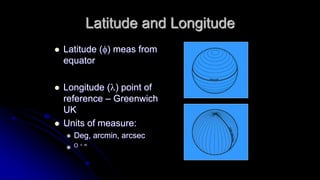
Latitude and Longitude 
 Latitude (f) meas from 
equator 
 Longitude (l) point of 
reference – Greenwich 
UK 
 Units of measure: 
 Deg, arcmin, arcsec 
 O ‘ “
Two types of Coordination Systems are used to 
describe the position of an object in the Sky 
1) Horizon System 
2) Equator System
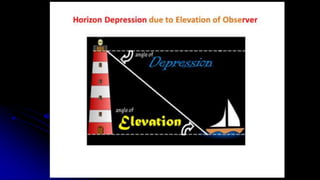
The Horizon System 
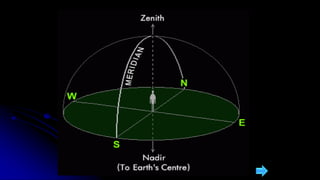
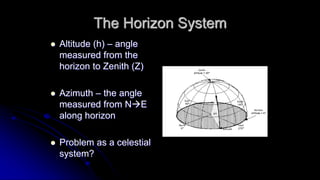
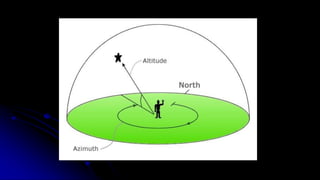
 Altitude (h) – angle 
measured from the 
horizon to Zenith (Z) 
 Azimuth – the angle 
measured from NE 
along horizon 
 Problem as a celestial 
system?
What is an Equator System? 
Based on 
Right Ascension 
& 
Declination
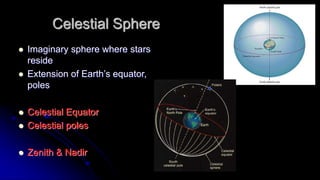
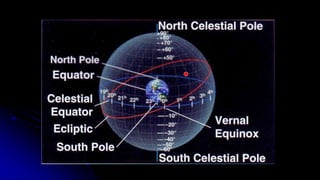
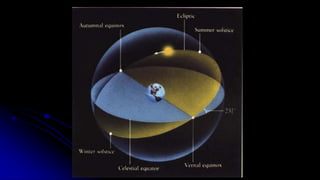
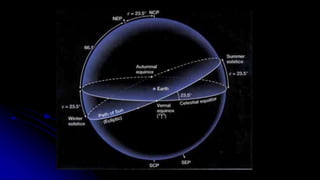
Celestial Sphere 
 Imaginary sphere where stars 
reside 
 Extension of Earth’s equator, 
poles 
 Celestial Equator 
 Celestial poles 
 Zenith & Nadir
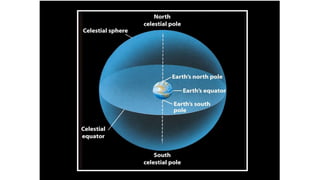
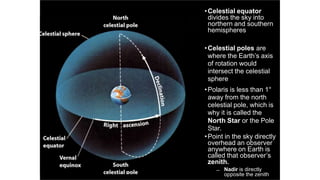
• Celestial equator 
divides the sky into 
northern and southern 
hemispheres 
•Celestial poles are 
where the Earth’s axis 
of rotation would 
intersect the celestial 
sphere 
• Polaris is less than 1° 
away from the north 
celestial pole, which is 
why it is called the 
North Star or the Pole 
Star. 
•Point in the sky directly 
overhead an observer 
anywhere on Earth is 
called that observer’s 
zenith. 
– Nadir is directly 
opposite the zenith
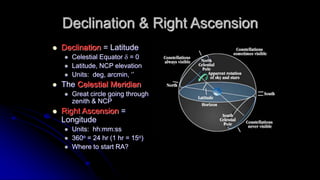
Declination & Right Ascension 
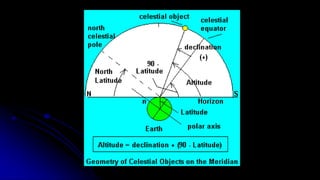
 Declination = Latitude 
 Celestial Equator d = 0 
 Latitude, NCP elevation 
 Units: deg, arcmin, ‘’ 
 The Celestial Meridian 
 Great circle going through 
zenith & NCP 
 Right Ascension = 
Longitude 
 Units: hh:mm:ss 
 360o = 24 hr (1 hr = 15o) 
 Where to start RA?
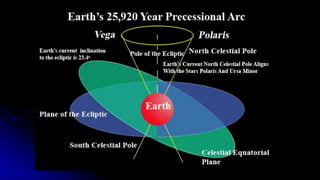
How the Equatorial Coordinates are changed over a long time? 
 Due to two main reasons 
1) Precision of Equinoxes 
2) Lunar orbit is getting far from Earth by ~3cm per year 
( Earth’s rotational angle is getting changed )
Thank you

Sky coordination systems & celestial sphere

  • 1.
    Astronomy & SpaceScience Association in University of Kelaniya Astro Night 2014 Lecture 2 Coordination Systems in the Sky & Celestial Sphere Eranga Jayashantha Hon. mentd Dip in Astronomy & Astrophysics ( IOAA – China ) National Representative at Space Generation Advisory Council ( UN ) Sri Lanka national Astrophysics Olympiad Team Trainer at Institute of Physics Sri Lanka
  • 2.
    Latitude and Longitude  Latitude (f) meas from equator  Longitude (l) point of reference – Greenwich UK  Units of measure:  Deg, arcmin, arcsec  O ‘ “
  • 5.
    Two types ofCoordination Systems are used to describe the position of an object in the Sky 1) Horizon System 2) Equator System
  • 6.
    The Horizon System  Altitude (h) – angle measured from the horizon to Zenith (Z)  Azimuth – the angle measured from NE along horizon  Problem as a celestial system?
  • 9.
    What is anEquator System? Based on Right Ascension & Declination
  • 10.
    Celestial Sphere Imaginary sphere where stars reside  Extension of Earth’s equator, poles  Celestial Equator  Celestial poles  Zenith & Nadir
  • 14.
    • Celestial equator divides the sky into northern and southern hemispheres •Celestial poles are where the Earth’s axis of rotation would intersect the celestial sphere • Polaris is less than 1° away from the north celestial pole, which is why it is called the North Star or the Pole Star. •Point in the sky directly overhead an observer anywhere on Earth is called that observer’s zenith. – Nadir is directly opposite the zenith
  • 15.
    Declination & RightAscension  Declination = Latitude  Celestial Equator d = 0  Latitude, NCP elevation  Units: deg, arcmin, ‘’  The Celestial Meridian  Great circle going through zenith & NCP  Right Ascension = Longitude  Units: hh:mm:ss  360o = 24 hr (1 hr = 15o)  Where to start RA?
  • 17.
    How the EquatorialCoordinates are changed over a long time?  Due to two main reasons 1) Precision of Equinoxes 2) Lunar orbit is getting far from Earth by ~3cm per year ( Earth’s rotational angle is getting changed )
  • 19.