Unit Introduction 
Unit 1: Principles of Anatomy and 
physiology in Sport (Sport DCF) 
…or… 
Unit 1: Anatomy for Sport & 
Exercise (Sport & Exercise Sciences)
Learning Outcomes 
1. You will be able to identify the five main 
functions of the skeleton. 
2. You will be able to describe the functions of a 
majority of specific bones in the skeleton. 
3. You will be able to write at least 1 paragraph on 
the different functions of the skeleton 
4. You will start to become familiar with the 
anatomical terms for bones!
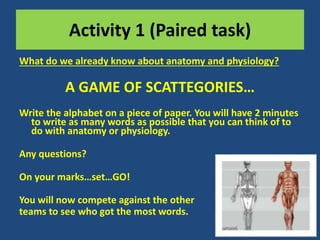
Activity 1 (Paired task) 
What do we already know about anatomy and physiology? 
A GAME OF SCATTEGORIES… 
Write the alphabet on a piece of paper. You will have 2 minutes 
to write as many words as possible that you can think of to 
do with anatomy or physiology. 
Any questions? 
On your marks…set…GO! 
You will now compete against the other 
teams to see who got the most words.
What does our skeleton do?
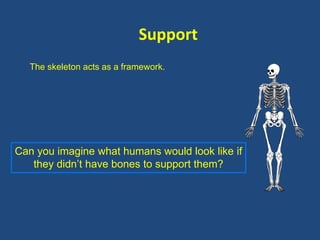
Support 
The skeleton acts as a framework. 
Can you imagine what humans would look like if 
they didn’t have bones to support them?
Movement 
Muscle 
Tendon 
Periosteum 
Bone
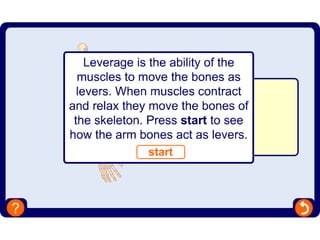
Movement
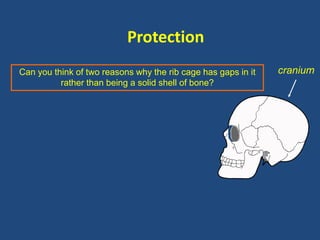
Protection 
Can you think of two reasons why the rib cage has gaps in it 
rather than being a solid shell of bone? 
cranium
Blood cell production 
Red 
marrow 
embedded 
in spongy 
bone 
Yellow 
bone 
marrow in 
the shaft
Blood Composition 
Red Blood cells 
Also referred to as Erythrocyte - these …? 
White blood cells 
Act in various ways to protect the body – they form a…? 
Platelets 
Are cell fragments – they help to…?
Storage of minerals 
Bone is a reservoir for minerals 
These stored minerals are released into the 
bloodstream – they are need for …?
Activity 2 (Paired task) 
Watch the video using the QR code or interactive 
board. 
In pairs, make notes on the following:- 
1. The functions of the skeletal system 
2. Key anatomical terms (e.g. the names of the 
bones) 
3. Key processes and anything else you think is 
important! 
PICK 3 KEY POINTS AND USE THESE IN THE 
COMPETITION 
YOU GET 1 POINT FOR STATING AN ACCURATE 
FACT OR TERM, YOU GET 2 POINTS FOR STATING A 
FACT THAT NO-OTHER TEAM HAS! 
http://bit.ly/1y3iGCB 
YouTube - introduction to 
the role of the Skeletal 
System
Clavicle 
Commonly 
called the 
collarbone, is a 
slender S-shaped 
bone 
that connects 
the upper arm 
to the trunk of 
the body.
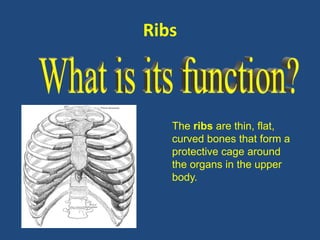
Ribs 
The ribs are thin, flat, 
curved bones that form a 
protective cage around 
the organs in the upper 
body.
Scapula 
The scapula is a large, 
triangular, flat bone on the back 
side of the rib cage commonly 
called the shoulder blade.
Pelvic Girdle 
The Pelvic Girdle is composed to two 
coxal (hip) bones. 
The coxal bones are also called 
innominate bones.
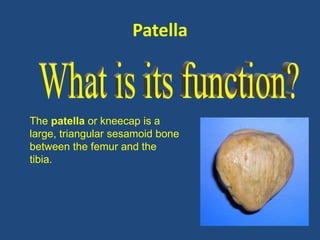
Patella 
The patella or kneecap is a 
large, triangular sesamoid bone 
between the femur and the 
tibia.
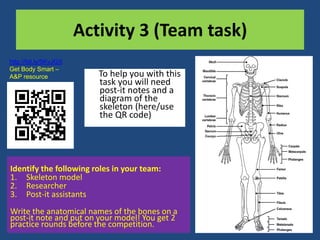
Activity 3 (Team task) 
To help you with this 
task you will need 
post-it notes and a 
diagram of the 
skeleton (here/use 
the QR code) 
http://bit.ly/5KvJGX 
Get Body Smart – 
A&P resource 
Identify the following roles in your team: 
1. Skeleton model 
2. Researcher 
3. Post-it assistants 
Write the anatomical names of the bones on a 
post-it note and put on your model! You get 2 
practice rounds before the competition.
Activity 4 (Individual task) 
On your own 
Without using your notes, write a paragraph on at 
least two of the functions of the skeleton. 
Remember to include: 
• A definition of the function 
• A description of what that definition means in 
your own words 
• Relate the function to an example of a bone 
• Explain the use of this function in a sport
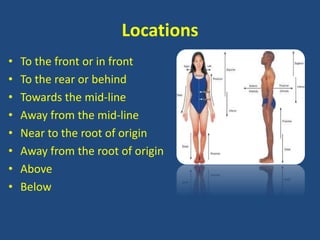
Terms for locations 
(Worksheet/additional task) 
Anterior 
Superior 
Proximal Distal 
Medial 
Lateral 
Posterior 
Inferior
Locations 
• To the front or in front 
• To the rear or behind 
• Towards the mid-line 
• Away from the mid-line 
• Near to the root of origin 
• Away from the root of origin 
• Above 
• Below
Additional Reading/Watching… 
These resources will help with your assignment – you should use them to 
reinforce what you have learnt, help develop your knowledge or complete 
further research. Hopefully these actions will help you work towards the 
higher Merit/Distinction grades! 
http://bit.ly/1y3iGCB 
YouTube - introduction to 
the role of the Skeletal 
System 
http://bit.ly/5KvJGX 
Get Body Smart – 
A&P resource
Further resources 
Textbooks 
• Adams M et al – BTEC Level 3 National Sport (Development, Coaching and Fitness) OR Sport & Exercise 
Sciences Student Book (Pearson, 2010) 
• Howley E T and Franks B D – Health Fitness Instructor’s Handbook (Human Kinetics Europe, 2003) 
• Palastanga N – Anatomy and Human Movement (Butterworth-Heinemann, 2006) 
• Sharkey B J and Gaskill S E – Fitness and Health (Human Kinetics, 2006) 
• Stafford-Brown J et al – BTEC National Sport and Exercise Science (Hodder Arnold, 2007) 
• Tortora G J and Derrickson B H – Principles of Anatomy and Physiology (John Wiley and Sons, 2008) 
Journals 
• American College of Sport Medicine’s Health and Fitness Journal / British Journal of Sports Medicine / 
Exercise and Sport Sciences Reviews / International Journal of Sports Science and Coaching / Medicine and 
Science in Sports and Exercise / Research Quarterly for Exercise and Sport 
Websites 
• American College of Sports Medicine www.acsm.org 
• British Association of Sport and Exercise Sciences www.bases.org.uk 
• Human Kinetics www.humankinetics.com 
• Sport Science www.sportsci.org 
• Top End Sports www.topendsports.com

Skeletal system introduction

  • 1.
    Unit Introduction Unit1: Principles of Anatomy and physiology in Sport (Sport DCF) …or… Unit 1: Anatomy for Sport & Exercise (Sport & Exercise Sciences)
  • 2.
    Learning Outcomes 1.You will be able to identify the five main functions of the skeleton. 2. You will be able to describe the functions of a majority of specific bones in the skeleton. 3. You will be able to write at least 1 paragraph on the different functions of the skeleton 4. You will start to become familiar with the anatomical terms for bones!
  • 3.
    Activity 1 (Pairedtask) What do we already know about anatomy and physiology? A GAME OF SCATTEGORIES… Write the alphabet on a piece of paper. You will have 2 minutes to write as many words as possible that you can think of to do with anatomy or physiology. Any questions? On your marks…set…GO! You will now compete against the other teams to see who got the most words.
  • 4.
    What does ourskeleton do?
  • 5.
    Support The skeletonacts as a framework. Can you imagine what humans would look like if they didn’t have bones to support them?
  • 6.
    Movement Muscle Tendon Periosteum Bone
  • 7.
  • 8.
    Protection Can youthink of two reasons why the rib cage has gaps in it rather than being a solid shell of bone? cranium
  • 9.
    Blood cell production Red marrow embedded in spongy bone Yellow bone marrow in the shaft
  • 10.
    Blood Composition RedBlood cells Also referred to as Erythrocyte - these …? White blood cells Act in various ways to protect the body – they form a…? Platelets Are cell fragments – they help to…?
  • 11.
    Storage of minerals Bone is a reservoir for minerals These stored minerals are released into the bloodstream – they are need for …?
  • 12.
    Activity 2 (Pairedtask) Watch the video using the QR code or interactive board. In pairs, make notes on the following:- 1. The functions of the skeletal system 2. Key anatomical terms (e.g. the names of the bones) 3. Key processes and anything else you think is important! PICK 3 KEY POINTS AND USE THESE IN THE COMPETITION YOU GET 1 POINT FOR STATING AN ACCURATE FACT OR TERM, YOU GET 2 POINTS FOR STATING A FACT THAT NO-OTHER TEAM HAS! http://bit.ly/1y3iGCB YouTube - introduction to the role of the Skeletal System
  • 13.
    Clavicle Commonly calledthe collarbone, is a slender S-shaped bone that connects the upper arm to the trunk of the body.
  • 14.
    Ribs The ribsare thin, flat, curved bones that form a protective cage around the organs in the upper body.
  • 15.
    Scapula The scapulais a large, triangular, flat bone on the back side of the rib cage commonly called the shoulder blade.
  • 16.
    Pelvic Girdle ThePelvic Girdle is composed to two coxal (hip) bones. The coxal bones are also called innominate bones.
  • 17.
    Patella The patellaor kneecap is a large, triangular sesamoid bone between the femur and the tibia.
  • 18.
    Activity 3 (Teamtask) To help you with this task you will need post-it notes and a diagram of the skeleton (here/use the QR code) http://bit.ly/5KvJGX Get Body Smart – A&P resource Identify the following roles in your team: 1. Skeleton model 2. Researcher 3. Post-it assistants Write the anatomical names of the bones on a post-it note and put on your model! You get 2 practice rounds before the competition.
  • 19.
    Activity 4 (Individualtask) On your own Without using your notes, write a paragraph on at least two of the functions of the skeleton. Remember to include: • A definition of the function • A description of what that definition means in your own words • Relate the function to an example of a bone • Explain the use of this function in a sport
  • 20.
    Terms for locations (Worksheet/additional task) Anterior Superior Proximal Distal Medial Lateral Posterior Inferior
  • 21.
    Locations • Tothe front or in front • To the rear or behind • Towards the mid-line • Away from the mid-line • Near to the root of origin • Away from the root of origin • Above • Below
  • 22.
    Additional Reading/Watching… Theseresources will help with your assignment – you should use them to reinforce what you have learnt, help develop your knowledge or complete further research. Hopefully these actions will help you work towards the higher Merit/Distinction grades! http://bit.ly/1y3iGCB YouTube - introduction to the role of the Skeletal System http://bit.ly/5KvJGX Get Body Smart – A&P resource
  • 23.
    Further resources Textbooks • Adams M et al – BTEC Level 3 National Sport (Development, Coaching and Fitness) OR Sport & Exercise Sciences Student Book (Pearson, 2010) • Howley E T and Franks B D – Health Fitness Instructor’s Handbook (Human Kinetics Europe, 2003) • Palastanga N – Anatomy and Human Movement (Butterworth-Heinemann, 2006) • Sharkey B J and Gaskill S E – Fitness and Health (Human Kinetics, 2006) • Stafford-Brown J et al – BTEC National Sport and Exercise Science (Hodder Arnold, 2007) • Tortora G J and Derrickson B H – Principles of Anatomy and Physiology (John Wiley and Sons, 2008) Journals • American College of Sport Medicine’s Health and Fitness Journal / British Journal of Sports Medicine / Exercise and Sport Sciences Reviews / International Journal of Sports Science and Coaching / Medicine and Science in Sports and Exercise / Research Quarterly for Exercise and Sport Websites • American College of Sports Medicine www.acsm.org • British Association of Sport and Exercise Sciences www.bases.org.uk • Human Kinetics www.humankinetics.com • Sport Science www.sportsci.org • Top End Sports www.topendsports.com