The Human Skeleton
GM Siddiqui
Clinical Instructor
The Kidney Center
Post Graduate Training Institute
Main Menu:
 The different functions of the human skeleton
 Protection
 Structure and shape
 Blood cell production
 Movement
 Mineral Storage
A quiz testing your new knowledge…
In this lesson you will find…
Overview: Human Skeleton
 There are 206 bones in the human skeleton.
 Functions of the skeleton:
 Gives structure and shape to the body
 like the framework of a house.
 Provides protection for the organs
 such as the heart and brain.
 Blood cells are produced in the bones
 in the marrow new cells are produced and damaged ones are repaired.
 Movement
 muscles pull on the bones to move body parts.
 Mineral Storage
 important minerals such as calcium are stored in the bones.
Protection
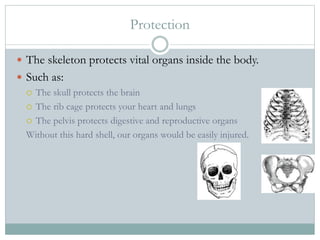
 The skeleton protects vital organs inside the body.
 Such as:
 The skull protects the brain
 The rib cage protects your heart and lungs
 The pelvis protects digestive and reproductive organs
Without this hard shell, our organs would be easily injured.
Structure and Shape
 The skeleton provides the body with structure and shape;
much like the framework of a house.
 The other parts of our body like our skin and muscles form around the
bones; much like the walls around the frame of a house.
Without these bones to offer structure and shape, our bodies would be
blobs like jelly fish.
Blood Cell Production
 The marrow inside of bone is where most of the
blood cells are made. Red blood cells are produced
here; they help carry oxygen throughout the body.
Platelets are also found here; they help with wound
healing.
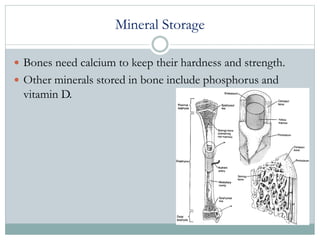
Mineral Storage
 Bones need calcium to keep their hardness and strength.
 Other minerals stored in bone include phosphorus and
vitamin D.
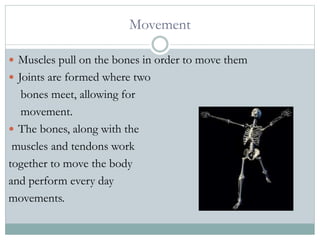
Movement
 Muscles pull on the bones in order to move them
 Joints are formed where two
bones meet, allowing for
movement.
 The bones, along with the
muscles and tendons work
together to move the body
and perform every day
movements.

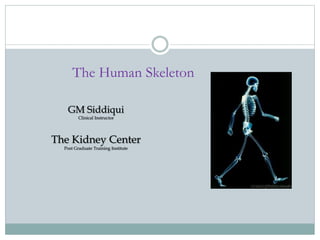
Human skeleton.

  • 2.
    The Human Skeleton GMSiddiqui Clinical Instructor The Kidney Center Post Graduate Training Institute
  • 3.
    Main Menu:  Thedifferent functions of the human skeleton  Protection  Structure and shape  Blood cell production  Movement  Mineral Storage A quiz testing your new knowledge… In this lesson you will find…
  • 4.
    Overview: Human Skeleton There are 206 bones in the human skeleton.  Functions of the skeleton:  Gives structure and shape to the body  like the framework of a house.  Provides protection for the organs  such as the heart and brain.  Blood cells are produced in the bones  in the marrow new cells are produced and damaged ones are repaired.  Movement  muscles pull on the bones to move body parts.  Mineral Storage  important minerals such as calcium are stored in the bones.
  • 5.
    Protection  The skeletonprotects vital organs inside the body.  Such as:  The skull protects the brain  The rib cage protects your heart and lungs  The pelvis protects digestive and reproductive organs Without this hard shell, our organs would be easily injured.
  • 6.
    Structure and Shape The skeleton provides the body with structure and shape; much like the framework of a house.  The other parts of our body like our skin and muscles form around the bones; much like the walls around the frame of a house. Without these bones to offer structure and shape, our bodies would be blobs like jelly fish.
  • 7.
    Blood Cell Production The marrow inside of bone is where most of the blood cells are made. Red blood cells are produced here; they help carry oxygen throughout the body. Platelets are also found here; they help with wound healing.
  • 8.
    Mineral Storage  Bonesneed calcium to keep their hardness and strength.  Other minerals stored in bone include phosphorus and vitamin D.
  • 9.
    Movement  Muscles pullon the bones in order to move them  Joints are formed where two bones meet, allowing for movement.  The bones, along with the muscles and tendons work together to move the body and perform every day movements.