Sepsis and septic
shock
By - Money Kalash
Pharm.D
Definition
In past ,sepsis was considered as Severe, systemic
infection due to bacteria getting into the bloodstream from
an infectiousfocusin thebody .
But In 1992 , terminology for sepsis was standardized
by ACCP& SCCM.
It became clear that non-infectious diseases also can give
rise to the same clinical syndrome that is caused by
bacteria(burns, pancreatitisetc.)
According to new terms patients can be categorized as
having bacteraemia, SIRS, sepsis, severesepsis, MODS.
By definition -
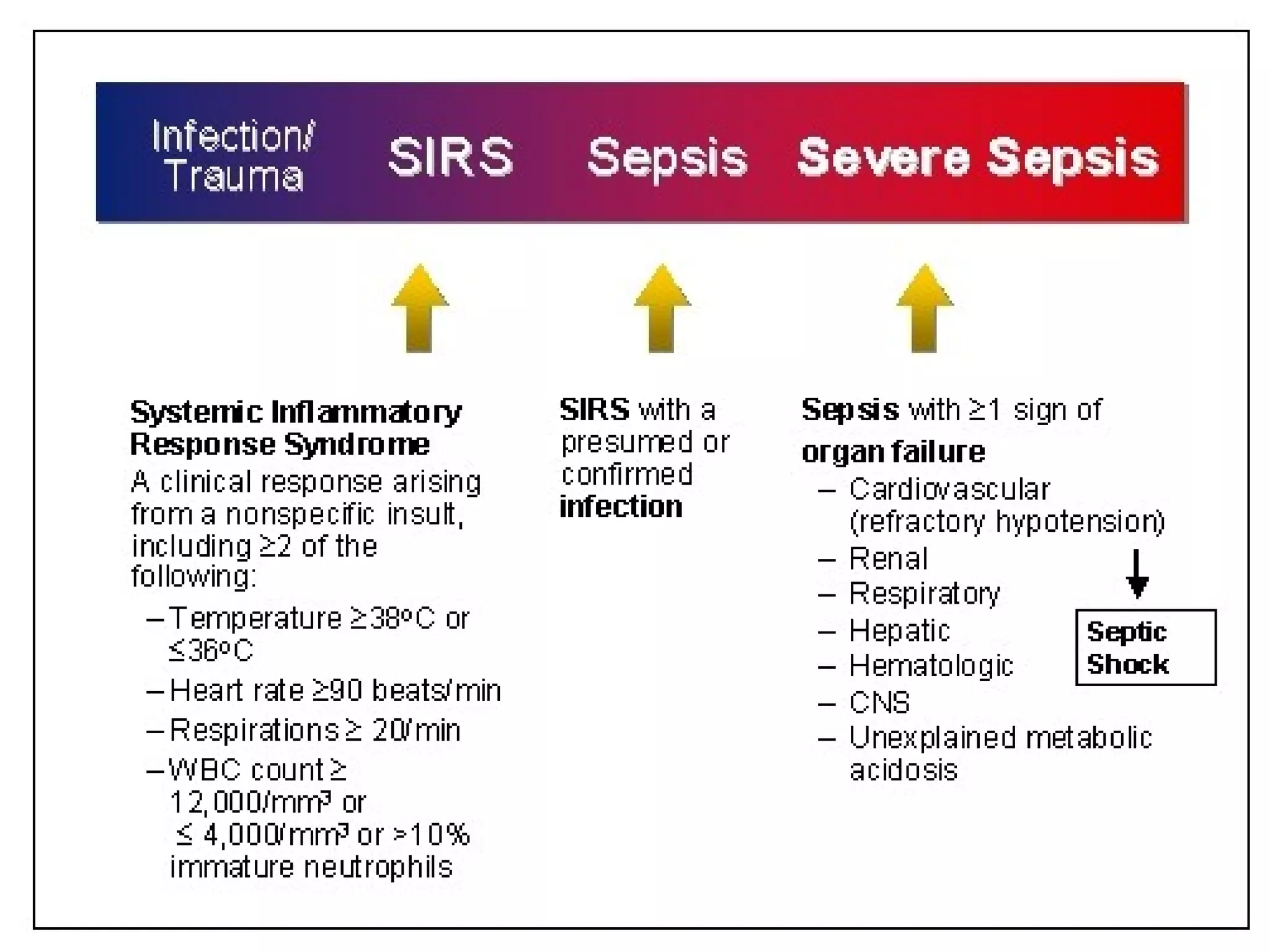
SIRS – Systemic Inflammatory Response
Syndrome
By definition: at least 2 criteria
Temperatureabove38˚C or below 360
C
Heart rateabove90/min.
Respiratory rateabove20/min
Pa(CO2) < 32 torr
Leukocyte count above 12000 or below 4000 or
morethan 10 % immatureforms
SIRS – Non-infectious systemic
inflammatory responsesyndrome
Sepsis – Infectious systemic inflammatory
responsesyndrome
Infection – Invasion of microbes that
provokes a controlled, local
inflammatory response
Severe Sepsis – sepsis associated with organ
dysfunction , hypoperfusion or hypotension .
Septic shock – Sepsis with hypotension ,
despite fluid resuscitation , along with the
presenceof perfusion abnormalities.
Multiple – organ dysfunction syndrome
(MODS) - presence of altered organ function
to maintain homeostasis.
Compensatory anti-inflammatory response
syndrome (CARS) – Compensatory
physiologic response to systemic
inflammation.
Etiology
Causativeorganism vary and dependsupon siteof infection.
Bacteria , viruses , fungi , protozoa , spirochetes and
ricketssiae can cause sepsis or septic shock. However , bacteria
themost common causeof sepsis.
Community acquired infections
Gram- negative bacteria – E.co li ,Klebsiella pnuemo niae
,Pseudo monas aerugino sa , N. meningitidis, L. pneumophilaetc.
Gram- positive bacteria – Staphylo co ccus aureus , S.
pyogenes, S. pneumoniae, S. aureus Entero co cci ,Strepto cocci
etc.
Etiology
Nosocomial infections
Gram-positive bacteria - S. aureus (MRSA),
S. epidermidis (MRSE), Entero co ccus spp
Gram-negative bacteria - E. co li, K. pneumo niae,
P. aerugino sa, A. baumannii
Fungi - Candida spp, Aspergillus spp
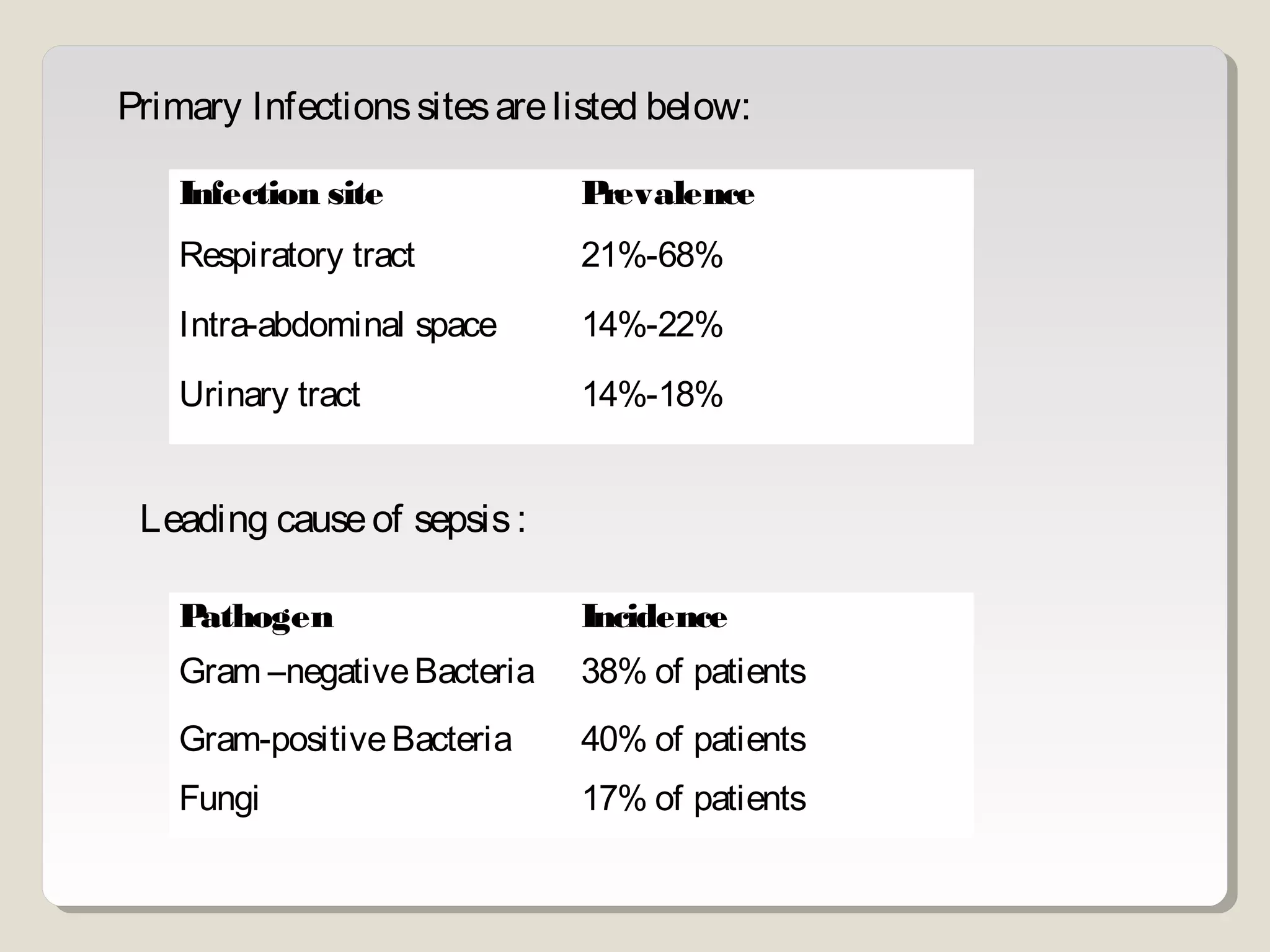
Infection site Prevalence
Respiratory tract 21%-68%
Intra-abdominal space 14%-22%
Urinary tract 14%-18%
Primary Infectionssitesarelisted below:
Pathogen Incidence
Gram –negativeBacteria 38% of patients
Gram-positiveBacteria 40% of patients
Fungi 17% of patients
Leading causeof sepsis:
Sepsis is an extremely complex
response syndrome evoked by
microbial agents.
Endothelium damage, micro vascular
dysfunction, impaired tissue oxygen uptake
with consecutiveorgan damage.
The sepsis is an auto destructive process
that precipitates the dysfunction of multiple
organs: MODS (multiple organ dysfunction
syndrome)
Mediators of sepsis
Cytokines (morethan 150)
Pro-inflammatory cytokines
TNF – Tumour necrosisfactor
Interleukins1, 2, 6, 12
PAF – Thrombocyteactivating factor
Anti-inflammatory cytokines
Interleukin 4, 10, 11, 13
The sepsis syndrome is the response of the human
organism to microbe invasion: the outcome depends
on theinter-relationship of pro- and anti-inflammatory
cytokines.
If the infectious source can be controlled and the
function of pro- and anti-inflammatory cytokines is
balanced, thepatient survives.
If the function of pro-inflammatory cytokines – for
any reason-outweighs the anti-inflammatory system,
the developing organ damage becomes irreversible
and it may lead to death.
Microbial factors in sepsis
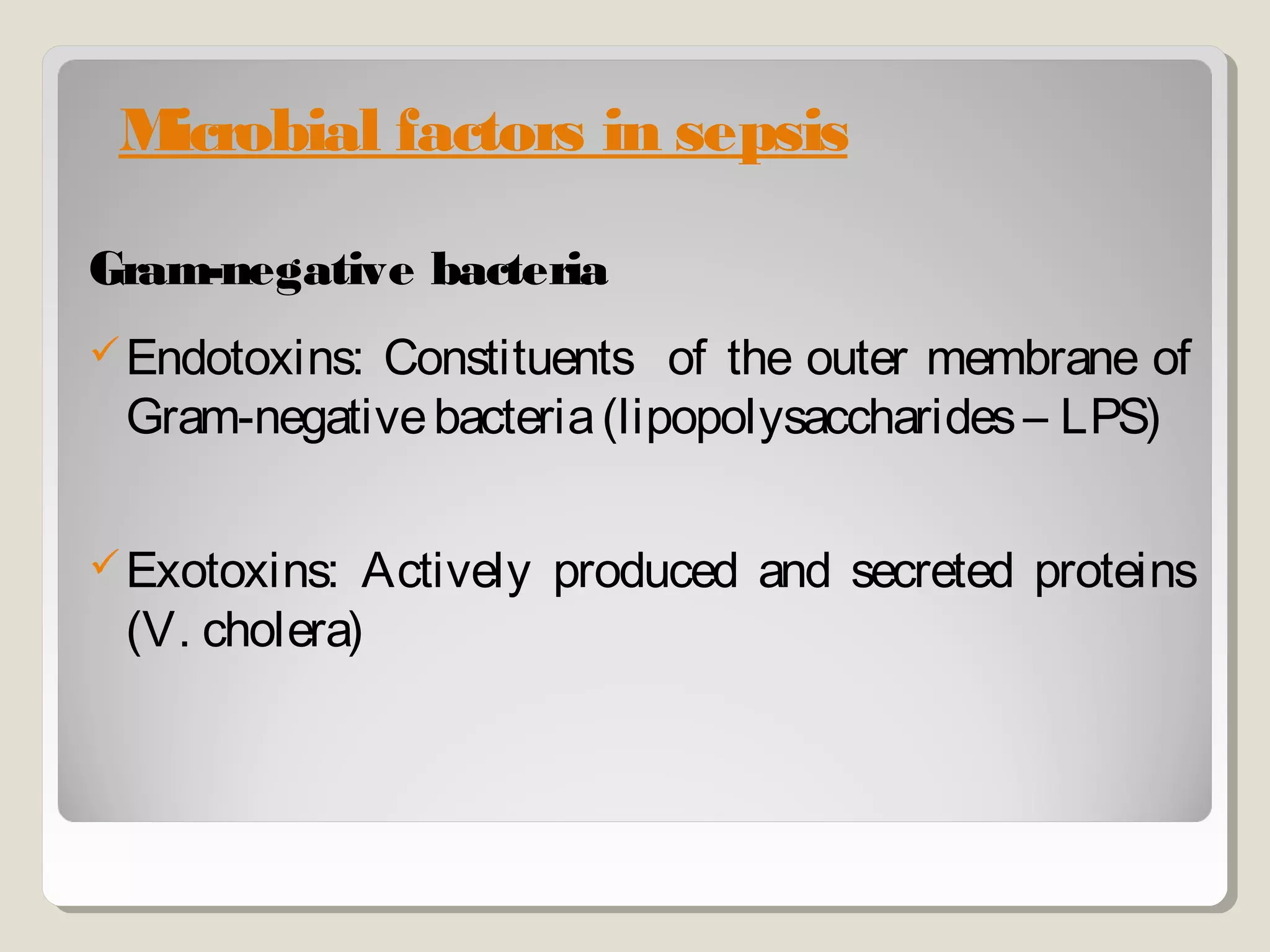
Gram-negative bacteria
Endotoxins: Constituents of the outer membrane of
Gram-negativebacteria(lipopolysaccharides– LPS)
Exotoxins: Actively produced and secreted proteins
(V. cholera)
Microbial factors in sepsisMicrobial factors in sepsis
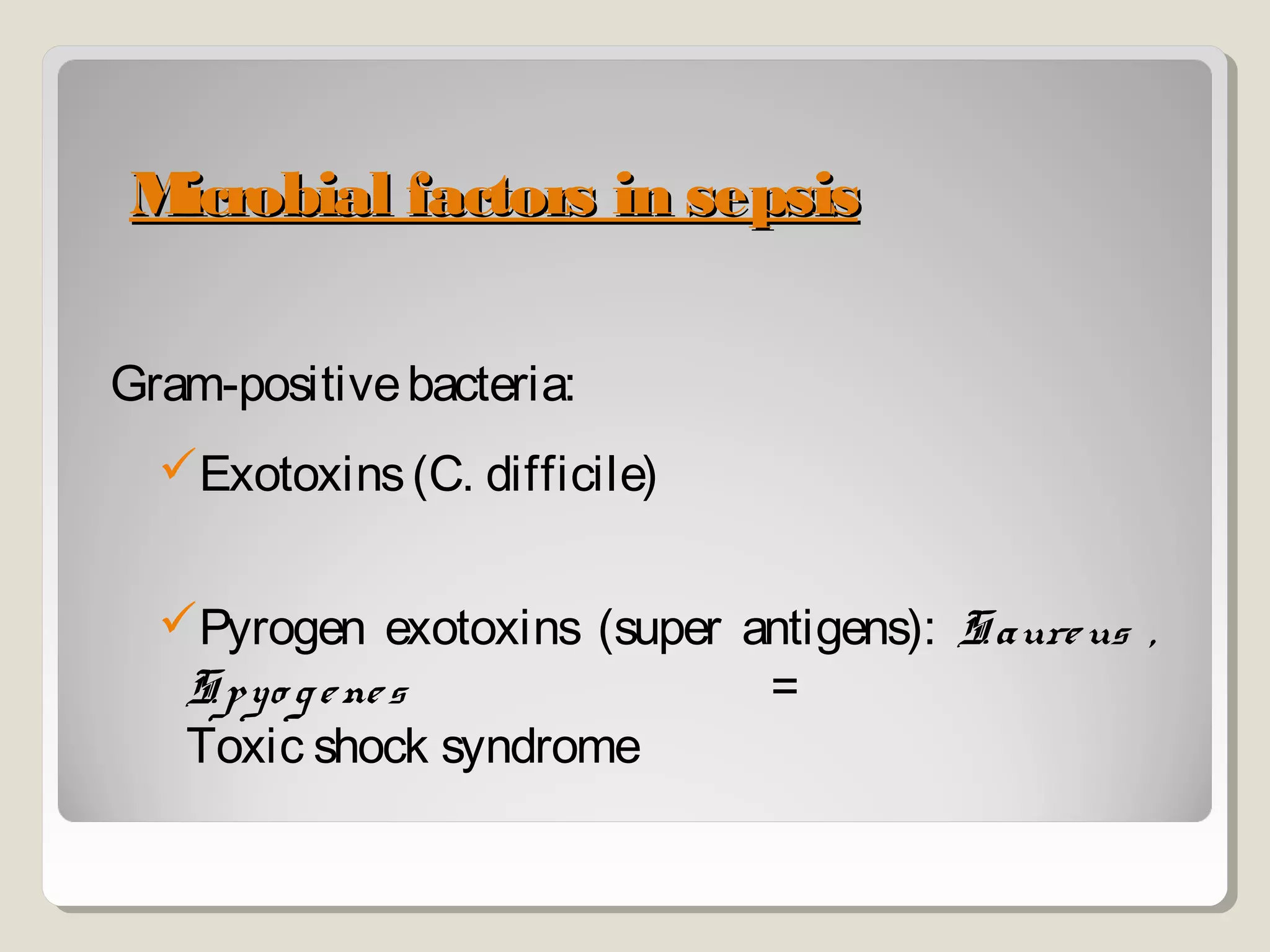
Gram-positivebacteria:
Exotoxins(C. difficile)
Pyrogen exotoxins (super antigens): S.aureus ,
S.pyo genes =
Toxic shock syndrome
Cascadeof sepsis
Complications of sepsisComplications of sepsis
Disseminated intravascular coagulation (DIC)
Pulmonary dysfunction
Acuterespiratory distresssyndrome(ARDS)
Renal failure
Clinical presentationClinical presentation
Fever
Chills
Change in mental status
Fatigue
Sometimes hypothermia instead of fever
Hypotension
Oliguria
Gastrointestinal hemorrhage
DIAGNOSIS OF
SEPSIS
LABORATORY TESTSLABORATORY TESTS
COMPLETE BLOOD PICTURE
Leukopeniaor Neutrophil leukocytosis
Toxic granulation of neutrophils
Increased band forms
Low platelet count – DIC
COAGULATION SCREEN – For Evidenceof DIC
PT – Prolonged
Fibrinogen – Low levels
Markersof fibrinolysis(D-Dimer) - Elevated
LABORATORY TESTSLABORATORY TESTS
Electrolytesand Renal function tests
Liver function tests
Plasmaalbumin – acutefall
C-ReactiveProtein
Procalcitonin levels
Blood glucose
Plasmalactate
Arterial blood gases
Endotoxin or Cytokinelevels(TNF-alpha, IL-6)
LABORATORY TESTSLABORATORY TESTS
MICROBIOLOGY TESTS
Blood Culture
Sputum Culture
UrineCulture
Treatment goalsTreatment goals
The primary goals for treatment of sepsis are as
follows:
Timely diagnosisand identification of thepathogen.
Rapid elimination of thesourceof infection.
Early initiation of aggressiveantimicrobial therapy.
Interruption of the pathogenic sequence leading to
septic shock.
Avoidanceof organ failure.
Principles of antimicrobial therapy in sepsisPrinciples of antimicrobial therapy in sepsis
For the optimum treatment of sepsis one has to have
some imagination about the focus and the type of
pathogen according to thesiteof infection.
Samples have to be taken for culture before the
administration of antibiotics.
Bactericidal antibioticsshould bechosen.
The probability of effectiveness of antimicrobial
therapy should be at least 90-95 % in severe
infections.
Early antimicrobial therapy is helpful in management
of sepsis.
Vallés et al. Chest 2003 123:1615–1624
Factors to be considered forthe choiceFactors to be considered forthe choice
of antibioticsof antibiotics
1. Community versushospital-acquired infections
 The pathogens are different in term of spectrum and
antibiotic sensitivity.
 The pathogens of the nosocomial infections are more
resistant or even multiply resistant.
2. Theanatomical siteof thefocusof sepsis
 The anatomical site determines the types of possible
pathogens, especially in community-acquired
infections
Factors to be considered forthe choiceFactors to be considered forthe choice
of antibioticsof antibiotics
3. Thepresenceof
underlying diseases
 Diabetesmellitus
 Alcoholism
 Splenectomy
 Neutropenia
 Myeloma
 Immunosuppression
4. Diagnostic or surgical
intervention in the
recent past
 IV lines
 Indwelling catheter
 Implantations
 Operation
Infection
(Site orType)
Community-Acquired Hospital-Acquired
Urinary tract Ciprofloxacin or
levofloxacin
Ciprofloxacin,
levofloxacin or
ceftazidime, ceftriaxone
±gentamicin
Respiratory tract Newer fluoroquinolonea
or ceftriaxone +
clarithromycin/
azithromycin
Piperacillin, ceftazidime,
or cefepime
+ gentamicin or
ciprofloxacin
Intraabdominal β-Lactamase inhibitor
combob
or ciprofloxacin +
metronidazole
Piperacillin/tazobactam or
carbapenem
Skin/soft tissue Vancomycin or linezolid
or daptomycin
β−Lactamase inhibitor
combob or clindamycin
plus ciprofloxacin or
carbapenem
Catheter related Vancomycin + gentamicin
Unknown Piperacillin or
ceftazidime/cefepime or
imipenem/meropenem
± vancomycin
TreatmentTreatment
Antimicrobial therapy
Inotrope and vasoactive drug support (eg:-
dopamine , dobutamine , nor-epinephrine ,
epinephrine)
Hemodynamic support (increasecardiac output)
Adjunctive therapy (glucocorticoids)
EVIDENCEBASEDTREATMENTEVIDENCEBASEDTREATMENT
RECOMMENDATION FORSEPSIS ANDSEPTICRECOMMENDATION FORSEPSIS ANDSEPTIC
SHOCKSHOCK
Antibiotic therapy
  Use a broad initial empirical antibiotic regimen against all
likely pathogens
  There is no evidence of higher efficacy with combination
therapy
Fluid therapy
  Immediate initial resuscitation of a patient in severe sepsis or
sepsis-induced tissue hypoperfusion should be instituted to
achieve central venous pressure 8–12 mm Hg, mean arterial
pressure ≥65 mm Hg, urine output ≥0.5 mL/kg/h, central
venousor mixed venousoxygen saturation ≥70%
Vasopressors
 The advantages of norepinephrine and dopamine over epinephrine
(potential tachycardia, possibly disadvantageous effects on splanchnic
circulation) and phenylephrine (decrease in stroke volume) are not
supported by theliterature.
Inotropic therapy
 Dobutamine as the first-choice inotrope to increase cardiac output
combined with norepinephrine in the presence of low blood pressure is
not supported in theliterature.
Glucose control
 
There is minimal support for maintaining blood glucose <150 mg/dL
to improvesurvival
Steroids
 The value of intravenous hydrocortisone 200–300 mg/day for 7 days
in threeor four divided dosesin patientswith septic shock isnot clear.
Drotrecogin
 
Drotrecogin is effective in patients at high risk of death (Acute
Physiology and Chronic Health Evaluation II >25, sepsis induced
multiple organ failure, septic shock, or sepsis induced acute
respiratory distresssyndrome)
Deep vein thrombosis prophylaxis
 
Either low-dose heparin or low-molecular weight heparin are
effectivein preventing deep vein thrombosis.
Stress ulcerprophylaxis
H2 receptor inhibitorsaremoreefficaciousthan sucralfate.
MRSA
Methicillin-resistant Staphylococcusaureus.
Methicillin resistance implies resistance to all
penicillins, cephalosporins, carbapenems and beta
lactam/betalactamaseinhibitor combinations.
MRSA
Hospital associated MRSA isolates often are multiply
resistant to other commonly used antimicrobial
agents, including erythromycin, clindamycin and
tetracycline.
Community associated MRSA isolates are often
resistant only to betalactam agentsand erythromycin
TREATMENTOPTIONSTREATMENTOPTIONS
Carbapenems
Meropenem, Imipenem+Cilastatin, Ertapenem
Highly resistant to ESBLs – due to the trans-6 hydroxy
ethyl group.
They havesignificant PAE even against Pseudomonas
Resistance mechanisms
Production of Metallo carbapenamases (Class B beta-
lactamases) by some-Acinetobacter and Pseudomonas
strains
Efflux pumps
Changesin OMPs
Aztreonam is the drug of choice in treating
infections caused by carbapenamase producing
bacteria.
THANK
YOU

Sepsis and septic shock

  • 1.
    Sepsis and septic shock By- Money Kalash Pharm.D
  • 2.
    Definition In past ,sepsiswas considered as Severe, systemic infection due to bacteria getting into the bloodstream from an infectiousfocusin thebody . But In 1992 , terminology for sepsis was standardized by ACCP& SCCM. It became clear that non-infectious diseases also can give rise to the same clinical syndrome that is caused by bacteria(burns, pancreatitisetc.) According to new terms patients can be categorized as having bacteraemia, SIRS, sepsis, severesepsis, MODS.
  • 3.
    By definition - SIRS– Systemic Inflammatory Response Syndrome By definition: at least 2 criteria Temperatureabove38˚C or below 360 C Heart rateabove90/min. Respiratory rateabove20/min Pa(CO2) < 32 torr Leukocyte count above 12000 or below 4000 or morethan 10 % immatureforms
  • 4.
    SIRS – Non-infectioussystemic inflammatory responsesyndrome Sepsis – Infectious systemic inflammatory responsesyndrome Infection – Invasion of microbes that provokes a controlled, local inflammatory response Severe Sepsis – sepsis associated with organ dysfunction , hypoperfusion or hypotension .
  • 5.
    Septic shock –Sepsis with hypotension , despite fluid resuscitation , along with the presenceof perfusion abnormalities. Multiple – organ dysfunction syndrome (MODS) - presence of altered organ function to maintain homeostasis. Compensatory anti-inflammatory response syndrome (CARS) – Compensatory physiologic response to systemic inflammation.
  • 8.
    Etiology Causativeorganism vary anddependsupon siteof infection. Bacteria , viruses , fungi , protozoa , spirochetes and ricketssiae can cause sepsis or septic shock. However , bacteria themost common causeof sepsis. Community acquired infections Gram- negative bacteria – E.co li ,Klebsiella pnuemo niae ,Pseudo monas aerugino sa , N. meningitidis, L. pneumophilaetc. Gram- positive bacteria – Staphylo co ccus aureus , S. pyogenes, S. pneumoniae, S. aureus Entero co cci ,Strepto cocci etc.
  • 9.
    Etiology Nosocomial infections Gram-positive bacteria- S. aureus (MRSA), S. epidermidis (MRSE), Entero co ccus spp Gram-negative bacteria - E. co li, K. pneumo niae, P. aerugino sa, A. baumannii Fungi - Candida spp, Aspergillus spp
  • 10.
    Infection site Prevalence Respiratorytract 21%-68% Intra-abdominal space 14%-22% Urinary tract 14%-18% Primary Infectionssitesarelisted below: Pathogen Incidence Gram –negativeBacteria 38% of patients Gram-positiveBacteria 40% of patients Fungi 17% of patients Leading causeof sepsis:
  • 11.
    Sepsis is anextremely complex response syndrome evoked by microbial agents. Endothelium damage, micro vascular dysfunction, impaired tissue oxygen uptake with consecutiveorgan damage. The sepsis is an auto destructive process that precipitates the dysfunction of multiple organs: MODS (multiple organ dysfunction syndrome)
  • 12.
    Mediators of sepsis Cytokines(morethan 150) Pro-inflammatory cytokines TNF – Tumour necrosisfactor Interleukins1, 2, 6, 12 PAF – Thrombocyteactivating factor Anti-inflammatory cytokines Interleukin 4, 10, 11, 13
  • 13.
    The sepsis syndromeis the response of the human organism to microbe invasion: the outcome depends on theinter-relationship of pro- and anti-inflammatory cytokines. If the infectious source can be controlled and the function of pro- and anti-inflammatory cytokines is balanced, thepatient survives. If the function of pro-inflammatory cytokines – for any reason-outweighs the anti-inflammatory system, the developing organ damage becomes irreversible and it may lead to death.
  • 14.
    Microbial factors insepsis Gram-negative bacteria Endotoxins: Constituents of the outer membrane of Gram-negativebacteria(lipopolysaccharides– LPS) Exotoxins: Actively produced and secreted proteins (V. cholera)
  • 15.
    Microbial factors insepsisMicrobial factors in sepsis Gram-positivebacteria: Exotoxins(C. difficile) Pyrogen exotoxins (super antigens): S.aureus , S.pyo genes = Toxic shock syndrome
  • 16.
  • 17.
    Complications of sepsisComplicationsof sepsis Disseminated intravascular coagulation (DIC) Pulmonary dysfunction Acuterespiratory distresssyndrome(ARDS) Renal failure
  • 18.
    Clinical presentationClinical presentation Fever Chills Changein mental status Fatigue Sometimes hypothermia instead of fever Hypotension Oliguria Gastrointestinal hemorrhage
  • 19.
  • 20.
    LABORATORY TESTSLABORATORY TESTS COMPLETEBLOOD PICTURE Leukopeniaor Neutrophil leukocytosis Toxic granulation of neutrophils Increased band forms Low platelet count – DIC COAGULATION SCREEN – For Evidenceof DIC PT – Prolonged Fibrinogen – Low levels Markersof fibrinolysis(D-Dimer) - Elevated
  • 21.
    LABORATORY TESTSLABORATORY TESTS ElectrolytesandRenal function tests Liver function tests Plasmaalbumin – acutefall C-ReactiveProtein Procalcitonin levels Blood glucose Plasmalactate Arterial blood gases Endotoxin or Cytokinelevels(TNF-alpha, IL-6)
  • 22.
    LABORATORY TESTSLABORATORY TESTS MICROBIOLOGYTESTS Blood Culture Sputum Culture UrineCulture
  • 23.
    Treatment goalsTreatment goals Theprimary goals for treatment of sepsis are as follows: Timely diagnosisand identification of thepathogen. Rapid elimination of thesourceof infection. Early initiation of aggressiveantimicrobial therapy. Interruption of the pathogenic sequence leading to septic shock. Avoidanceof organ failure.
  • 24.
    Principles of antimicrobialtherapy in sepsisPrinciples of antimicrobial therapy in sepsis For the optimum treatment of sepsis one has to have some imagination about the focus and the type of pathogen according to thesiteof infection. Samples have to be taken for culture before the administration of antibiotics. Bactericidal antibioticsshould bechosen. The probability of effectiveness of antimicrobial therapy should be at least 90-95 % in severe infections. Early antimicrobial therapy is helpful in management of sepsis.
  • 25.
    Vallés et al.Chest 2003 123:1615–1624
  • 26.
    Factors to beconsidered forthe choiceFactors to be considered forthe choice of antibioticsof antibiotics 1. Community versushospital-acquired infections  The pathogens are different in term of spectrum and antibiotic sensitivity.  The pathogens of the nosocomial infections are more resistant or even multiply resistant. 2. Theanatomical siteof thefocusof sepsis  The anatomical site determines the types of possible pathogens, especially in community-acquired infections
  • 27.
    Factors to beconsidered forthe choiceFactors to be considered forthe choice of antibioticsof antibiotics 3. Thepresenceof underlying diseases  Diabetesmellitus  Alcoholism  Splenectomy  Neutropenia  Myeloma  Immunosuppression 4. Diagnostic or surgical intervention in the recent past  IV lines  Indwelling catheter  Implantations  Operation
  • 28.
    Infection (Site orType) Community-Acquired Hospital-Acquired Urinarytract Ciprofloxacin or levofloxacin Ciprofloxacin, levofloxacin or ceftazidime, ceftriaxone ±gentamicin Respiratory tract Newer fluoroquinolonea or ceftriaxone + clarithromycin/ azithromycin Piperacillin, ceftazidime, or cefepime + gentamicin or ciprofloxacin Intraabdominal β-Lactamase inhibitor combob or ciprofloxacin + metronidazole Piperacillin/tazobactam or carbapenem Skin/soft tissue Vancomycin or linezolid or daptomycin β−Lactamase inhibitor combob or clindamycin plus ciprofloxacin or carbapenem Catheter related Vancomycin + gentamicin Unknown Piperacillin or ceftazidime/cefepime or imipenem/meropenem ± vancomycin
  • 29.
    TreatmentTreatment Antimicrobial therapy Inotrope andvasoactive drug support (eg:- dopamine , dobutamine , nor-epinephrine , epinephrine) Hemodynamic support (increasecardiac output) Adjunctive therapy (glucocorticoids)
  • 30.
    EVIDENCEBASEDTREATMENTEVIDENCEBASEDTREATMENT RECOMMENDATION FORSEPSIS ANDSEPTICRECOMMENDATIONFORSEPSIS ANDSEPTIC SHOCKSHOCK Antibiotic therapy   Use a broad initial empirical antibiotic regimen against all likely pathogens   There is no evidence of higher efficacy with combination therapy Fluid therapy   Immediate initial resuscitation of a patient in severe sepsis or sepsis-induced tissue hypoperfusion should be instituted to achieve central venous pressure 8–12 mm Hg, mean arterial pressure ≥65 mm Hg, urine output ≥0.5 mL/kg/h, central venousor mixed venousoxygen saturation ≥70%
  • 31.
    Vasopressors  The advantages ofnorepinephrine and dopamine over epinephrine (potential tachycardia, possibly disadvantageous effects on splanchnic circulation) and phenylephrine (decrease in stroke volume) are not supported by theliterature. Inotropic therapy  Dobutamine as the first-choice inotrope to increase cardiac output combined with norepinephrine in the presence of low blood pressure is not supported in theliterature. Glucose control   There is minimal support for maintaining blood glucose <150 mg/dL to improvesurvival Steroids  The value of intravenous hydrocortisone 200–300 mg/day for 7 days in threeor four divided dosesin patientswith septic shock isnot clear.
  • 32.
    Drotrecogin   Drotrecogin is effectivein patients at high risk of death (Acute Physiology and Chronic Health Evaluation II >25, sepsis induced multiple organ failure, septic shock, or sepsis induced acute respiratory distresssyndrome) Deep vein thrombosis prophylaxis   Either low-dose heparin or low-molecular weight heparin are effectivein preventing deep vein thrombosis. Stress ulcerprophylaxis H2 receptor inhibitorsaremoreefficaciousthan sucralfate.
  • 33.
    MRSA Methicillin-resistant Staphylococcusaureus. Methicillin resistanceimplies resistance to all penicillins, cephalosporins, carbapenems and beta lactam/betalactamaseinhibitor combinations.
  • 34.
    MRSA Hospital associated MRSAisolates often are multiply resistant to other commonly used antimicrobial agents, including erythromycin, clindamycin and tetracycline. Community associated MRSA isolates are often resistant only to betalactam agentsand erythromycin
  • 35.
    TREATMENTOPTIONSTREATMENTOPTIONS Carbapenems Meropenem, Imipenem+Cilastatin, Ertapenem Highlyresistant to ESBLs – due to the trans-6 hydroxy ethyl group. They havesignificant PAE even against Pseudomonas Resistance mechanisms Production of Metallo carbapenamases (Class B beta- lactamases) by some-Acinetobacter and Pseudomonas strains Efflux pumps Changesin OMPs Aztreonam is the drug of choice in treating infections caused by carbapenamase producing bacteria.
  • 36.

Editor's Notes

  • #29 aLevofloxacin, moxifloxacin, gemifloxacin. bAmpicillin/sulbactam, ticarcillin/clavulanic acid, piperacillin/tazobactam.