SIMPLE PRESENT  AND  PRESENT CONTINUOUS The Present tenses
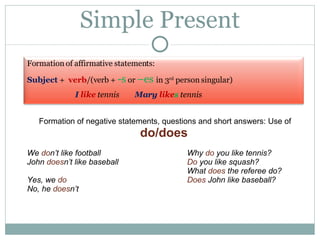
Simple Present Formation of negative statements, questions and short answers: Use of  do/does   We  do n’t like football  Why  do  you like tennis? John  does n’t like baseball  Do  you like squash?  What  does  the referee do? Yes, we  do  Does  John like baseball?  No, he  does n’t Formation of affirmative statements:  Subject  +  verb /(verb +  -s  or  –es  in 3 rd  person singular) I   like  tennis  Mary   like s  tennis
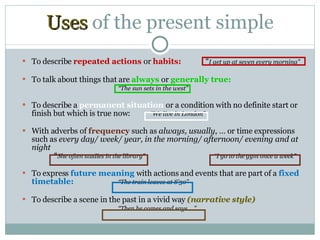
Uses  of  the present simple To describe  repeated actions  or  habits:  “ I get up at seven every morning” To talk about things that are  always  or  generally true: “ The sun sets in the west” To describe a  permanent situation  or a condition with no definite start or finish but which is true now:   “We live in London” With adverbs of  frequency  such as  always, usually , … or time expressions such as  every day/ week/ year, in the morning/ afternoon/ evening and at night   “ She often studies in the library”  “I go to the gym once a week” To express  future meaning  with actions and events that are part of a  fixed timetable: “The train leaves at 8’30” To describe a scene in the past in a vivid way  (narrative style) “ Then he comes and says …”
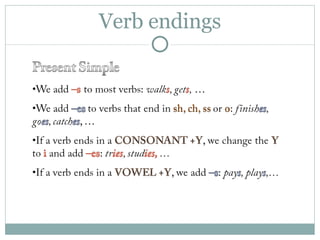
Verb endings
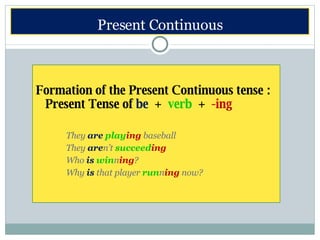
Formation of the Present Continuous tense : Present Tense of  be   +  verb   +  -ing They  are   play ing  baseball They  are n’t  succeed ing Who  is   win n ing ? Why  is  that player  run n ing  now? Present Continuous
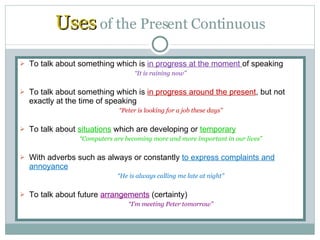
Uses  of the Present Continuous To talk about something which is  in progress at the moment  of speaking “ It is raining now” To talk about something which is  in progress around the present , but not exactly at the time of speaking “ Peter is looking for a job these days” To talk about  situations  which are developing or  temporary “ Computers are becoming more and more important in our lives” With adverbs such as always or constantly  to express complaints and annoyance “ He is always calling me late at night” To talk about future  arrangements  (certainty) “ I’m meeting Peter tomorrow”
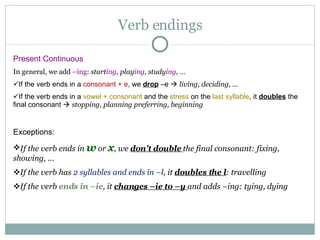
Verb endings Present Continuous In general, we add  –ing :  start ing , play ing , study ing ,  … If the verb ends in a  consonant + e , we  drop  –e     living, deciding, … If the verb ends in a  vowel + consonant  and the  stress  on the  last syllable , it  doubles  the final consonant     stopping, planning preferring, beginning Exceptions:  If the verb ends in  w  or  x , we  don’t double  the final consonant: fixing, showing, … If the verb has  2 syllables and ends in –l , it  doubles the l : travelling If the verb  ends in –ie , it  changes –ie to –y  and adds –ing: tying, dying
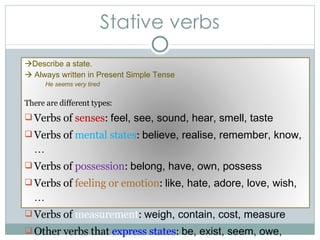
Stative verbs  Describe a state.    Always written in Present Simple Tense He seems very tired There are different types: Verbs of  senses :  feel, see, sound, hear, smell, taste Verbs of  mental states :  believe, realise, remember, know, … Verbs of  possession :  belong, have, own, possess Verbs of  feeling or emotion :  like, hate, adore, love, wish, … Verbs of  measurement :  weigh, contain, cost, measure Other verbs that  express states :  be, exist, seem, owe, require
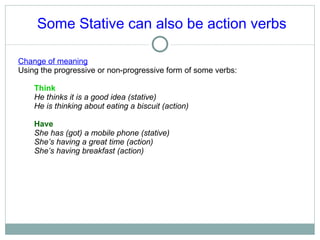
Some Stative can also be action verbs Change of meaning Using the progressive or non-progressive form of some verbs: Think  He thinks it is a good idea (stative) He is thinking about eating a biscuit (action) Have She has (got) a mobile phone (stative) She’s having a great time (action) She’s having breakfast (action)

Simple&Continuos Present Intermediate Level

  • 1.
    SIMPLE PRESENT AND PRESENT CONTINUOUS The Present tenses
  • 2.
    Simple Present Formationof negative statements, questions and short answers: Use of do/does We do n’t like football Why do you like tennis? John does n’t like baseball Do you like squash? What does the referee do? Yes, we do Does John like baseball? No, he does n’t Formation of affirmative statements: Subject + verb /(verb + -s or –es in 3 rd person singular) I like tennis Mary like s tennis
  • 3.
    Uses of the present simple To describe repeated actions or habits: “ I get up at seven every morning” To talk about things that are always or generally true: “ The sun sets in the west” To describe a permanent situation or a condition with no definite start or finish but which is true now: “We live in London” With adverbs of frequency such as always, usually , … or time expressions such as every day/ week/ year, in the morning/ afternoon/ evening and at night “ She often studies in the library” “I go to the gym once a week” To express future meaning with actions and events that are part of a fixed timetable: “The train leaves at 8’30” To describe a scene in the past in a vivid way (narrative style) “ Then he comes and says …”
  • 4.
  • 5.
    Formation of thePresent Continuous tense : Present Tense of be + verb + -ing They are play ing baseball They are n’t succeed ing Who is win n ing ? Why is that player run n ing now? Present Continuous
  • 6.
    Uses ofthe Present Continuous To talk about something which is in progress at the moment of speaking “ It is raining now” To talk about something which is in progress around the present , but not exactly at the time of speaking “ Peter is looking for a job these days” To talk about situations which are developing or temporary “ Computers are becoming more and more important in our lives” With adverbs such as always or constantly to express complaints and annoyance “ He is always calling me late at night” To talk about future arrangements (certainty) “ I’m meeting Peter tomorrow”
  • 7.
    Verb endings PresentContinuous In general, we add –ing : start ing , play ing , study ing , … If the verb ends in a consonant + e , we drop –e  living, deciding, … If the verb ends in a vowel + consonant and the stress on the last syllable , it doubles the final consonant  stopping, planning preferring, beginning Exceptions: If the verb ends in w or x , we don’t double the final consonant: fixing, showing, … If the verb has 2 syllables and ends in –l , it doubles the l : travelling If the verb ends in –ie , it changes –ie to –y and adds –ing: tying, dying
  • 8.
    Stative verbs Describe a state.  Always written in Present Simple Tense He seems very tired There are different types: Verbs of senses : feel, see, sound, hear, smell, taste Verbs of mental states : believe, realise, remember, know, … Verbs of possession : belong, have, own, possess Verbs of feeling or emotion : like, hate, adore, love, wish, … Verbs of measurement : weigh, contain, cost, measure Other verbs that express states : be, exist, seem, owe, require
  • 9.
    Some Stative canalso be action verbs Change of meaning Using the progressive or non-progressive form of some verbs: Think He thinks it is a good idea (stative) He is thinking about eating a biscuit (action) Have She has (got) a mobile phone (stative) She’s having a great time (action) She’s having breakfast (action)