P resent  S imple
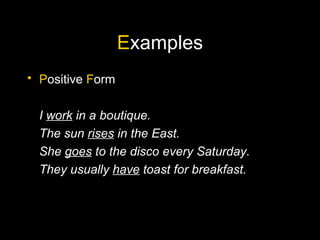
E xamples P ositive  F orm I  work  in a boutique. The sun  rises  in the East. She  goes  to the disco every Saturday. They usually  have  toast for breakfast.
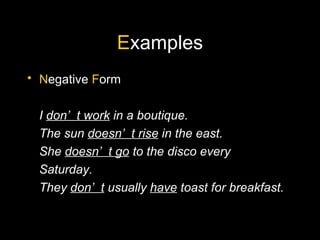
E xamples N egative  F orm I  don’t work  in a boutique. The sun  doesn’t rise  in the east. She  doesn’t go  to the disco every Saturday. They  don’t  usually  have  toast for breakfast.
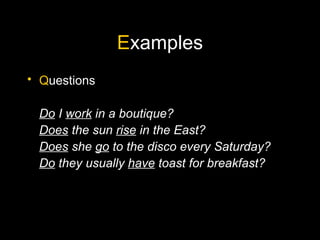
E xamples Q uestions Do  I  work  in a boutique? Does  the sun  rise  in the East? Does  she  go  to the disco every Saturday? Do  they usually  have  toast for breakfast?
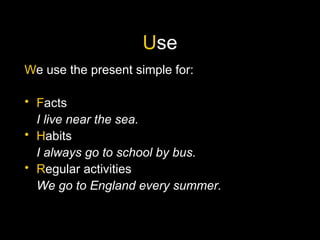
U se W e use the present simple for: F acts I live near the sea. H abits I always go to school by bus. R egular activities We go to England every summer.
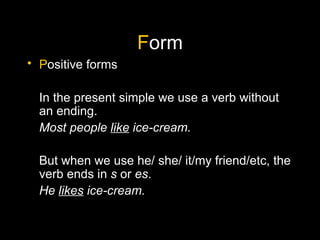
F orm P ositive forms In the present simple we use a verb without an ending. Most people  like  ice-cream. But when we use he/ she/ it/my friend/etc, the verb ends in  s  or  es . He  likes  ice-cream.
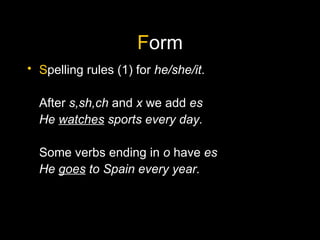
F orm S pelling rules (1) for  he/she/it . After  s,sh,ch  and  x  we add  es He  watches  sports every day. Some verbs ending in  o  have  es He  goes  to Spain every year.
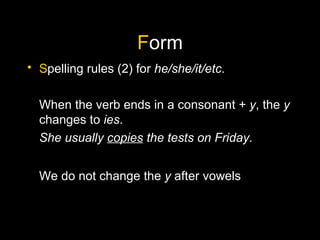
F orm S pelling rules (2) for  he/she/it/etc . When the verb ends in a consonant +  y , the  y  changes to  ies . She usually  copies  the tests on Friday. We do not change the  y  after vowels
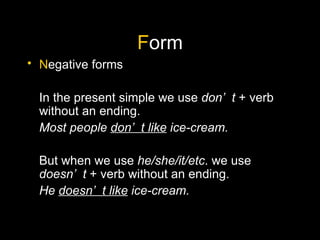
F orm N egative forms In the present simple we use  don’t  + verb without an ending. Most people  don’t like  ice-cream. But when we use  he/she/it/etc . we use  doesn’t  + verb without an ending. He  doesn’t like  ice-cream.
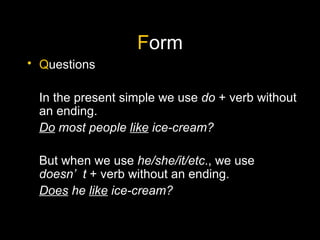
F orm Q uestions In the present simple we use  do  + verb without an ending. Do  most people  like  ice-cream? But when we use  he/she/it/etc ., we use  doesn’t  + verb without an ending. Does  he  like  ice-cream?
Q uestions? For more slide presentations visit:

Present Simple Tense

  • 1.
    P resent S imple
  • 2.
    E xamples Positive F orm I work in a boutique. The sun rises in the East. She goes to the disco every Saturday. They usually have toast for breakfast.
  • 3.
    E xamples Negative F orm I don’t work in a boutique. The sun doesn’t rise in the east. She doesn’t go to the disco every Saturday. They don’t usually have toast for breakfast.
  • 4.
    E xamples Questions Do I work in a boutique? Does the sun rise in the East? Does she go to the disco every Saturday? Do they usually have toast for breakfast?
  • 5.
    U se We use the present simple for: F acts I live near the sea. H abits I always go to school by bus. R egular activities We go to England every summer.
  • 6.
    F orm Positive forms In the present simple we use a verb without an ending. Most people like ice-cream. But when we use he/ she/ it/my friend/etc, the verb ends in s or es . He likes ice-cream.
  • 7.
    F orm Spelling rules (1) for he/she/it . After s,sh,ch and x we add es He watches sports every day. Some verbs ending in o have es He goes to Spain every year.
  • 8.
    F orm Spelling rules (2) for he/she/it/etc . When the verb ends in a consonant + y , the y changes to ies . She usually copies the tests on Friday. We do not change the y after vowels
  • 9.
    F orm Negative forms In the present simple we use don’t + verb without an ending. Most people don’t like ice-cream. But when we use he/she/it/etc . we use doesn’t + verb without an ending. He doesn’t like ice-cream.
  • 10.
    F orm Questions In the present simple we use do + verb without an ending. Do most people like ice-cream? But when we use he/she/it/etc ., we use doesn’t + verb without an ending. Does he like ice-cream?
  • 11.
    Q uestions? Formore slide presentations visit: