Simple Present
Form:
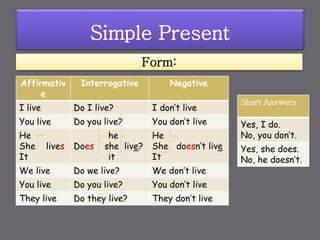
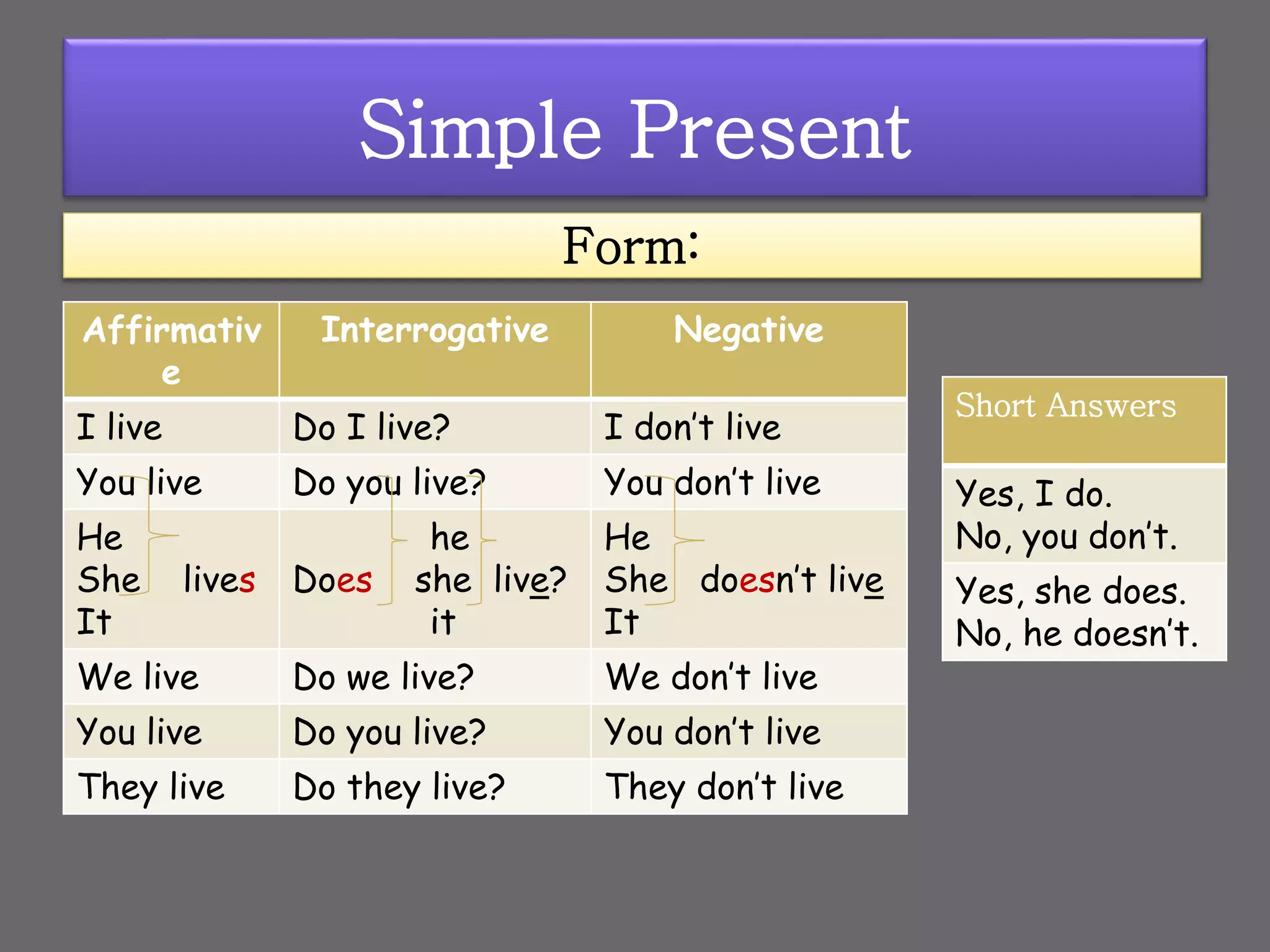
Affirmativ
e
Interrogative Negative
I live Do I live? I don’t live
You live Do you live? You don’t live
He
She lives
It
he
Does she live?
it
He
She doesn’t live
It
We live Do we live? We don’t live
You live Do you live? You don’t live
They live Do they live? They don’t live
Short Answers
Yes, I do.
No, you don’t.
Yes, she does.
No, he doesn’t.
Simple Present
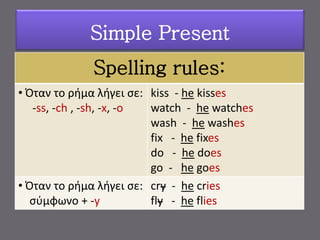
Spelling rules:
• Όταν το ρήμα λήγει σε:
-ss, -ch , -sh, -x, -o
kiss - he kisses
watch - he watches
wash - he washes
fix - he fixes
do - he does
go - he goes
• Όταν το ρήμα λήγει σε:
σύμφωνο + -y
cry - he cries
fly - he flies
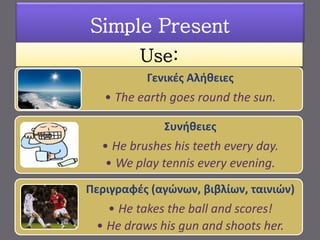
Simple Present
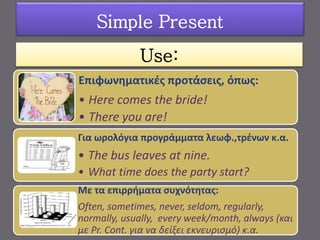
Use:
Επιφωνηματικές προτάσεις, όπως:
• Here comes the bride!
• There you are!
Για ωρολόγια προγράμματα λεωφ.,τρένων κ.α.
• The bus leaves at nine.
• What time does the party start?
Με τα επιρρήματα συχνότητας:
Often, sometimes, never, seldom, regularly,
normally, usually, every week/month, always (και
με Pr. Cont. για να δείξει εκνευρισμό) κ.α.
Simple Present
Γενικές Αλήθειες
• The earth goes round the sun.
Συνήθειες
• He brushes his teeth every day.
• We play tennis every evening.
Περιγραφές (αγώνων, βιβλίων, ταινιών)
• He takes the ball and scores!
• He draws his gun and shoots her.
Use:
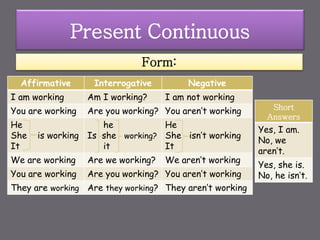
Present Continuous
Form:
Affirmative Interrogative Negative
I am working Am I working? I am not working
You are working Are you working? You aren’t working
He
She is working
It
he
Is she working?
it
He
She isn’t working
It
We are working Are we working? We aren’t working
You are working Are you working? You aren’t working
They are working Are they working? They aren’t working
Short
Answers
Yes, I am.
No, we
aren’t.
Yes, she is.
No, he isn’t.
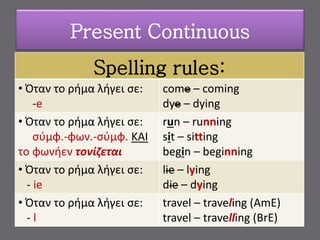
Present Continuous
Spelling rules:
• Όταν το ρήμα λήγει σε:
-e
come – coming
dye – dying
• Όταν το ρήμα λήγει σε:
σύμφ.-φων.-σύμφ. ΚΑΙ
το φωνήεν τονίζεται
run – running
sit – sitting
begin – beginning
• Όταν το ρήμα λήγει σε:
- ie
lie – lying
die – dying
• Όταν το ρήμα λήγει σε:
- l
travel – traveling (AmE)
travel – travelling (BrE)
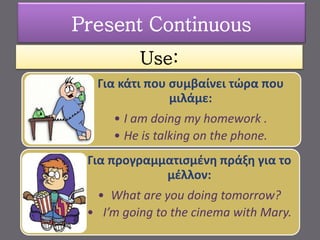
Use:
Για κάτι που συμβαίνει τώρα που
μιλάμε:
• I am doing my homework .
• He is talking on the phone.
Για προγραμματισμένη πράξη για το
μέλλον:
• What are you doing tomorrow?
• I’m going to the cinema with Mary.
Present Continuous
Use:
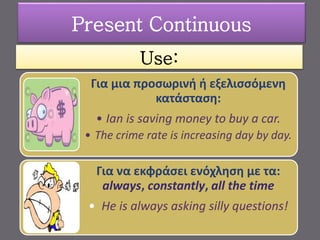
Για μια προσωρινή ή εξελισσόμενη
κατάσταση:
• Ian is saving money to buy a car.
• The crime rate is increasing day by day.
Για να εκφράσει ενόχληση με τα:
always, constantly, all the time
• He is always asking silly questions!
Present Continuous
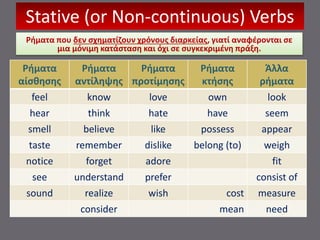
Stative (or Non-continuous) Verbs
Ρήματα που δεν σχηματίζουν χρόνους διαρκείας, γιατί αναφέρονται σε
μια μόνιμη κατάσταση και όχι σε συγκεκριμένη πράξη.
Ρήματα
αίσθησης
Ρήματα
αντίληψης
Ρήματα
προτίμησης
Ρήματα
κτήσης
Άλλα
ρήματα
feel know love own look
hear think hate have seem
smell believe like possess appear
taste remember dislike belong (to) weigh
notice forget adore fit
see understand prefer consist of
sound realize wish cost measure
consider mean need
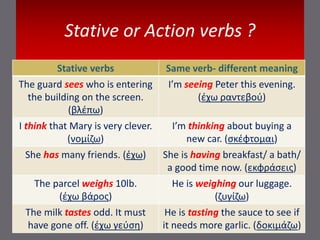
Stative or Action verbs ?
Stative verbs Same verb- different meaning
The guard sees who is entering
the building on the screen.
(βλέπω)
I’m seeing Peter this evening.
(έχω ραντεβού)
I think that Mary is very clever.
(νομίζω)
I’m thinking about buying a
new car. (σκέφτομαι)
She has many friends. (έχω) She is having breakfast/ a bath/
a good time now. (εκφράσεις)
The parcel weighs 10lb.
(έχω βάρος)
He is weighing our luggage.
(ζυγίζω)
The milk tastes odd. It must
have gone off. (έχω γεύση)
He is tasting the sauce to see if
it needs more garlic. (δοκιμάζω)
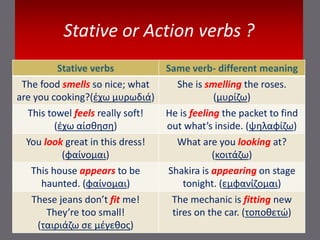
Stative or Action verbs ?
Stative verbs Same verb- different meaning
The food smells so nice; what
are you cooking?(έχω μυρωδιά)
She is smelling the roses.
(μυρίζω)
This towel feels really soft!
(έχω αίσθηση)
He is feeling the packet to find
out what’s inside. (ψηλαφίζω)
You look great in this dress!
(φαίνομαι)
What are you looking at?
(κοιτάζω)
This house appears to be
haunted. (φαίνομαι)
Shakira is appearing on stage
tonight. (εμφανίζομαι)
These jeans don’t fit me!
They’re too small!
(ταιριάζω σε μέγεθος)
The mechanic is fitting new
tires on the car. (τοποθετώ)

Simple present & Present continuous

  • 1.
    Simple Present Form: Affirmativ e Interrogative Negative Ilive Do I live? I don’t live You live Do you live? You don’t live He She lives It he Does she live? it He She doesn’t live It We live Do we live? We don’t live You live Do you live? You don’t live They live Do they live? They don’t live Short Answers Yes, I do. No, you don’t. Yes, she does. No, he doesn’t.
  • 2.
    Simple Present Spelling rules: •Όταν το ρήμα λήγει σε: -ss, -ch , -sh, -x, -o kiss - he kisses watch - he watches wash - he washes fix - he fixes do - he does go - he goes • Όταν το ρήμα λήγει σε: σύμφωνο + -y cry - he cries fly - he flies
  • 3.
    Simple Present Use: Επιφωνηματικές προτάσεις,όπως: • Here comes the bride! • There you are! Για ωρολόγια προγράμματα λεωφ.,τρένων κ.α. • The bus leaves at nine. • What time does the party start? Με τα επιρρήματα συχνότητας: Often, sometimes, never, seldom, regularly, normally, usually, every week/month, always (και με Pr. Cont. για να δείξει εκνευρισμό) κ.α.
  • 4.
    Simple Present Γενικές Αλήθειες •The earth goes round the sun. Συνήθειες • He brushes his teeth every day. • We play tennis every evening. Περιγραφές (αγώνων, βιβλίων, ταινιών) • He takes the ball and scores! • He draws his gun and shoots her. Use:
  • 5.
    Present Continuous Form: Affirmative InterrogativeNegative I am working Am I working? I am not working You are working Are you working? You aren’t working He She is working It he Is she working? it He She isn’t working It We are working Are we working? We aren’t working You are working Are you working? You aren’t working They are working Are they working? They aren’t working Short Answers Yes, I am. No, we aren’t. Yes, she is. No, he isn’t.
  • 6.
    Present Continuous Spelling rules: •Όταν το ρήμα λήγει σε: -e come – coming dye – dying • Όταν το ρήμα λήγει σε: σύμφ.-φων.-σύμφ. ΚΑΙ το φωνήεν τονίζεται run – running sit – sitting begin – beginning • Όταν το ρήμα λήγει σε: - ie lie – lying die – dying • Όταν το ρήμα λήγει σε: - l travel – traveling (AmE) travel – travelling (BrE)
  • 7.
    Use: Για κάτι πουσυμβαίνει τώρα που μιλάμε: • I am doing my homework . • He is talking on the phone. Για προγραμματισμένη πράξη για το μέλλον: • What are you doing tomorrow? • I’m going to the cinema with Mary. Present Continuous
  • 8.
    Use: Για μια προσωρινήή εξελισσόμενη κατάσταση: • Ian is saving money to buy a car. • The crime rate is increasing day by day. Για να εκφράσει ενόχληση με τα: always, constantly, all the time • He is always asking silly questions! Present Continuous
  • 9.
    Stative (or Non-continuous)Verbs Ρήματα που δεν σχηματίζουν χρόνους διαρκείας, γιατί αναφέρονται σε μια μόνιμη κατάσταση και όχι σε συγκεκριμένη πράξη. Ρήματα αίσθησης Ρήματα αντίληψης Ρήματα προτίμησης Ρήματα κτήσης Άλλα ρήματα feel know love own look hear think hate have seem smell believe like possess appear taste remember dislike belong (to) weigh notice forget adore fit see understand prefer consist of sound realize wish cost measure consider mean need
  • 10.
    Stative or Actionverbs ? Stative verbs Same verb- different meaning The guard sees who is entering the building on the screen. (βλέπω) I’m seeing Peter this evening. (έχω ραντεβού) I think that Mary is very clever. (νομίζω) I’m thinking about buying a new car. (σκέφτομαι) She has many friends. (έχω) She is having breakfast/ a bath/ a good time now. (εκφράσεις) The parcel weighs 10lb. (έχω βάρος) He is weighing our luggage. (ζυγίζω) The milk tastes odd. It must have gone off. (έχω γεύση) He is tasting the sauce to see if it needs more garlic. (δοκιμάζω)
  • 11.
    Stative or Actionverbs ? Stative verbs Same verb- different meaning The food smells so nice; what are you cooking?(έχω μυρωδιά) She is smelling the roses. (μυρίζω) This towel feels really soft! (έχω αίσθηση) He is feeling the packet to find out what’s inside. (ψηλαφίζω) You look great in this dress! (φαίνομαι) What are you looking at? (κοιτάζω) This house appears to be haunted. (φαίνομαι) Shakira is appearing on stage tonight. (εμφανίζομαι) These jeans don’t fit me! They’re too small! (ταιριάζω σε μέγεθος) The mechanic is fitting new tires on the car. (τοποθετώ)