Antimicrobial activity of Silver
nanoparticles
BY:
UMAR HAYAT
M. BILAL
Contents
 Problem
 Antimicrobial activity of AgNPs
 Mechanism of action
 Conclusion
Problem
 Microbes are causing a number of diseases.
 Antimicrobial resistance (AMR) threatens the effective prevention and
treatment of an ever-increasing range of infections caused by bacteria,
parasites, viruses and fungi.
 Adaptation of microbes to stress and other controlling factors.
Silver
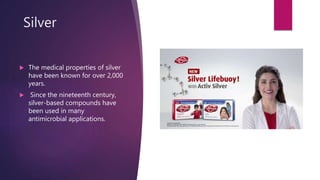
 The medical properties of silver
have been known for over 2,000
years.
 Since the nineteenth century,
silver-based compounds have
been used in many
antimicrobial applications.
AgNPs?
 Silver nanoparticles are particles of silver which are in the range of 1 and
100 nm in size.
 Silver nanoparticles have unique properties which help in molecular
diagnostics, in therapies.
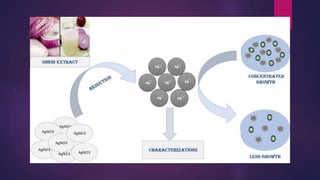
 The major methods used for silver nanoparticle synthesis are the green
synthesis and chemical methods.
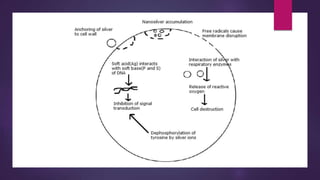
Mechanism of action
 The exact mechanism which silver nanoparticles employ to cause
antimicrobial effect is not clearly known and is a debated topic.
 There are however various theories on the action of silver nanoparticles
on microbes to cause the microbicidal effect.
Accumulation on cell surface
 Silver nanoparticles have the ability to anchor to the bacterial cell wall and
subsequently penetrate it.
 There is formation of ‘pits’ on the cell surface, and there is accumulation of
the nanoparticles on the cell surface.
 Thereby causing structural changes in the cell membrane like the
permeability of the cell membrane and death of the cell.
Formation of free radicals
 The formation of free radicals by the silver nanoparticles may be
considered to be another mechanism by which the cells die.
 There have been electron spin resonance spectroscopy studies that
suggested that there is formation of free radicals by the silver
nanoparticles when in contact with the bacteria.
 These free radicals have the ability to damage the cell membrane and
make it porous which can ultimately lead to cell death.
Release of silver ions
 It has also been proposed that there can be release of silver ions by the
nanoparticles.
 These ions can interact with the thiol groups of many vital enzymes and
inactivate them.
 The bacterial cells in contact with silver take in silver ions, which inhibit
several functions in the cell and damage the cells
Reactive oxygen species
 Then, there is the generation of reactive oxygen species, which are
produced possibly through the inhibition of a respiratory enzyme by silver
ions and attack the cell itself.
Acid –Base reaction
 Silver is a soft acid, and have l tendency to react with a soft base.
 The cells are majorly made up of sulfur and phosphorus which are soft
bases.
 The action of these nanoparticles on the cell can cause the reaction to take
place and subsequently lead to cell death.
 DNA has sulfur and phosphorus as its major components.
 The interaction of the silver nanoparticles DNA can lead to problems in the
DNA replication of the bacteria.
Modulate the signal transduction
 Nanoparticles can modulate the signal transduction in bacteria.
 It is a well-established fact that phosphorylation of protein substrates in
bacteria influences bacterial signal transduction.
 The phospho-tyrosine profile of bacterial peptides is altered by the
nanoparticles.
 Nanoparticles dephosphorylate the peptide substrates on tyrosine
residues, which leads to signal transduction inhibition and thus the
stoppage of growth.
Conclusion
 Silver has always been an excellent antimicrobial.
 The unique physical and chemical properties of silver nanoparticles only
increase the efficacy of silver.
 Though there are many mechanisms attributed to the antimicrobial
activity shown by silver nanoparticles, the actual and most reliable
mechanism is not fully understood.
 Nanoparticles are found to act on different organisms in different ways.
Any Question?

Silver nps

  • 1.
    Antimicrobial activity ofSilver nanoparticles BY: UMAR HAYAT M. BILAL
  • 2.
    Contents  Problem  Antimicrobialactivity of AgNPs  Mechanism of action  Conclusion
  • 3.
    Problem  Microbes arecausing a number of diseases.  Antimicrobial resistance (AMR) threatens the effective prevention and treatment of an ever-increasing range of infections caused by bacteria, parasites, viruses and fungi.  Adaptation of microbes to stress and other controlling factors.
  • 4.
    Silver  The medicalproperties of silver have been known for over 2,000 years.  Since the nineteenth century, silver-based compounds have been used in many antimicrobial applications.
  • 5.
    AgNPs?  Silver nanoparticlesare particles of silver which are in the range of 1 and 100 nm in size.  Silver nanoparticles have unique properties which help in molecular diagnostics, in therapies.  The major methods used for silver nanoparticle synthesis are the green synthesis and chemical methods.
  • 7.
    Mechanism of action The exact mechanism which silver nanoparticles employ to cause antimicrobial effect is not clearly known and is a debated topic.  There are however various theories on the action of silver nanoparticles on microbes to cause the microbicidal effect.
  • 8.
    Accumulation on cellsurface  Silver nanoparticles have the ability to anchor to the bacterial cell wall and subsequently penetrate it.  There is formation of ‘pits’ on the cell surface, and there is accumulation of the nanoparticles on the cell surface.  Thereby causing structural changes in the cell membrane like the permeability of the cell membrane and death of the cell.
  • 9.
    Formation of freeradicals  The formation of free radicals by the silver nanoparticles may be considered to be another mechanism by which the cells die.  There have been electron spin resonance spectroscopy studies that suggested that there is formation of free radicals by the silver nanoparticles when in contact with the bacteria.  These free radicals have the ability to damage the cell membrane and make it porous which can ultimately lead to cell death.
  • 10.
    Release of silverions  It has also been proposed that there can be release of silver ions by the nanoparticles.  These ions can interact with the thiol groups of many vital enzymes and inactivate them.  The bacterial cells in contact with silver take in silver ions, which inhibit several functions in the cell and damage the cells
  • 11.
    Reactive oxygen species Then, there is the generation of reactive oxygen species, which are produced possibly through the inhibition of a respiratory enzyme by silver ions and attack the cell itself.
  • 12.
    Acid –Base reaction Silver is a soft acid, and have l tendency to react with a soft base.  The cells are majorly made up of sulfur and phosphorus which are soft bases.  The action of these nanoparticles on the cell can cause the reaction to take place and subsequently lead to cell death.  DNA has sulfur and phosphorus as its major components.  The interaction of the silver nanoparticles DNA can lead to problems in the DNA replication of the bacteria.
  • 13.
    Modulate the signaltransduction  Nanoparticles can modulate the signal transduction in bacteria.  It is a well-established fact that phosphorylation of protein substrates in bacteria influences bacterial signal transduction.  The phospho-tyrosine profile of bacterial peptides is altered by the nanoparticles.  Nanoparticles dephosphorylate the peptide substrates on tyrosine residues, which leads to signal transduction inhibition and thus the stoppage of growth.
  • 15.
    Conclusion  Silver hasalways been an excellent antimicrobial.  The unique physical and chemical properties of silver nanoparticles only increase the efficacy of silver.  Though there are many mechanisms attributed to the antimicrobial activity shown by silver nanoparticles, the actual and most reliable mechanism is not fully understood.  Nanoparticles are found to act on different organisms in different ways.
  • 17.