Prepared by:
Mosa Hussein
LITERATURE
Dram
A drama is a story enacted onstage for a
live audience.
WHAT IS
DRAMA?
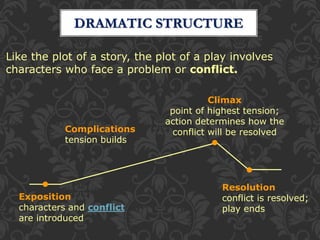
 Origins of Drama
 The word drama comes
from the Greek verb dran,
which means “to do.”
 The earliest known plays . . .
 were written around the fifth
century B.C.
 produced for festivals to
honor Dionysus, the god of
wine and fertility
WHAT IS
DRAMA?
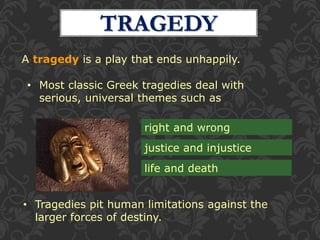
Like the plot of a story, the plot of a play involves
characters who face a problem or conflict.
DRAMATIC STRUCTURE
Climax
point of highest tension;
action determines how the
conflict will be resolvedComplications
tension builds
Resolution
conflict is resolved;
play ends
Exposition
characters and conflict
are introduced
DRAMATIC STRUCTURE
Conflict is a struggle or clash
between opposing characters
or forces. A conflict may
develop . . .
 between characters who
want different things or the
same thing
 between a character and his
or her circumstances
 within a character who is
torn by competing desires
TRAGEDY
A tragedy is a play that ends unhappily.
• Most classic Greek tragedies deal with
serious, universal themes such as
• Tragedies pit human limitations against the
larger forces of destiny.
right and wrong
justice and injustice
life and death
TRAGEDY
The protagonist of most classical tragedies is a
tragic hero. This hero
• is noble and in many
ways admirable
• has a tragic flaw, a
personal failing that
leads to a tragic end
rebelliousness
jealousy
pride
COMEDY
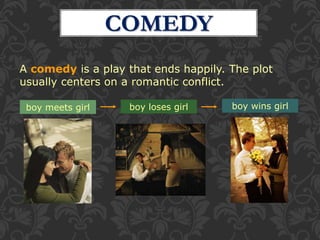
A comedy is a play that ends happily. The plot
usually centers on a romantic conflict.
boy meets girl boy loses girl boy wins girl
COMEDY
The main characters in a comedy could be
anyone:
nobility servantstownspeople
COMEDY
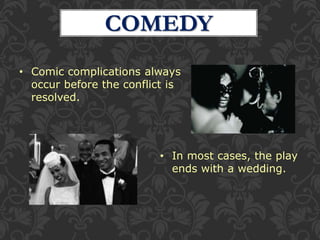
• Comic complications always
occur before the conflict is
resolved.
• In most cases, the play
ends with a wedding.
SETTING THE STAGE
Stages can have many different sizes and
layouts.
“Thrust” stage
• The stage extends
into the viewing
area.
• The audience
surrounds the stage
on three sides.
SETTING THE STAGE
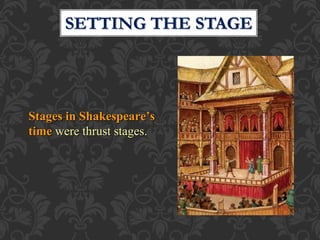
Stages in Shakespeare’s
time were thrust stages.
SETTING THE STAGE
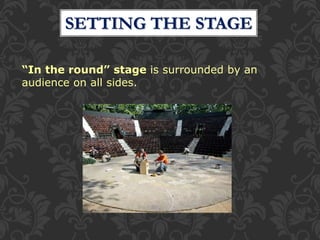
“In the round” stage is surrounded by an
audience on all sides.
SETTING THE STAGE
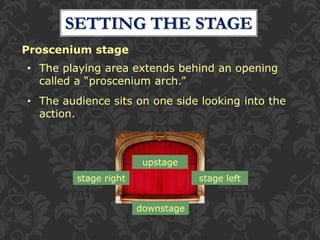
Proscenium stage
• The playing area extends behind an opening
called a “proscenium arch.”
• The audience sits on one side looking into the
action.
upstage
downstage
stage leftstage right
THE END
Q/A

Drama

  • 1.
  • 2.
    A drama isa story enacted onstage for a live audience. WHAT IS DRAMA?
  • 3.
     Origins ofDrama  The word drama comes from the Greek verb dran, which means “to do.”  The earliest known plays . . .  were written around the fifth century B.C.  produced for festivals to honor Dionysus, the god of wine and fertility WHAT IS DRAMA?
  • 4.
    Like the plotof a story, the plot of a play involves characters who face a problem or conflict. DRAMATIC STRUCTURE Climax point of highest tension; action determines how the conflict will be resolvedComplications tension builds Resolution conflict is resolved; play ends Exposition characters and conflict are introduced
  • 5.
    DRAMATIC STRUCTURE Conflict isa struggle or clash between opposing characters or forces. A conflict may develop . . .  between characters who want different things or the same thing  between a character and his or her circumstances  within a character who is torn by competing desires
  • 6.
    TRAGEDY A tragedy isa play that ends unhappily. • Most classic Greek tragedies deal with serious, universal themes such as • Tragedies pit human limitations against the larger forces of destiny. right and wrong justice and injustice life and death
  • 7.
    TRAGEDY The protagonist ofmost classical tragedies is a tragic hero. This hero • is noble and in many ways admirable • has a tragic flaw, a personal failing that leads to a tragic end rebelliousness jealousy pride
  • 8.
    COMEDY A comedy isa play that ends happily. The plot usually centers on a romantic conflict. boy meets girl boy loses girl boy wins girl
  • 9.
    COMEDY The main charactersin a comedy could be anyone: nobility servantstownspeople
  • 10.
    COMEDY • Comic complicationsalways occur before the conflict is resolved. • In most cases, the play ends with a wedding.
  • 11.
    SETTING THE STAGE Stagescan have many different sizes and layouts. “Thrust” stage • The stage extends into the viewing area. • The audience surrounds the stage on three sides.
  • 12.
    SETTING THE STAGE Stagesin Shakespeare’s time were thrust stages.
  • 13.
    SETTING THE STAGE “Inthe round” stage is surrounded by an audience on all sides.
  • 14.
    SETTING THE STAGE Prosceniumstage • The playing area extends behind an opening called a “proscenium arch.” • The audience sits on one side looking into the action. upstage downstage stage leftstage right
  • 15.