
PRESENTATION
 PRESENTED BY:
 JASPINDER SINGH SIDHU
Should You Invest
                    in the Long Tail?


by Anita Elberse
CONTENTS
1. Should you invest in the long tail?
2. Theory of anderson
3. Investigation
4. Mcphee theory
5.Advice to producers
6.Advice to retailers
7.conclusion
THE LONG TAIL THEORY IN SHORT

   EDITOR OF WIRED MAGAZINE:
           chris anderson

   Chris anderson puts 42 distinct but
   related ideas.

   1. The merchandise assortments are growing.

   2. Online channels actually change the shape of the
    demand curve
INVESTIGATION
   Chris investigated sales patterns in the music and home-
    video industries –two markets that anderson and others
    frequently hod up as examples of the long tail theory in
    action.

   He reviewed sales data obtained from nielsen videoscan
    and nielsen soundscan,which monitor weekly purchases
    of videos and music through online and offline retailers:

   Quickflix and from rhapsody ……
Results of investigation
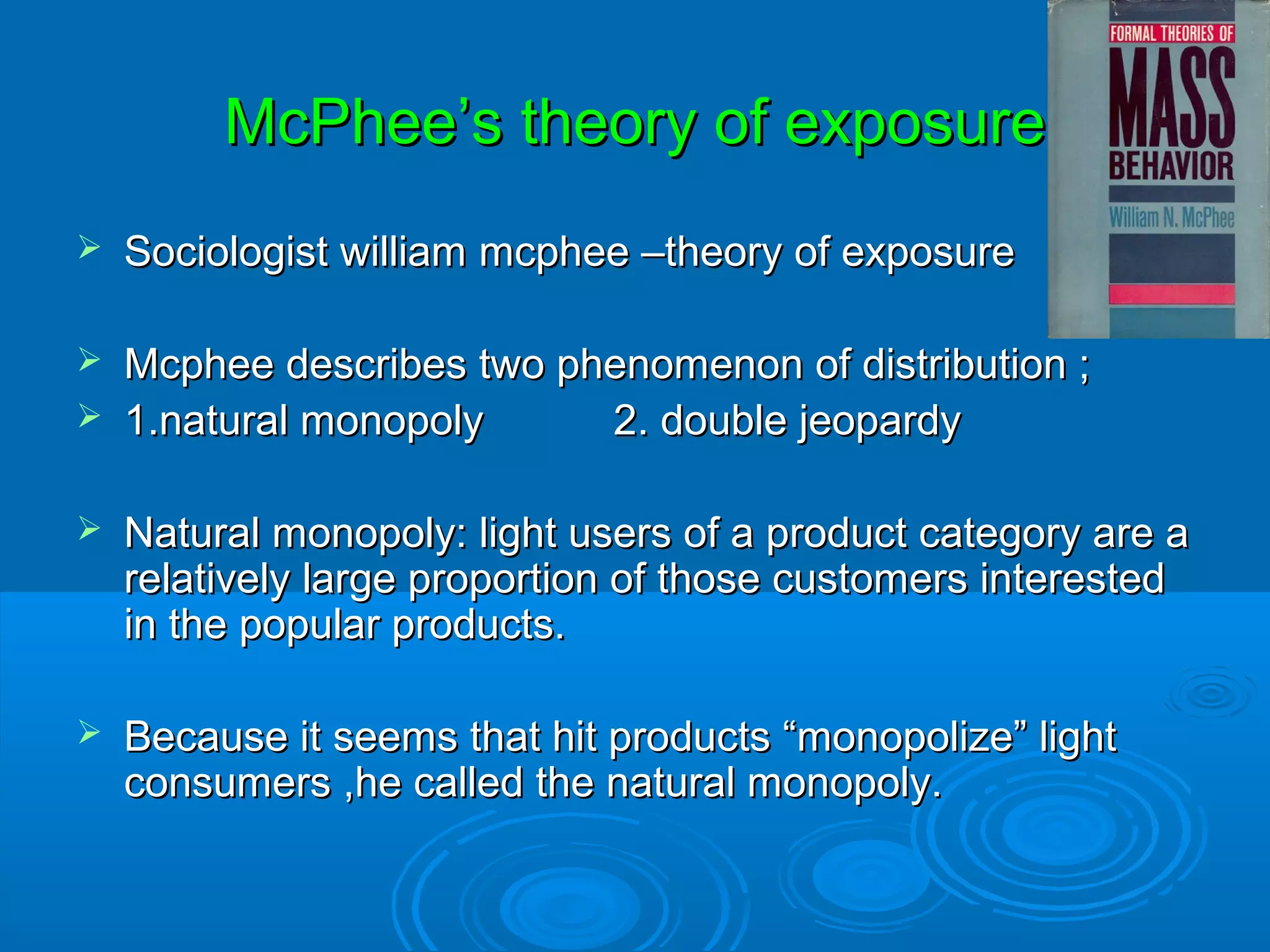
McPhee’s theory of exposure
   Sociologist william mcphee –theory of exposure

   Mcphee describes two phenomenon of distribution ;
   1.natural monopoly     2. double jeopardy

   Natural monopoly: light users of a product category are a
    relatively large proportion of those customers interested
    in the popular products.

   Because it seems that hit products “monopolize” light
    consumers ,he called the natural monopoly.
DOUBLE JEOPARDY
   Mcphee noted that “the larger the proportion of the
    people with a given alternative …the less likely are those
    who are familiar with it to like it especially”

   The people who choose obscure products tend to be
    familiar with many alternatives and to stick with popular
    products.

   Mcphee described this concept because niche products
    have a double advantage :first they are not well known
   Secondly: when they become known it is by the people
    who “know better”.
Quickflix data
ADVICE TO PRODUCERS
   Donot radically alter blockbuster resource-allocation or
    product portfolio management strategies.

   When producing niche goods for the long tail end of the
    distribution, keep cost as low as possible.

   When trying to strengthen your presence in digital
    channels, focus on marketing.

   Leverage your scale to improve online exposure and
    demand for products .
ADVICE TO RETAILERS
   If the goal is to cater to your heavy customers, broaden
    your assortment with more niche products.

   Strictly manage the costs of offering products that will
    rarely sell .if possible, use online networks to construct
    creative models .

   Acquire and manage customers by using your most
    popular products.

   Even though obscure products may have a higher profit
    margin.
Should u invest in long tail?

Should u invest in long tail?

  • 2.
    PRESENTATION PRESENTED BY: JASPINDER SINGH SIDHU
  • 3.
    Should You Invest in the Long Tail? by Anita Elberse
  • 4.
    CONTENTS 1. Should youinvest in the long tail? 2. Theory of anderson 3. Investigation 4. Mcphee theory 5.Advice to producers 6.Advice to retailers 7.conclusion
  • 5.
    THE LONG TAILTHEORY IN SHORT  EDITOR OF WIRED MAGAZINE: chris anderson  Chris anderson puts 42 distinct but  related ideas.  1. The merchandise assortments are growing.  2. Online channels actually change the shape of the demand curve
  • 6.
    INVESTIGATION  Chris investigated sales patterns in the music and home- video industries –two markets that anderson and others frequently hod up as examples of the long tail theory in action.  He reviewed sales data obtained from nielsen videoscan and nielsen soundscan,which monitor weekly purchases of videos and music through online and offline retailers:  Quickflix and from rhapsody ……
  • 7.
  • 8.
    McPhee’s theory ofexposure  Sociologist william mcphee –theory of exposure  Mcphee describes two phenomenon of distribution ;  1.natural monopoly 2. double jeopardy  Natural monopoly: light users of a product category are a relatively large proportion of those customers interested in the popular products.  Because it seems that hit products “monopolize” light consumers ,he called the natural monopoly.
  • 9.
    DOUBLE JEOPARDY  Mcphee noted that “the larger the proportion of the people with a given alternative …the less likely are those who are familiar with it to like it especially”  The people who choose obscure products tend to be familiar with many alternatives and to stick with popular products.  Mcphee described this concept because niche products have a double advantage :first they are not well known  Secondly: when they become known it is by the people who “know better”.
  • 10.
  • 11.
    ADVICE TO PRODUCERS  Donot radically alter blockbuster resource-allocation or product portfolio management strategies.  When producing niche goods for the long tail end of the distribution, keep cost as low as possible.  When trying to strengthen your presence in digital channels, focus on marketing.  Leverage your scale to improve online exposure and demand for products .
  • 12.
    ADVICE TO RETAILERS  If the goal is to cater to your heavy customers, broaden your assortment with more niche products.  Strictly manage the costs of offering products that will rarely sell .if possible, use online networks to construct creative models .  Acquire and manage customers by using your most popular products.  Even though obscure products may have a higher profit margin.