
PRESENTATION


PREPARED BY :     presented to :

Jaspinder Singh   Gautam sir
Jaskamal Singh
Vishal Sharma
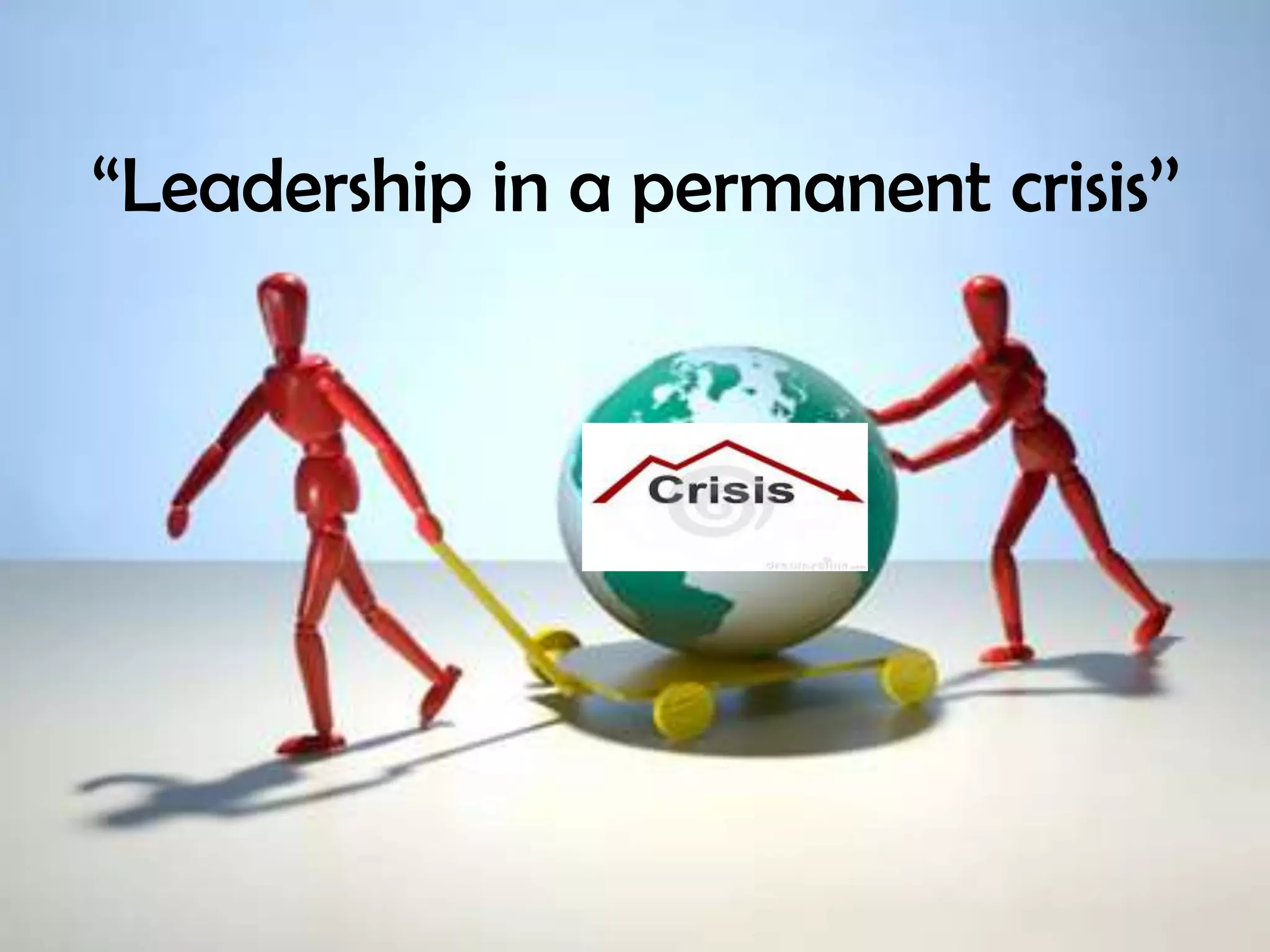
“Leadership in a permanent crisis’’
Contents
•   Leadership in a permanent crisis
•   Economic crisis
•   Sustained crisis v/s permanent crisis
•   Crisis leadership
•   Phases of crisis leadership
•   Solutions to boost up economy
•   Need of skilled crisis leaders
•   Essential leadership skills required
Leadership in a permanent crisis

• When the economy recovers ,things won’t return
  to normal and a different mode of leadership will
  be required.

•          -- Ronald Heifetz, Alexander Grashow,
    and Marty Linsky
Economic crisis

• Economies cannot erect a firewall against intensifying
  global competition , energy constraints, climate change
  and political instability .

• An economic crisis is a sharp transition to a recession.
  See for example 1994 economic crisis in Mexico,
  Argentine economic crisis (1999–2002), South American
  economic crisis of 2002, Economic crisis of Cameroon.
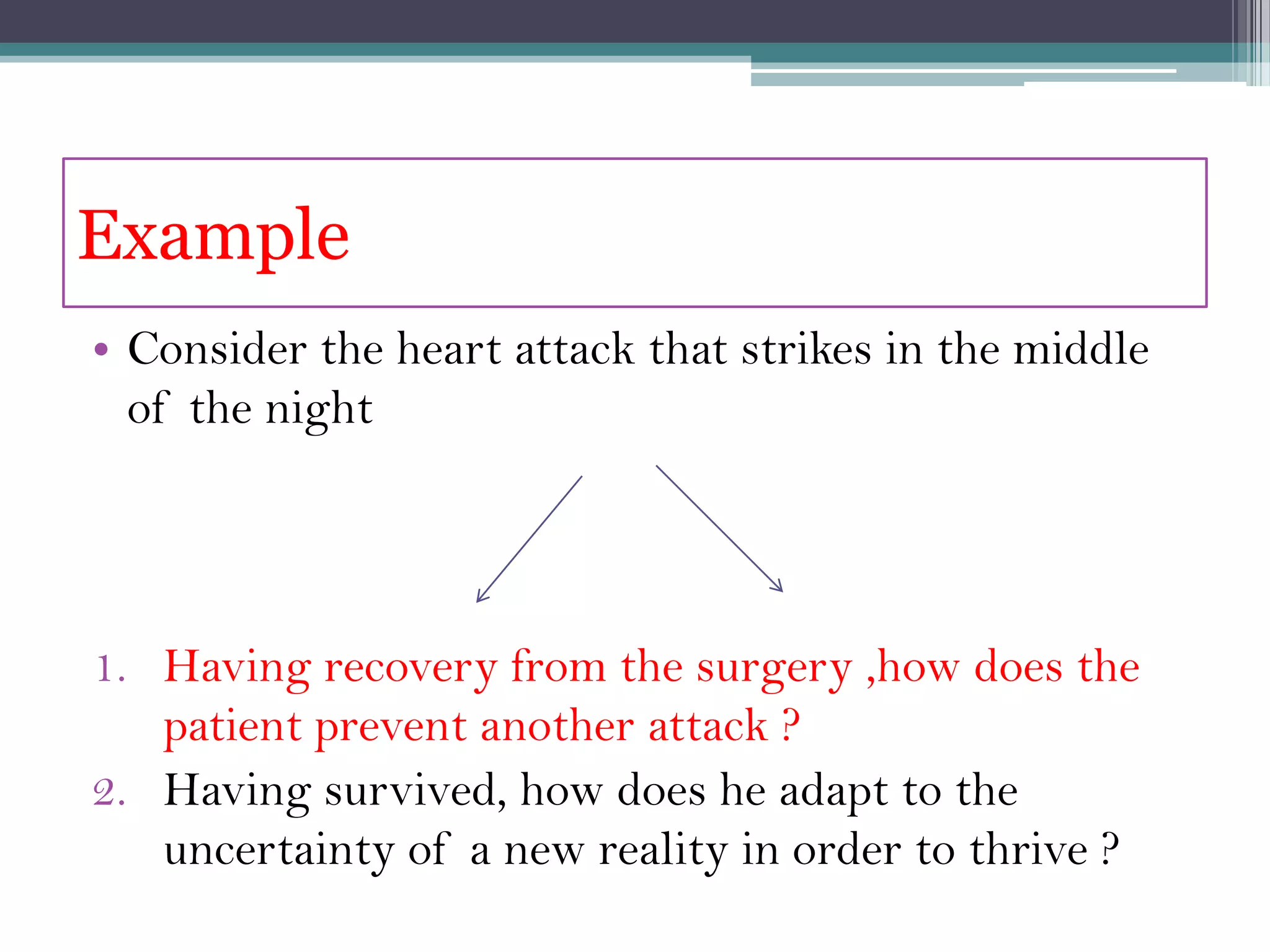
Example
• Consider the heart attack that strikes in the middle
  of the night


1. Having recovery from the surgery ,how does the
   patient prevent another attack ?
2. Having survived, how does he adapt to the
   uncertainty of a new reality in order to thrive ?
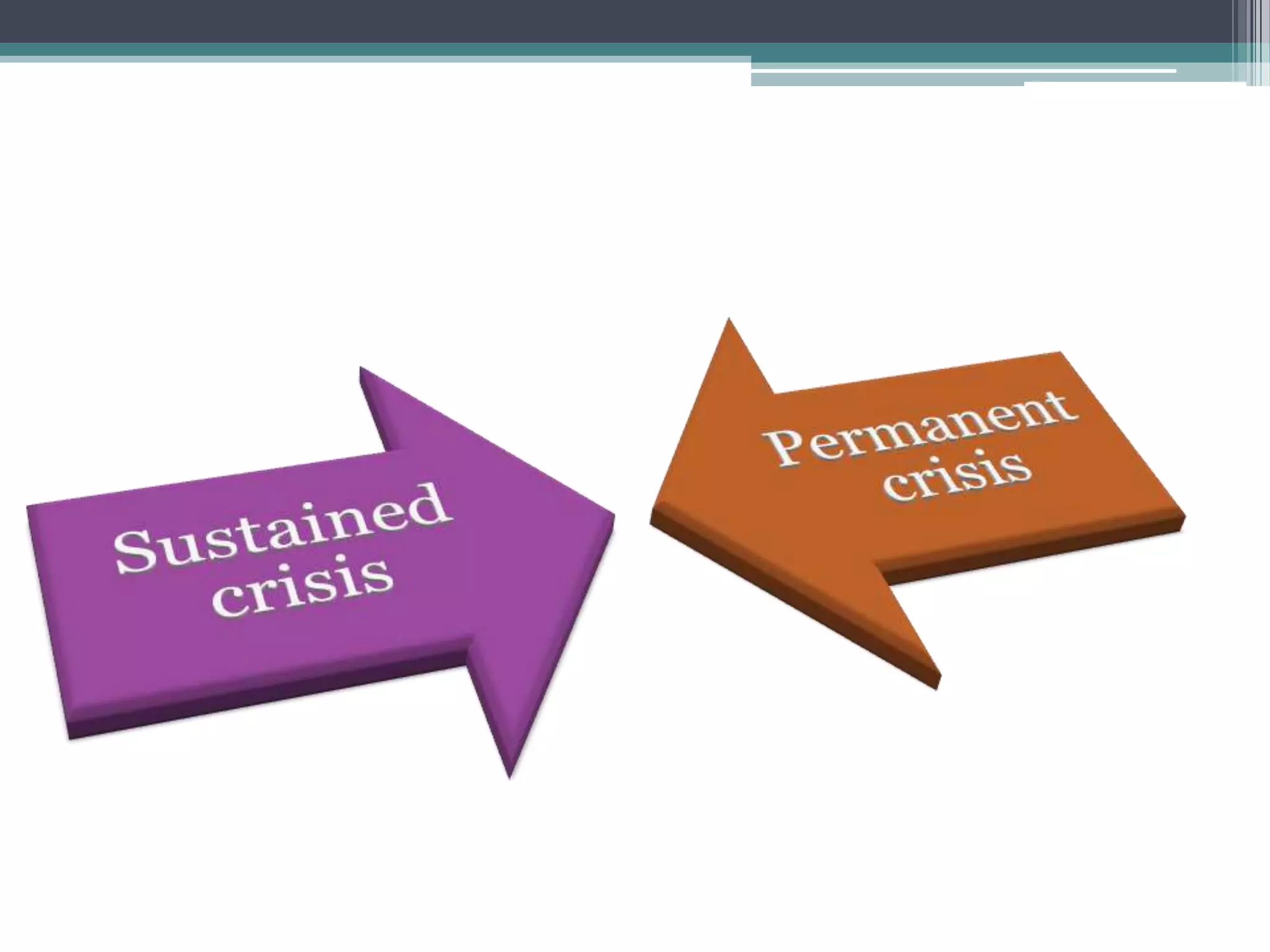
Sustained crisis or permanent crisis


• Sustained crisis are types of crisis that can
  persist for months or even years. These
  types of crises can result from media
  rumors or speculation.
Permanent crisis

• Recession stands for long term may have ill effects on
  each and every business.

• Amalgamation, or merging of industrial units, is made
  unfavorable by the dead weight of closed-down unit.

• Wage-cutting and intensified exploitation also have their
  limits.
Sustained crisis : crisis leadership

• crisis leadership involves high leverage skills
  that are vital to corporate.

• Divided into two distinct phases :-
• 1.Emergency phase
• 2.Adaptive phase
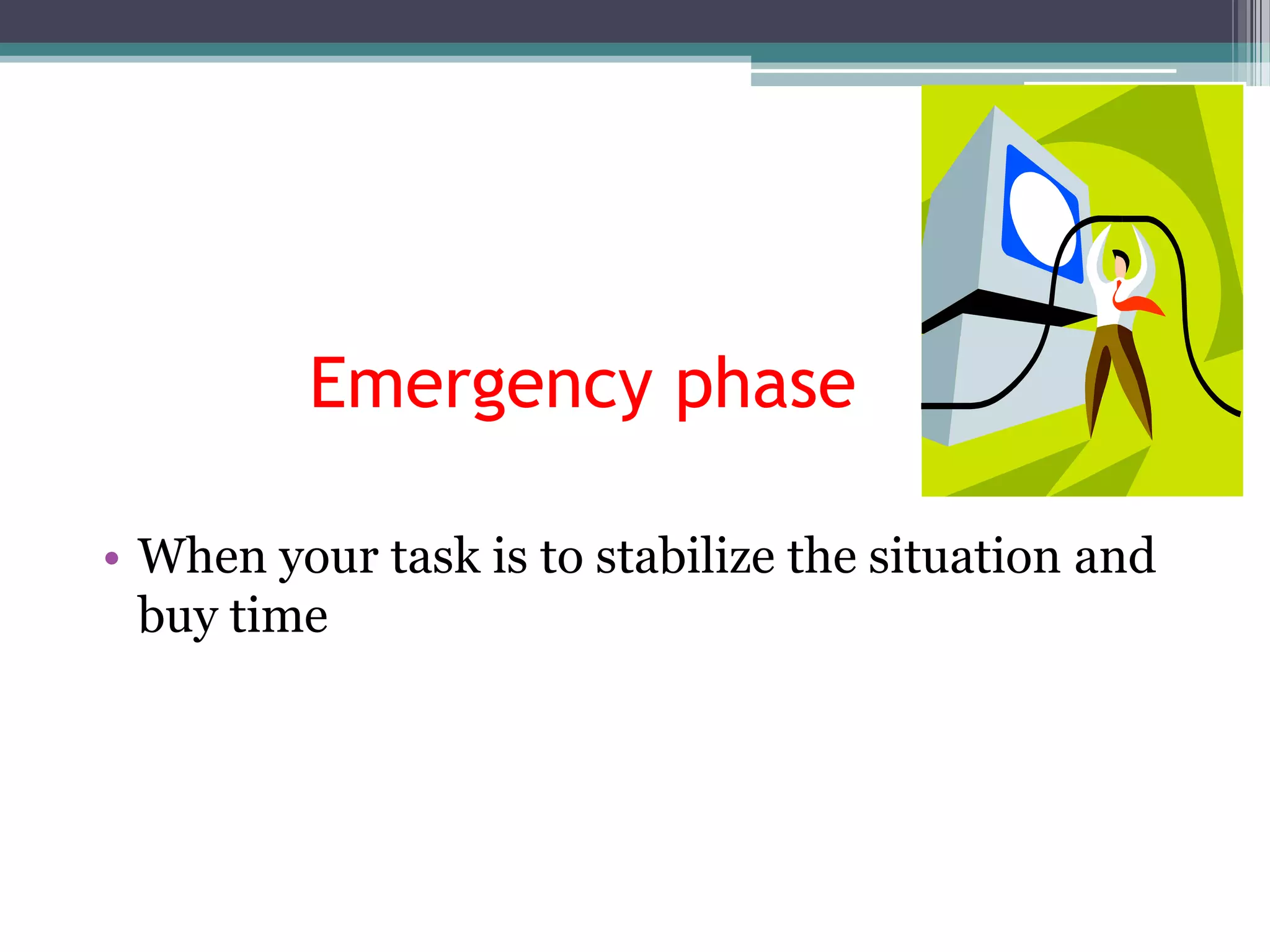
Emergency phase

• When your task is to stabilize the situation and
  buy time
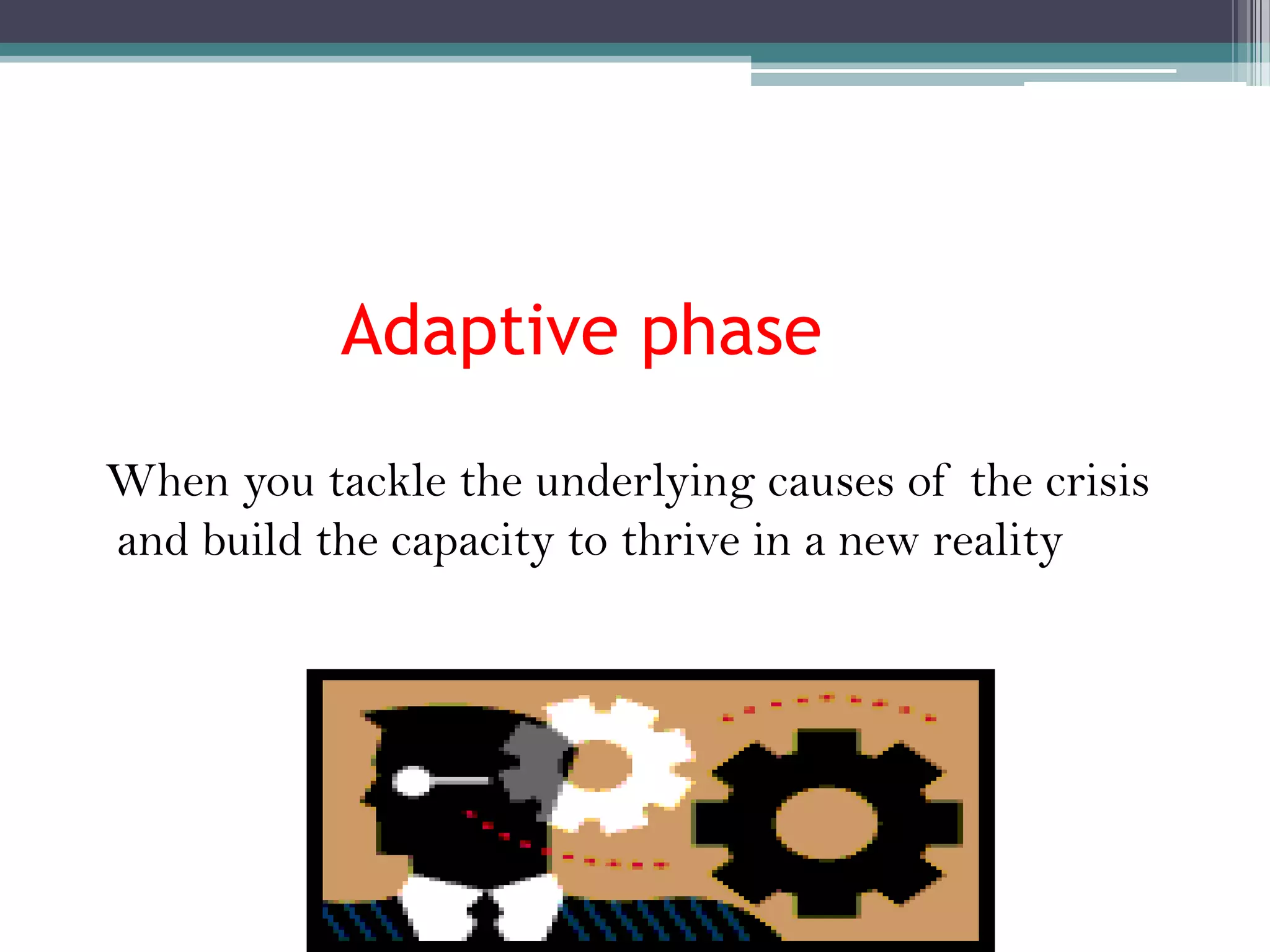
Adaptive phase

When you tackle the underlying causes of the crisis
and build the capacity to thrive in a new reality
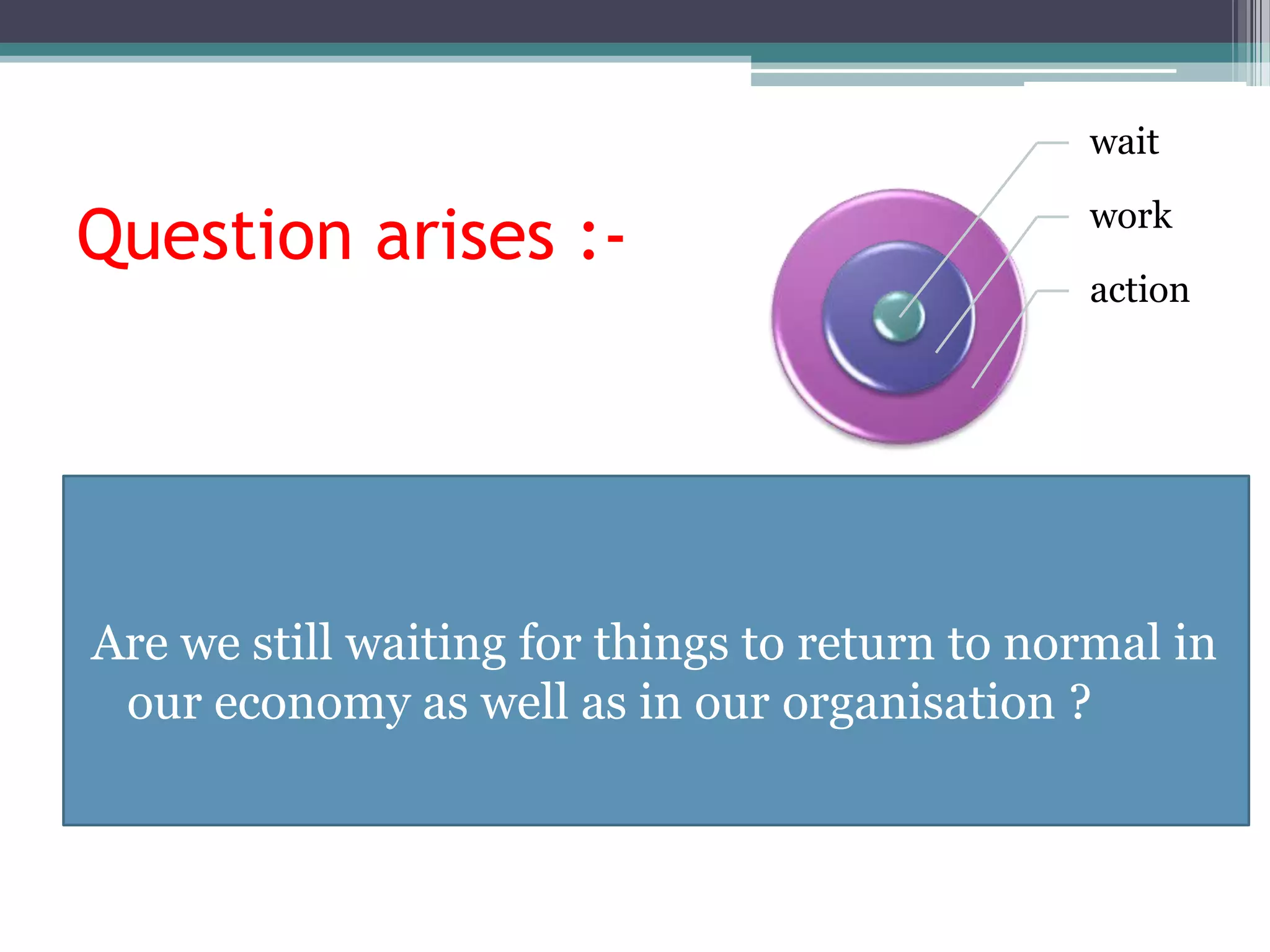
wait

Question arises :-                             work

                                               action


Are we still waiting for things to return to normal in
 our economy as well as in our organisation ?
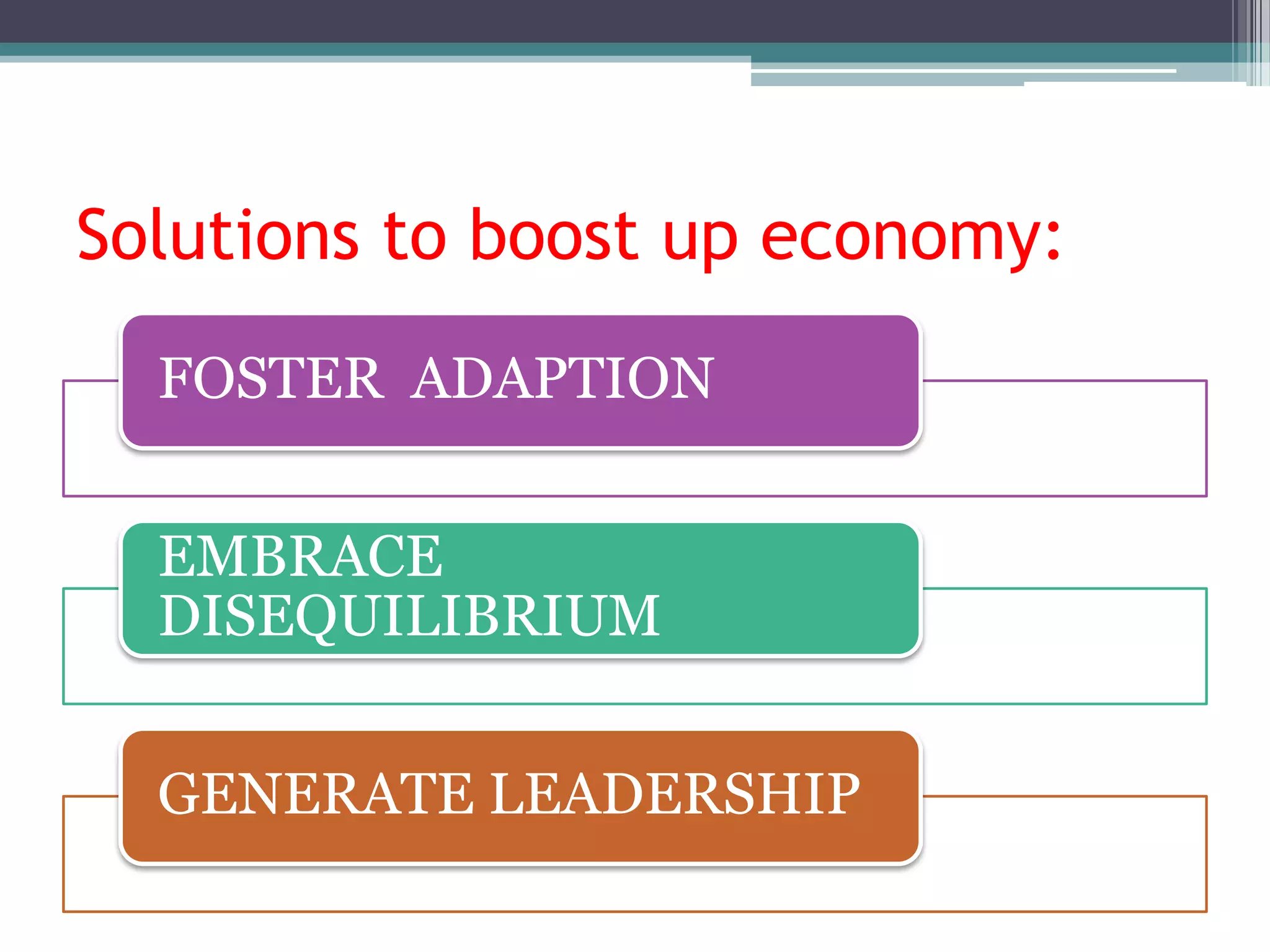
Solutions to boost up economy:
  FOSTER ADAPTION


  EMBRACE
  DISEQUILIBRIUM


  GENERATE LEADERSHIP
Keep your hand on the thermostat

• If the heat’s too low ,

            people won’t make difficult decision.

 If it’s too high, they might panic.
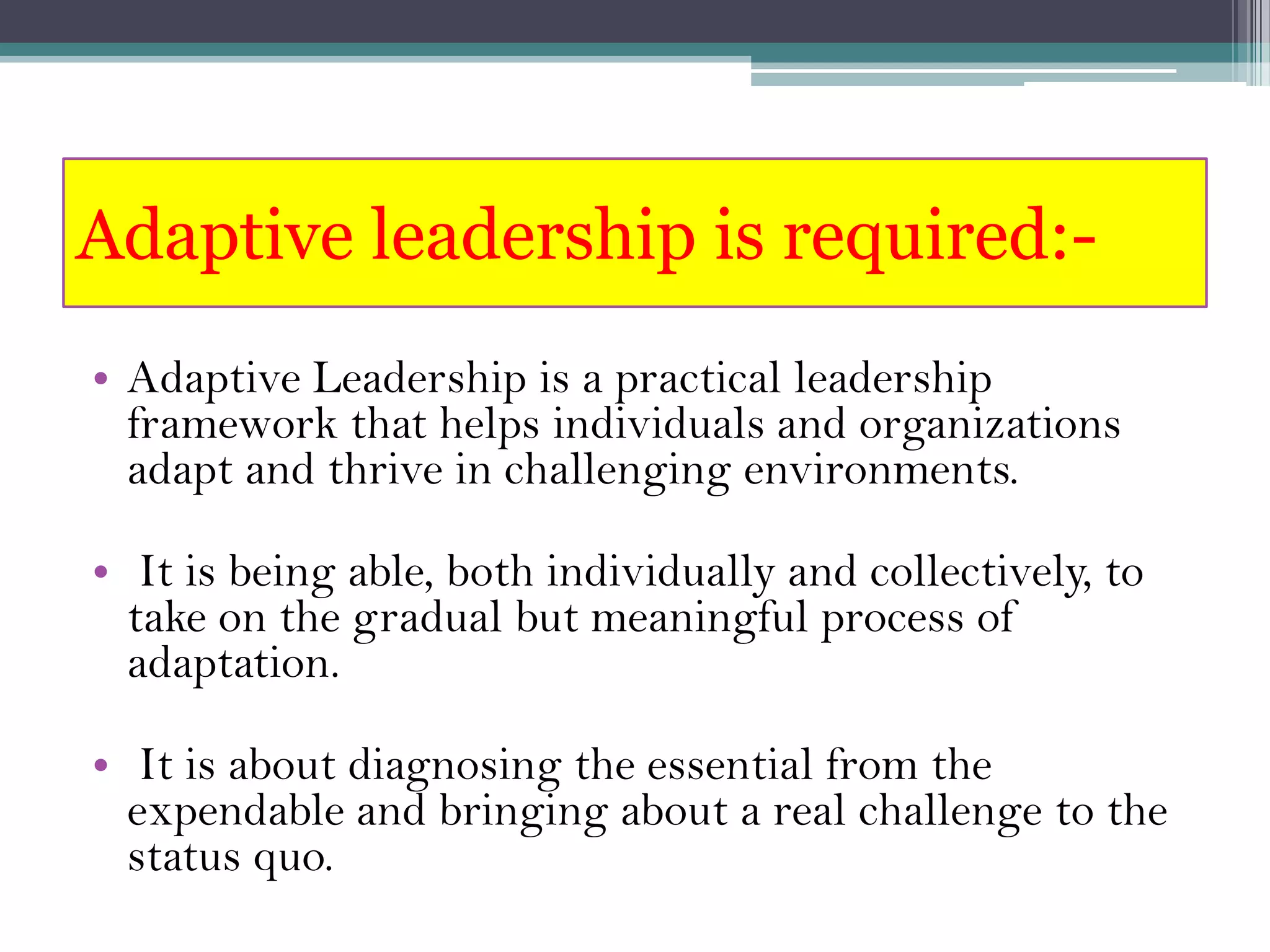
Adaptive leadership is required:-
• Adaptive Leadership is a practical leadership
  framework that helps individuals and organizations
  adapt and thrive in challenging environments.

• It is being able, both individually and collectively, to
  take on the gradual but meaningful process of
  adaptation.

• It is about diagnosing the essential from the
  expendable and bringing about a real challenge to the
  status quo.
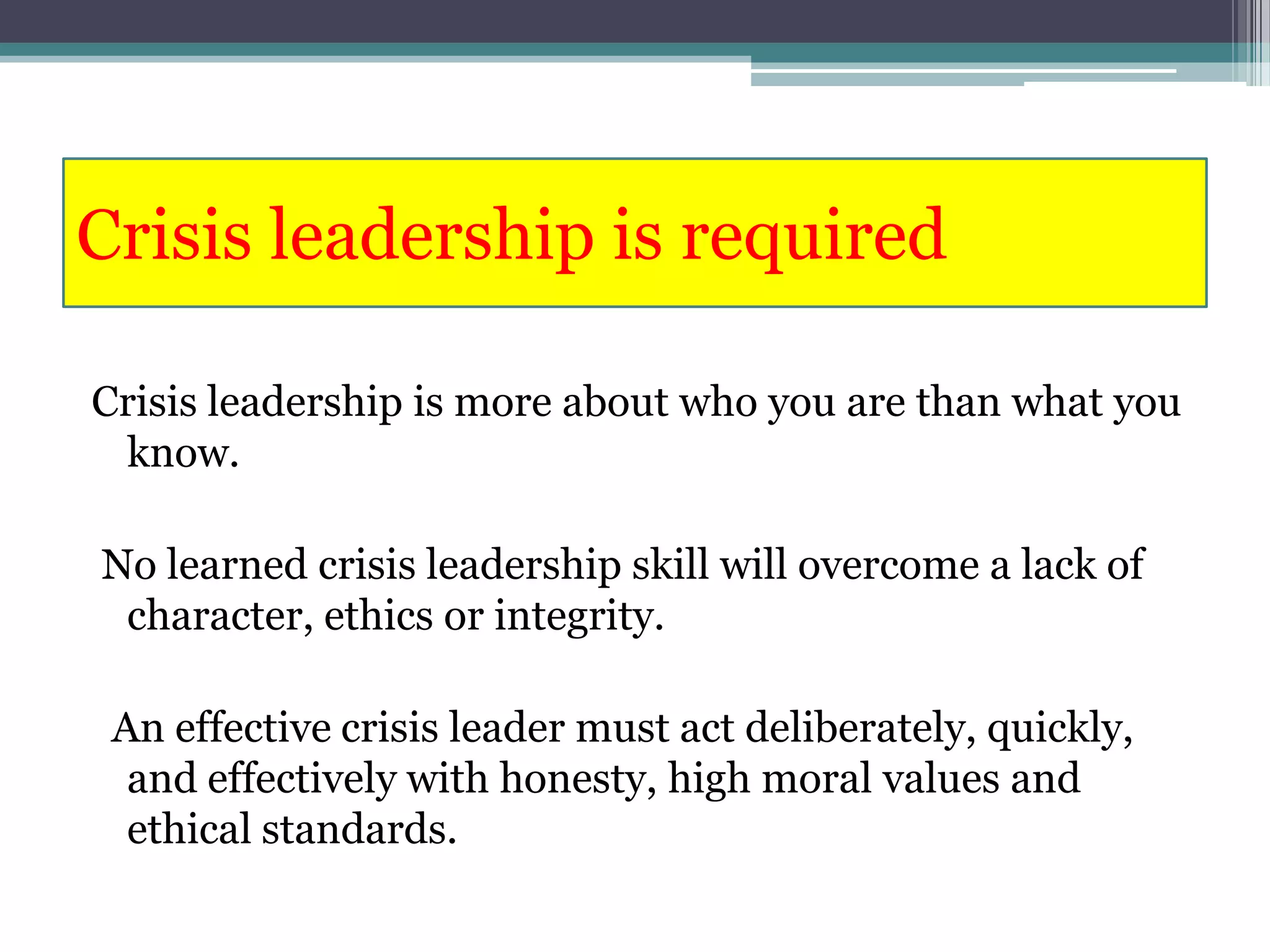
Crisis leadership is required

Crisis leadership is more about who you are than what you
 know.

No learned crisis leadership skill will overcome a lack of
 character, ethics or integrity.

 An effective crisis leader must act deliberately, quickly,
  and effectively with honesty, high moral values and
  ethical standards.
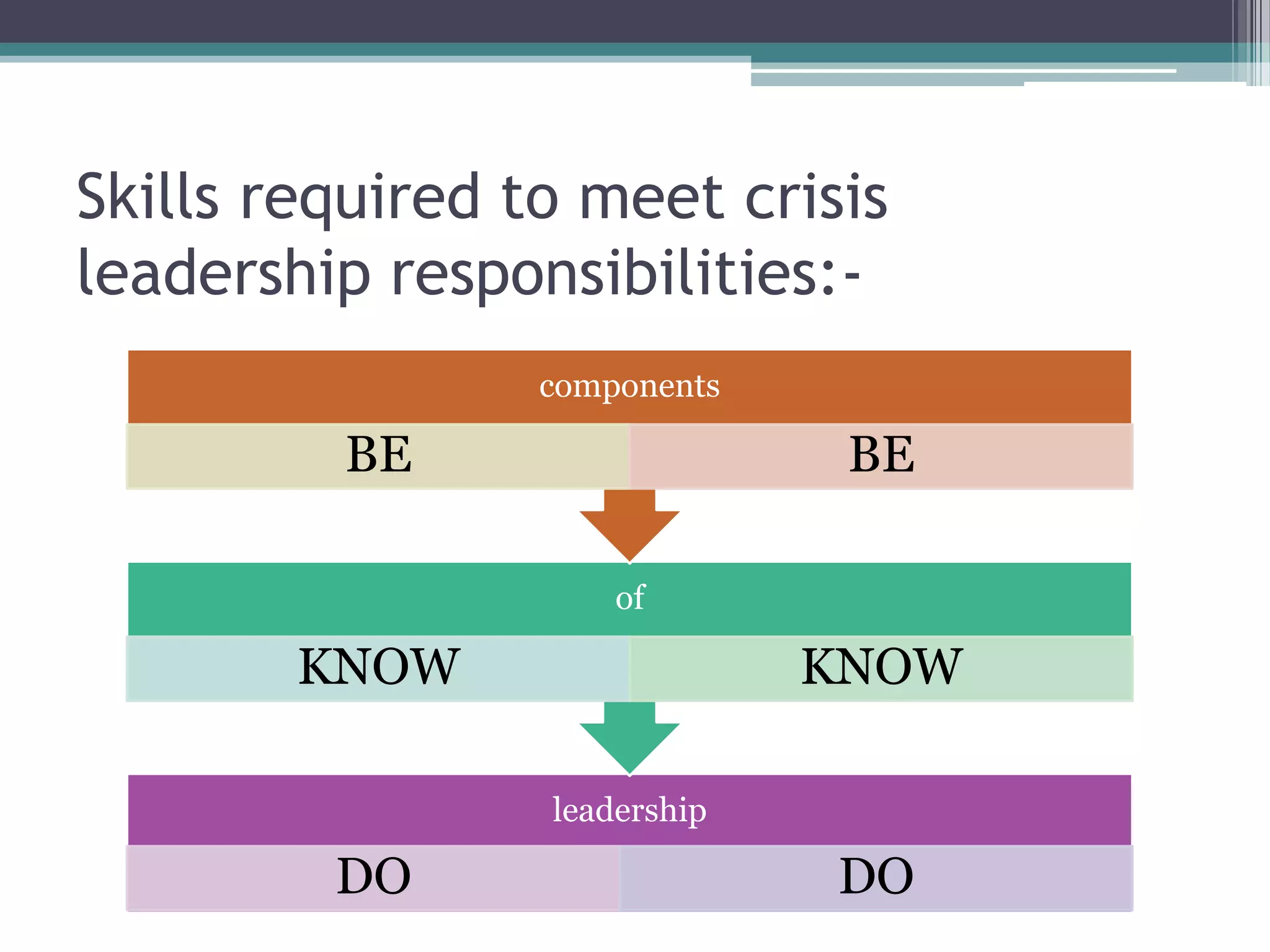
Skills required to meet crisis
leadership responsibilities:-
                 components

         BE                    BE

                     of

        KNOW                  KNOW

                 leadership

         DO                   DO
The Need for Skilled Crisis Leaders

• Acute threats; natural and human-caused.

• A crisis causes dramatic systems change.

• There are differences between management and
  leadership.

• A crisis will affect multiple systems; there is a need to
  manage conflicting goals, values, and responsibilities
Essential Leadership Skill Set

•   Collaborative leadership
•   Systems thinking
•   Creativity
•   Emotional intelligence
•   Risk communication
•   Influence and negotiation
•   Conflict management
Leadership’s Role in a Crisis
• Leaders set the tone by their example and conduct.

• Leaders must pay attention to the components of
  influence.

• Leaders can have a significant positive impact on the
  very human, emotionally charged climate.

• Leaders cannot rely only on authoritarian or fear
  tactics to get results during a crisis.
Preparing for Crisis


• It’s never too early to prepare

• Leaders should begin with a self-assessment

• Need to conduct an organizational assessment

• Systems View
  ▫ Community Assessment; Intra/Inter-agency
    assessment
Leadership styles:-

• Directive

• Supportive

• Participative

• Achievement –oriented.
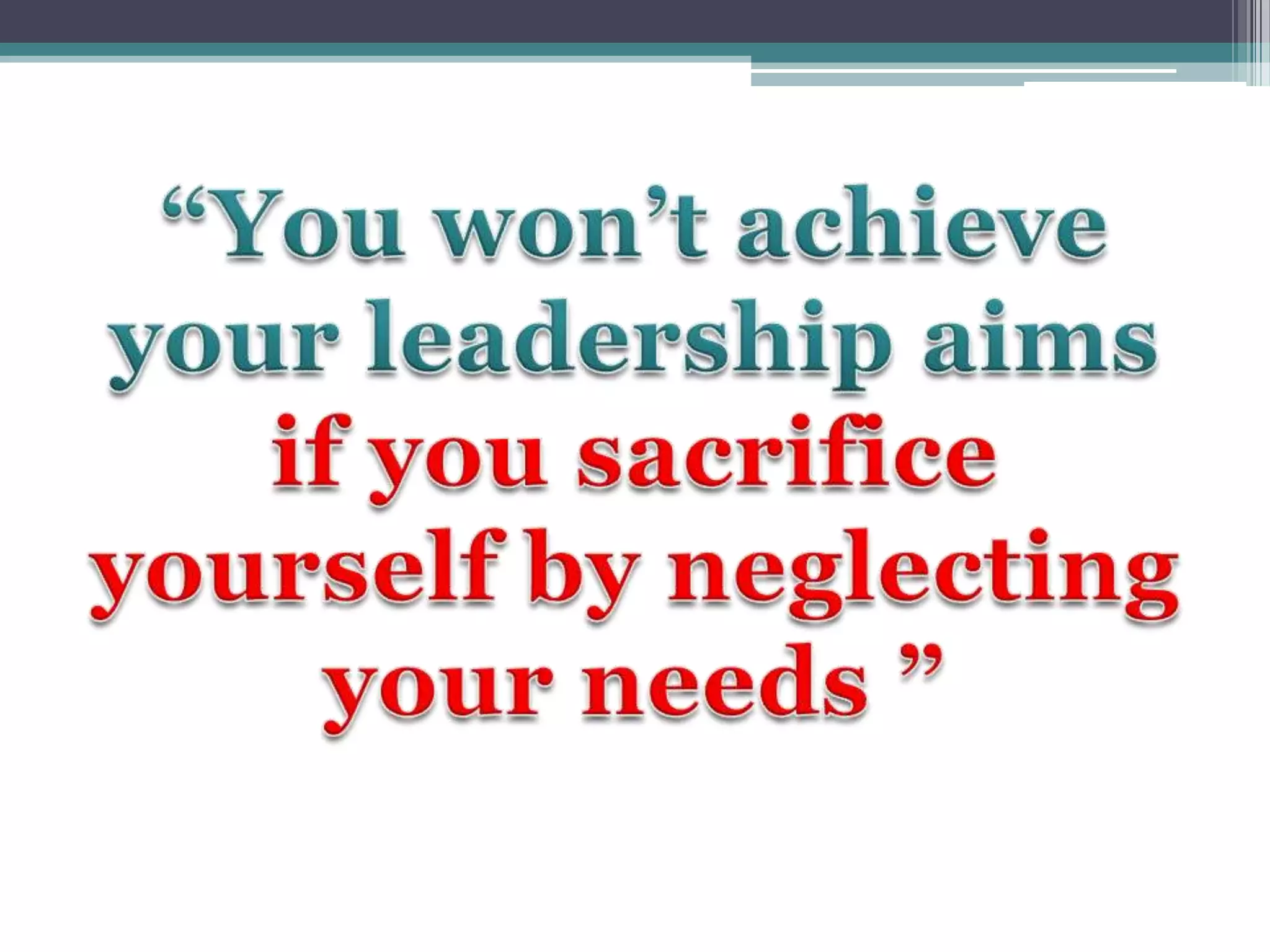
Taking care of yourself
• To be optimistic and realistic.

• Find sanctuaries.

• Reach out to confidants .

• Bring more of your emotional self.

• Finally, don’t lose yourself in your role.
References

• Harvard business review { July –Aug 2009 }

• Hbrsasia.org

• Sultan chand & sons.- L M Prasad.
Presentation

Presentation

  • 2.
    PRESENTATION PREPARED BY : presented to : Jaspinder Singh Gautam sir Jaskamal Singh Vishal Sharma
  • 3.
    “Leadership in apermanent crisis’’
  • 4.
    Contents • Leadership in a permanent crisis • Economic crisis • Sustained crisis v/s permanent crisis • Crisis leadership • Phases of crisis leadership • Solutions to boost up economy • Need of skilled crisis leaders • Essential leadership skills required
  • 5.
    Leadership in apermanent crisis • When the economy recovers ,things won’t return to normal and a different mode of leadership will be required. • -- Ronald Heifetz, Alexander Grashow, and Marty Linsky
  • 6.
    Economic crisis • Economiescannot erect a firewall against intensifying global competition , energy constraints, climate change and political instability . • An economic crisis is a sharp transition to a recession. See for example 1994 economic crisis in Mexico, Argentine economic crisis (1999–2002), South American economic crisis of 2002, Economic crisis of Cameroon.
  • 7.
    Example • Consider theheart attack that strikes in the middle of the night 1. Having recovery from the surgery ,how does the patient prevent another attack ? 2. Having survived, how does he adapt to the uncertainty of a new reality in order to thrive ?
  • 9.
    Sustained crisis orpermanent crisis • Sustained crisis are types of crisis that can persist for months or even years. These types of crises can result from media rumors or speculation.
  • 10.
    Permanent crisis • Recessionstands for long term may have ill effects on each and every business. • Amalgamation, or merging of industrial units, is made unfavorable by the dead weight of closed-down unit. • Wage-cutting and intensified exploitation also have their limits.
  • 11.
    Sustained crisis :crisis leadership • crisis leadership involves high leverage skills that are vital to corporate. • Divided into two distinct phases :- • 1.Emergency phase • 2.Adaptive phase
  • 12.
    Emergency phase • Whenyour task is to stabilize the situation and buy time
  • 13.
    Adaptive phase When youtackle the underlying causes of the crisis and build the capacity to thrive in a new reality
  • 14.
    wait Question arises :- work action Are we still waiting for things to return to normal in our economy as well as in our organisation ?
  • 15.
    Solutions to boostup economy: FOSTER ADAPTION EMBRACE DISEQUILIBRIUM GENERATE LEADERSHIP
  • 16.
    Keep your handon the thermostat • If the heat’s too low , people won’t make difficult decision. If it’s too high, they might panic.
  • 17.
    Adaptive leadership isrequired:- • Adaptive Leadership is a practical leadership framework that helps individuals and organizations adapt and thrive in challenging environments. • It is being able, both individually and collectively, to take on the gradual but meaningful process of adaptation. • It is about diagnosing the essential from the expendable and bringing about a real challenge to the status quo.
  • 18.
    Crisis leadership isrequired Crisis leadership is more about who you are than what you know. No learned crisis leadership skill will overcome a lack of character, ethics or integrity. An effective crisis leader must act deliberately, quickly, and effectively with honesty, high moral values and ethical standards.
  • 19.
    Skills required tomeet crisis leadership responsibilities:- components BE BE of KNOW KNOW leadership DO DO
  • 21.
    The Need forSkilled Crisis Leaders • Acute threats; natural and human-caused. • A crisis causes dramatic systems change. • There are differences between management and leadership. • A crisis will affect multiple systems; there is a need to manage conflicting goals, values, and responsibilities
  • 22.
    Essential Leadership SkillSet • Collaborative leadership • Systems thinking • Creativity • Emotional intelligence • Risk communication • Influence and negotiation • Conflict management
  • 23.
    Leadership’s Role ina Crisis • Leaders set the tone by their example and conduct. • Leaders must pay attention to the components of influence. • Leaders can have a significant positive impact on the very human, emotionally charged climate. • Leaders cannot rely only on authoritarian or fear tactics to get results during a crisis.
  • 24.
    Preparing for Crisis •It’s never too early to prepare • Leaders should begin with a self-assessment • Need to conduct an organizational assessment • Systems View ▫ Community Assessment; Intra/Inter-agency assessment
  • 25.
    Leadership styles:- • Directive •Supportive • Participative • Achievement –oriented.
  • 26.
    Taking care ofyourself • To be optimistic and realistic. • Find sanctuaries. • Reach out to confidants . • Bring more of your emotional self. • Finally, don’t lose yourself in your role.
  • 27.
    References • Harvard businessreview { July –Aug 2009 } • Hbrsasia.org • Sultan chand & sons.- L M Prasad.