SHORTEST PATH PROBLEM
Submitted to: Submitted by:
Mrs. Priyanka Soni Krati Katyal
MCA 2nd
Sem
Topic Covered
• GRAPH
• SHORTEST PATH PROBLEM
• DIJKISTRA’S ALGORITHM
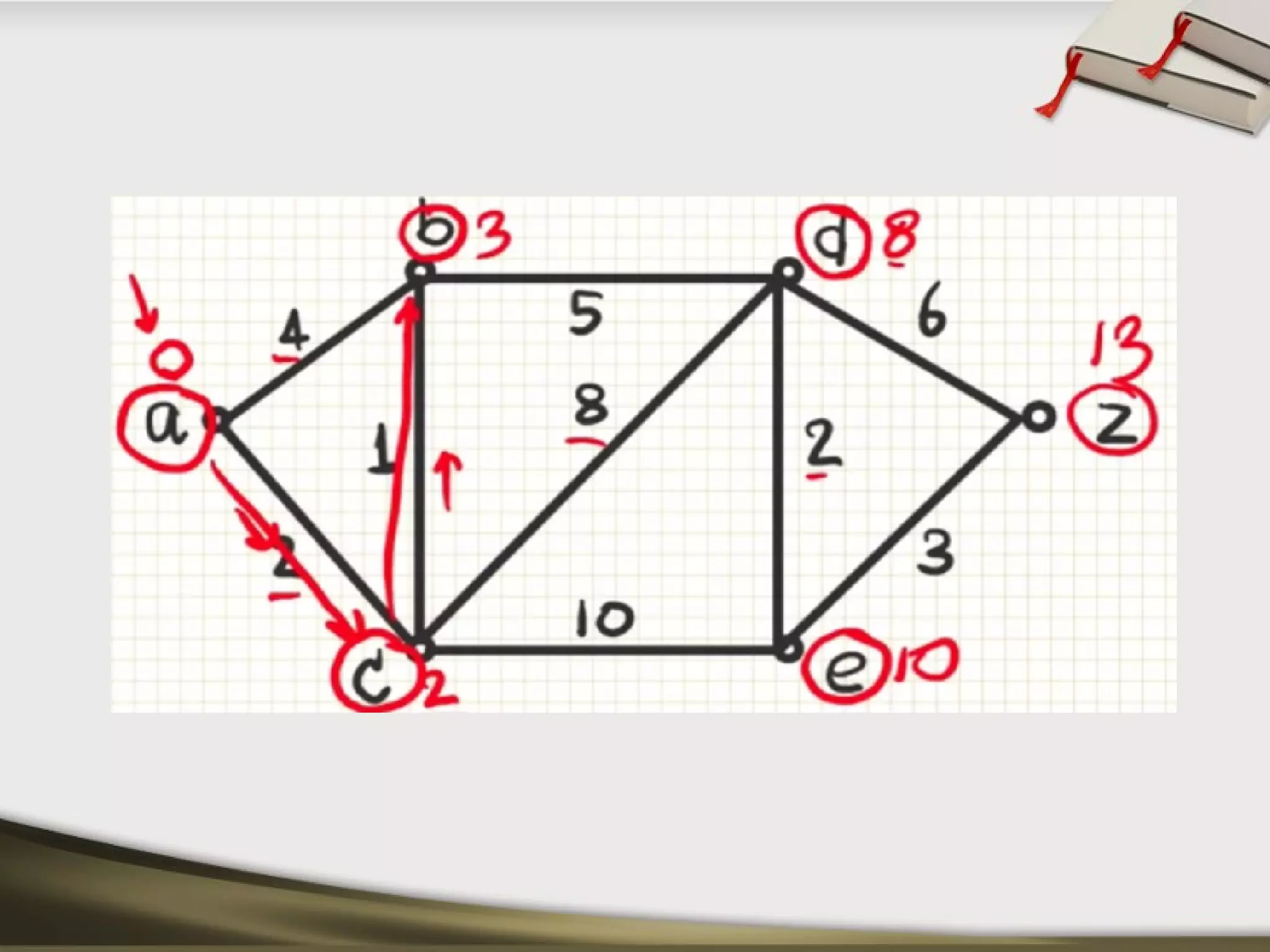
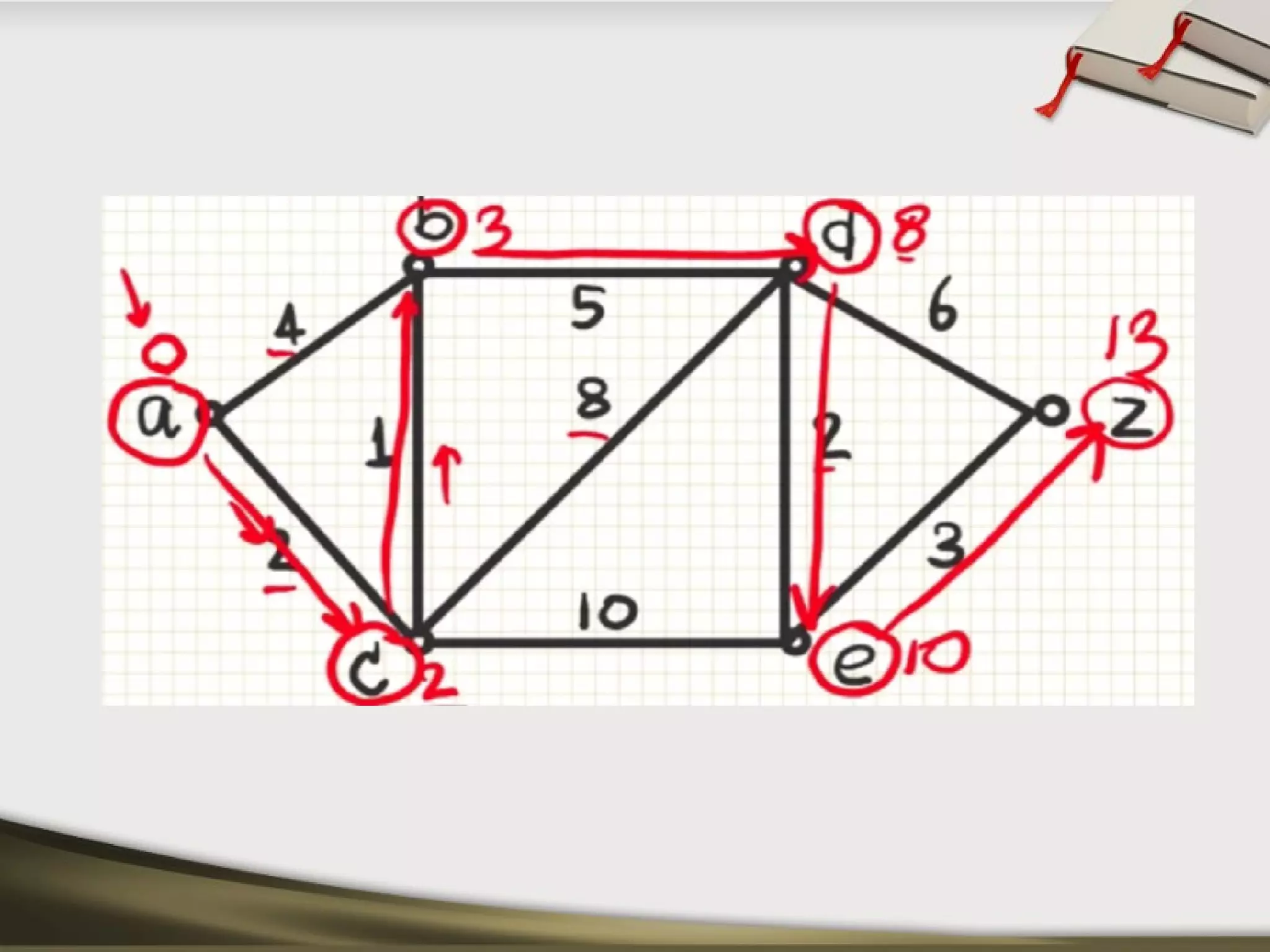
• EXAMPLE
• SPANNING TREE
• PRIM’S ALGORITHM
• EXAMPLE
Graph
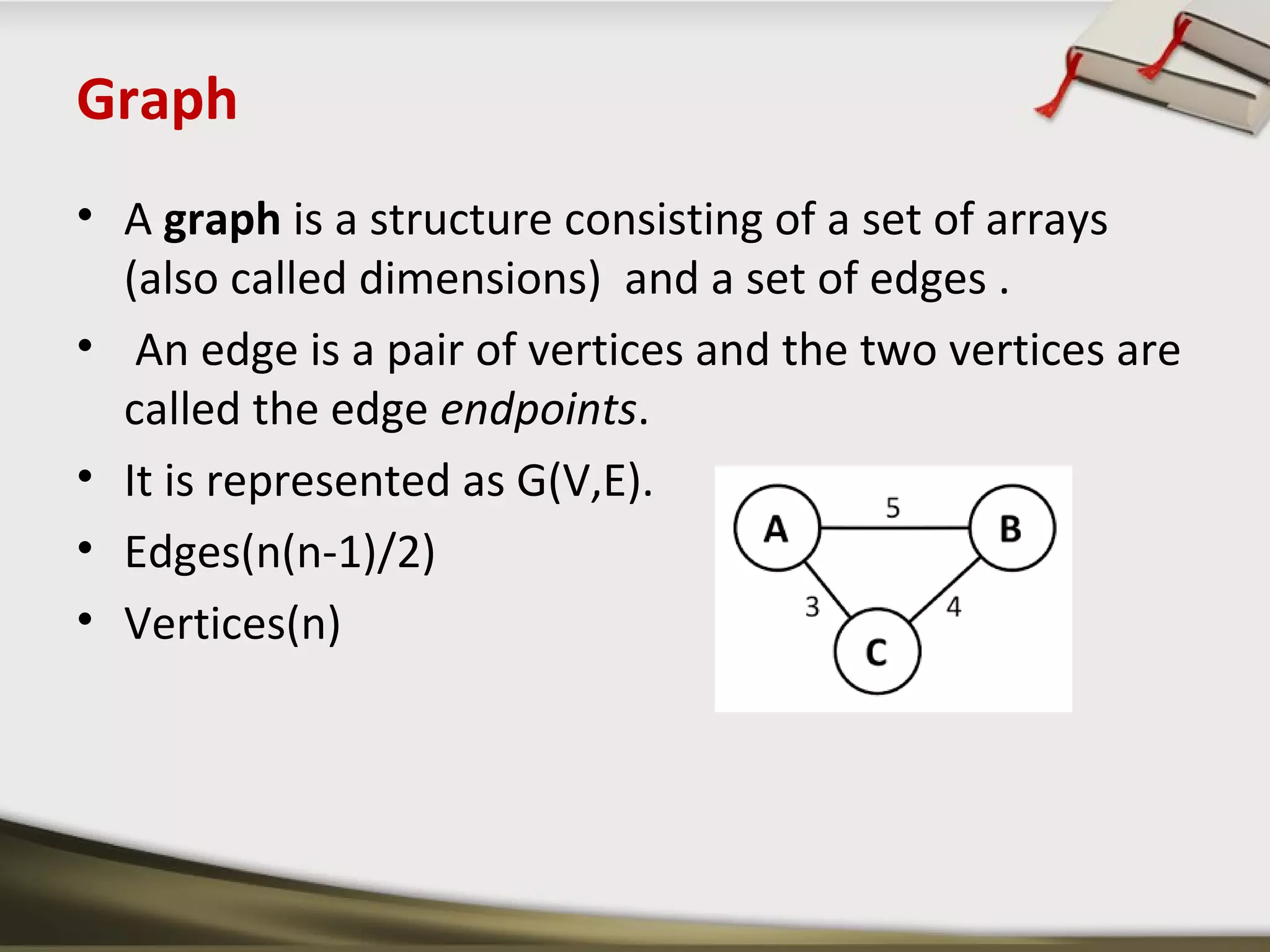
• A graph is a structure consisting of a set of arrays
(also called dimensions) and a set of edges .
• An edge is a pair of vertices and the two vertices are
called the edge endpoints.
• It is represented as G(V,E).
• Edges(n(n-1)/2)
• Vertices(n)
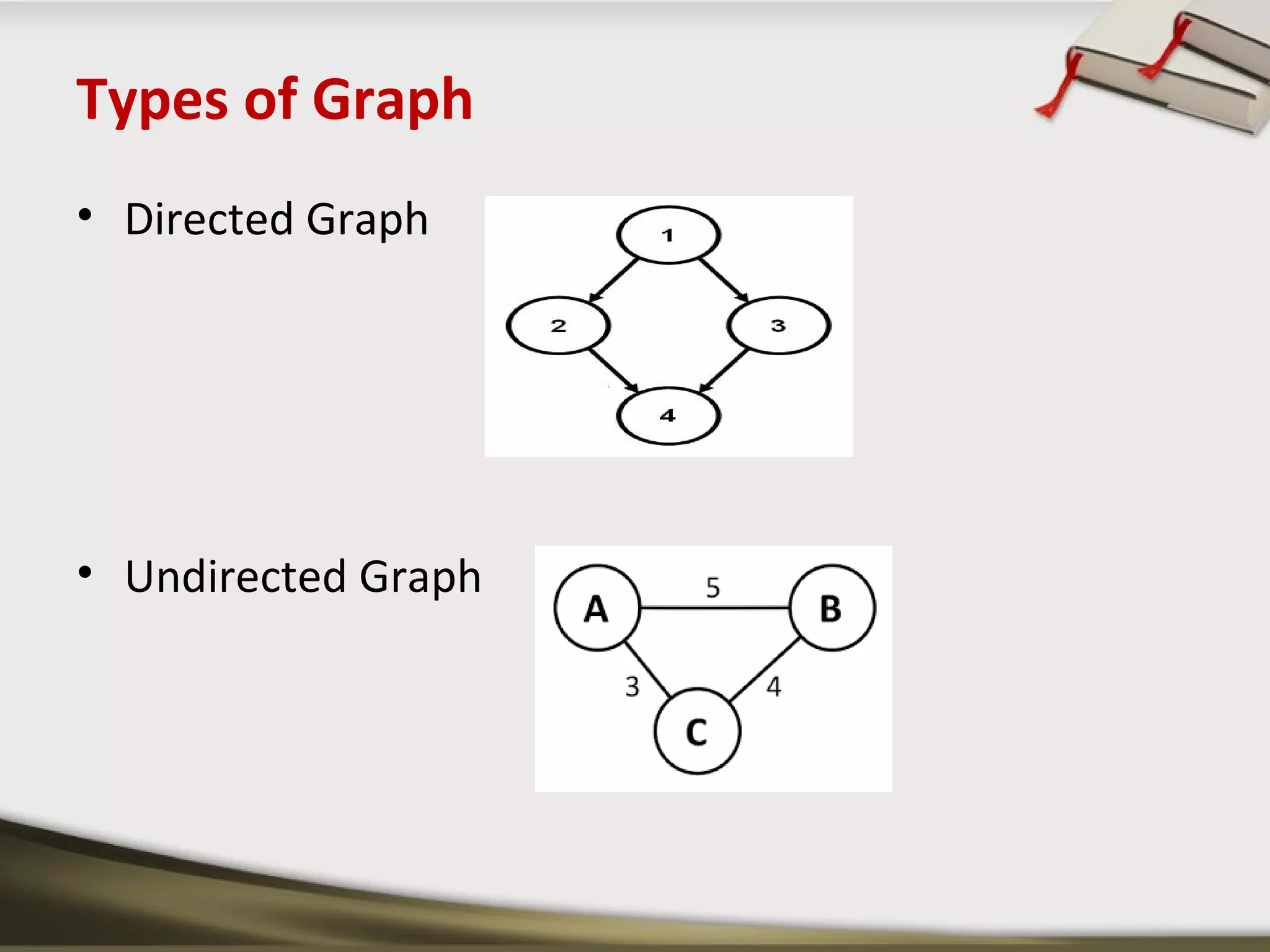
Types of Graph
• Directed Graph
• Undirected Graph
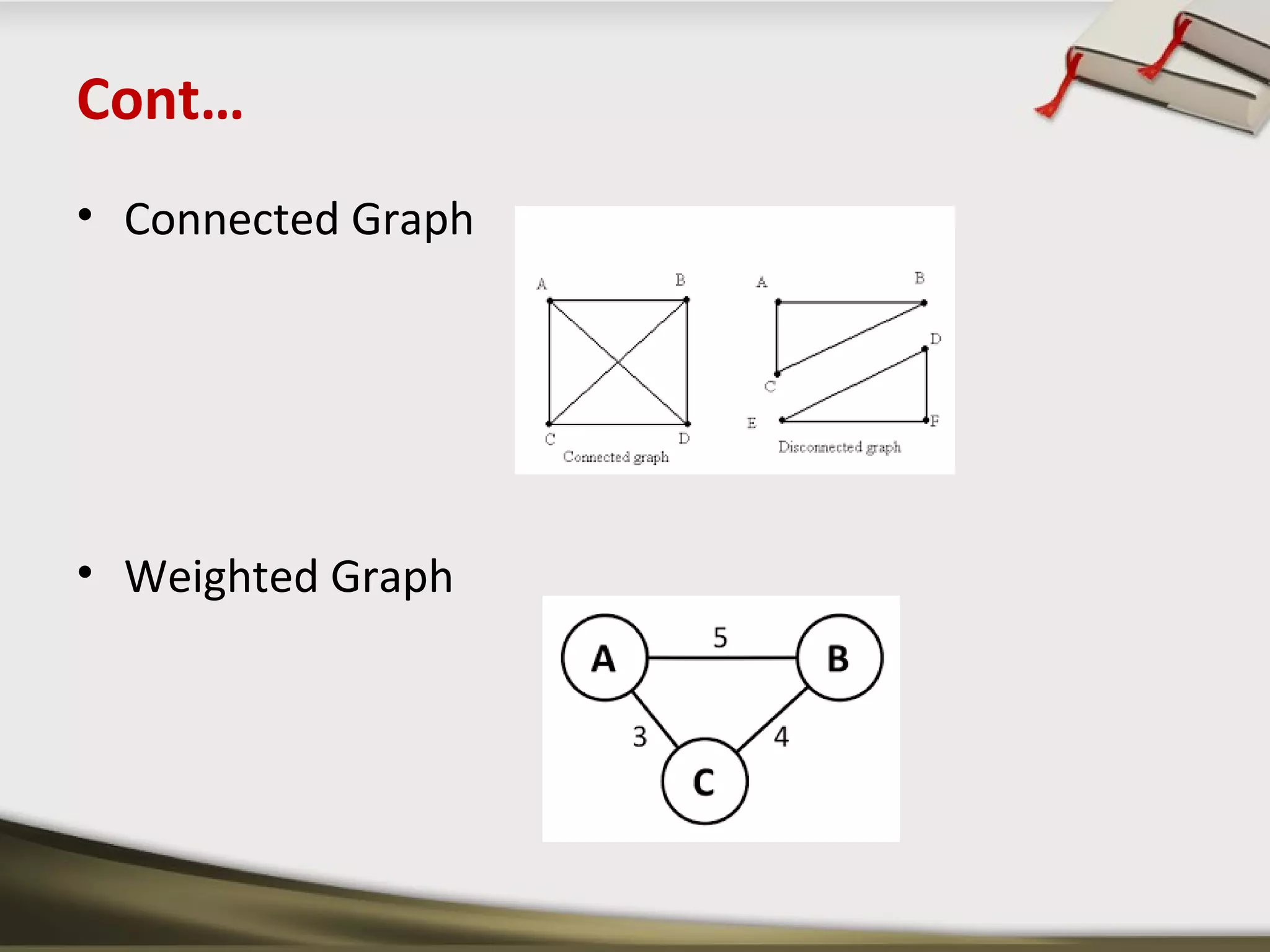
Cont…
• Connected Graph
• Weighted Graph
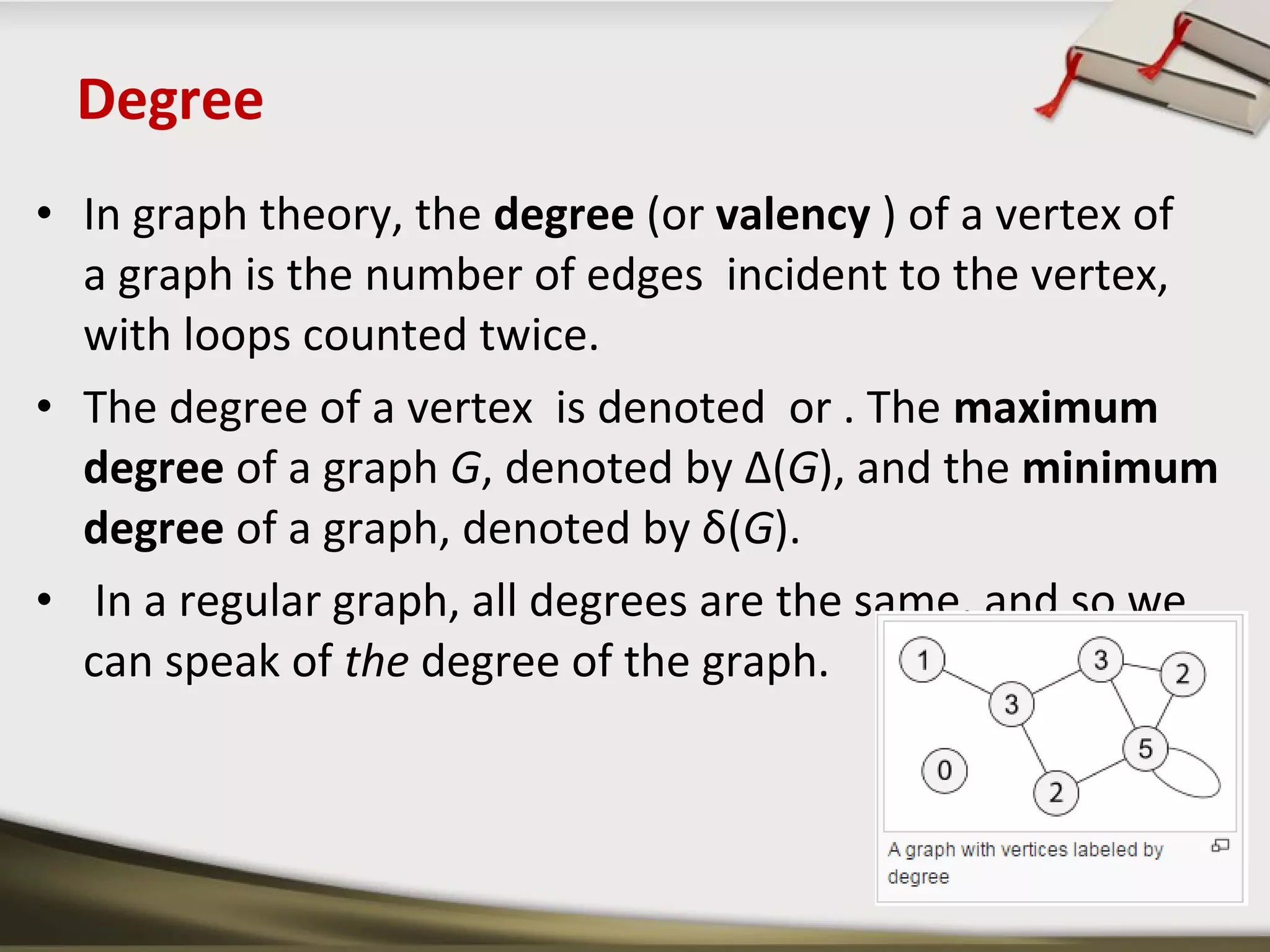
• In graph theory, the degree (or valency ) of a vertex of
a graph is the number of edges incident to the vertex,
with loops counted twice.
• The degree of a vertex is denoted or . The maximum
degree of a graph G, denoted by Δ(G), and the minimum
degree of a graph, denoted by δ(G).
• In a regular graph, all degrees are the same, and so we
can speak of the degree of the graph.
Degree
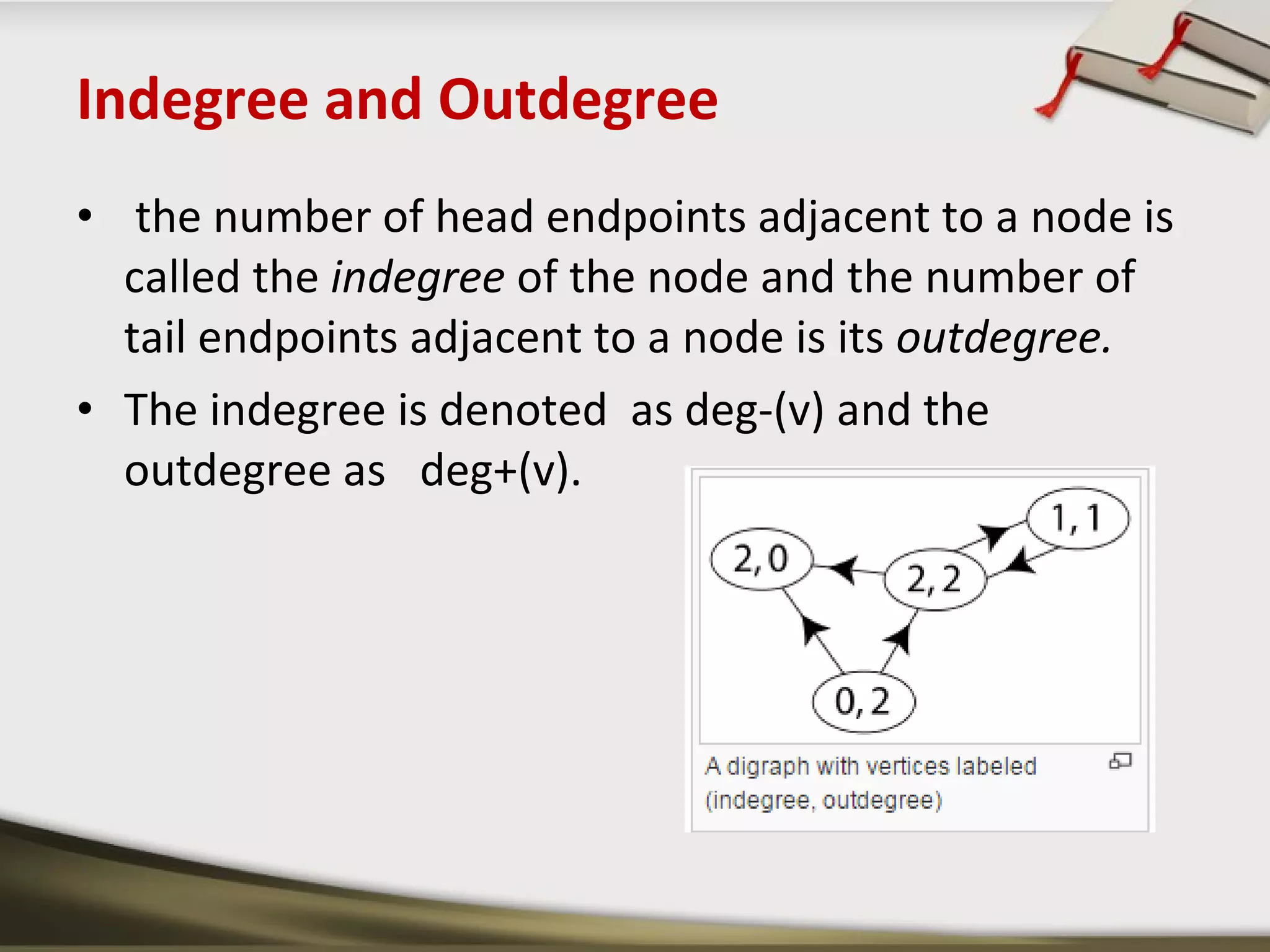
• the number of head endpoints adjacent to a node is
called the indegree of the node and the number of
tail endpoints adjacent to a node is its outdegree.
• The indegree is denoted as deg-(v) and the
outdegree as deg+(v).
Indegree and Outdegree
Shortest Path Problem
• If all the edges in a graph have non-negative weights,
then it is possible to find the shortest path from any
two vertices.
• For example, lets assume in a figure, the shortest
path from B to F is { B, A, C, E, F } with a total cost of
nine.
• Thus, the problem is well defined for a graph that
contains non-negative weights.
• In an weighted graph, the weight of an edge measures
the cost of traveling that edge.
• For example, in a graph representing a network of
airports, the weights could represent: distance, cost or
time.
• Such a graph could be used to answer any of the
following:
– What is the fastest way to get from A to B?
– Which route from A to B is the least expensive?
– What is the shortest possible distance from A to B?
Shortest Path Problem
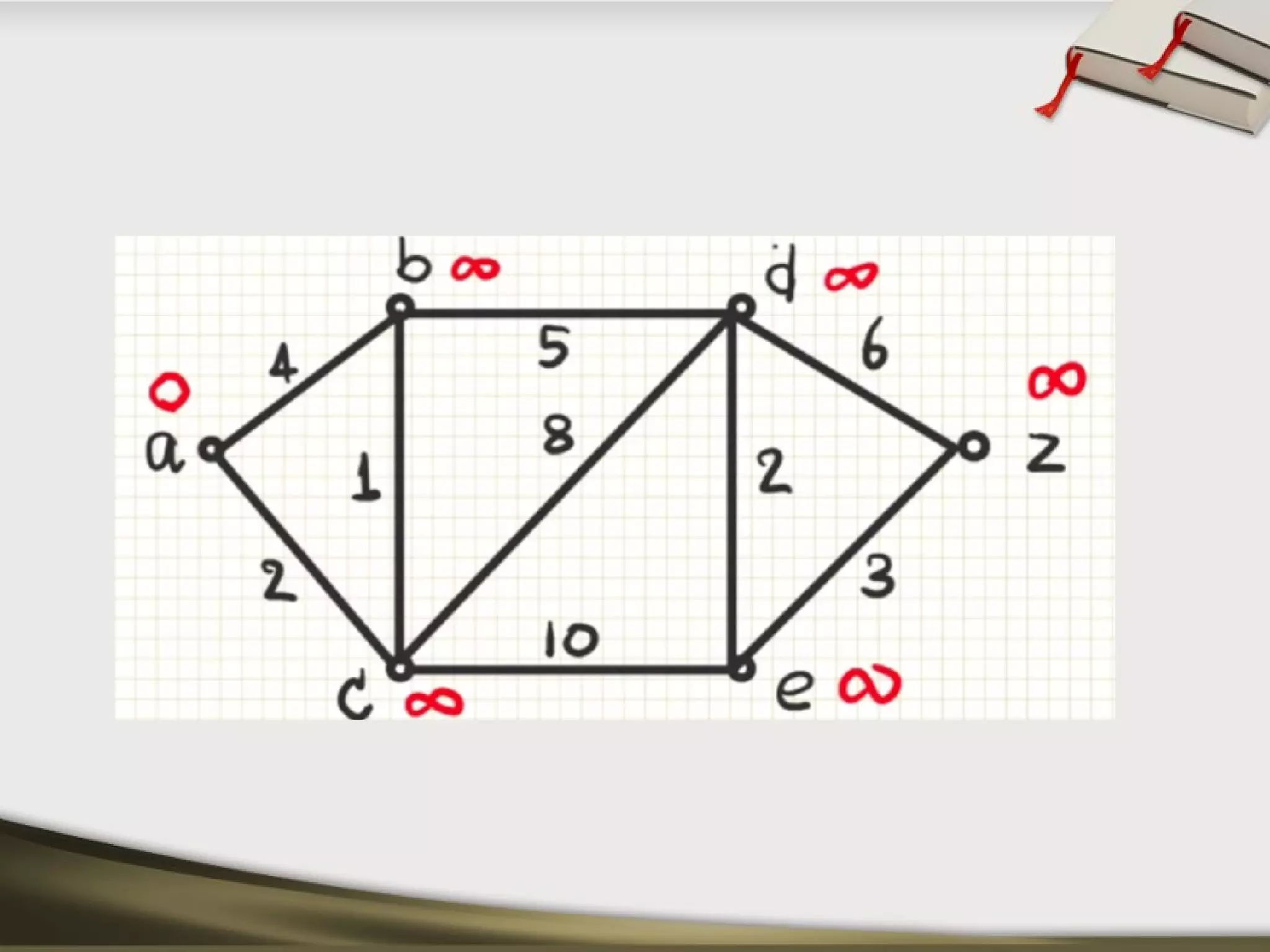
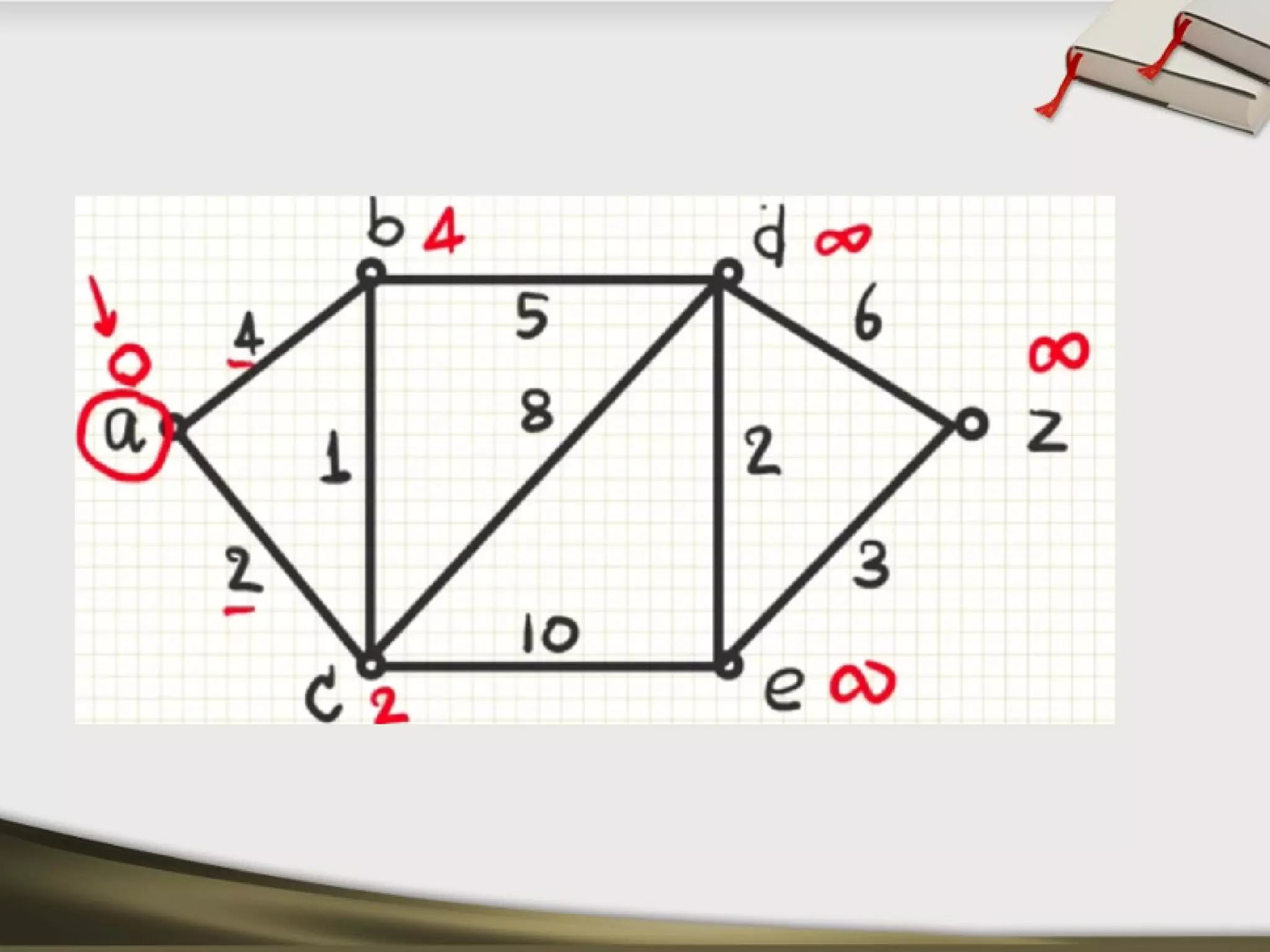
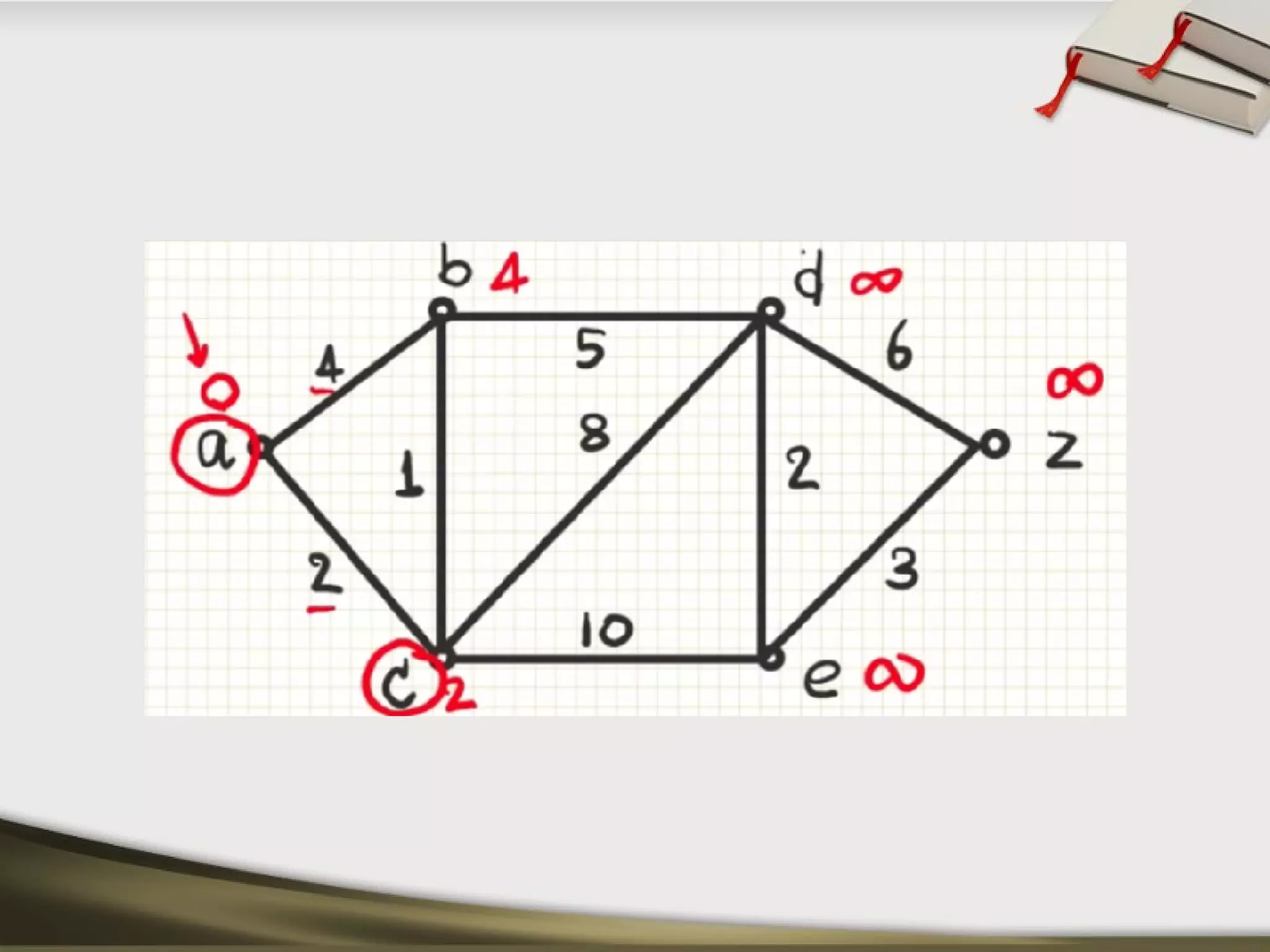
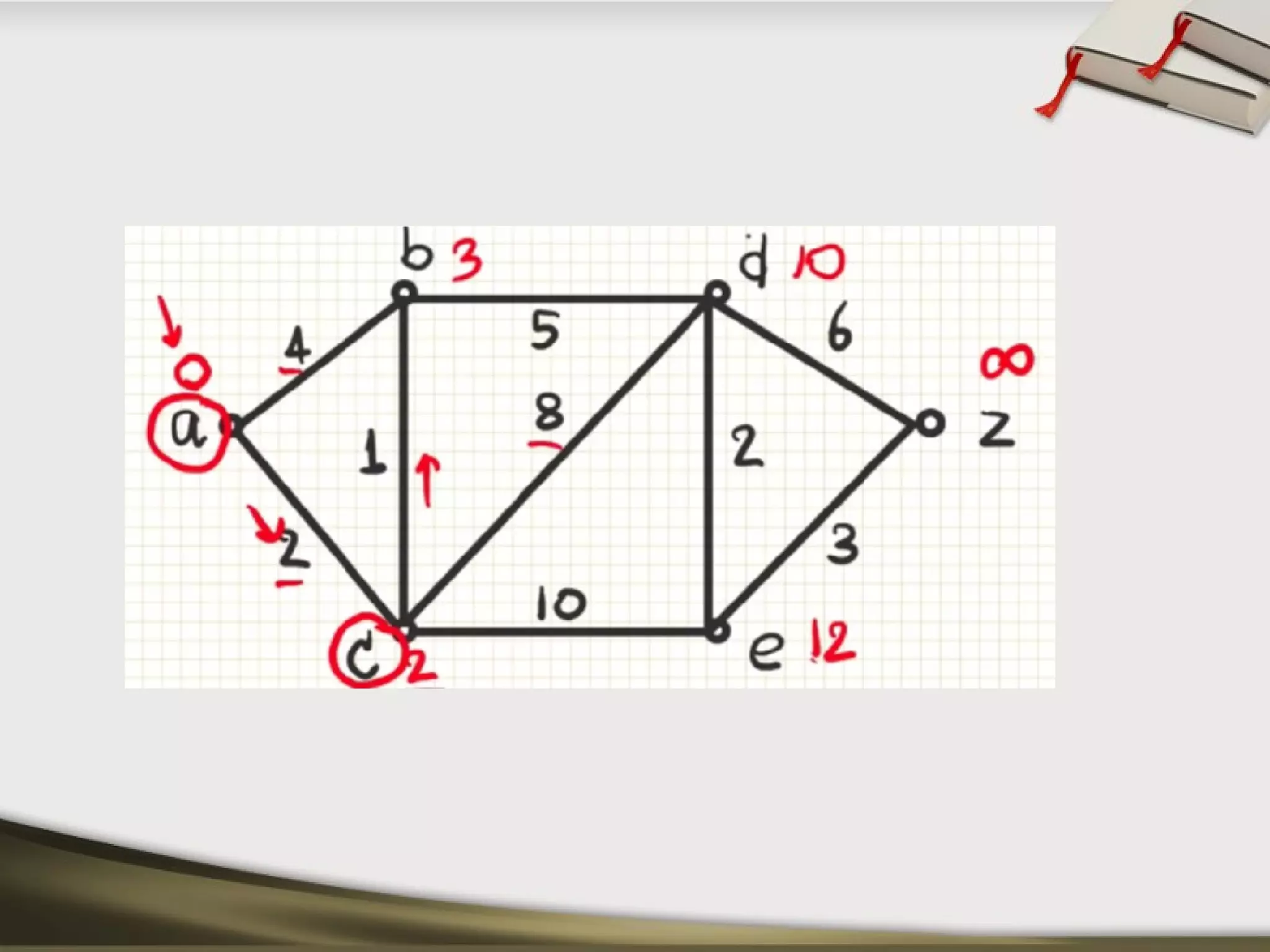
Dijkistra’s Algorithm
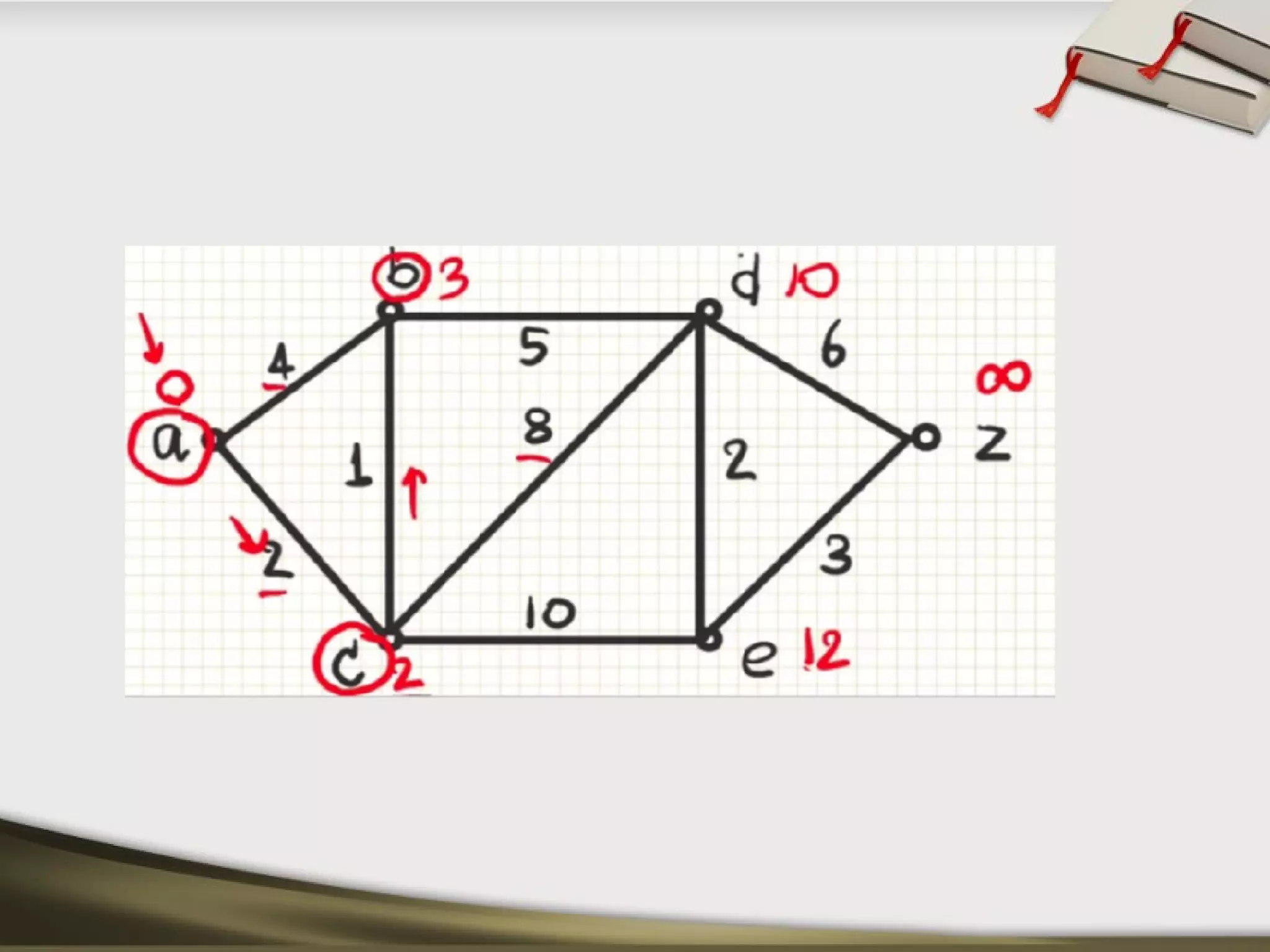
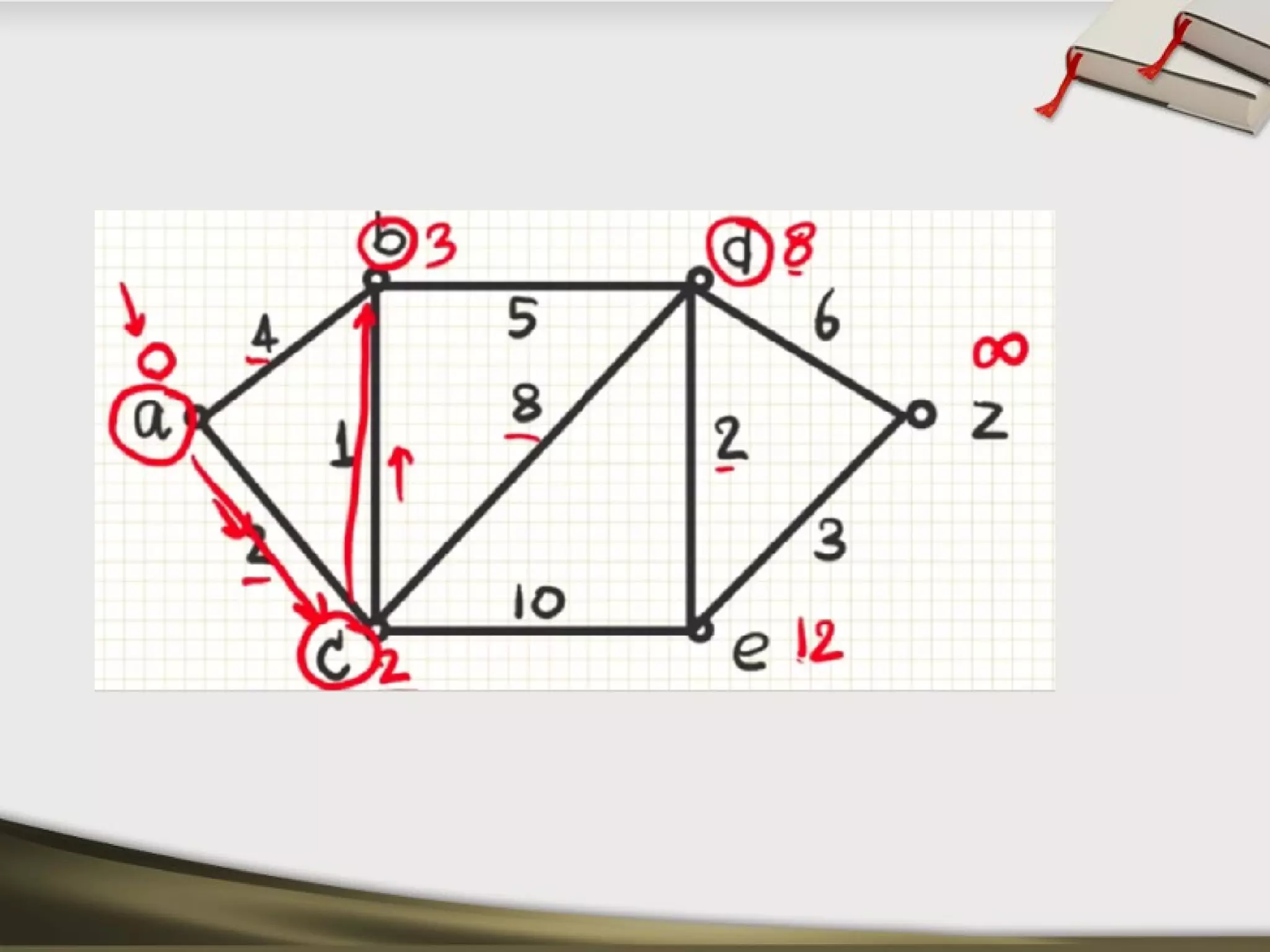
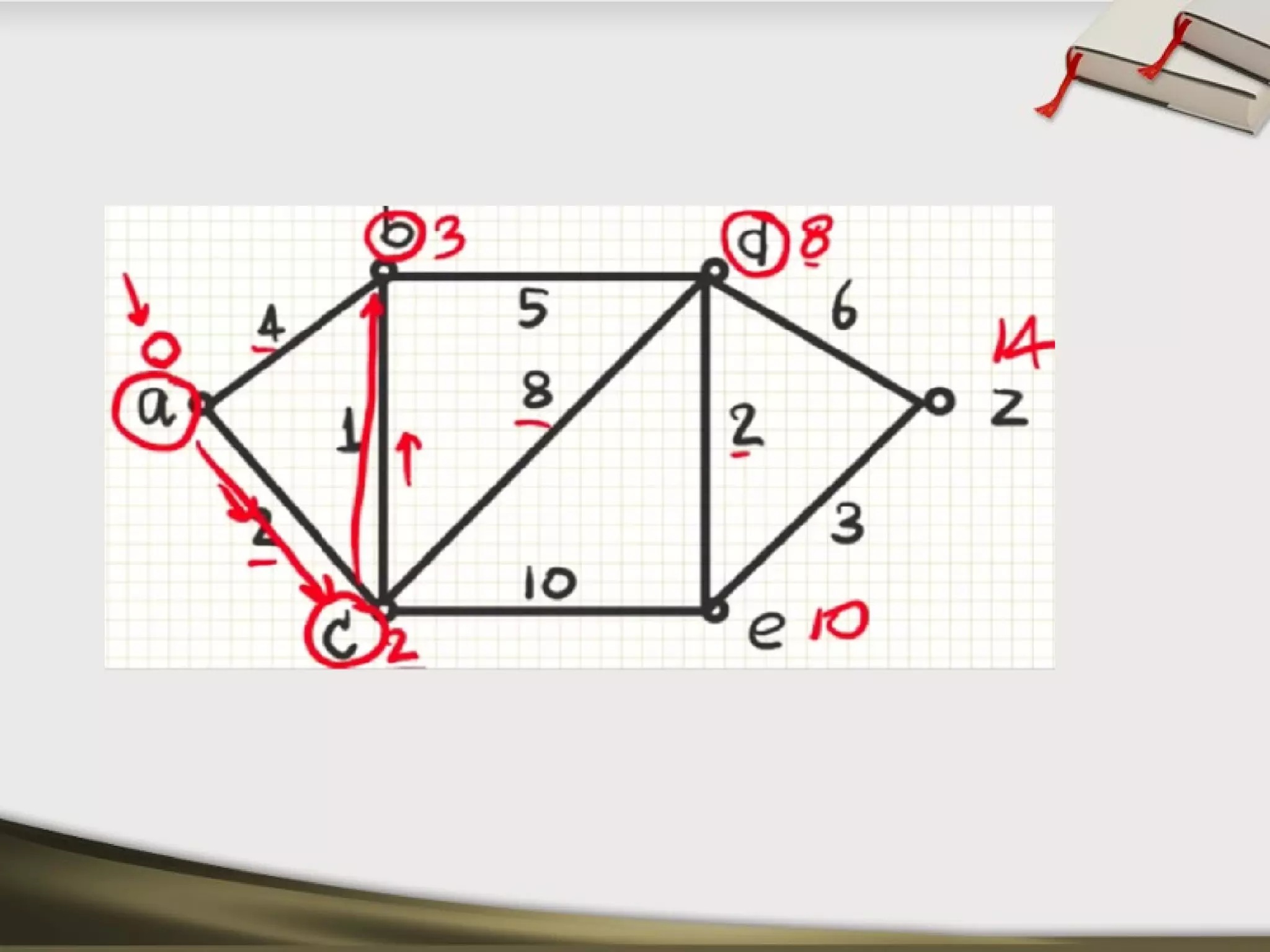
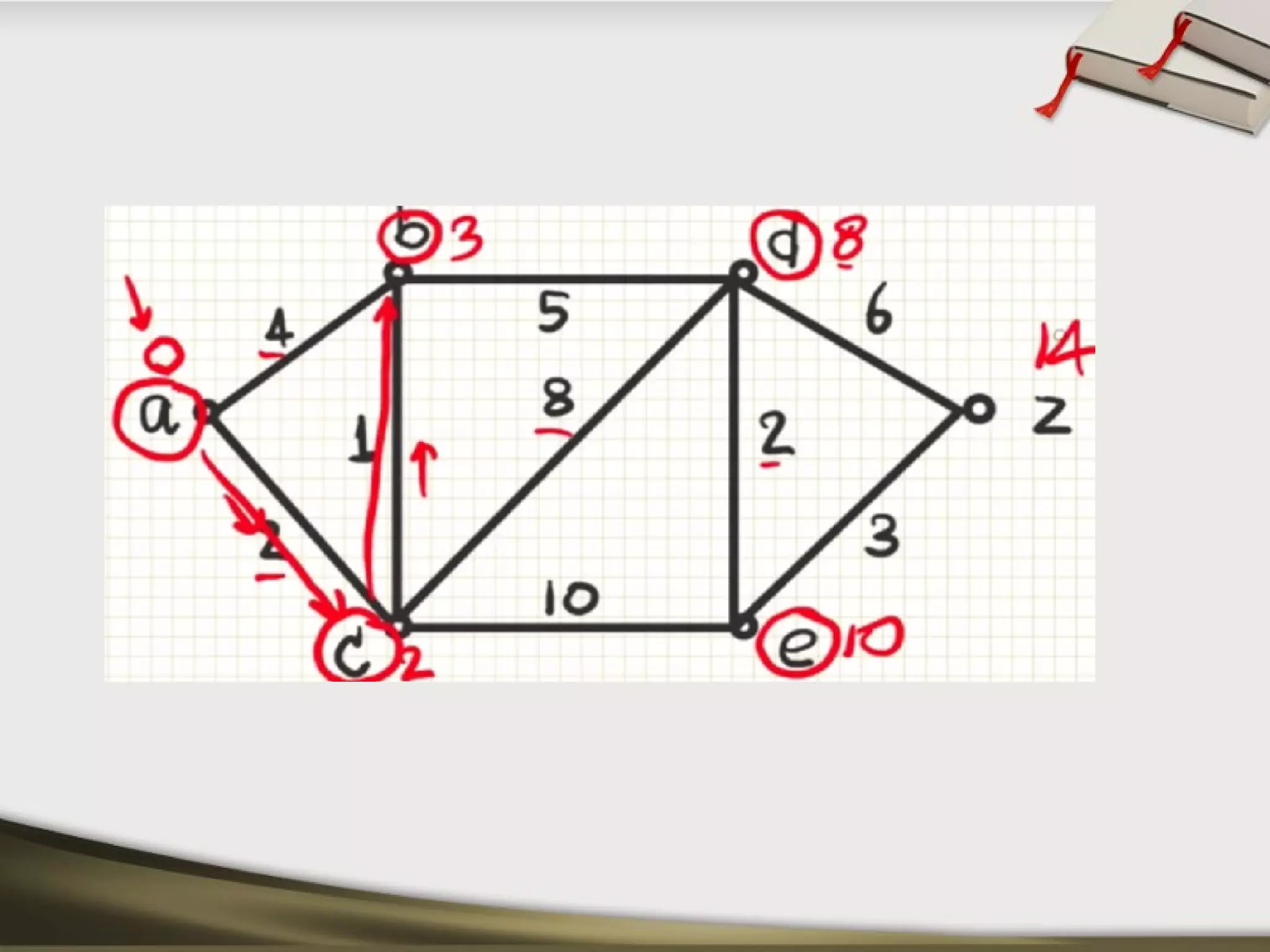
function Dijkstra(Graph, source):
dist[source] ← 0
prev[source] ← undefined
for each vertex v in Graph:
if v ≠ source
dist[v] ← infinity
prev[v] ← undefined
end if
add v to Q
end for
while Q is not empty:
u ← vertex in Q with min dist[u]
remove u from Q
for each neighbor v of u:
alt ← dist[u] + length(u, v)
if alt < dist[v]
dist[v] ← alt
prev[v] ← u
end if
end for
end while
Cont…
return dist[], prev[]
end function
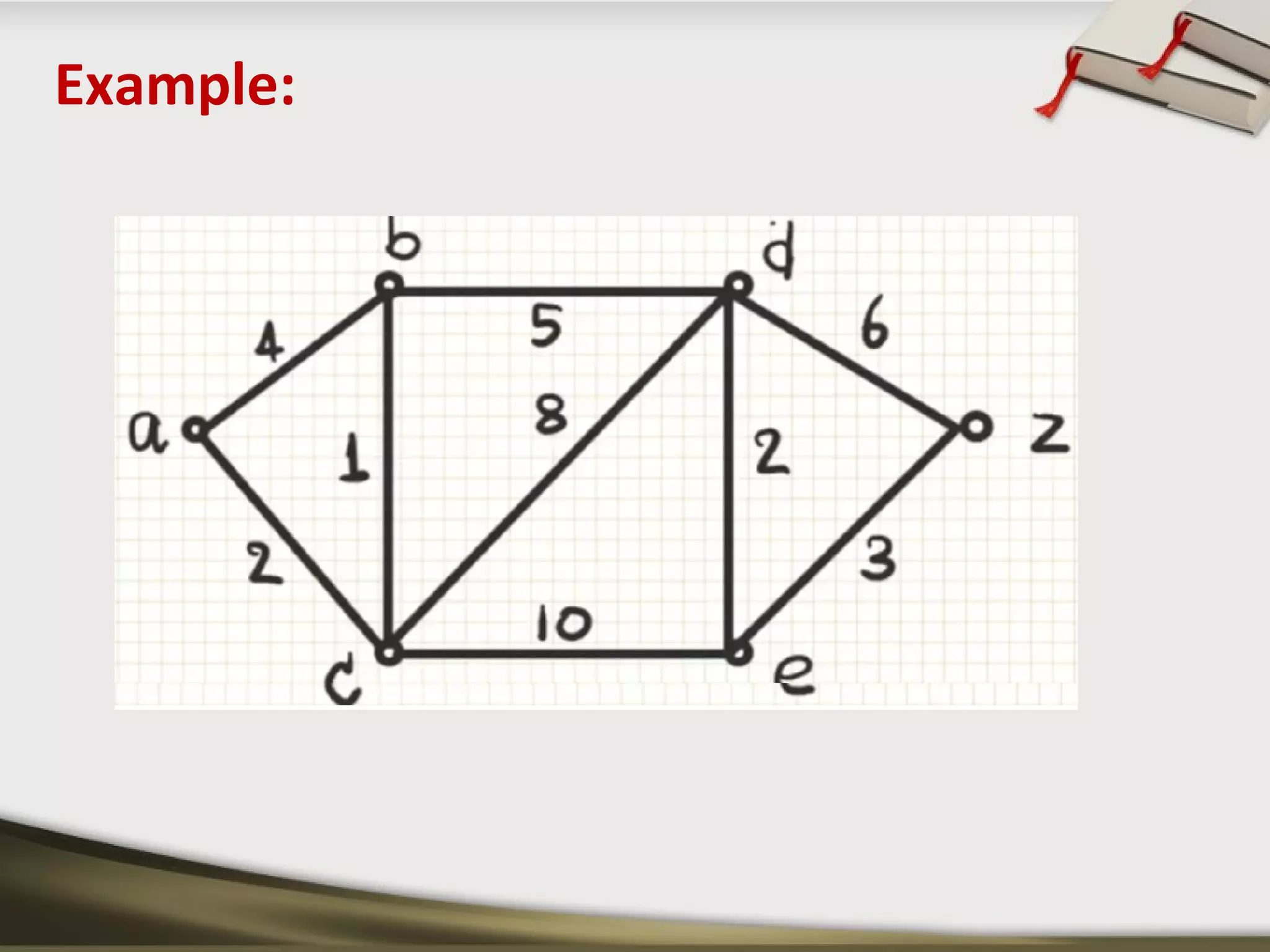
Example:
1.Given a road map of Europe find the distance from
Wien to all other capitals on the map. - Represent cities
as vertices, roads as edges and distances between
cities as edge weights. Then, find the shortest paths to
all vertices the vertex that represents Wien.
2. Given the schedule of all airline flights and their
flying-times what is the fastest way to go from Wien to
Calcutta.
3. Urban traffic planning.
4. Routing of telecommunications messages.
Application
Spanning Tree
In the mathematical field of graph theory, a spanning
tree T of an undirected graph G is a sub graph that
includes all the vertices of G that is a tree.
In general, a graph may have several spanning trees,
but a graph that is not connected will not contain a
spanning tree .
Algorithm :
 Prim’s Algorithm
 Kruskal Algorithm
Prim’s Algorithm
Initially discovered in 1930 by Vojtěch Jarník, then
rediscovered in 1957 by Robert C. Prim
Prim's algorithm is a greedy algorithm that finds
a minimum spanning tree for a connected weighted
undirected graph.
This means it finds a subset of the edges that forms
a tree that includes every vertex, where the total weight of
all the edges in the tree is minimized.
A graph can have one or more number of spanning trees.
If the graph has N vertices then the spanning tree will have
n-1 edges
A minimum spanning tree is a spanning tree that has the
minimum weight than all other spanning trees of the
graph.
cont...
Prim’s Algorithm
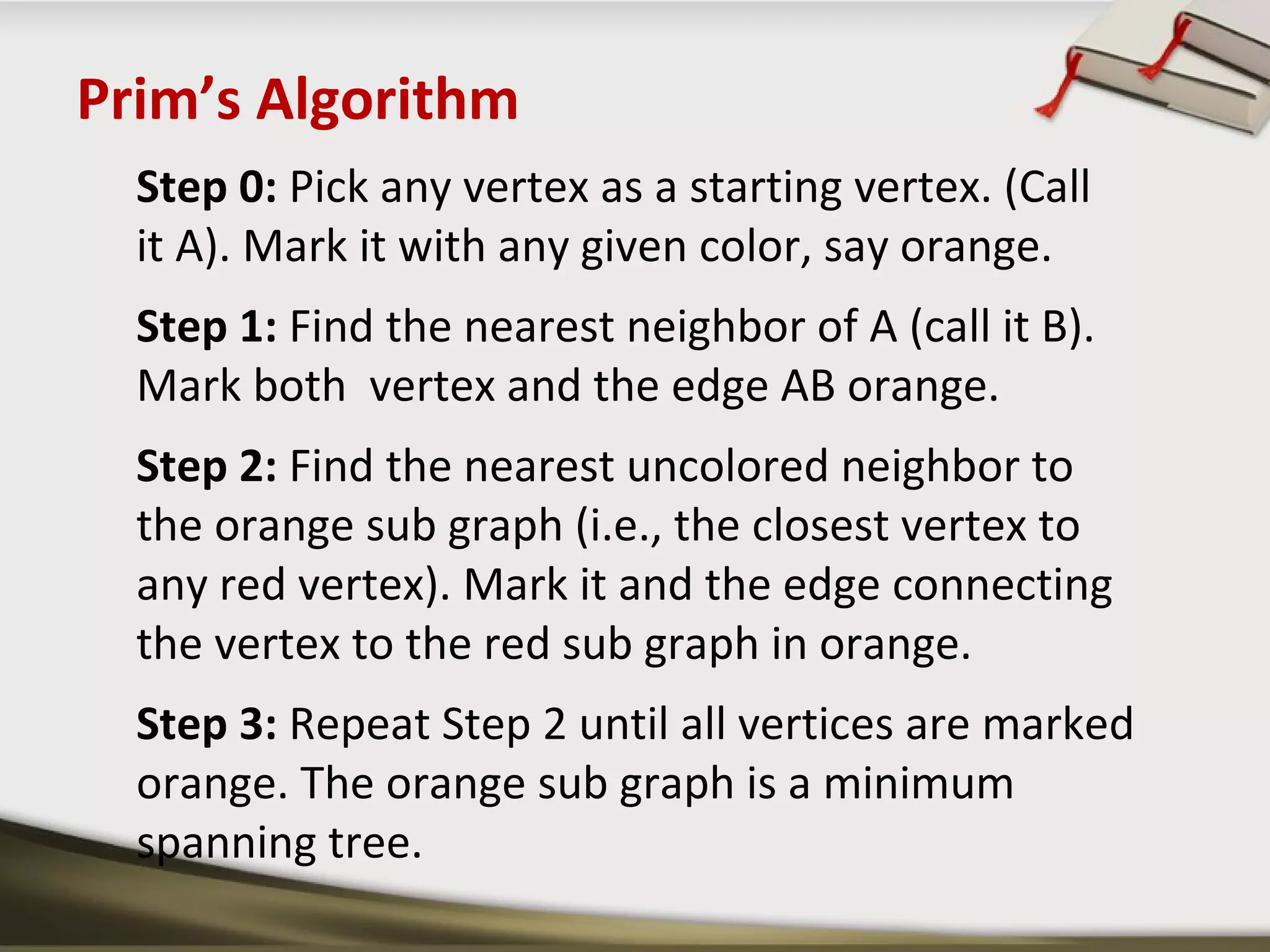
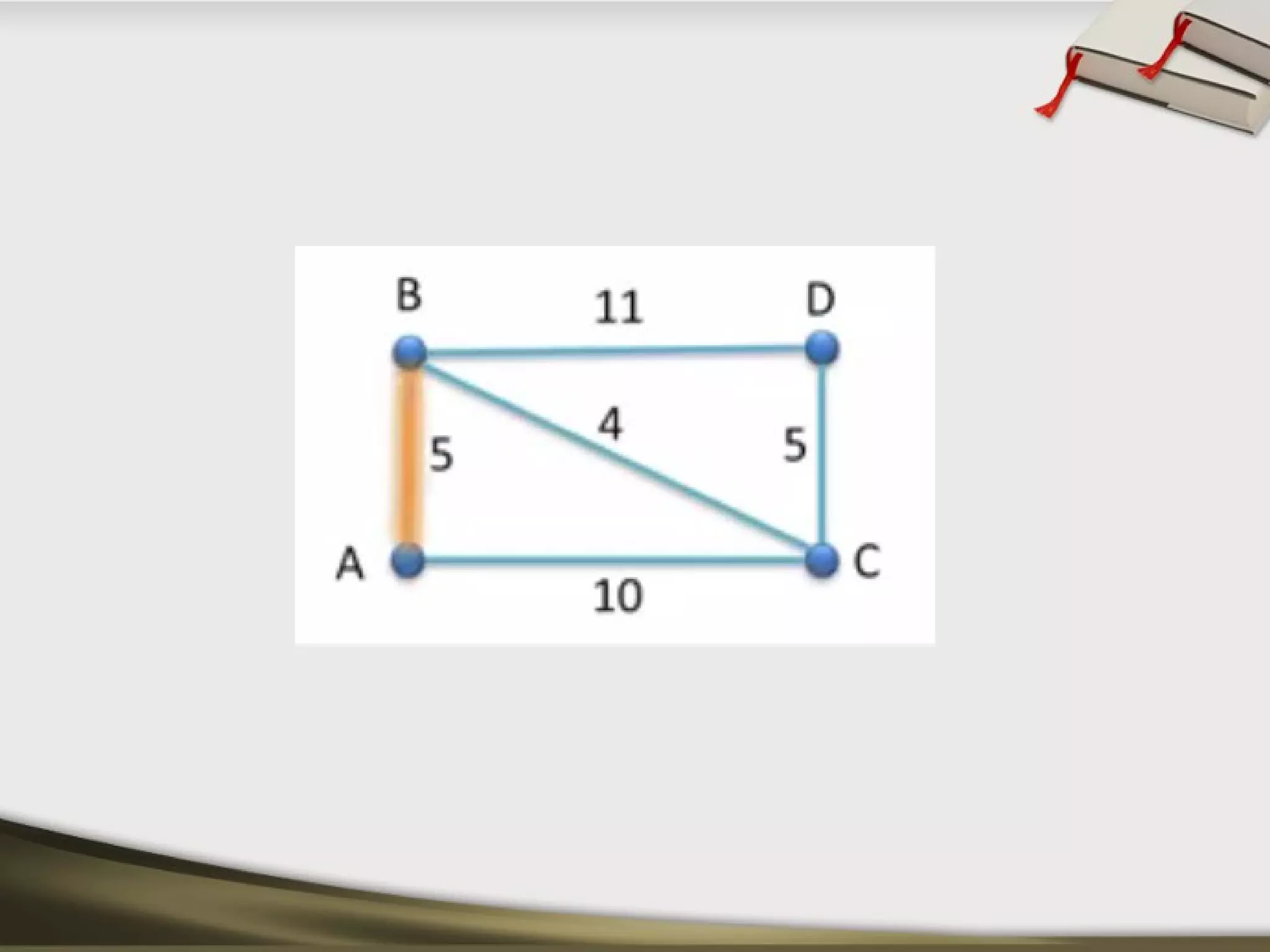
Step 0: Pick any vertex as a starting vertex. (Call
it A). Mark it with any given color, say orange.
Step 1: Find the nearest neighbor of A (call it B).
Mark both vertex and the edge AB orange.
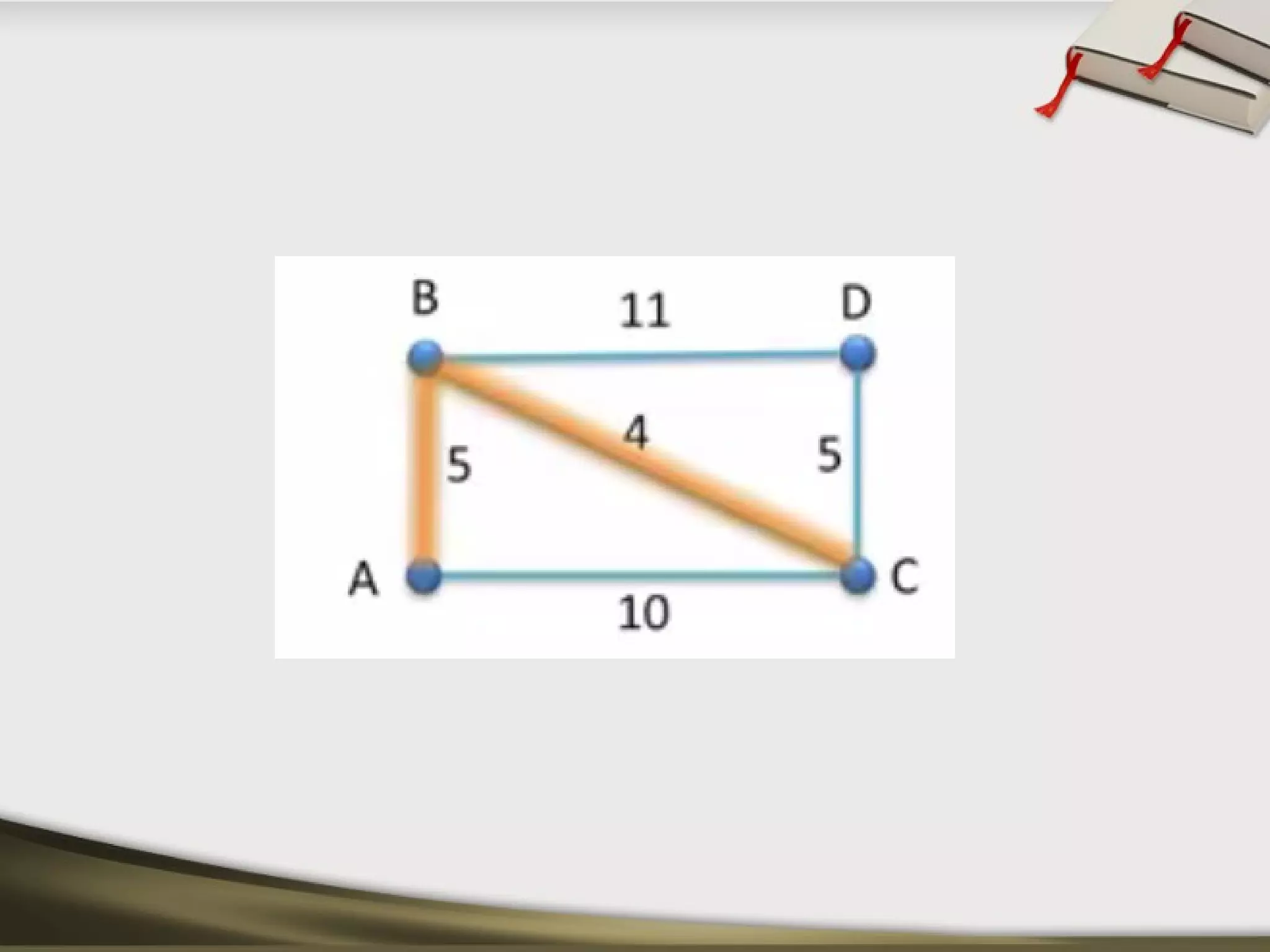
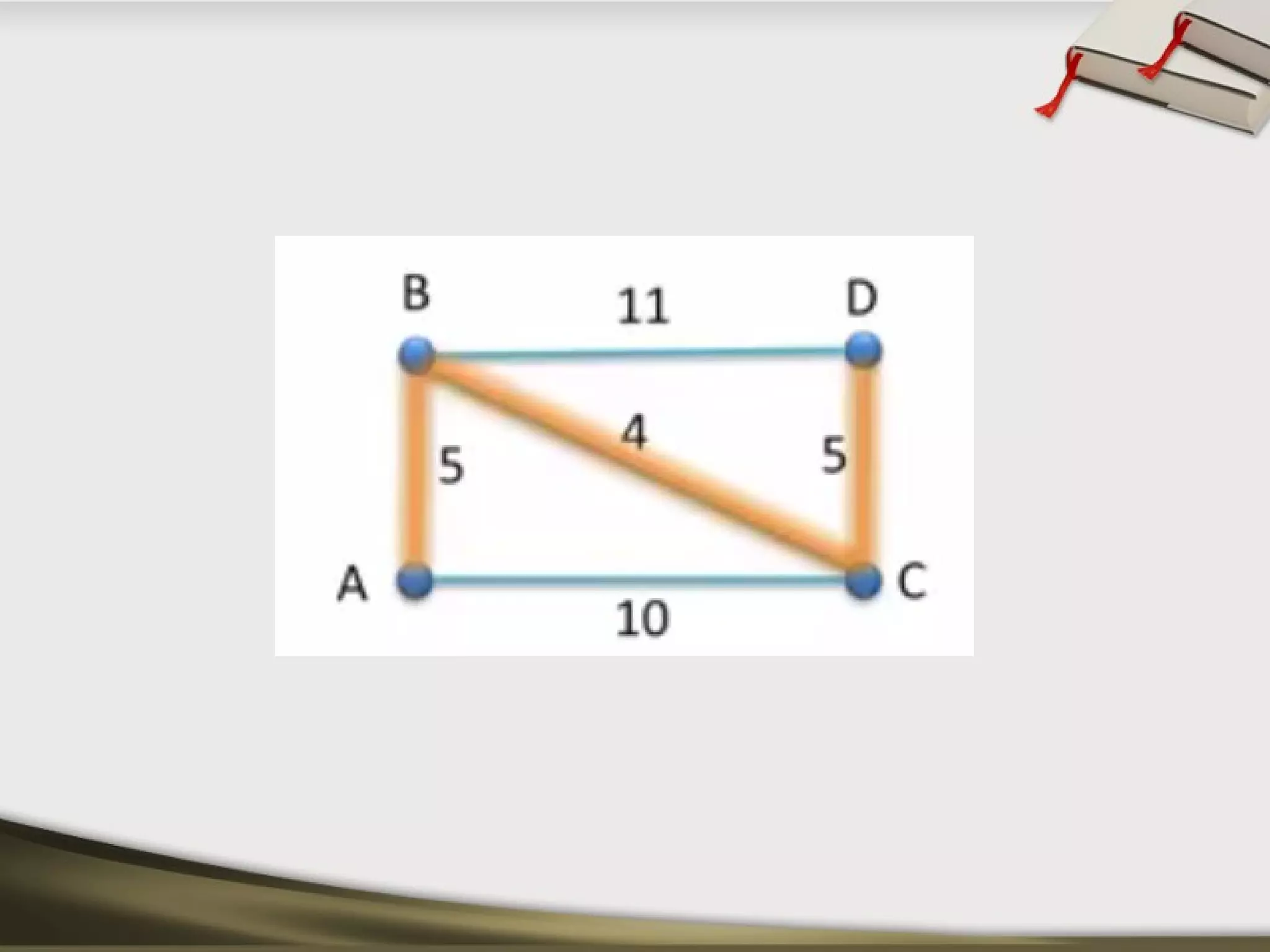
Step 2: Find the nearest uncolored neighbor to
the orange sub graph (i.e., the closest vertex to
any red vertex). Mark it and the edge connecting
the vertex to the red sub graph in orange.
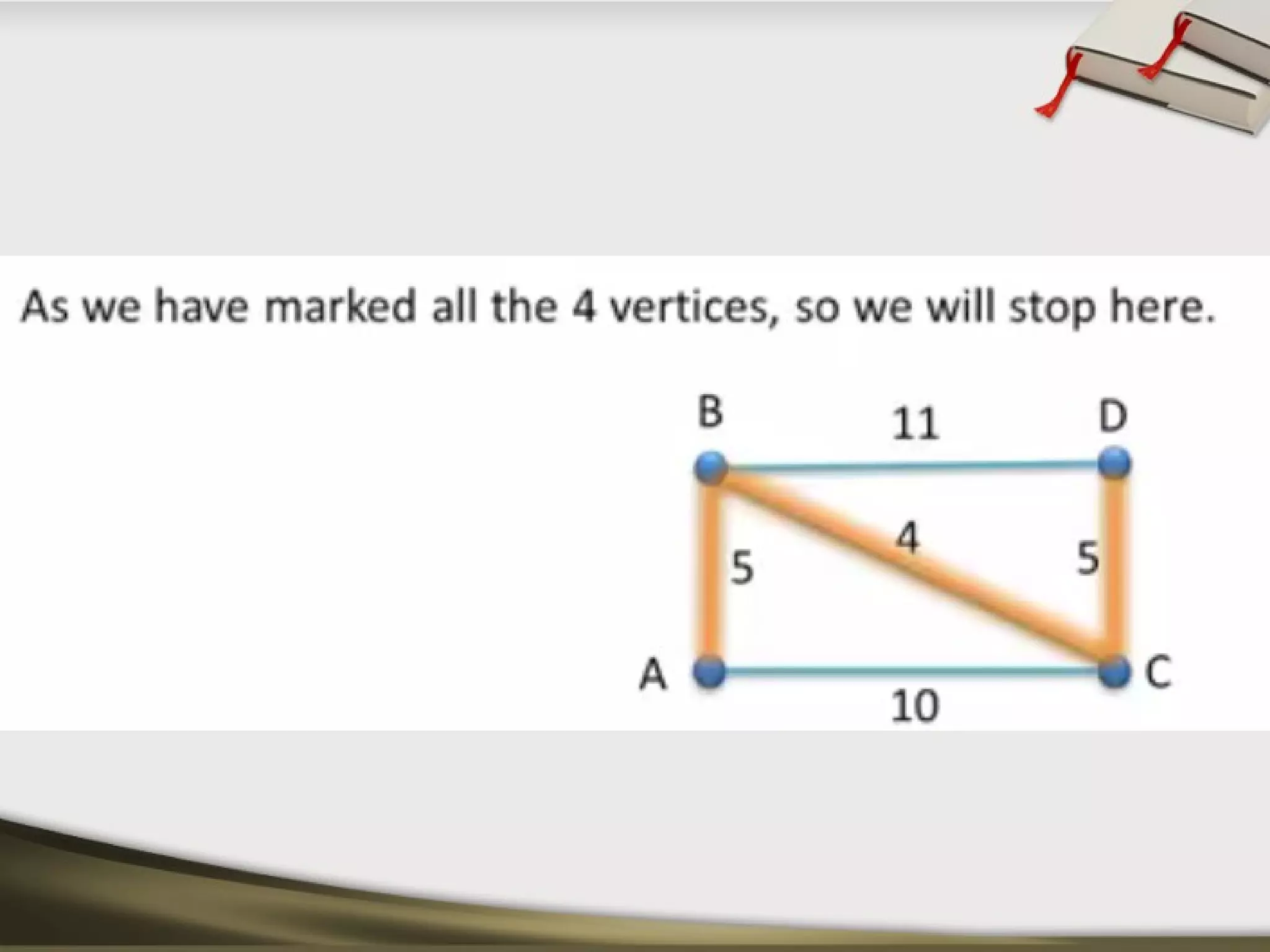
Step 3: Repeat Step 2 until all vertices are marked
orange. The orange sub graph is a minimum
spanning tree.
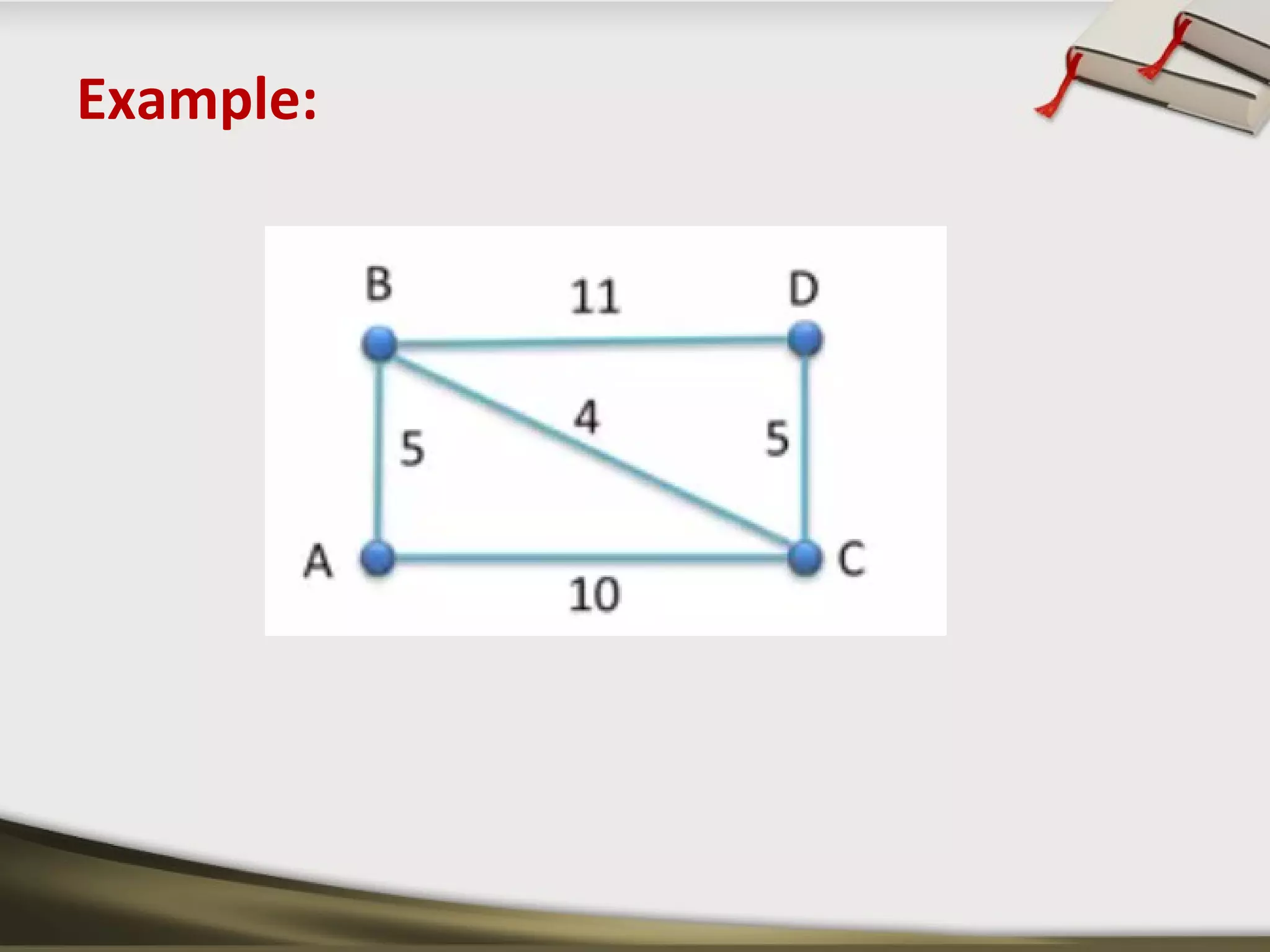
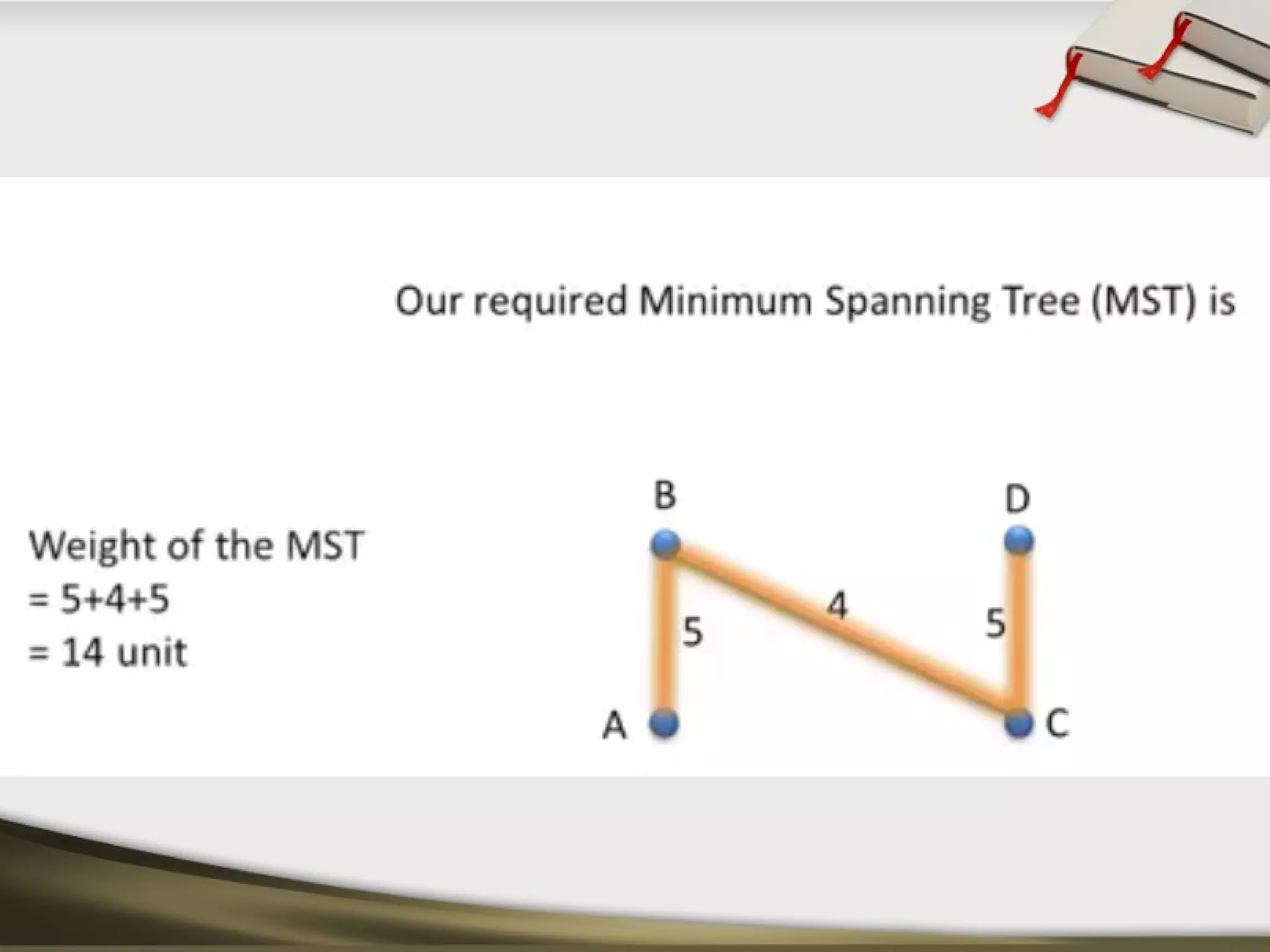
Example:
Reference
•www.google.com
•www.wikipidea.com
•H. coreman
MLSU UNIVERSITY

Shortest path (Dijkistra's Algorithm) & Spanning Tree (Prim's Algorithm)

  • 1.
    SHORTEST PATH PROBLEM Submittedto: Submitted by: Mrs. Priyanka Soni Krati Katyal MCA 2nd Sem
  • 2.
    Topic Covered • GRAPH •SHORTEST PATH PROBLEM • DIJKISTRA’S ALGORITHM • EXAMPLE • SPANNING TREE • PRIM’S ALGORITHM • EXAMPLE
  • 3.
    Graph • A graphis a structure consisting of a set of arrays (also called dimensions) and a set of edges . • An edge is a pair of vertices and the two vertices are called the edge endpoints. • It is represented as G(V,E). • Edges(n(n-1)/2) • Vertices(n)
  • 4.
    Types of Graph •Directed Graph • Undirected Graph
  • 5.
  • 6.
    • In graphtheory, the degree (or valency ) of a vertex of a graph is the number of edges incident to the vertex, with loops counted twice. • The degree of a vertex is denoted or . The maximum degree of a graph G, denoted by Δ(G), and the minimum degree of a graph, denoted by δ(G). • In a regular graph, all degrees are the same, and so we can speak of the degree of the graph. Degree
  • 7.
    • the numberof head endpoints adjacent to a node is called the indegree of the node and the number of tail endpoints adjacent to a node is its outdegree. • The indegree is denoted as deg-(v) and the outdegree as deg+(v). Indegree and Outdegree
  • 8.
    Shortest Path Problem •If all the edges in a graph have non-negative weights, then it is possible to find the shortest path from any two vertices. • For example, lets assume in a figure, the shortest path from B to F is { B, A, C, E, F } with a total cost of nine. • Thus, the problem is well defined for a graph that contains non-negative weights.
  • 9.
    • In anweighted graph, the weight of an edge measures the cost of traveling that edge. • For example, in a graph representing a network of airports, the weights could represent: distance, cost or time. • Such a graph could be used to answer any of the following: – What is the fastest way to get from A to B? – Which route from A to B is the least expensive? – What is the shortest possible distance from A to B? Shortest Path Problem
  • 10.
    Dijkistra’s Algorithm function Dijkstra(Graph,source): dist[source] ← 0 prev[source] ← undefined for each vertex v in Graph: if v ≠ source dist[v] ← infinity prev[v] ← undefined end if add v to Q end for
  • 11.
    while Q isnot empty: u ← vertex in Q with min dist[u] remove u from Q for each neighbor v of u: alt ← dist[u] + length(u, v) if alt < dist[v] dist[v] ← alt prev[v] ← u end if end for end while Cont…
  • 12.
  • 13.
  • 24.
    1.Given a roadmap of Europe find the distance from Wien to all other capitals on the map. - Represent cities as vertices, roads as edges and distances between cities as edge weights. Then, find the shortest paths to all vertices the vertex that represents Wien. 2. Given the schedule of all airline flights and their flying-times what is the fastest way to go from Wien to Calcutta. 3. Urban traffic planning. 4. Routing of telecommunications messages. Application
  • 25.
    Spanning Tree In themathematical field of graph theory, a spanning tree T of an undirected graph G is a sub graph that includes all the vertices of G that is a tree. In general, a graph may have several spanning trees, but a graph that is not connected will not contain a spanning tree . Algorithm :  Prim’s Algorithm  Kruskal Algorithm
  • 26.
    Prim’s Algorithm Initially discoveredin 1930 by Vojtěch Jarník, then rediscovered in 1957 by Robert C. Prim Prim's algorithm is a greedy algorithm that finds a minimum spanning tree for a connected weighted undirected graph. This means it finds a subset of the edges that forms a tree that includes every vertex, where the total weight of all the edges in the tree is minimized.
  • 27.
    A graph canhave one or more number of spanning trees. If the graph has N vertices then the spanning tree will have n-1 edges A minimum spanning tree is a spanning tree that has the minimum weight than all other spanning trees of the graph. cont...
  • 28.
    Prim’s Algorithm Step 0:Pick any vertex as a starting vertex. (Call it A). Mark it with any given color, say orange. Step 1: Find the nearest neighbor of A (call it B). Mark both vertex and the edge AB orange. Step 2: Find the nearest uncolored neighbor to the orange sub graph (i.e., the closest vertex to any red vertex). Mark it and the edge connecting the vertex to the red sub graph in orange. Step 3: Repeat Step 2 until all vertices are marked orange. The orange sub graph is a minimum spanning tree.
  • 29.
  • 35.
  • 36.