Discuss the Pathology and
advances in the management of
Short Bowel Syndrome (SBS)
By: Dr. Oladele Situ, General Surgery Unit, Department of Surgery, NHA
10th September, 2018
Moderator: Dr. C.S Batta, Consultant General Surgeon, Department of
Surgery, NHA
Outline
• Introduction
• Epidemiology
• Relevant anatomy and Physiology
• Pathophysiology of Short Bowel Syndrome
• Options of management and Management protocol
• Education, monitoring and weaning
• Prevention of short Bowel Syndrome
• National Hospital Experience
• Recommendations & Conclusion
• References
Introduction
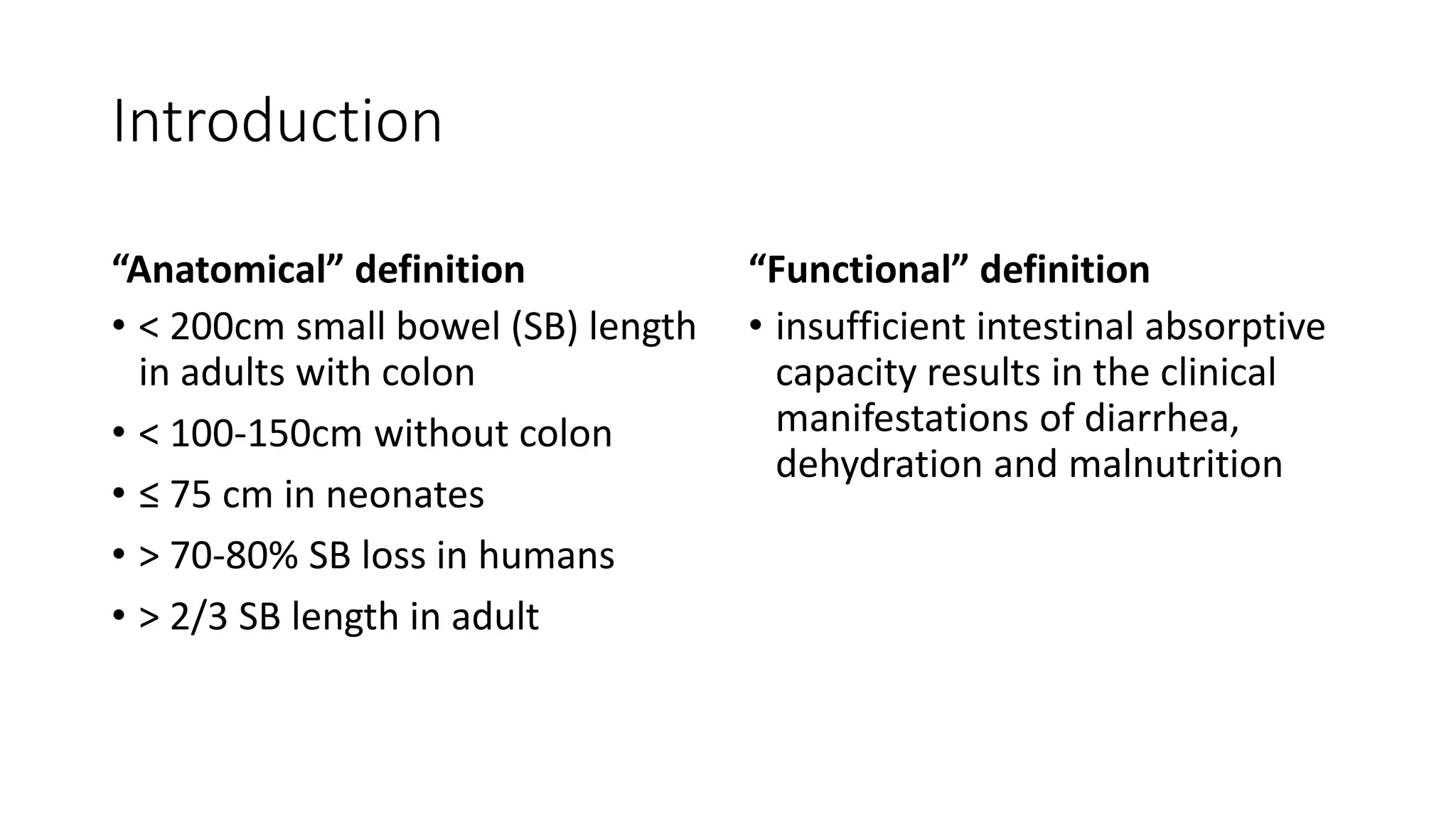
“Anatomical” definition
• < 200cm small bowel (SB) length
in adults with colon
• < 100-150cm without colon
• ≤ 75 cm in neonates
• > 70-80% SB loss in humans
• > 2/3 SB length in adult
“Functional” definition
• insufficient intestinal absorptive
capacity results in the clinical
manifestations of diarrhea,
dehydration and malnutrition
Introduction
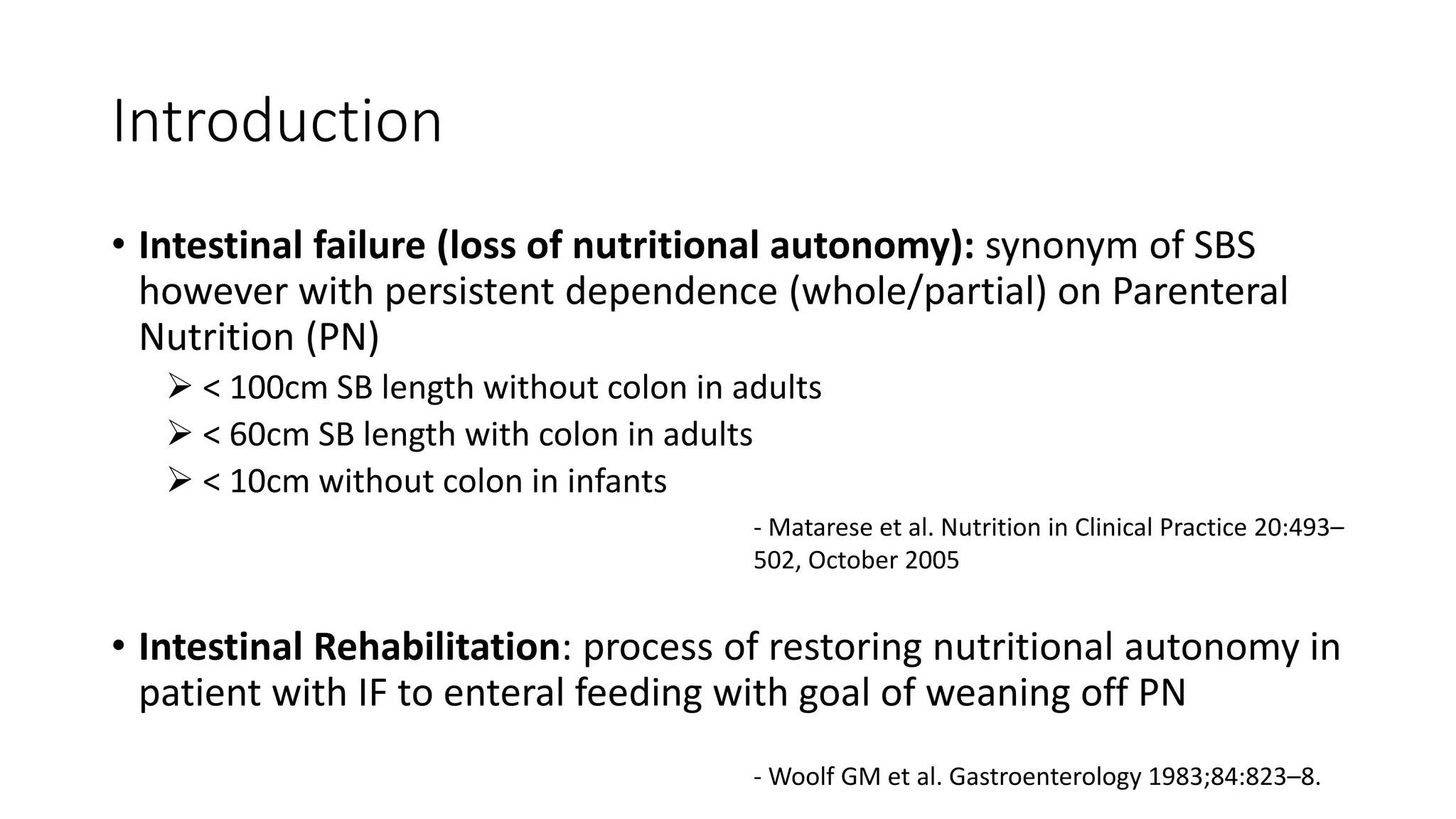
• Intestinal failure (loss of nutritional autonomy): synonym of SBS
however with persistent dependence (whole/partial) on Parenteral
Nutrition (PN)
 < 100cm SB length without colon in adults
 < 60cm SB length with colon in adults
 < 10cm without colon in infants
• Intestinal Rehabilitation: process of restoring nutritional autonomy in
patient with IF to enteral feeding with goal of weaning off PN
- Woolf GM et al. Gastroenterology 1983;84:823–8.
- Matarese et al. Nutrition in Clinical Practice 20:493–
502, October 2005
Epidemiology
• Relatively ‘uncommon’ and Epidemiology unclear especially in
developing countries
• Many report 2-4 patients per million population
• Commoner in children.
• ? Rising trends in adults because of advances in Intestinal Transplants
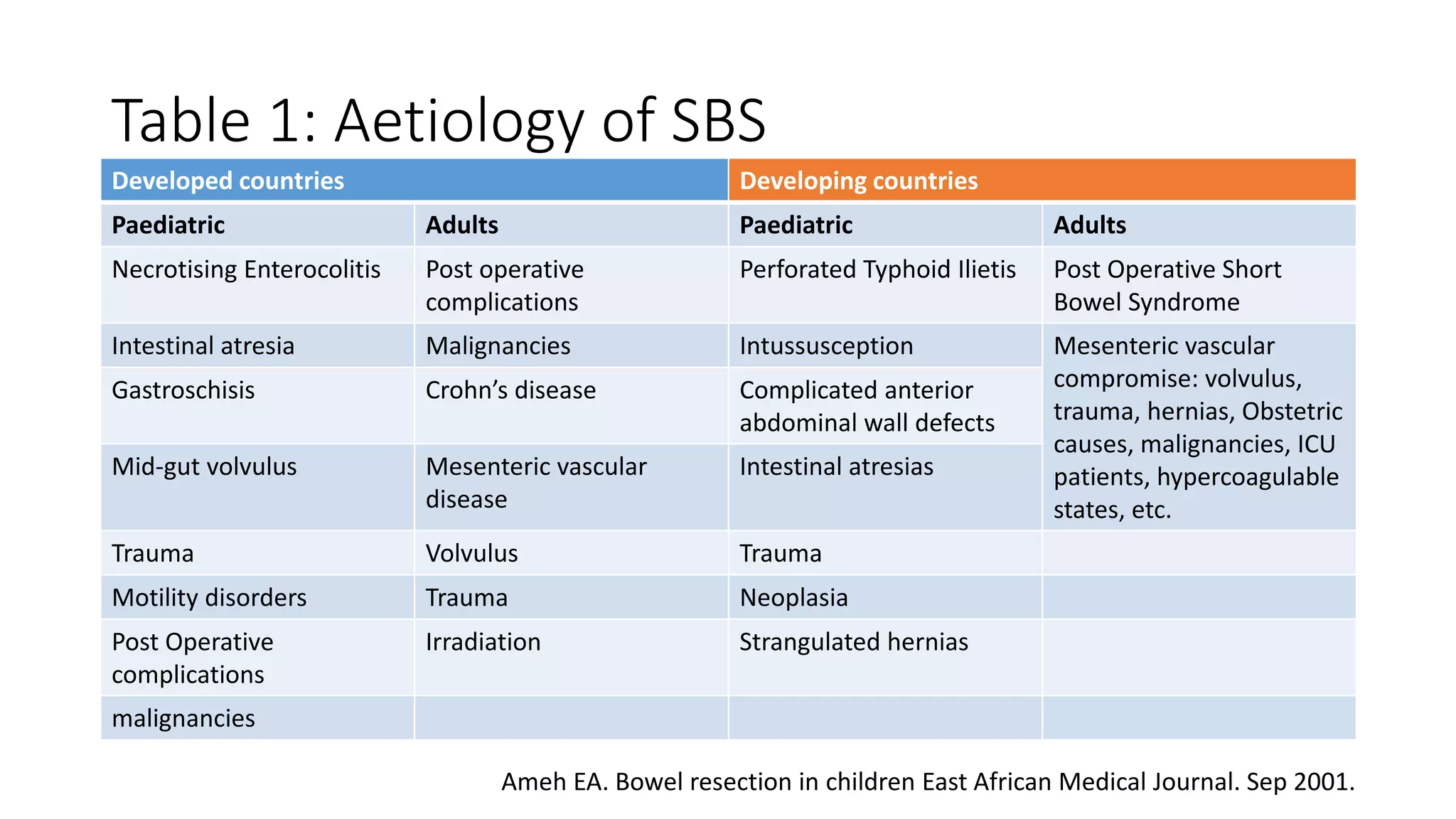
Table 1: Aetiology of SBS
Developed countries Developing countries
Paediatric Adults Paediatric Adults
Necrotising Enterocolitis Post operative
complications
Perforated Typhoid Ilietis Post Operative Short
Bowel Syndrome
Intestinal atresia Malignancies Intussusception Mesenteric vascular
compromise: volvulus,
trauma, hernias, Obstetric
causes, malignancies, ICU
patients, hypercoagulable
states, etc.
Gastroschisis Crohn’s disease Complicated anterior
abdominal wall defects
Mid-gut volvulus Mesenteric vascular
disease
Intestinal atresias
Trauma Volvulus Trauma
Motility disorders Trauma Neoplasia
Post Operative
complications
Irradiation Strangulated hernias
malignancies
Ameh EA. Bowel resection in children East African Medical Journal. Sep 2001.
Relevant Anatomy
and Physiology
• SB length
• Most absorption at first 150cm
• Ileocecal valve
• The colon
• Superior mesenteric vessels
• Glucose and Protein absorption
• Bile salt & Vit B12
• Other Water soluble Vitamins
• Na+, K+, Ca2+, Fe2+, Cl-, SO4
2-
• Long chain fatty acids
• Short chain fatty acids
Figure 1
Pathophysiological basis of SBS
• Quantitative loss of absorptive capacity
• Diarrhoea, dehydration, electrolyte loss, bacterial overgrowth
• Qualitative loss of absorptive capacity
• Duodenum/proximal jejunum (Ca, Mg, F/A, ↓pancreatic enzyme stimulation)
• Terminal 100cm of ileum (Bile salt, Vit B12-Intrinsic factor, loss of ‘ileal break’)
• Gall stones, Renal stones, Osteomalacia, Loss of fat soluble vitamins
• Hypergastrinaemia, Malnutrition
Pathophysiological basis of SBS: Post
Operative Adaptation Phase
• Acute (< 4weeks): diarrhea, patient requires PN
• Adaptation Phase: Absorption improves
First phase (1-3months)
Second phase (few months – 1 year)
Third phase (1-2 years)
• Post-Adaptation Phase: gradually achieves clinical Enteral Autonomy
NB: Role of the Colon and terminal Ileum in neurohormonal mechanism
Management of Short bowel syndrome
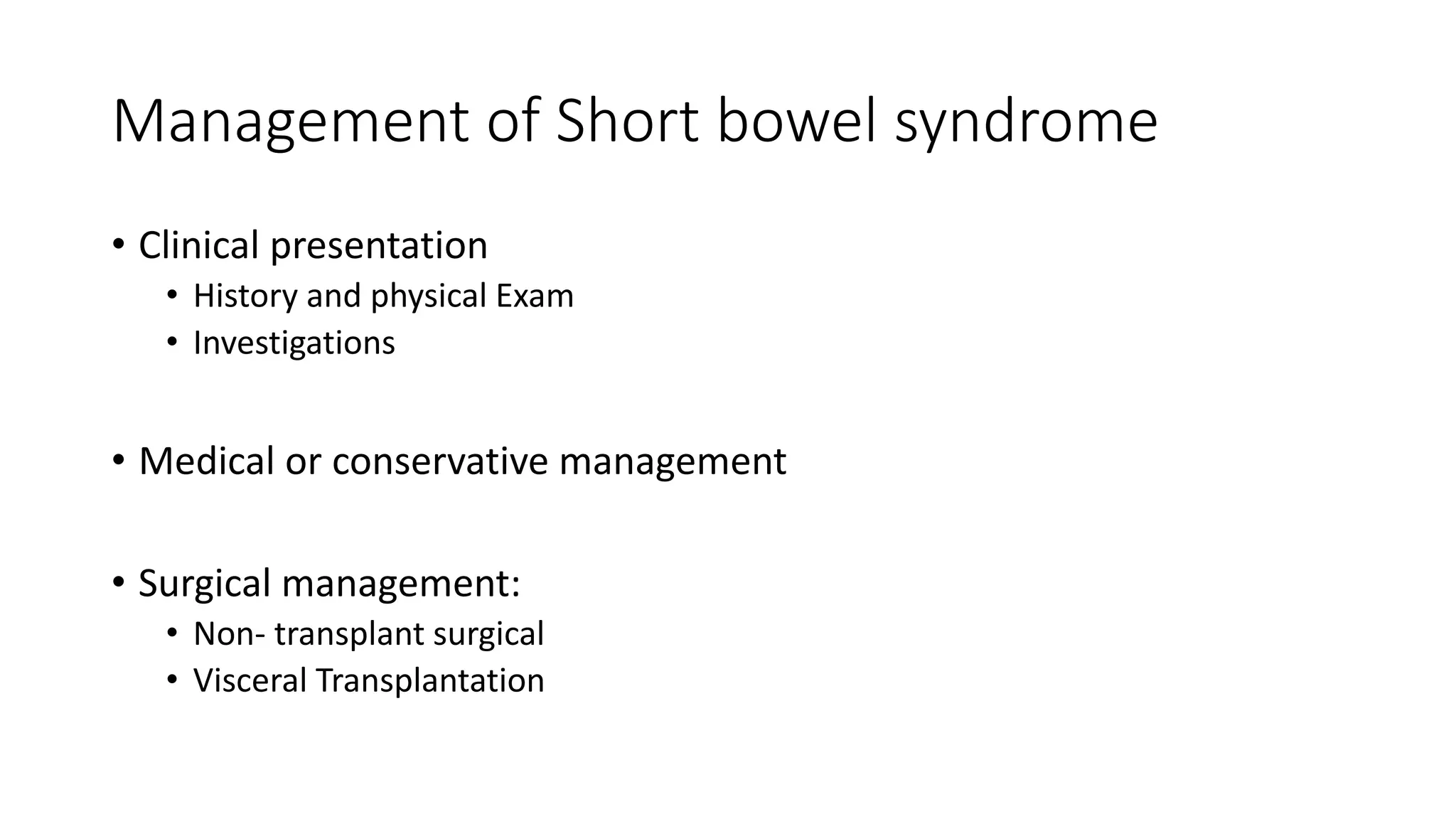
• Clinical presentation
• History and physical Exam
• Investigations
• Medical or conservative management
• Surgical management:
• Non- transplant surgical
• Visceral Transplantation
Medical Treatment: Summary
• Nutritional supplementation with TPN (omega-3 rich PN)
• Management of hypergastrinaemia (PPI, H2RA, Octreotide)
• Early introduction of enteral feeding (oral, NG or surgical enteral).
• Medical reduction of transit time:
• Loperamide, Codeine and morphine
• Octreotide (its use is associated with an inhibition of intestinal adaptation in animal
models.)
• High fibre diet (can supply up to 500-1000Kcal/day)
• Cholestyramine
• Hormonal enhancement of bowel adaptation
• Antibiotics and probiotics
• Combination of Growth hormone
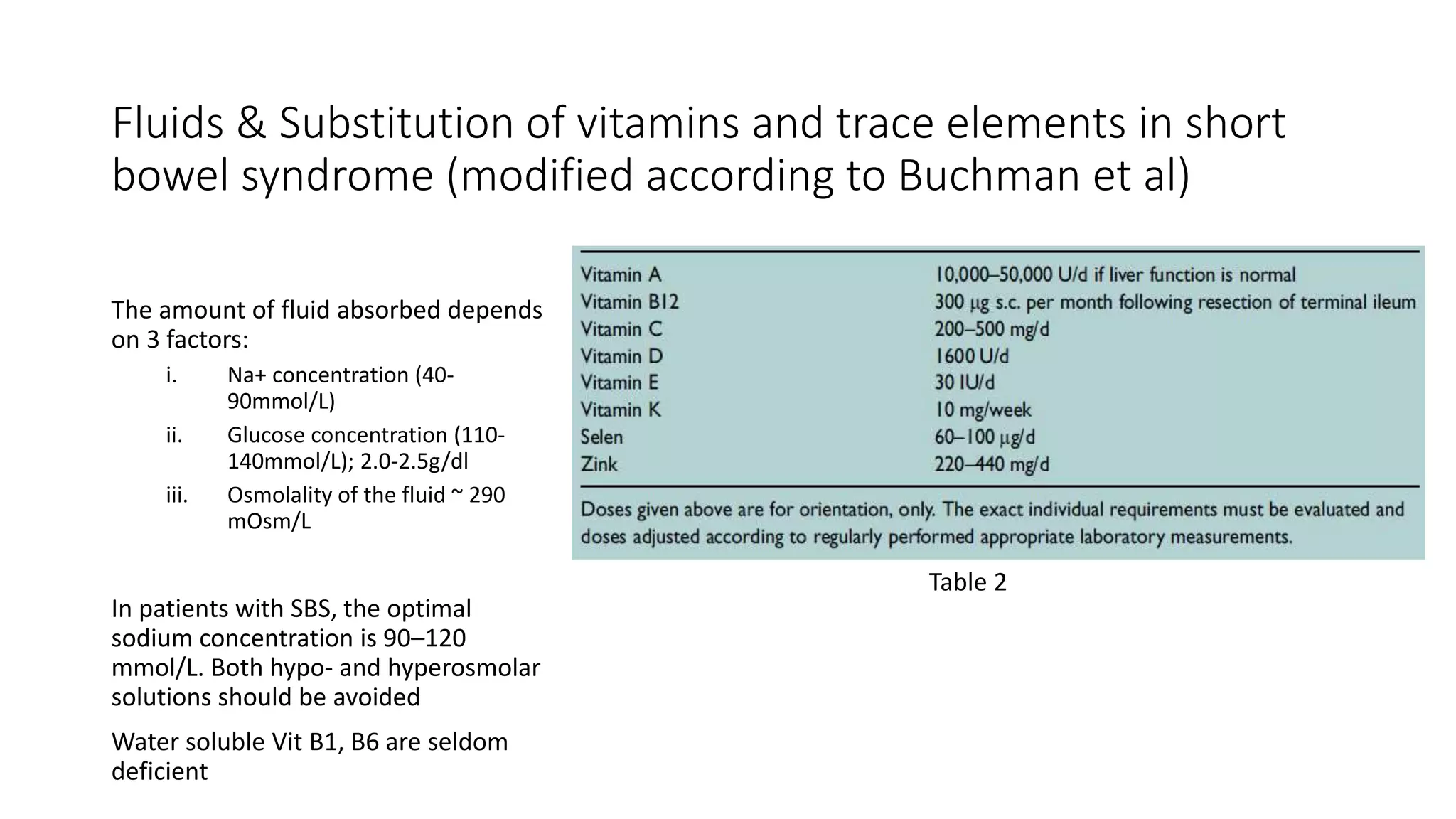
Fluids & Substitution of vitamins and trace elements in short
bowel syndrome (modified according to Buchman et al)
The amount of fluid absorbed depends
on 3 factors:
i. Na+ concentration (40-
90mmol/L)
ii. Glucose concentration (110-
140mmol/L); 2.0-2.5g/dl
iii. Osmolality of the fluid ~ 290
mOsm/L
In patients with SBS, the optimal
sodium concentration is 90–120
mmol/L. Both hypo- and hyperosmolar
solutions should be avoided
Water soluble Vit B1, B6 are seldom
deficient
Table 2
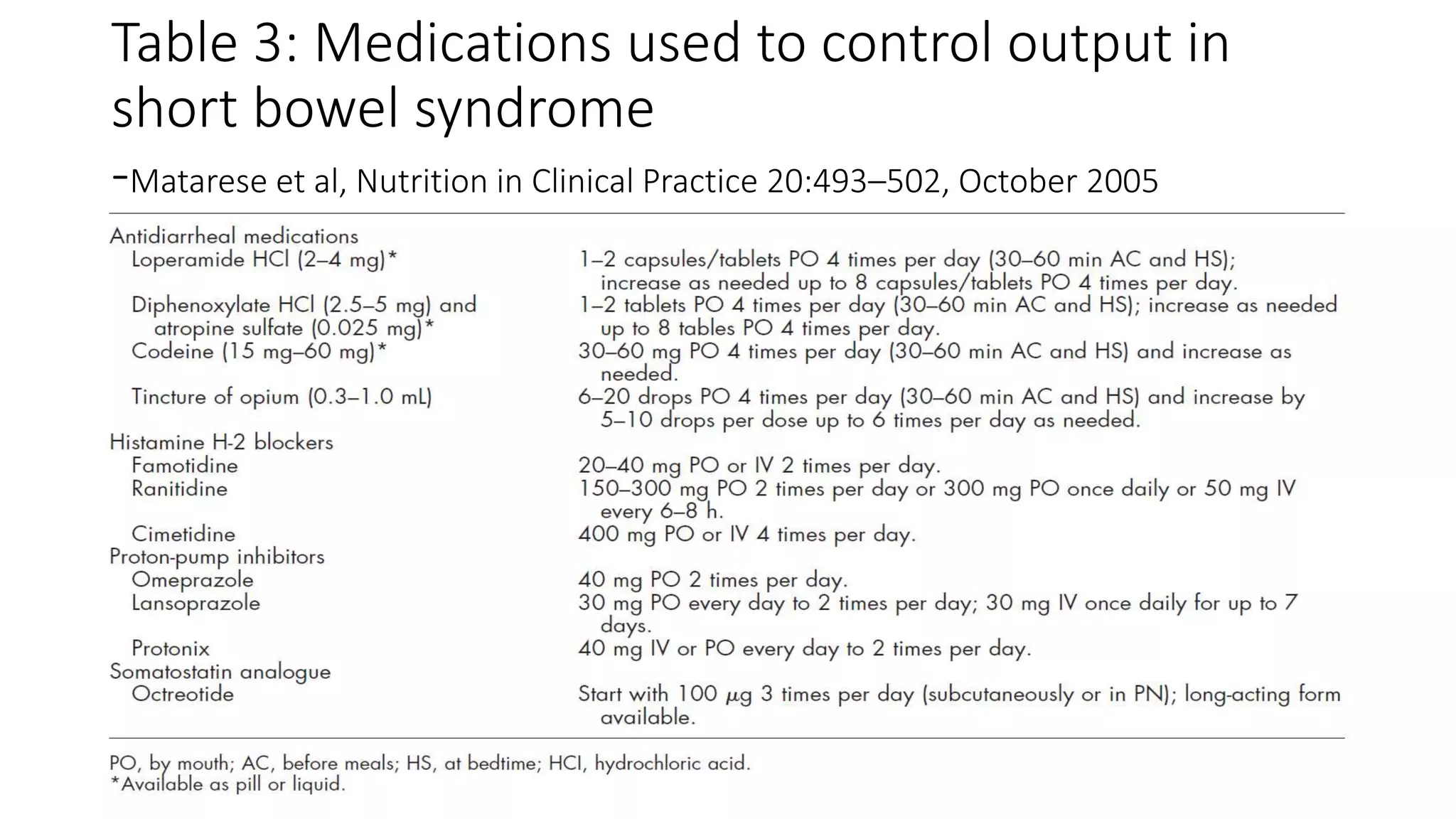
Table 3: Medications used to control output in
short bowel syndrome
-Matarese et al, Nutrition in Clinical Practice 20:493–502, October 2005
Table 4: Diet for SBS according to GI anatomy –
Byerne et al Nutr Clin Pract. 2000;15:306–311.
*Fat rich in essential fatty acids in order to prevent essential fatty acid deficiency
*Protein of high-biologic value from eggs, chicken, turkey, fish, beef, and pork are encouraged
*Many SBS patients tolerate lactose in the diet so it is unnecessary to restrict these food choices (improved
palatability of the diet and are important sources of protein, calcium, and vitamin D)
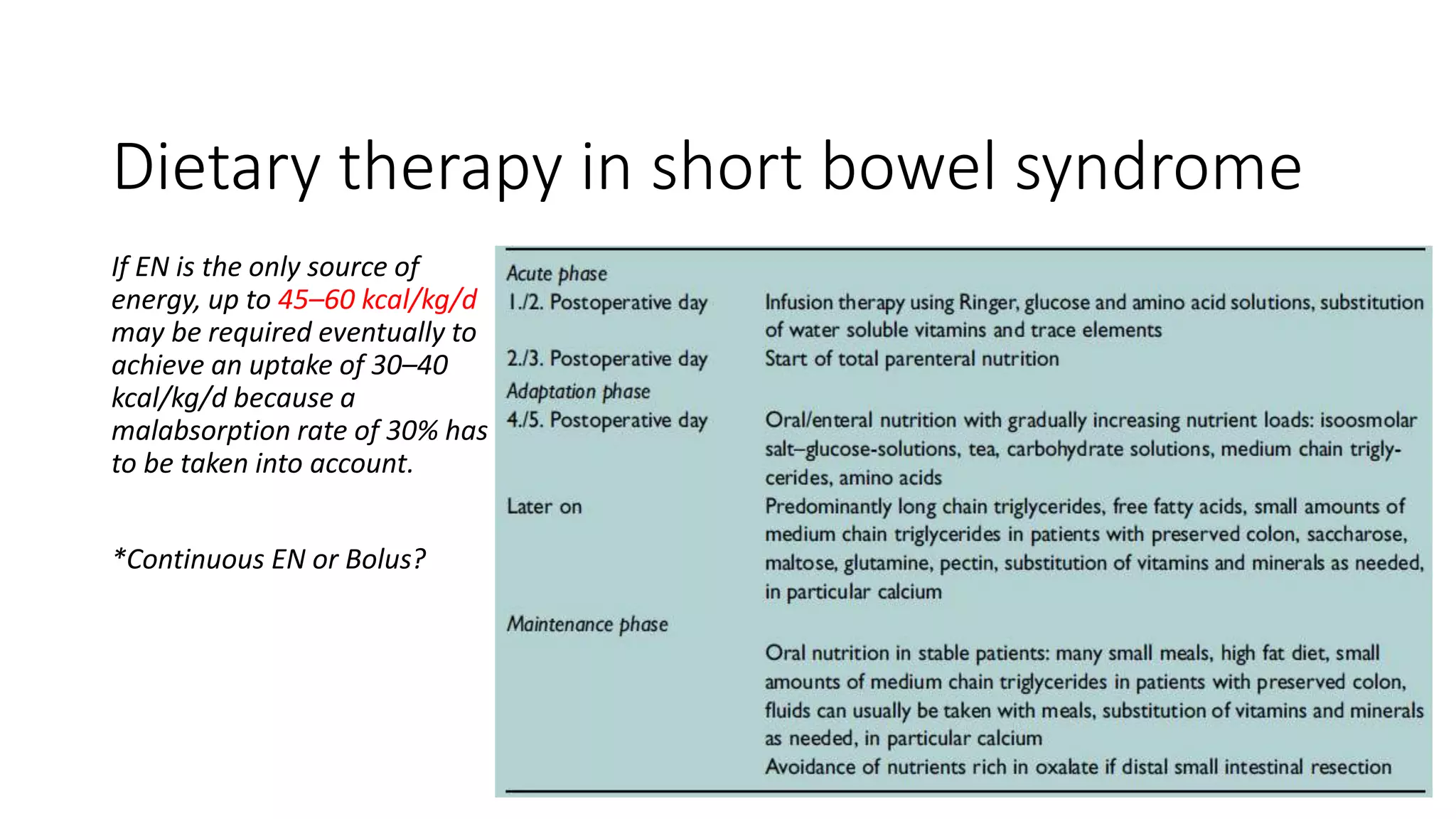
Dietary therapy in short bowel syndrome
If EN is the only source of
energy, up to 45–60 kcal/kg/d
may be required eventually to
achieve an uptake of 30–40
kcal/kg/d because a
malabsorption rate of 30% has
to be taken into account.
*Continuous EN or Bolus?
Surgical Options in the care of SBS: Summary
• Autologous Intestinal reconstruction surgeries (AIRS)
To ↑motility & mucosal functional surface area of the dilated bowel
1. Serial Transverse Enteroplasty (STEP)
2. Spiral Intestinal Lengthening and Tailoring (SILT)
3. Longitudinal intestinal lengthening and Tailoring (LILT)
To increase transit time
1. Antiperistaltic ‘reverse’ SB segment
2. Colonic (isoperistaltic or antiperistaltic) Interposition
3. Ileocecal valve ‘reconstruction’
To increase the absorptive bowel surface area
1. Controlled Bowel Expansion procedure
Combination of the procedures
Surgical Options in the care of SBS
• Intestinal Transplantation
• Other Roles of Surgery
Prevention of SBS
Management of Central venous access
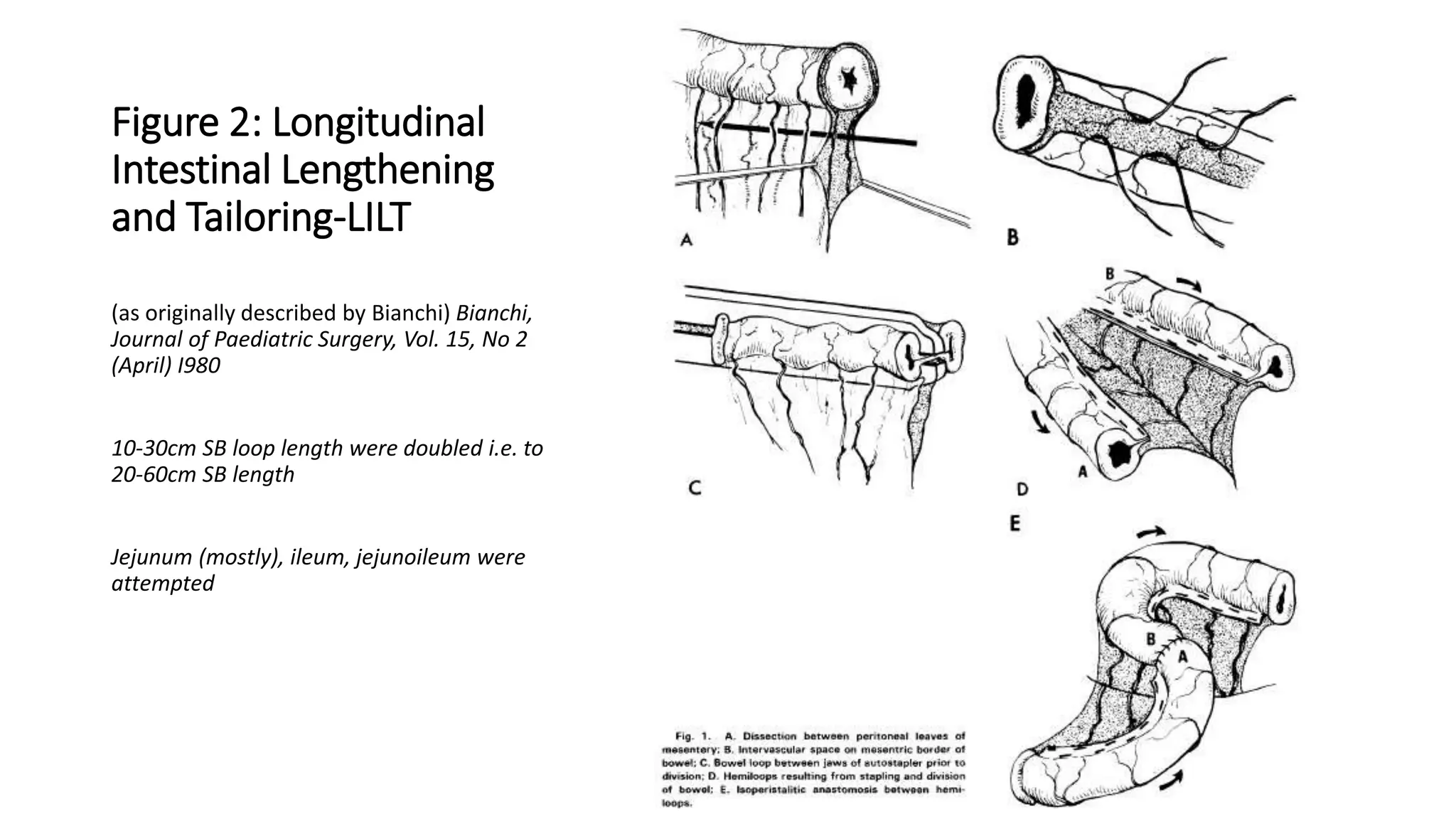
Figure 2: Longitudinal
Intestinal Lengthening
and Tailoring-LILT
(as originally described by Bianchi) Bianchi,
Journal of Paediatric Surgery, Vol. 15, No 2
(April) I980
10-30cm SB loop length were doubled i.e. to
20-60cm SB length
Jejunum (mostly), ileum, jejunoileum were
attempted
Serial Transverse Enteroplasty:
Kim et al. Journal of Pediatric Surgery,
Vol 38, No 3 (March), 2003: pp 425-429
Figure 3 Figures 4 & 5
Spiral Intestinal
Lengthening and
Tailoring (SILT)
-Konig, Paediatrics Today 2015;11(2):85-92
Alberti et al. Pediatr Surg Int
(2014) 30:1169–1172
first described by Cserni et al in 2011.
Figure 5
Figure 6
AIRS to Increase Transit time
• Antiperistaltic “reverse” SB
segment procedures ( benefit in
neonate with as little as 3cm SB
reversed)
• Colonic interposition (8-24cm)
• Valve procedures
8-10cm
10-24cm colonic interposition has been used
Figure 7
Maneuvers to increase bowel surface area
• Controlled bowel expansion
• (e.g. with use of stoma catheter) is
used to expand the intestine,
obtaining a greater absorbing
surface.
• Combination of Procedures
Ileocecal valve reconstruction: Jejunocecal ‘valve’
≥1cm
Gier et al. Arch Surg/Vol. 102, March 1971
Waddell et al. Arch Surg/Vol 100, April 1970
Figures 8, 9
Intestinal Transplantation
• From Manchester UK to Pittsburgh USA
• 1990 to2013, a total of 2379 intestinal transplants were performed
(organ procurement and transplantation network )
• Advances in immunosuppression
Figure 10. Historical timeline of the development
of intestinal and multivisceral transplant
Figure 11:
Main Premorbid
conditions for which
intestinal transplants
were done in developed
countries
O’ Keefe et al. Current Gastroenterology
Reports 2006, 8:360–366
Table 5: Centers for Medicare and Medicaid
approved indications for intestinal transplantation-
Buchman et al. Gastroenterol 2003;124:1111–34.
Figure 12: Main types of Intestinal Transplant
Isolated Intestinal Liver + intestine + pancreas multivisceral
O’ Keefe et al. Current Gastroenterology Reports 2006, 8:360–366
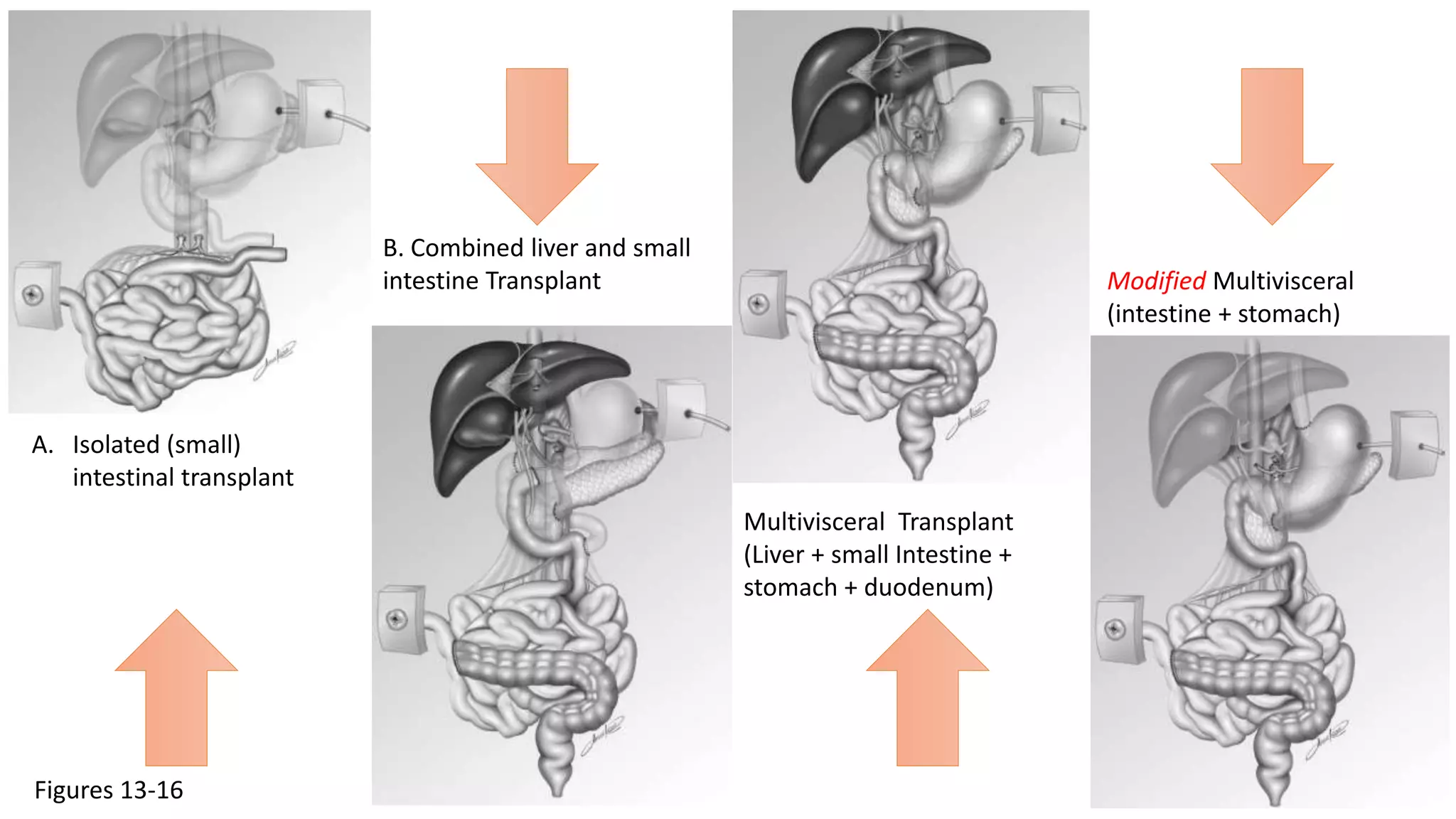
A. Isolated (small)
intestinal transplant
B. Combined liver and small
intestine Transplant
Multivisceral Transplant
(Liver + small Intestine +
stomach + duodenum)
Modified Multivisceral
(intestine + stomach)
Figures 13-16
Assessing the Outcomes
• Survival: Bianchi= 81-88% (80%), STEP= 89-95% (92%)
• Average enteral caloric intake in pediatric patients was 15 kcal/kg before
lengthening and 85 kcal/kg at 1 year after lengthening
• Weaning from TPN: Earlier and complete weaning of TPN for STEP than
Bianchi
• PNLD (liver disease): was reversed in 80%.
• Need for Intestinal Transplantation: Intestinal transplantation salvage was
required in 14% at a median of 2.9 years range _ 8 months to 20.7years) after
lengthening.
• Transplantation: 1-3 year survival is economically effective
Some more recent advances
ENETEROCYTE TROPHIC FACTORS
• epidermalgrowth factor (EGF)
• Keratinocyte GF
• IGF-1
• glucagon-like peptide 2 (GLP-2)
• Analogue of GLP-2 (Teduglutide)
• Probiotics
• ? Oral Insulin in children
VISCERAL TRANSPLANT
• Simultaneous SB & Pancreas
harvest
• En-bloc preservation of the
donor pancreaticoduodenal
complex (2011)
• Inclusion of the donor spleen
inclusion of donor spleen =
normalize WBC & PLT count
Some more recent advances
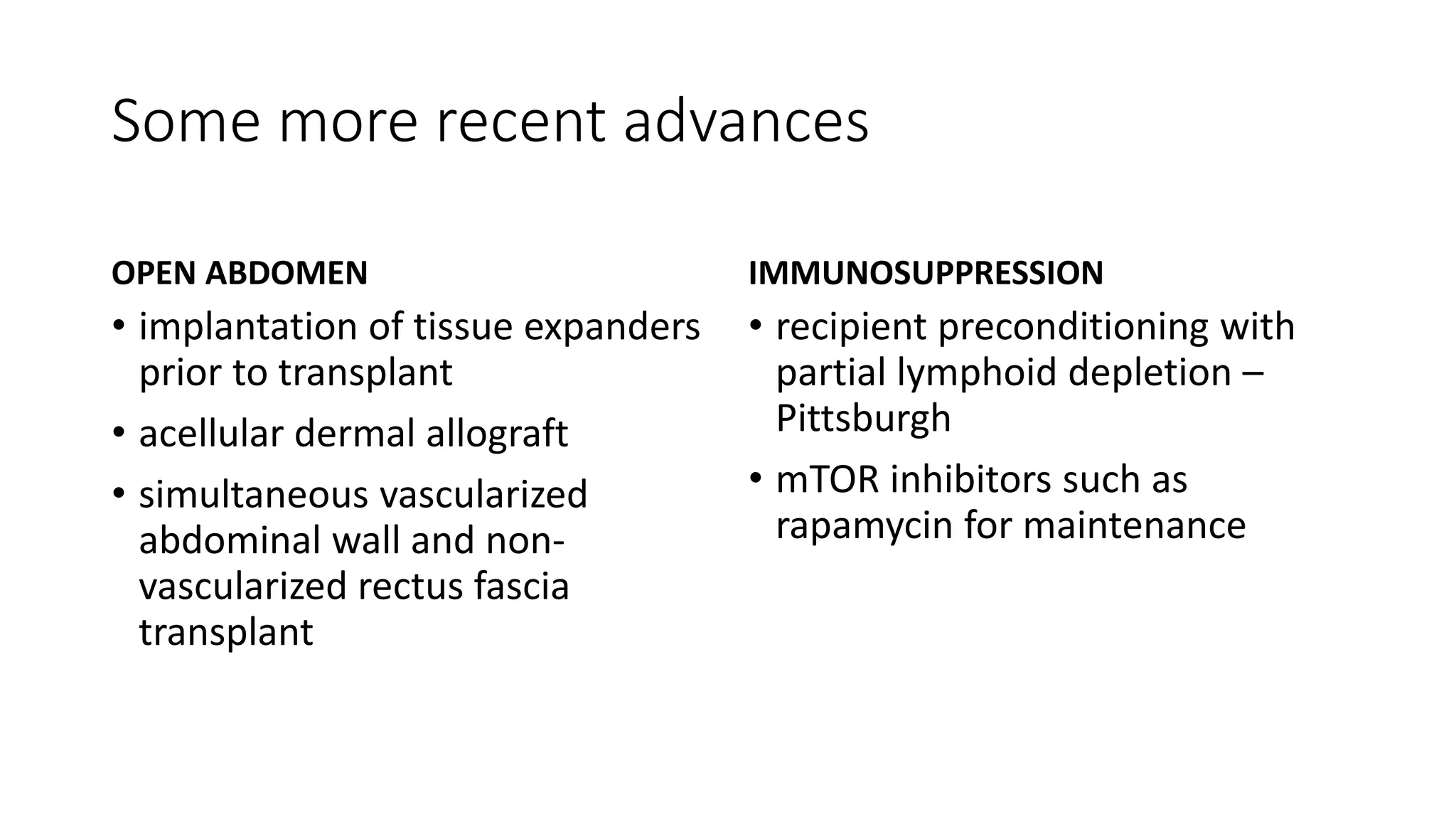
OPEN ABDOMEN
• implantation of tissue expanders
prior to transplant
• acellular dermal allograft
• simultaneous vascularized
abdominal wall and non-
vascularized rectus fascia
transplant
IMMUNOSUPPRESSION
• recipient preconditioning with
partial lymphoid depletion –
Pittsburgh
• mTOR inhibitors such as
rapamycin for maintenance
Education, Monitoring and Weaning
• Patients must be taught not only what to eat but how to eat
• Plan should be tailored to fit the lifestyle, preferences, and needs of the
individual patient.
• Individual goals for nutrient and fluid intake should be set and adjusted as
the patient’s needs change.
• There is a lack of published guidelines regarding the optimal methods of
weaning patients from PN
Management of Vascular access for TPN
• Careful indication and technique are mandatory.
• The percutaneous technique is preferred over surgical exploration
• Antiseptic non-touch handling of catheters
• Regular 70% ethanol catheter block may prevent catheter-sepsis
• Broad-spectrum antibiotics may be effective to treat infected central lines
• Urokinase to unblock catheter
• If the removal of the catheter is unavoidable, the new catheter should be
placed into the same vein, if possible.
Complications
• Of the Primary disease
• Of TPN (CRBSI, PNLD)
• Of the AIRS (vascular injury, stenosis, fistulas, dilatations, ECF)
• OF transplantation (GVD, CMV, PTLD, sepsis, malignancies, e.t.c)
Summary:
Therapeutic options
and algorithm in
short bowel
syndrome
Adapted from Keller et al. Best Practice &
Research Clinical Gastroenterology Vol. 18,
No. 5, pp. 977–992, 2004
Prevention
General preventive measures
Early and appropriate diagnosis of emergencies
Adequate resuscitation
Revascularization
Minimize irradiation exposure
Employ ‘second-look’ surgeries
Avoid abdominal compartment syndrome
Hyperbaric oxygen in radiation enteritis
Operative strategies
Timing and extent of surgery
Minimal resection, multiple gut anastomosis
Conserve bowel (stricturoplasty, serosal patch repair)
Avoid resection of ileocecal valve. Formal Right
hemicolectomies may be avoided in infants
Avoid use of intestinal clamps where possible to
avoid ischaemia and gentle gut handling
Recruiting on intestine
Tapering and lengthening
Cautious re-exploration of frozen abdomen
Hand sewn vs. Staplers, single layer anastomosis
General measures to prevent adhesionsTables 6 & 7
Can we do this at NHA?
• Early presentation of abdominal emergencies is a problem
• Cost and availability of TPN for prolonged use
• Cost of and skill for tunneled CVL + Maintenance of line
• Cost and availability of octreotide
• Cost of laboratory monitoring of patients on TPN
• Cost and structure for home nursing care
• Availability of hormone enhancement of bowel adaptation
• Training of surgical staff ( both for AIRS and Organ Transplantation)
NHA experience: Why do we resect bowel?
Adult (GENERAL SURGERY UNIT)
PATHOLOGY FREQUENCY
Colonic tumor 11
Anorectal tumor 6
Typhoid 4
ECF 3
Diverticular disease 2
intussusception 2
Gastric tumor 2
Small Bowel mesenteric
schaemia & Obstruction
2
Strangulated Hernia
Ruptured appendix 1
Rectal prolapse 1
Sigmoid volvulus 1
TOTAL 36
Paediatric (PAEDIATRIC SURGERY UNIT)
PATHOLOGY FREQUENCY
Typhoid 36
Intussusception 27
Malrotation + volvulus 8
Hernia 5
Atresias 4
ECF 2
Perforated omphalocele 1
Colonic stricture 1
TOTAL 84
Tables 7 & 8
Recommendations and Conclusion
• Prevention of SBS
• Early AIRS will be far efficient and cost friendly overall
• STEPS is relatively technically easier, faster, >100% length, early TPN
wean, easily repeated, short mesentery and precarious vasculature,
tried in newborns with short TPN exposure, comparable outcome
with Bianchi, easily combined with others.
• Partnership with dedicated outlets for Nutritional supplements
• Randomized control study between Medical and Surgical therapy?
Recommendations and Conclusion
• Though rare, incidence seem to be increasing due to better infant
survival and daring surgeries
• Attending severe nutritional challenges
• Medical, non-transplant surgical & transplant surgical options
• The ultimate goal is to improve the nutrition status of these patients
through the safest, most efficacious method that will improve the
quality of their lives.
• Prognosis is getting better
• Prevention is still a key component in management
THANK YOU
Dr. Adrian Bianchi,
Denis Browne Medal winner in Paediatric surgery Prof. Thomas Starzl (1926 - 2017)
References
• Keller J, Panter H, Layer P. Management of the short bowel syndrome after extensive small
bowel resection. Best Practice & Research Clinical Gastroenterology. 2004 Oct;18(5):977–92.
• Bianchi A. Intestinal loop lengthening—A technique for increasing small intestinal length.
Journal of Pediatric Surgery. 1980 Apr;15(2):145–51.
• KőNig R. OVERVIEW OF NON-TRANSPLANT SURGICAL MANAGEMENT OF SHORT BOWEL
SYNDROME IN CHILDREN. Paediatrics Today. 2015 Oct 8;11(2):85–92.
• Bharadwaj S, Tandon P, Gohel TD, Brown J, Steiger E, Kirby DF, et al. Current status of
intestinal and multivisceral transplantation. Gastroenterology Report. 2017 Jan 26;gow045.
• Grier RL. Experimental Sphincter for Short-Bowel Syndrome. Archives of Surgery. 1971 Mar
1;102(3):203.
• Brunicardi FC, Andersen DK, Billiar TR, Dunn DL, Hunter JG, editors. Schwartz’s principles of
surgery. Tenth edition. New York: McGraw-Hill Education; 2014.
References
• Misiakos EP, Macheras A, Kapetanakis T, Liakakos T. Short Bowel Syndrome: Current
Medical and Surgical Trends: Journal of Clinical Gastroenterology. 2007 Jan;41(1):5–18.
• Arruda RA, Ibrahim A, Dong A, Henrique F, Jorge R, Carneiro LA. SMALL BOWEL
TRANSPLANTATION. SMALL BOWEL TRANSPLANTATION. :7.
• O’Keefe SJD, Matarese L. Small bowel transplantation. :7.
• Vanderhoof JA, Langnas AN. SPECIAL REPORTS AND REVIEWS. 1997;113(5):12.
• Cruz RJ, Butera L, Poloyac K, McGurgan J, Stein W, Binion D, et al. Surgical and medical
approach to patients requiring total small bowel resection: Managing the “no gut
syndrome”. Surgery. 2017 Oct;162(4):871–9.
• Sommovilla J, Warner BW. Surgical options to enhance intestinal function in patients
with short bowel syndrome: Current Opinion in Pediatrics. 2014 Jun;26(3):350–5.
References
• Alberti D, Boroni G, Giannotti G, Parolini F, Armellini A, Morabito A, et al. “Spiral
intestinal lenghtening and tailoring (SILT)” for a child with severely short bowel.
Pediatric Surgery International. 2014 Nov;30(11):1169–72.
• Robledo-Ogazón F, Becerril-Martínez G, Hernández-Saldaña V, Zavala-Aznar ML,
Bojalil-Durán L. Anastomosis colónica múltiple en el tratamiento quirúrgico del
intestino corto. Una nueva técnica. Cirugía y Cirujanos. 2008;(1):6.
• Ameh EA. Bowel resection in children. East African Medical Journal [Internet]. 2001
Sep 1 [cited 2018 Aug 28];78(9). Available from:
http://www.ajol.info/index.php/eamj/article/view/8979
• Glick PL, de Lorimier AA, Scott Adzick N, Harrison MR. Colon interposition: An
adjuvant operation for short-gut syndrome. Journal of Pediatric Surgery. 1984
Dec;19(6):719–25.
• Sudan D, Thompson J, Botha J, Grant W, Antonson D, Raynor S, et al. Comparison of
Intestinal Lengthening Procedures for Patients With Short Bowel Syndrome: Annals
of Surgery. 2007 Oct;246(4):593–604.
References
• Cervellione RM, Hajnal D, Varga G, Rakoczy G, Kubiak R, Kaszaki J, et al. New alternative
Mitrofanoff channel based on spiral intestinal lengthening and tailoring. Journal of Pediatric
Urology. 2015 Jun;11(3):131.e1-131.e5.
• Thompson JS, DiBaise JK, Iyer KR, Yeats M, Sudan DL. Postoperative Short Bowel Syndrome.
Journal of the American College of Surgeons. 2005 Jul;201(1):85–9.
• Kim HB, Fauza D, Garza J, Oh J-T, Nurko S, Jaksic T. Serial transverse enteroplasty (STEP): A
novel bowel lengthening procedure. Journal of Pediatric Surgery. 2003 Mar;38(3):425–9.
• Thompson JS. Short Bowel Syndrome and Malabsorption - Causes and Prevention.
Viszeralmedizin. 2014;30(3):3–3.
• Matarese LE, O’Keefe SJ, Kandil HM, Bond G, Costa G, Abu-Elmagd K. Short Bowel Syndrome:
Clinical Guidelines for Nutrition Management. Nutrition in Clinical Practice. 2005
Oct;20(5):493–502.

Short Bowel Syndrome

  • 1.
    Discuss the Pathologyand advances in the management of Short Bowel Syndrome (SBS) By: Dr. Oladele Situ, General Surgery Unit, Department of Surgery, NHA 10th September, 2018 Moderator: Dr. C.S Batta, Consultant General Surgeon, Department of Surgery, NHA
  • 2.
    Outline • Introduction • Epidemiology •Relevant anatomy and Physiology • Pathophysiology of Short Bowel Syndrome • Options of management and Management protocol • Education, monitoring and weaning • Prevention of short Bowel Syndrome • National Hospital Experience • Recommendations & Conclusion • References
  • 3.
    Introduction “Anatomical” definition • <200cm small bowel (SB) length in adults with colon • < 100-150cm without colon • ≤ 75 cm in neonates • > 70-80% SB loss in humans • > 2/3 SB length in adult “Functional” definition • insufficient intestinal absorptive capacity results in the clinical manifestations of diarrhea, dehydration and malnutrition
  • 4.
    Introduction • Intestinal failure(loss of nutritional autonomy): synonym of SBS however with persistent dependence (whole/partial) on Parenteral Nutrition (PN)  < 100cm SB length without colon in adults  < 60cm SB length with colon in adults  < 10cm without colon in infants • Intestinal Rehabilitation: process of restoring nutritional autonomy in patient with IF to enteral feeding with goal of weaning off PN - Woolf GM et al. Gastroenterology 1983;84:823–8. - Matarese et al. Nutrition in Clinical Practice 20:493– 502, October 2005
  • 5.
    Epidemiology • Relatively ‘uncommon’and Epidemiology unclear especially in developing countries • Many report 2-4 patients per million population • Commoner in children. • ? Rising trends in adults because of advances in Intestinal Transplants
  • 6.
    Table 1: Aetiologyof SBS Developed countries Developing countries Paediatric Adults Paediatric Adults Necrotising Enterocolitis Post operative complications Perforated Typhoid Ilietis Post Operative Short Bowel Syndrome Intestinal atresia Malignancies Intussusception Mesenteric vascular compromise: volvulus, trauma, hernias, Obstetric causes, malignancies, ICU patients, hypercoagulable states, etc. Gastroschisis Crohn’s disease Complicated anterior abdominal wall defects Mid-gut volvulus Mesenteric vascular disease Intestinal atresias Trauma Volvulus Trauma Motility disorders Trauma Neoplasia Post Operative complications Irradiation Strangulated hernias malignancies Ameh EA. Bowel resection in children East African Medical Journal. Sep 2001.
  • 7.
    Relevant Anatomy and Physiology •SB length • Most absorption at first 150cm • Ileocecal valve • The colon • Superior mesenteric vessels • Glucose and Protein absorption • Bile salt & Vit B12 • Other Water soluble Vitamins • Na+, K+, Ca2+, Fe2+, Cl-, SO4 2- • Long chain fatty acids • Short chain fatty acids Figure 1
  • 8.
    Pathophysiological basis ofSBS • Quantitative loss of absorptive capacity • Diarrhoea, dehydration, electrolyte loss, bacterial overgrowth • Qualitative loss of absorptive capacity • Duodenum/proximal jejunum (Ca, Mg, F/A, ↓pancreatic enzyme stimulation) • Terminal 100cm of ileum (Bile salt, Vit B12-Intrinsic factor, loss of ‘ileal break’) • Gall stones, Renal stones, Osteomalacia, Loss of fat soluble vitamins • Hypergastrinaemia, Malnutrition
  • 9.
    Pathophysiological basis ofSBS: Post Operative Adaptation Phase • Acute (< 4weeks): diarrhea, patient requires PN • Adaptation Phase: Absorption improves First phase (1-3months) Second phase (few months – 1 year) Third phase (1-2 years) • Post-Adaptation Phase: gradually achieves clinical Enteral Autonomy NB: Role of the Colon and terminal Ileum in neurohormonal mechanism
  • 10.
    Management of Shortbowel syndrome • Clinical presentation • History and physical Exam • Investigations • Medical or conservative management • Surgical management: • Non- transplant surgical • Visceral Transplantation
  • 11.
    Medical Treatment: Summary •Nutritional supplementation with TPN (omega-3 rich PN) • Management of hypergastrinaemia (PPI, H2RA, Octreotide) • Early introduction of enteral feeding (oral, NG or surgical enteral). • Medical reduction of transit time: • Loperamide, Codeine and morphine • Octreotide (its use is associated with an inhibition of intestinal adaptation in animal models.) • High fibre diet (can supply up to 500-1000Kcal/day) • Cholestyramine • Hormonal enhancement of bowel adaptation • Antibiotics and probiotics • Combination of Growth hormone
  • 12.
    Fluids & Substitutionof vitamins and trace elements in short bowel syndrome (modified according to Buchman et al) The amount of fluid absorbed depends on 3 factors: i. Na+ concentration (40- 90mmol/L) ii. Glucose concentration (110- 140mmol/L); 2.0-2.5g/dl iii. Osmolality of the fluid ~ 290 mOsm/L In patients with SBS, the optimal sodium concentration is 90–120 mmol/L. Both hypo- and hyperosmolar solutions should be avoided Water soluble Vit B1, B6 are seldom deficient Table 2
  • 13.
    Table 3: Medicationsused to control output in short bowel syndrome -Matarese et al, Nutrition in Clinical Practice 20:493–502, October 2005
  • 14.
    Table 4: Dietfor SBS according to GI anatomy – Byerne et al Nutr Clin Pract. 2000;15:306–311. *Fat rich in essential fatty acids in order to prevent essential fatty acid deficiency *Protein of high-biologic value from eggs, chicken, turkey, fish, beef, and pork are encouraged *Many SBS patients tolerate lactose in the diet so it is unnecessary to restrict these food choices (improved palatability of the diet and are important sources of protein, calcium, and vitamin D)
  • 15.
    Dietary therapy inshort bowel syndrome If EN is the only source of energy, up to 45–60 kcal/kg/d may be required eventually to achieve an uptake of 30–40 kcal/kg/d because a malabsorption rate of 30% has to be taken into account. *Continuous EN or Bolus?
  • 16.
    Surgical Options inthe care of SBS: Summary • Autologous Intestinal reconstruction surgeries (AIRS) To ↑motility & mucosal functional surface area of the dilated bowel 1. Serial Transverse Enteroplasty (STEP) 2. Spiral Intestinal Lengthening and Tailoring (SILT) 3. Longitudinal intestinal lengthening and Tailoring (LILT) To increase transit time 1. Antiperistaltic ‘reverse’ SB segment 2. Colonic (isoperistaltic or antiperistaltic) Interposition 3. Ileocecal valve ‘reconstruction’ To increase the absorptive bowel surface area 1. Controlled Bowel Expansion procedure Combination of the procedures
  • 17.
    Surgical Options inthe care of SBS • Intestinal Transplantation • Other Roles of Surgery Prevention of SBS Management of Central venous access
  • 18.
    Figure 2: Longitudinal IntestinalLengthening and Tailoring-LILT (as originally described by Bianchi) Bianchi, Journal of Paediatric Surgery, Vol. 15, No 2 (April) I980 10-30cm SB loop length were doubled i.e. to 20-60cm SB length Jejunum (mostly), ileum, jejunoileum were attempted
  • 19.
    Serial Transverse Enteroplasty: Kimet al. Journal of Pediatric Surgery, Vol 38, No 3 (March), 2003: pp 425-429 Figure 3 Figures 4 & 5
  • 20.
    Spiral Intestinal Lengthening and Tailoring(SILT) -Konig, Paediatrics Today 2015;11(2):85-92 Alberti et al. Pediatr Surg Int (2014) 30:1169–1172 first described by Cserni et al in 2011. Figure 5 Figure 6
  • 21.
    AIRS to IncreaseTransit time • Antiperistaltic “reverse” SB segment procedures ( benefit in neonate with as little as 3cm SB reversed) • Colonic interposition (8-24cm) • Valve procedures 8-10cm 10-24cm colonic interposition has been used Figure 7
  • 22.
    Maneuvers to increasebowel surface area • Controlled bowel expansion • (e.g. with use of stoma catheter) is used to expand the intestine, obtaining a greater absorbing surface. • Combination of Procedures
  • 23.
    Ileocecal valve reconstruction:Jejunocecal ‘valve’ ≥1cm Gier et al. Arch Surg/Vol. 102, March 1971 Waddell et al. Arch Surg/Vol 100, April 1970 Figures 8, 9
  • 24.
    Intestinal Transplantation • FromManchester UK to Pittsburgh USA • 1990 to2013, a total of 2379 intestinal transplants were performed (organ procurement and transplantation network ) • Advances in immunosuppression
  • 25.
    Figure 10. Historicaltimeline of the development of intestinal and multivisceral transplant
  • 26.
    Figure 11: Main Premorbid conditionsfor which intestinal transplants were done in developed countries O’ Keefe et al. Current Gastroenterology Reports 2006, 8:360–366
  • 27.
    Table 5: Centersfor Medicare and Medicaid approved indications for intestinal transplantation- Buchman et al. Gastroenterol 2003;124:1111–34.
  • 28.
    Figure 12: Maintypes of Intestinal Transplant Isolated Intestinal Liver + intestine + pancreas multivisceral O’ Keefe et al. Current Gastroenterology Reports 2006, 8:360–366
  • 29.
    A. Isolated (small) intestinaltransplant B. Combined liver and small intestine Transplant Multivisceral Transplant (Liver + small Intestine + stomach + duodenum) Modified Multivisceral (intestine + stomach) Figures 13-16
  • 30.
    Assessing the Outcomes •Survival: Bianchi= 81-88% (80%), STEP= 89-95% (92%) • Average enteral caloric intake in pediatric patients was 15 kcal/kg before lengthening and 85 kcal/kg at 1 year after lengthening • Weaning from TPN: Earlier and complete weaning of TPN for STEP than Bianchi • PNLD (liver disease): was reversed in 80%. • Need for Intestinal Transplantation: Intestinal transplantation salvage was required in 14% at a median of 2.9 years range _ 8 months to 20.7years) after lengthening. • Transplantation: 1-3 year survival is economically effective
  • 31.
    Some more recentadvances ENETEROCYTE TROPHIC FACTORS • epidermalgrowth factor (EGF) • Keratinocyte GF • IGF-1 • glucagon-like peptide 2 (GLP-2) • Analogue of GLP-2 (Teduglutide) • Probiotics • ? Oral Insulin in children VISCERAL TRANSPLANT • Simultaneous SB & Pancreas harvest • En-bloc preservation of the donor pancreaticoduodenal complex (2011) • Inclusion of the donor spleen inclusion of donor spleen = normalize WBC & PLT count
  • 32.
    Some more recentadvances OPEN ABDOMEN • implantation of tissue expanders prior to transplant • acellular dermal allograft • simultaneous vascularized abdominal wall and non- vascularized rectus fascia transplant IMMUNOSUPPRESSION • recipient preconditioning with partial lymphoid depletion – Pittsburgh • mTOR inhibitors such as rapamycin for maintenance
  • 33.
    Education, Monitoring andWeaning • Patients must be taught not only what to eat but how to eat • Plan should be tailored to fit the lifestyle, preferences, and needs of the individual patient. • Individual goals for nutrient and fluid intake should be set and adjusted as the patient’s needs change. • There is a lack of published guidelines regarding the optimal methods of weaning patients from PN
  • 34.
    Management of Vascularaccess for TPN • Careful indication and technique are mandatory. • The percutaneous technique is preferred over surgical exploration • Antiseptic non-touch handling of catheters • Regular 70% ethanol catheter block may prevent catheter-sepsis • Broad-spectrum antibiotics may be effective to treat infected central lines • Urokinase to unblock catheter • If the removal of the catheter is unavoidable, the new catheter should be placed into the same vein, if possible.
  • 35.
    Complications • Of thePrimary disease • Of TPN (CRBSI, PNLD) • Of the AIRS (vascular injury, stenosis, fistulas, dilatations, ECF) • OF transplantation (GVD, CMV, PTLD, sepsis, malignancies, e.t.c)
  • 36.
    Summary: Therapeutic options and algorithmin short bowel syndrome Adapted from Keller et al. Best Practice & Research Clinical Gastroenterology Vol. 18, No. 5, pp. 977–992, 2004
  • 37.
    Prevention General preventive measures Earlyand appropriate diagnosis of emergencies Adequate resuscitation Revascularization Minimize irradiation exposure Employ ‘second-look’ surgeries Avoid abdominal compartment syndrome Hyperbaric oxygen in radiation enteritis Operative strategies Timing and extent of surgery Minimal resection, multiple gut anastomosis Conserve bowel (stricturoplasty, serosal patch repair) Avoid resection of ileocecal valve. Formal Right hemicolectomies may be avoided in infants Avoid use of intestinal clamps where possible to avoid ischaemia and gentle gut handling Recruiting on intestine Tapering and lengthening Cautious re-exploration of frozen abdomen Hand sewn vs. Staplers, single layer anastomosis General measures to prevent adhesionsTables 6 & 7
  • 38.
    Can we dothis at NHA? • Early presentation of abdominal emergencies is a problem • Cost and availability of TPN for prolonged use • Cost of and skill for tunneled CVL + Maintenance of line • Cost and availability of octreotide • Cost of laboratory monitoring of patients on TPN • Cost and structure for home nursing care • Availability of hormone enhancement of bowel adaptation • Training of surgical staff ( both for AIRS and Organ Transplantation)
  • 39.
    NHA experience: Whydo we resect bowel? Adult (GENERAL SURGERY UNIT) PATHOLOGY FREQUENCY Colonic tumor 11 Anorectal tumor 6 Typhoid 4 ECF 3 Diverticular disease 2 intussusception 2 Gastric tumor 2 Small Bowel mesenteric schaemia & Obstruction 2 Strangulated Hernia Ruptured appendix 1 Rectal prolapse 1 Sigmoid volvulus 1 TOTAL 36 Paediatric (PAEDIATRIC SURGERY UNIT) PATHOLOGY FREQUENCY Typhoid 36 Intussusception 27 Malrotation + volvulus 8 Hernia 5 Atresias 4 ECF 2 Perforated omphalocele 1 Colonic stricture 1 TOTAL 84 Tables 7 & 8
  • 40.
    Recommendations and Conclusion •Prevention of SBS • Early AIRS will be far efficient and cost friendly overall • STEPS is relatively technically easier, faster, >100% length, early TPN wean, easily repeated, short mesentery and precarious vasculature, tried in newborns with short TPN exposure, comparable outcome with Bianchi, easily combined with others. • Partnership with dedicated outlets for Nutritional supplements • Randomized control study between Medical and Surgical therapy?
  • 41.
    Recommendations and Conclusion •Though rare, incidence seem to be increasing due to better infant survival and daring surgeries • Attending severe nutritional challenges • Medical, non-transplant surgical & transplant surgical options • The ultimate goal is to improve the nutrition status of these patients through the safest, most efficacious method that will improve the quality of their lives. • Prognosis is getting better • Prevention is still a key component in management
  • 42.
    THANK YOU Dr. AdrianBianchi, Denis Browne Medal winner in Paediatric surgery Prof. Thomas Starzl (1926 - 2017)
  • 43.
    References • Keller J,Panter H, Layer P. Management of the short bowel syndrome after extensive small bowel resection. Best Practice & Research Clinical Gastroenterology. 2004 Oct;18(5):977–92. • Bianchi A. Intestinal loop lengthening—A technique for increasing small intestinal length. Journal of Pediatric Surgery. 1980 Apr;15(2):145–51. • KőNig R. OVERVIEW OF NON-TRANSPLANT SURGICAL MANAGEMENT OF SHORT BOWEL SYNDROME IN CHILDREN. Paediatrics Today. 2015 Oct 8;11(2):85–92. • Bharadwaj S, Tandon P, Gohel TD, Brown J, Steiger E, Kirby DF, et al. Current status of intestinal and multivisceral transplantation. Gastroenterology Report. 2017 Jan 26;gow045. • Grier RL. Experimental Sphincter for Short-Bowel Syndrome. Archives of Surgery. 1971 Mar 1;102(3):203. • Brunicardi FC, Andersen DK, Billiar TR, Dunn DL, Hunter JG, editors. Schwartz’s principles of surgery. Tenth edition. New York: McGraw-Hill Education; 2014.
  • 44.
    References • Misiakos EP,Macheras A, Kapetanakis T, Liakakos T. Short Bowel Syndrome: Current Medical and Surgical Trends: Journal of Clinical Gastroenterology. 2007 Jan;41(1):5–18. • Arruda RA, Ibrahim A, Dong A, Henrique F, Jorge R, Carneiro LA. SMALL BOWEL TRANSPLANTATION. SMALL BOWEL TRANSPLANTATION. :7. • O’Keefe SJD, Matarese L. Small bowel transplantation. :7. • Vanderhoof JA, Langnas AN. SPECIAL REPORTS AND REVIEWS. 1997;113(5):12. • Cruz RJ, Butera L, Poloyac K, McGurgan J, Stein W, Binion D, et al. Surgical and medical approach to patients requiring total small bowel resection: Managing the “no gut syndrome”. Surgery. 2017 Oct;162(4):871–9. • Sommovilla J, Warner BW. Surgical options to enhance intestinal function in patients with short bowel syndrome: Current Opinion in Pediatrics. 2014 Jun;26(3):350–5.
  • 45.
    References • Alberti D,Boroni G, Giannotti G, Parolini F, Armellini A, Morabito A, et al. “Spiral intestinal lenghtening and tailoring (SILT)” for a child with severely short bowel. Pediatric Surgery International. 2014 Nov;30(11):1169–72. • Robledo-Ogazón F, Becerril-Martínez G, Hernández-Saldaña V, Zavala-Aznar ML, Bojalil-Durán L. Anastomosis colónica múltiple en el tratamiento quirúrgico del intestino corto. Una nueva técnica. Cirugía y Cirujanos. 2008;(1):6. • Ameh EA. Bowel resection in children. East African Medical Journal [Internet]. 2001 Sep 1 [cited 2018 Aug 28];78(9). Available from: http://www.ajol.info/index.php/eamj/article/view/8979 • Glick PL, de Lorimier AA, Scott Adzick N, Harrison MR. Colon interposition: An adjuvant operation for short-gut syndrome. Journal of Pediatric Surgery. 1984 Dec;19(6):719–25. • Sudan D, Thompson J, Botha J, Grant W, Antonson D, Raynor S, et al. Comparison of Intestinal Lengthening Procedures for Patients With Short Bowel Syndrome: Annals of Surgery. 2007 Oct;246(4):593–604.
  • 46.
    References • Cervellione RM,Hajnal D, Varga G, Rakoczy G, Kubiak R, Kaszaki J, et al. New alternative Mitrofanoff channel based on spiral intestinal lengthening and tailoring. Journal of Pediatric Urology. 2015 Jun;11(3):131.e1-131.e5. • Thompson JS, DiBaise JK, Iyer KR, Yeats M, Sudan DL. Postoperative Short Bowel Syndrome. Journal of the American College of Surgeons. 2005 Jul;201(1):85–9. • Kim HB, Fauza D, Garza J, Oh J-T, Nurko S, Jaksic T. Serial transverse enteroplasty (STEP): A novel bowel lengthening procedure. Journal of Pediatric Surgery. 2003 Mar;38(3):425–9. • Thompson JS. Short Bowel Syndrome and Malabsorption - Causes and Prevention. Viszeralmedizin. 2014;30(3):3–3. • Matarese LE, O’Keefe SJ, Kandil HM, Bond G, Costa G, Abu-Elmagd K. Short Bowel Syndrome: Clinical Guidelines for Nutrition Management. Nutrition in Clinical Practice. 2005 Oct;20(5):493–502.

Editor's Notes

  • #30 Post-transplant survival rates may be higher for combined liver/intestine recipients compared with isolated intestine recipients due to proven immunologic benefits of the liver