
Assessing and nursing the person
with a problem with mood
Nursing the person who self-
harms/is suicidal
Paul McNamara
RGN (RAH), RPN (SAMHS), BN (Flin.), MMHN (USQ), Cert IMH (WCHN), CMHN, FACMHN
@meta4RN
#NS3360
Acknowledgements
Roianne West @RoianneWest
+ Nurses 1988-2015
Teaching Assumption
Probable Life Experience
Limited Clinical Experience
Learning Outcomes
 Depression
 Mania
 Self Harm & Suicide
 Electroconvulsive Therapy (ECT)
Today’s Presentation
 Mood Disorders Overview
 Specific Mood Disorders
 Treatment Strategies
 Self Harm & Suicide
 ECT
Today’s Presentation
 Mood Disorders Overview
 Specific Mood Disorders
 Treatment Strategies
 Self Harm & Suicide
 ECT
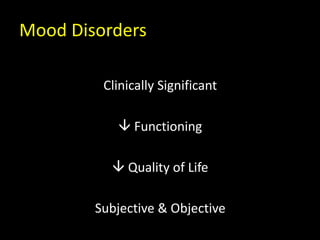
Mood Disorders
Clinically Significant
 Functioning
 Quality of Life
Subjective & Objective
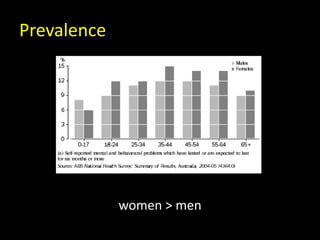
Prevalence
women > men
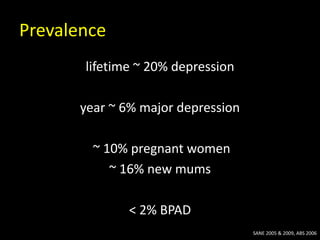
Prevalence
lifetime ~ 20% depression
year ~ 6% major depression
~ 10% pregnant women
~ 16% new mums
< 2% BPAD
SANE 2005 & 2009, ABS 2006
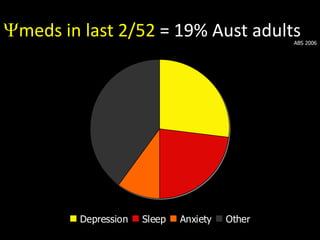
meds in last 2/52 = 19% Aust adults
Depression Sleep Anxiety Other
ABS 2006
Youth Prevalence
4 to 17 ~ 14% mental health problem
? 50% depression
high risk behaviours & suicidal thoughts
BPAD ~ teenage years
SANE 2005 & 2009, ABS 2006
Risk Factors
Genetic (31-42%)
Loss/Trauma/Abuse/Stressors
 Supports
 Alcohol & Other Drugs
Illness/Disability
Neurochemical/Neurotransmitters
Circadian Rhythms, Melatonin & Sleep
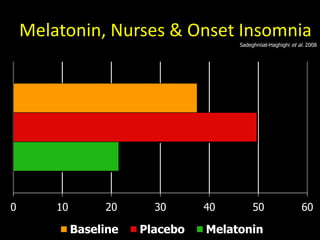
Melatonin, Nurses & Onset Insomnia
0 10 20 30 40 50 60
Baseline Placebo Melatonin
Sadeghniiat-Haghighi et al. 2008
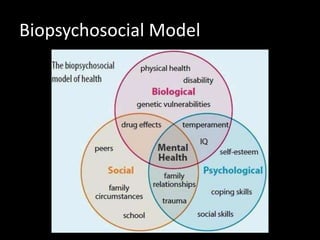
Biopsychosocial Model
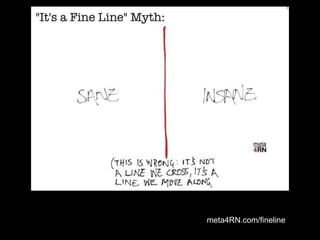
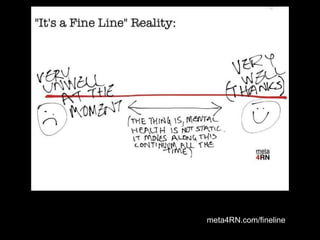
meta4RN.com/fineline
10
10
12
9
7
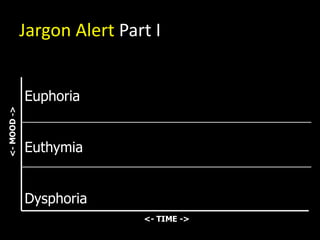
Jargon Alert Part I
<- TIME ->
<-MOOD->
Euphoria
Euthymia
Dysphoria
10
10
12
9
7
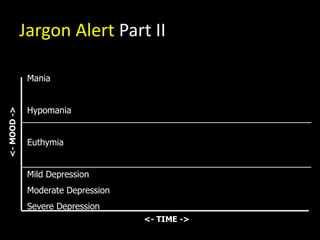
Jargon Alert Part II
<- TIME ->
<-MOOD->
Mania
Hypomania
Euthymia
Mild Depression
Moderate Depression
Severe Depression
10
10
12
9
7
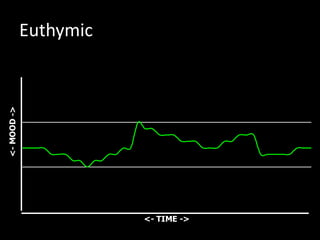
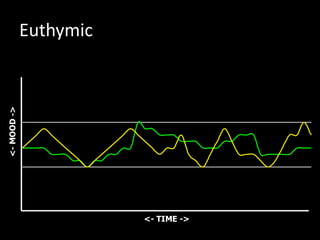
Euthymic
<- TIME ->
<-MOOD->
10
10
12
9
7
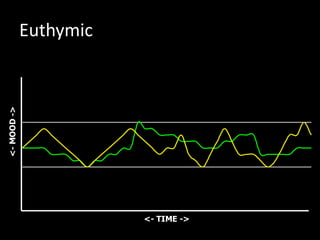
Euthymic
<- TIME ->
<-MOOD->
10
10
12
9
7
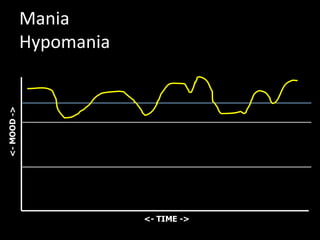
Mania
Hypomania
<- TIME ->
<-MOOD->
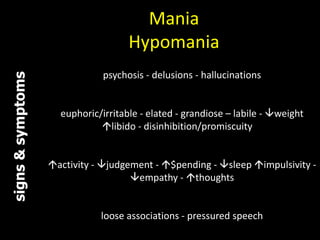
Mania
Hypomania
psychosis - delusions - hallucinations
euphoric/irritable - elated - grandiose – labile - weight
libido - disinhibition/promiscuity
activity - judgement - $pending - sleep impulsivity -
empathy - thoughts
loose associations - pressured speech
signs&symptoms
10
10
12
9
7
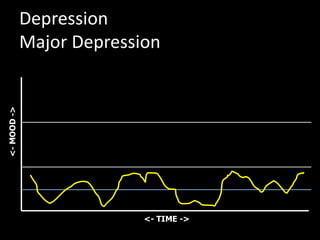
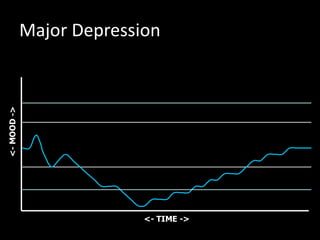
Depression
Major Depression
<- TIME ->
<-MOOD->
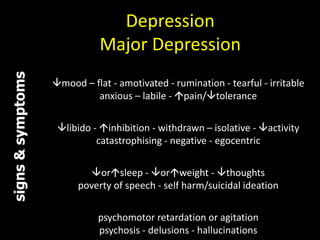
Depression
Major Depression
signs&symptoms
mood – flat - amotivated - rumination - tearful - irritable
anxious – labile - pain/tolerance
libido - inhibition - withdrawn – isolative - activity
catastrophising - negative - egocentric
orsleep - orweight - thoughts
poverty of speech - self harm/suicidal ideation
psychomotor retardation or agitation
psychosis - delusions - hallucinations
10
10
12
9
7
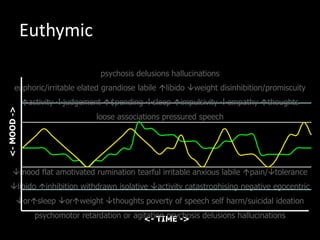
Euthymic
<- TIME ->
<-MOOD->
mood flat amotivated rumination tearful irritable anxious labile pain/tolerance
libido inhibition withdrawn isolative activity catastrophising negative egocentric
orsleep orweight thoughts poverty of speech self harm/suicidal ideation
psychomotor retardation or agitation psychosis delusions hallucinations
psychosis delusions hallucinations
euphoric/irritable elated grandiose labile libido weight disinhibition/promiscuity
activity judgement $pending sleep impulsivity empathy thoughts
loose associations pressured speech
Today’s Presentation
 Mood Disorders Overview
 Specific Mood Disorders
 Treatment Strategies
 Self Harm & Suicide
 ECT

10
10
12
9
7
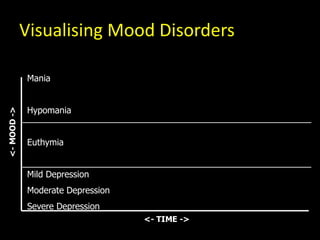
Visualising Mood Disorders
<- TIME ->
<-MOOD->
Mania
Hypomania
Euthymia
Mild Depression
Moderate Depression
Severe Depression
10
10
12
9
7
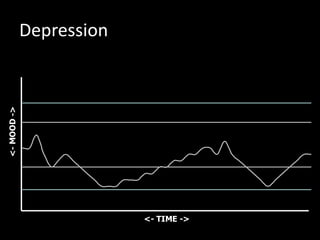
Depression
<- TIME ->
<-MOOD->
10
10
12
9
7
Major Depression
<- TIME ->
<-MOOD->
10
10
12
9
7
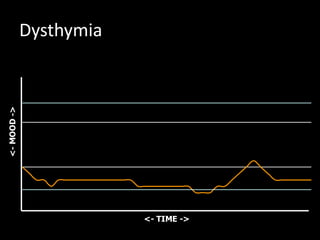
Dysthymia
<- TIME ->
<-MOOD->
10
10
12
9
7
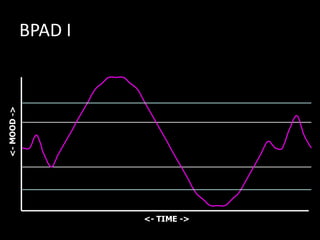
BPAD I
<- TIME ->
<-MOOD->
10
10
12
9
7
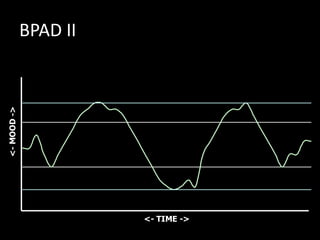
BPAD II
<- TIME ->
<-MOOD->
10
10
12
9
7
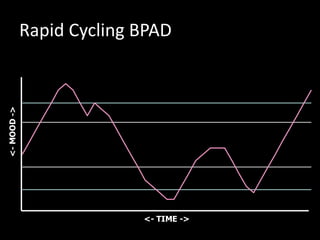
Rapid Cycling BPAD
<- TIME ->
<-MOOD->
10
10
12
9
7
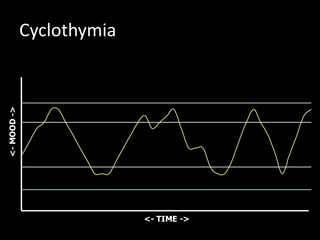
Cyclothymia
<- TIME ->
<-MOOD->
10
10
12
9
7
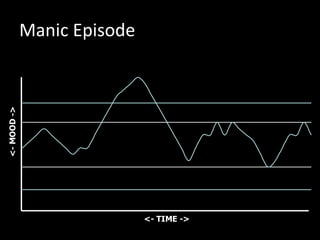
Manic Episode
<- TIME ->
<-MOOD->
10
10
12
9
7
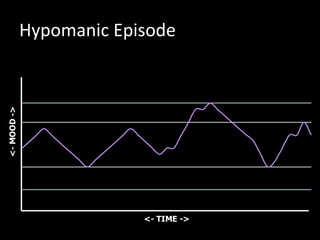
Hypomanic Episode
<- TIME ->
<-MOOD->
10
10
12
9
7
<- TIME ->
<-MOOD->
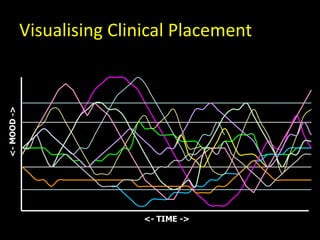
Visualising Clinical Placement
10
10
12
9
7
Euthymic
<- TIME ->
<-MOOD->
Today’s Presentation
 Mood Disorders Overview
 Specific Mood Disorders
 Treatment Strategies
 Self Harm & Suicide
 ECT
Nursing Approaches
Shared humanity
Life balance
No loss is trivial
Assessing cues
Pacing the development of the therapeutic relationship
Assessing the person within their socio-cultural context
Nursing Approaches
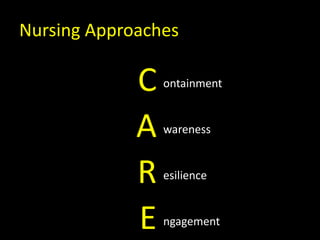
C ontainment
A wareness
R esilience
E ngagement
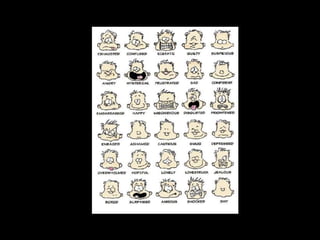
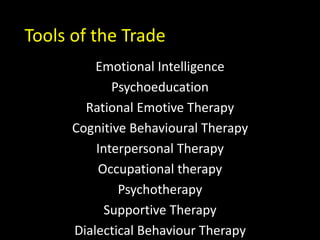
Emotional Intelligence
Psychoeducation
Rational Emotive Therapy
Cognitive Behavioural Therapy
Interpersonal Therapy
Occupational therapy
Psychotherapy
Supportive Therapy
Dialectical Behaviour Therapy
Tools of the Trade
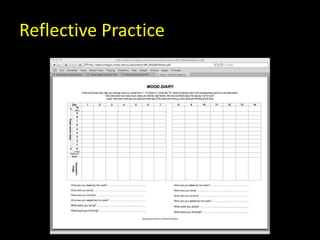
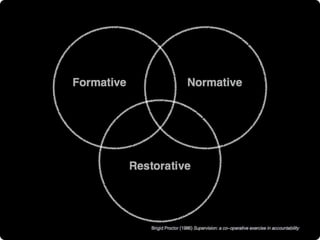
Reflective Practice
Clinical Supervision
process of reflection
one clinician to another:
support
professional development
education
clinical practice skills
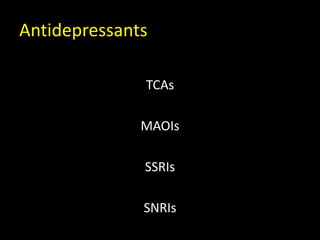
Antidepressants
TCAs
MAOIs
SSRIs
SNRIs
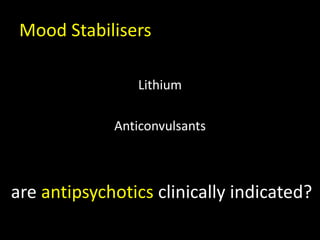
Mood Stabilisers
Lithium
Anticonvulsants
are antipsychotics clinically indicated?
Today’s Presentation
 Mood Disorders Overview
 Specific Mood Disorders
 Treatment Strategies
 Self Harm & Suicide
 ECT
Suicidal
or
Deliberate Self Harm?
Perceived Lethality
[as perceived by the client, not the clinician]
The “Attention Seeking” Myth
[created in the 1960s; a “truism” via repetition]
Self Harm
Maladaptive Coping
Self Loathing
Release
Empowerment
NOT “Attention Seeking”
Watch Counter-Transference
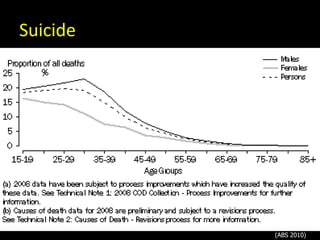
(ABS 2010)
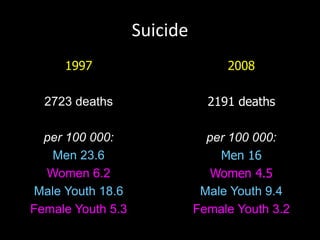
Suicide
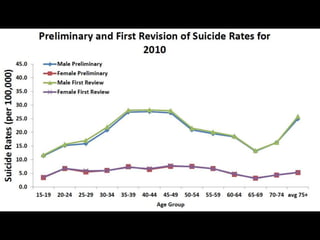
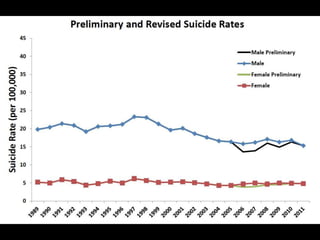
Suicide
1997
2723 deaths
per 100 000:
Men 23.6
Women 6.2
Male Youth 18.6
Female Youth 5.3
2008
2191 deaths
per 100 000:
Men 16
Women 4.5
Male Youth 9.4
Female Youth 3.2
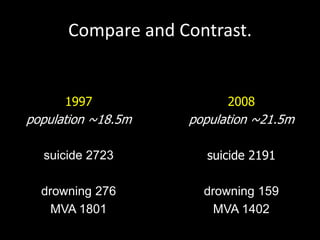
Compare and Contrast.
1997
population ~18.5m
suicide 2723
drowning 276
MVA 1801
2008
population ~21.5m
suicide 2191
drowning 159
MVA 1402
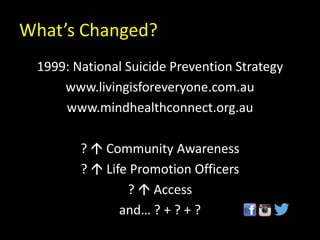
What’s Changed?
1999: National Suicide Prevention Strategy
www.livingisforeveryone.com.au
www.mindhealthconnect.org.au
?  Community Awareness
?  Life Promotion Officers
?  Access
and… ? + ? + ?
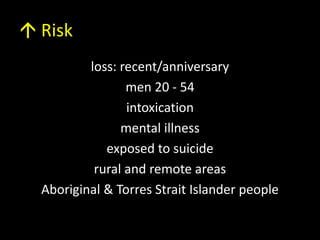
 Risk
loss: recent/anniversary
men 20 - 54
intoxication
mental illness
exposed to suicide
rural and remote areas
Aboriginal & Torres Strait Islander people
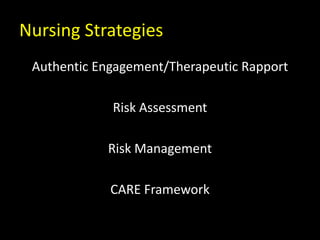
Nursing Strategies
Authentic Engagement/Therapeutic Rapport
Risk Assessment
Risk Management
CARE Framework
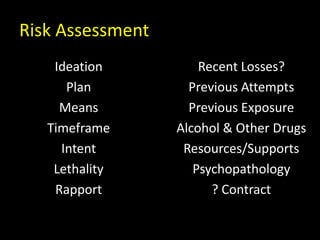
Risk Assessment
Ideation
Plan
Means
Timeframe
Intent
Lethality
Rapport
Recent Losses?
Previous Attempts
Previous Exposure
Alcohol & Other Drugs
Resources/Supports
Psychopathology
? Contract
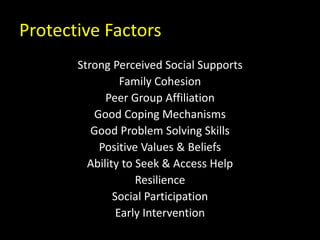
Protective Factors
Strong Perceived Social Supports
Family Cohesion
Peer Group Affiliation
Good Coping Mechanisms
Good Problem Solving Skills
Positive Values & Beliefs
Ability to Seek & Access Help
Resilience
Social Participation
Early Intervention
Today’s Presentation
 Mood Disorders Overview
 Specific Mood Disorders
 Treatment Strategies
 Self Harm & Suicide
 ECT
ECT
Electroconvulsive Therapy
History v Hollywood v Clinical Evidence
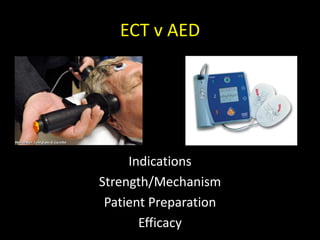
ECT v AED
Indications
Strength/Mechanism
Patient Preparation
Efficacy
ECT
Modified
Depolarisation of Neurons
Amnesia
Anterograde & Retrograde
Nurse ECT role
Education
Psychological
Legal
Assist
Physical
Today’s Presentation
 Mood Disorders Overview
 Specific Mood Disorders
 Treatment Strategies
 Self Harm & Suicide
 ECT
References
Athanasos, P. (2009). Mood Disorders. In R. Elder, K. Evans & D. Nizette (Eds), Psychiatric and mental health nursing (pp. 267-284). Sydney: Elsevoir Australia.
Australian Bureau of Statistics (1999), Causes of Death, Australia, 1997, cat. No. 3302.0, ABS, Canberra
Australian Bureau of Statistics (2006), National Health Survey: Summary of Results, Australia, 2004-05, cat. no. 4364.0, ABS, Canberra.
Australian Bureau of Statistics (2008), Causes of Death, Australia, 2006, cat. No. 3303.0, ABS, Canberra
Australian Institute of Health and Welfare (AIHW): Harrison JE, Pointer S and Elnour AA (2009). A review of suicide statistics in Australia. Injury research and
statistics series no. 49. Cat. no. INJCAT 121. Adelaide: AIHW.
Loo, C., Schweitzer, I. & Pratt, C. (2006) Recent advances in optimising electroconvulsive therapy. Australian and New Zealand Journal of Psychiatry, 40, pp.
632-638
Mindframe National Media Initiative (2009) Facts and statistics. Retrieved 22 March 2009 from: http://www.mindframe-media.info
Palmer, C. (2009). Mood Disorders. In R. Elder, K. Evans & D. Nizette (Eds), Psychiatric and mental health nursing (pp. 450-451). Sydney: Elsevoir Australia.
Sadeghniiat-Haghighi, K., Aminian, O., Pouryaghoub, G. & Yazdi, Z. (2008) Efficacy and hypnotic effects of melatonin in shift-work nurses: double-blind,
placebo-controlled crossover trial. Journal of Circadian Rhythms. 6:10. Retrieved 22 March 2009 from:
http://www.jcircadianrhythms.com/content/6/1/10
SANE Australia. (2005). Bipolar Disorder. Retrieved 22 March 2009 from: http://www.sane.org/information/factsheets/bipolar_disorder.html
SANE Australia. (2009). Depression. Retrieved 22 March 2009 from: http://www.sane.org/Information/Factsheets/Depression.html
Shepperd, C. & McAllister, M. (2003). CARE: A framework for responding therapeutically to the client who self-harms. Journal of Psychiatric and Mental
Health Nursing, 10, pp. 442-447

Mood Disorders and Suicide