Today’s Lecture    Vital Signs Overview/Context    Temperature    Pulse    Blood Pressure     Respiratory Rate    Oxygen Saturation    Pain    Assignment
T ° Body Temp hypothalamus -> thermoregulation Core Temp temp of the deep tissues of the body Surface Temp temp of the surface of the body
T °  Sites Core Rectum Tympanic Membrane Oesophagus Pulmonary artery Urinary bladder Surface Skin Axillae Oral
Equipment Glass/plastic/tympanic thermometer Alcohol swab if required Time required varies Pen, vital sign record sheet
T °  Process Tollefson 2007 pp226-228
T °  Process    Explanation     Equipment & Environment    Standard Precautions    Previous Activity?     Site    Equipment    Document    Compare
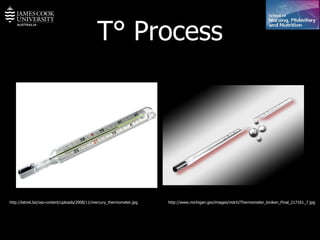
T °  Process http://latnet.biz/wp-content/uploads/2008/11/mercury_thermometer.jpg http://www.michigan.gov/images/mdch/Thermometer_broken_Final_217161_7.jpg
 
Effects on   T °   Developmental state Circadian rhythms Hormones Stress Environment Nervous System Impairment Medications/Illicit Substances Genetic
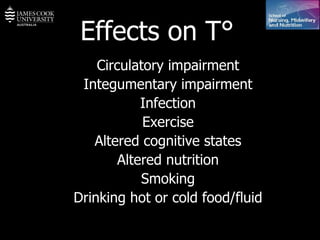
Circulatory impairment Integumentary impairment Infection Exercise Altered cognitive states Altered nutrition Smoking Drinking hot or cold food/fluid Effects on T°
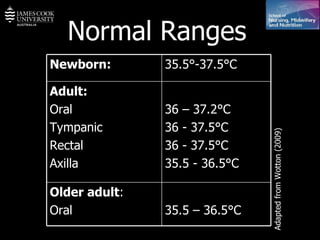
Normal Ranges   Adapted from Wotton (2009) 35.5 – 36.5°C Older adult : Oral 36 – 37.2°C 36 - 37.5°C 36 - 37.5°C 35.5 - 36.5°C Adult: Oral  Tympanic Rectal Axilla  35.5°-37.5°C Newborn:
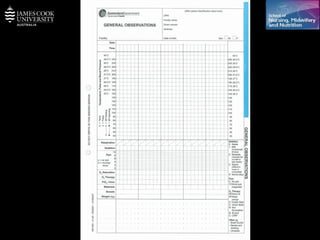
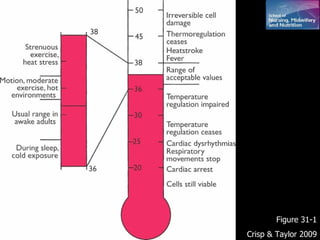
Figure 31-1 Crisp & Taylor 2009
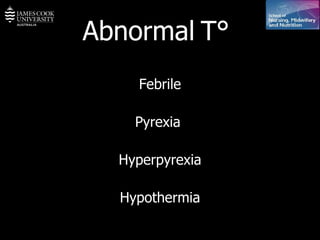
Abnormal   T °   Febrile Pyrexia  Hyperpyrexia Hypothermia
To  ↓  T °   ↓   Environmental T °   Electric Fan Ice Chips/Cool Drinks Tepid Shower/Sponge Cotton Clothing/Linen Antipyretic Medication
Today’s Lecture    Vital Signs Overview/Context    Temperature    Pulse    Blood Pressure     Respiratory Rate    Oxygen Saturation    Pain    Assignment

Ns1211 2009 Week 4 Part 2

  • 1.
    Today’s Lecture  Vital Signs Overview/Context  Temperature  Pulse  Blood Pressure  Respiratory Rate  Oxygen Saturation  Pain  Assignment
  • 2.
    T ° BodyTemp hypothalamus -> thermoregulation Core Temp temp of the deep tissues of the body Surface Temp temp of the surface of the body
  • 3.
    T ° Sites Core Rectum Tympanic Membrane Oesophagus Pulmonary artery Urinary bladder Surface Skin Axillae Oral
  • 4.
    Equipment Glass/plastic/tympanic thermometerAlcohol swab if required Time required varies Pen, vital sign record sheet
  • 5.
    T ° Process Tollefson 2007 pp226-228
  • 6.
    T ° Process  Explanation  Equipment & Environment  Standard Precautions  Previous Activity?  Site  Equipment  Document  Compare
  • 7.
    T ° Process http://latnet.biz/wp-content/uploads/2008/11/mercury_thermometer.jpg http://www.michigan.gov/images/mdch/Thermometer_broken_Final_217161_7.jpg
  • 8.
  • 9.
    Effects on T ° Developmental state Circadian rhythms Hormones Stress Environment Nervous System Impairment Medications/Illicit Substances Genetic
  • 10.
    Circulatory impairment Integumentaryimpairment Infection Exercise Altered cognitive states Altered nutrition Smoking Drinking hot or cold food/fluid Effects on T°
  • 11.
    Normal Ranges Adapted from Wotton (2009) 35.5 – 36.5°C Older adult : Oral 36 – 37.2°C 36 - 37.5°C 36 - 37.5°C 35.5 - 36.5°C Adult: Oral Tympanic Rectal Axilla 35.5°-37.5°C Newborn:
  • 12.
    Figure 31-1 Crisp& Taylor 2009
  • 13.
    Abnormal T ° Febrile Pyrexia Hyperpyrexia Hypothermia
  • 14.
    To ↓ T ° ↓ Environmental T ° Electric Fan Ice Chips/Cool Drinks Tepid Shower/Sponge Cotton Clothing/Linen Antipyretic Medication
  • 15.
    Today’s Lecture  Vital Signs Overview/Context  Temperature  Pulse  Blood Pressure  Respiratory Rate  Oxygen Saturation  Pain  Assignment