

Sentinal Lymph Node Biopsy
Dr Jameel Kifayatullah
Khyber College of dentistry Peshawar
Sentinal Lymph Node
• Sentinel lymph node (SLN) is the first lymph
node to receive drainage directly from a
tumor.
Sentinal Lymph node biopsy
• SLN biopsy is based on an ordered dissemination of
tumor cells from peritumoral lymphatics to the SLN,
and then to more distant lymph nodes
• Clinical identifcation of these nodes is performed via
injection of numerous types of tracers, dyes, and
radioisotopes into the peritumoral site depending on
the type and location of the tumor
• Labeled lymph nodes are surgically excised and
histologically examined for the presence of disease.
• Identification and biopsy of the SLN can correctly
indicate the status of the draining lymph node basin.
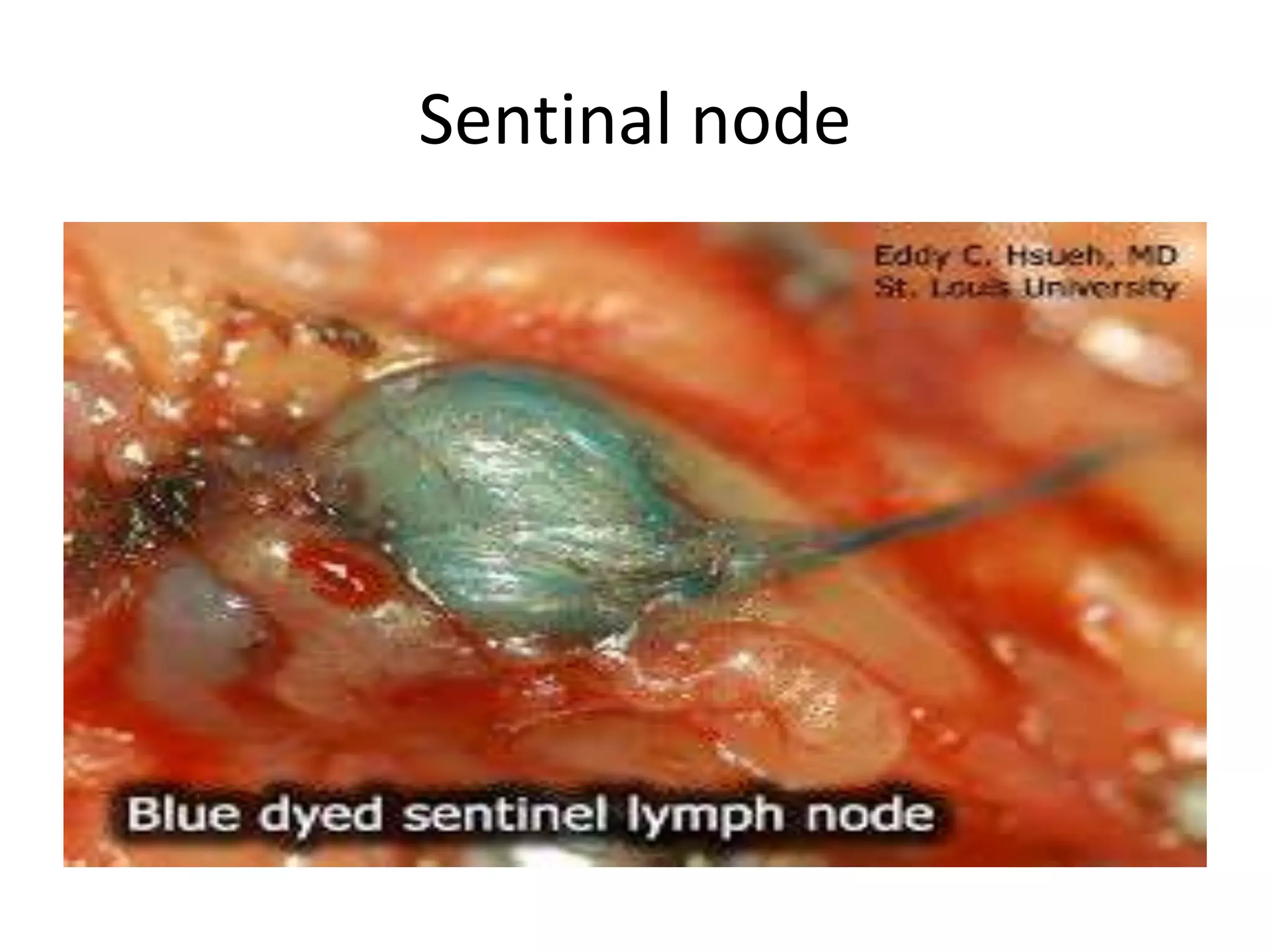
Sentinal node
ADVANATAGES OF SNB
The advantages of implementing SNB instead
of ND include
• decreased morbidity
• Decreased operating room time
• Decreased length of postoperative stay
Side effects OF SNB
• Tenderness around the area of surgery
• Numbness
• Limited range of motion
• Infection
• Lymphedema
Technique
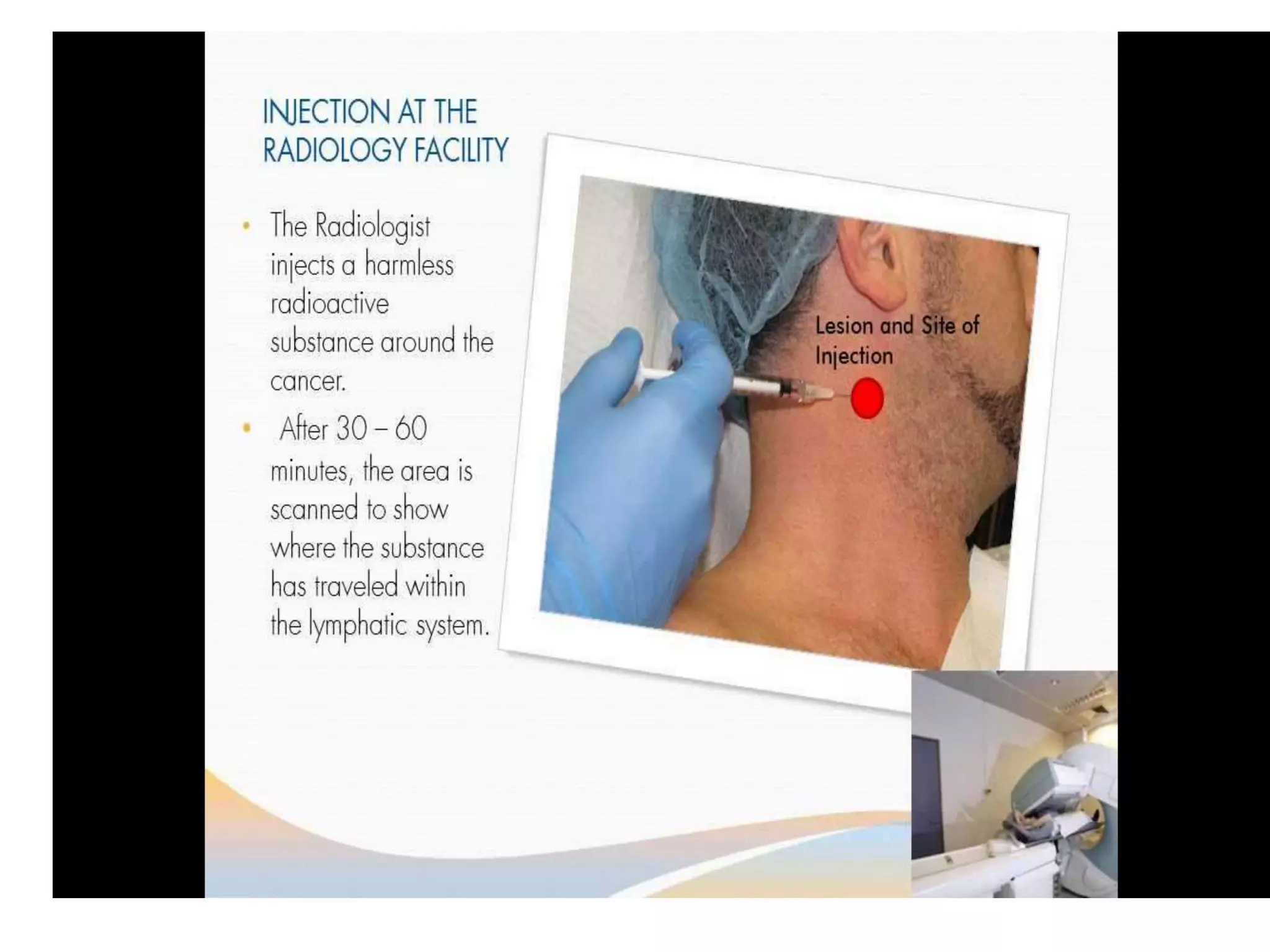
• The radiologist injects a harmless radioactive
substance around the tumor
• After 30-60 seconds the area is scanned to
show where the substance has travelled
within the lymphatic system.
Technique
• The radioactive tracer travels within lymphatic
channels and gets trapped in a lymph node.
• The first node to receive drainage from a
tumor is called the sentinel lymph node.
• Sentinel node will also trap metastatic cancer
cells before they spread to other lymph nodes.
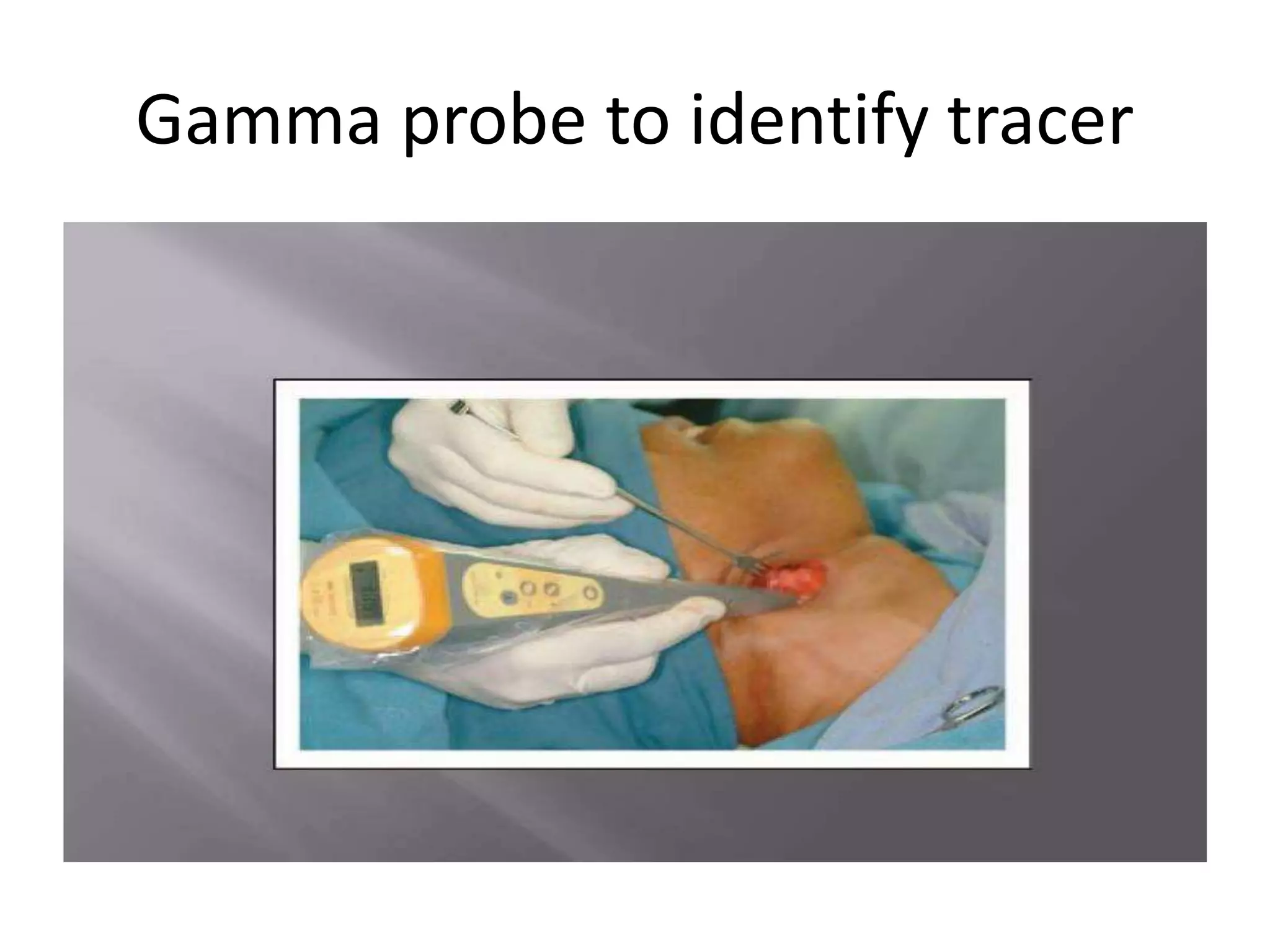
• A special probe i.e gamma probe is used to
identify the greatest concentration of
radioactive tracer.
Gamma probe to identify tracer
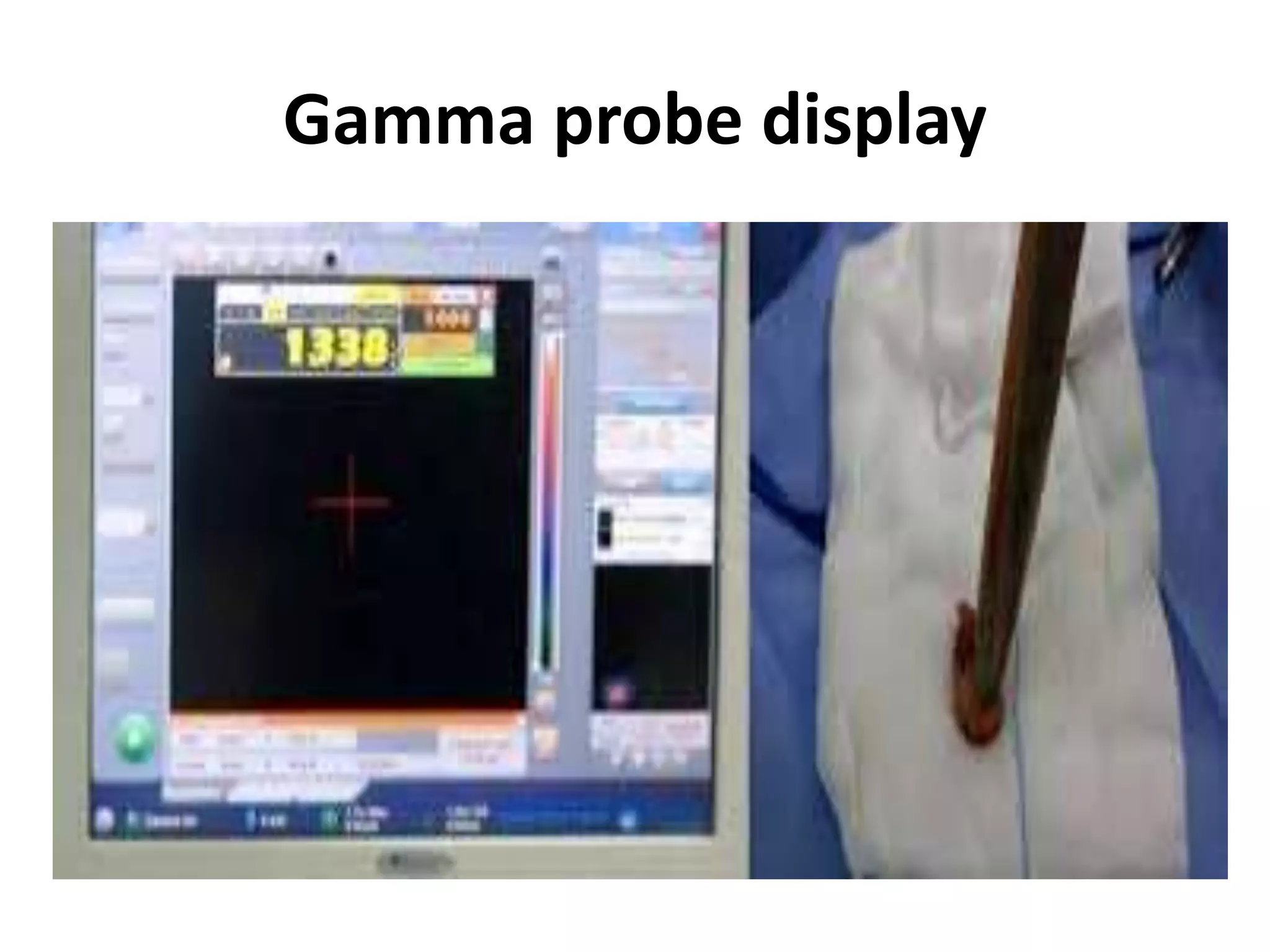
Gamma probe display
technique
• The display shows the amount of tracer
activity detected by the probe
• High level of tracer activity indicates location
of sentinel lymph node.
• The sentinel node is identified again
intraoperatively with the aid of a gamma
probe
• The area with elevated radioactivity is
explored to identify the sentinel lymph node
Technique
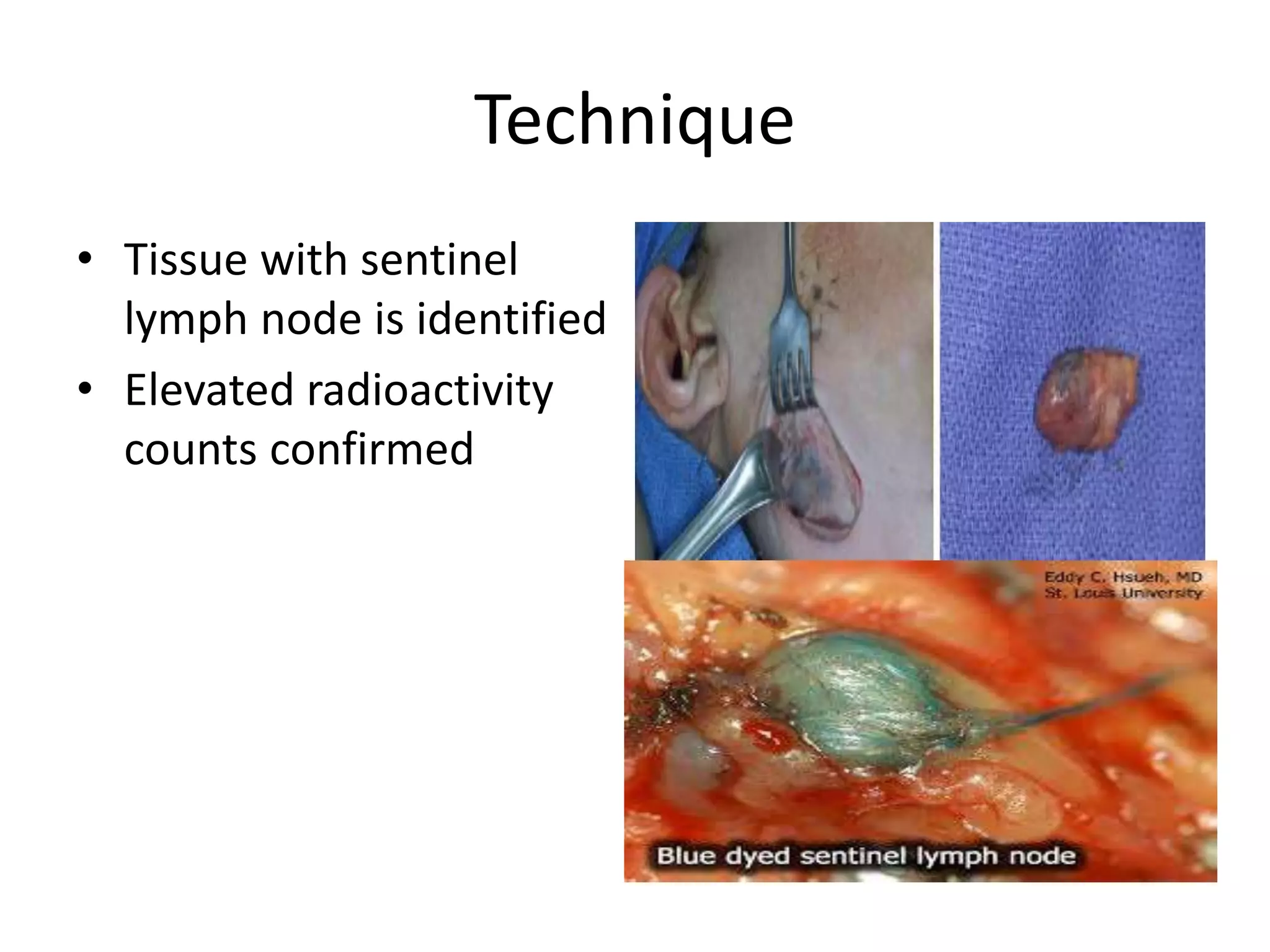
• Tissue with sentinel
lymph node is identified
• Elevated radioactivity
counts confirmed
Technique
• The lymph node is removed and sent to
pathologist if cancer cells are present
• If cancer is detected then more aggressive
treatment such as neck dissection is carried
out.
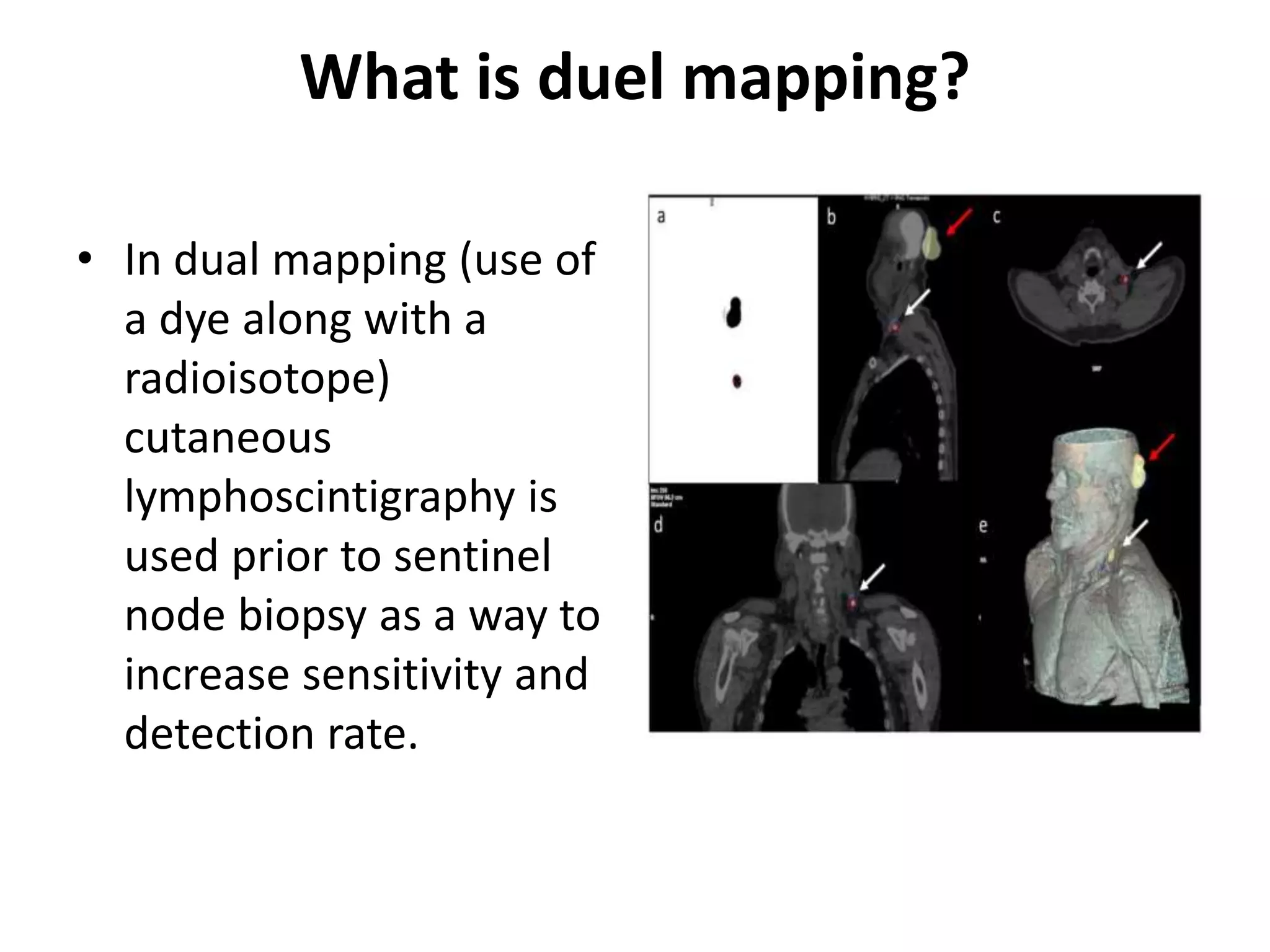
What is duel mapping?
• In dual mapping (use of
a dye along with a
radioisotope)
cutaneous
lymphoscintigraphy is
used prior to sentinel
node biopsy as a way to
increase sensitivity and
detection rate.
Importance of SLNB
• Sentinel node biopsy (SNB) is a reliable staging
test for patients with early disease and a
radiologically N0 neck, can detect occult
metastases with a sensitivity of 86%–94%.
• Patients with no sign of metastases on SNB
could avoid neck dissection, and individual
treatment should reduce both morbidity and
cost.
SENTINAL LYMPH NODE BIOPSY
INDICATIONS
• N0 neck
SNB
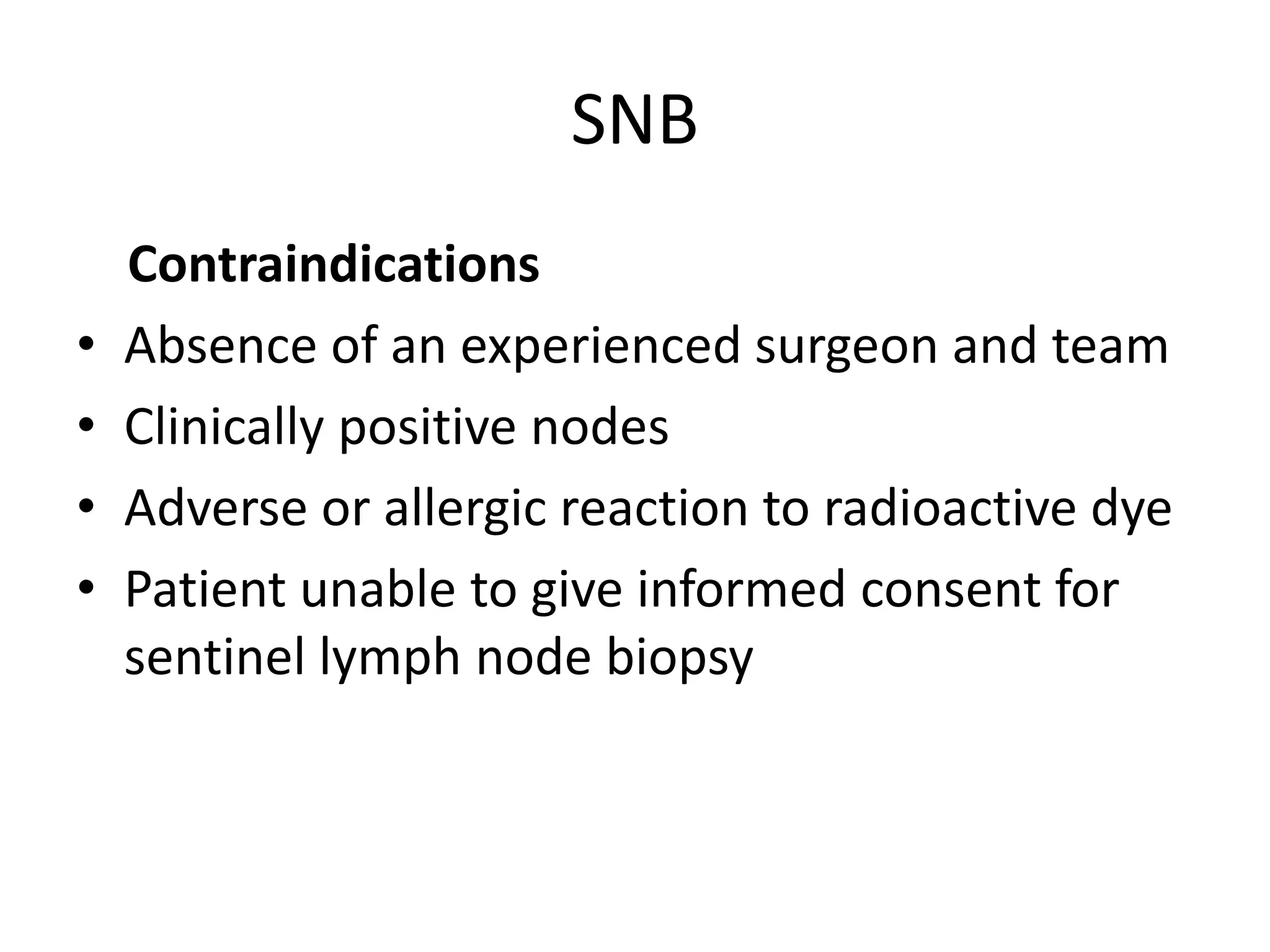
Contraindications
• Absence of an experienced surgeon and team
• Clinically positive nodes
• Adverse or allergic reaction to radioactive dye
• Patient unable to give informed consent for
sentinel lymph node biopsy
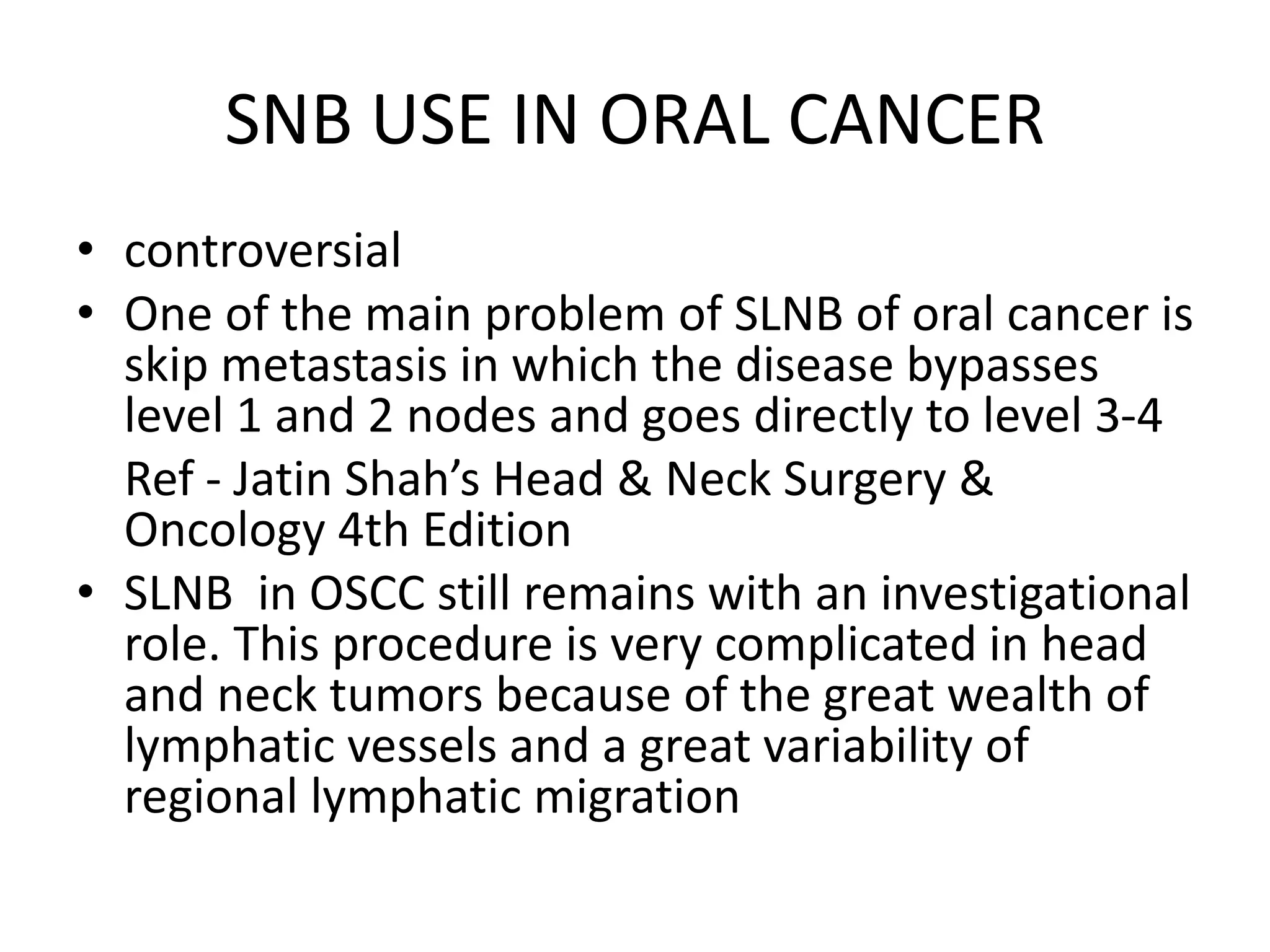
SNB USE IN ORAL CANCER
• controversial
• One of the main problem of SLNB of oral cancer is
skip metastasis in which the disease bypasses
level 1 and 2 nodes and goes directly to level 3-4
Ref - Jatin Shah’s Head & Neck Surgery &
Oncology 4th Edition
• SLNB in OSCC still remains with an investigational
role. This procedure is very complicated in head
and neck tumors because of the great wealth of
lymphatic vessels and a great variability of
regional lymphatic migration
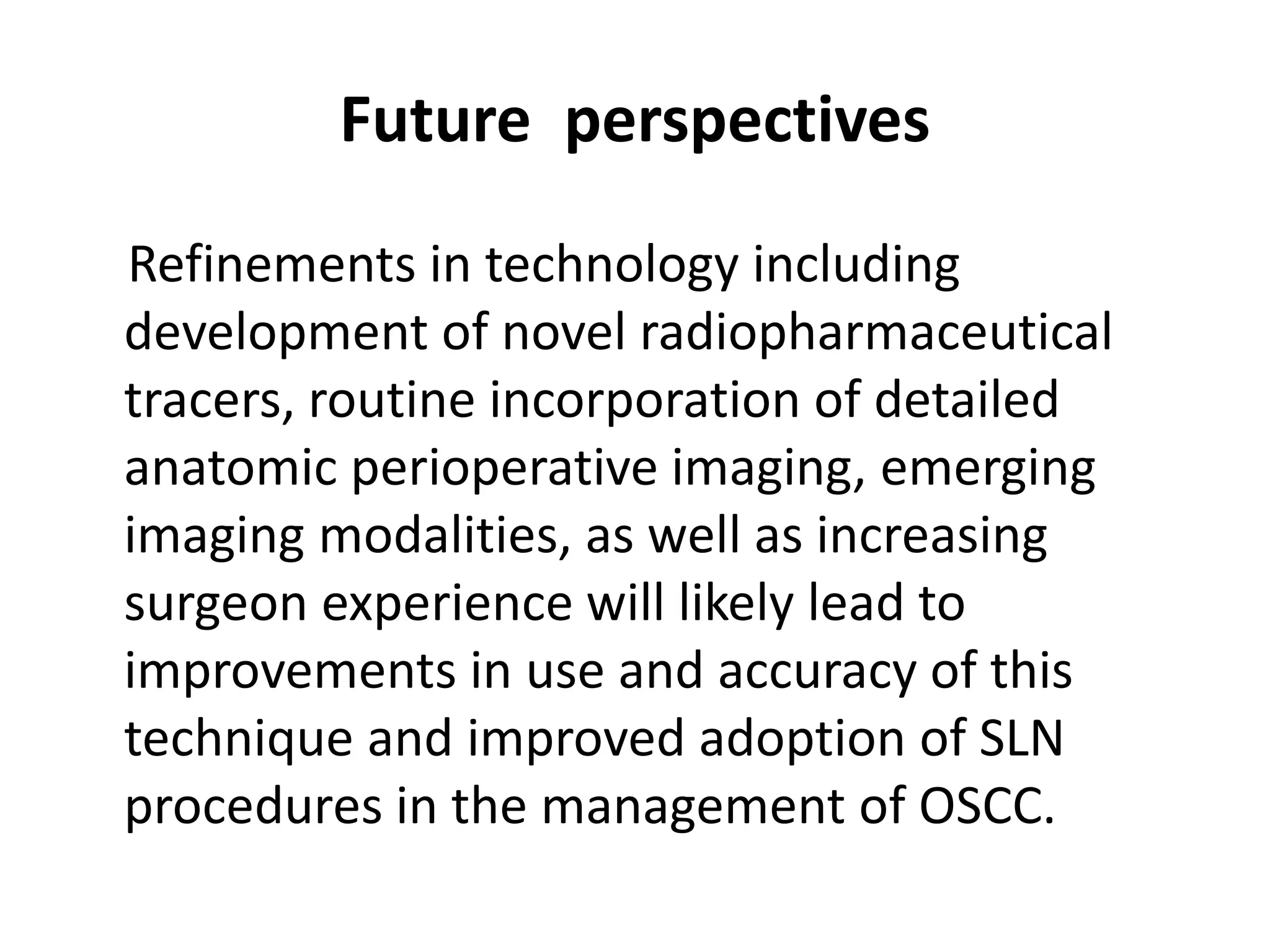
Future perspectives
Refinements in technology including
development of novel radiopharmaceutical
tracers, routine incorporation of detailed
anatomic perioperative imaging, emerging
imaging modalities, as well as increasing
surgeon experience will likely lead to
improvements in use and accuracy of this
technique and improved adoption of SLN
procedures in the management of OSCC.
Sentinal lymph node biopsy

Sentinal lymph node biopsy

  • 1.
    Sentinal Lymph NodeBiopsy Dr Jameel Kifayatullah Khyber College of dentistry Peshawar
  • 2.
    Sentinal Lymph Node •Sentinel lymph node (SLN) is the first lymph node to receive drainage directly from a tumor.
  • 3.
    Sentinal Lymph nodebiopsy • SLN biopsy is based on an ordered dissemination of tumor cells from peritumoral lymphatics to the SLN, and then to more distant lymph nodes • Clinical identifcation of these nodes is performed via injection of numerous types of tracers, dyes, and radioisotopes into the peritumoral site depending on the type and location of the tumor • Labeled lymph nodes are surgically excised and histologically examined for the presence of disease. • Identification and biopsy of the SLN can correctly indicate the status of the draining lymph node basin.
  • 4.
  • 5.
    ADVANATAGES OF SNB Theadvantages of implementing SNB instead of ND include • decreased morbidity • Decreased operating room time • Decreased length of postoperative stay
  • 6.
    Side effects OFSNB • Tenderness around the area of surgery • Numbness • Limited range of motion • Infection • Lymphedema
  • 7.
    Technique • The radiologistinjects a harmless radioactive substance around the tumor • After 30-60 seconds the area is scanned to show where the substance has travelled within the lymphatic system.
  • 9.
    Technique • The radioactivetracer travels within lymphatic channels and gets trapped in a lymph node. • The first node to receive drainage from a tumor is called the sentinel lymph node. • Sentinel node will also trap metastatic cancer cells before they spread to other lymph nodes. • A special probe i.e gamma probe is used to identify the greatest concentration of radioactive tracer.
  • 10.
    Gamma probe toidentify tracer
  • 11.
  • 12.
    technique • The displayshows the amount of tracer activity detected by the probe • High level of tracer activity indicates location of sentinel lymph node. • The sentinel node is identified again intraoperatively with the aid of a gamma probe • The area with elevated radioactivity is explored to identify the sentinel lymph node
  • 13.
    Technique • Tissue withsentinel lymph node is identified • Elevated radioactivity counts confirmed
  • 14.
    Technique • The lymphnode is removed and sent to pathologist if cancer cells are present • If cancer is detected then more aggressive treatment such as neck dissection is carried out.
  • 15.
    What is duelmapping? • In dual mapping (use of a dye along with a radioisotope) cutaneous lymphoscintigraphy is used prior to sentinel node biopsy as a way to increase sensitivity and detection rate.
  • 16.
    Importance of SLNB •Sentinel node biopsy (SNB) is a reliable staging test for patients with early disease and a radiologically N0 neck, can detect occult metastases with a sensitivity of 86%–94%. • Patients with no sign of metastases on SNB could avoid neck dissection, and individual treatment should reduce both morbidity and cost.
  • 17.
    SENTINAL LYMPH NODEBIOPSY INDICATIONS • N0 neck
  • 18.
    SNB Contraindications • Absence ofan experienced surgeon and team • Clinically positive nodes • Adverse or allergic reaction to radioactive dye • Patient unable to give informed consent for sentinel lymph node biopsy
  • 19.
    SNB USE INORAL CANCER • controversial • One of the main problem of SLNB of oral cancer is skip metastasis in which the disease bypasses level 1 and 2 nodes and goes directly to level 3-4 Ref - Jatin Shah’s Head & Neck Surgery & Oncology 4th Edition • SLNB in OSCC still remains with an investigational role. This procedure is very complicated in head and neck tumors because of the great wealth of lymphatic vessels and a great variability of regional lymphatic migration
  • 20.
    Future perspectives Refinements intechnology including development of novel radiopharmaceutical tracers, routine incorporation of detailed anatomic perioperative imaging, emerging imaging modalities, as well as increasing surgeon experience will likely lead to improvements in use and accuracy of this technique and improved adoption of SLN procedures in the management of OSCC.