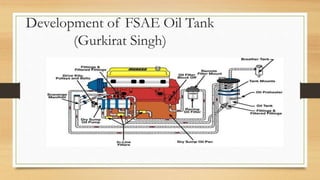
Development of FSAE Oil Tank
(Gurkirat Singh)
Need for oil tank cooling
 Current model of oil tank doesn’t have effective cooling
system incorporated
 Oil composition breaks down after certain range of
temperature
 Cooling of oil help to reduce the wear and tear of engine
parts due to friction
Objectives
 Optimise the heat transfer between the engine oil and
surrounding air
 Design should be compact and of less weight
 Find the areas where heat transfer can occur
Background
• Using of dry sump over wet sump system
• Cooling is necessity for ECU race car
• Heat transfer method and different heat exchanger.
The two types of heat transfer which takes place in heat exchangers used in car is conduction and convection.
Convection occurs mainly where fluids are used and the preliminary results are based on the convection
equation.
𝑄𝑐𝑜𝑛𝑑 = 𝑈 ∗ 𝐴 ∗ 𝛥𝑡 ∗ 10−3
𝐾𝑊
𝑄𝑐𝑜𝑛𝑣𝑐 = ℎ ∗ 𝐴 ∗ 𝛥𝑡 ∗ 10−3 (𝐾𝑊)
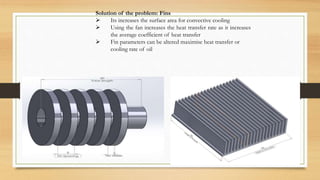
Solution of the problem: Fins
 Its increases the surface area for convective cooling
 Using the fan increases the heat transfer rate as it increases
the average coefficient of heat transfer
 Fin parameters can be altered maximise heat transfer or
cooling rate of oil
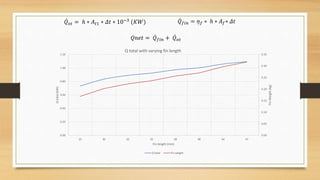
𝑄 𝑓𝑖𝑛 = 𝜂 𝑓 ∗ ℎ ∗ 𝐴 𝑓∗ 𝛥𝑡
0.00
0.05
0.10
0.15
0.20
0.25
0.30
0.35
0.00
0.20
0.40
0.60
0.80
1.00
1.20
25 30 33 35 38 40 44 47
FinWeight(kg)
Qtotal(kW)
Fin length (mm)
Q total with varying fin length
Q total Fin weight
𝑄𝑛𝑒𝑡 = 𝑄 𝑓𝑖𝑛 + 𝑄 𝑜𝑡
𝑄 𝑜𝑡 = ℎ ∗ 𝐴 𝑡1 ∗ 𝛥𝑡 ∗ 10−3
(𝐾𝑊)
0.00
0.05
0.10
0.15
0.20
0.25
0.30
0.35
0.40
0.45
0.50
0.00
0.20
0.40
0.60
0.80
1.00
1.20
1.40
1.60
1.80
25 30 35 40 45 50 55
finweight(Kg)
Qtotal(kw)
fin diameter (mm)
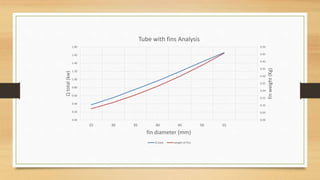
Tube with fins Analysis
Q total weight of fins
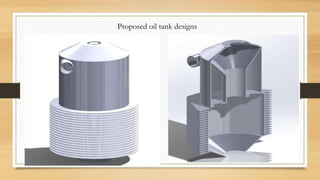
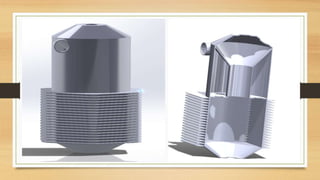
Proposed oil tank designs
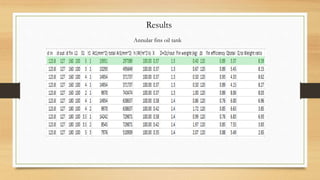
Results
Annular fins oil tank
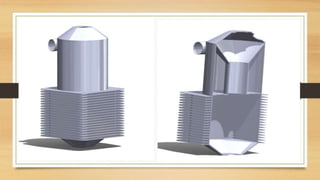
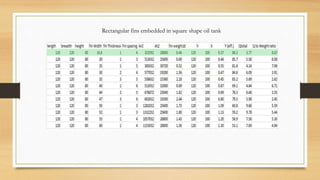
Rectangular fins embedded in square shape oil tank
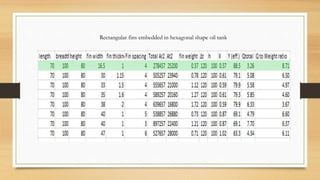
Rectangular fins embedded in hexagonal shape oil tank
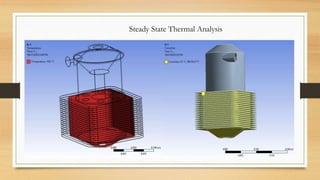
Steady State Thermal Analysis
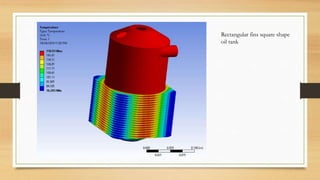
Rectangular fins square shape
oil tank
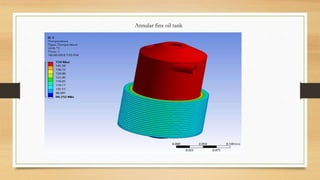
Annular fins oil tank
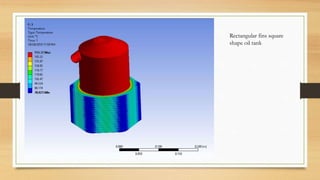
Rectangular fins square
shape oil tank
Component name Minimum
Temperature (ºC)
Weight of the oil tank using
Aluminum as material (g)
Square plate fins 104 1148.55
Annular plate fins 90 996.64
Hexagonal plate fins 95 1055.60
Observations
Conclusion
• Different design posses different heat sink rate depending upon the fins parameters
• From the calculated results hexagonal fins poses greater heat sink compared to annular fins but the
overall weight of oil tank increase in hexagonal arrangement as showed in observations.
• Annular fins arrangement works effective in reducing the tempeartuer of the oil going through the
tank.

Seminar presentation

  • 1.
    Development of FSAEOil Tank (Gurkirat Singh)
  • 2.
    Need for oiltank cooling  Current model of oil tank doesn’t have effective cooling system incorporated  Oil composition breaks down after certain range of temperature  Cooling of oil help to reduce the wear and tear of engine parts due to friction Objectives  Optimise the heat transfer between the engine oil and surrounding air  Design should be compact and of less weight  Find the areas where heat transfer can occur
  • 3.
    Background • Using ofdry sump over wet sump system • Cooling is necessity for ECU race car • Heat transfer method and different heat exchanger. The two types of heat transfer which takes place in heat exchangers used in car is conduction and convection. Convection occurs mainly where fluids are used and the preliminary results are based on the convection equation. 𝑄𝑐𝑜𝑛𝑑 = 𝑈 ∗ 𝐴 ∗ 𝛥𝑡 ∗ 10−3 𝐾𝑊 𝑄𝑐𝑜𝑛𝑣𝑐 = ℎ ∗ 𝐴 ∗ 𝛥𝑡 ∗ 10−3 (𝐾𝑊)
  • 4.
    Solution of theproblem: Fins  Its increases the surface area for convective cooling  Using the fan increases the heat transfer rate as it increases the average coefficient of heat transfer  Fin parameters can be altered maximise heat transfer or cooling rate of oil
  • 5.
    𝑄 𝑓𝑖𝑛 =𝜂 𝑓 ∗ ℎ ∗ 𝐴 𝑓∗ 𝛥𝑡 0.00 0.05 0.10 0.15 0.20 0.25 0.30 0.35 0.00 0.20 0.40 0.60 0.80 1.00 1.20 25 30 33 35 38 40 44 47 FinWeight(kg) Qtotal(kW) Fin length (mm) Q total with varying fin length Q total Fin weight 𝑄𝑛𝑒𝑡 = 𝑄 𝑓𝑖𝑛 + 𝑄 𝑜𝑡 𝑄 𝑜𝑡 = ℎ ∗ 𝐴 𝑡1 ∗ 𝛥𝑡 ∗ 10−3 (𝐾𝑊)
  • 6.
    0.00 0.05 0.10 0.15 0.20 0.25 0.30 0.35 0.40 0.45 0.50 0.00 0.20 0.40 0.60 0.80 1.00 1.20 1.40 1.60 1.80 25 30 3540 45 50 55 finweight(Kg) Qtotal(kw) fin diameter (mm) Tube with fins Analysis Q total weight of fins
  • 7.
  • 10.
  • 11.
    Rectangular fins embeddedin square shape oil tank
  • 12.
    Rectangular fins embeddedin hexagonal shape oil tank
  • 13.
  • 14.
  • 15.
  • 16.
  • 17.
    Component name Minimum Temperature(ºC) Weight of the oil tank using Aluminum as material (g) Square plate fins 104 1148.55 Annular plate fins 90 996.64 Hexagonal plate fins 95 1055.60 Observations
  • 18.
    Conclusion • Different designposses different heat sink rate depending upon the fins parameters • From the calculated results hexagonal fins poses greater heat sink compared to annular fins but the overall weight of oil tank increase in hexagonal arrangement as showed in observations. • Annular fins arrangement works effective in reducing the tempeartuer of the oil going through the tank.