Bharati Vidyapeeth Deemed University College of
Engineering, Pune
Prepared By:-
Lokesh Jain(1714110897)
Guided By:-
Dr. Bindu Garg
Context
1. INTRODUCTION
2. DIFFERENCEBETWEENSMARTAND
INTELLIGENTFABRICS
3. TYPESOF SMART FABRICS
4. WORKING OF SMART FABRICS
5. APPLICATIONS OF SMART FABRICS
6. SOMEINNOVATIVE SMART FABRICS
7. REFERENCES
INTRODUCTION
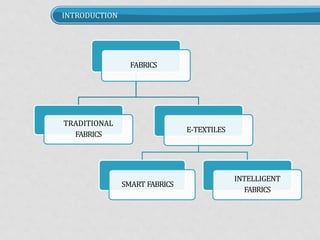
FABRICS
TRADITIONAL
FABRICS
E-TEXTILES
SMART FABRICS
INTELLIGENT
FABRICS
E_TEXTILES
1. E-textiles, also known as smart garments, smart
clothing or electronic textiles are fabrics that
enable digital components such as a battery and a
light (including small computers), and electronics
to be embedded in them.
2. E-Textiles are further divided into two groups:
1. Smart Fabrics
2. Intelligent Fabrics
Difference Between Smart Fabric and Intelligent Fabric
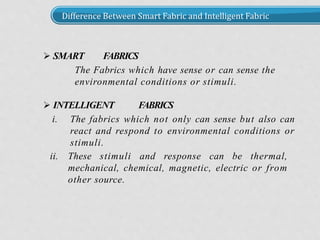
 SMART FABRICS
The Fabrics which have sense or can sense the
environmental conditions or stimuli.
 INTELLIGENT FABRICS
i. The fabrics which not only can sense but also can
react and respond to environmental conditions or
stimuli.
ii. These stimuli and response can be thermal,
mechanical, chemical, magnetic, electric or from
other source.
CATEGORY of E-Textile
1. Passive smart materials can only sense the
environmental conditions or stimuli, they are
only sensors, they can't react.
2. Active smart materials can sense and also react to
the environmental conditions or stimuli.
3. Very smart materials can sense, react and adapt
themselves according to the environment.
TYPES of E-TEXTILE
 Smart textiles can be broken into two different
categories:
 Aesthetic
 Performance enhancing
 Aesthetic Textiles are fabrics that light up and
fabrics that can change color.
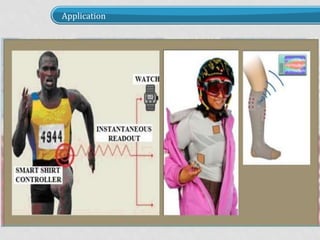
Performance enhancing smart textiles are intended for use
in athletic, extreme sports and military applications.
These include fabrics designed to regulate body
temperature, reduce wind resistance, and control muscle
vibrations –all of which may improve athletic
performance.
Working of Smart Fabric
Busses, microcontrollers, Keyboards and touch pads are
embedded with smart fabrics
The microcontroller is directly connected to the fabric
The keypad shown here has been produced using ordinary
embroidery techniques and mildly conductive thread
The keypad is flexible, durable and responsive to
touch
A printed circuit board supports the components
necessary to do capacitive sensing and output key
press events as a serial data stream
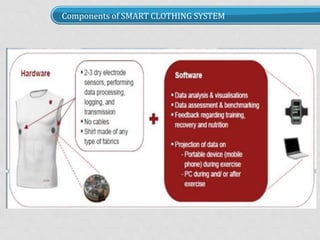
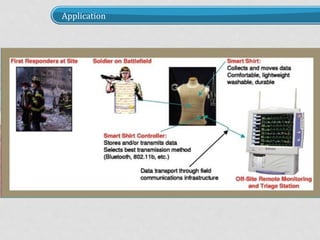
Components of SMART CLOTHING SYSTEM
Application
Application
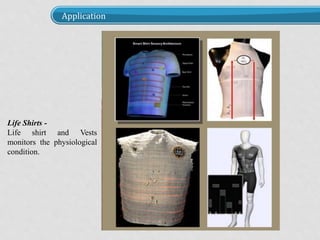
Life Shirts -
Life shirt and Vests
monitors the physiological
condition.
Application
Sensory Baby Vests-
Monitors the vital
functions of infants
and youth
Application
References
 https://en.wikipedia.org
 http://www.technicaltextile.net
 http://fashion.bodi.me/top-5-smart-
fabrics- intelligent-clothing/
 https://www.wearabletechnologyinsights.c
om
 http://www.indiantextilejournal.com
 http://www.thinkgeek.com
Seminar on smart clothing

Seminar on smart clothing

  • 1.
    Bharati Vidyapeeth DeemedUniversity College of Engineering, Pune Prepared By:- Lokesh Jain(1714110897) Guided By:- Dr. Bindu Garg
  • 2.
    Context 1. INTRODUCTION 2. DIFFERENCEBETWEENSMARTAND INTELLIGENTFABRICS 3.TYPESOF SMART FABRICS 4. WORKING OF SMART FABRICS 5. APPLICATIONS OF SMART FABRICS 6. SOMEINNOVATIVE SMART FABRICS 7. REFERENCES
  • 3.
  • 4.
    E_TEXTILES 1. E-textiles, alsoknown as smart garments, smart clothing or electronic textiles are fabrics that enable digital components such as a battery and a light (including small computers), and electronics to be embedded in them. 2. E-Textiles are further divided into two groups: 1. Smart Fabrics 2. Intelligent Fabrics
  • 5.
    Difference Between SmartFabric and Intelligent Fabric  SMART FABRICS The Fabrics which have sense or can sense the environmental conditions or stimuli.  INTELLIGENT FABRICS i. The fabrics which not only can sense but also can react and respond to environmental conditions or stimuli. ii. These stimuli and response can be thermal, mechanical, chemical, magnetic, electric or from other source.
  • 6.
    CATEGORY of E-Textile 1.Passive smart materials can only sense the environmental conditions or stimuli, they are only sensors, they can't react. 2. Active smart materials can sense and also react to the environmental conditions or stimuli. 3. Very smart materials can sense, react and adapt themselves according to the environment.
  • 7.
    TYPES of E-TEXTILE Smart textiles can be broken into two different categories:  Aesthetic  Performance enhancing  Aesthetic Textiles are fabrics that light up and fabrics that can change color. Performance enhancing smart textiles are intended for use in athletic, extreme sports and military applications. These include fabrics designed to regulate body temperature, reduce wind resistance, and control muscle vibrations –all of which may improve athletic performance.
  • 8.
    Working of SmartFabric Busses, microcontrollers, Keyboards and touch pads are embedded with smart fabrics The microcontroller is directly connected to the fabric The keypad shown here has been produced using ordinary embroidery techniques and mildly conductive thread The keypad is flexible, durable and responsive to touch A printed circuit board supports the components necessary to do capacitive sensing and output key press events as a serial data stream
  • 9.
    Components of SMARTCLOTHING SYSTEM
  • 10.
  • 11.
    Application Life Shirts - Lifeshirt and Vests monitors the physiological condition.
  • 12.
    Application Sensory Baby Vests- Monitorsthe vital functions of infants and youth
  • 13.
  • 14.
    References  https://en.wikipedia.org  http://www.technicaltextile.net http://fashion.bodi.me/top-5-smart- fabrics- intelligent-clothing/  https://www.wearabletechnologyinsights.c om  http://www.indiantextilejournal.com  http://www.thinkgeek.com