


Dr. B.R. Ambedkar National Institute of Technology
Jalandhar Punjab
Programme : Bachelor of Technology
Discipline : Textile Technology
Course Title : Natural Fibers Course Code : TTPC - 203
Submitted By : Submitted To :
Harsh Kumar - 19110032 Dr. Lalit Jajpura
Vishnu Pratap Singh - 19110105
Satyam Kumar Chandra - 19110086
• An e-textile is a fabric developed with electronics in it to
enable conductivity and the use of various technologies.
• Electronic textiles may be embedded with sensors, batteries
LEDs and hands-free computing devices.
• The field of electronic textiles combines the worlds of
textiles and electronics, and explores techniques that
redefine construction methods .
• They usually contain conductive yarns that are either spun
or twisted and incorporate some amount of conductive
material to enable electrical conductivity.
There are several definitions for “e-textile” in the
world today. The terms stands for “electronic textile”
or “electronically integrated textile.”
 Electronic textiles combine traditional fabrics and
fibers with electronics.
 E-textiles enable the transfer of data, including
sensor data on heat, light, movement, and other local
conditions.
 Electronically integrated textiles are designed
primarily with wearable computing in mind, but there
are many other applications.
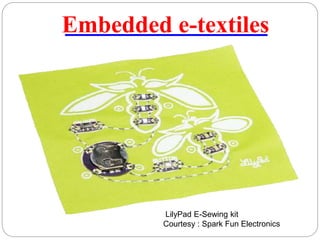
Embedded e-textiles have their electronic
components woven together with the fabric
components. This type is more like a textile
product than an electronic product.
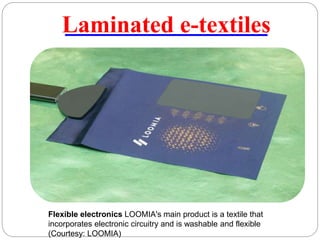
Laminated e-textiles have their circuitry printed
onto a non-textile material which is then bonded or
sewn to the surface of a textile. This type may
more closely resemble an electronic product than a
textile product.
Embedded e-textiles
LilyPad E-Sewing kit
Courtesy : Spark Fun Electronics
Flexible electronics LOOMIA's main product is a textile that
incorporates electronic circuitry and is washable and flexible
(Courtesy: LOOMIA)
Laminated e-textiles
Properties of e-textile:
• Flexible
• No wires to snag environment
• Large surface area for sensing
• Invisible to others
• Cheap manufacturing
• Permeability
• Strength
• Thermal Resistance
• Electrical resistance
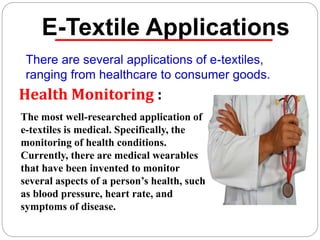
E-Textile Applications
There are several applications of e-textiles,
ranging from healthcare to consumer goods.
Health Monitoring :
The most well-researched application of
e-textiles is medical. Specifically, the
monitoring of health conditions.
Currently, there are medical wearables
that have been invented to monitor
several aspects of a person’s health, such
as blood pressure, heart rate, and
symptoms of disease.
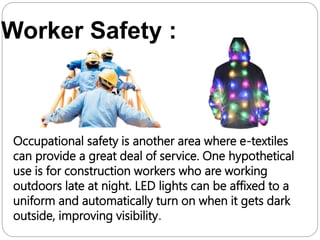
Worker Safety :
Occupational safety is another area where e-textiles
can provide a great deal of service. One hypothetical
use is for construction workers who are working
outdoors late at night. LED lights can be affixed to a
uniform and automatically turn on when it gets dark
outside, improving visibility.
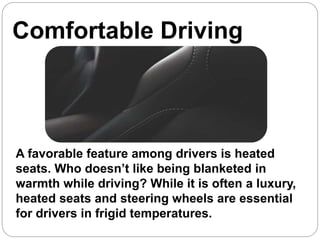
Comfortable Driving
:
A favorable feature among drivers is heated
seats. Who doesn’t like being blanketed in
warmth while driving? While it is often a luxury,
heated seats and steering wheels are essential
for drivers in frigid temperatures.
Athletic Performance :
Several companies are developing garments and
accessories made from smart textiles that track
and record data based on athletes motion.
These invention could prove useful to marathon
runners when they are in the midst of training,
and are looking for ways to improve their overall
• https://textilelearner.blogspot.com/2011/08/e-
textile-electronic-textile.html
• https://www.fibre2fashion.com/industry-
article/7124/manufacturing-of-electronic-textile
•https://www.loomia.com/blog/2019/9/2/zl70axxzv
913ajm64vm1rbdvrrfhgu
•
https://www.wearabletechnologyinsights.com/tag/
150/e-textiles
• https://en.wikipedia.org/wiki/E-textiles
Applications of e-textile

Applications of e-textile

  • 1.
    Dr. B.R. AmbedkarNational Institute of Technology Jalandhar Punjab Programme : Bachelor of Technology Discipline : Textile Technology Course Title : Natural Fibers Course Code : TTPC - 203 Submitted By : Submitted To : Harsh Kumar - 19110032 Dr. Lalit Jajpura Vishnu Pratap Singh - 19110105 Satyam Kumar Chandra - 19110086
  • 3.
    • An e-textileis a fabric developed with electronics in it to enable conductivity and the use of various technologies. • Electronic textiles may be embedded with sensors, batteries LEDs and hands-free computing devices. • The field of electronic textiles combines the worlds of textiles and electronics, and explores techniques that redefine construction methods . • They usually contain conductive yarns that are either spun or twisted and incorporate some amount of conductive material to enable electrical conductivity.
  • 4.
    There are severaldefinitions for “e-textile” in the world today. The terms stands for “electronic textile” or “electronically integrated textile.”  Electronic textiles combine traditional fabrics and fibers with electronics.  E-textiles enable the transfer of data, including sensor data on heat, light, movement, and other local conditions.  Electronically integrated textiles are designed primarily with wearable computing in mind, but there are many other applications.
  • 5.
    Embedded e-textiles havetheir electronic components woven together with the fabric components. This type is more like a textile product than an electronic product. Laminated e-textiles have their circuitry printed onto a non-textile material which is then bonded or sewn to the surface of a textile. This type may more closely resemble an electronic product than a textile product.
  • 6.
    Embedded e-textiles LilyPad E-Sewingkit Courtesy : Spark Fun Electronics
  • 7.
    Flexible electronics LOOMIA'smain product is a textile that incorporates electronic circuitry and is washable and flexible (Courtesy: LOOMIA) Laminated e-textiles
  • 8.
    Properties of e-textile: •Flexible • No wires to snag environment • Large surface area for sensing • Invisible to others • Cheap manufacturing • Permeability • Strength • Thermal Resistance • Electrical resistance
  • 9.
    E-Textile Applications There areseveral applications of e-textiles, ranging from healthcare to consumer goods. Health Monitoring : The most well-researched application of e-textiles is medical. Specifically, the monitoring of health conditions. Currently, there are medical wearables that have been invented to monitor several aspects of a person’s health, such as blood pressure, heart rate, and symptoms of disease.
  • 10.
    Worker Safety : Occupationalsafety is another area where e-textiles can provide a great deal of service. One hypothetical use is for construction workers who are working outdoors late at night. LED lights can be affixed to a uniform and automatically turn on when it gets dark outside, improving visibility.
  • 11.
    Comfortable Driving : A favorablefeature among drivers is heated seats. Who doesn’t like being blanketed in warmth while driving? While it is often a luxury, heated seats and steering wheels are essential for drivers in frigid temperatures.
  • 12.
    Athletic Performance : Severalcompanies are developing garments and accessories made from smart textiles that track and record data based on athletes motion. These invention could prove useful to marathon runners when they are in the midst of training, and are looking for ways to improve their overall
  • 13.