SemanticsA thorough study of meaning
Presented by: MA. BRENDA P. ESTUYA
MARY QUEEN C. ESTRELLA
JONNA MAE S. MARTINICO
LOVE MAE B. BATALLA
BSEd 2 English
Objectives
 Define the meaning of semantics.
 Differentiate the two types of meaning.
 Categorize words among the four
features of semantics.
 Identify the roles of semantics in a
sentence.
Semantics defined…
 is the study of meaning in language
 the branch of linguistics and logic
concerned with meaning.
 the meaning of a word, phrase,
sentence, or text.
Semantics defined…
 The term is taken from the
Greek seme, meaning sign.
(www.wikipedia.semantics-meaning-com)
Linguistic semantics deals with the
conventional meaning conveyed by the
use of words and sentences of a
language. (Yule, 2010)
2 types of meaning
1. Conceptual Meaning
2. Associative Meaning
Conceptual meaning defined…
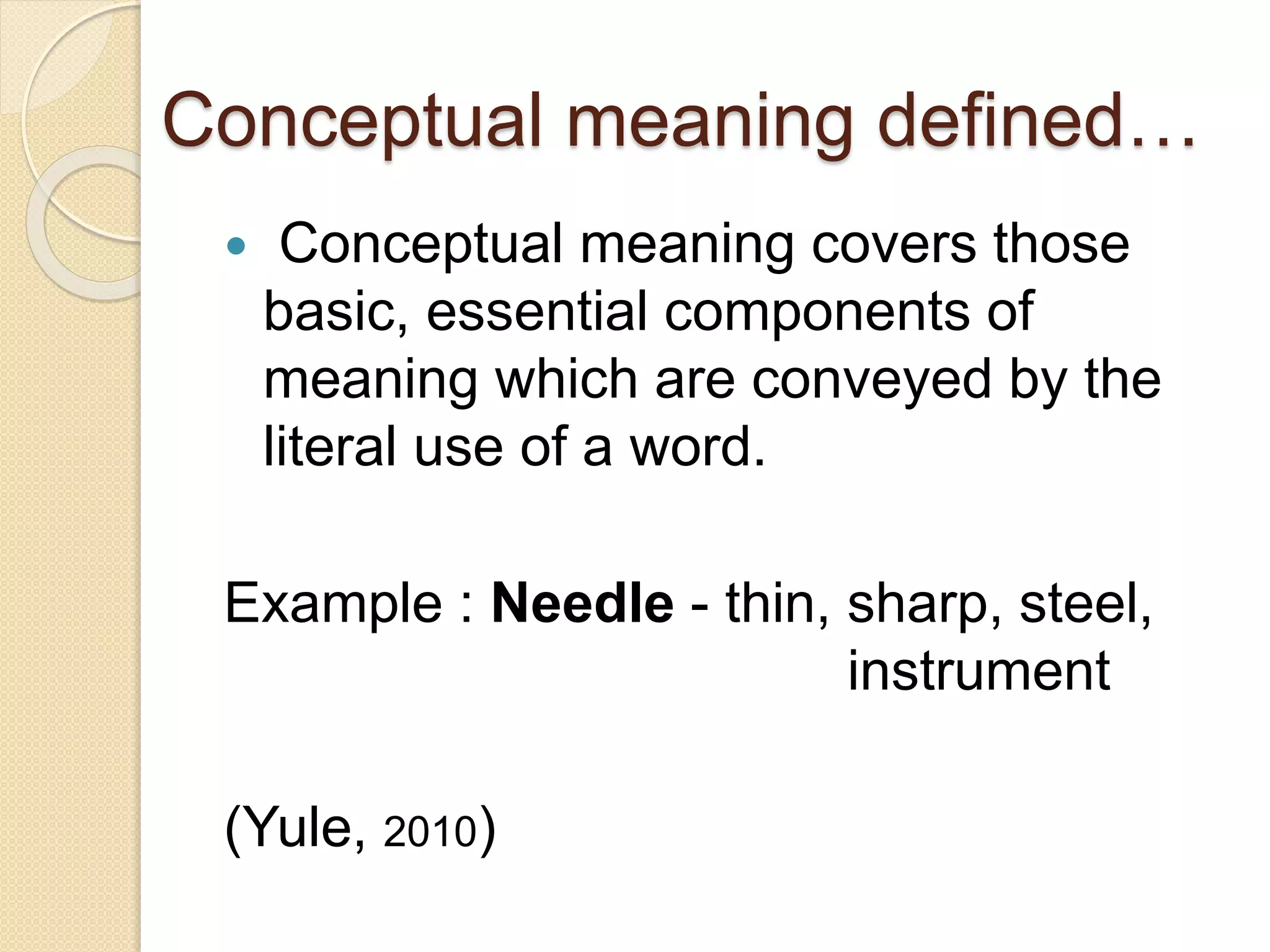
 Conceptual meaning covers those
basic, essential components of
meaning which are conveyed by the
literal use of a word.
Example : Needle - thin, sharp, steel,
instrument
(Yule, 2010)
Associative meaning
defined…
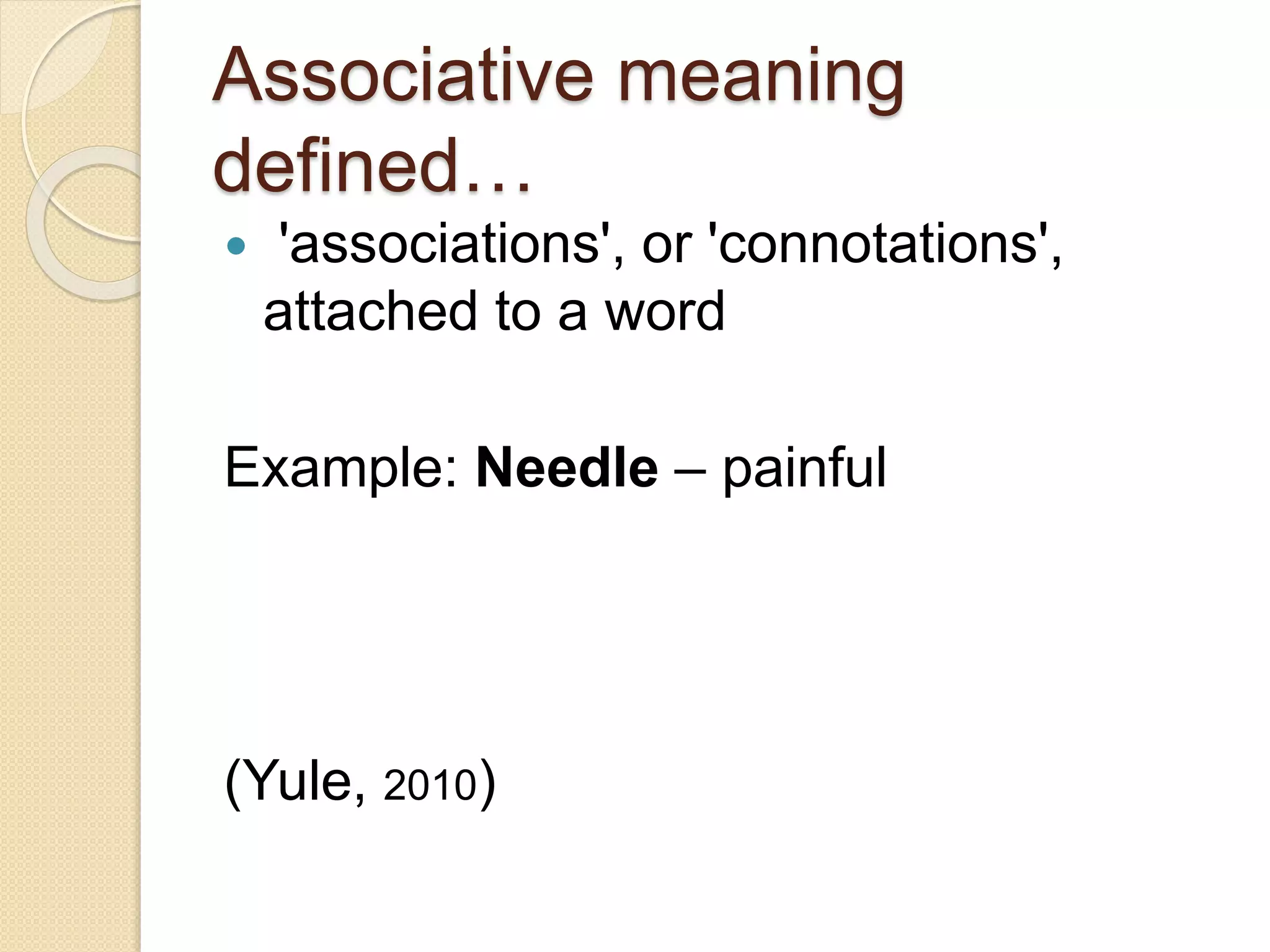
 'associations', or 'connotations',
attached to a word
Example: Needle – painful
(Yule, 2010)
Semantic features
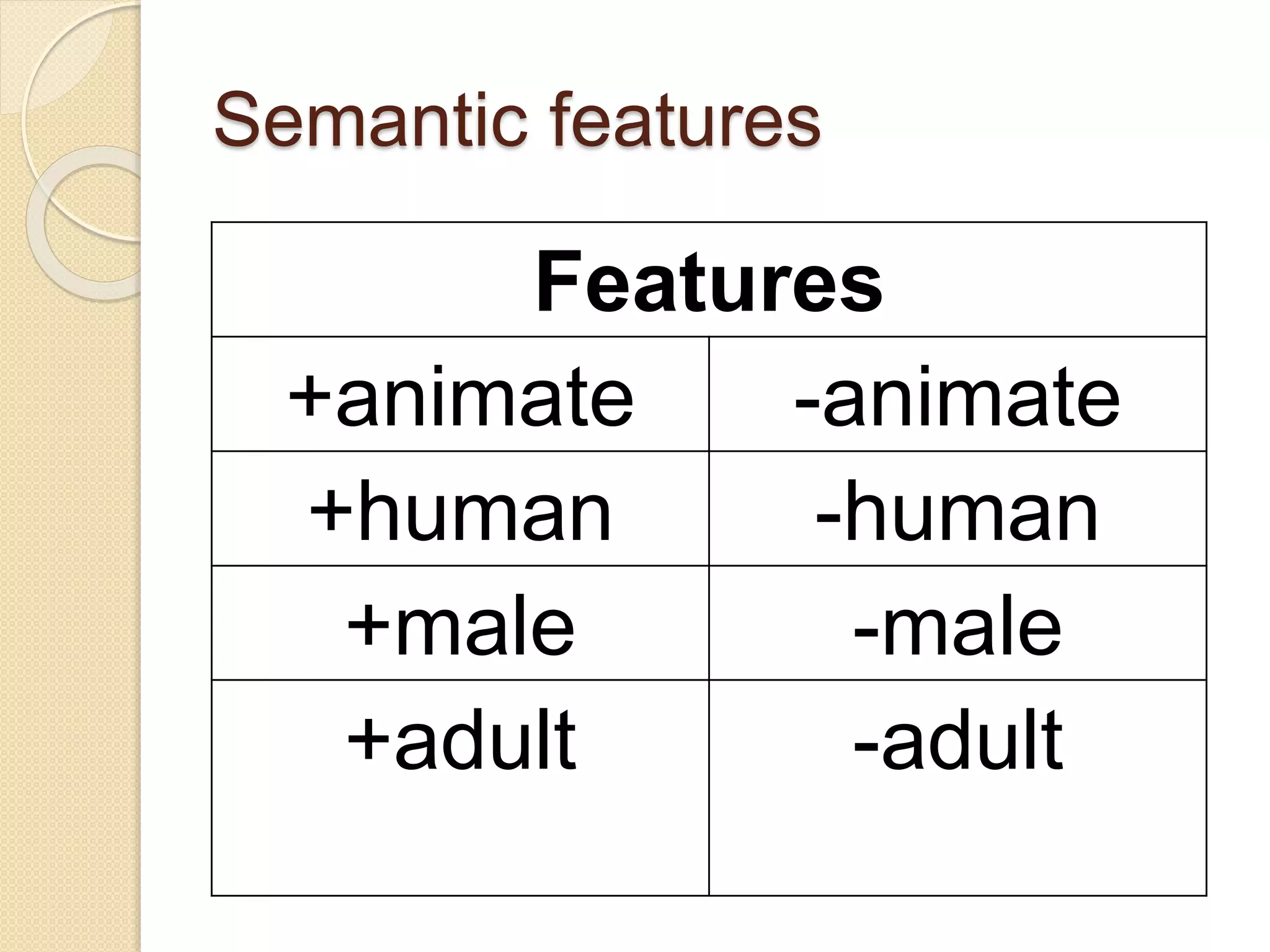
Features
+animate -animate
+human -human
+male -male
+adult -adult
Semantic features
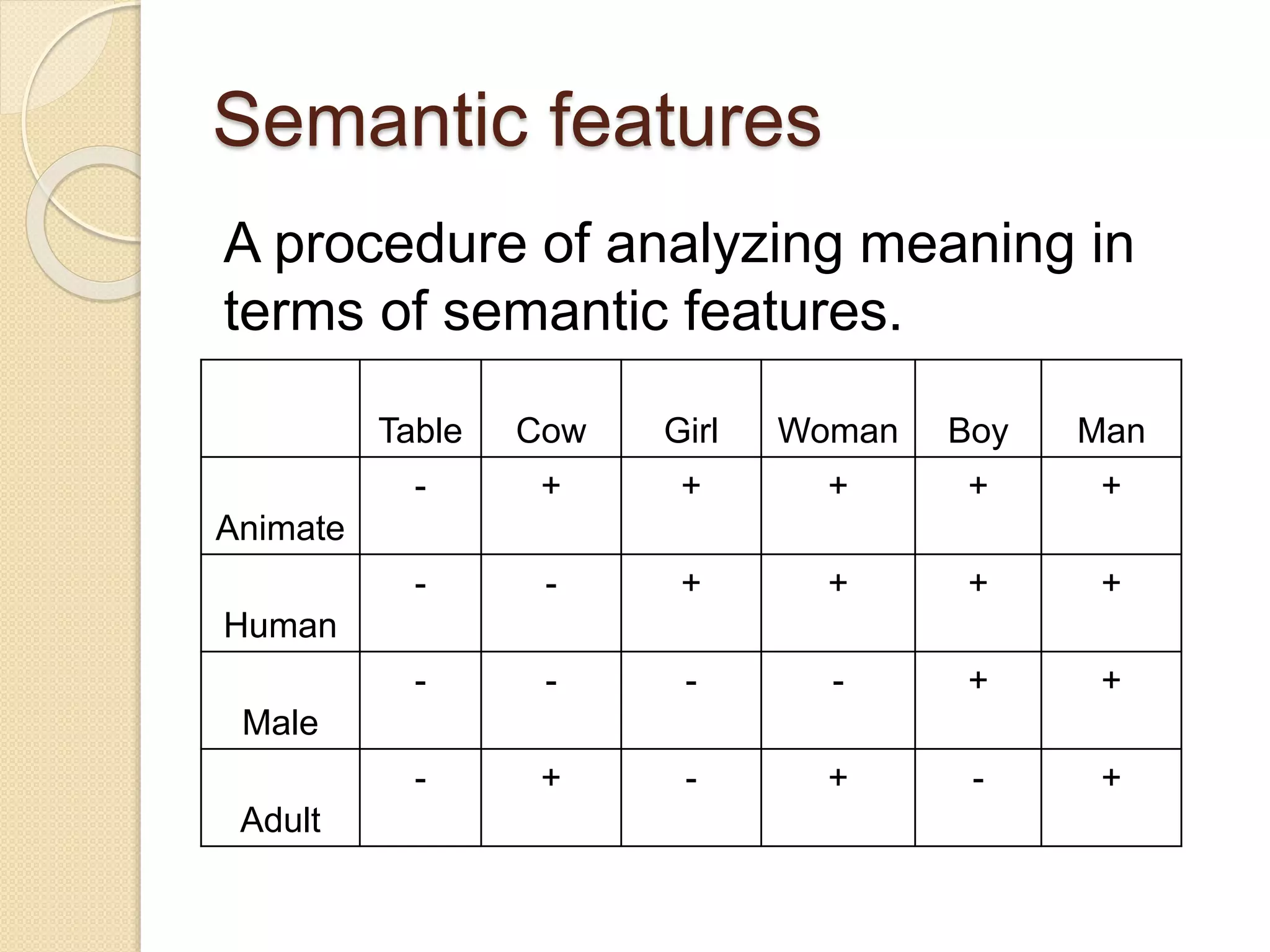
A procedure of analyzing meaning in
terms of semantic features.
Table Cow Girl Woman Boy Man
Animate
- + + + + +
Human
- - + + + +
Male
- - - - + +
Adult
- + - + - +
Semantic roles
1. Agent, theme, instrument
2. Experiencer, location, source, goal
Semantic roles
1. Agent, theme, instrument
Agent - the entity that performs the
action
Example : The boy kicked the ball
Semantic roles
 Agents are typically human, they can
also be non-human forces
Example: The wind blew the ball away.
Semantic roles
 Agents can also be machines.
Example : the car ran over the ball.
Semantic roles
 It can also be creatures.
Example : The dog caught the ball.
Semantic roles
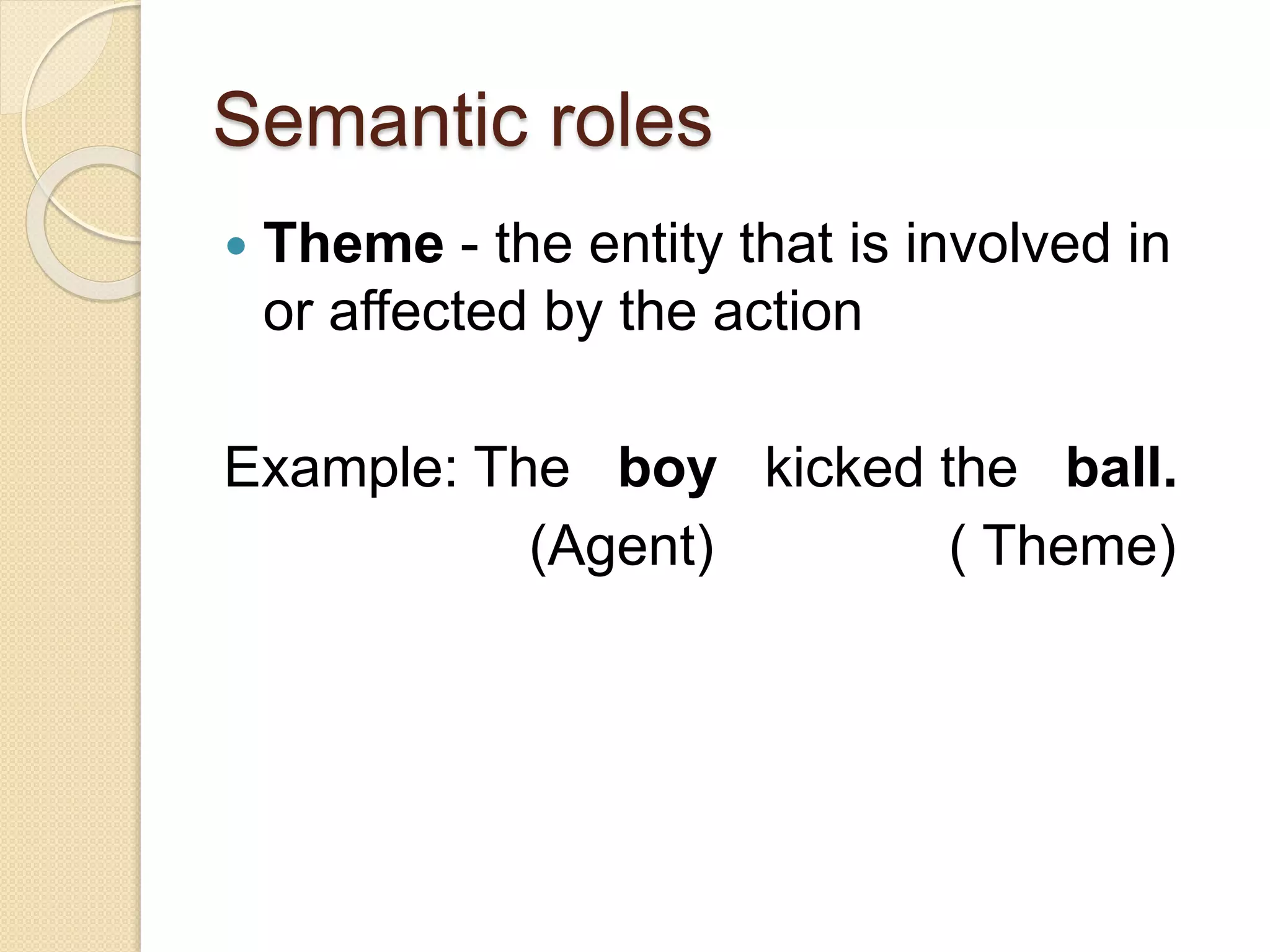
 Theme - the entity that is involved in
or affected by the action
Example: The boy kicked the ball.
(Agent) ( Theme)
Semantic roles
The theme can also be an
entity that is simply being
described.
Example: The ball was red
Semantic roles
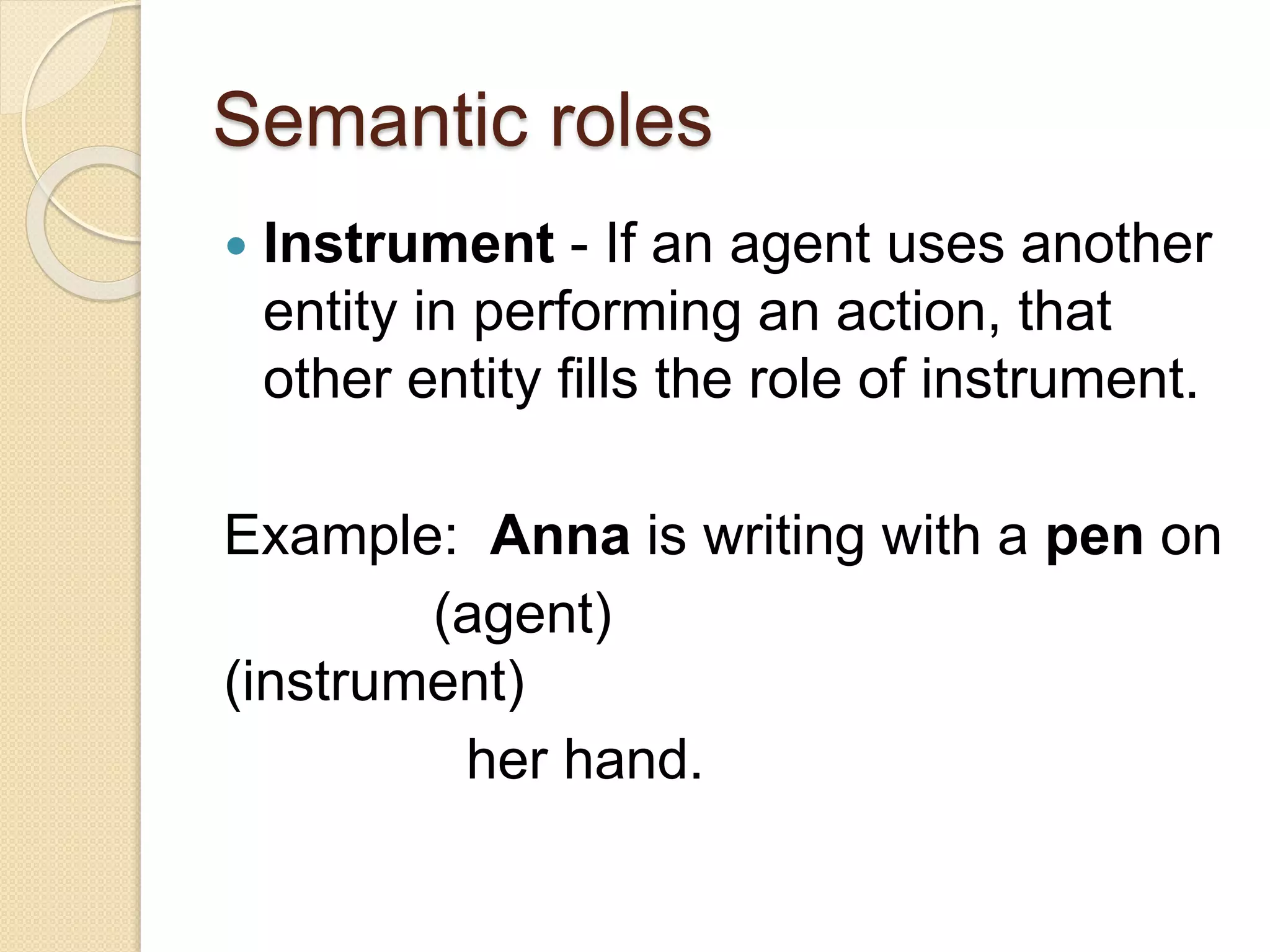
 Instrument - If an agent uses another
entity in performing an action, that
other entity fills the role of instrument.
Example: Anna is writing with a pen on
(agent)
(instrument)
her hand.
Semantic roles
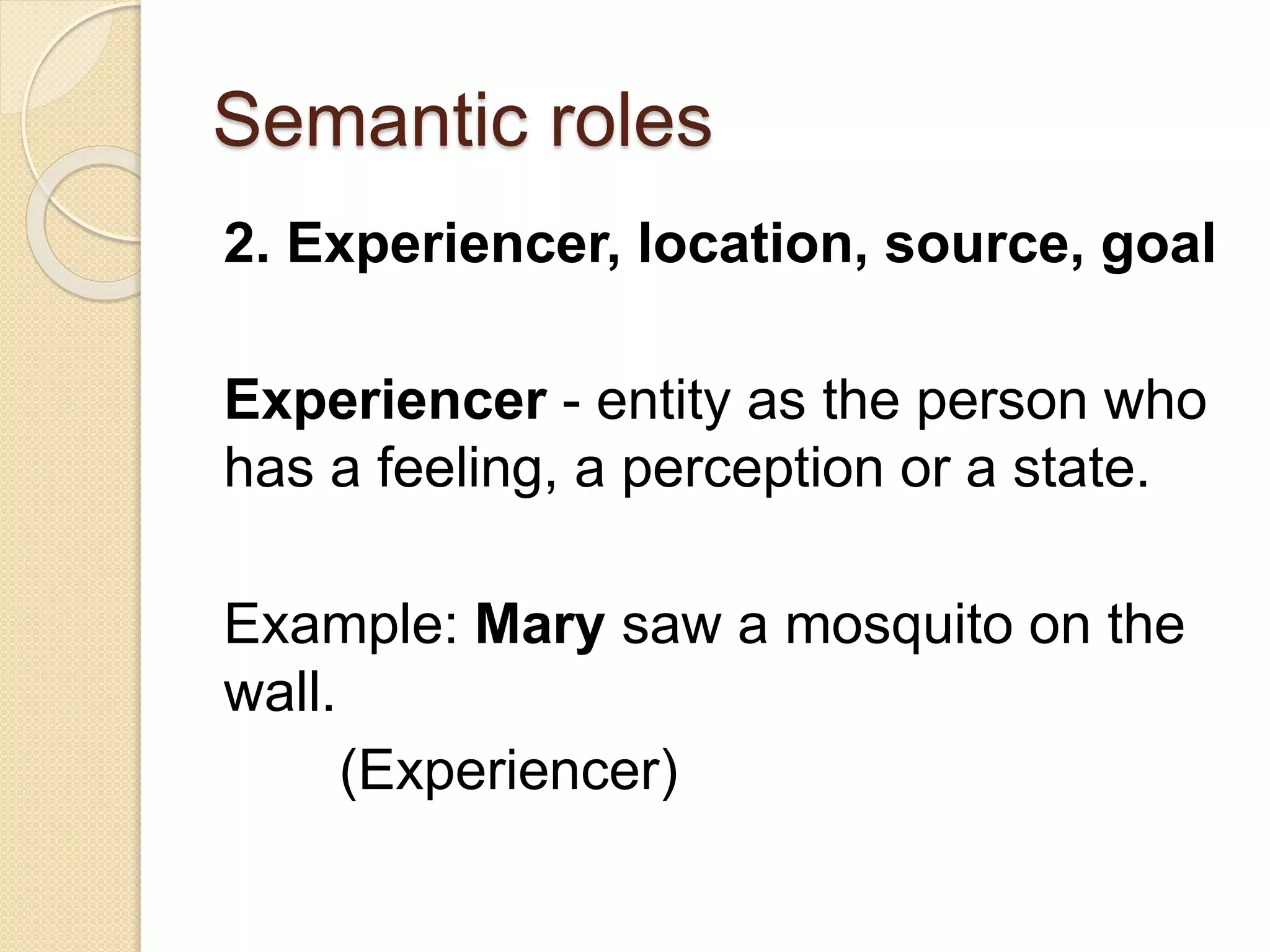
2. Experiencer, location, source, goal
Experiencer - entity as the person who
has a feeling, a perception or a state.
Example: Mary saw a mosquito on the
wall.
(Experiencer)
Semantic roles
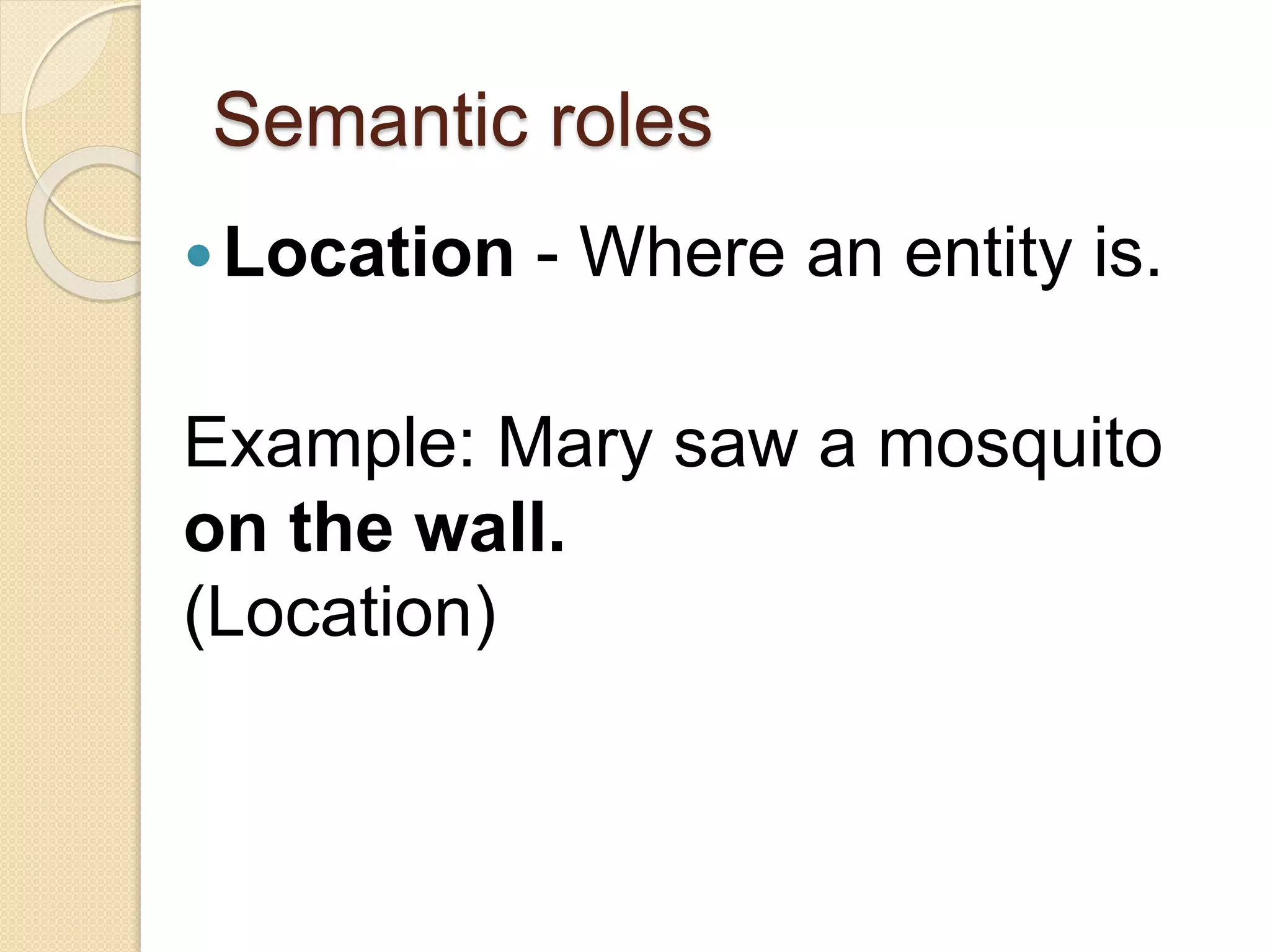
Location - Where an entity is.
Example: Mary saw a mosquito
on the wall.
(Location)
Semantic roles
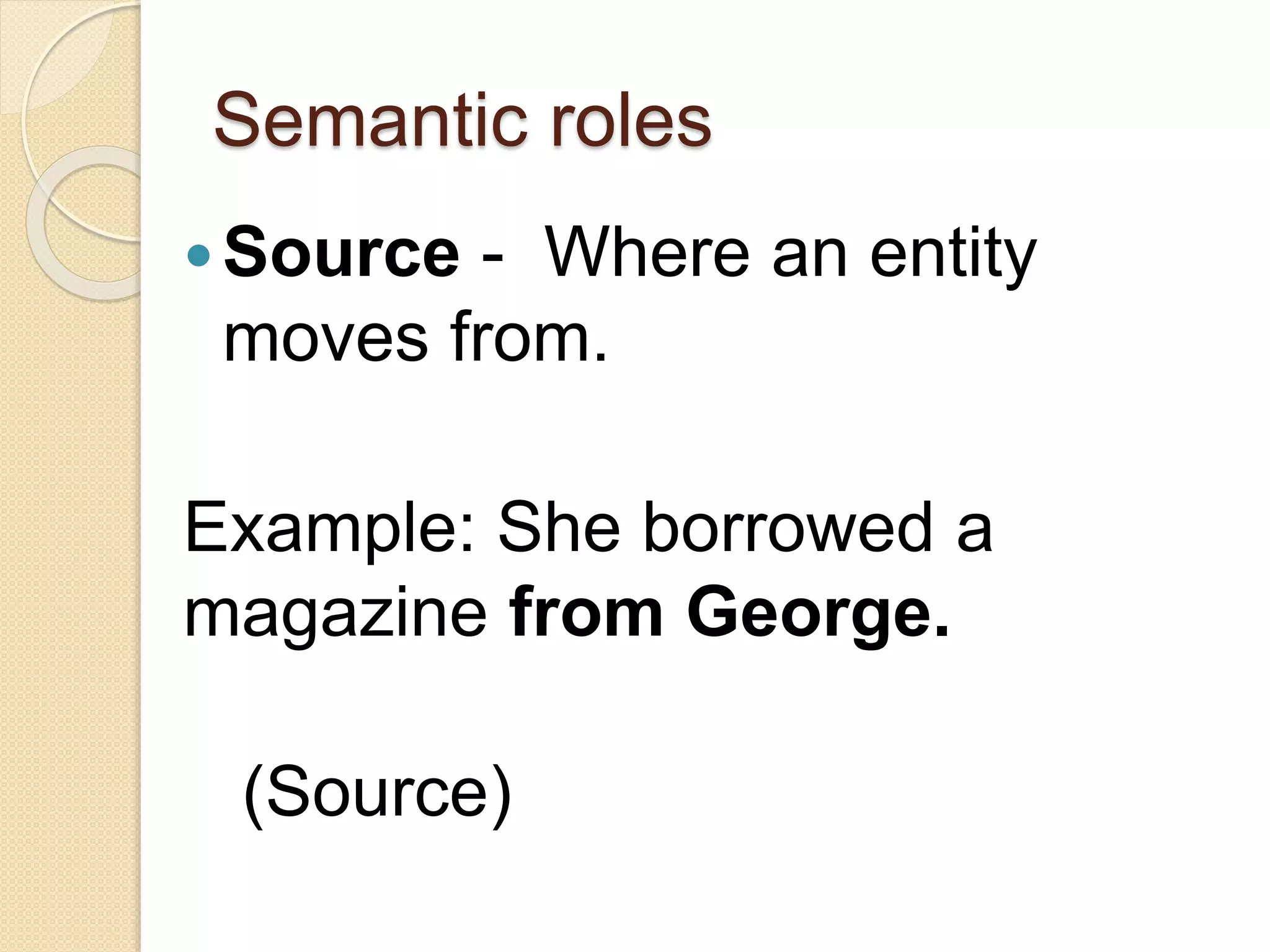
Source - Where an entity
moves from.
Example: She borrowed a
magazine from George.
(Source)
Semantic roles
 Goal - where it moves to.
Example : She handed the
magazine back to George.
(Goal)

Semantics (Introduction To Linguistics)

  • 1.
    SemanticsA thorough studyof meaning Presented by: MA. BRENDA P. ESTUYA MARY QUEEN C. ESTRELLA JONNA MAE S. MARTINICO LOVE MAE B. BATALLA BSEd 2 English
  • 2.
    Objectives  Define themeaning of semantics.  Differentiate the two types of meaning.  Categorize words among the four features of semantics.  Identify the roles of semantics in a sentence.
  • 3.
    Semantics defined…  isthe study of meaning in language  the branch of linguistics and logic concerned with meaning.  the meaning of a word, phrase, sentence, or text.
  • 4.
    Semantics defined…  Theterm is taken from the Greek seme, meaning sign. (www.wikipedia.semantics-meaning-com) Linguistic semantics deals with the conventional meaning conveyed by the use of words and sentences of a language. (Yule, 2010)
  • 5.
    2 types ofmeaning 1. Conceptual Meaning 2. Associative Meaning
  • 6.
    Conceptual meaning defined… Conceptual meaning covers those basic, essential components of meaning which are conveyed by the literal use of a word. Example : Needle - thin, sharp, steel, instrument (Yule, 2010)
  • 7.
    Associative meaning defined…  'associations',or 'connotations', attached to a word Example: Needle – painful (Yule, 2010)
  • 8.
  • 9.
    Semantic features A procedureof analyzing meaning in terms of semantic features. Table Cow Girl Woman Boy Man Animate - + + + + + Human - - + + + + Male - - - - + + Adult - + - + - +
  • 10.
    Semantic roles 1. Agent,theme, instrument 2. Experiencer, location, source, goal
  • 11.
    Semantic roles 1. Agent,theme, instrument Agent - the entity that performs the action Example : The boy kicked the ball
  • 12.
    Semantic roles  Agentsare typically human, they can also be non-human forces Example: The wind blew the ball away.
  • 13.
    Semantic roles  Agentscan also be machines. Example : the car ran over the ball.
  • 14.
    Semantic roles  Itcan also be creatures. Example : The dog caught the ball.
  • 15.
    Semantic roles  Theme- the entity that is involved in or affected by the action Example: The boy kicked the ball. (Agent) ( Theme)
  • 16.
    Semantic roles The themecan also be an entity that is simply being described. Example: The ball was red
  • 17.
    Semantic roles  Instrument- If an agent uses another entity in performing an action, that other entity fills the role of instrument. Example: Anna is writing with a pen on (agent) (instrument) her hand.
  • 18.
    Semantic roles 2. Experiencer,location, source, goal Experiencer - entity as the person who has a feeling, a perception or a state. Example: Mary saw a mosquito on the wall. (Experiencer)
  • 19.
    Semantic roles Location -Where an entity is. Example: Mary saw a mosquito on the wall. (Location)
  • 20.
    Semantic roles Source -Where an entity moves from. Example: She borrowed a magazine from George. (Source)
  • 21.
    Semantic roles  Goal- where it moves to. Example : She handed the magazine back to George. (Goal)