An Introduction to PPC
Advertising
Today’s Class
•
•
•
•
•
•
•

What is PPC?
General principles
How to get into PPC
Technicalities/Specifics
Creating a strategy
Measuring success
Ethical issues
2
What is PPC?

3
An Introduction to PPC
PPC stands for “Pay Per Click” Marketing.
Differentiates from traditional media buys,
where you pay for a number of impressions, be
it in a magazine, a TV ad, or on the internet.

4
Acronym Jungle
•
•
•
•
•
•
•

PPC
CPC
CPM
SEM
C/R
CTR
CPA / CPL

5
Acronym Jungle
•
•
•
•
•
•
•

PPC – Pay Per Click
CPC – Cost Per Click
CPM – Cost Per Mille (Thousand Impressions)
SEM – Search Engine Marketing
C/R – Conversion Rate
CTR – Click-Through Rate
CPA / CPL – Cost Per Acquisition / Lead

6
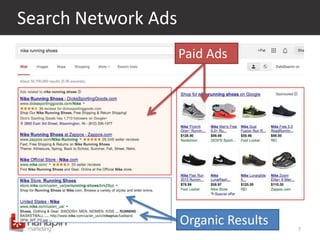
Search Network Ads
Paid Ads

Organic Results

7
Search Network Ads
Largest US Search Engines:
1. Google
2. Bing
3. Yahoo
4. Ask
5. AOL

8
Search Network Ads
Largest US Search Engines:
1. Google – 66.7%
2. Bing – 17.9%
3. Yahoo – 11.4%
4. Ask – 2.7%
5. AOL – 1.3%
Source – comScore Core Search Share Report July 2013

9
Display Network Ads

Display /
Image Ads

10
Display Network Ads
Google Display Network:
Display /
Image Ads

• 180 Billion Monthly Ad
Impressions
• $3 Billion per quarter revenue
• 0.1% CTRs
• $0.75 average CPC
• About 20% of online conversions

11
Where our clients’ money goes
4% 3%
8%
Google AdWords
Bing
Facebook

Other

85%

12
Top AdWords Spenders

13
Search Engine Marketing

Branches of SEM:
•
•
•
•

PPC – Pay Per Click
SEO – Search Engine Optimization
CRO – Conversion Rate Optimization
Social Media – Twitter, Facebook etc.

14
SEO
• Search Engine Optimization is the process of
trying to get your website to rank higher on
Google (or other search engines)
• The higher you rank, the more people come to
your website
• The more people come to your website, the
more money you make

15
SEO

16
CRO
“Conversion Rate Optimization” is a name given
to the process of making a website generate
more conversions from existing traffic.
– CRO is Amazon’s bread and butter

Spend/CPC * Conversion Rate = Leads

17
Social Media
• Reaching out to customers & forming
relationships
• Improving brand awareness and reputation
• Working as a backup customer service
• Not the same as advertising on Facebook or
Twitter, which still falls under PPC.

18
General Principles

19
PPC
• Ads
• Bids
• Targets
– Keywords
– Websites
– Location
– Time
– Device
20
Ad Rank

Why does this ad
appear above that ad?
21
The Auction

Source: http://searchengineland.com/new-adwords-ad-ranking-formula-what-does-it-mean-174946

22
The Auction

Source: http://searchengineland.com/new-adwords-ad-ranking-formula-what-does-it-mean-174946

23
The Auction

Source: http://searchengineland.com/new-adwords-ad-ranking-formula-what-does-it-mean-174946

24
What Is Quality Score?

25
PPC Specifics

26
Account Structure
My Client Center
Account
Campaigns
Ad Groups
Keywords & Ads

27
Keywords
• How you actually target users searching
Google
o [exact match]
o “phrase match”
o +broad +match
o -negative match

• Search Query =/= Keyword

28
Keywords
• How do we know which keywords to bid on?
– Common sense / brainstorming
– Use tools like the Google Keyword Planner

29
Bids
• Bid on a keyword level
• Set bids to maximize clicks on keywords that
drive sales/sign ups
• Use different tools to help us set bids:
– Excel
– Automated Software
– AdWords Rules

30
Bids
Calculating a bid:
• Bid = Target Cost Per Lead x Conversion Rate
Example: The keyword [ppc management company] has
a conversion rate of 0.5% and a lead is worth $200 to
Hanapin.
Our bid should be $200 x 0.5% = $1

31
Bid Adjustments
• Time of day
– Reduce bids 50% from midnight to 6am

• Device Type
– Reduce bids 10% for mobile users

• Geography
– Increase bids 25% for users within 50 miles of
Bloomington, IN

32
Ads
High click-through rates = good Google Quality Scores
Temptation to overpromise = low conversion rates
Need to find the middle ground:
• A good hook (such as a catchy headline)
• Proof
• Trust
• Benefits

Create a feature/benefit matrix
33
Ads
A Google Search ad:
• Has a 25 character headline limit
• Two 35 character description lines
• One 35 character Display URL
• One 2048 character Destination URL

34
Ads

35
Which ad did better?

Source: http://boostctr.com/blog

36
Which ad did better?
200%
Higher
CTR

Source: http://boostctr.com/blog

37
Which ad did better?

Source: http://boostctr.com/blog

38
Which ad did better?
50%
Higher
CTR

Source: http://boostctr.com/blog

39
Which ad did better?

Ad A

Ad B

40
Which ad did better?

Ad A

57%
Higher
CTR

Ad B

41
Ad Testing

42
Measuring Success

43
Key Performance Indicators (KPIs)
What is the goal of your account?
1. Direct Response
2. Brand Awareness

44
Key Performance Indicators (KPIs)
Typical Direct Response KPIs:
• Conversions
• Cost Per Conversion (CPA)
• Revenue
• Return on Ad Spend (ROAS)
• Leads
• Return on Investment (ROI)
45
Key Performance Indicators (KPIs)
Typical Brand Awareness KPIs:
• Impressions
• Clicks
• Bounce Rate
• Average Time On Site

46
Conversion Tracking
• Conversions are typically tracked as a
pageview of an important page
• Placing a small code snippet on these pages
• Phone tracking systems link back to custom
tags

47
Creating a Strategy

48
PPC Strategy
What is the goal of your account?
1. Direct Response
2. Brand Awareness

49
Budget?
How much money do we have for PPC?
1. Unlimited as long as hitting goals?
2. Limits set by client for overall spend
3. Divide up budget to promote more profitable
campaigns

50
Market
Google Trends:
• Seasonality
• Long term
How much are CPCs?
What do you expect your Conversion Rate to
be?
51
Goals?
Sales?
Calls?
Sign Ups?
Free Trials?
Twitter followers?

52
Marketing Mix
Where does PPC fit into the company’s overall
marketing plan?
• Main driver of traffic
• Ancillary source of sales

53
Ethical Issues?

54
Retargeting

55
Retargeting
• When you visit a site, you get a Google cookie
• Advertisers can use that cookie to show you
ads on the Google Display Network (Google
Remarketing) and Google Search Network
(Remarketing for Search)
• Remarketing is popular because it normally
has crazy good ROIs

56
Data Privacy
• Websites can track data through tools such as
Google Analytics
• Access to search data is anonymous but
intrusive
• What stats do sites keep about you?
• Tends to be overblown with the media Analytics data is anonymous and most
advertisers don’t care about an individual
user, so much as the overall trends.
57
Advice for getting into
online advertising

58
My Background
• History degree from University of Warwick
• Job through a friend. Had never heard of PPC
or SEO until then
• Big fan of the PPC Hero blog
• Moved to US in 2011 – joined Hanapin a few
months after

59
Read Blogs!
There are no experts in online advertising:
•
•
•
•
•
•
•
•

searchengineland.com
adwords.blogspot.com
ppchero.com
moz.com/blog (SEO)
boostctr.com/blog (ad copy)
3qdigital.com/blog
www.clixmarketing.com/blog
Book – Advanced Google AdWords – Brad Geddes (available on Amazon)

60
Become a master of Excel!
• 90% of PPC Analysis can be done with Pivot
Tables
• Building out accounts is mostly done with
Excel & AdWords Editor
• Writing ads mostly done in Excel so we can
use =LEN( function to make sure we don’t go
over character limits

61
Get Certified
Google Certified Partners
Google AdWords Qualified Professional Exams
• One fundamentals exam
• One specialist exam

62
63

Sem for PPC Introduction - Sam Owen at IU

Editor's Notes

  • #8 Also known as a SERP = Search Engine Results PageAd Extensions are also shown on here – Sitelinks, Reviews, Addresses
  • #11 Lots of different ad formats can be here – image, dynamic, videoAlso, non-Google display networks are a large part of display advertising
  • #14 CPCs can vary a lot – car insurance bids in the $50 region, for small retail items 10c is reasonable
  • #28 MCC = for agencies or big companies with lots of different depts.Account = uses one billing CC number, can include multiple domainsCampaigns = based around a specific theme, e.g. Nike Shoes within Shoe store account
  • #36 Not much room for creativity! Testing is hugely important
  • #37 TESTING IS IMPORTANT!
  • #38 1, #1 plug in for iTunes – huge appeal to popularity.
  • #40 Winning ad addressed quality concernsThe losing Ad’s reassurance unwittingly cast doubt
  • #43 Ad Testing Matrix – typical of how we plan our ad tests
  • #50 More keywords for Google SearchMore display traffic and ads, YouTube videos
  • #51 Getting budgets can be a dance, you can have a lot of say, you can have none at all. Progressive companies will analyze where they’re getting value and redirect budgets.
  • #52 Trend for [nike running shoes]