SELF-ESTEEM
  “You your self, as much as anybody else as much as
anybody in the entire univer se, deser ve your love and
                                            attention.”
                         -Prince Gautama Siddhar tha
SELF-ESTEEM

How much you value yourself and your
 abilities, skills and accomplishments.
 You believe setbacks are temporary. You
 have confidence to confront challenges
 and overcome them.
Having good self-esteem will also affect
 your overall attitude and the health
 choices you make
SELF-ESTEEM

 Self-Esteem is a combination of self -image, ideal self, and
  Pygmalion-self
 Self Image: what we perceive ourselves to be
 Ideal-self: how we want to be
 Pygmalion-self: our perception of what we believe other
  people think of us.

I am not what I think I am
I am not what you think I am
I am what I think you think I am
SELF TALK

 The encouragement or criticism you give yourself

 The Law of Positive Self -Talk states: “You can change who you
  are by changing what you say when you talk to your mind. ”

 When do you find yourself talking to yourself?
WAYS TO IMPROVE SELF -ESTEEM

   Good Friends
   Focus on the positive aspects about yourself
   Supportive self-talk
   Work toward accomplishments rather than perfection
   Mistakes are learning opportunities
   Try new activities
   Set goals
   Exercise regularly
   Volunteer
   Accept that which you can not change.
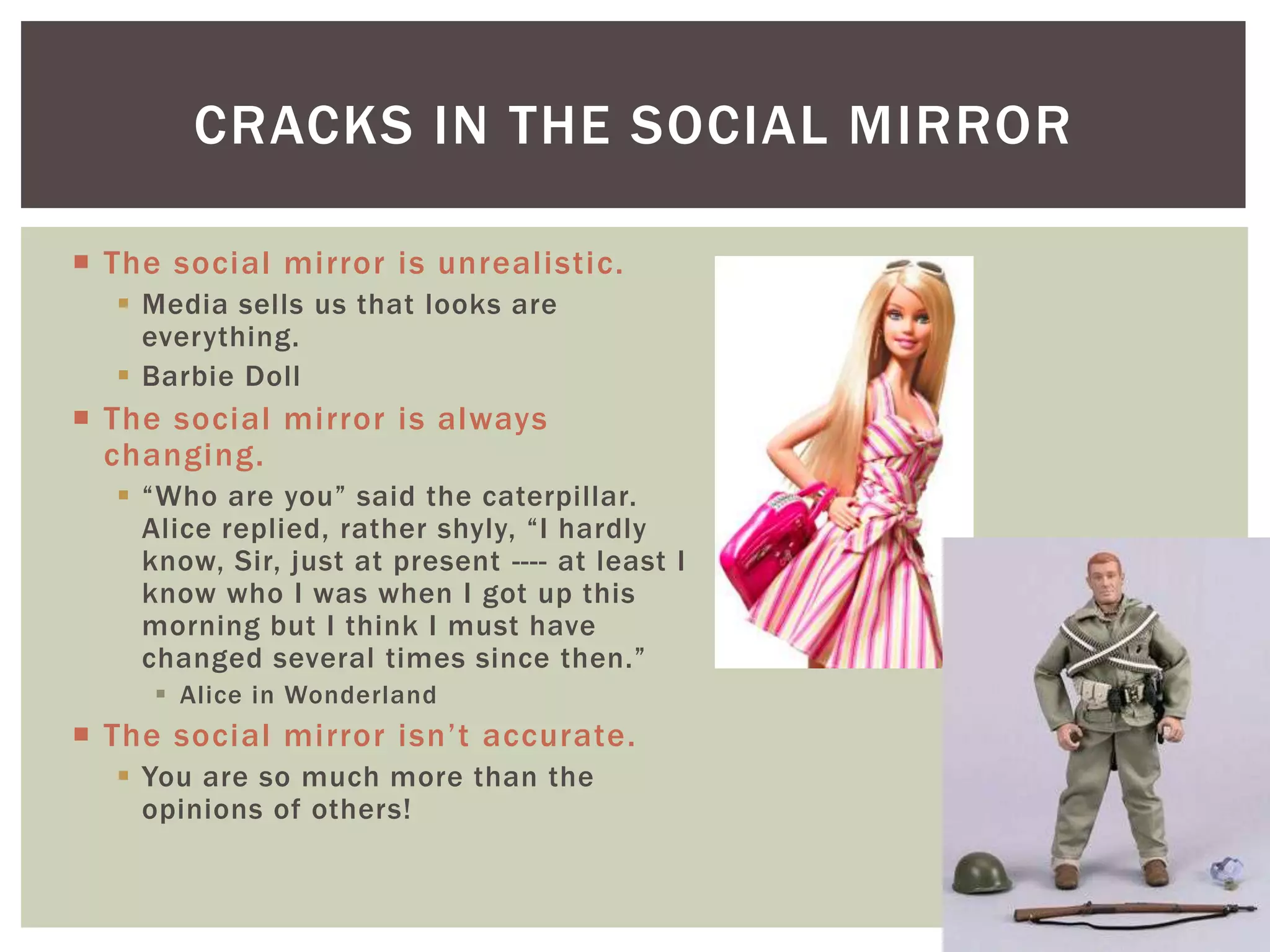
CRACKS IN THE SOCIAL MIRROR

 The social mirror is unrealistic.
   Media sells us that looks are
    everything.
   Barbie Doll
 The social mirror is always
  changing.
   “Who are you” said the caterpillar.
    Alice replied, rather shyly, “I hardly
    know, Sir, just at present ---- at least I
    know who I was when I got up this
    morning but I think I must have
    changed several times since then.”
      Alice in Wonderland
 The social mirror isn’t accurate.
   You are so much more than the
    opinions of others!
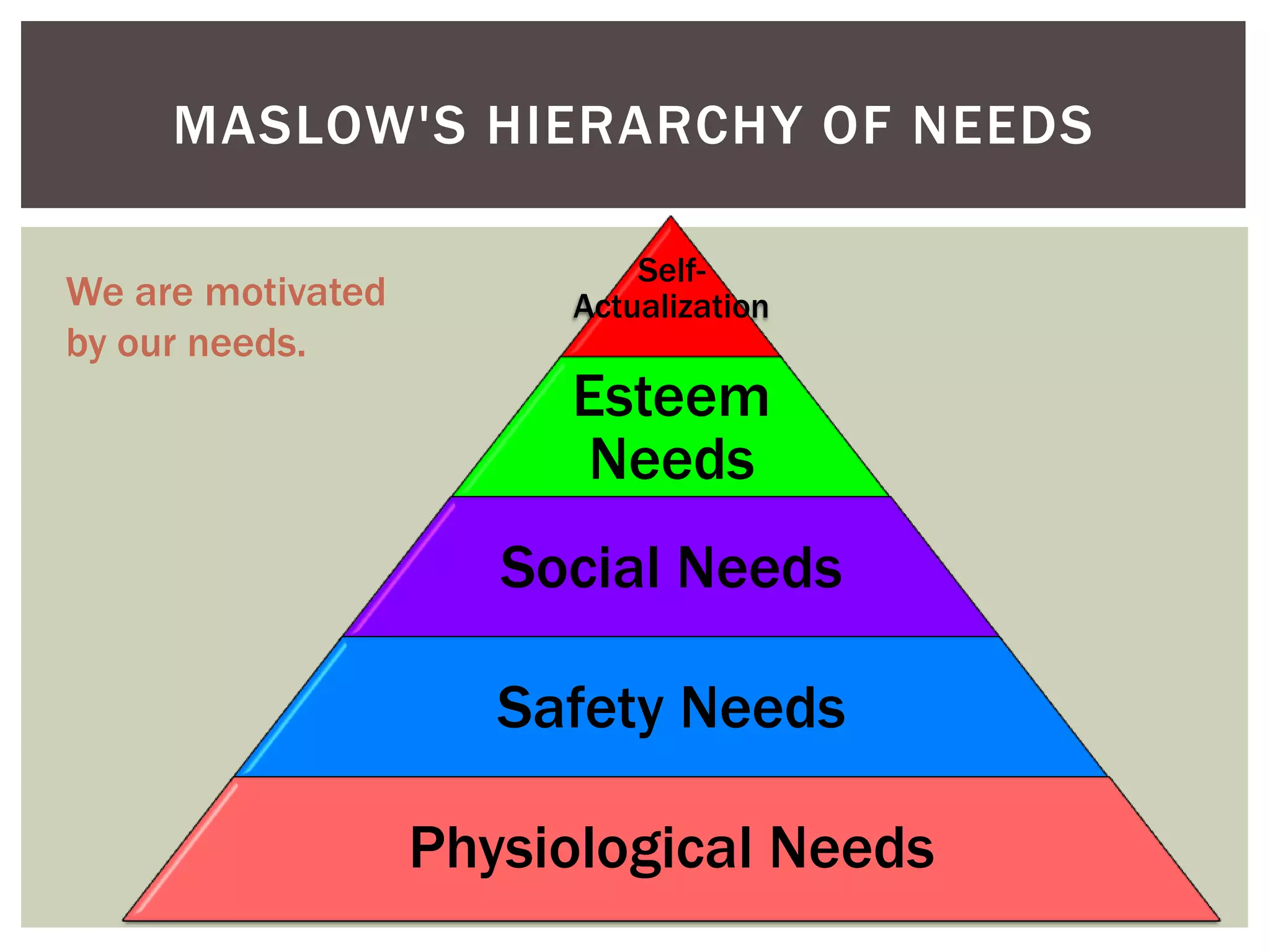
MASLOW'S HIERARCHY OF NEEDS

                            Self-
We are motivated        Actualization
by our needs.
                        Esteem
                        Needs
                      Social Needs

                      Safety Needs

                   Physiological Needs

Self-Esteem PowerPoint

  • 1.
    SELF-ESTEEM “Youyour self, as much as anybody else as much as anybody in the entire univer se, deser ve your love and attention.” -Prince Gautama Siddhar tha
  • 2.
    SELF-ESTEEM How much youvalue yourself and your abilities, skills and accomplishments. You believe setbacks are temporary. You have confidence to confront challenges and overcome them. Having good self-esteem will also affect your overall attitude and the health choices you make
  • 3.
    SELF-ESTEEM  Self-Esteem isa combination of self -image, ideal self, and Pygmalion-self  Self Image: what we perceive ourselves to be  Ideal-self: how we want to be  Pygmalion-self: our perception of what we believe other people think of us. I am not what I think I am I am not what you think I am I am what I think you think I am
  • 5.
    SELF TALK  Theencouragement or criticism you give yourself  The Law of Positive Self -Talk states: “You can change who you are by changing what you say when you talk to your mind. ”  When do you find yourself talking to yourself?
  • 6.
    WAYS TO IMPROVESELF -ESTEEM  Good Friends  Focus on the positive aspects about yourself  Supportive self-talk  Work toward accomplishments rather than perfection  Mistakes are learning opportunities  Try new activities  Set goals  Exercise regularly  Volunteer  Accept that which you can not change.
  • 7.
    CRACKS IN THESOCIAL MIRROR  The social mirror is unrealistic.  Media sells us that looks are everything.  Barbie Doll  The social mirror is always changing.  “Who are you” said the caterpillar. Alice replied, rather shyly, “I hardly know, Sir, just at present ---- at least I know who I was when I got up this morning but I think I must have changed several times since then.”  Alice in Wonderland  The social mirror isn’t accurate.  You are so much more than the opinions of others!
  • 9.
    MASLOW'S HIERARCHY OFNEEDS Self- We are motivated Actualization by our needs. Esteem Needs Social Needs Safety Needs Physiological Needs

Editor's Notes

  • #8 Read the Barbie doll and GI Joe stories on pg. 272.
  • #10 Have students give examples of each section