   Critical thinking is an integrated way of
    examining information, ideas, and
    proposals.
   Being able to question, explore, and deal
    effectively with yourself, others, and life’s
    problems
   Developing your own view of the world
   Being open to new ideas and willing to
    analyze issues
   Supporting your personal views with
    reasons and evidence, while understanding
    alternative viewpoints.
   Discussing your ideas with others to test
    and enrich your thinking.
Testing existing ideas and/or solutions for flaws
 and errors. Being able to apply logic and make
                           one’s own decisions.
   Identify and describe a problem
   Discriminate between fact and opinion
   List possible solutions and their
    consequences
   Identify personal and/or family values that
    conflict with the situation
   Take a defensible position based on logic
   How do you make personal decisions?
   Do your make your decisions at the time
    something happens or ahead of time?
   Is it against the law, my rules or the teachings
    of my family or religion?
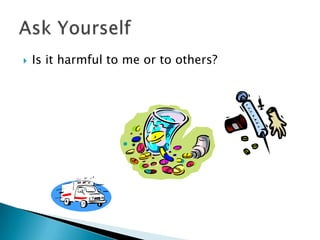
   Is it harmful to me or to others?
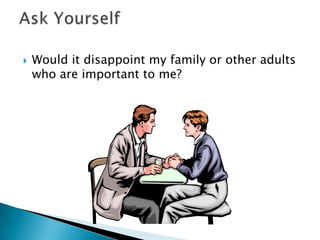
   Would it disappoint my family or other adults
    who are important to me?
   Is it wrong to do?
   Could I be sorry afterward?
   Would I be hurt or upset if someone did this
    to me?
   Is it within my value system?
 Healthful
 Ethical
 Legal
 Parent approval
   Clearly identify the situation
   Ask yourself: what decision do I need to
    make? Who is involved? Am I feeling pressure
    to make a decision? How much time do I have
    to decide?
   What are all the possible choices you could
    make? Remember that sometimes it is
    appropriate not to take action. Sare your
    options with parents or guardians, siblings,
    teachers, or friends. Ask for their advice
   Weigh the consequences of each option. Use
    the HELP strategy to guide your choices.
   A responsible decision will reflect your values
   Use everything you know at this point to
    make a responsible decision. You can feel
    good that you have carefully thought about
    the situation and your options.
   After you have made the decision and taken
    action, reflect on what happened. What was
    the outcome? How did your decision affect
    your health and the health of those around
    you? What did you learn? Would you take the
    same action again? If not, how would our
    choice differ?

Critical thinking pp

  • 4.
    Critical thinking is an integrated way of examining information, ideas, and proposals.
  • 5.
    Being able to question, explore, and deal effectively with yourself, others, and life’s problems  Developing your own view of the world  Being open to new ideas and willing to analyze issues
  • 6.
    Supporting your personal views with reasons and evidence, while understanding alternative viewpoints.  Discussing your ideas with others to test and enrich your thinking.
  • 7.
    Testing existing ideasand/or solutions for flaws and errors. Being able to apply logic and make one’s own decisions.
  • 8.
    Identify and describe a problem  Discriminate between fact and opinion  List possible solutions and their consequences  Identify personal and/or family values that conflict with the situation  Take a defensible position based on logic
  • 9.
    How do you make personal decisions?  Do your make your decisions at the time something happens or ahead of time?
  • 10.
    Is it against the law, my rules or the teachings of my family or religion?
  • 11.
    Is it harmful to me or to others?
  • 12.
    Would it disappoint my family or other adults who are important to me?
  • 13.
    Is it wrong to do?
  • 14.
    Could I be sorry afterward?
  • 15.
    Would I be hurt or upset if someone did this to me?
  • 16.
    Is it within my value system?
  • 17.
     Healthful  Ethical Legal  Parent approval
  • 18.
    Clearly identify the situation  Ask yourself: what decision do I need to make? Who is involved? Am I feeling pressure to make a decision? How much time do I have to decide?
  • 19.
    What are all the possible choices you could make? Remember that sometimes it is appropriate not to take action. Sare your options with parents or guardians, siblings, teachers, or friends. Ask for their advice
  • 20.
    Weigh the consequences of each option. Use the HELP strategy to guide your choices.
  • 21.
    A responsible decision will reflect your values
  • 22.
    Use everything you know at this point to make a responsible decision. You can feel good that you have carefully thought about the situation and your options.
  • 23.
    After you have made the decision and taken action, reflect on what happened. What was the outcome? How did your decision affect your health and the health of those around you? What did you learn? Would you take the same action again? If not, how would our choice differ?