Model of curriculum
Presented by:
Jamila Khan
Definition of curriculum:
“All the learning which is planned and guided by the
school, whether it is carried on in groups or individually
inside or outside the school”
Model of curriculum
development
Diagnosis of
needs
Formulation of
objectives
Implementation
Selection of
content
Selection of learning
experiences
Selection of
teaching method
Evaluation
Steps of Model of curriculum
Diagnosis of needs
Diagnosis of needs is the first step in preparing
curriculum model. It is a process of diagnosing the
needs of society, students and parents.
Formulation of objectives:
Formulation of objectives is the second most
essential step of preparing curriculum.
Aims covers all the experiences provided in the
curriculum.
Goals are tied to specific subjects or groups of content
within the curriculum.
Objectives describes more specific outcomes as a
result of lessons or instructions delivered at a classroom.
Selection of content
The selection of proper content is a very important
phase in the process of the curriculum development. In
fact, this, phase is related to all the other phases.
The curriculum content is selected keeping in view the
characteristics and nature of the target group sorted
out during the first phase of diagnosis. Further, the
selection of the content is primarily determined by the
operations of Phase 2 : Formulation of objectives.
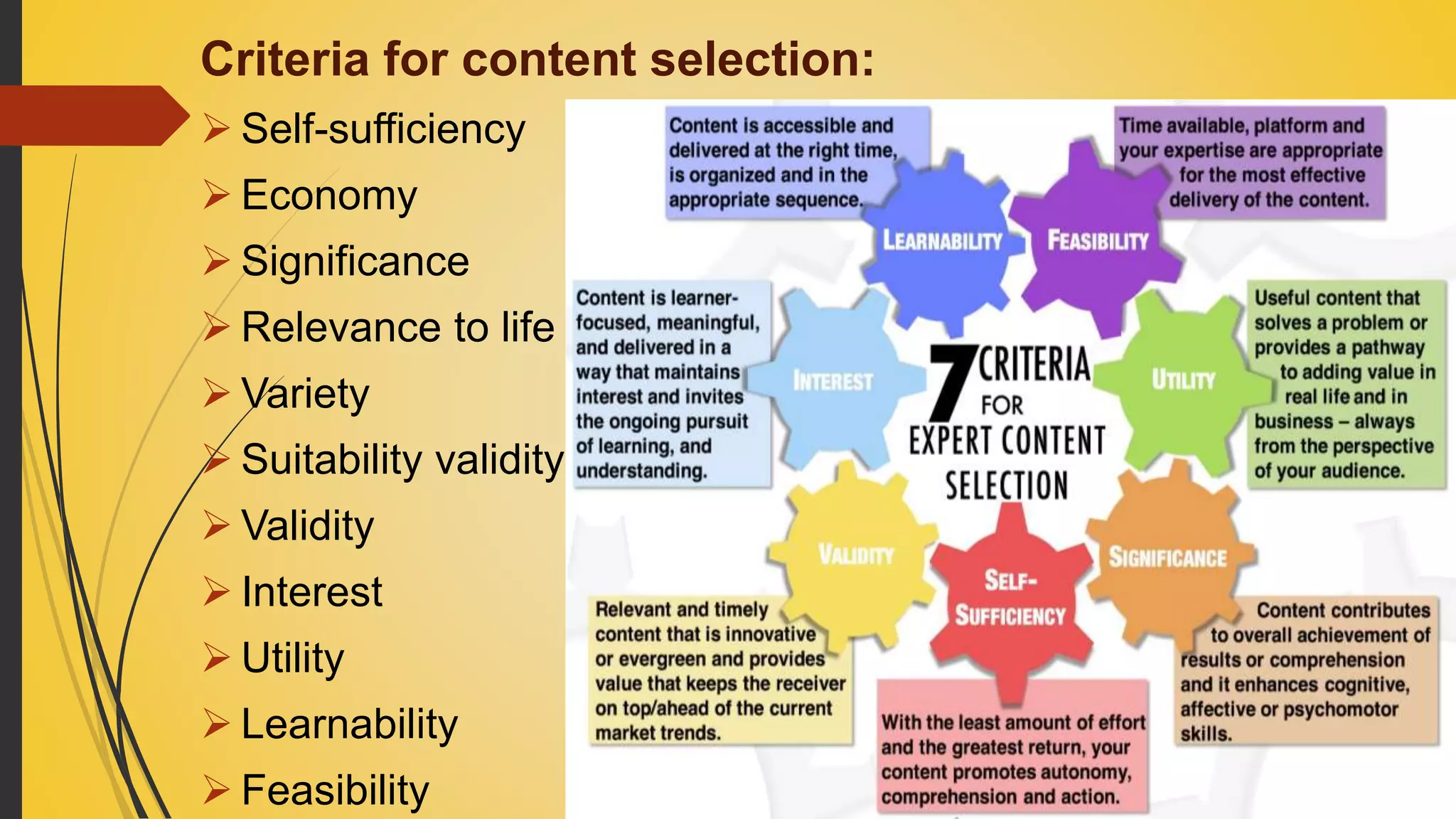
Criteria for content selection:
 Self-sufficiency
 Economy
 Significance
 Relevance to life
 Variety
 Suitability validity
 Validity
 Interest
 Utility
 Learnability
 Feasibility
Selection of learning experiences
The term learning experiences refers to the
interaction between the learners and the external
conditions in the environment to which learner can react.
Learning takes through the active behavior of the
students, it is what he learns not what teacher does.
It is said that learning experiences which the learner
undergoes.
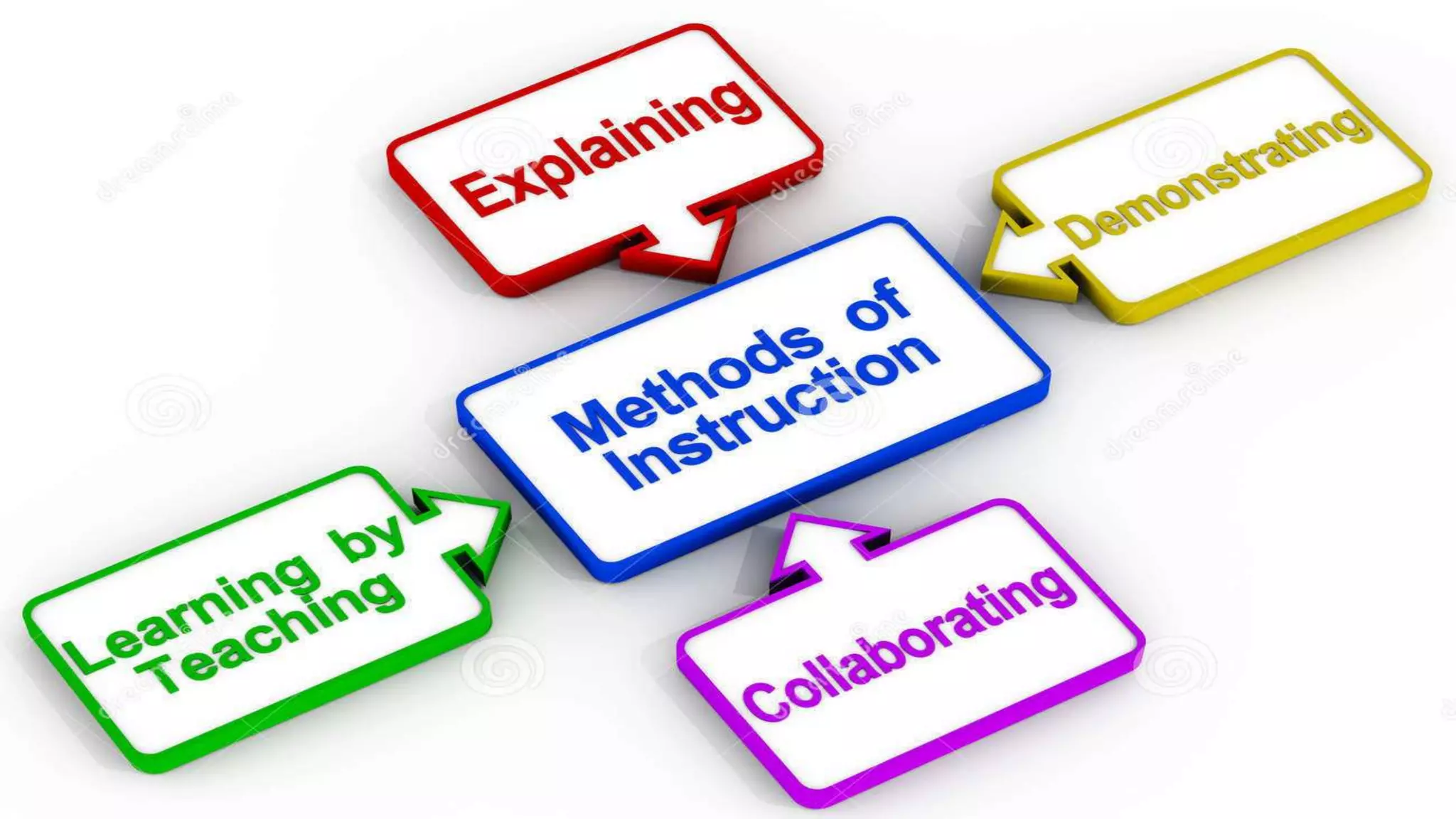
Selection of teaching method
Teaching method and the design of the
teaching within that method will depend on the
context in which you are teaching. However, a key
criterion should be the suitability of the method or
design model for developing the knowledge and
skills that learners will need in a digital age.
Evaluation
The evaluation of the curriculum also depends on
the content of the curriculum. Thus, the selection of
proper content should be done very carefully and
systematically. Curriculum evaluation is an essential
phase of curriculum development. Through evaluation a
faculty discovers whether a curriculum is fulfilling its
purpose and whether students are actually learning.
self developed model of curriculum

self developed model of curriculum

  • 2.
  • 3.
    Definition of curriculum: “Allthe learning which is planned and guided by the school, whether it is carried on in groups or individually inside or outside the school”
  • 4.
  • 5.
    Diagnosis of needs Formulation of objectives Implementation Selectionof content Selection of learning experiences Selection of teaching method Evaluation
  • 6.
    Steps of Modelof curriculum Diagnosis of needs Diagnosis of needs is the first step in preparing curriculum model. It is a process of diagnosing the needs of society, students and parents.
  • 7.
    Formulation of objectives: Formulationof objectives is the second most essential step of preparing curriculum. Aims covers all the experiences provided in the curriculum. Goals are tied to specific subjects or groups of content within the curriculum. Objectives describes more specific outcomes as a result of lessons or instructions delivered at a classroom.
  • 8.
    Selection of content Theselection of proper content is a very important phase in the process of the curriculum development. In fact, this, phase is related to all the other phases. The curriculum content is selected keeping in view the characteristics and nature of the target group sorted out during the first phase of diagnosis. Further, the selection of the content is primarily determined by the operations of Phase 2 : Formulation of objectives.
  • 10.
    Criteria for contentselection:  Self-sufficiency  Economy  Significance  Relevance to life  Variety  Suitability validity  Validity  Interest  Utility  Learnability  Feasibility
  • 11.
    Selection of learningexperiences The term learning experiences refers to the interaction between the learners and the external conditions in the environment to which learner can react. Learning takes through the active behavior of the students, it is what he learns not what teacher does. It is said that learning experiences which the learner undergoes.
  • 13.
    Selection of teachingmethod Teaching method and the design of the teaching within that method will depend on the context in which you are teaching. However, a key criterion should be the suitability of the method or design model for developing the knowledge and skills that learners will need in a digital age.
  • 14.
    Evaluation The evaluation ofthe curriculum also depends on the content of the curriculum. Thus, the selection of proper content should be done very carefully and systematically. Curriculum evaluation is an essential phase of curriculum development. Through evaluation a faculty discovers whether a curriculum is fulfilling its purpose and whether students are actually learning.