SEED DORMANCY
BY-SAKET RANJAN
M.SC. PLANT BIOTECHNOLOGY
R.G.S.C (BHU)
EXAM ROLL NO.-20430PLB025
CONTENT
What is seed?
Seed dormancy
Types of seed dormancy
Cause of seed dormancy
Methods of breaking seed dormancy
What is seed?
 A seed is an embryonic plant enclosed in a protective outer covering.
 The fertilized, matured ovule of a flowering plant, containing an embryo
or rudimentary plant.
 Seed is material which is used For planting or regeneration purpose.
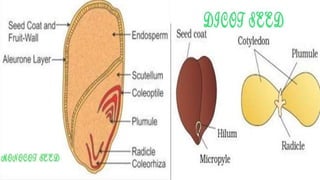
 Seed is a fertilized ripened ovule consisting of three main parts namely
seed coat , endosperm, and embryo which in due course give rise to a
new plant.
 Propagating material of healthy seedlings,tubers, rhizome, bulbs ,root,
cutting,setts,all type of grafts and vegetatively propagating materials
used for production purpose.
SEED DORMANCY
 Seed dormancy is an evolutionary adaptation that prevents seeds
from germinating during unsuitable ecological conditions that
would typically lead to a low probability of seedling survival.
 True dormancy or innate dormancy is caused by conditions within
the seed that prevent germination under normally ideal
conditions.
 Seed dormancy is divided into two major categories based on
what part of the seed produces dormancy:-exogenous and
endogenous
 There are three types of dormancy based on their mode of
action: physical, physiological and morphological.
TYPES OF SEED DORMANCY
1. Primary dormancy:-when seed fails to germinate due to
internal causess even if favourable environmental condition
are provided for germination. E.g-potato
2. Secondary dormancy:-seeds of some plants may
germinates immediately in favourable environmental
condition but dormancy can be induced in this seeds if
provided adverse conditions. E.g:-white mustard
3. Special dormancy:-Seeds of some plants species germinates
but primary root fails to develop, epicotyl growth is
stopped.
Causes of seed dormancy
1. Impermeability of seed coat to water. E.g- plants of family
leguminaceae,solanaceae,chenopodiaceae,convolvoaceae
2. Seed coat impermeable tooxygen. E.g- Xanthium.
3. Seed coat restricting mechanically the growth of embryo .E.g:-Mustard and
amaranths
4. Immaturity of embryos. E.g:- Datura ,peach etc.
5. Germination inhibitors. E.g:- tomato sap, circulic acid in rice hull
6. Light requirement. E.g:- carrot,lettuce needs light for dormancy while Datura not
needs light for dormancy
7. Temperature requirement. E.g:-apple ,pear ,peach need low temperature for
dormancy.
Methods for breaking dormancy
 SCARIFICATION:- (mechanical treatment) Practice of breaking the hard seed coat by
mechanical treatment.
a)Chilling:- seeds are placed in temperature between 5 to 10 degree Celsius for 7days
for germination. E.g-cabbage, cauliflower, sunflower
b)Pre-drying:- seeds are dried below 40 degree Celsius for 7days. E.g-maize, lettuce
c)pre-washing:- removal of germination inhibitors by soaking & washing seed in water.
E.g:-sugarbeet
d)pre-soaking:- seeds are soaked in warm water for some period to enhance imbibition
process in seed. E.g-chilli, subabul
e) Rubbing or puncturing seed coat:- seed are either rubbed against rough surface or
punctured with pointed needle. E.g-Coriander, castor
f) Application of pressure to seeds:- Germination increase is seed in some plants when
hydraulic pressure is applied on it. E.g- Medicago sativa.
Continued....
 STRATIFICATION:- In some seeds after ripening ,low temperature and moisture conditions
required in artificial stratification .Seed layer altered with layers of moist sand or appropriate
material to store at low temperature. E.g- Mustard & ground nut
 EXPOSURE OF SEEDS TO LIGHT:- It also helps to break the dormancy & increase the germination.
 CHEMICAL TREATMENT:-
a)pottasium nitrate treatment:- 2% solution of KNo3 is mixed in seeds .
e.g- Rice, tomato, chilli
b) Gibberellic acid treatment:- seeds may be moistened with 500 ppm solution of GA.
e.g:- wheat ,oat
c)Thio-urea treatment:- Potato tubers are dipped in thio-urea solution (1%) for 1 hour when fresh
harvested produce is to be used as seed material.
Seed dormancy

Seed dormancy

  • 1.
    SEED DORMANCY BY-SAKET RANJAN M.SC.PLANT BIOTECHNOLOGY R.G.S.C (BHU) EXAM ROLL NO.-20430PLB025
  • 2.
    CONTENT What is seed? Seeddormancy Types of seed dormancy Cause of seed dormancy Methods of breaking seed dormancy
  • 3.
    What is seed? A seed is an embryonic plant enclosed in a protective outer covering.  The fertilized, matured ovule of a flowering plant, containing an embryo or rudimentary plant.  Seed is material which is used For planting or regeneration purpose.  Seed is a fertilized ripened ovule consisting of three main parts namely seed coat , endosperm, and embryo which in due course give rise to a new plant.  Propagating material of healthy seedlings,tubers, rhizome, bulbs ,root, cutting,setts,all type of grafts and vegetatively propagating materials used for production purpose.
  • 5.
    SEED DORMANCY  Seeddormancy is an evolutionary adaptation that prevents seeds from germinating during unsuitable ecological conditions that would typically lead to a low probability of seedling survival.  True dormancy or innate dormancy is caused by conditions within the seed that prevent germination under normally ideal conditions.  Seed dormancy is divided into two major categories based on what part of the seed produces dormancy:-exogenous and endogenous  There are three types of dormancy based on their mode of action: physical, physiological and morphological.
  • 6.
    TYPES OF SEEDDORMANCY 1. Primary dormancy:-when seed fails to germinate due to internal causess even if favourable environmental condition are provided for germination. E.g-potato 2. Secondary dormancy:-seeds of some plants may germinates immediately in favourable environmental condition but dormancy can be induced in this seeds if provided adverse conditions. E.g:-white mustard 3. Special dormancy:-Seeds of some plants species germinates but primary root fails to develop, epicotyl growth is stopped.
  • 7.
    Causes of seeddormancy 1. Impermeability of seed coat to water. E.g- plants of family leguminaceae,solanaceae,chenopodiaceae,convolvoaceae 2. Seed coat impermeable tooxygen. E.g- Xanthium. 3. Seed coat restricting mechanically the growth of embryo .E.g:-Mustard and amaranths 4. Immaturity of embryos. E.g:- Datura ,peach etc. 5. Germination inhibitors. E.g:- tomato sap, circulic acid in rice hull 6. Light requirement. E.g:- carrot,lettuce needs light for dormancy while Datura not needs light for dormancy 7. Temperature requirement. E.g:-apple ,pear ,peach need low temperature for dormancy.
  • 8.
    Methods for breakingdormancy  SCARIFICATION:- (mechanical treatment) Practice of breaking the hard seed coat by mechanical treatment. a)Chilling:- seeds are placed in temperature between 5 to 10 degree Celsius for 7days for germination. E.g-cabbage, cauliflower, sunflower b)Pre-drying:- seeds are dried below 40 degree Celsius for 7days. E.g-maize, lettuce c)pre-washing:- removal of germination inhibitors by soaking & washing seed in water. E.g:-sugarbeet d)pre-soaking:- seeds are soaked in warm water for some period to enhance imbibition process in seed. E.g-chilli, subabul e) Rubbing or puncturing seed coat:- seed are either rubbed against rough surface or punctured with pointed needle. E.g-Coriander, castor f) Application of pressure to seeds:- Germination increase is seed in some plants when hydraulic pressure is applied on it. E.g- Medicago sativa.
  • 9.
    Continued....  STRATIFICATION:- Insome seeds after ripening ,low temperature and moisture conditions required in artificial stratification .Seed layer altered with layers of moist sand or appropriate material to store at low temperature. E.g- Mustard & ground nut  EXPOSURE OF SEEDS TO LIGHT:- It also helps to break the dormancy & increase the germination.  CHEMICAL TREATMENT:- a)pottasium nitrate treatment:- 2% solution of KNo3 is mixed in seeds . e.g- Rice, tomato, chilli b) Gibberellic acid treatment:- seeds may be moistened with 500 ppm solution of GA. e.g:- wheat ,oat c)Thio-urea treatment:- Potato tubers are dipped in thio-urea solution (1%) for 1 hour when fresh harvested produce is to be used as seed material.