Seed dormancy
 Seed dormancy is defined as a state in which seeds are
prevented from germinating even under environmental
conditions normally favorable for germination.
 These conditions are a complex combination of water,
light, temperature, gasses, mechanical restrictions, seed
coats, and hormone structures.
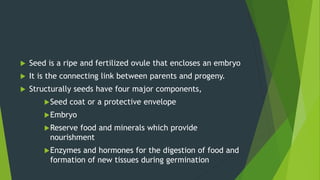
 Seed is a ripe and fertilized ovule that encloses an embryo
 It is the connecting link between parents and progeny.
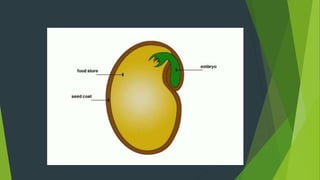
 Structurally seeds have four major components,
Seed coat or a protective envelope
Embryo
Reserve food and minerals which provide
nourishment
Enzymes and hormones for the digestion of food and
formation of new tissues during germination
 Seeds of most plants germinate when they provide
favourable environmental conditions ,such as
moisture,air,suitable temperature and proper sequence of
light and darkness
 The inability or failure of the seeds to germinate due to
internal factors,even under optimal environmental
conditions , is called dormancy
Factors
 It may be caused due to individual or combined
effects , it includes
Dormancy due to hard seed coat
Dormancy due to condition of
embryo
Dormancy due to absence of light
Seed dormancy due to low
temperature
Coat imposed dormancy
 Imposed by seed coat and other enclosing tissues like
endosperm , pericarp and extra floral organs
 Seed coat is mainly made up of complex mixture of
polysaccharides, hemicelluloses, fats, waxes and proteins.
 During seed ripening it gets dehydrated and forms a hard
and tough protective covering around the embryo.
 Such seed coats prevents the seeds from germination .
 Seeds dormancy may be due to
 Impermeability of seed coat to water
 Impermeability of seed coat to oxygen and interference
with gas exchange
 Mechanical resistance of seed coat against embryonic
growth
 Production and retention of large amount of growth
inhibitors within the seed.
 Seed coat dormancy can be lifted by weakening or breaking the
seed coat by natural and artificial processes.
 The natural processes include microbial action, mechanical
abrasion , passing of seeds through the digestive tract of
animals etc.
 Artifical processes include scarification(scratching) of the seeds
with abrasives ,soaking of the seeds in concentrated sulphuric
acid , washing of seeds with alcohol , treating the seeds with
potassium nitrate , thiourea and gibberellic acid , subjecting
the seeds to hydraulic pressure etc.
Embryo dormancy
 Already inherent in embryo and is not due to the influence
of seed coat or other surrounding tissues.
 Commonest type of dormancy
 It is believed to result from the presence of growth
inhibitors especially ABA , and also from the absence of
growth promoters such as GA.
 The major causes of embryonic dormancy are
 Immature or underdeveloped state of embryo, when seeds
are shed.
 Presence of germination inhibitors in the embryo,
endosperm and other tissues of seed or fruit , which includes
abscisic acid , phenolic acid ,ferulic acid , parasorbic acid
,coumarin , aseperidin, etc.
 absence of sufficient amounts of growth promoters such
as gibberellic acid.
Dormancy due to absence of light
 In case of photoblastic seeds some seeds require light to
germinate
Due to the absence of low temperature
 low temperature is required by some plants
 So in such plants dormancy is due to absence of low
temperature
Methods to overcome seed dormancy
 Scarification
 Impaction
 Stratification
 Alternating the temperature
 Exposure of seeds to light
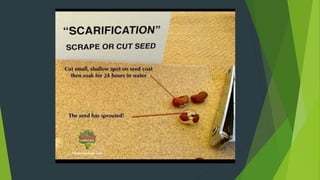
Scarification
 Seed dormancy caused by seed coat can be removed by
breaking, softening or weakening of seed coat
 This method is known as scarification
 Under natural conditions in the soil , micro organisms such
as fungi and bacteria , act upon the seed coat and
decompose it.
 But this process requires a lot of time
 Various mechanical and chemical treatments are used to
promote seed germination
 They include cutting or chipping of the seed coat , storage
of seeds at high temperature , and use of organic solvents
to remove waxy or fatty compounds
 Acid treatments are also sometimes recommended
 But care must be taken to ensure that the treatment does
not destroy the embryo
Impaction
 In some seeds water and oxygen are unable to penetrate ,
because their entry is blocked by a cork like filing in the
small opening in the seed coat
 These seeds are shaken vigorously to remove the plug
 This treatment is called impaction
Stratification
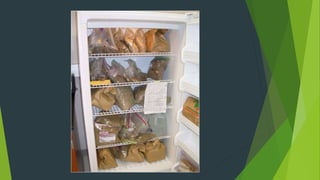
 some seeds e.g. those of peach , apple , plum , cherry
etc. germinate only when they are exposed to well
aerated moist conditions under low temperature for
weeks or months
 Such a treatment is called stratification
 It is believed that the embryos of those seeds which
require stratification are immature in the sense that some
chemical changes must take place to initiate seed
germination
Alternating the temperature
 Germination of some seeds is strongly promoted by
alternating the daily temperature
 This is not directly related to the cold requirement for
germination , though it is useful in those seeds in which
dormancy is due to immature embryos.
 The difference between the alternating temperatures
should not be more than 10 -20 degree C
EXPOSURE OF SEEDS TO LIGHT
 Quite a number of seeds require light for their
germination
 They are called photoblastic seeds.
 There are three categories of seeds
 Positively photoblastic
 Negatively photoblastic
 Non photoblastic seeds
Advantages of seed dormancy
 Adaptation to ensure that seed germination occurs only
under favourable conditions
 Enables embryo to tide over the unfavourable condition
 Enables storage of cereals , millets , pulses etc to be used
later for food or for sowing in the next season
 Introduces a delay in seed germination and there by
provides additional time for seed dispersal
 Maximizes the survival of seedlings by preventing seed
germination under unfavourable condition
Seed dormancy (Plant Physiology)

Seed dormancy (Plant Physiology)

  • 1.
  • 2.
     Seed dormancyis defined as a state in which seeds are prevented from germinating even under environmental conditions normally favorable for germination.  These conditions are a complex combination of water, light, temperature, gasses, mechanical restrictions, seed coats, and hormone structures.
  • 3.
     Seed isa ripe and fertilized ovule that encloses an embryo  It is the connecting link between parents and progeny.  Structurally seeds have four major components, Seed coat or a protective envelope Embryo Reserve food and minerals which provide nourishment Enzymes and hormones for the digestion of food and formation of new tissues during germination
  • 5.
     Seeds ofmost plants germinate when they provide favourable environmental conditions ,such as moisture,air,suitable temperature and proper sequence of light and darkness  The inability or failure of the seeds to germinate due to internal factors,even under optimal environmental conditions , is called dormancy
  • 6.
    Factors  It maybe caused due to individual or combined effects , it includes Dormancy due to hard seed coat Dormancy due to condition of embryo Dormancy due to absence of light Seed dormancy due to low temperature
  • 7.
    Coat imposed dormancy Imposed by seed coat and other enclosing tissues like endosperm , pericarp and extra floral organs  Seed coat is mainly made up of complex mixture of polysaccharides, hemicelluloses, fats, waxes and proteins.  During seed ripening it gets dehydrated and forms a hard and tough protective covering around the embryo.  Such seed coats prevents the seeds from germination .
  • 8.
     Seeds dormancymay be due to  Impermeability of seed coat to water  Impermeability of seed coat to oxygen and interference with gas exchange  Mechanical resistance of seed coat against embryonic growth  Production and retention of large amount of growth inhibitors within the seed.
  • 9.
     Seed coatdormancy can be lifted by weakening or breaking the seed coat by natural and artificial processes.  The natural processes include microbial action, mechanical abrasion , passing of seeds through the digestive tract of animals etc.  Artifical processes include scarification(scratching) of the seeds with abrasives ,soaking of the seeds in concentrated sulphuric acid , washing of seeds with alcohol , treating the seeds with potassium nitrate , thiourea and gibberellic acid , subjecting the seeds to hydraulic pressure etc.
  • 10.
    Embryo dormancy  Alreadyinherent in embryo and is not due to the influence of seed coat or other surrounding tissues.  Commonest type of dormancy  It is believed to result from the presence of growth inhibitors especially ABA , and also from the absence of growth promoters such as GA.
  • 11.
     The majorcauses of embryonic dormancy are  Immature or underdeveloped state of embryo, when seeds are shed.  Presence of germination inhibitors in the embryo, endosperm and other tissues of seed or fruit , which includes abscisic acid , phenolic acid ,ferulic acid , parasorbic acid ,coumarin , aseperidin, etc.  absence of sufficient amounts of growth promoters such as gibberellic acid.
  • 12.
    Dormancy due toabsence of light  In case of photoblastic seeds some seeds require light to germinate
  • 13.
    Due to theabsence of low temperature  low temperature is required by some plants  So in such plants dormancy is due to absence of low temperature
  • 14.
    Methods to overcomeseed dormancy  Scarification  Impaction  Stratification  Alternating the temperature  Exposure of seeds to light
  • 15.
    Scarification  Seed dormancycaused by seed coat can be removed by breaking, softening or weakening of seed coat  This method is known as scarification  Under natural conditions in the soil , micro organisms such as fungi and bacteria , act upon the seed coat and decompose it.  But this process requires a lot of time  Various mechanical and chemical treatments are used to promote seed germination
  • 16.
     They includecutting or chipping of the seed coat , storage of seeds at high temperature , and use of organic solvents to remove waxy or fatty compounds  Acid treatments are also sometimes recommended  But care must be taken to ensure that the treatment does not destroy the embryo
  • 18.
    Impaction  In someseeds water and oxygen are unable to penetrate , because their entry is blocked by a cork like filing in the small opening in the seed coat  These seeds are shaken vigorously to remove the plug  This treatment is called impaction
  • 20.
    Stratification  some seedse.g. those of peach , apple , plum , cherry etc. germinate only when they are exposed to well aerated moist conditions under low temperature for weeks or months  Such a treatment is called stratification  It is believed that the embryos of those seeds which require stratification are immature in the sense that some chemical changes must take place to initiate seed germination
  • 22.
    Alternating the temperature Germination of some seeds is strongly promoted by alternating the daily temperature  This is not directly related to the cold requirement for germination , though it is useful in those seeds in which dormancy is due to immature embryos.  The difference between the alternating temperatures should not be more than 10 -20 degree C
  • 23.
    EXPOSURE OF SEEDSTO LIGHT  Quite a number of seeds require light for their germination  They are called photoblastic seeds.  There are three categories of seeds  Positively photoblastic  Negatively photoblastic  Non photoblastic seeds
  • 24.
    Advantages of seeddormancy  Adaptation to ensure that seed germination occurs only under favourable conditions  Enables embryo to tide over the unfavourable condition  Enables storage of cereals , millets , pulses etc to be used later for food or for sowing in the next season  Introduces a delay in seed germination and there by provides additional time for seed dispersal  Maximizes the survival of seedlings by preventing seed germination under unfavourable condition