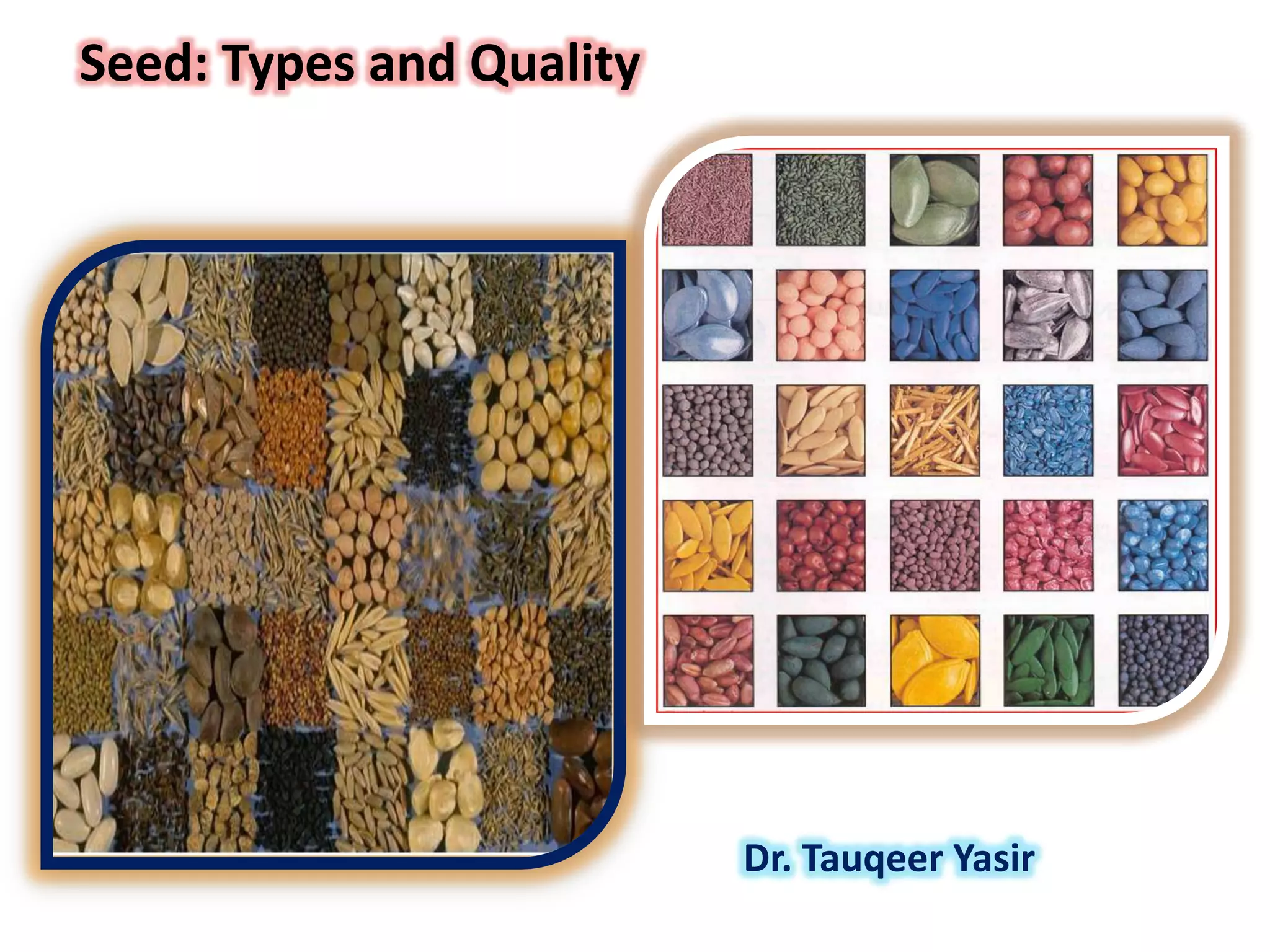
Seed: Types and Quality

Dr. Tauqeer Yasir
What is seed?
In broad sense
Seed is a material which is used for planting or regeneration purpose.
scientifically
Seed is a fertilized matured ovule together covered with seed coat is called
seed or it is a propagating material.
Technological point of view
Seed is a fertilized ripened ovule consisting of three main parts namely
seed coat, endosperm and embryo, which in due course gives rise to a
new plant.
It also refers to

Propagating

materials

of

healthy

seedlings, tuber, bulbs, rhizome, roots, cuttings, setts, all types of grafts
and vegetatively propagating materials used for production purpose.
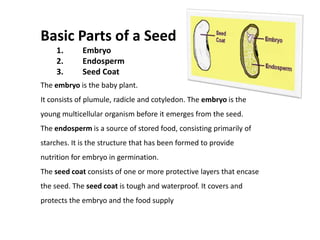
Basic Parts of a Seed
1.
2.
3.

Embryo
Endosperm
Seed Coat

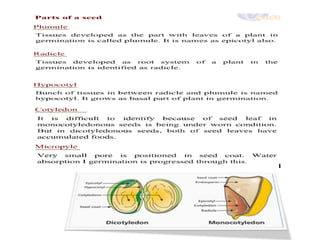
The embryo is the baby plant.
It consists of plumule, radicle and cotyledon. The embryo is the
young multicellular organism before it emerges from the seed.
The endosperm is a source of stored food, consisting primarily of
starches. It is the structure that has been formed to provide
nutrition for embryo in germination.
The seed coat consists of one or more protective layers that encase
the seed. The seed coat is tough and waterproof. It covers and
protects the embryo and the food supply
Germination
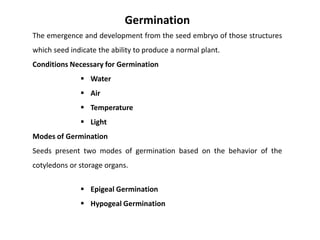
The emergence and development from the seed embryo of those structures
which seed indicate the ability to produce a normal plant.
Conditions Necessary for Germination
 Water
 Air
 Temperature
 Light

Modes of Germination
Seeds present two modes of germination based on the behavior of the
cotyledons or storage organs.
 Epigeal Germination
 Hypogeal Germination
Types of Seeds
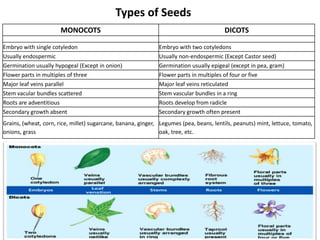
MONOCOTS
Embryo with single cotyledon
Usually endospermic
Germination usually hypogeal (Except in onion)
Flower parts in multiples of three
Major leaf veins parallel
Stem vacular bundles scattered
Roots are adventitious
Secondary growth absent

DICOTS
Embryo with two cotyledons
Usually non-endospermic (Except Castor seed)
Germination usually epigeal (except in pea, gram)
Flower parts in multiples of four or five
Major leaf veins reticulated
Stem vascular bundles in a ring
Roots develop from radicle
Secondary growth often present

Grains, (wheat, corn, rice, millet) sugarcane, banana, ginger, Legumes (pea, beans, lentils, peanuts) mint, lettuce, tomato,
onions, grass
oak, tree, etc.
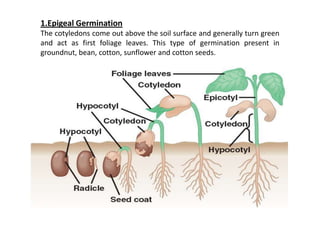
1.Epigeal Germination
The cotyledons come out above the soil surface and generally turn green
and act as first foliage leaves. This type of germination present in
groundnut, bean, cotton, sunflower and cotton seeds.
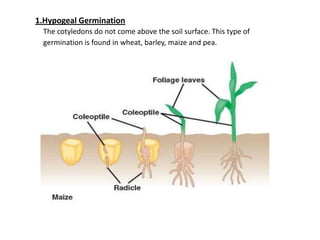
1.Hypogeal Germination
The cotyledons do not come above the soil surface. This type of
germination is found in wheat, barley, maize and pea.
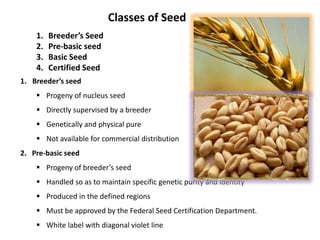
Classes of Seed
1.
2.
3.
4.

Breeder’s Seed
Pre-basic seed
Basic Seed
Certified Seed

1. Breeder’s seed
 Progeny of nucleus seed

 Directly supervised by a breeder
 Genetically and physical pure
 Not available for commercial distribution
2. Pre-basic seed
 Progeny of breeder’s seed
 Handled so as to maintain specific genetic purity and identity
 Produced in the defined regions
 Must be approved by the Federal Seed Certification Department.
 White label with diagonal violet line
Classes of Seed
3. Basic seed
• Progeny of pre-basic seed
• Produced on extension farms ,

research farms and by progressive farmers
• Must be certified by the FSCD
• white label
4. Certified seed
• Progeny of basic seed
• Produced by registered growers
of seed producing agencies
• Quality is controlled by the FSCD
• Certified Seed-I has Blue label and
certified seed-II (improved seed) has red label
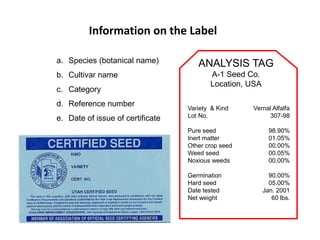
Information on the Label
a. Species (botanical name)
b. Cultivar name
c. Category
d. Reference number
e. Date of issue of certificate

ANALYSIS TAG
A-1 Seed Co.
Location, USA
Variety & Kind
Lot No.
Pure seed
Inert matter
Other crop seed
Weed seed
Noxious weeds
Germination
Hard seed
Date tested
Net weight

Vernal Alfalfa
307-98
98.90%
01.05%
00.00%
00.05%
00.00%
90.00%
05.00%
Jan. 2001
60 lbs.
Seed Quality
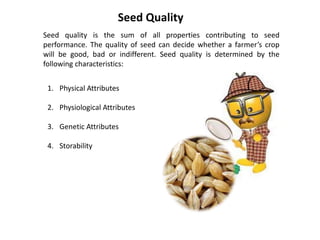
Seed quality is the sum of all properties contributing to seed
performance. The quality of seed can decide whether a farmer’s crop
will be good, bad or indifferent. Seed quality is determined by the
following characteristics:

1. Physical Attributes
2. Physiological Attributes
3. Genetic Attributes

4. Storability
Seed Quality
1. Physical Attributes





A minimum of damaged seed
A minimal amount of weed seed or inert matter
A minimum of diseased seed
Near uniform seed size

2. Physiological Attributes
 Germination Percentage or Viability
The germination percentage or viability is an indicator of the
seed’s ability to emerge from the soil to produce a plant in the
field under normal conditions
 Seed Vigour
Seed vigour is the capacity of seed to emerge from the soil and
survive under potentially stressful field conditions and to grow
rapidly under favourable conditions
Seed Quality
3. Genetic Attributes
 Seed of the same variety
 Adapted to the local conditions
 Pest and disease tolerance
 High yielding ability

4. Storability
 Moisture content
 Temperature of the environment
 Seed treatment

Seed, Seed Types and Seed Quality

  • 1.
    Seed: Types andQuality Dr. Tauqeer Yasir
  • 2.
    What is seed? Inbroad sense Seed is a material which is used for planting or regeneration purpose. scientifically Seed is a fertilized matured ovule together covered with seed coat is called seed or it is a propagating material. Technological point of view Seed is a fertilized ripened ovule consisting of three main parts namely seed coat, endosperm and embryo, which in due course gives rise to a new plant. It also refers to Propagating materials of healthy seedlings, tuber, bulbs, rhizome, roots, cuttings, setts, all types of grafts and vegetatively propagating materials used for production purpose.
  • 3.
    Basic Parts ofa Seed 1. 2. 3. Embryo Endosperm Seed Coat The embryo is the baby plant. It consists of plumule, radicle and cotyledon. The embryo is the young multicellular organism before it emerges from the seed. The endosperm is a source of stored food, consisting primarily of starches. It is the structure that has been formed to provide nutrition for embryo in germination. The seed coat consists of one or more protective layers that encase the seed. The seed coat is tough and waterproof. It covers and protects the embryo and the food supply
  • 5.
    Germination The emergence anddevelopment from the seed embryo of those structures which seed indicate the ability to produce a normal plant. Conditions Necessary for Germination  Water  Air  Temperature  Light Modes of Germination Seeds present two modes of germination based on the behavior of the cotyledons or storage organs.  Epigeal Germination  Hypogeal Germination
  • 6.
    Types of Seeds MONOCOTS Embryowith single cotyledon Usually endospermic Germination usually hypogeal (Except in onion) Flower parts in multiples of three Major leaf veins parallel Stem vacular bundles scattered Roots are adventitious Secondary growth absent DICOTS Embryo with two cotyledons Usually non-endospermic (Except Castor seed) Germination usually epigeal (except in pea, gram) Flower parts in multiples of four or five Major leaf veins reticulated Stem vascular bundles in a ring Roots develop from radicle Secondary growth often present Grains, (wheat, corn, rice, millet) sugarcane, banana, ginger, Legumes (pea, beans, lentils, peanuts) mint, lettuce, tomato, onions, grass oak, tree, etc.
  • 7.
    1.Epigeal Germination The cotyledonscome out above the soil surface and generally turn green and act as first foliage leaves. This type of germination present in groundnut, bean, cotton, sunflower and cotton seeds.
  • 8.
    1.Hypogeal Germination The cotyledonsdo not come above the soil surface. This type of germination is found in wheat, barley, maize and pea.
  • 9.
    Classes of Seed 1. 2. 3. 4. Breeder’sSeed Pre-basic seed Basic Seed Certified Seed 1. Breeder’s seed  Progeny of nucleus seed  Directly supervised by a breeder  Genetically and physical pure  Not available for commercial distribution 2. Pre-basic seed  Progeny of breeder’s seed  Handled so as to maintain specific genetic purity and identity  Produced in the defined regions  Must be approved by the Federal Seed Certification Department.  White label with diagonal violet line
  • 10.
    Classes of Seed 3.Basic seed • Progeny of pre-basic seed • Produced on extension farms , research farms and by progressive farmers • Must be certified by the FSCD • white label 4. Certified seed • Progeny of basic seed • Produced by registered growers of seed producing agencies • Quality is controlled by the FSCD • Certified Seed-I has Blue label and certified seed-II (improved seed) has red label
  • 11.
    Information on theLabel a. Species (botanical name) b. Cultivar name c. Category d. Reference number e. Date of issue of certificate ANALYSIS TAG A-1 Seed Co. Location, USA Variety & Kind Lot No. Pure seed Inert matter Other crop seed Weed seed Noxious weeds Germination Hard seed Date tested Net weight Vernal Alfalfa 307-98 98.90% 01.05% 00.00% 00.05% 00.00% 90.00% 05.00% Jan. 2001 60 lbs.
  • 12.
    Seed Quality Seed qualityis the sum of all properties contributing to seed performance. The quality of seed can decide whether a farmer’s crop will be good, bad or indifferent. Seed quality is determined by the following characteristics: 1. Physical Attributes 2. Physiological Attributes 3. Genetic Attributes 4. Storability
  • 13.
    Seed Quality 1. PhysicalAttributes     A minimum of damaged seed A minimal amount of weed seed or inert matter A minimum of diseased seed Near uniform seed size 2. Physiological Attributes  Germination Percentage or Viability The germination percentage or viability is an indicator of the seed’s ability to emerge from the soil to produce a plant in the field under normal conditions  Seed Vigour Seed vigour is the capacity of seed to emerge from the soil and survive under potentially stressful field conditions and to grow rapidly under favourable conditions
  • 14.
    Seed Quality 3. GeneticAttributes  Seed of the same variety  Adapted to the local conditions  Pest and disease tolerance  High yielding ability 4. Storability  Moisture content  Temperature of the environment  Seed treatment