Chong Boon Secondary School
Humanities Department Geography Unit Sec 2
Geography
 By the end of this topic you will be
able to :
◦ Identify and explain the
inputs, processes and outputs of the
4 key agricultural types
 Shifting Cultivation
 Wet Rice Cultivation
 Plantation Agriculture
 High Tech farming
Also known as “Slash
and Burn Farming”
Used by traditional tribes
Small plots of land used
Subsistence agriculture
1. Tribe Elder selects plot of land
2. Slash and burn applied to wild vegetation
3. Small area cleared (only areas used are
cleared)
4. Simple tools used in seeding (dibble stick)
5. Cultivation carried out on cleared areas
6. Minimal weeding done on crops
7. After repeated harvests (when fertility is
reduced), the land is abandoned (fallow
period)
8. New plot selected and process is repeated.
Amazon Basin (South
America)
Indonesia (South East
Asia)
Congo Basin (Africa)
 Kalimantan Indonesia
 Key crops cultivated include
Rice, root
crops, vegetables, banana, maize,
pumpkin, etc.
 Soil able to sustain for 3-4 years
 Fallow period usually up to 10
years before plot is reused again.
 Complete the exercise
provided.
 You may use your notes to
help you.
 You have a total of 15
minutes!
 Good luck!
 Tropical regions (monsoon lands)
◦ South Asia, South-East Asia and
South China
 Growing of padi (Wet Rice)
◦ Requirement for flooding for
cultivation
 Highly intensive cultivation
1. Flat land
2. Large amount of sunlight
3. Heavy rainfall during
growing season
4. Fertile alluvial soil
 Draught animals for ploughing
 Fertilizers
◦ Natural Fertilizers (Animal Waste)
◦ Chemical Fertilizers (Nitrates)
 Irrigation
◦ Lack of rainwater during growing
 Relief modification
◦ Absence of flat land
1. Ploughing, planting in nursery
and fertilising
2. Transplanting to fields
3. Irrigation (maintain flooding)
4. Breaking bunds and allow for
ripening
5. Harvesting
6. Threshing and Winnowing
 Terracing method used
 Lack of natural flat lands
 Modification of hills into terraces
 Mud walls (bunds) are built at edge of
steps to retain water (flooding)
 When crops are mature, bunds are
broken and rice will ripen
 Harvesting done by hand.
 Complete the exercise
provided.
 You may use your notes to
help you.
 You have a total of 15
minutes!
 Good luck!
 Dominant in countries with
◦ High temperature, humidity and heavy
rainfall
 Former colonies
◦ Malaysia, Indonesia, Sri Lanka, Brazil and
Colombia
 Typical cash crops
◦ Rubber, cacao, oil palm, coconut,
pineapple, tea, sugar cane.
 Climatic conditions
◦High humidity
◦High temperature
◦High rainfall
 Large arable land area
 Cheap labour
 Management team
 High Capital
 Modern machinery
 Processing facilities
 Fertilisers and Pesticides
 Transport infrastructure
 Research and Development facility
Cultivation and
processing of the
crops
Semi-processed /
Processed products.
Profit ($)
 World’s top producer of Palm
Oil
 Started cultivation in 1917
 Small private estates and Large
MNC (Multi-national
Corporation) estates
◦E.g. Sime Darby
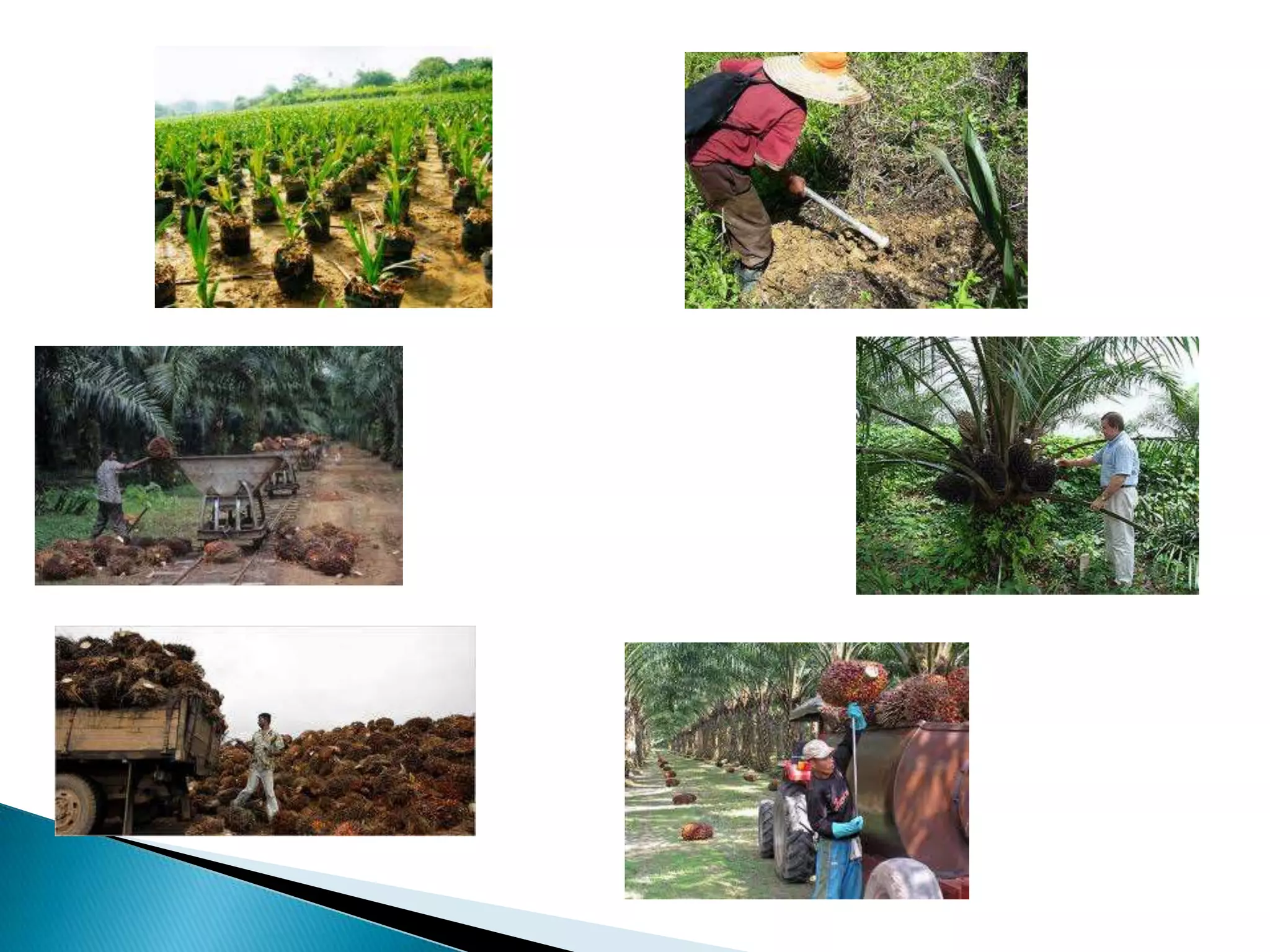
 Pre-nursery stage
◦ Good seeds soaked in water and germinated for 80 days
between 39°C to 40°C.
 Transplanted to nursery for one year
 Second transplanting into fields at start of rainy
season
 Cover crops grown in between oil palm trees
◦ Provide shelter from heavy rains
◦ Extra income for farmers
 Chemical fertilisers added.
 Harvesting starts after 3 years and fruits are sent
for processing.
 Harvested fruits are loaded onto containers
and sent for processing within 24 hours
 Fruits are sterilised by steam
 Fruits are stripped and mesocarp is separated
from the kernel
 Mesocarp is cooked further and pressed to
extract oil that is sent to a refinery
 Kernel also pressed and high quality kernel
oil is extracted.
Read
Pg 56 of
your
Textbook!
As a filler ingredient
◦Ice
Cream, Soap, Plastics, Biscuit
s, Chocolates, Sweets
As a consumable oil
◦Cooking oil (Palm Oil & Palm
Kernel Oil)
10 Seconds
Advent of green revolution
Green Revolution – the use
of technology to increase
crop yield
Helps maximise profits and
minimise costs
Agro-Chemicals
Irrigation
Farm Machinery
Computerised Control
High Yield Variety (HYV)
Seeds
 Chemicals added for nutrients
(nitrates)
 Chemicals added as pesticides
◦Kills pests (locusts,
grasshoppers)
 Chemicals added as herbicides
◦Kills weeds
 Provision of water supply during dry
season.
 No limitation of 1 growing season per
year.
 Double / multiple harvests in a year
◦ Double cropping
◦ Multiple cropping
 Re-cropping arid areas
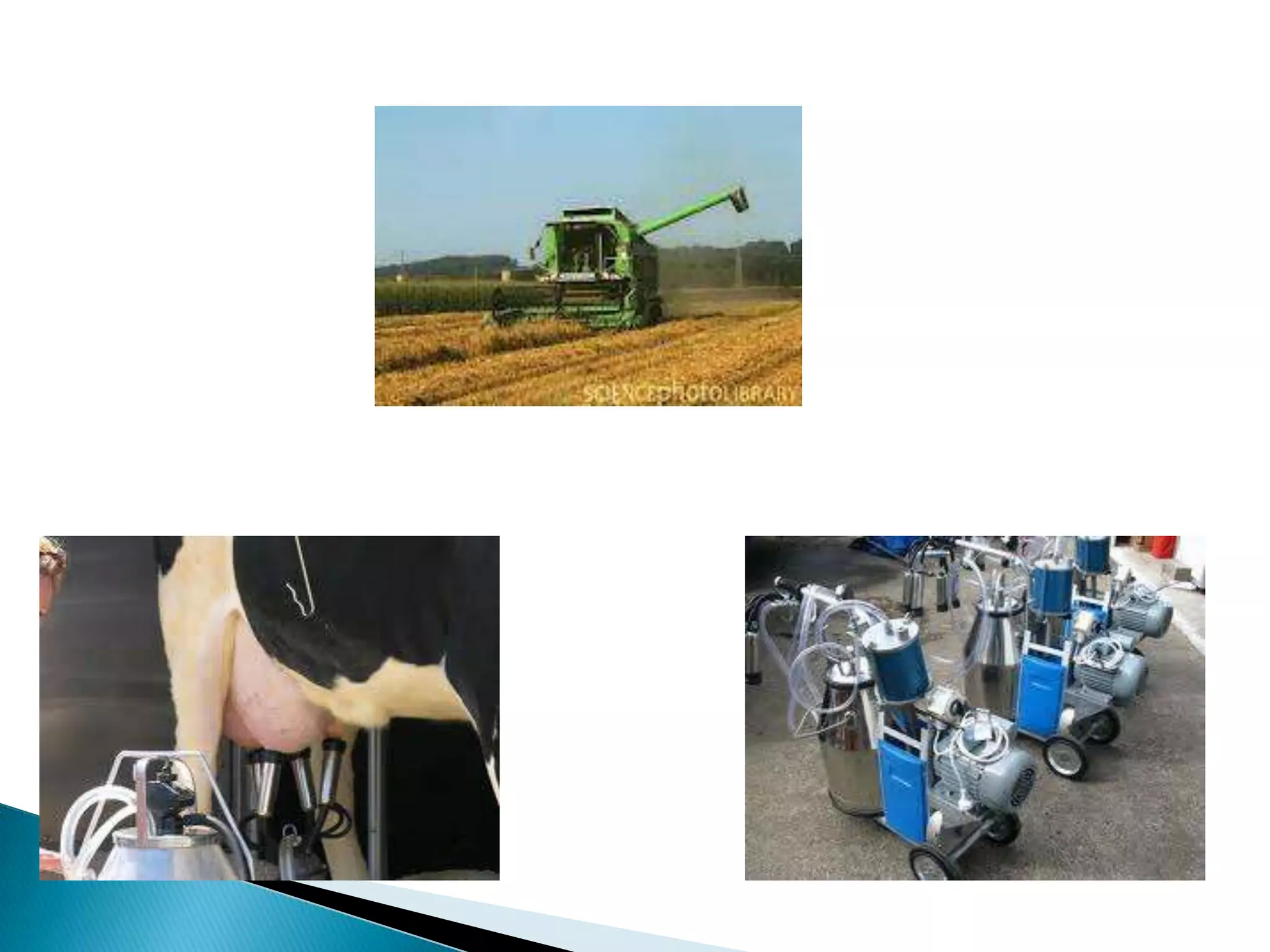
 Raise the efficiency of farming
processes
 Increase production and replace
human labour.
◦ Harvesting crops
◦ Milking cows
 Refrigerated trucks
◦ Help keep perishables fresh from farm to
market/factory
Use of computers to
calculate nutrition needs
Increases the efficiency and
quality of produce
 Genetic engineering selects best
characteristics of the crop
 More produce per plant
 More resistant to disease and
hazards
◦ Super rice (Wind and Drought
resistant rice)
 Little land used in Singapore for farming.
 Land scarcity – high demand for urban land.
 Presence of agro-tech parks in Singapore
◦ Help in food stability
◦ Aquaculture
◦ Egg farms
 Non-food farms
◦ Ornamental fish
◦ Orchid farms
 Food and non-food products
 High investment in machines
 Use of highly specialised
workforce
 Engaged in Research and
Development (R&D)
 Physical inputs
◦ Sunshine / shade
◦ Land
 Human inputs
◦ Capital
◦ Seedlings
◦ Nutrient solution
◦ Chemical fertilisers
◦ Specialised equipment and labour
◦ R&D
 Germination in dark room
 Transplanting to growing troughs
 Adding nutrient solutions / spraying
nutrients on roots
 Monitoring plant growth with
computers
 Manual harvesting
 Packaging and refrigerated transport
 Local leafy vegetables
◦ Caixin, KangKong
 Temperate and subtropical
vegetables
◦ Butterhead lettuce, HongKong kai lan
 Dwarf cabbage
Let’s look at the exercise
Complete the exercise in 20
minutes

Sec 2 Unit 7 types of agriculture

  • 1.
    Chong Boon SecondarySchool Humanities Department Geography Unit Sec 2 Geography
  • 2.
     By theend of this topic you will be able to : ◦ Identify and explain the inputs, processes and outputs of the 4 key agricultural types  Shifting Cultivation  Wet Rice Cultivation  Plantation Agriculture  High Tech farming
  • 3.
    Also known as“Slash and Burn Farming” Used by traditional tribes Small plots of land used Subsistence agriculture
  • 4.
    1. Tribe Elderselects plot of land 2. Slash and burn applied to wild vegetation 3. Small area cleared (only areas used are cleared) 4. Simple tools used in seeding (dibble stick) 5. Cultivation carried out on cleared areas 6. Minimal weeding done on crops 7. After repeated harvests (when fertility is reduced), the land is abandoned (fallow period) 8. New plot selected and process is repeated.
  • 5.
    Amazon Basin (South America) Indonesia(South East Asia) Congo Basin (Africa)
  • 7.
     Kalimantan Indonesia Key crops cultivated include Rice, root crops, vegetables, banana, maize, pumpkin, etc.  Soil able to sustain for 3-4 years  Fallow period usually up to 10 years before plot is reused again.
  • 8.
     Complete theexercise provided.  You may use your notes to help you.  You have a total of 15 minutes!  Good luck!
  • 10.
     Tropical regions(monsoon lands) ◦ South Asia, South-East Asia and South China  Growing of padi (Wet Rice) ◦ Requirement for flooding for cultivation  Highly intensive cultivation
  • 11.
    1. Flat land 2.Large amount of sunlight 3. Heavy rainfall during growing season 4. Fertile alluvial soil
  • 12.
     Draught animalsfor ploughing  Fertilizers ◦ Natural Fertilizers (Animal Waste) ◦ Chemical Fertilizers (Nitrates)  Irrigation ◦ Lack of rainwater during growing  Relief modification ◦ Absence of flat land
  • 13.
    1. Ploughing, plantingin nursery and fertilising 2. Transplanting to fields 3. Irrigation (maintain flooding) 4. Breaking bunds and allow for ripening 5. Harvesting 6. Threshing and Winnowing
  • 14.
     Terracing methodused  Lack of natural flat lands  Modification of hills into terraces  Mud walls (bunds) are built at edge of steps to retain water (flooding)  When crops are mature, bunds are broken and rice will ripen  Harvesting done by hand.
  • 16.
     Complete theexercise provided.  You may use your notes to help you.  You have a total of 15 minutes!  Good luck!
  • 19.
     Dominant incountries with ◦ High temperature, humidity and heavy rainfall  Former colonies ◦ Malaysia, Indonesia, Sri Lanka, Brazil and Colombia  Typical cash crops ◦ Rubber, cacao, oil palm, coconut, pineapple, tea, sugar cane.
  • 20.
     Climatic conditions ◦Highhumidity ◦High temperature ◦High rainfall  Large arable land area
  • 21.
     Cheap labour Management team  High Capital  Modern machinery  Processing facilities  Fertilisers and Pesticides  Transport infrastructure  Research and Development facility
  • 22.
  • 23.
  • 24.
     World’s topproducer of Palm Oil  Started cultivation in 1917  Small private estates and Large MNC (Multi-national Corporation) estates ◦E.g. Sime Darby
  • 26.
     Pre-nursery stage ◦Good seeds soaked in water and germinated for 80 days between 39°C to 40°C.  Transplanted to nursery for one year  Second transplanting into fields at start of rainy season  Cover crops grown in between oil palm trees ◦ Provide shelter from heavy rains ◦ Extra income for farmers  Chemical fertilisers added.  Harvesting starts after 3 years and fruits are sent for processing.
  • 28.
     Harvested fruitsare loaded onto containers and sent for processing within 24 hours  Fruits are sterilised by steam  Fruits are stripped and mesocarp is separated from the kernel  Mesocarp is cooked further and pressed to extract oil that is sent to a refinery  Kernel also pressed and high quality kernel oil is extracted.
  • 29.
  • 30.
    As a filleringredient ◦Ice Cream, Soap, Plastics, Biscuit s, Chocolates, Sweets As a consumable oil ◦Cooking oil (Palm Oil & Palm Kernel Oil)
  • 31.
  • 32.
    Advent of greenrevolution Green Revolution – the use of technology to increase crop yield Helps maximise profits and minimise costs
  • 33.
  • 34.
     Chemicals addedfor nutrients (nitrates)  Chemicals added as pesticides ◦Kills pests (locusts, grasshoppers)  Chemicals added as herbicides ◦Kills weeds
  • 36.
     Provision ofwater supply during dry season.  No limitation of 1 growing season per year.  Double / multiple harvests in a year ◦ Double cropping ◦ Multiple cropping  Re-cropping arid areas
  • 38.
     Raise theefficiency of farming processes  Increase production and replace human labour. ◦ Harvesting crops ◦ Milking cows  Refrigerated trucks ◦ Help keep perishables fresh from farm to market/factory
  • 40.
    Use of computersto calculate nutrition needs Increases the efficiency and quality of produce
  • 41.
     Genetic engineeringselects best characteristics of the crop  More produce per plant  More resistant to disease and hazards ◦ Super rice (Wind and Drought resistant rice)
  • 42.
     Little landused in Singapore for farming.  Land scarcity – high demand for urban land.  Presence of agro-tech parks in Singapore ◦ Help in food stability ◦ Aquaculture ◦ Egg farms  Non-food farms ◦ Ornamental fish ◦ Orchid farms
  • 43.
     Food andnon-food products  High investment in machines  Use of highly specialised workforce  Engaged in Research and Development (R&D)
  • 44.
     Physical inputs ◦Sunshine / shade ◦ Land  Human inputs ◦ Capital ◦ Seedlings ◦ Nutrient solution ◦ Chemical fertilisers ◦ Specialised equipment and labour ◦ R&D
  • 45.
     Germination indark room  Transplanting to growing troughs  Adding nutrient solutions / spraying nutrients on roots  Monitoring plant growth with computers  Manual harvesting  Packaging and refrigerated transport
  • 46.
     Local leafyvegetables ◦ Caixin, KangKong  Temperate and subtropical vegetables ◦ Butterhead lettuce, HongKong kai lan  Dwarf cabbage
  • 47.
    Let’s look atthe exercise Complete the exercise in 20 minutes

Editor's Notes

  • #9 Give out Unit 7 Ex 1 and collect at end of lesson.
  • #10 Show Timelapse video on Wet Rice Cultivation
  • #15 Video on wet rice cultivation Thailand
  • #19 Show Timelapse video on Wet Rice Cultivation
  • #36 Watch video on locusts (click on locusts swarm picture)
  • #38 Watch irrigation farming video
  • #40 Watch cow milking video and combined harvester videos