Economic Geography:
Farming
Agriculture
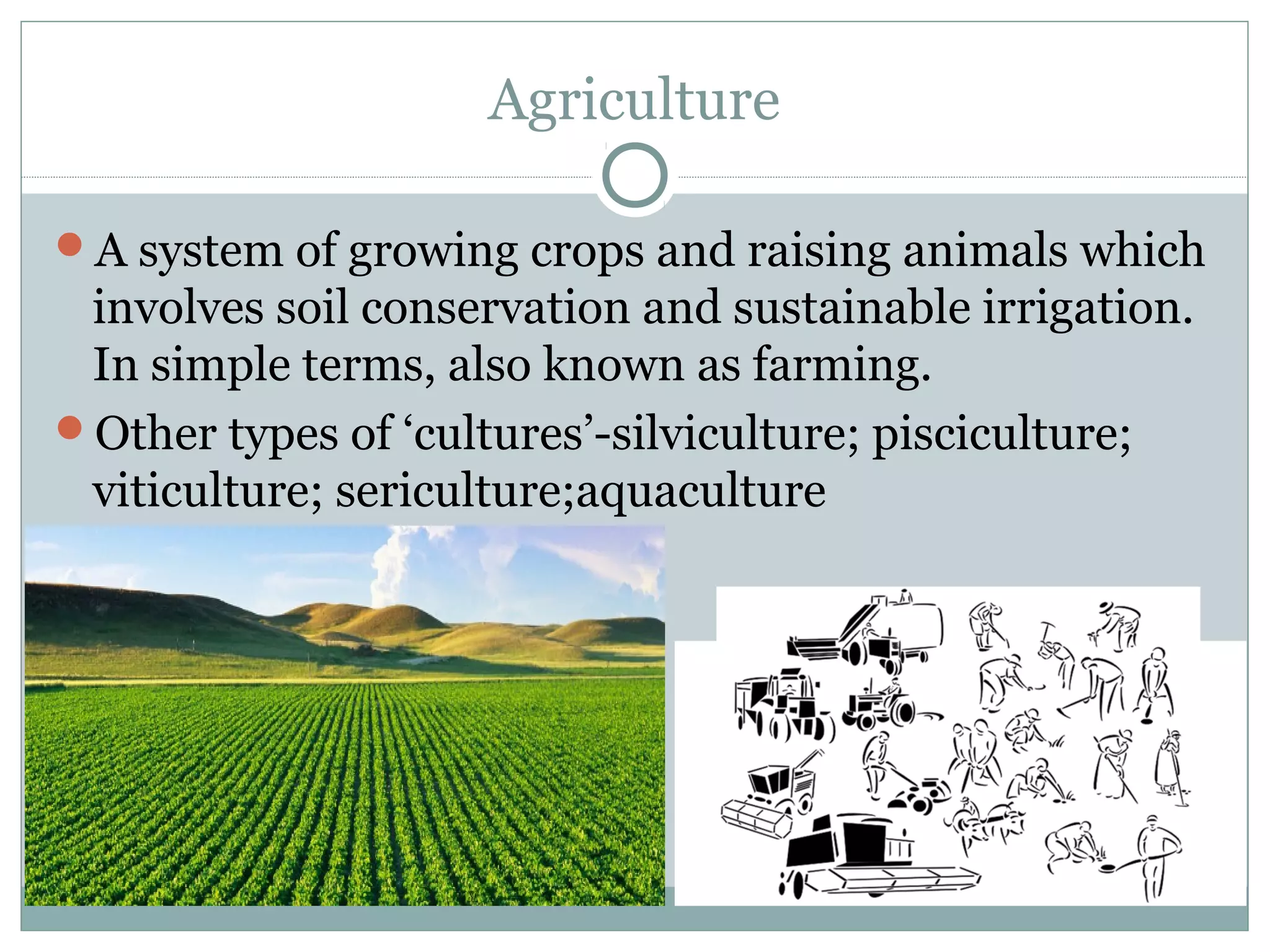
A system of growing crops and raising animals which
involves soil conservation and sustainable irrigation.
In simple terms, also known as farming.
Other types of ‘cultures’-silviculture; pisciculture;
viticulture; sericulture;aquaculture
Farming As A
System
Inputs
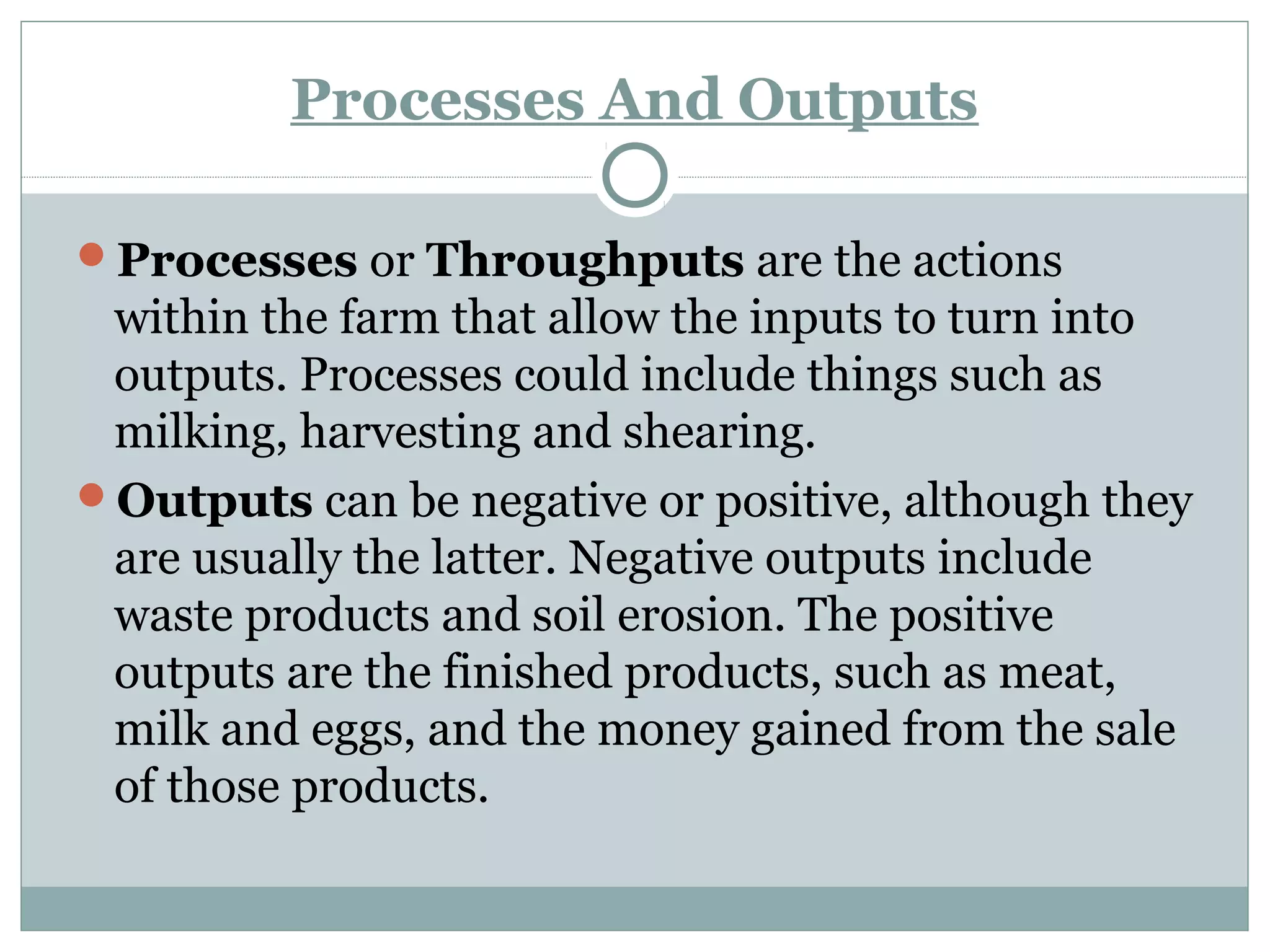
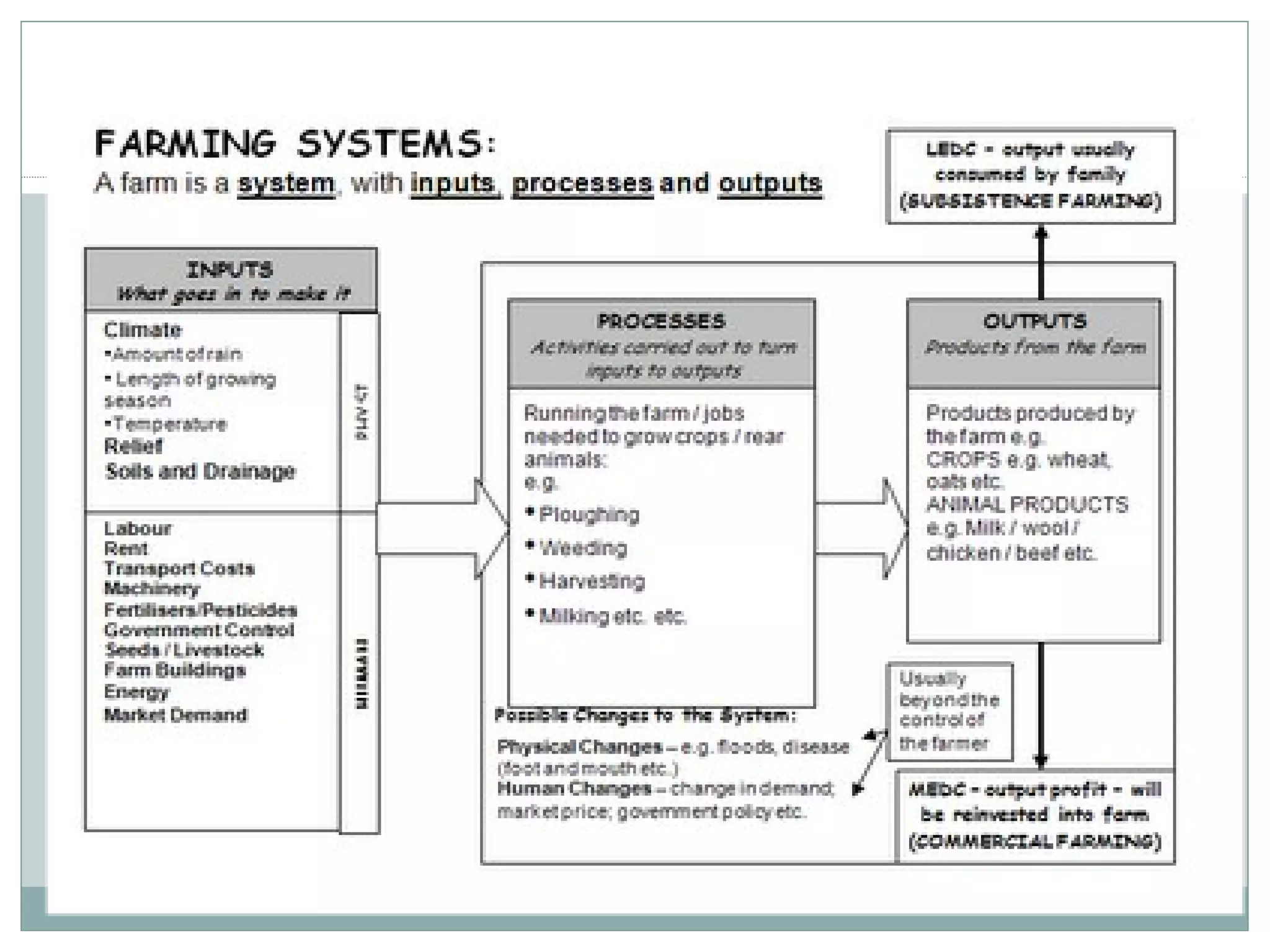
Any farm can be viewed as a system, with inputs,
throughputs (or processes), outputs and feedback.
Inputs can be divided into two groups.
Physical inputs are naturally occurring things
such as water, raw materials and the land.
Human or Cultural Inputs are things like
money, labour, and skills.
Processes And Outputs
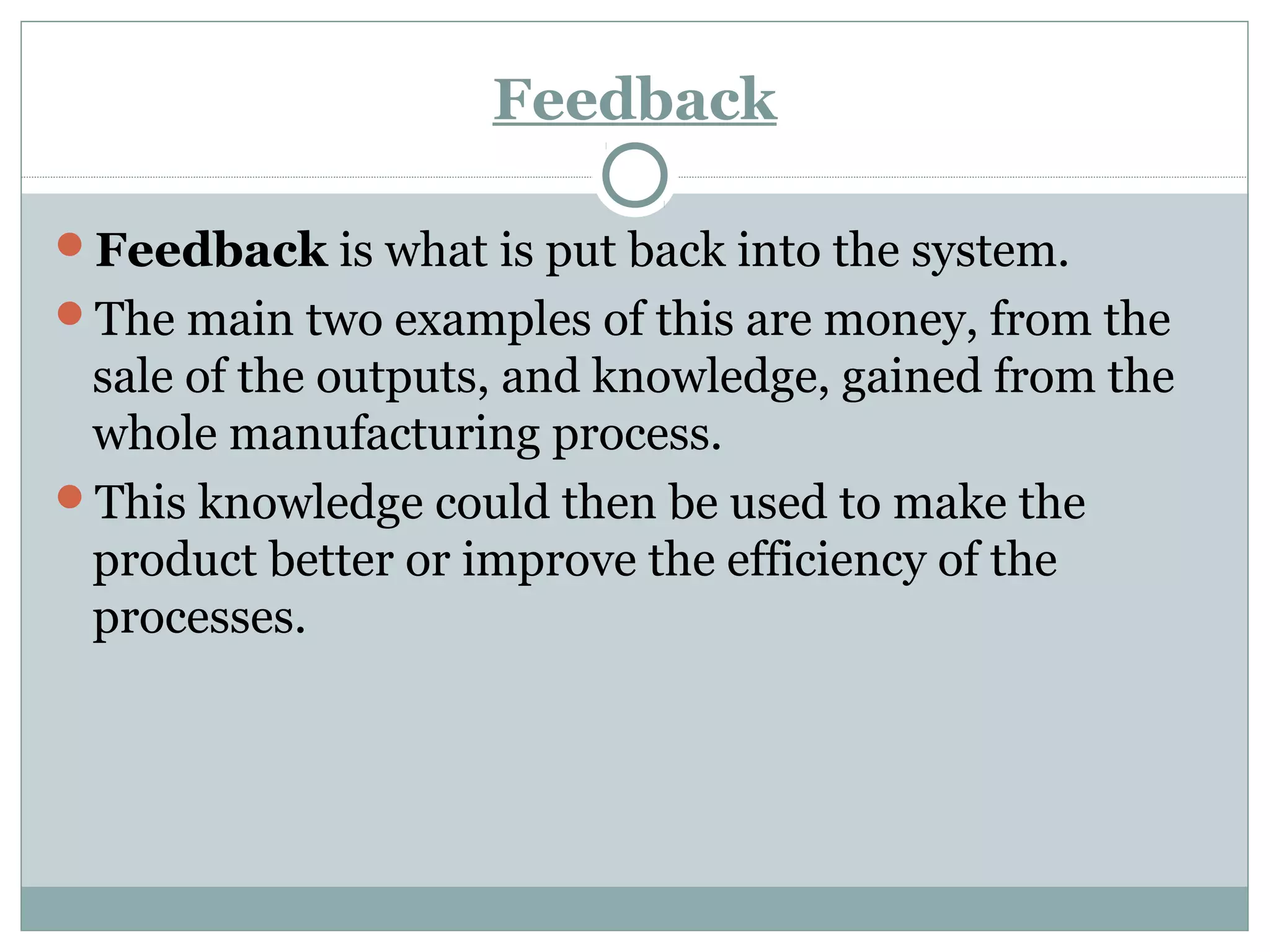
Processes or Throughputs are the actions
within the farm that allow the inputs to turn into
outputs. Processes could include things such as
milking, harvesting and shearing.
Outputs can be negative or positive, although they
are usually the latter. Negative outputs include
waste products and soil erosion. The positive
outputs are the finished products, such as meat,
milk and eggs, and the money gained from the sale
of those products.
Feedback
Feedback is what is put back into the system.
The main two examples of this are money, from the
sale of the outputs, and knowledge, gained from the
whole manufacturing process.
This knowledge could then be used to make the
product better or improve the efficiency of the
processes.
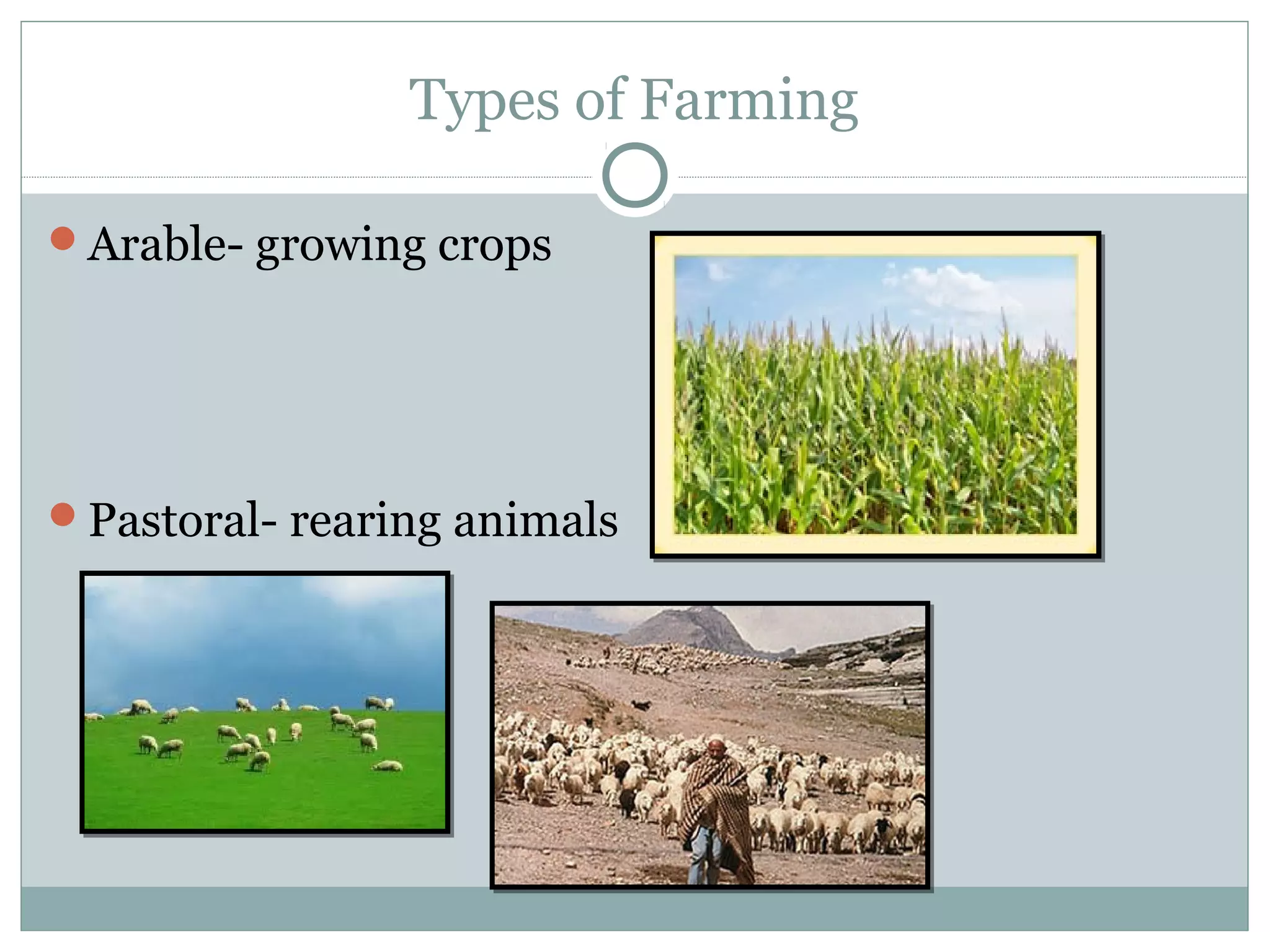
Types of Farming
Arable- growing crops
Pastoral- rearing animals
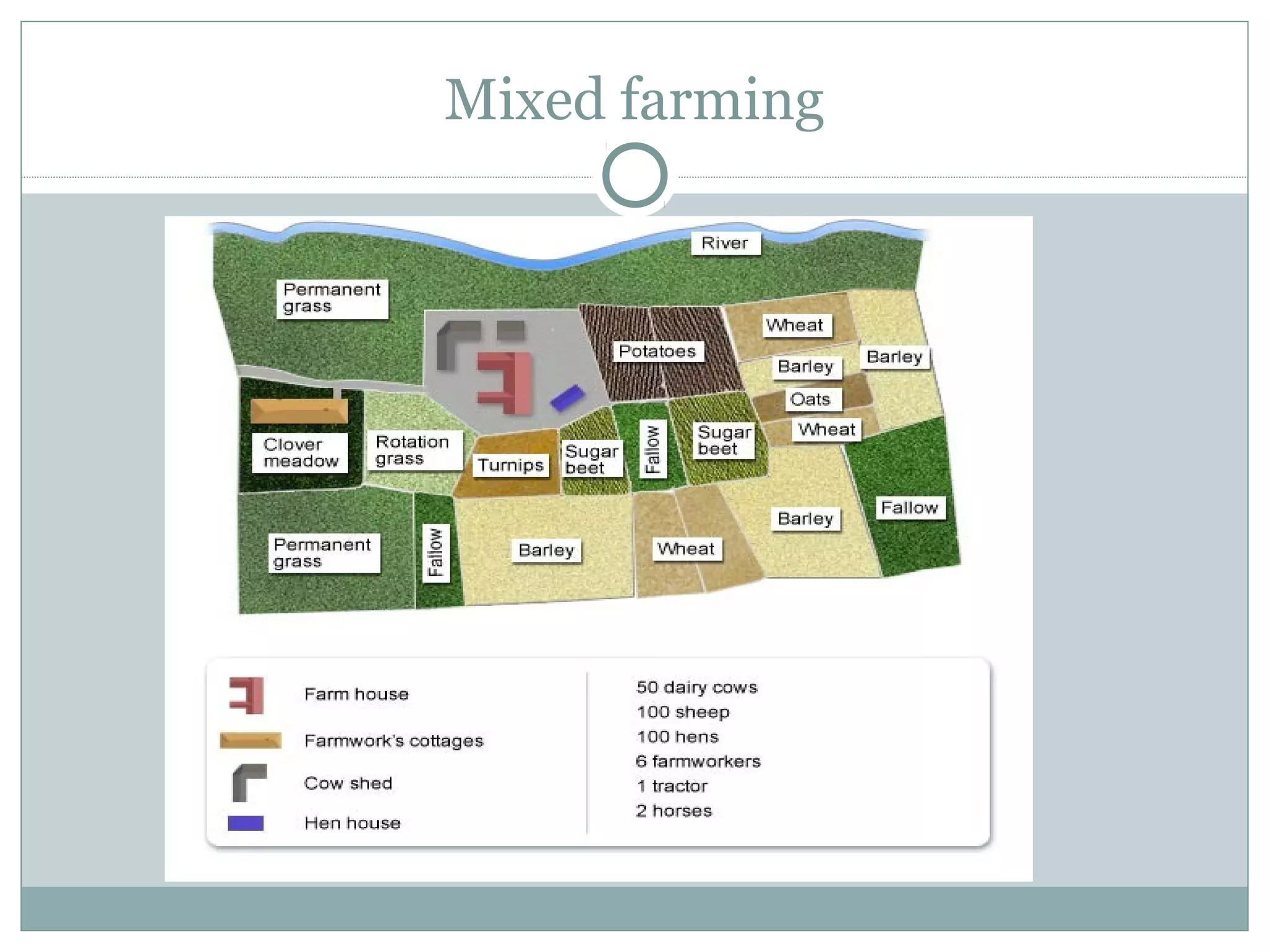
Mixed farming
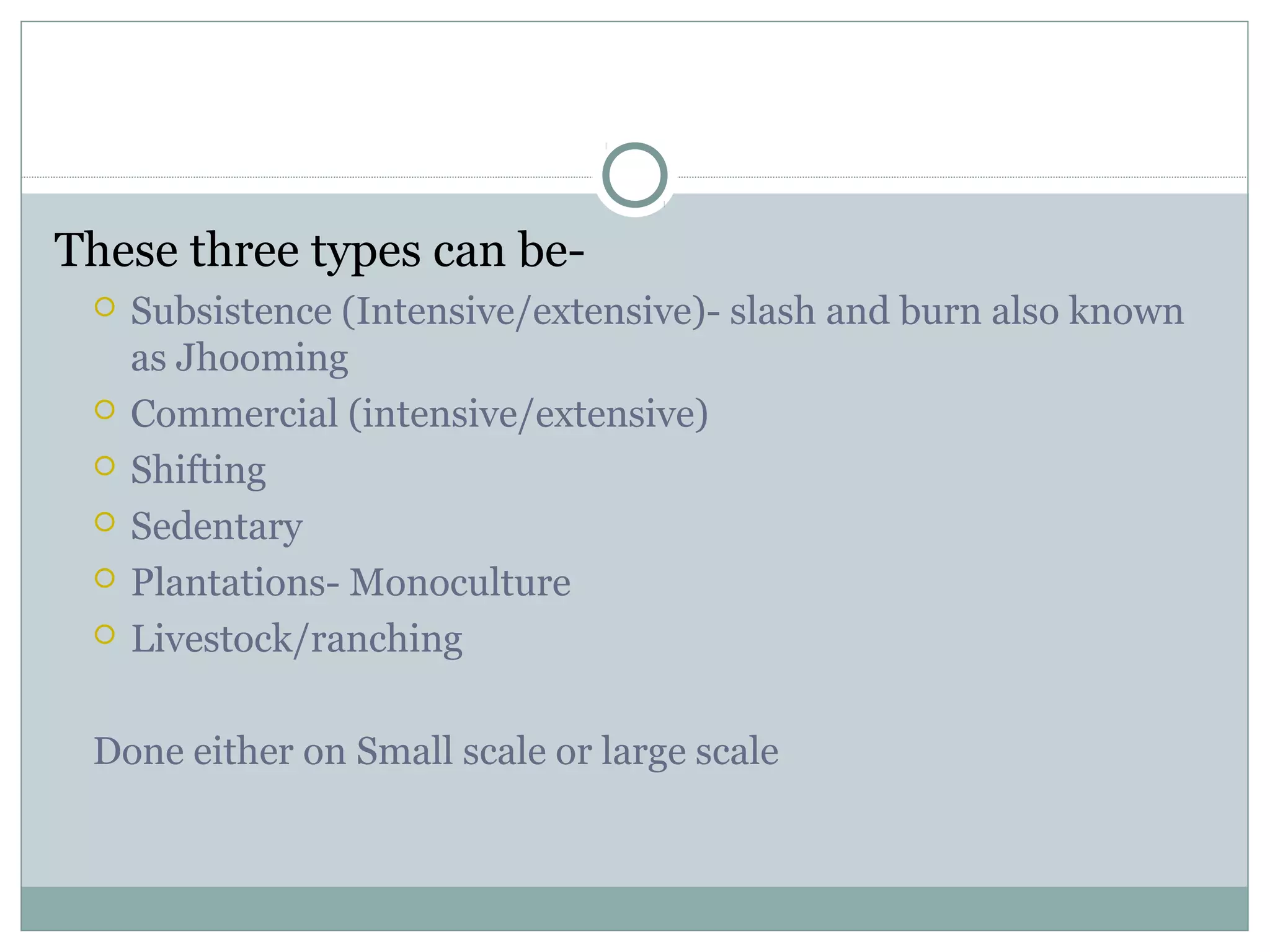
These three types can be-
 Subsistence (Intensive/extensive)- slash and burn also known
as Jhooming
 Commercial (intensive/extensive)
 Shifting
 Sedentary
 Plantations- Monoculture
 Livestock/ranching
Done either on Small scale or large scale
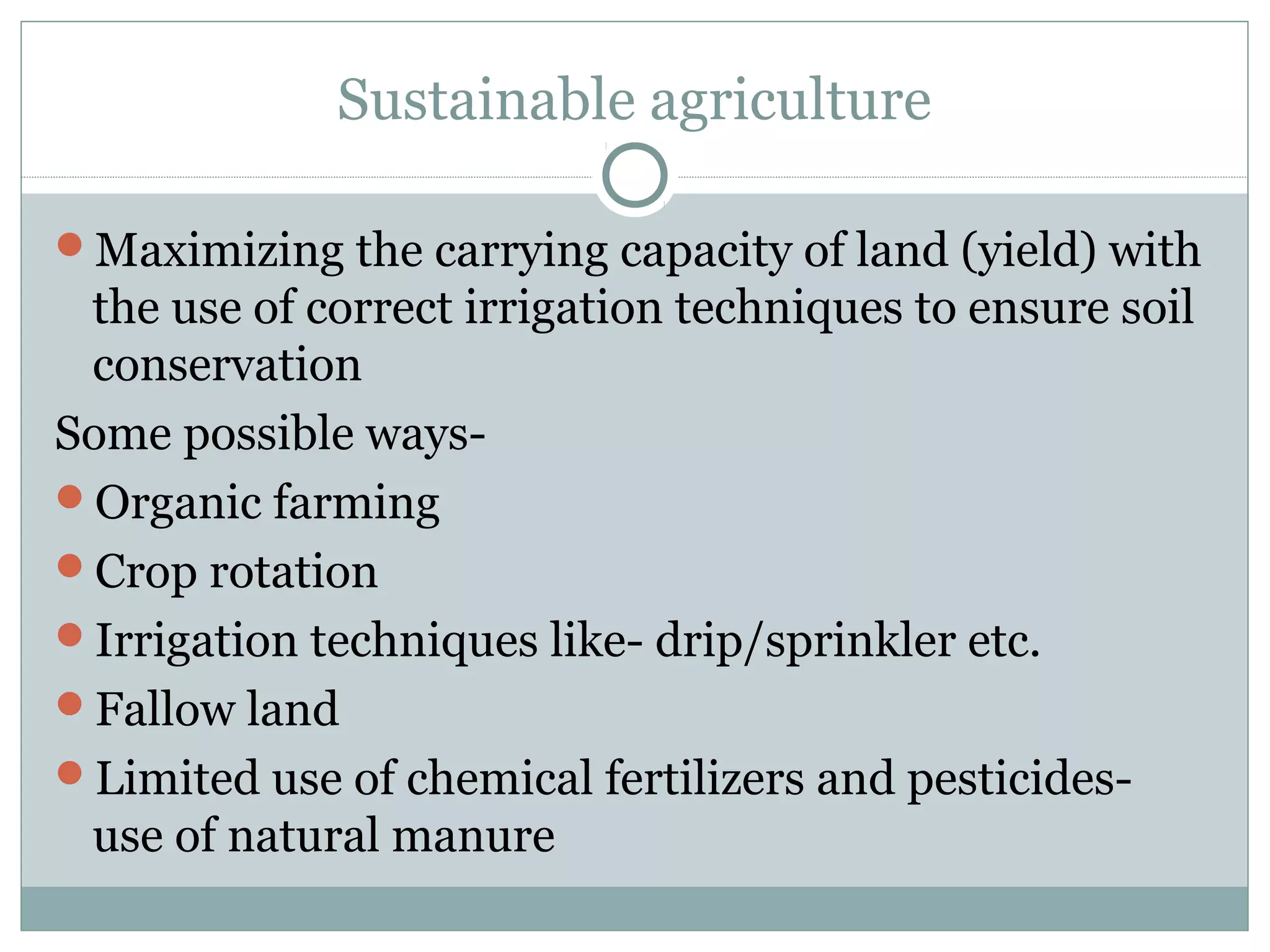
Sustainable agriculture
Maximizing the carrying capacity of land (yield) with
the use of correct irrigation techniques to ensure soil
conservation
Some possible ways-
Organic farming
Crop rotation
Irrigation techniques like- drip/sprinkler etc.
Fallow land
Limited use of chemical fertilizers and pesticides-
use of natural manure
Case studies
Subsistence farming
Commercial farming- one plantation and one other
Green Revolution
The introduction of modern western style farming
techniques in LEDCs during the late 1960's and
1970's.
 Norman Borlaug- 1940’s researched on wheat
Supported by Rockefeller and Ford foundations- a
lot of work done on varieties of rice- especially in
Philippines
Introduction of HYVs
Advantages of GR
Increased food production- improved food trade
Helped solve problem of food shortage-
Shorter growing period- farmers could grow 2-3
crops in the same duration
Consumers had access to different types of crops
Some farmers in LEDCs gained financially
Disadvantages of GR
Expensive for some farmer- HYVs were not cheap
Water intensive
Heavily rely on Insecticides and fertilizers increasing
chances of euthrophication
Not suitable to the local palate as the taste changed
Natural varieties lost
Foreign dependence increased (tariffs and subsidies
became very important)
Mechanization increased leading to umemployment
GM crops Vs Organic Crops
Genetically modified- so look/production was better
but taste is not- though uniform-led to unnecessary
growth in size/shape/texture of crops- effects on
humans still not known-destruction of native species
Organic- grown the natural way- takes longer-more
expensive-but healthy food.
Food security
The World Food Summit of 1996 defined food
security as existing “when all people at all times have
access to sufficient, safe, nutritious food to maintain
a healthy and active life”.
Its 3 pillars are-
Food Availability
Food Access
Food Use
Malnourised
Badly nourished
Under/over
Disease of affluence and Poverty
http://www.bbc.co.uk/bitesize/standard/geography
/images/g287.jpg
http://agriculturechp10.weebly.com/uploads/1/1/2/
1/11215473/1335920.jpeg?443
http://www.clipartlab.com/clipart_preview/clipart/
va5-agriculture.gif
http://www.bbc.co.uk/bitesize/standard/geography
/images/g30.gif

Farming as a system igcse

  • 1.
  • 2.
    Agriculture A system ofgrowing crops and raising animals which involves soil conservation and sustainable irrigation. In simple terms, also known as farming. Other types of ‘cultures’-silviculture; pisciculture; viticulture; sericulture;aquaculture
  • 4.
  • 5.
    Inputs Any farm canbe viewed as a system, with inputs, throughputs (or processes), outputs and feedback. Inputs can be divided into two groups. Physical inputs are naturally occurring things such as water, raw materials and the land. Human or Cultural Inputs are things like money, labour, and skills.
  • 6.
    Processes And Outputs Processesor Throughputs are the actions within the farm that allow the inputs to turn into outputs. Processes could include things such as milking, harvesting and shearing. Outputs can be negative or positive, although they are usually the latter. Negative outputs include waste products and soil erosion. The positive outputs are the finished products, such as meat, milk and eggs, and the money gained from the sale of those products.
  • 7.
    Feedback Feedback is whatis put back into the system. The main two examples of this are money, from the sale of the outputs, and knowledge, gained from the whole manufacturing process. This knowledge could then be used to make the product better or improve the efficiency of the processes.
  • 9.
    Types of Farming Arable-growing crops Pastoral- rearing animals
  • 10.
  • 11.
    These three typescan be-  Subsistence (Intensive/extensive)- slash and burn also known as Jhooming  Commercial (intensive/extensive)  Shifting  Sedentary  Plantations- Monoculture  Livestock/ranching Done either on Small scale or large scale
  • 12.
    Sustainable agriculture Maximizing thecarrying capacity of land (yield) with the use of correct irrigation techniques to ensure soil conservation Some possible ways- Organic farming Crop rotation Irrigation techniques like- drip/sprinkler etc. Fallow land Limited use of chemical fertilizers and pesticides- use of natural manure
  • 13.
    Case studies Subsistence farming Commercialfarming- one plantation and one other
  • 14.
    Green Revolution The introductionof modern western style farming techniques in LEDCs during the late 1960's and 1970's.  Norman Borlaug- 1940’s researched on wheat Supported by Rockefeller and Ford foundations- a lot of work done on varieties of rice- especially in Philippines Introduction of HYVs
  • 15.
    Advantages of GR Increasedfood production- improved food trade Helped solve problem of food shortage- Shorter growing period- farmers could grow 2-3 crops in the same duration Consumers had access to different types of crops Some farmers in LEDCs gained financially
  • 16.
    Disadvantages of GR Expensivefor some farmer- HYVs were not cheap Water intensive Heavily rely on Insecticides and fertilizers increasing chances of euthrophication Not suitable to the local palate as the taste changed Natural varieties lost Foreign dependence increased (tariffs and subsidies became very important) Mechanization increased leading to umemployment
  • 17.
    GM crops VsOrganic Crops Genetically modified- so look/production was better but taste is not- though uniform-led to unnecessary growth in size/shape/texture of crops- effects on humans still not known-destruction of native species Organic- grown the natural way- takes longer-more expensive-but healthy food.
  • 18.
    Food security The WorldFood Summit of 1996 defined food security as existing “when all people at all times have access to sufficient, safe, nutritious food to maintain a healthy and active life”. Its 3 pillars are- Food Availability Food Access Food Use
  • 19.
  • 20.