



Scope of civil engineering
INTRODUCTION
Civil – we have lot of definition and full form
Ex.,
1. Civil: Construction Is Very Important in
Life
2. Civil: Constructing Incredible Versatile
Important Landmarks
3. Civil: Construction In Various Investigation
and Learning
DEFINITION
• Civil engineering is a professional
engineering discipline that deals with
the design, construction, and
maintenance of the physical and
naturally built environment, including
works like roads, bridges, canals, dams,
and buildings.
The Civil Engineers play role in
• Design
• Construction
• Maintenance
• Demolition
• Disaster of buildings
• Infrastructure like: Roads, bridges, Canals,
Dams…more
• Civil Engineering plays major role on
ECONOMY of the Nation.
scope of civil engineering
• Structural engineering
• Geotechnical engineering
• Environmental engineering
• Transportation engineering
• Water resource engineering
• Geomatic engineering
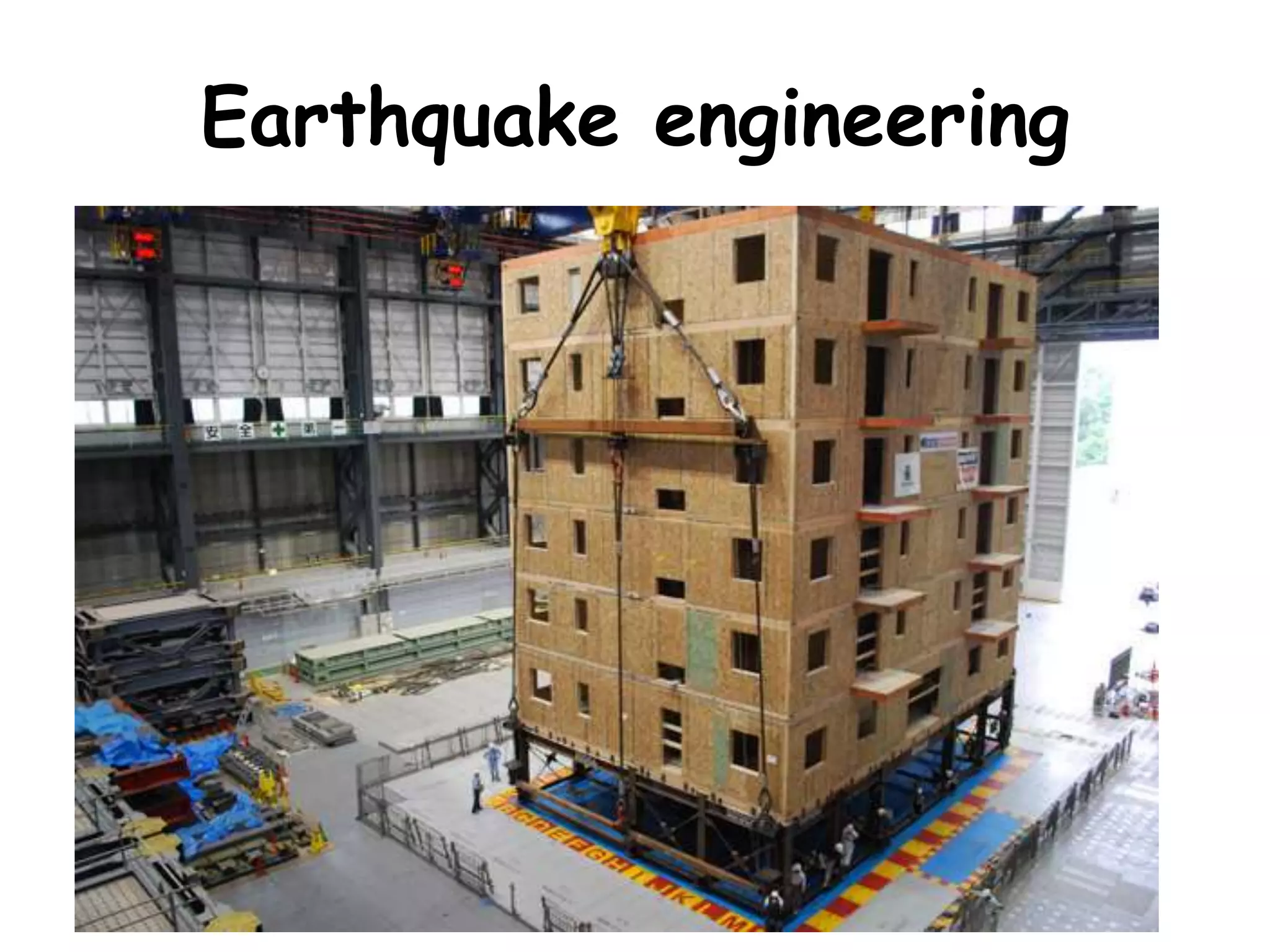
• Earthquake engineering
Structural engineering
• Structural engineering theory is based upon physical
laws and empirical knowledge of the structural
performance of different materials and geometries.
• Structural engineering design utilizes a number of
simple structural elements to build complex structural
systems.
• Structural engineering depends upon a detailed
knowledge of applied mechanics, materials science and
applied mathematics to understand and predict how
structures support and resist self-weight and imposed
loads.
BRANCHES IN STRUCTURAL
ENGINEERING
• Material science (strength of material)
• Applied mathematics (structure
analysis)
• Concrete structure (slabs, beams
columns)
• Steel structure (girder, beams and
columns)
• Prefabrication structures
Material science
• Materials science is an interdisciplinary
field involving the properties of matter
and its applications to various areas of
science and engineering.
Applied mathematics
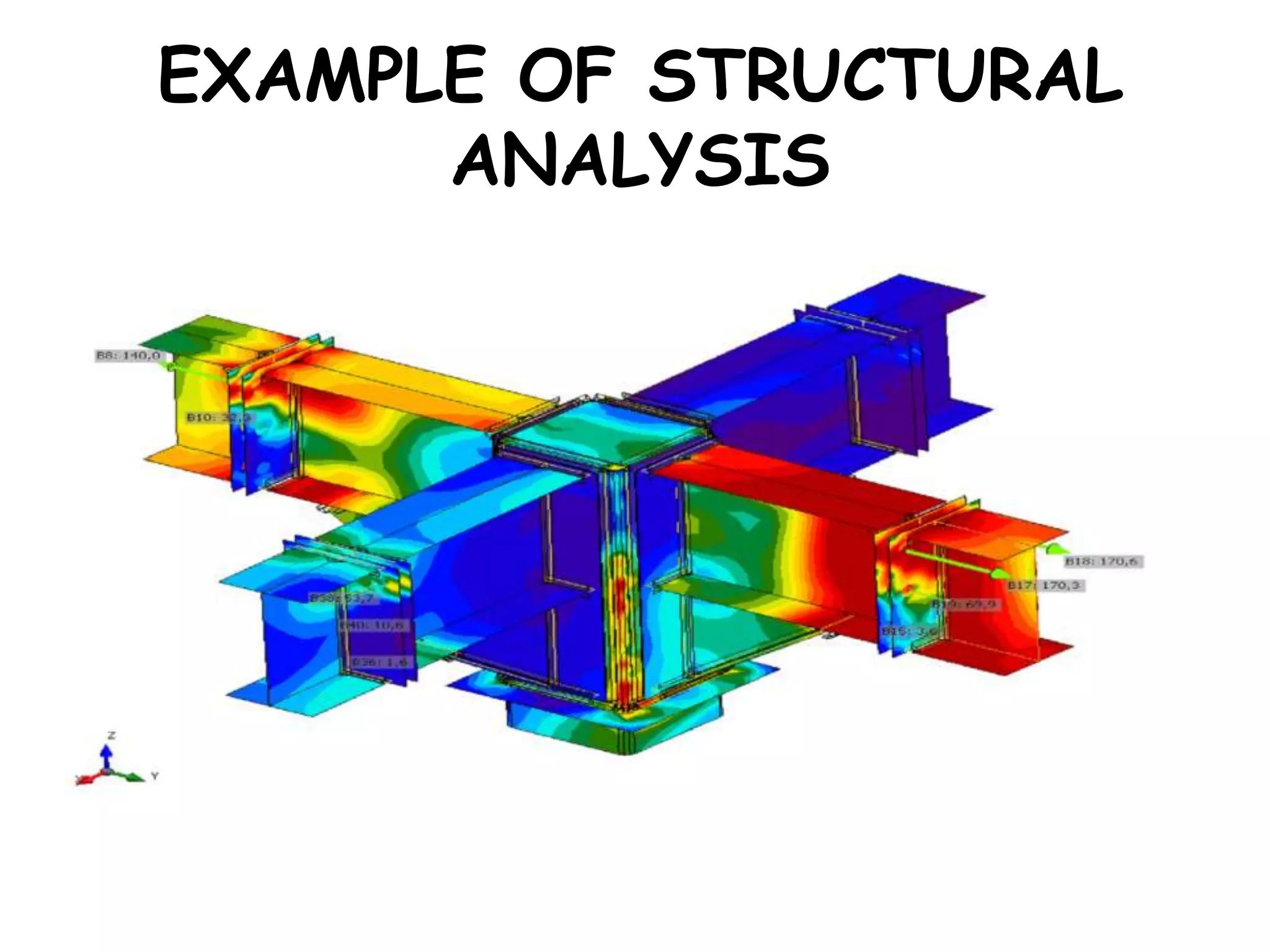
• Structural analysis is the determination
of the effects of loads on physical
structures and their components.
EXAMPLE OF STRUCTURAL
ANALYSIS
EXAMPLE OF STRUCTURAL
ANALYSIS
Concrete structure
• Concrete, in
construction are
structural material
consisting of a hard,
chemically inert
particulate
substance, known as
aggregate (usually
sand and gravel),
that is bonded
together
by cement and
water.
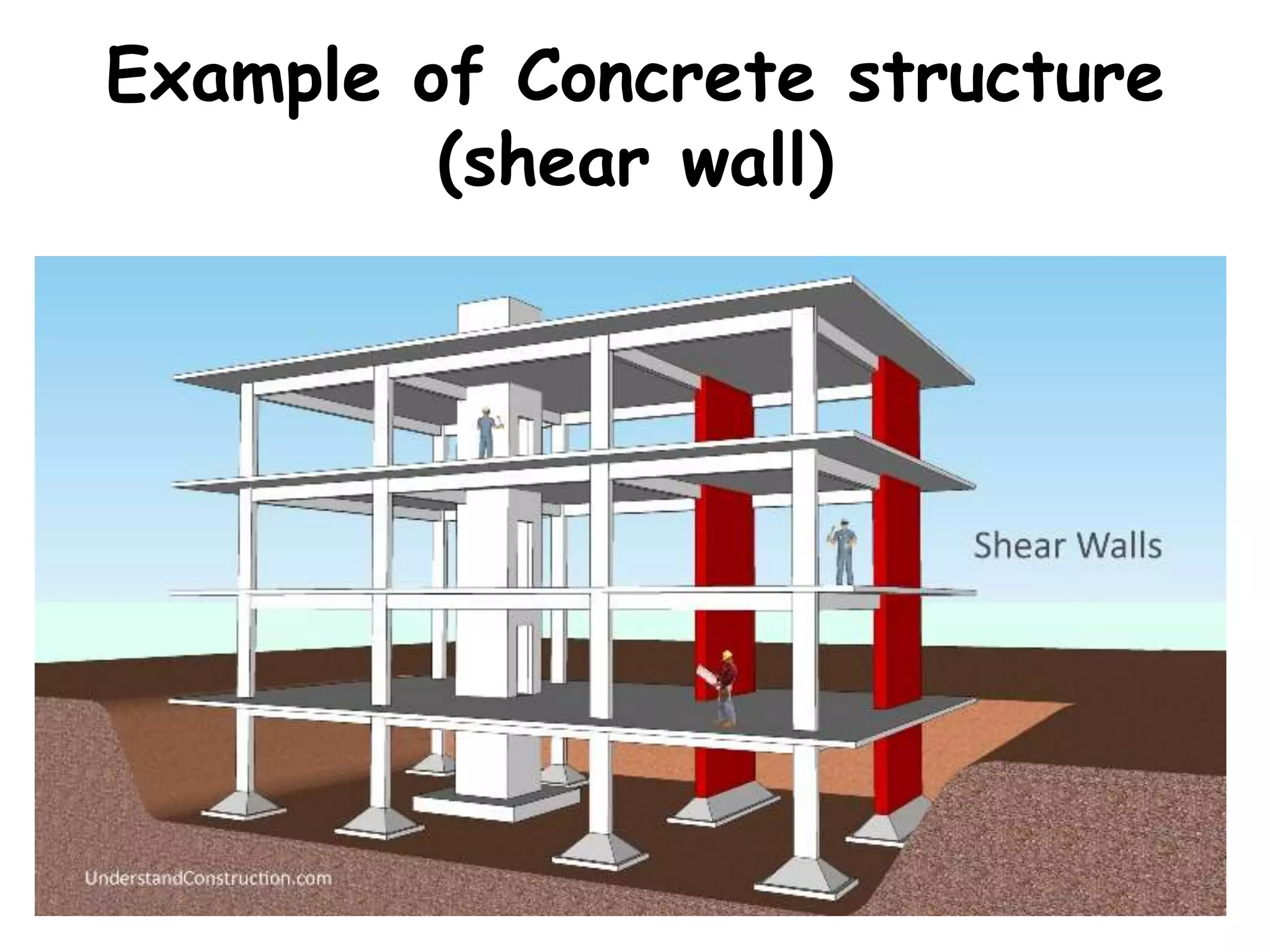
Example of Concrete structure
(shear wall)
Example of Concrete structure
(foundation)
Example of Concrete structure
(slabs)
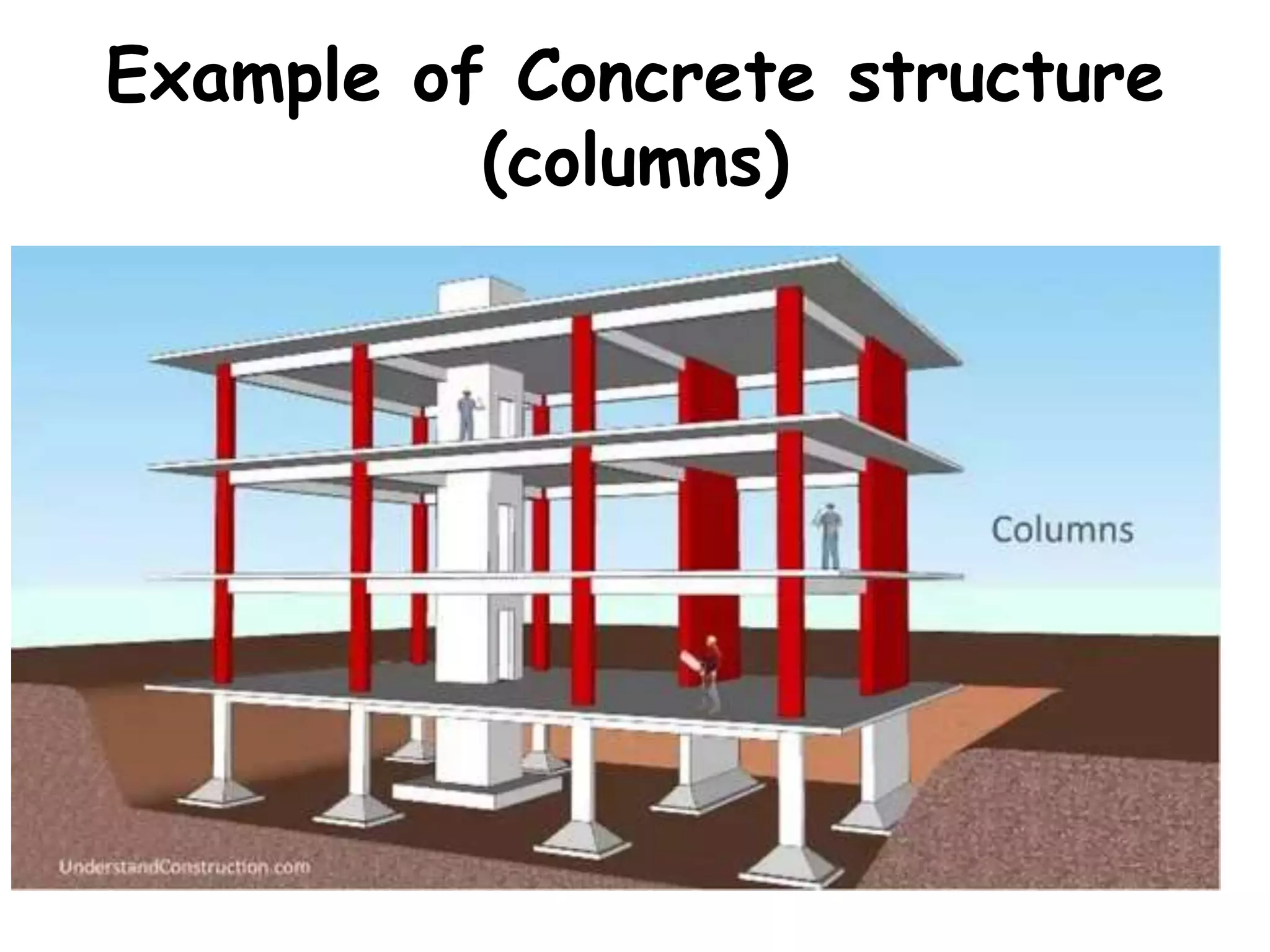
Example of Concrete structure
(columns)
Example Of Steel Structure
Prefabrication structures
GEOTECHNICAL ENGINEERING
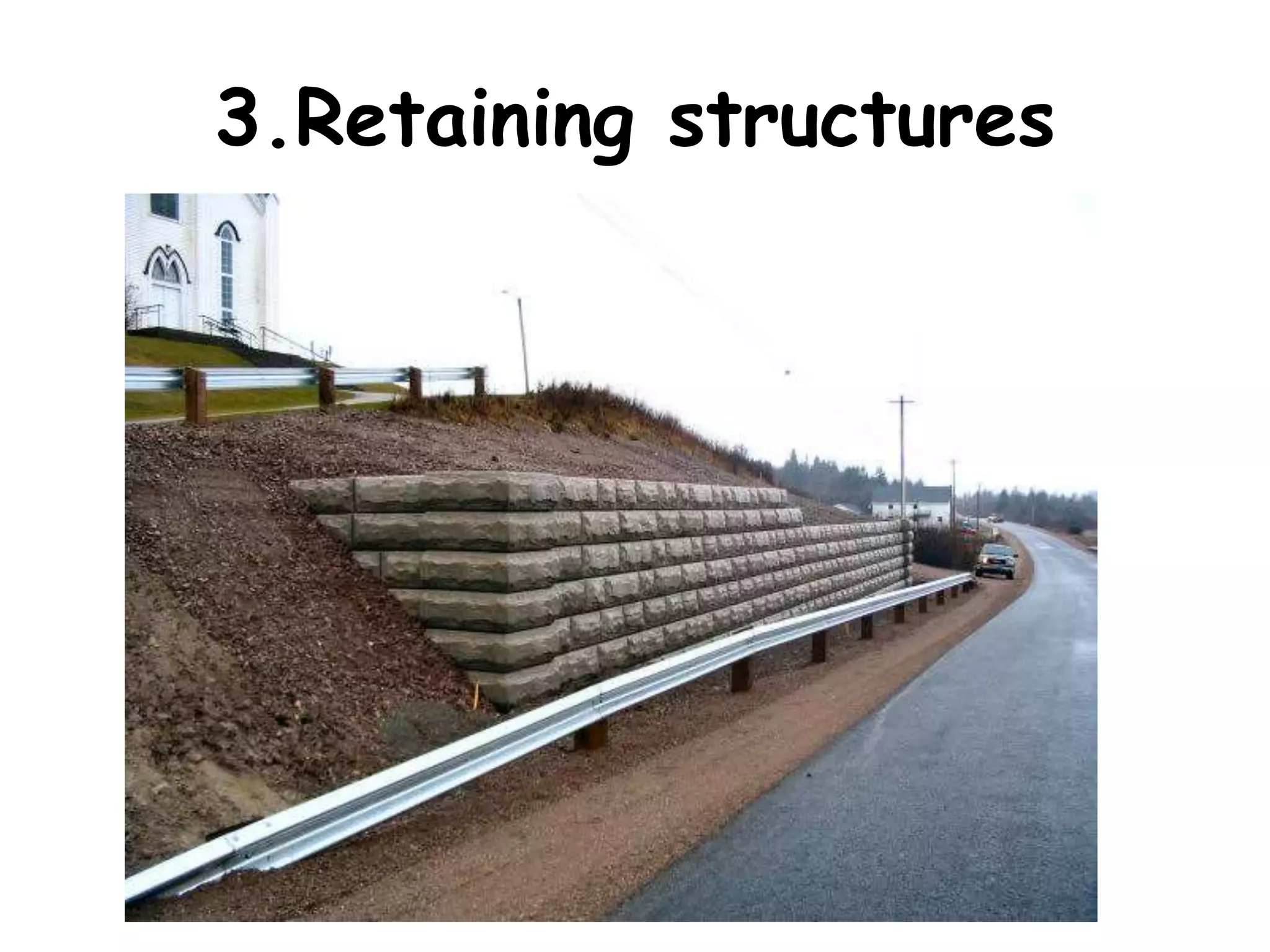
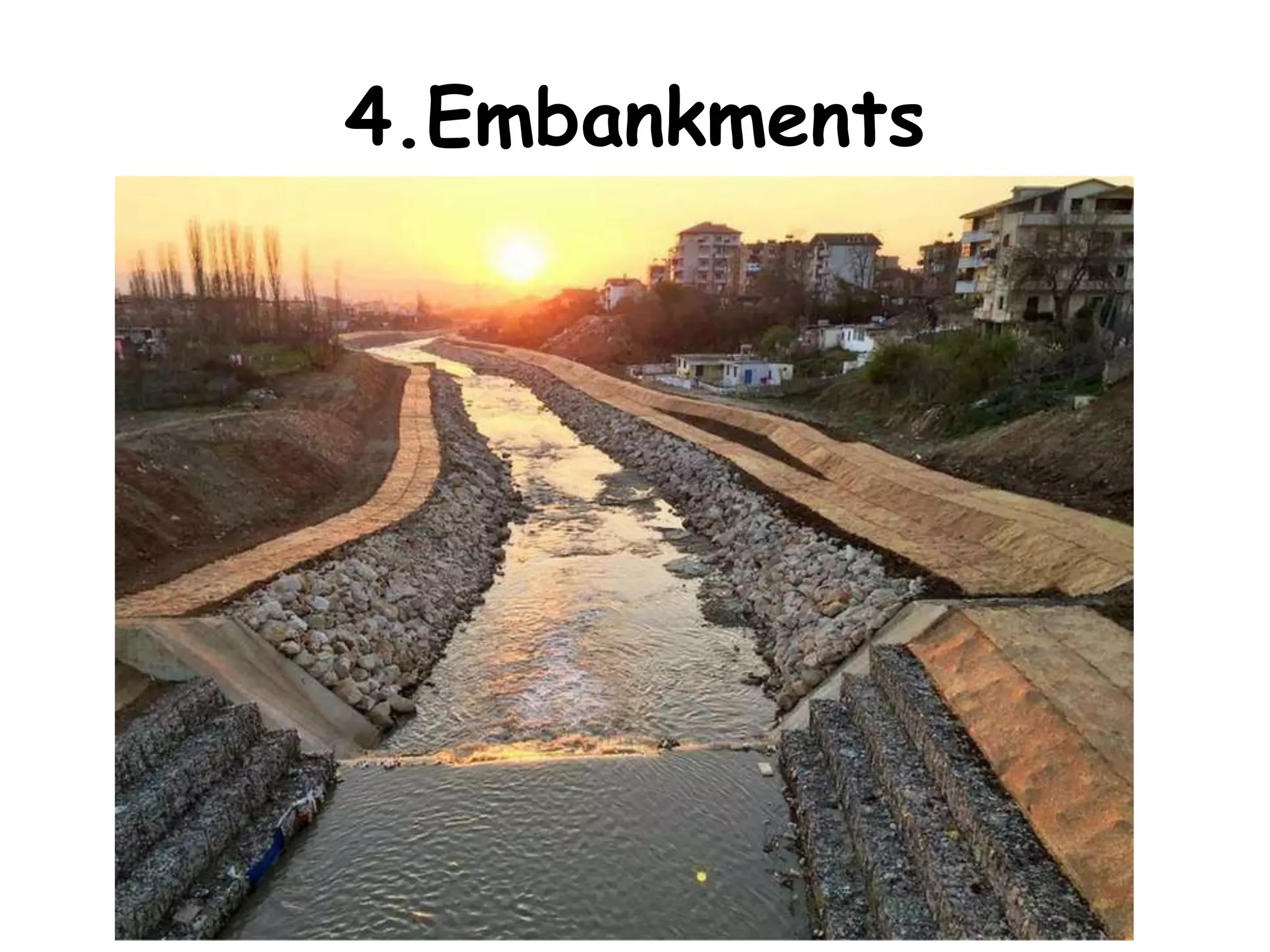
• Geotechnical engineering is the
branch of engineering concerned with
the analysis, design and construction
of foundations, slopes, retaining
structures, embankments, tunnels,
levees, wharves, landfills and other
systems that are made of or are
supported by soil or rock.
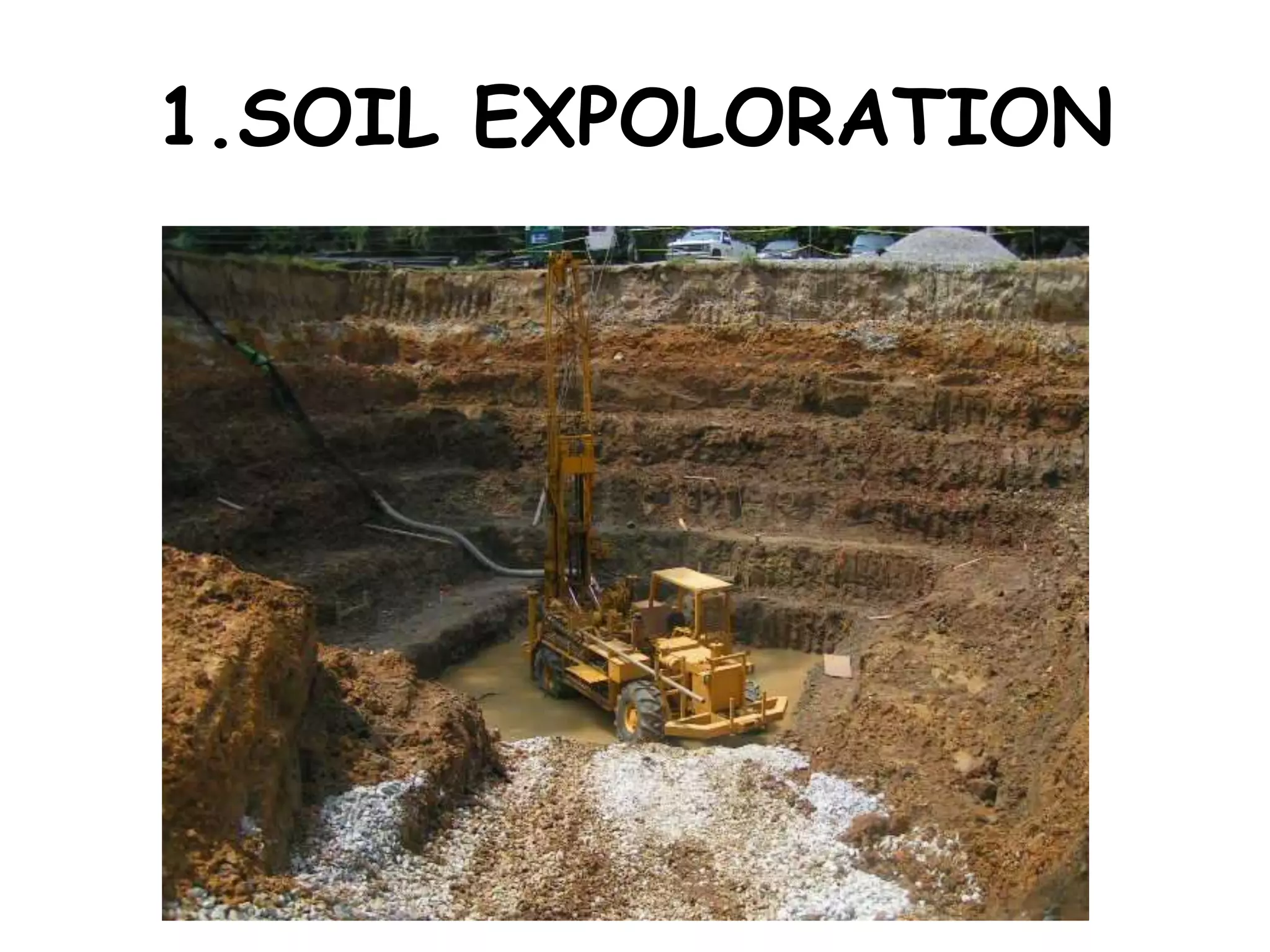
1.SOIL EXPOLORATION
2.Foundation engineering
3.Retaining structures
4.Embankments
5.TUNNELS
6.WHARVES
Environmental engineering
• Environmental Engineering is the application of
engineering principles to improve and maintain
the environment for the protection of human
health and at-risk ecosystems. In the past,
environmental engineers worked to provide
clean drinking water, safely manage wastes, and
clean the air we breathe.
• Water resource engineering
• Waste water engineering
• Solid waste management
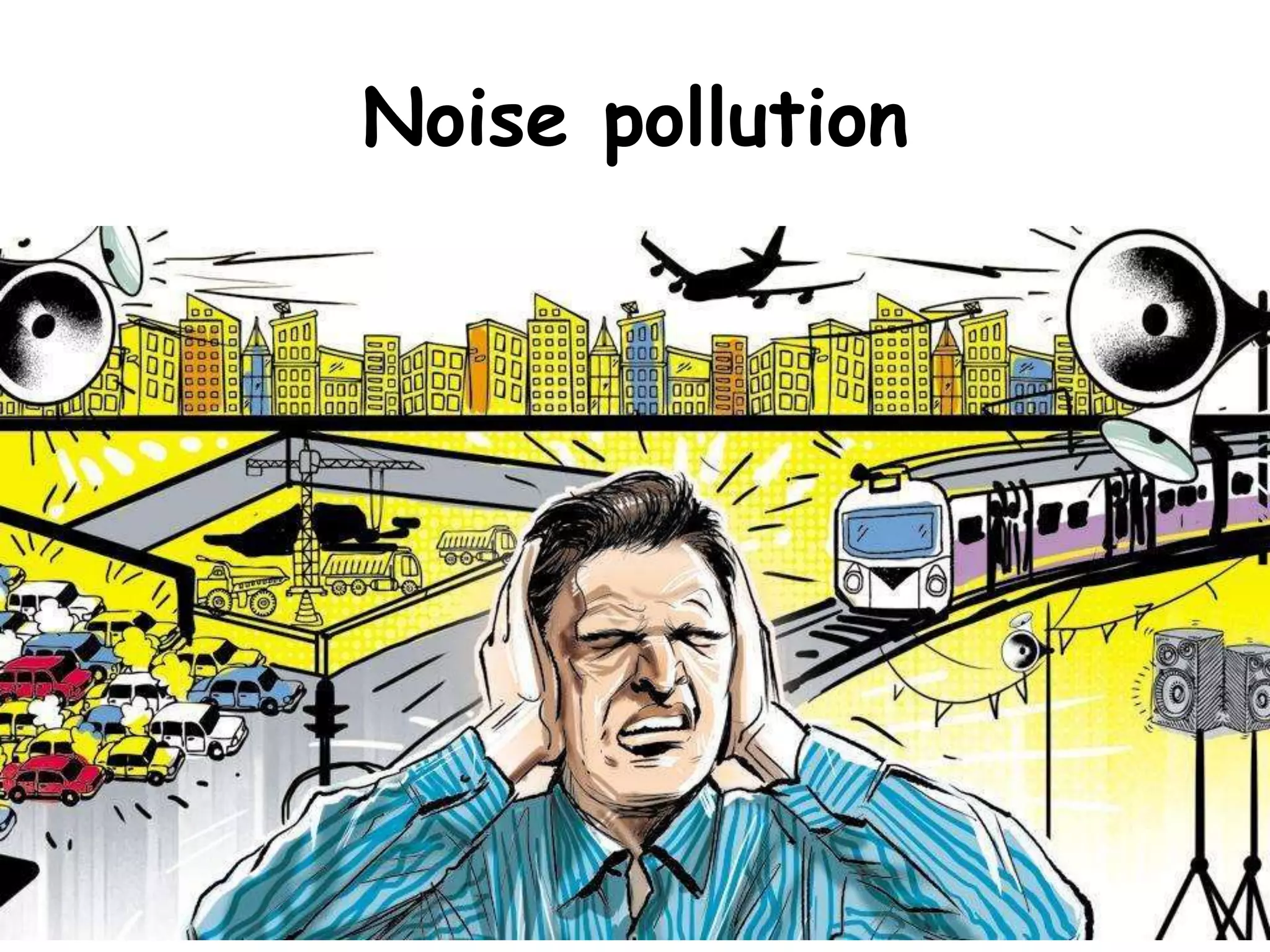
• Pollution control (air and noise)
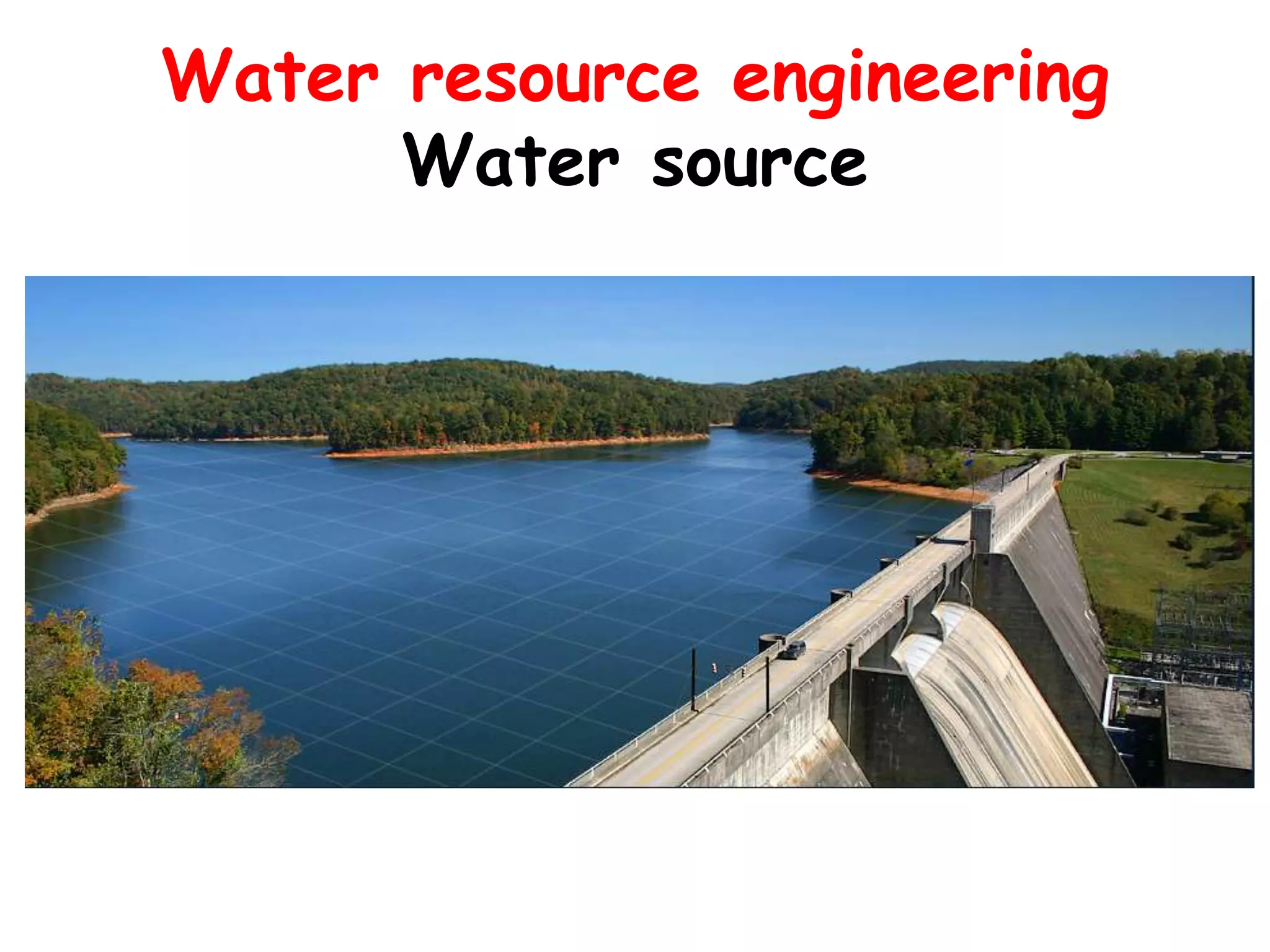
Water resource engineering
Water source
Water resource engineering
Water treatment
Water resource engineering
Water distribution
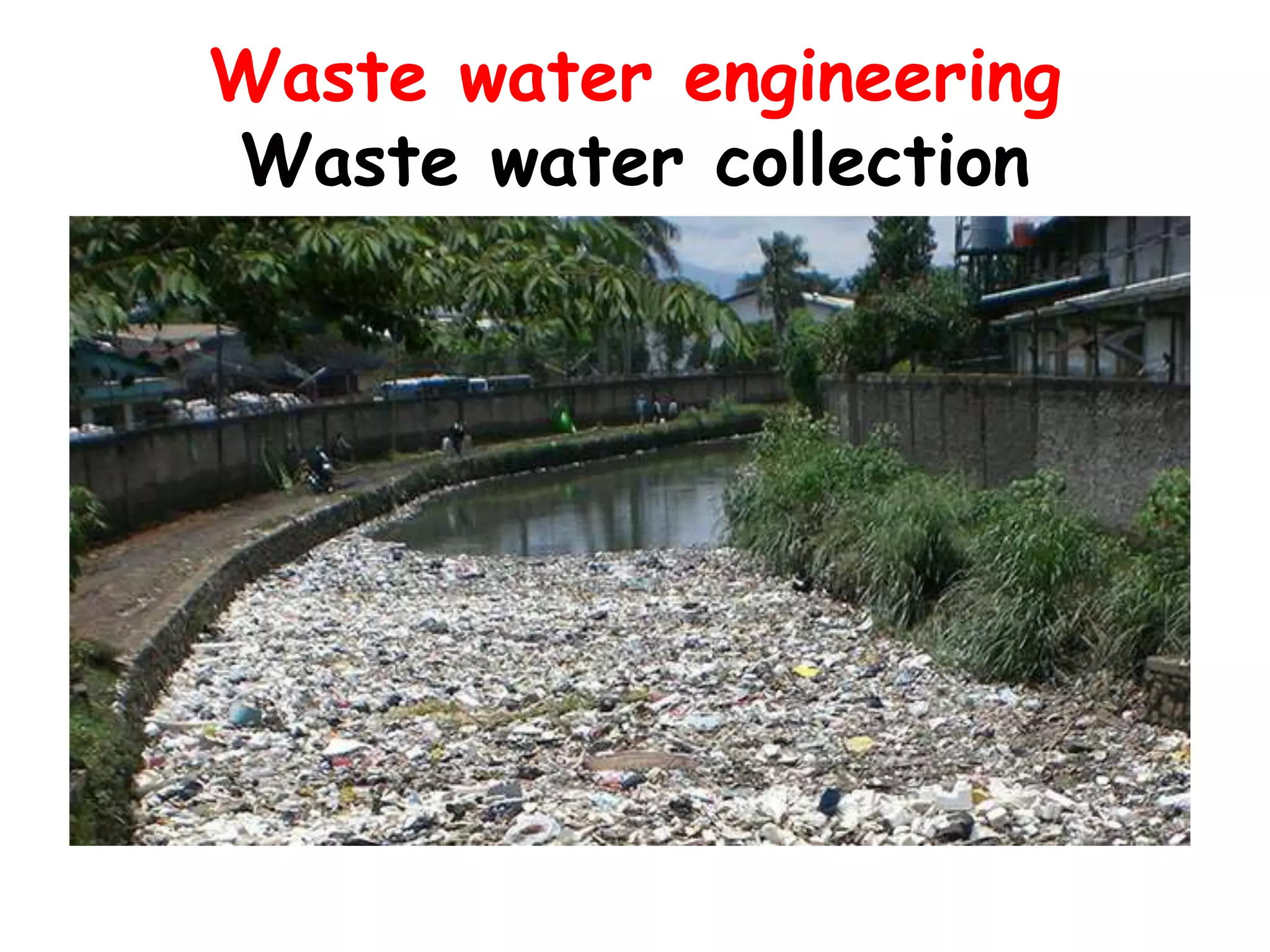
Waste water engineering
Waste water collection
Waste water engineering
waste water treatment
Waste water engineering
Wastewater used by agriculture
Solid waste management
Air Pollution
Noise pollution
Transportation engineering
• Transportation Engineering is the application
of scientific principles and technologies to the
planning, design, analysis, operation, and
management of transportation systems for a
full range of modes of transportation, e.g.
highway, urban transit, air, rail and water, in
order to provide for the movement of people
• Airways
• Water ways
• Road ways
• Rail ways
Airport engineering
harbour engineering
Roadways engineering
Railway engineering
Geomatics engineering
• Geomatics engineering is the surveying
of the entire or a part of the earth
with various techniques (satellites
positioning, satellite images processing,
etc.) and the resulting spatial data is
evaluated and expressed in maps and
plans in the computer environment
Earthquake engineering
civil engineers best
creation
Island made of humans - Palm Islands
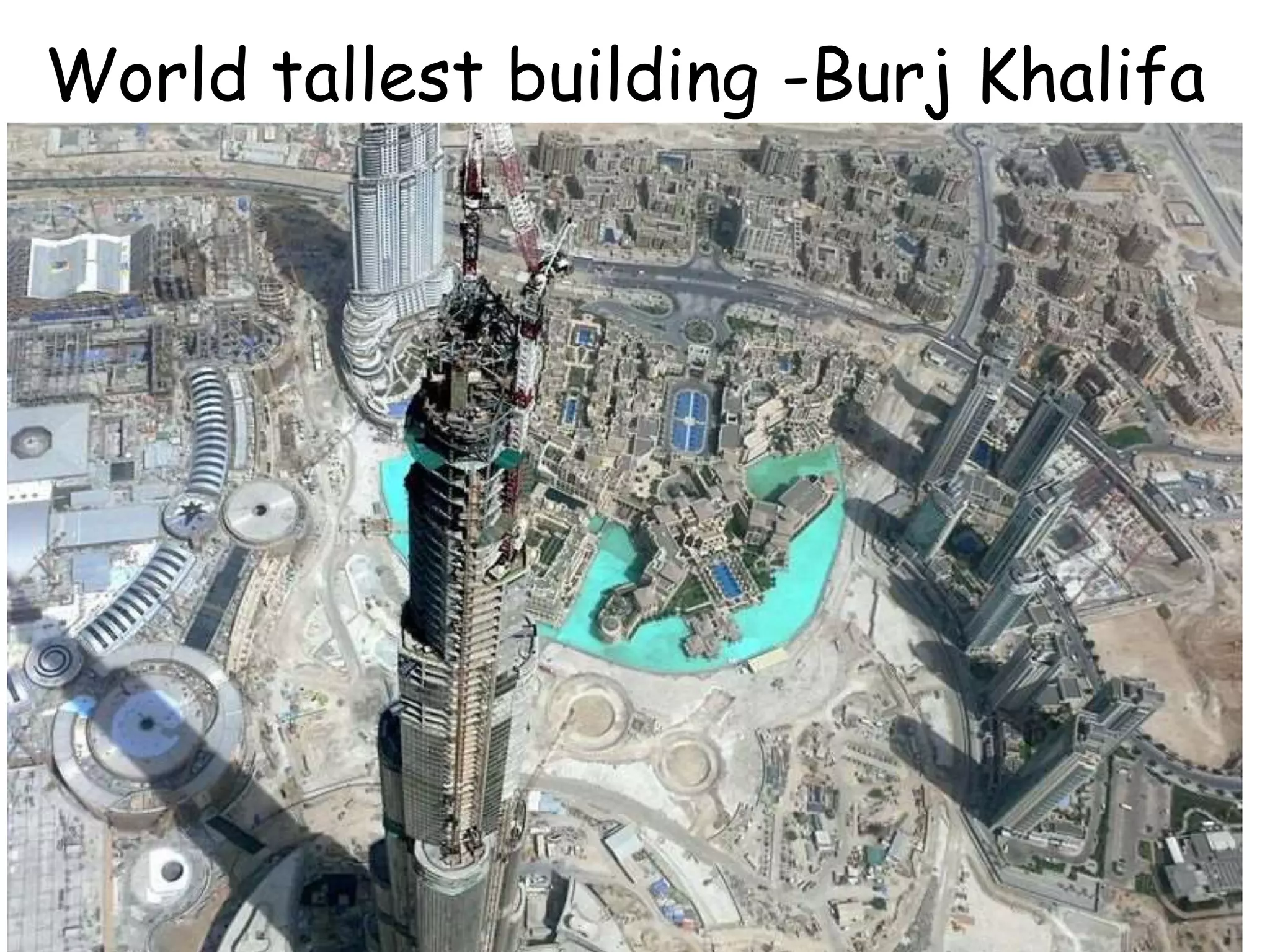
World tallest building -Burj Khalifa
Qingdao Haiwan Bridge
Golden Gate Bridge
Hoover Dam
Great Wall of China
English channel tunnel
Scope of civil engineering

Scope of civil engineering