By
N. Krishna Veni


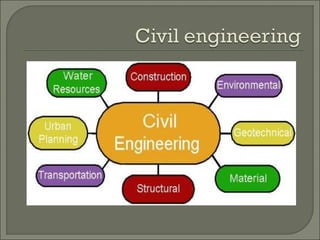
Civil Engineering is one of the most
indispensable part of society. Civil
Engineering is the backbone of
civilization, our infrastructure, the
buildings, mansions, factories, freeways,
high-speed railways.


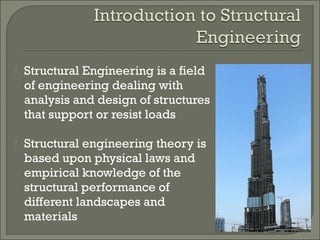
Structural Engineering is a field
of engineering dealing with
analysis and design of structures
that support or resist loads



Structural engineering theory is
based upon physical laws and
empirical knowledge of the
structural performance of
different landscapes and
materials


Structural engineering depends upon a
detailed knowledge of loads, physics and
materials to understand and predict how
structures support and resist self-weight
and imposed loads


Structural engineers ensure that their
designs satisfy a given "design intent",
predicated on safety (e.g. structures do
not collapse without due warning), or
serviceability (e.g. floor vibration and
building sway do not result in discomfort
for the occupants). Structural engineers
are responsible for making creative and
efficient use of funds and materials to
achieve these goals.


Seismic Design of New Bridges , Buildings
and Dams


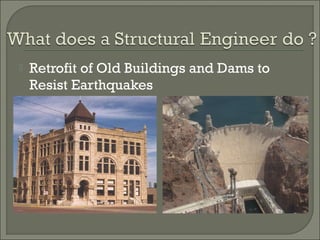
Retrofit of Old Buildings and Dams to
Resist Earthquakes


The term structural derives from the Latin
word structus, which is "to pile, build
assemble". The first use of the term structure
was c.1440. The term engineer derives from
the old French term engin, meaning "skill,
cleverness" and also 'war machine'. This term in
turn derives from the Latin word ingenium,
which means "inborn qualities, talent," and is
constructed of in- "in" + gen-, the root of
gignere, meaning "to beget, produce." The
term engineer is related to ingenious.


Structural engineering dates back to
2700 BC when the Step pyramid for
Pharaoh Djoser was built by Imhotep


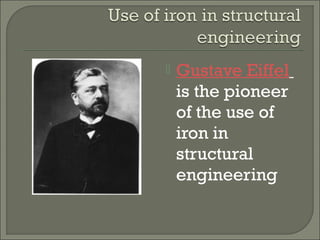
Gustave Eiffel
is the pioneer
of the use of
iron in
structural
engineering


Developments in the understanding of materials and
structural behaviour in the latter part of the 20th
Century have been significant, with developed of
topics such as fracture mechanics, 
earthquake engineering, composite materials,
temperature effects on materials, dynamics and
vibration, fatigue, creep and others.The increasing
range of different structures and the increasing
complexity of those structures has led to increasing
specialisation of structural engineers.


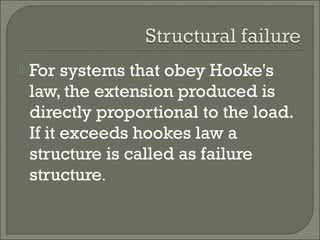
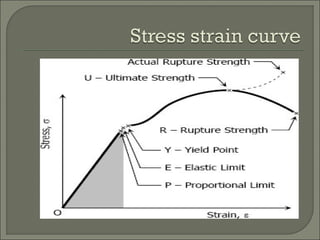
For systems that obey Hooke's
law, the extension produced is
directly proportional to the load.
If it exceeds hookes law a
structure is called as failure
structure.








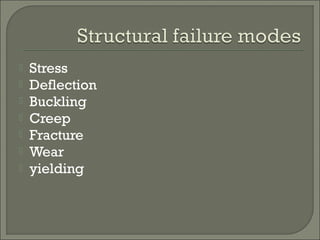
Stress
Deflection
Buckling
Creep
Fracture
Wear
yielding
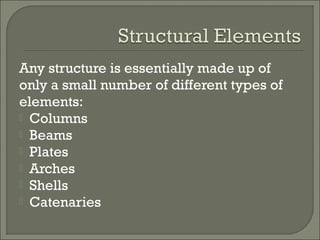
Any structure is essentially made up of
only a small number of different types of
elements:
 Columns
 Beams
 Plates
 Arches
 Shells
 Catenaries





Structural loads on structures are
generally classified as live (imposed)
loads and dead loads.
Live loads are transitory or temporary
loads
Dead loads are permanent, and may
include the weight of the structure itself
and all major permanent components.




Axial: cables,shells,arches
Flexural: beams,plates
shear: frames,shear walls




Structural engineering depends on the
knowledge of materials and their
properties, in order to understand how
different materials support and resist loads.
Common structural materials are:
 Iron
 Concrete
 Aluminum
 Timber
 Composites





Building structures
Earthquake engineering structures
Civil engineering structures
Mechanical structures


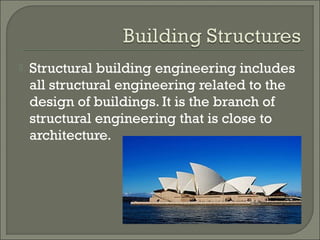
Structural building engineering includes
all structural engineering related to the
design of buildings. It is the branch of
structural engineering that is close to
architecture.




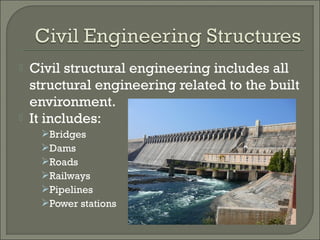
Civil structural engineering includes all
structural engineering related to the built
environment.
It includes:
Bridges
Dams
Roads
Railways
Pipelines
Power stations
backbone of civilization, our infrastructure, the magnificent buildings, mansions, theme-parks, factories, freeways, high-speed railways, tunnels that bore through mountains to make routes shorter, bridges that span large valleys and rive





tunnels that bore through mountains to make
routes shorter.
bridges that span large valleys and rivers.
Dams that provide water and electricity,
everything owes its existing to this wonderful
science, this branch of Engineering.


A structural engineer is most commonly
involved in the design
of buildings and nonbuilding structures but
also plays an essential role in
designing machinery where structural integrity
of the design item impacts safety and
reliability. Large man-made objects,
from furniture to medical equipment to a
variety of vehicles, require significant design
input from a structural engineer.


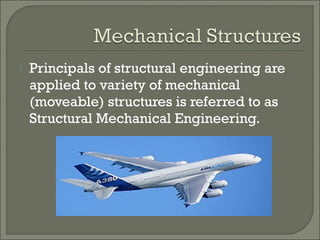
Principals of structural engineering are
applied to variety of mechanical
(moveable) structures is referred to as
Structural Mechanical Engineering.


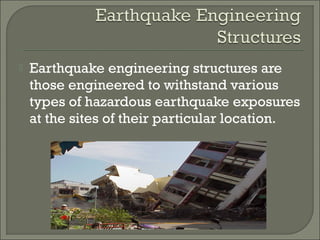
Earthquake engineering structures are
those engineered to withstand various
types of hazardous earthquake exposures
at the sites of their particular location.



Understand what happened in past
earthquakes
Understand how materials, members and
structures respond
• Basic tests of materials
• Physical test of individual members
• Small scale tests of structures



Incorporate knowledge into computer
analysis to simulate earthquake demands
Satisfaction of seeing
your work getting
built,



peopl
finished

and watching
people use the
finished products.


Design future
land mark structures,
or help save old ones


Contributes to the Safety of Society





Heyman, Jacques (1999). The Science of
Structural Engineering.
Heyman, Jacques (1998). Structural
Analysis: A Historical Approach
Labrum, E.A. (1994). Civil Engineering
Heritage
http://en.wikipedia.org/wiki/Structural_
engineering
Itroduction to Structural engineering

Itroduction to Structural engineering

  • 1.
  • 2.
     Civil Engineering is oneof the most indispensable part of society. Civil Engineering is the backbone of civilization, our infrastructure, the buildings, mansions, factories, freeways, high-speed railways.
  • 4.
     Structural Engineering isa field of engineering dealing with analysis and design of structures that support or resist loads  Structural engineering theory is based upon physical laws and empirical knowledge of the structural performance of different landscapes and materials
  • 5.
     Structural engineering dependsupon a detailed knowledge of loads, physics and materials to understand and predict how structures support and resist self-weight and imposed loads
  • 6.
     Structural engineers ensurethat their designs satisfy a given "design intent", predicated on safety (e.g. structures do not collapse without due warning), or serviceability (e.g. floor vibration and building sway do not result in discomfort for the occupants). Structural engineers are responsible for making creative and efficient use of funds and materials to achieve these goals.
  • 7.
     Seismic Design ofNew Bridges , Buildings and Dams
  • 8.
     Retrofit of OldBuildings and Dams to Resist Earthquakes
  • 9.
     The term structuralderives from the Latin word structus, which is "to pile, build assemble". The first use of the term structure was c.1440. The term engineer derives from the old French term engin, meaning "skill, cleverness" and also 'war machine'. This term in turn derives from the Latin word ingenium, which means "inborn qualities, talent," and is constructed of in- "in" + gen-, the root of gignere, meaning "to beget, produce." The term engineer is related to ingenious.
  • 10.
     Structural engineering datesback to 2700 BC when the Step pyramid for Pharaoh Djoser was built by Imhotep
  • 11.
     Gustave Eiffel is thepioneer of the use of iron in structural engineering
  • 12.
     Developments in theunderstanding of materials and structural behaviour in the latter part of the 20th Century have been significant, with developed of topics such as fracture mechanics,  earthquake engineering, composite materials, temperature effects on materials, dynamics and vibration, fatigue, creep and others.The increasing range of different structures and the increasing complexity of those structures has led to increasing specialisation of structural engineers.
  • 14.
     For systems thatobey Hooke's law, the extension produced is directly proportional to the load. If it exceeds hookes law a structure is called as failure structure.
  • 16.
  • 17.
    Any structure isessentially made up of only a small number of different types of elements:  Columns  Beams  Plates  Arches  Shells  Catenaries
  • 18.
       Structural loads on structuresare generally classified as live (imposed) loads and dead loads. Live loads are transitory or temporary loads Dead loads are permanent, and may include the weight of the structure itself and all major permanent components.
  • 19.
  • 20.
      Structural engineering dependson the knowledge of materials and their properties, in order to understand how different materials support and resist loads. Common structural materials are:  Iron  Concrete  Aluminum  Timber  Composites
  • 21.
        Building structures Earthquake engineeringstructures Civil engineering structures Mechanical structures
  • 22.
     Structural building engineeringincludes all structural engineering related to the design of buildings. It is the branch of structural engineering that is close to architecture.
  • 23.
      Civil structural engineeringincludes all structural engineering related to the built environment. It includes: Bridges Dams Roads Railways Pipelines Power stations
  • 24.
    backbone of civilization,our infrastructure, the magnificent buildings, mansions, theme-parks, factories, freeways, high-speed railways, tunnels that bore through mountains to make routes shorter, bridges that span large valleys and rive    tunnels that bore through mountains to make routes shorter. bridges that span large valleys and rivers. Dams that provide water and electricity, everything owes its existing to this wonderful science, this branch of Engineering.
  • 25.
     A structural engineer is mostcommonly involved in the design of buildings and nonbuilding structures but also plays an essential role in designing machinery where structural integrity of the design item impacts safety and reliability. Large man-made objects, from furniture to medical equipment to a variety of vehicles, require significant design input from a structural engineer.
  • 26.
     Principals of structuralengineering are applied to variety of mechanical (moveable) structures is referred to as Structural Mechanical Engineering.
  • 27.
     Earthquake engineering structuresare those engineered to withstand various types of hazardous earthquake exposures at the sites of their particular location.
  • 28.
      Understand what happenedin past earthquakes Understand how materials, members and structures respond • Basic tests of materials • Physical test of individual members • Small scale tests of structures  Incorporate knowledge into computer analysis to simulate earthquake demands
  • 29.
    Satisfaction of seeing yourwork getting built,  peopl finished and watching people use the finished products.
  • 30.
     Design future land markstructures, or help save old ones
  • 31.
     Contributes to theSafety of Society
  • 32.
        Heyman, Jacques (1999).The Science of Structural Engineering. Heyman, Jacques (1998). Structural Analysis: A Historical Approach Labrum, E.A. (1994). Civil Engineering Heritage http://en.wikipedia.org/wiki/Structural_ engineering