
BY
PROF. AJAL A J
Oldest Engineering discipline
Civil Engineers plan, design, construct and operate the
facilities essential to modern life – bridges, highways, water
treatment plant etc.
Civil Engineers are problem solvers – meet challenges of
pollution, traffic congestion, drinking water and energy needs,
urban redevelopment, and community planning.
Oldest Engineering discipline
In the beginning, Civil Engineering included all engineers that
did not practice military engineering; said to have begun in
18th century France.
First “Civil Engineer” was an Englishman, John Smeaton in
1761
Statistics says that- ‘ Civil engineers saved more lives than all
the doctors’ in the history by development of clean water &
sanitation system.
Construction Engineering
Structural Engineering
Geotechnical Engineering
Environmental Engineering
Transportation Engineering
Water resources Engineering
Surveying and Remote Sensing
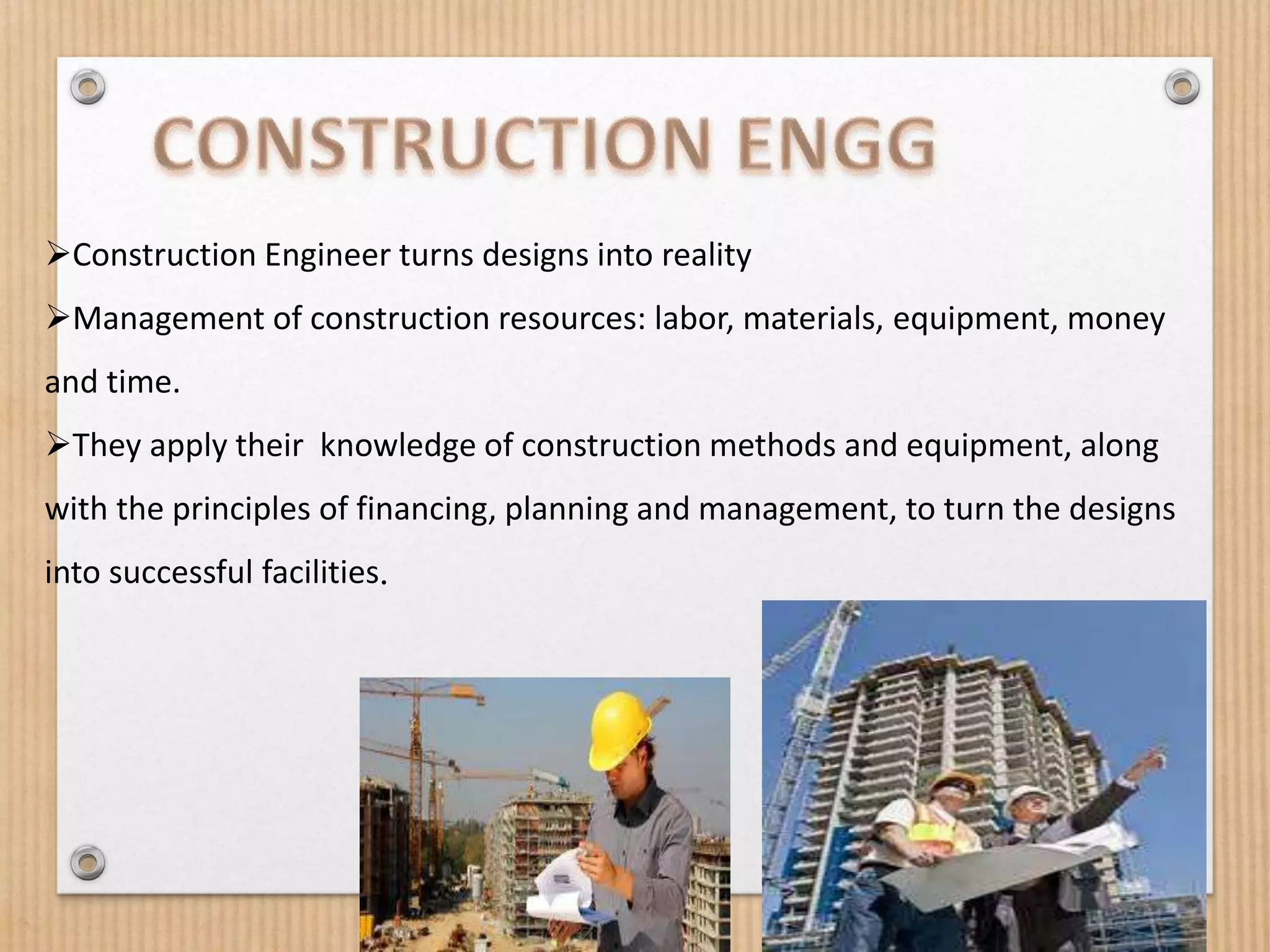
Construction Engineer turns designs into reality
Management of construction resources: labor, materials, equipment, money
and time.
They apply their knowledge of construction methods and equipment, along
with the principles of financing, planning and management, to turn the designs
into successful facilities.
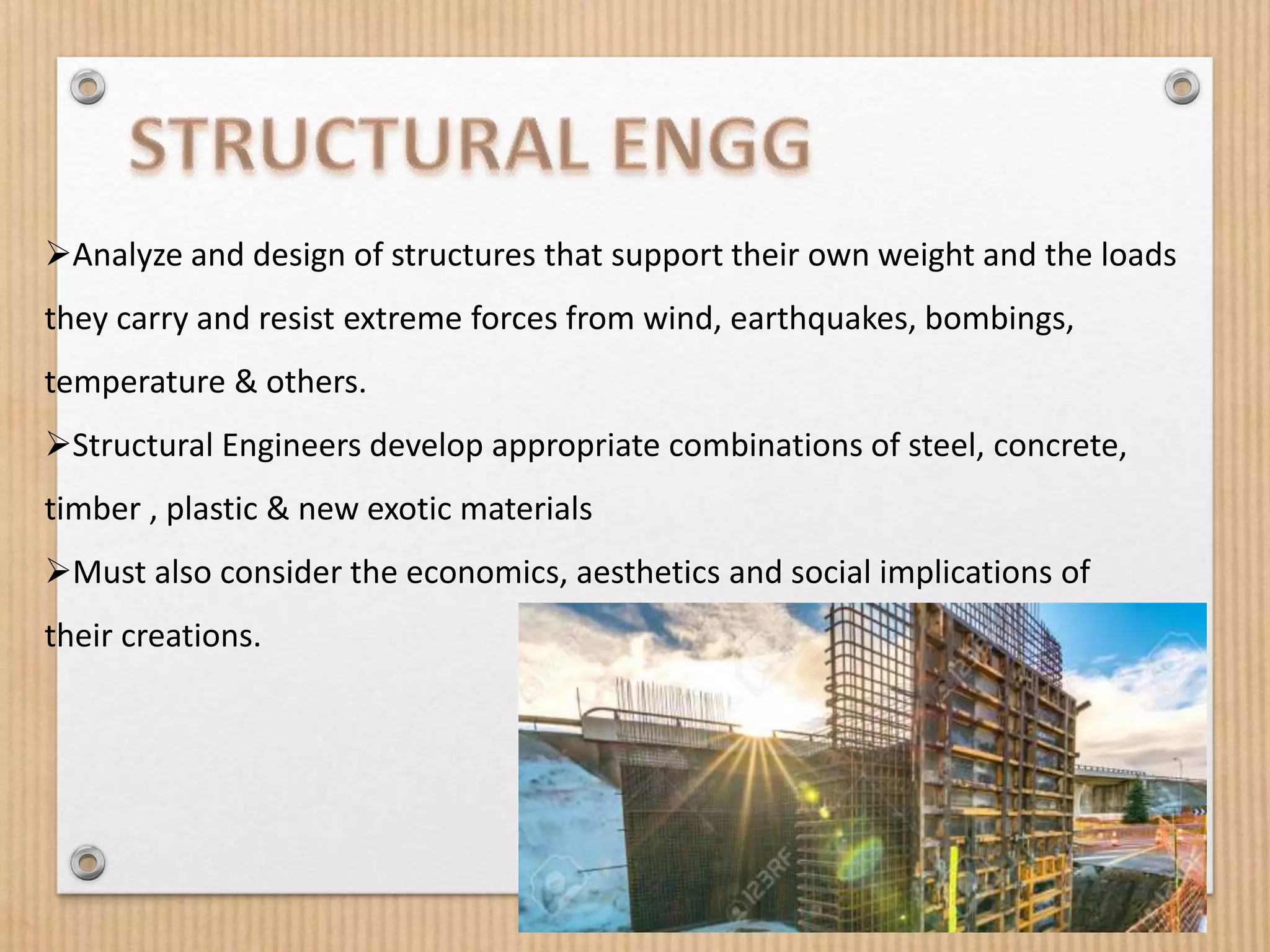
Analyze and design of structures that support their own weight and the loads
they carry and resist extreme forces from wind, earthquakes, bombings,
temperature & others.
Structural Engineers develop appropriate combinations of steel, concrete,
timber , plastic & new exotic materials
Must also consider the economics, aesthetics and social implications of
their creations.
Develop projects below the ground. Eg: tunnels, foundation,
offshore platforms, and containment structures for solid and liquid
wastes.
Analyze the properties of soil and rock that support and affect
the behavior of these structures.
Evaluate potential settlements of buildings, the stability of
slopes and fills, seepage of ground water and effects of earth
quakes.
Determine the best way to support a
structure in the ground.
Take part in design and construction of
dams, embankments and retaining walls.
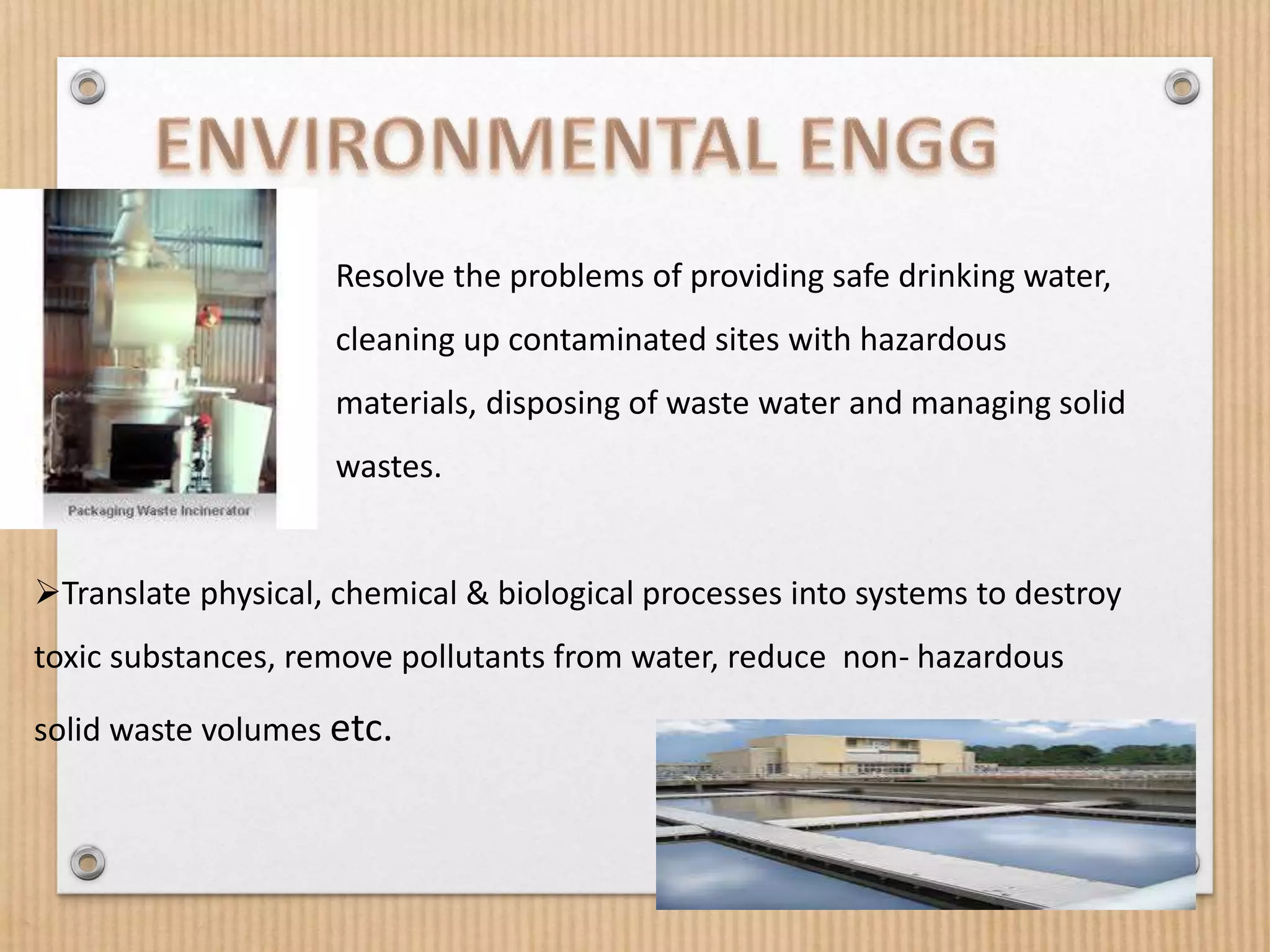
 Resolve the problems of providing safe drinking water,
cleaning up contaminated sites with hazardous
materials, disposing of waste water and managing solid
wastes.
Translate physical, chemical & biological processes into systems to destroy
toxic substances, remove pollutants from water, reduce non- hazardous
solid waste volumes etc.
Plan, design, construct, maintain and operate various
transportation facilities(e.g., highway, railway, airports,
ports, etc.).
Upgrading our transportation capability by improving
traffic control and mass transit systems.
Deals with physical control of water
Work with others to prevent floods, supply of water,
protect beaches or to manage redirect, rivers
Design, construct and maintain hydroelectric power
facilities, dams, pipelines, pumping
stations, etc.
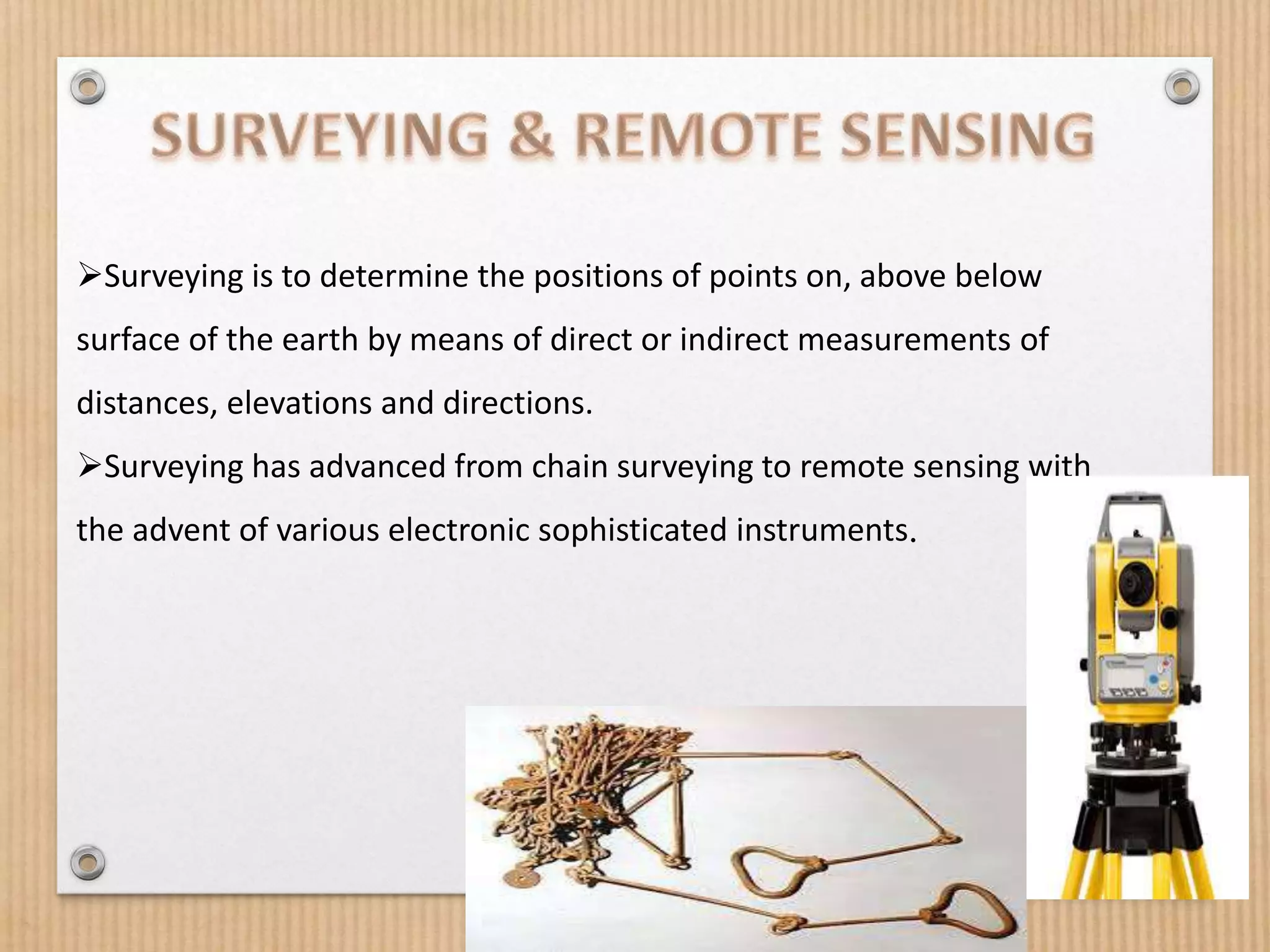
Surveying is to determine the positions of points on, above below
surface of the earth by means of direct or indirect measurements of
distances, elevations and directions.
Surveying has advanced from chain surveying to remote sensing with
the advent of various electronic sophisticated instruments.
Role of civil Engineer in overall
infrastructure developments
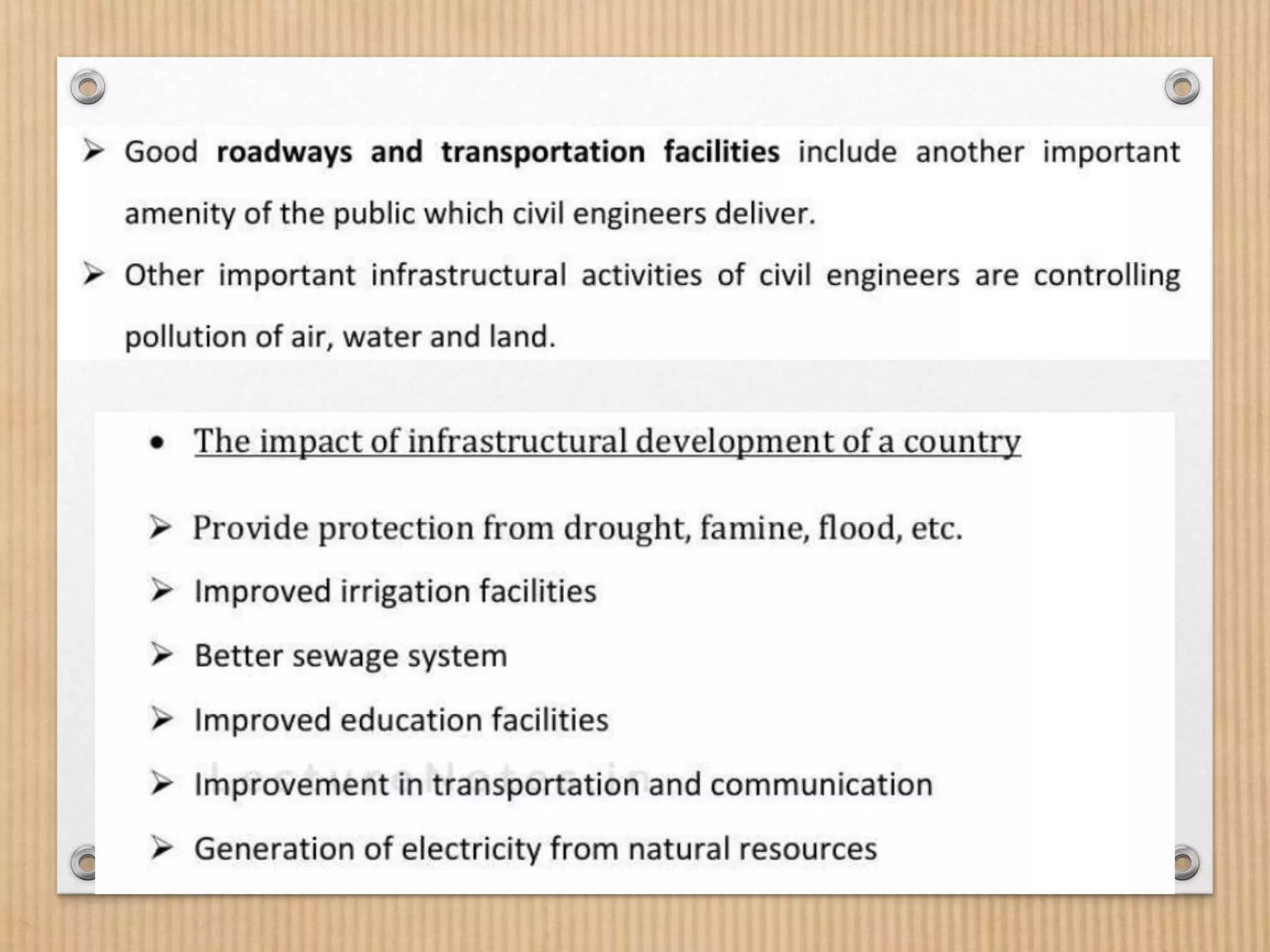
• Construction of Residential ,commercial and
Industrial buildings for urban and rural areas
• Town and city planning
• Construction of roads ,railways,airports etc
• Construction of dams for the proper utilization of
water resources and flood control
• Providing safe domestic agricultural and industrial
water supply
• Providing safe waste disposal
• Monitoring land,water and air pollution nd take
measures to control them
• Maintain the facilities
Classification of building based on
occupancy as per NBC(National
Building Code)
• RESIDENTIAL
• EDUCATIONAL
• INSTITUTIONAL
• ASSEMBLY
• BUSINESS
• MERCHANTILE
• INDUSTRIAL
• STORAGE
• HAZARDOUS
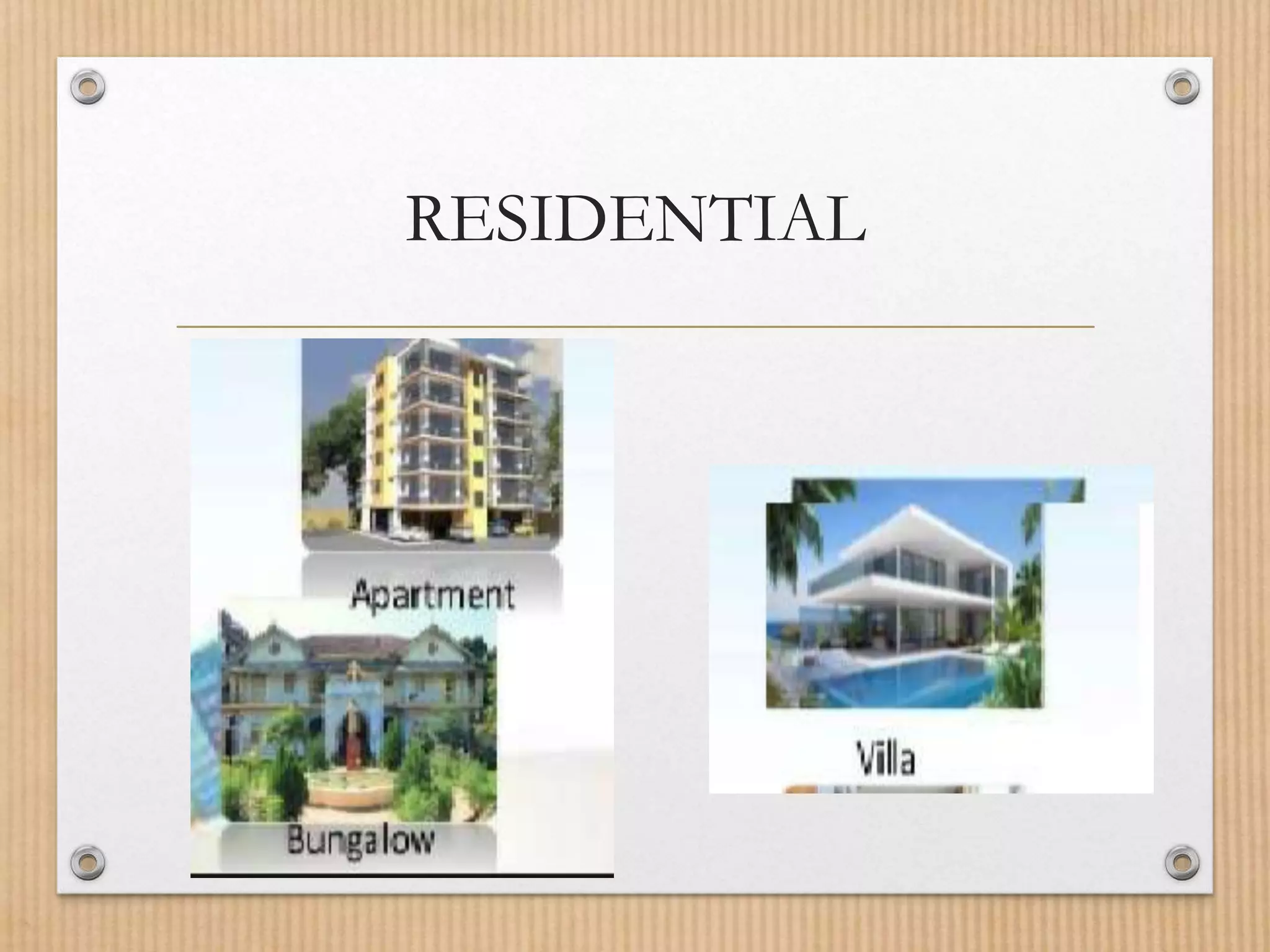
RESIDENTIAL
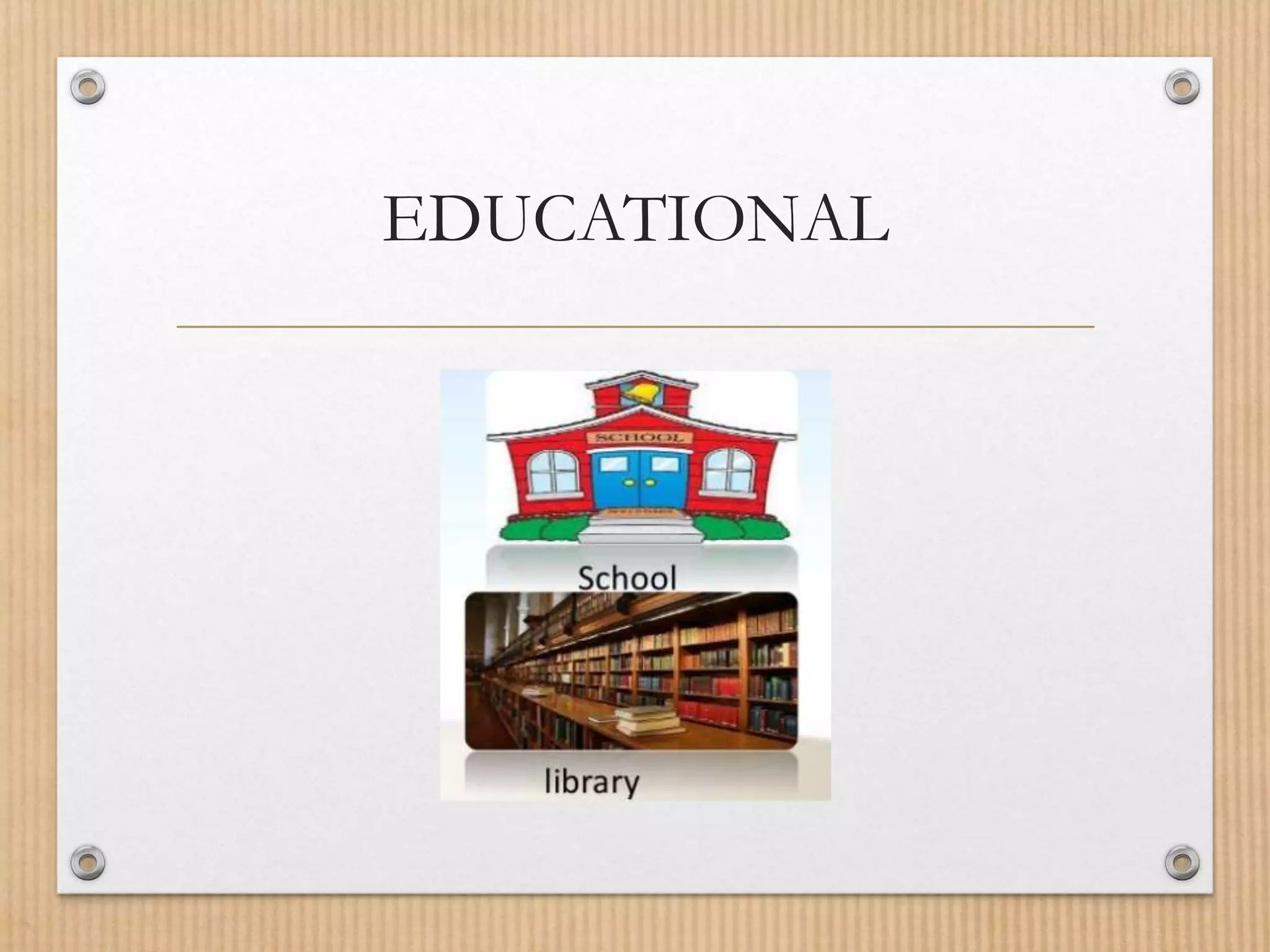
EDUCATIONAL
C : INSTITUTIONAL
D: ASSEMBLY BUILDING
BUISNESS
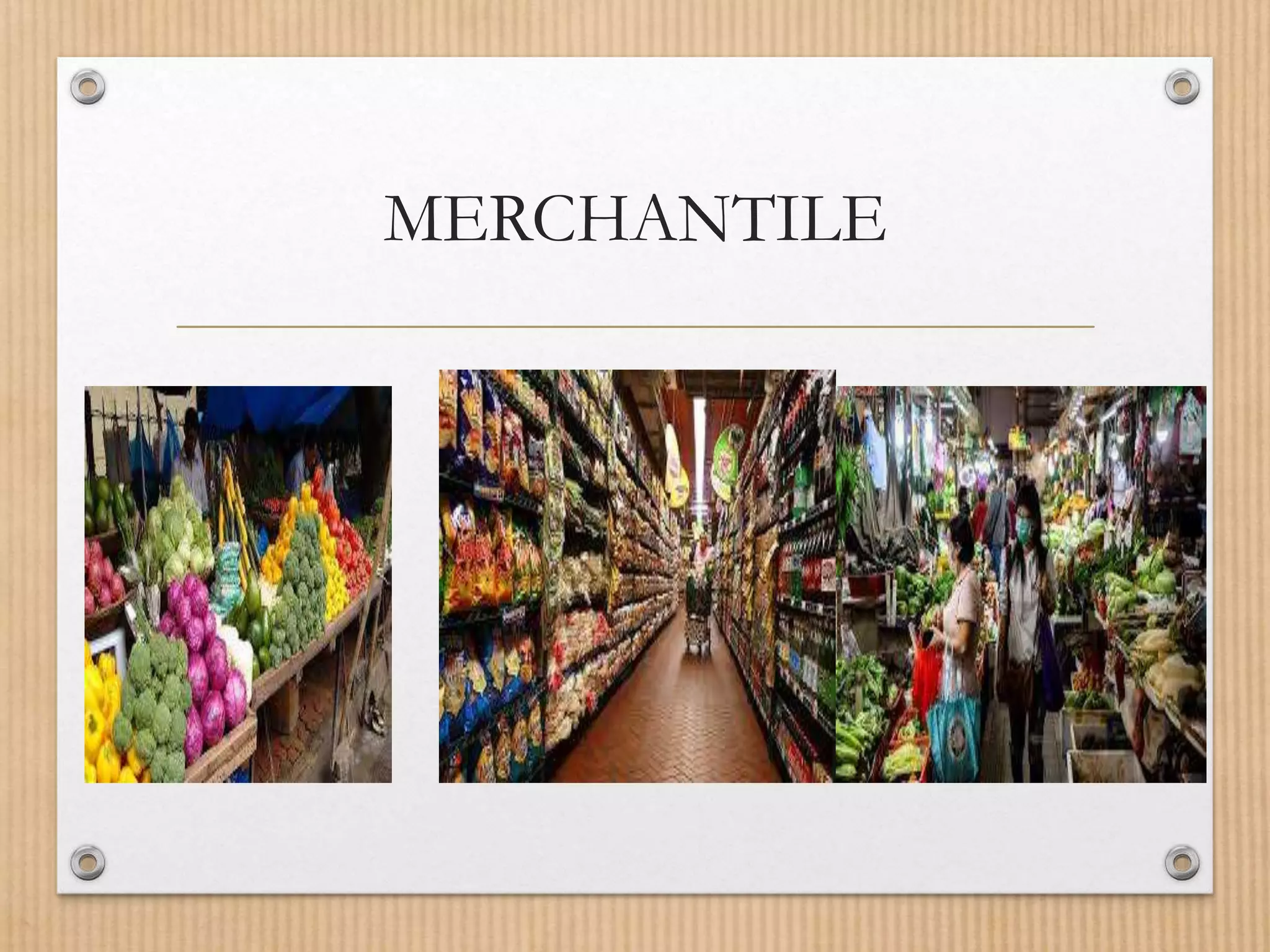
MERCHANTILE
INDUSTRIAL
STORAGE
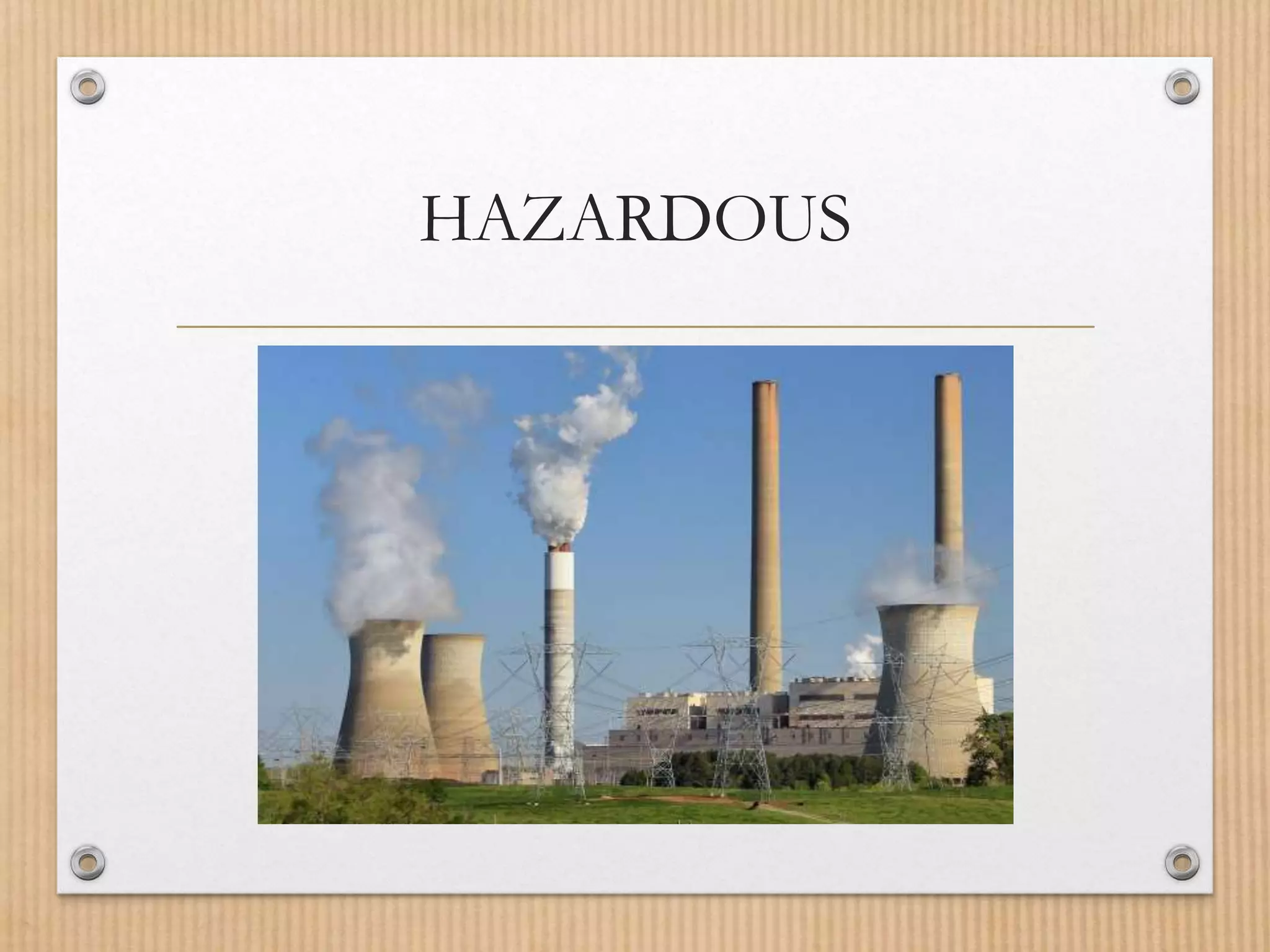
HAZARDOUS
DEFINITION OF BUILDING AS
PER NBC
• Any structure for whatever purpose and of whatever
materials constructed and whether used for human
habitation or not and includes
foundation,plinth,walls,floors,roofs,plumbing and
building services etc or anything enclosing a land or
space is called a building
GROUP TYPE OF
BUILDING
DEFINITION EXAMPLE
A RESIDENTIA
L
They include buildings in which
sleeping accommodation is
provided for normal residential
purposes with or without cooking
or dining or both facilities
Villas
,apartments,Banglaw
B Educational Any buildings used for schools
colleges and other training
institutions for day care purposes
involving assembly for instruction,
education and recreation for not
less than 20 students
Schools,colleges,
training centres
C Institutional These include any buildings or part
of buildings used for medical or
other treatment or care of persons
suffering from physical or mental
illness ,disease ,care of infants or
aged persons or correctional
detention in which liberty of
inmates is restricted
Hospitals ,old age
homes,orphanages,jails
GROUP TYPE OF
BUILDING
DEFINITION EXAMPLE
D Assembly
building
They include buildings in which not
less than 50 gather together for
amusement, recreation, social
religious, patriotic, civil, travel and
similar purposes
Assembly
hall,museum,auditorium,
gymnasium,place of
workships,clubs,bus
stops,air terminals,
F Merchantile
bulding
This include any building or part of
building which is used for display
and sale of merchandise,either
wholesale or retail
Shops ,stores,markets
G Industrial
building
This include any building or part of
building in which products and
materials of all kinds and properties
are fabricated,assembled,
manufactured or processed
Assembly
plant,labs,power
plants,pumping
stations,laundaries,refineri
es,saw mills
GROUP TYPE OF
BUILDING
DEFINITION EXAMPLE
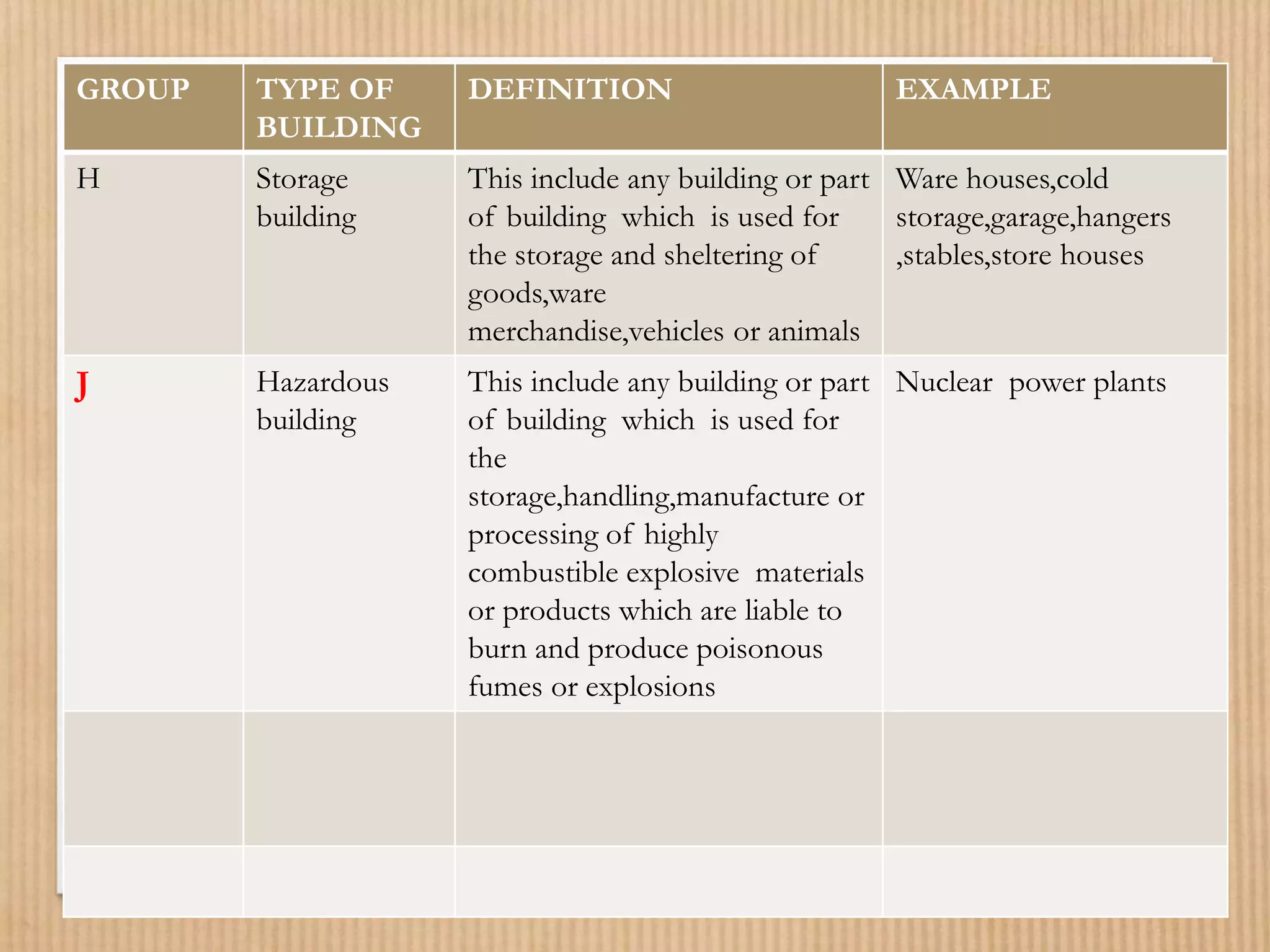
H Storage
building
This include any building or part
of building which is used for
the storage and sheltering of
goods,ware
merchandise,vehicles or animals
Ware houses,cold
storage,garage,hangers
,stables,store houses
J Hazardous
building
This include any building or part
of building which is used for
the
storage,handling,manufacture or
processing of highly
combustible explosive materials
or products which are liable to
burn and produce poisonous
fumes or explosions
Nuclear power plants
BASICS OF CIVIL ENGINEERING

BASICS OF CIVIL ENGINEERING

  • 1.
  • 2.
    Oldest Engineering discipline CivilEngineers plan, design, construct and operate the facilities essential to modern life – bridges, highways, water treatment plant etc. Civil Engineers are problem solvers – meet challenges of pollution, traffic congestion, drinking water and energy needs, urban redevelopment, and community planning.
  • 3.
  • 4.
    In the beginning,Civil Engineering included all engineers that did not practice military engineering; said to have begun in 18th century France. First “Civil Engineer” was an Englishman, John Smeaton in 1761 Statistics says that- ‘ Civil engineers saved more lives than all the doctors’ in the history by development of clean water & sanitation system.
  • 9.
    Construction Engineering Structural Engineering GeotechnicalEngineering Environmental Engineering Transportation Engineering Water resources Engineering Surveying and Remote Sensing
  • 10.
    Construction Engineer turnsdesigns into reality Management of construction resources: labor, materials, equipment, money and time. They apply their knowledge of construction methods and equipment, along with the principles of financing, planning and management, to turn the designs into successful facilities.
  • 11.
    Analyze and designof structures that support their own weight and the loads they carry and resist extreme forces from wind, earthquakes, bombings, temperature & others. Structural Engineers develop appropriate combinations of steel, concrete, timber , plastic & new exotic materials Must also consider the economics, aesthetics and social implications of their creations.
  • 12.
    Develop projects belowthe ground. Eg: tunnels, foundation, offshore platforms, and containment structures for solid and liquid wastes. Analyze the properties of soil and rock that support and affect the behavior of these structures. Evaluate potential settlements of buildings, the stability of slopes and fills, seepage of ground water and effects of earth quakes.
  • 13.
    Determine the bestway to support a structure in the ground. Take part in design and construction of dams, embankments and retaining walls.
  • 14.
     Resolve theproblems of providing safe drinking water, cleaning up contaminated sites with hazardous materials, disposing of waste water and managing solid wastes. Translate physical, chemical & biological processes into systems to destroy toxic substances, remove pollutants from water, reduce non- hazardous solid waste volumes etc.
  • 15.
    Plan, design, construct,maintain and operate various transportation facilities(e.g., highway, railway, airports, ports, etc.). Upgrading our transportation capability by improving traffic control and mass transit systems.
  • 16.
    Deals with physicalcontrol of water Work with others to prevent floods, supply of water, protect beaches or to manage redirect, rivers Design, construct and maintain hydroelectric power facilities, dams, pipelines, pumping stations, etc.
  • 17.
    Surveying is todetermine the positions of points on, above below surface of the earth by means of direct or indirect measurements of distances, elevations and directions. Surveying has advanced from chain surveying to remote sensing with the advent of various electronic sophisticated instruments.
  • 18.
    Role of civilEngineer in overall infrastructure developments • Construction of Residential ,commercial and Industrial buildings for urban and rural areas • Town and city planning • Construction of roads ,railways,airports etc • Construction of dams for the proper utilization of water resources and flood control • Providing safe domestic agricultural and industrial water supply
  • 19.
    • Providing safewaste disposal • Monitoring land,water and air pollution nd take measures to control them • Maintain the facilities
  • 20.
    Classification of buildingbased on occupancy as per NBC(National Building Code) • RESIDENTIAL • EDUCATIONAL • INSTITUTIONAL • ASSEMBLY • BUSINESS • MERCHANTILE • INDUSTRIAL • STORAGE • HAZARDOUS
  • 21.
  • 22.
  • 23.
  • 24.
  • 25.
  • 26.
  • 27.
  • 28.
  • 29.
  • 30.
    DEFINITION OF BUILDINGAS PER NBC • Any structure for whatever purpose and of whatever materials constructed and whether used for human habitation or not and includes foundation,plinth,walls,floors,roofs,plumbing and building services etc or anything enclosing a land or space is called a building
  • 31.
    GROUP TYPE OF BUILDING DEFINITIONEXAMPLE A RESIDENTIA L They include buildings in which sleeping accommodation is provided for normal residential purposes with or without cooking or dining or both facilities Villas ,apartments,Banglaw B Educational Any buildings used for schools colleges and other training institutions for day care purposes involving assembly for instruction, education and recreation for not less than 20 students Schools,colleges, training centres C Institutional These include any buildings or part of buildings used for medical or other treatment or care of persons suffering from physical or mental illness ,disease ,care of infants or aged persons or correctional detention in which liberty of inmates is restricted Hospitals ,old age homes,orphanages,jails
  • 32.
    GROUP TYPE OF BUILDING DEFINITIONEXAMPLE D Assembly building They include buildings in which not less than 50 gather together for amusement, recreation, social religious, patriotic, civil, travel and similar purposes Assembly hall,museum,auditorium, gymnasium,place of workships,clubs,bus stops,air terminals, F Merchantile bulding This include any building or part of building which is used for display and sale of merchandise,either wholesale or retail Shops ,stores,markets G Industrial building This include any building or part of building in which products and materials of all kinds and properties are fabricated,assembled, manufactured or processed Assembly plant,labs,power plants,pumping stations,laundaries,refineri es,saw mills
  • 33.
    GROUP TYPE OF BUILDING DEFINITIONEXAMPLE H Storage building This include any building or part of building which is used for the storage and sheltering of goods,ware merchandise,vehicles or animals Ware houses,cold storage,garage,hangers ,stables,store houses J Hazardous building This include any building or part of building which is used for the storage,handling,manufacture or processing of highly combustible explosive materials or products which are liable to burn and produce poisonous fumes or explosions Nuclear power plants