General Introduction
to
Civil Engineering
MODULE 1
Manju George Mar Baselios Institute of Technology and Science, Kerala
Civil Engineering
 Civil Engineering is the oldest engineering discipline which is
known as the mother of all engineering.
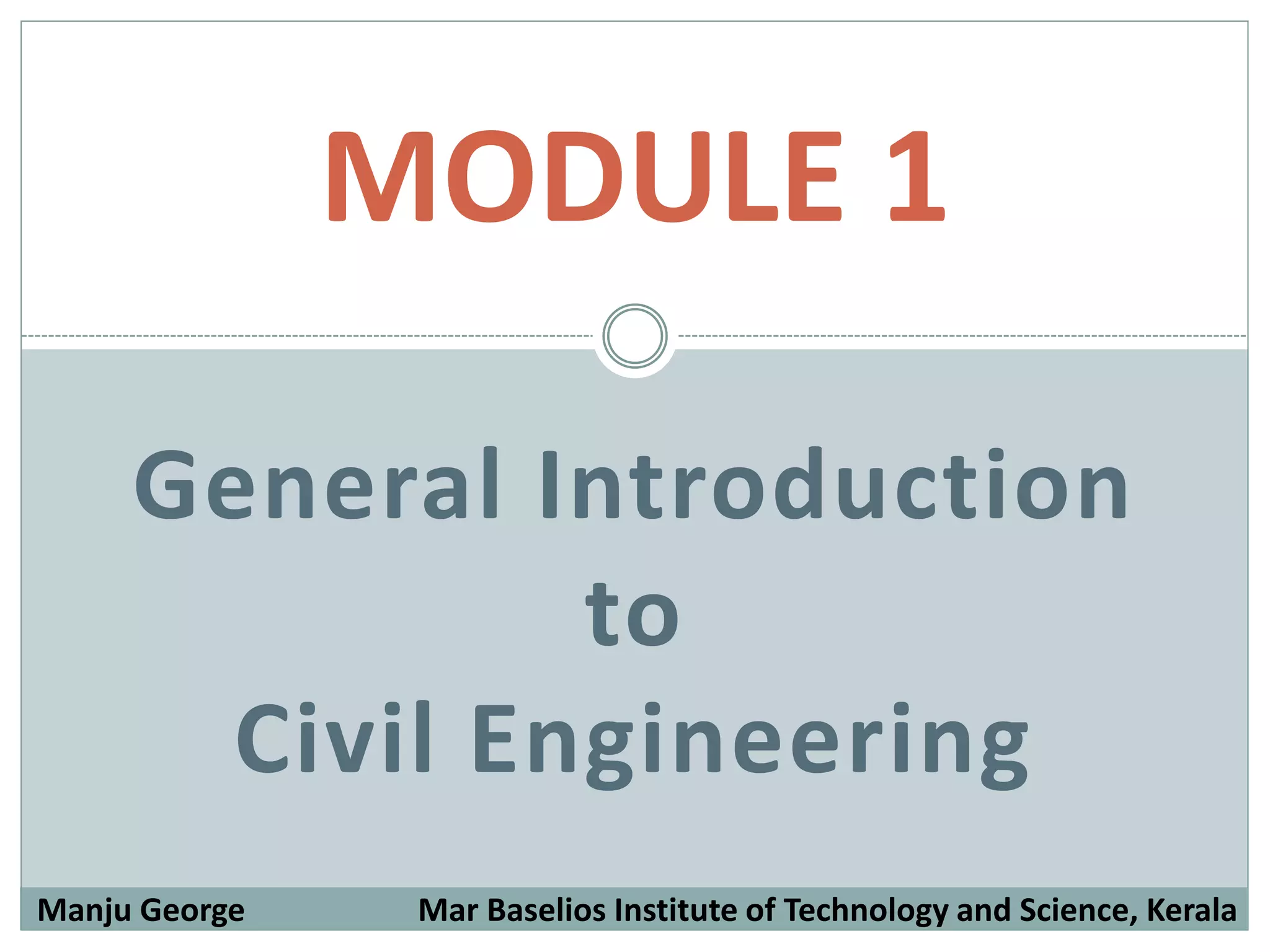
 It deals with planning, design, construction and management of
buildings, roads, bridges, dams, tunnels, water treatment plants
etc.
2
Who is a Civil Engineer ?
 A Civil Engineer is the one who improves the quality of life
through the production of infrastructure which must be safe,
functional, elegant and economically sound.
3
Infrastructure
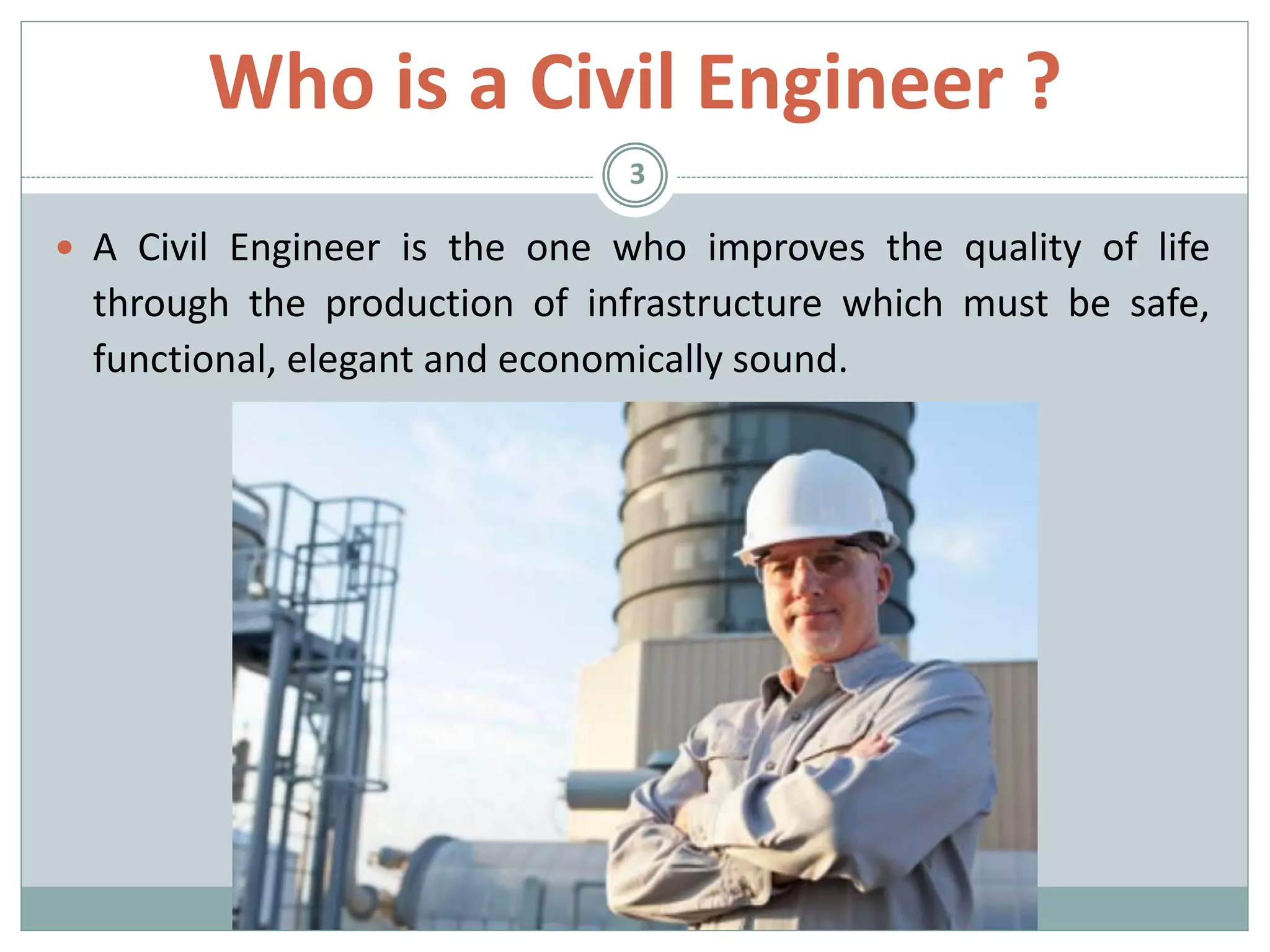
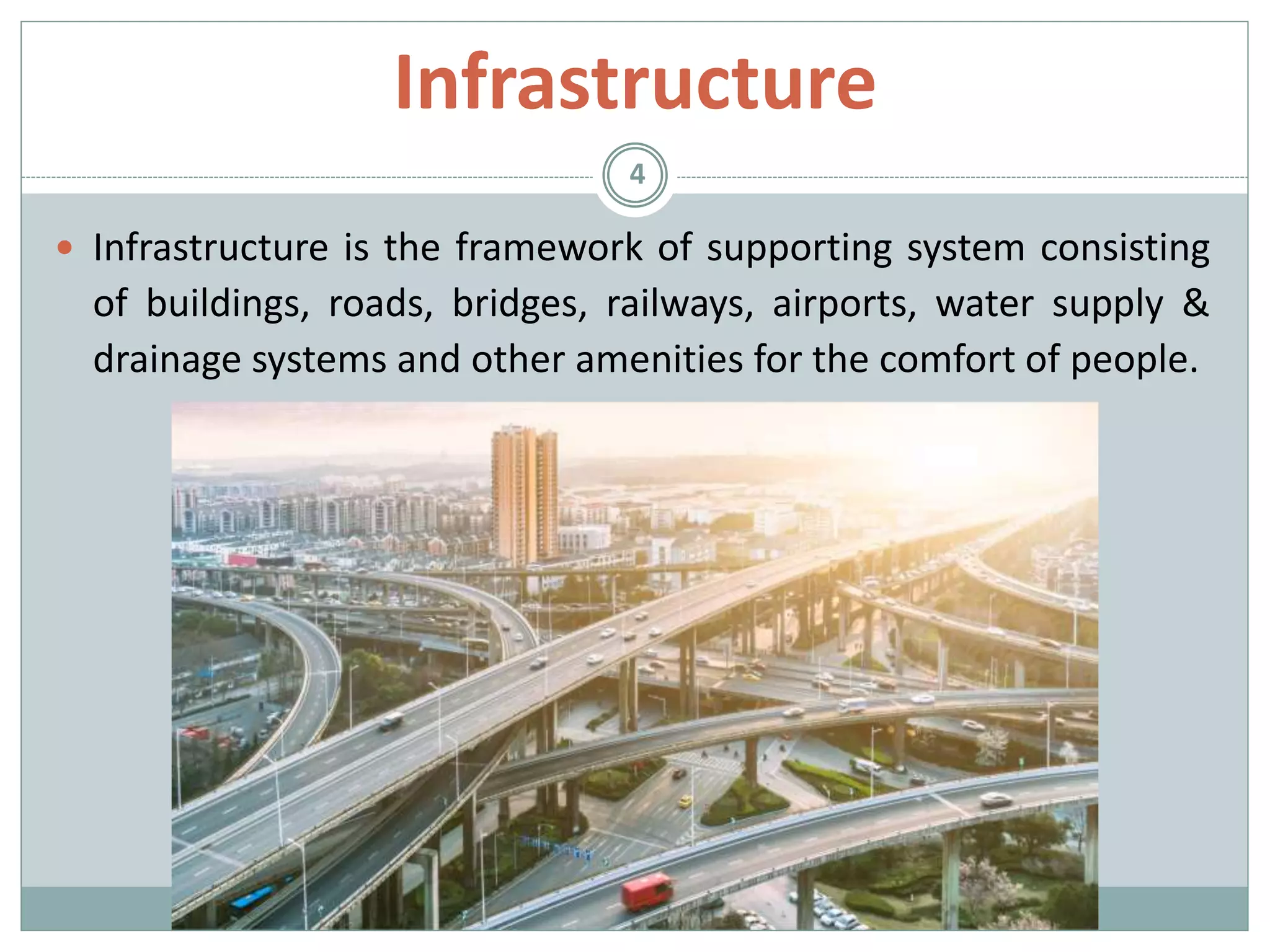
 Infrastructure is the framework of supporting system consisting
of buildings, roads, bridges, railways, airports, water supply &
drainage systems and other amenities for the comfort of people.
4
Infrastructural Development
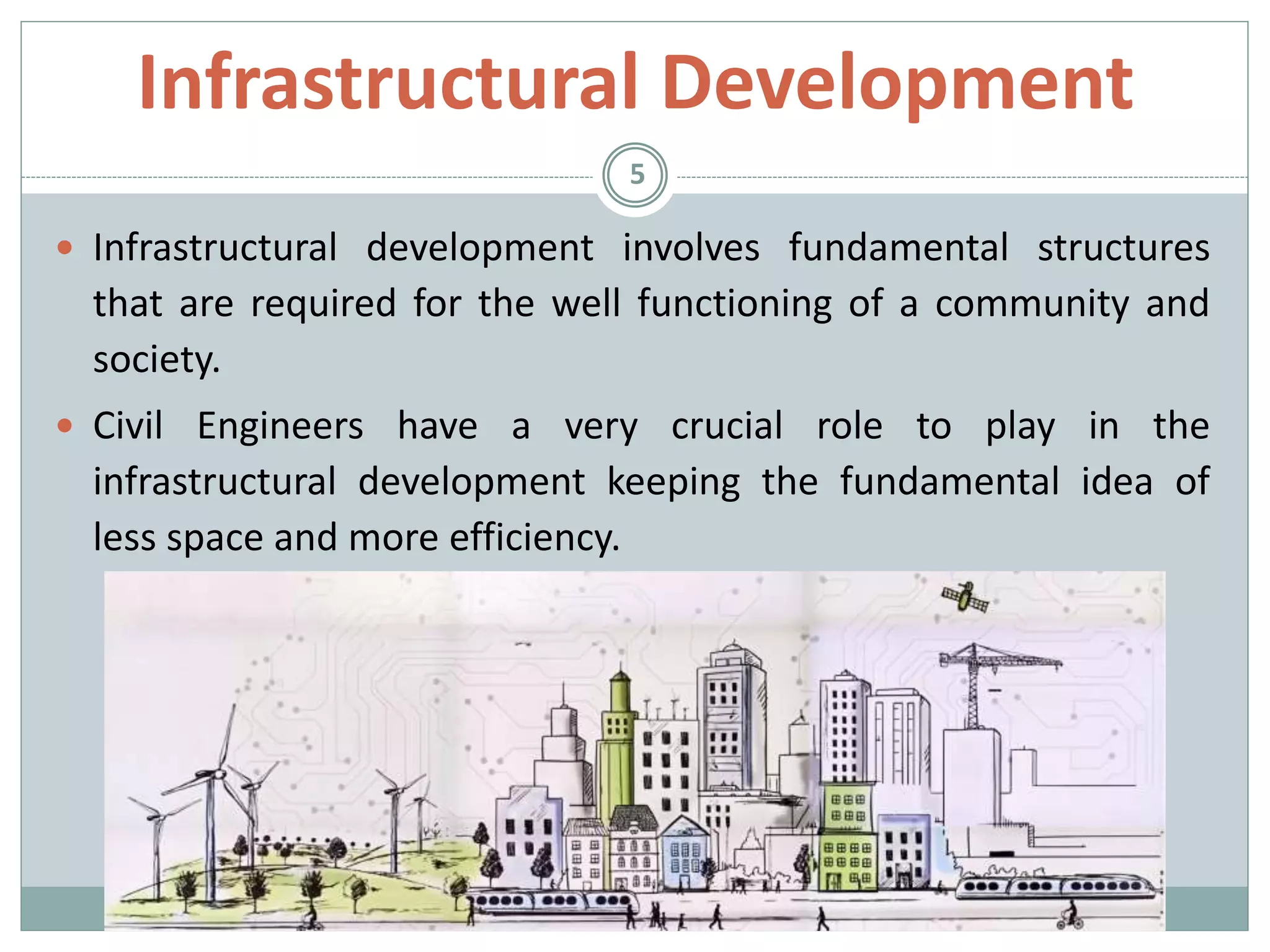
 Infrastructural development involves fundamental structures
that are required for the well functioning of a community and
society.
 Civil Engineers have a very crucial role to play in the
infrastructural development keeping the fundamental idea of
less space and more efficiency.
5
Relevance of Civil Engineering in the Overall
Infrastructural Development of the Country
1. Proper planning of towns and extension areas in the cities
2. Well planned and built transportation facilities
3. Assured water supply and good drainage system
4. Better sewage system
5. Improved irrigation facilities
6. Improved education and health care facilities
7. Improved communication facilities
8. Generation of electricity from natural resources
9. Pollution free environmental condition
10. Protection from flood, drought etc.
6
Responsibility of an Engineer in Ensuring
the Safety of Built Environment
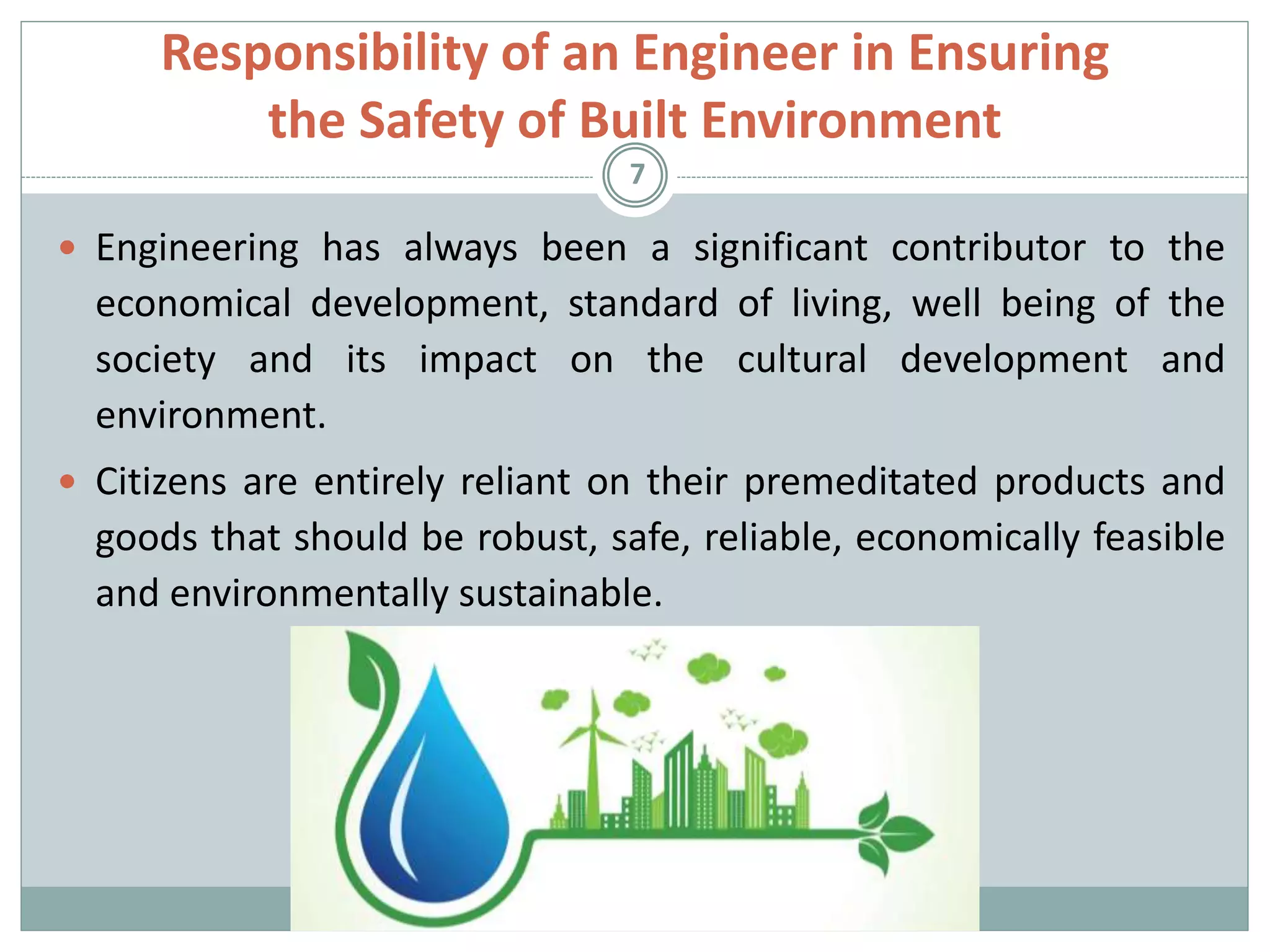
 Engineering has always been a significant contributor to the
economical development, standard of living, well being of the
society and its impact on the cultural development and
environment.
 Citizens are entirely reliant on their premeditated products and
goods that should be robust, safe, reliable, economically feasible
and environmentally sustainable.
7
Principles of Engineering for
Safe and Sustainable Development
1. Being creative and innovational
2. Being sure about the knowledge of needs and wants
3. Right things been done with the right decisions
4. Valuable and competent scheduling and administration
5. Commitment of risk assessment experts to safety assessments
6. Commitment in developing sustainable technologies
7. Guarantee the safety and well being to the public
8. Guarantee the well usage of society’s fund and resources
9. Social activities by engineers in public interest
10. Contributing services to worthy, non-profit groups and projects
8
Major Disciplines of Civil Engineering
 According to scope, type of structures and activities
carried out, following are the major disciplines of
Civil Engineering.
1) Transportation Engineering
2) Structural Engineering
3) Geotechnical Engineering
4) Water Resources Engineering
5) Environmental Engineering
9
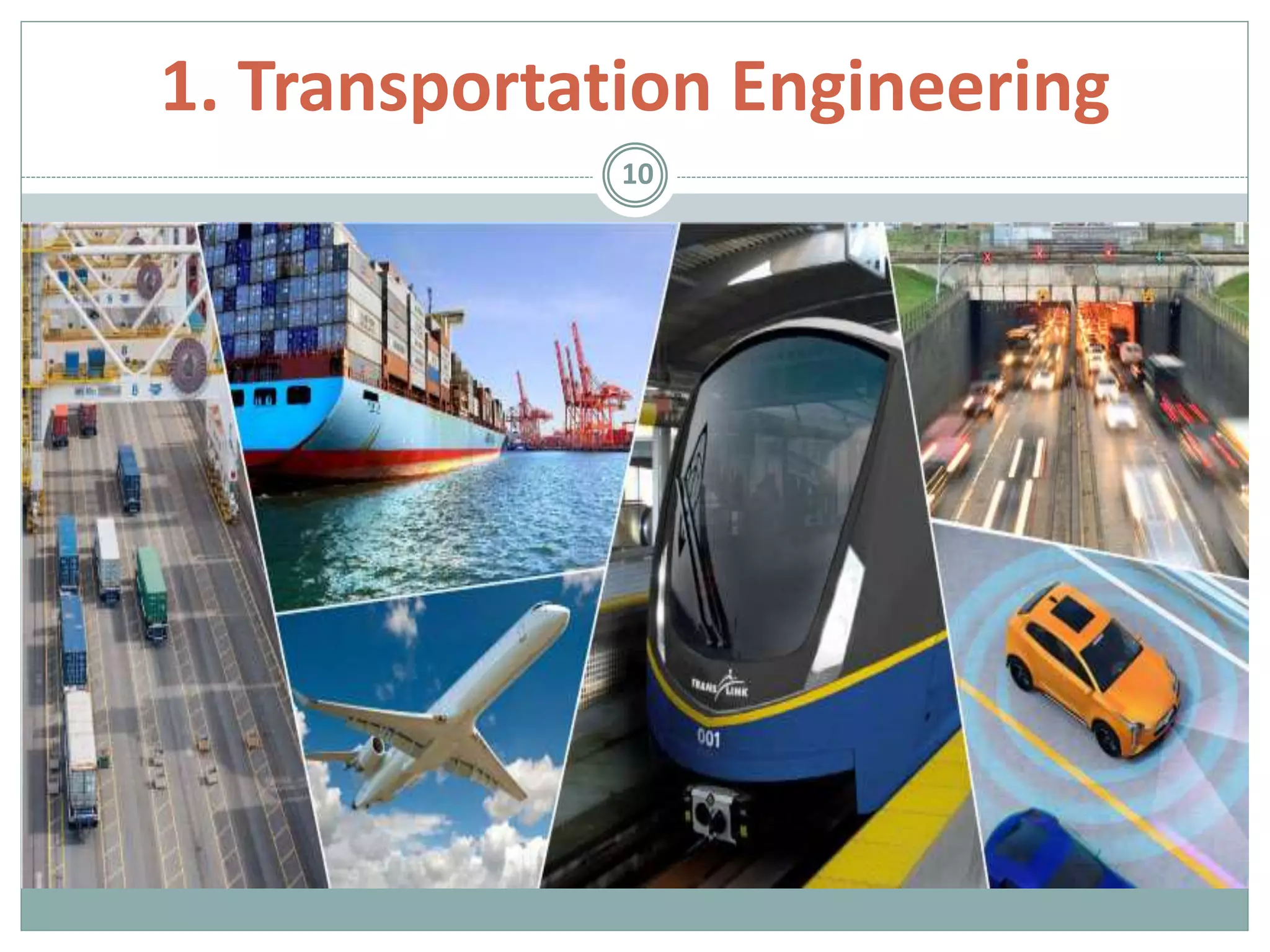
1. Transportation Engineering
10
1. Transportation Engineering
 Deals with planning, construction and management of
various transportation facilities.
 To provide safe, rapid, comfortable, convenient, economical
and environmentally compatible transport.
Sub disciplines of Transportation Engineering
1. Highway Engineering
2. Railway Engineering
3. Airport Engineering
11
4. Bridge Engineering
5. Harbour Engineering
6. Tunnel Engineering
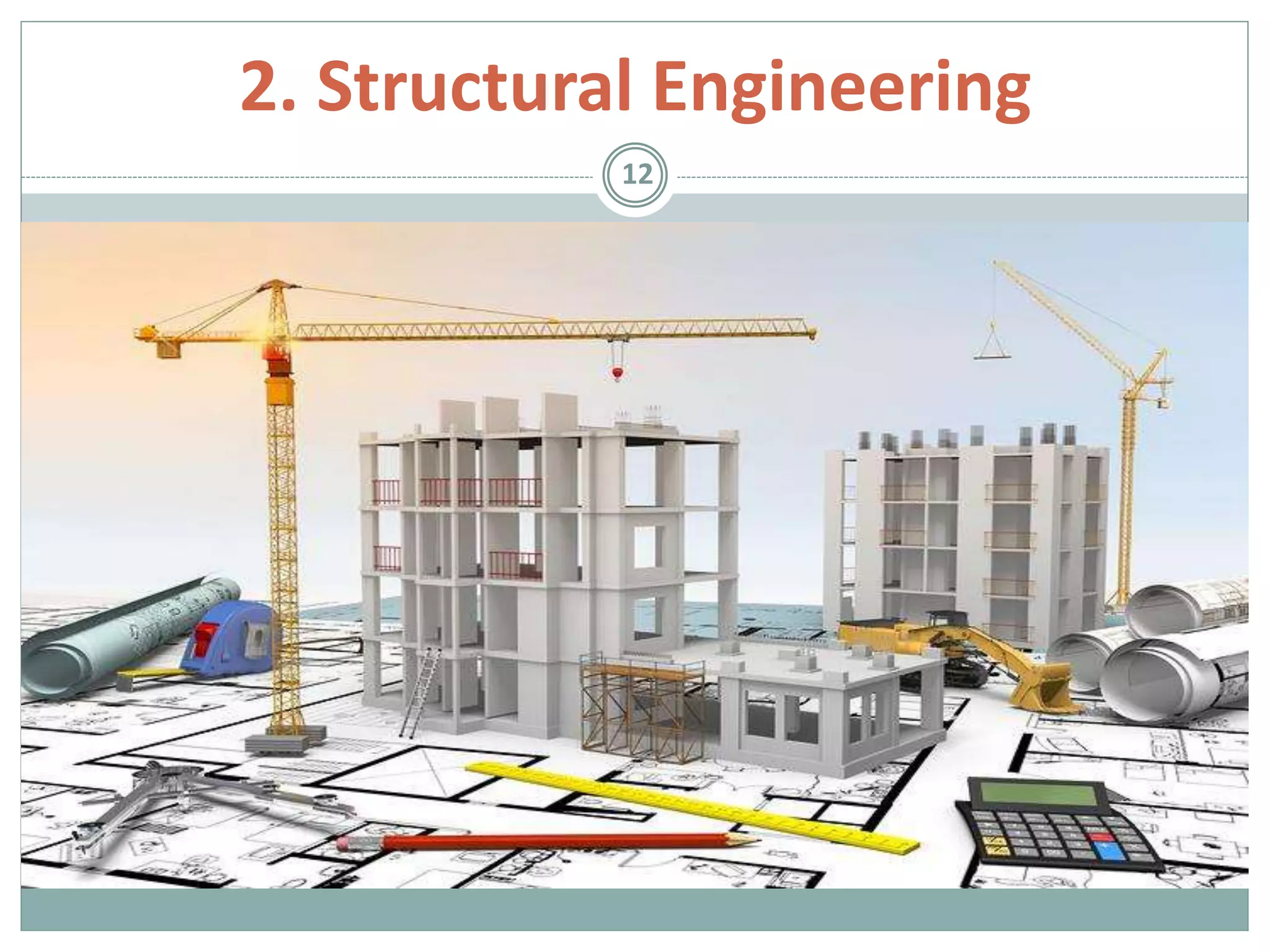
2. Structural Engineering
12
 Deals with the analysis and design of various structures like;
 Reinforced Cement Concrete (RCC) Structures
Buildings, Bridges, Water Tanks, Retaining Walls etc.
 Steel Structures
Steel Buildings, Steel Bridges, Railway Platforms,
Roof Trusses etc.
 Earthquake Resistant Structures
13
2. Structural Engineering
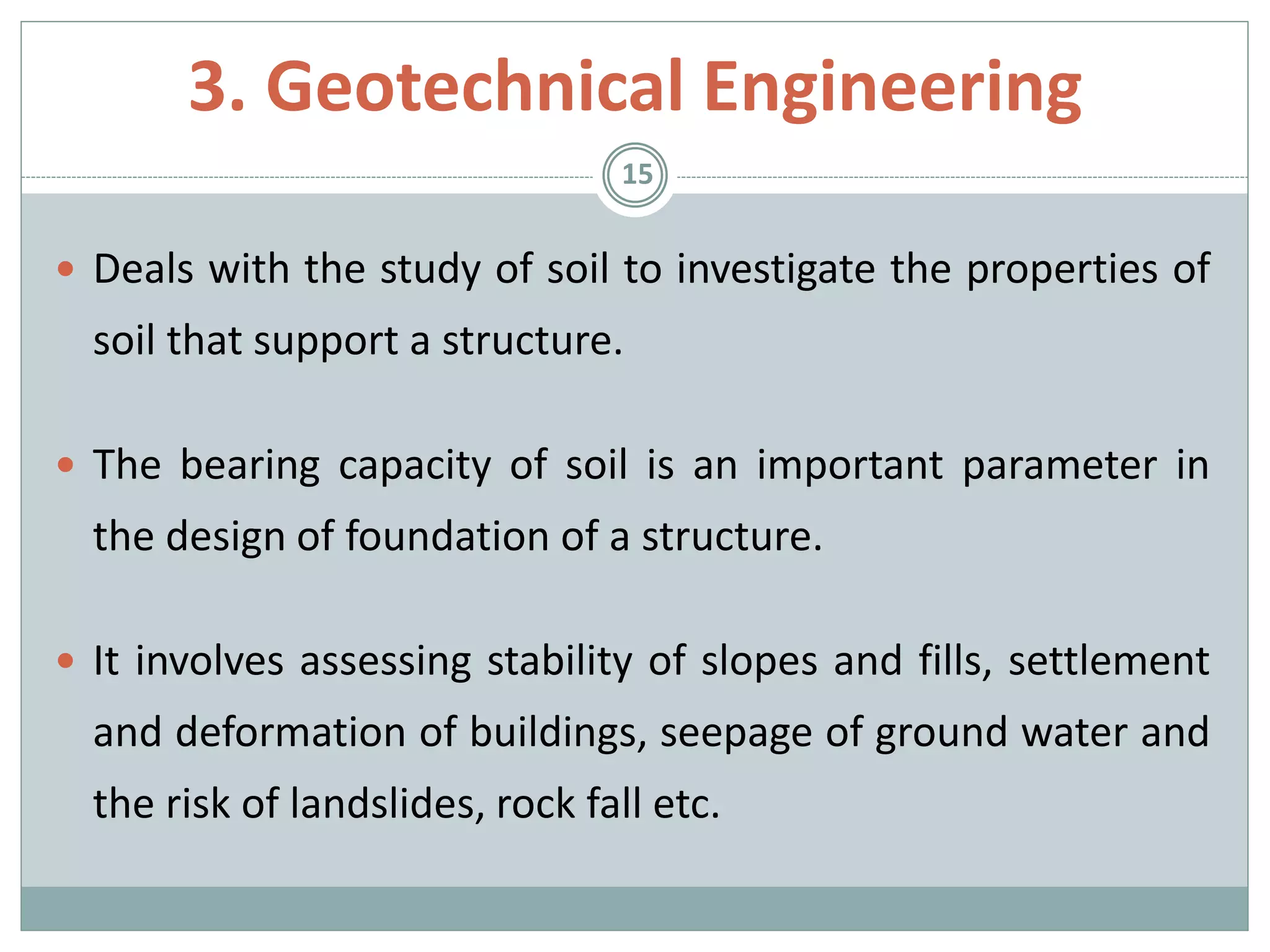
3. Geotechnical Engineering
14
 Deals with the study of soil to investigate the properties of
soil that support a structure.
 The bearing capacity of soil is an important parameter in
the design of foundation of a structure.
 It involves assessing stability of slopes and fills, settlement
and deformation of buildings, seepage of ground water and
the risk of landslides, rock fall etc.
15
3. Geotechnical Engineering
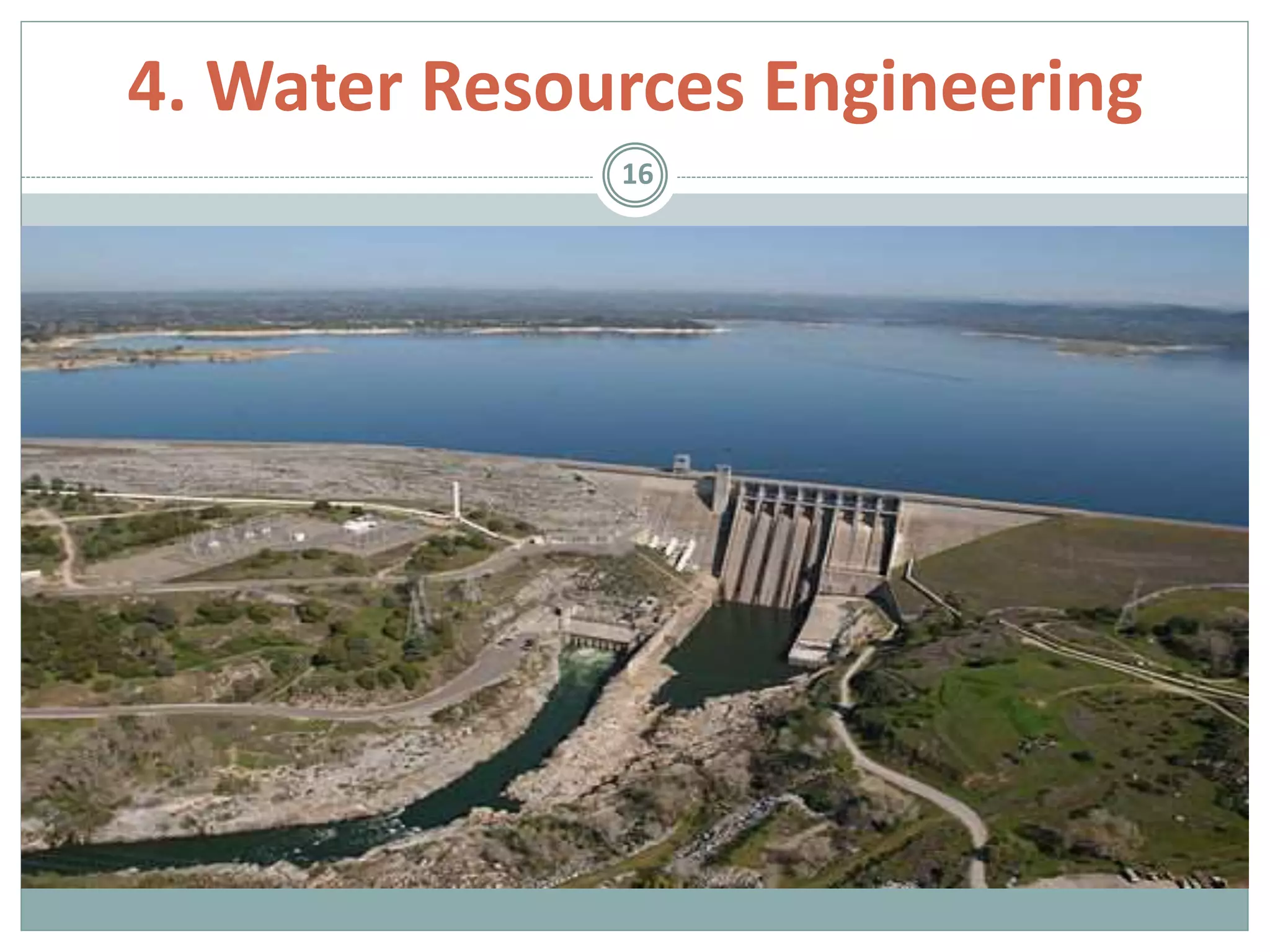
4. Water Resources Engineering
16
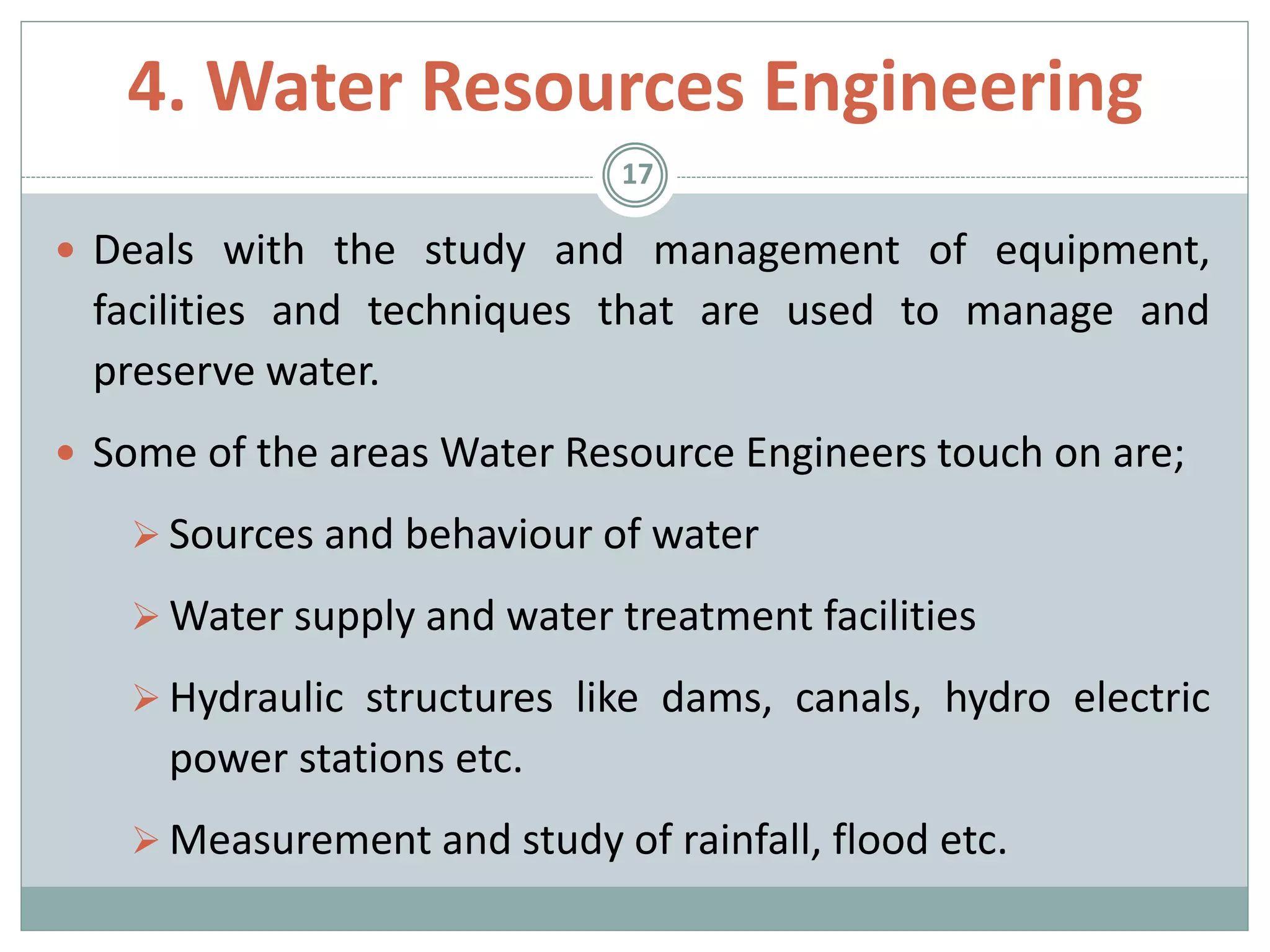
 Deals with the study and management of equipment,
facilities and techniques that are used to manage and
preserve water.
 Some of the areas Water Resource Engineers touch on are;
 Sources and behaviour of water
 Water supply and water treatment facilities
 Hydraulic structures like dams, canals, hydro electric
power stations etc.
 Measurement and study of rainfall, flood etc.
17
4. Water Resources Engineering
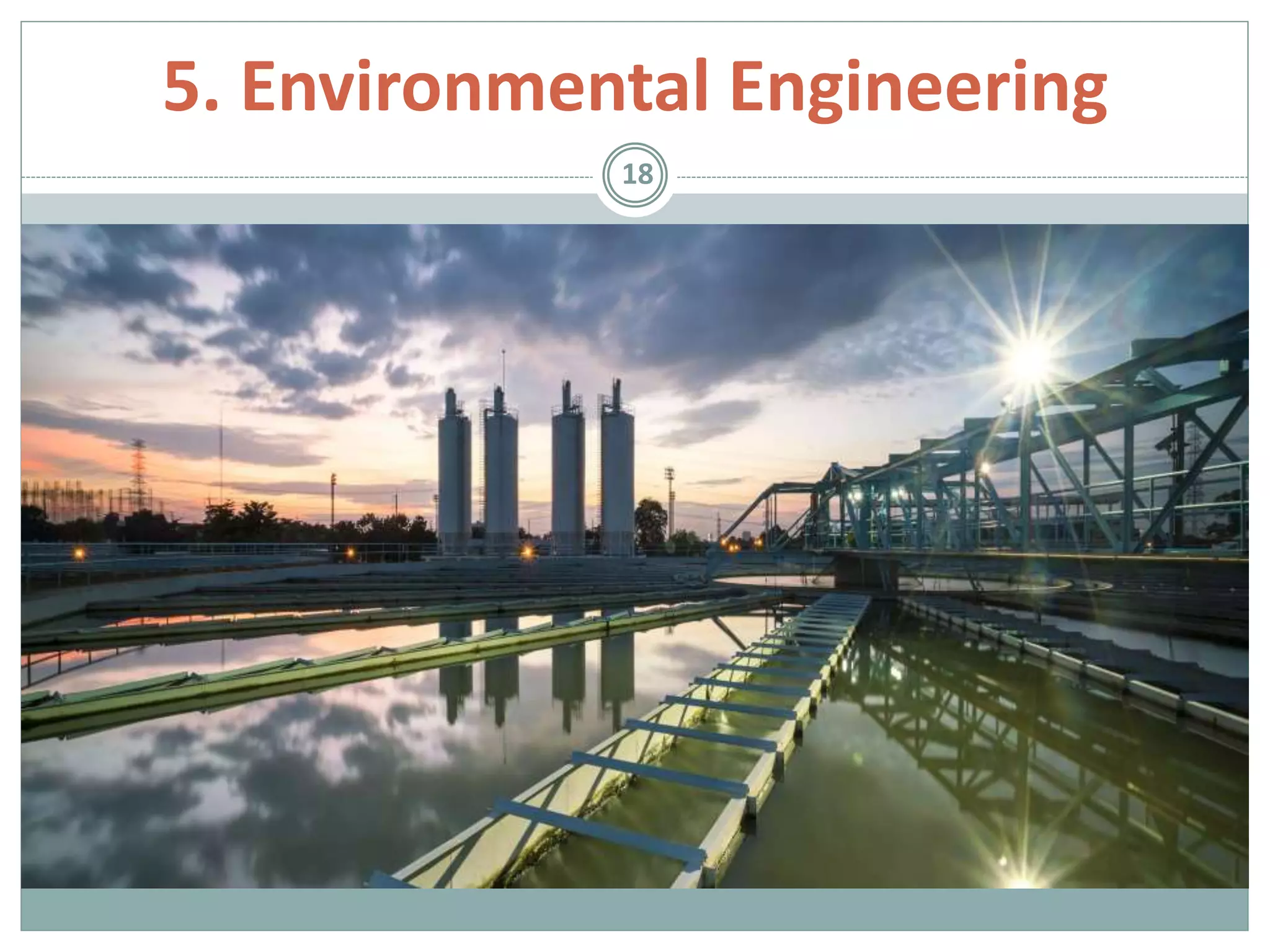
5. Environmental Engineering
18
 Deals with the study of environment friendly designs to
resolve the problems of water, land and air pollution.
 Environmental Engineering involves;
 Waste water treatment
 Solid waste management
 Sewage system management etc…
19
5. Environmental Engineering
Proud To Be A Civil Engineer
Thank You

Introduction to Civil Engineering

  • 1.
    General Introduction to Civil Engineering MODULE1 Manju George Mar Baselios Institute of Technology and Science, Kerala
  • 2.
    Civil Engineering  CivilEngineering is the oldest engineering discipline which is known as the mother of all engineering.  It deals with planning, design, construction and management of buildings, roads, bridges, dams, tunnels, water treatment plants etc. 2
  • 3.
    Who is aCivil Engineer ?  A Civil Engineer is the one who improves the quality of life through the production of infrastructure which must be safe, functional, elegant and economically sound. 3
  • 4.
    Infrastructure  Infrastructure isthe framework of supporting system consisting of buildings, roads, bridges, railways, airports, water supply & drainage systems and other amenities for the comfort of people. 4
  • 5.
    Infrastructural Development  Infrastructuraldevelopment involves fundamental structures that are required for the well functioning of a community and society.  Civil Engineers have a very crucial role to play in the infrastructural development keeping the fundamental idea of less space and more efficiency. 5
  • 6.
    Relevance of CivilEngineering in the Overall Infrastructural Development of the Country 1. Proper planning of towns and extension areas in the cities 2. Well planned and built transportation facilities 3. Assured water supply and good drainage system 4. Better sewage system 5. Improved irrigation facilities 6. Improved education and health care facilities 7. Improved communication facilities 8. Generation of electricity from natural resources 9. Pollution free environmental condition 10. Protection from flood, drought etc. 6
  • 7.
    Responsibility of anEngineer in Ensuring the Safety of Built Environment  Engineering has always been a significant contributor to the economical development, standard of living, well being of the society and its impact on the cultural development and environment.  Citizens are entirely reliant on their premeditated products and goods that should be robust, safe, reliable, economically feasible and environmentally sustainable. 7
  • 8.
    Principles of Engineeringfor Safe and Sustainable Development 1. Being creative and innovational 2. Being sure about the knowledge of needs and wants 3. Right things been done with the right decisions 4. Valuable and competent scheduling and administration 5. Commitment of risk assessment experts to safety assessments 6. Commitment in developing sustainable technologies 7. Guarantee the safety and well being to the public 8. Guarantee the well usage of society’s fund and resources 9. Social activities by engineers in public interest 10. Contributing services to worthy, non-profit groups and projects 8
  • 9.
    Major Disciplines ofCivil Engineering  According to scope, type of structures and activities carried out, following are the major disciplines of Civil Engineering. 1) Transportation Engineering 2) Structural Engineering 3) Geotechnical Engineering 4) Water Resources Engineering 5) Environmental Engineering 9
  • 10.
  • 11.
    1. Transportation Engineering Deals with planning, construction and management of various transportation facilities.  To provide safe, rapid, comfortable, convenient, economical and environmentally compatible transport. Sub disciplines of Transportation Engineering 1. Highway Engineering 2. Railway Engineering 3. Airport Engineering 11 4. Bridge Engineering 5. Harbour Engineering 6. Tunnel Engineering
  • 12.
  • 13.
     Deals withthe analysis and design of various structures like;  Reinforced Cement Concrete (RCC) Structures Buildings, Bridges, Water Tanks, Retaining Walls etc.  Steel Structures Steel Buildings, Steel Bridges, Railway Platforms, Roof Trusses etc.  Earthquake Resistant Structures 13 2. Structural Engineering
  • 14.
  • 15.
     Deals withthe study of soil to investigate the properties of soil that support a structure.  The bearing capacity of soil is an important parameter in the design of foundation of a structure.  It involves assessing stability of slopes and fills, settlement and deformation of buildings, seepage of ground water and the risk of landslides, rock fall etc. 15 3. Geotechnical Engineering
  • 16.
    4. Water ResourcesEngineering 16
  • 17.
     Deals withthe study and management of equipment, facilities and techniques that are used to manage and preserve water.  Some of the areas Water Resource Engineers touch on are;  Sources and behaviour of water  Water supply and water treatment facilities  Hydraulic structures like dams, canals, hydro electric power stations etc.  Measurement and study of rainfall, flood etc. 17 4. Water Resources Engineering
  • 18.
  • 19.
     Deals withthe study of environment friendly designs to resolve the problems of water, land and air pollution.  Environmental Engineering involves;  Waste water treatment  Solid waste management  Sewage system management etc… 19 5. Environmental Engineering
  • 20.
    Proud To BeA Civil Engineer Thank You