S
C
O
P
E
Adil Abdalla
January 2018
Disclaimer
This presentation document contains information which is proprietary to CentroidPM; and is (and is
intended to remain) confidential, being provided for the exclusive use of the intended addressee and may
be legally privileged. If you have reason to believe you are not the intended addressee(s); disclosing,
copying, disseminating or otherwise taking any action in connection with this document or the information
in; it is prohibited and may be unlawful. If you have reason to believe you have accessed this document in
error, please notify CentroidPM; comply with the foregoing warning and delete this document from your
system. This document shall not constitute binding legal obligation with the company.
➢ The extent of the area or subject matter that something deals with or to
which it is relevant. (Oxford)
➢ The work that needs to be accomplished to deliver a product, service, or
result with the specified features and functions that characterize a
product, service, or result. (PMI)
➢ Defining what is needed is the first step toward establishing a project
timeline, setting of project goals and allocating project resources. These
steps will help you to define the work that needs to be done - or in other
words, define the scope of the project. Once this is defined, you'll be able
to allocate tasks and give your team the direction they need to deliver the
project on time and on budget. (CIO)
➢ The main purpose of the scope definition is to clearly describe the
boundaries of your project. Clearly describing the boundaries is not
enough when it comes to project. You need to get the client's agreement
as well. (Prince2)
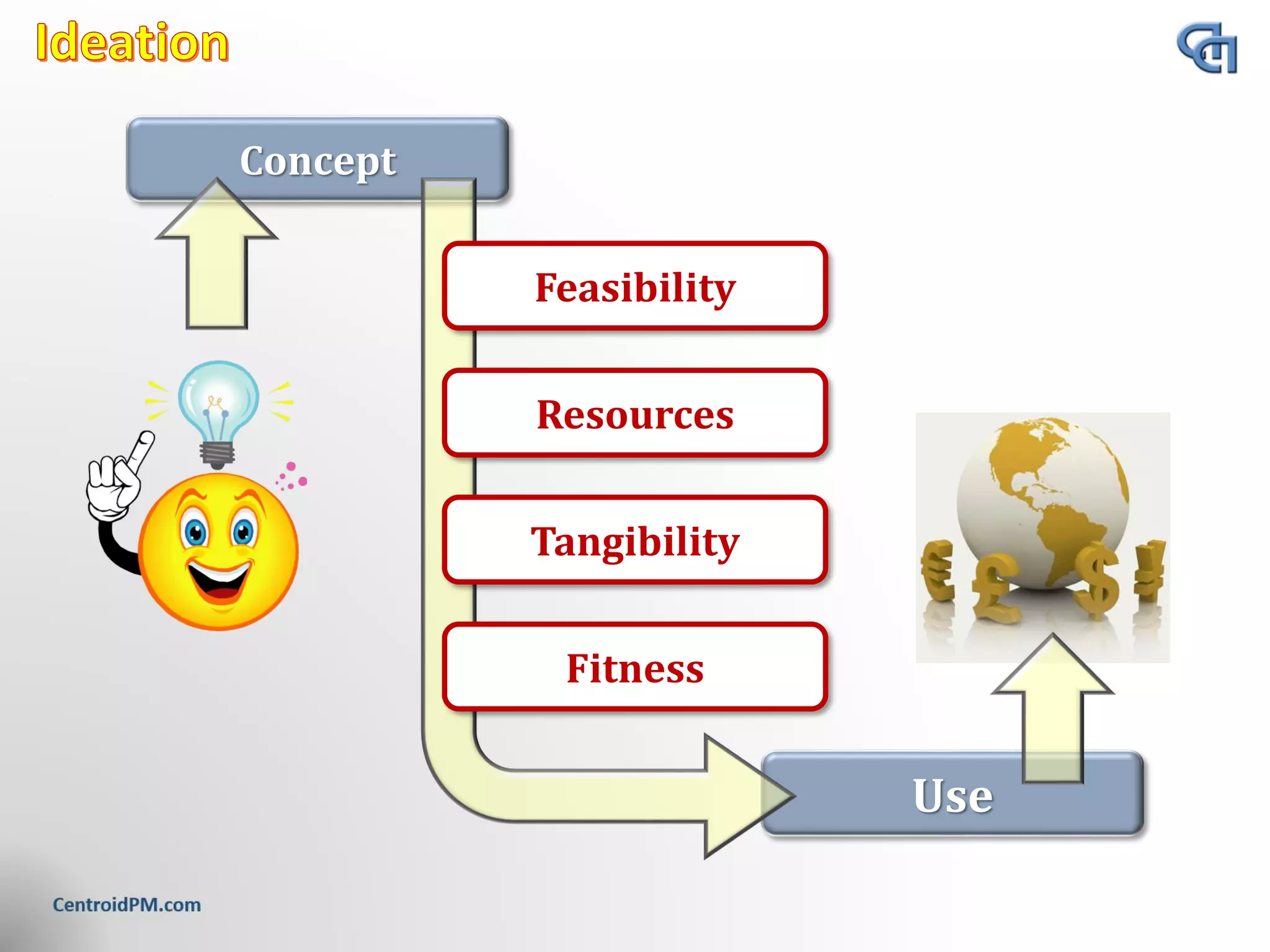
Concept
Use
Feasibility
Resources
Tangibility
Fitness
Desirability
Feasibility
Viability
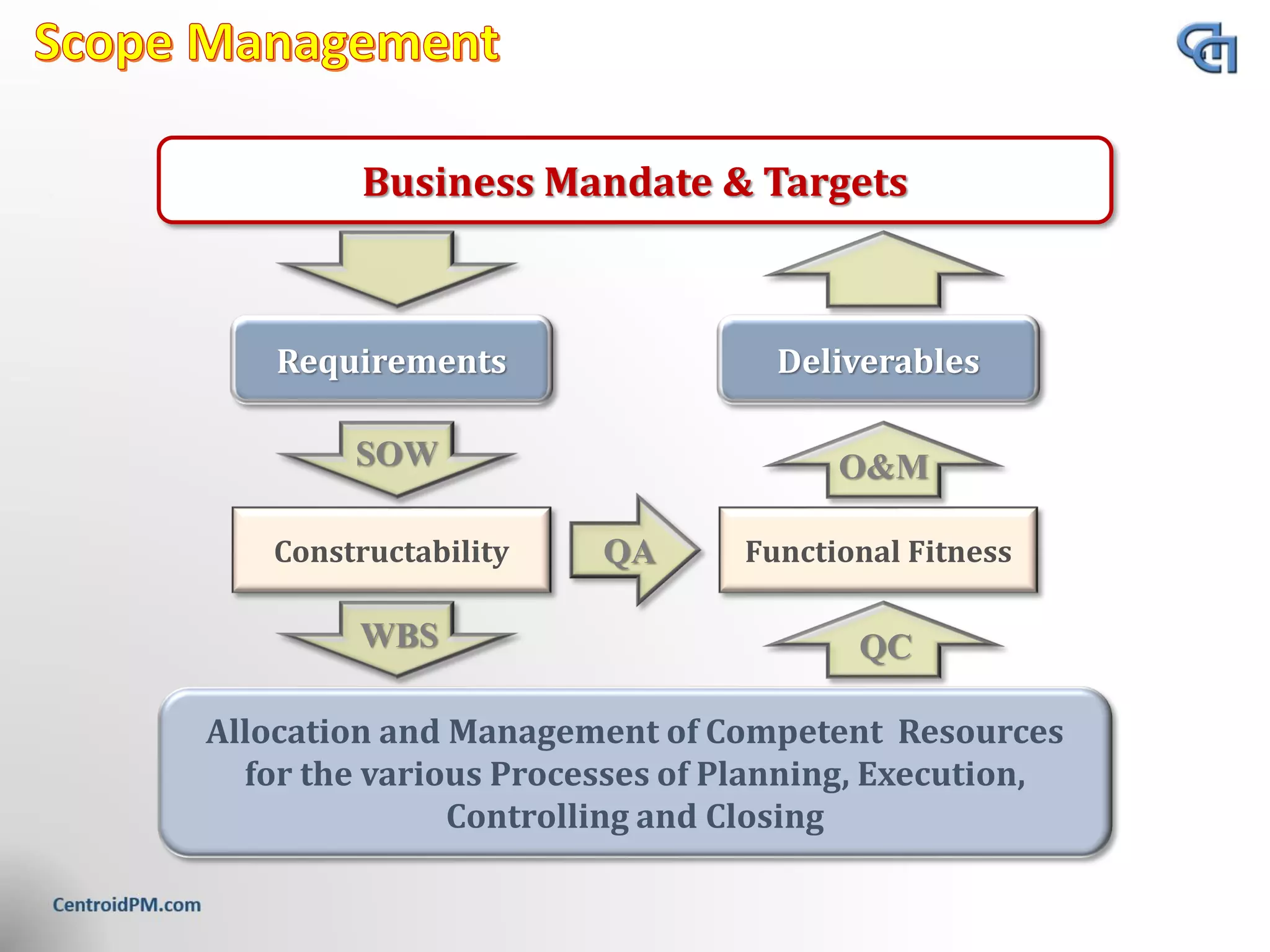
Business Mandate & Targets
Requirements
Allocation and Management of Competent Resources
for the various Processes of Planning, Execution,
Controlling and Closing
Constructability
Deliverables
Functional Fitness
SOW
WBS
O&M
QC
QA
Business
Sustainability
OperationDevelopmentLaunch
ExecutionDesignPlanning
QualityBenchmarking
End User
DeliveryDelivery AuditCommissioning
Level 1
Management
Level 2
Client Rep
Level 3
Project Manager
Level 4
Consultants
Level 5
Contractors
Level 6
Subcontractors
Level 7
Suppliers
The Project
Procurement ExecutionPlanning & Design
Assembly DeliveryMobilize
Main TestingEnabling
B CA
2 31
ii iiii
TheProject
ProcurementExecutionPlanning&Design
AssemblyDeliveryMobilize
MainTestingEnabling
BCA
231
iiiiii
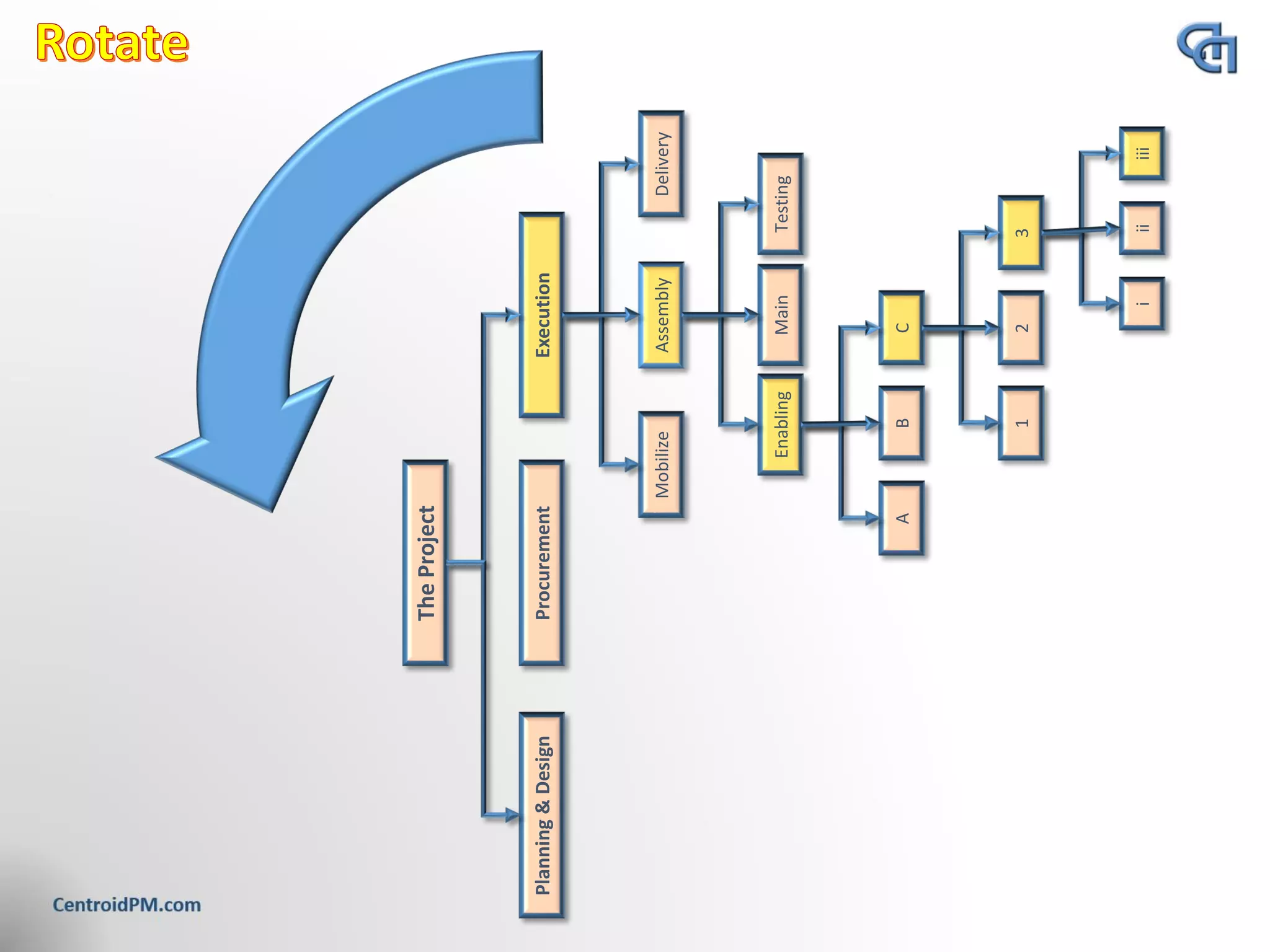
The Project
Procurement
Planning & Design
Execution
Assembly
Delivery
Mobilize
Enabling
Testing
Main
B
C
A
2
3
1
ii
iii
i
Milestones &
Delivery
Budget &
Cash Flow
Aggregates &
Functionality
Balance of Resources & Deliverables
Only 28% of the projects run by PMPs had met Deadlines, Cost
or Fitness Satisfaction (PMI 2014)
Scope StatementProject Basic Data
Schedule & Milestones
Cost & Budget
Configuration Plan
Constraints & Assumptions
SWOT Analysis
Procurement Plan
Quality Plan
Management of Risk
The more planning aggregates are analyzed, structured and
reported; the more control over the project and deliverables
The Project Plan Document
Integrated Management Applications
Directory
Stakeholders
Scope Program
Budget
Assumptions
Risk Contracts
Quality
Knowledge Communications Documentation
Updates & Approvals
Project Management is not only about decision-making and workaround
constraints, but mainly about documentation as a basic platform
Initiation
Compliance
Product
Management
Exit
Initiation Compliance Commerciality Management Exit
Developing
Opportunities
Governance
& Regulatory
Branding
Marketing & Sales
Procurement
Management
Product Usability &
Functionality
Shareholding
Consortium
Agreements
& Contracts
Concessions
Management
Product
Delivery & Control
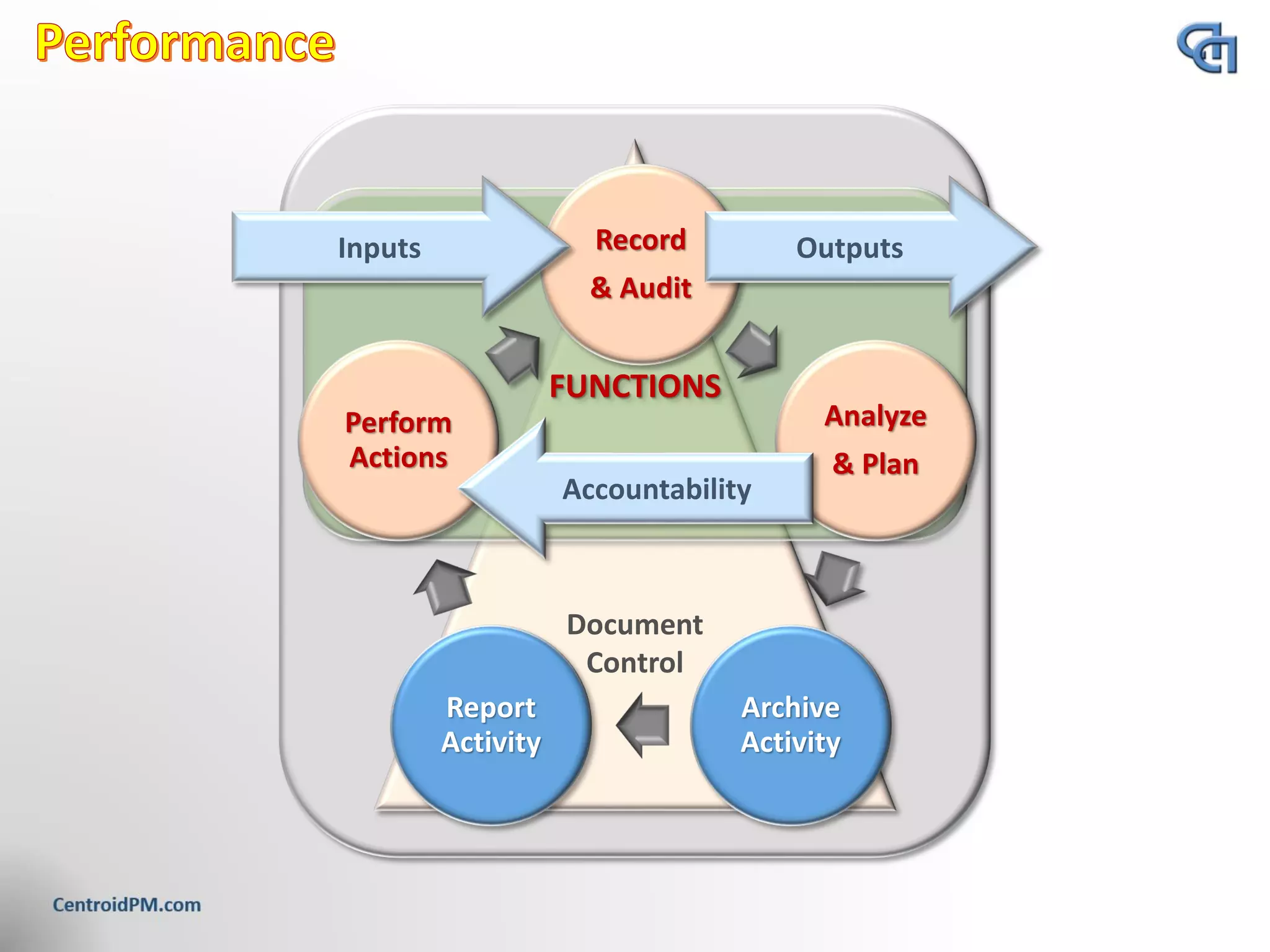
Document
Management
Document
Control
FUNCTIONS
Record
& Audit
Analyze
& Plan
Archive
Activity
Report
Activity
Perform
Actions
Inputs Outputs
Accountability
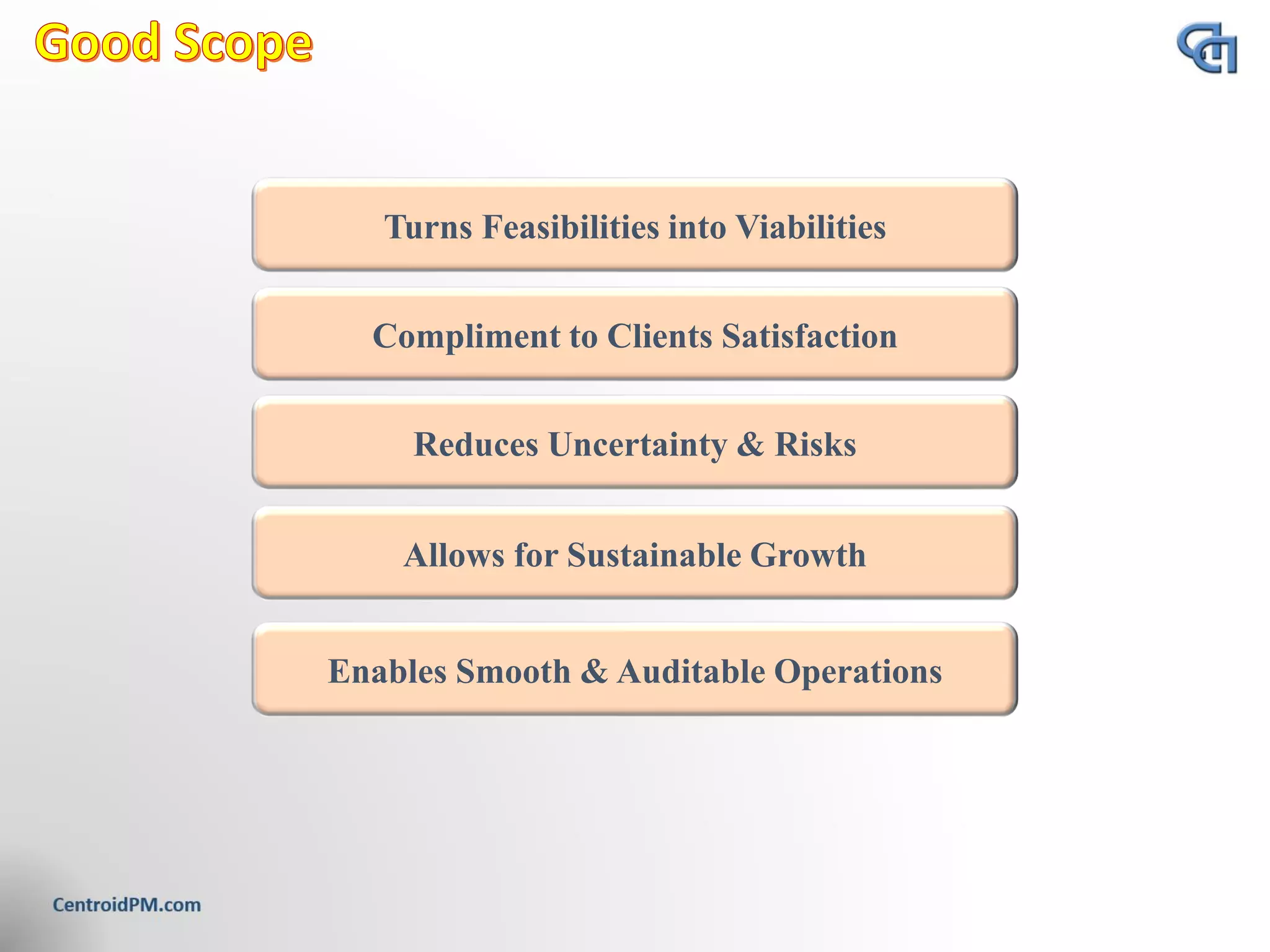
Turns Feasibilities into Viabilities
Compliment to Clients Satisfaction
Reduces Uncertainty & Risks
Enables Smooth & Auditable Operations
Allows for Sustainable Growth
Scope management

Scope management

  • 1.
  • 2.
    Disclaimer This presentation documentcontains information which is proprietary to CentroidPM; and is (and is intended to remain) confidential, being provided for the exclusive use of the intended addressee and may be legally privileged. If you have reason to believe you are not the intended addressee(s); disclosing, copying, disseminating or otherwise taking any action in connection with this document or the information in; it is prohibited and may be unlawful. If you have reason to believe you have accessed this document in error, please notify CentroidPM; comply with the foregoing warning and delete this document from your system. This document shall not constitute binding legal obligation with the company.
  • 4.
    ➢ The extentof the area or subject matter that something deals with or to which it is relevant. (Oxford) ➢ The work that needs to be accomplished to deliver a product, service, or result with the specified features and functions that characterize a product, service, or result. (PMI) ➢ Defining what is needed is the first step toward establishing a project timeline, setting of project goals and allocating project resources. These steps will help you to define the work that needs to be done - or in other words, define the scope of the project. Once this is defined, you'll be able to allocate tasks and give your team the direction they need to deliver the project on time and on budget. (CIO) ➢ The main purpose of the scope definition is to clearly describe the boundaries of your project. Clearly describing the boundaries is not enough when it comes to project. You need to get the client's agreement as well. (Prince2)
  • 6.
  • 7.
  • 8.
    Business Mandate &Targets Requirements Allocation and Management of Competent Resources for the various Processes of Planning, Execution, Controlling and Closing Constructability Deliverables Functional Fitness SOW WBS O&M QC QA
  • 9.
  • 11.
    Level 1 Management Level 2 ClientRep Level 3 Project Manager Level 4 Consultants Level 5 Contractors Level 6 Subcontractors Level 7 Suppliers The Project Procurement ExecutionPlanning & Design Assembly DeliveryMobilize Main TestingEnabling B CA 2 31 ii iiii
  • 12.
  • 13.
    The Project Procurement Planning &Design Execution Assembly Delivery Mobilize Enabling Testing Main B C A 2 3 1 ii iii i
  • 14.
    Milestones & Delivery Budget & CashFlow Aggregates & Functionality Balance of Resources & Deliverables Only 28% of the projects run by PMPs had met Deadlines, Cost or Fitness Satisfaction (PMI 2014)
  • 15.
    Scope StatementProject BasicData Schedule & Milestones Cost & Budget Configuration Plan Constraints & Assumptions SWOT Analysis Procurement Plan Quality Plan Management of Risk The more planning aggregates are analyzed, structured and reported; the more control over the project and deliverables
  • 16.
    The Project PlanDocument Integrated Management Applications Directory Stakeholders Scope Program Budget Assumptions Risk Contracts Quality Knowledge Communications Documentation Updates & Approvals Project Management is not only about decision-making and workaround constraints, but mainly about documentation as a basic platform
  • 17.
    Initiation Compliance Product Management Exit Initiation Compliance CommercialityManagement Exit Developing Opportunities Governance & Regulatory Branding Marketing & Sales Procurement Management Product Usability & Functionality Shareholding Consortium Agreements & Contracts Concessions Management Product Delivery & Control Document Management
  • 18.
  • 19.
    Turns Feasibilities intoViabilities Compliment to Clients Satisfaction Reduces Uncertainty & Risks Enables Smooth & Auditable Operations Allows for Sustainable Growth