ALL ABOUT PROJECT
SCOPE
Simply put, scope is
the size of the
project. But there’s
more to it than
that!
What is Project Scope?
• Simply put, project scope is the size of the project.
• Project scope includes one or more of the following considerations:
• How much is to be achieved in the project?
• What is the length of the project window, i.e., when does the
project start and when must it finish?
• What is the obligation of resources (money, people, equipment,
supplies, etc.)?
Adjusting Scope
• If you squeeze a project’s scope, you might end up spinning off
additional subprojects.
• If you make a project’s scope too broad, you add complexity and will
have to manage many disparate elements simultaneously.
Establishing Project
Scope
• The scope must be clearly defined and agreed upon when a new
project is established.
• Scope defines the assumptions for making all the cost, schedule and
resource projections in your project planning.
• Scope established for a project puts boundaries on the planning
process and deliverables.
• In defining scope, the specific outcomes or deliverables of the project
should be delineated along with those activities and deliverables
outside the scope of the project.
Scope Creep
• When you add work to a project, little by little, insidiously, until
the original schedule and cost estimates are completely blown
and meaningless, you’ve attained scope creep.
• Make sure that any scope creep in either the statement of work
or project plan is agreed to in writing, along with the resulting
Complexity vs. Scope
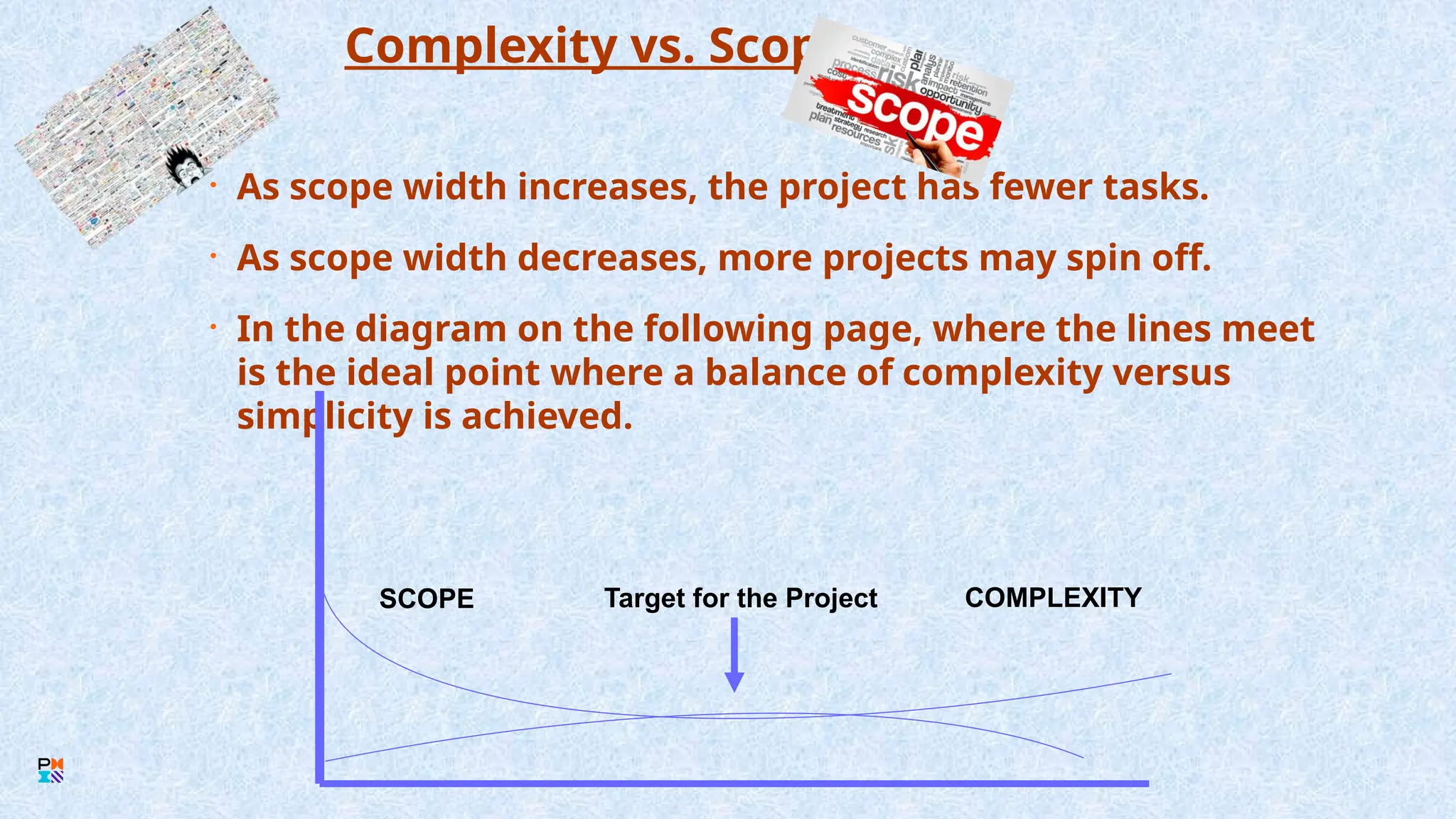
• As scope width increases, the project has fewer tasks.
• As scope width decreases, more projects may spin off.
• In the diagram on the following page, where the lines meet
is the ideal point where a balance of complexity versus
simplicity is achieved.
Target for the Project COMPLEXITY
SCOPE
Name : Soumyaa De
PMP & Registered Prince2
Practitioner
LinkedIn Profile
Project Management Institute | Community Profile

Total Understanding About Project Scope.

  • 1.
    ALL ABOUT PROJECT SCOPE Simplyput, scope is the size of the project. But there’s more to it than that!
  • 2.
    What is ProjectScope? • Simply put, project scope is the size of the project. • Project scope includes one or more of the following considerations: • How much is to be achieved in the project? • What is the length of the project window, i.e., when does the project start and when must it finish? • What is the obligation of resources (money, people, equipment, supplies, etc.)? Adjusting Scope • If you squeeze a project’s scope, you might end up spinning off additional subprojects. • If you make a project’s scope too broad, you add complexity and will have to manage many disparate elements simultaneously.
  • 3.
    Establishing Project Scope • Thescope must be clearly defined and agreed upon when a new project is established. • Scope defines the assumptions for making all the cost, schedule and resource projections in your project planning. • Scope established for a project puts boundaries on the planning process and deliverables. • In defining scope, the specific outcomes or deliverables of the project should be delineated along with those activities and deliverables outside the scope of the project. Scope Creep • When you add work to a project, little by little, insidiously, until the original schedule and cost estimates are completely blown and meaningless, you’ve attained scope creep. • Make sure that any scope creep in either the statement of work or project plan is agreed to in writing, along with the resulting
  • 4.
    Complexity vs. Scope •As scope width increases, the project has fewer tasks. • As scope width decreases, more projects may spin off. • In the diagram on the following page, where the lines meet is the ideal point where a balance of complexity versus simplicity is achieved. Target for the Project COMPLEXITY SCOPE
  • 5.
    Name : SoumyaaDe PMP & Registered Prince2 Practitioner LinkedIn Profile Project Management Institute | Community Profile