Integrated Management System
IMS & Internal Audit
Adil Abdalla
2019
Disclaimer
This presentation document contains information which is proprietary to CentroidPM; and is (and is
intended to remain) confidential, being provided for the exclusive use of the intended addressee and may
be legally privileged. If you have reason to believe you are not the intended addressee(s); disclosing,
copying, disseminating or otherwise taking any action in connection with this document or the information
in; it is prohibited and may be unlawful. If you have reason to believe you have accessed this document in
error, please notify CentroidPM; comply with the foregoing warning and delete this document from your
system. This document shall not constitute binding legal obligation with the company.
What Are the Standards
Like a symphony, it takes a lot of people working together to develop a
standard.
ISO’s role is similar to that of a conductor, while the orchestra is made up of
independent technical experts.
ISO creates documents that provide requirements, specifications, guidelines
or characteristics that can be used consistently to ensure that materials,
products, processes and services are fit for their purpose.
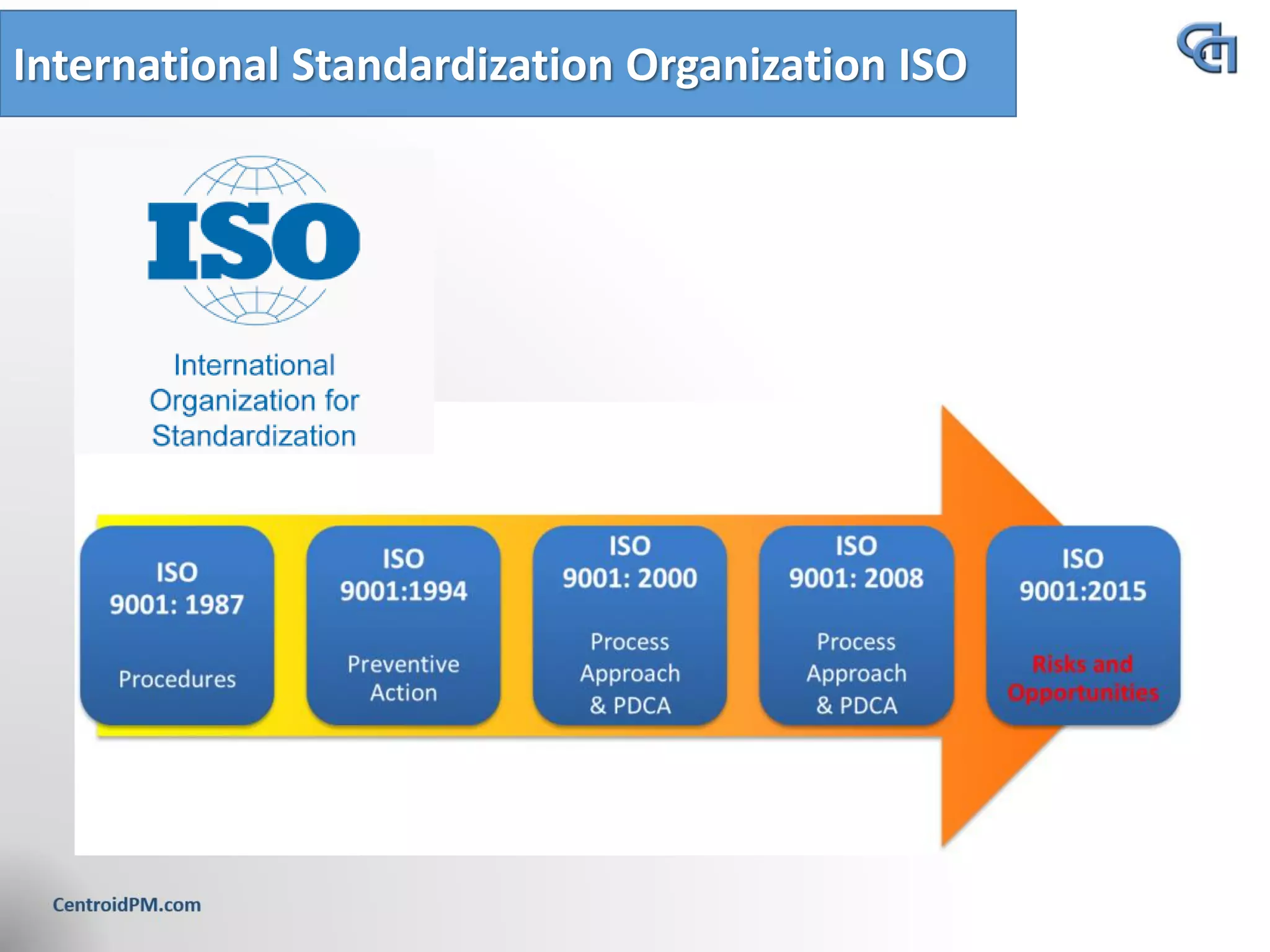
So far, ISO had published 22,654 International Standards
Certification – the provision by an
independent body of written
assurance (a certificate) that the
product, service or system in question
meets specific requirements.
Accreditation – the formal recognition
by an independent body, generally
known as an accreditation body, that a
certification body operates according
to international standards.
International Standardization Organization ISO
International Classifications Standards ICS
The ICS (International Classification for Standards) is intended to
serve as a structure for catalogues of international, regional and
national standards and other normative documents, and as a basis
for standing-order systems for international, regional and national
standards. It may also be used for classifying standards and
normative documents in databases, libraries, etc.
The ICS should facilitate the harmonization of information and
ordering tools such as catalogues, selective lists, bibliographies, and
databases on magnetic and optical media, thus promoting the
world-wide dissemination of international, regional and national
standards and other normative documents.
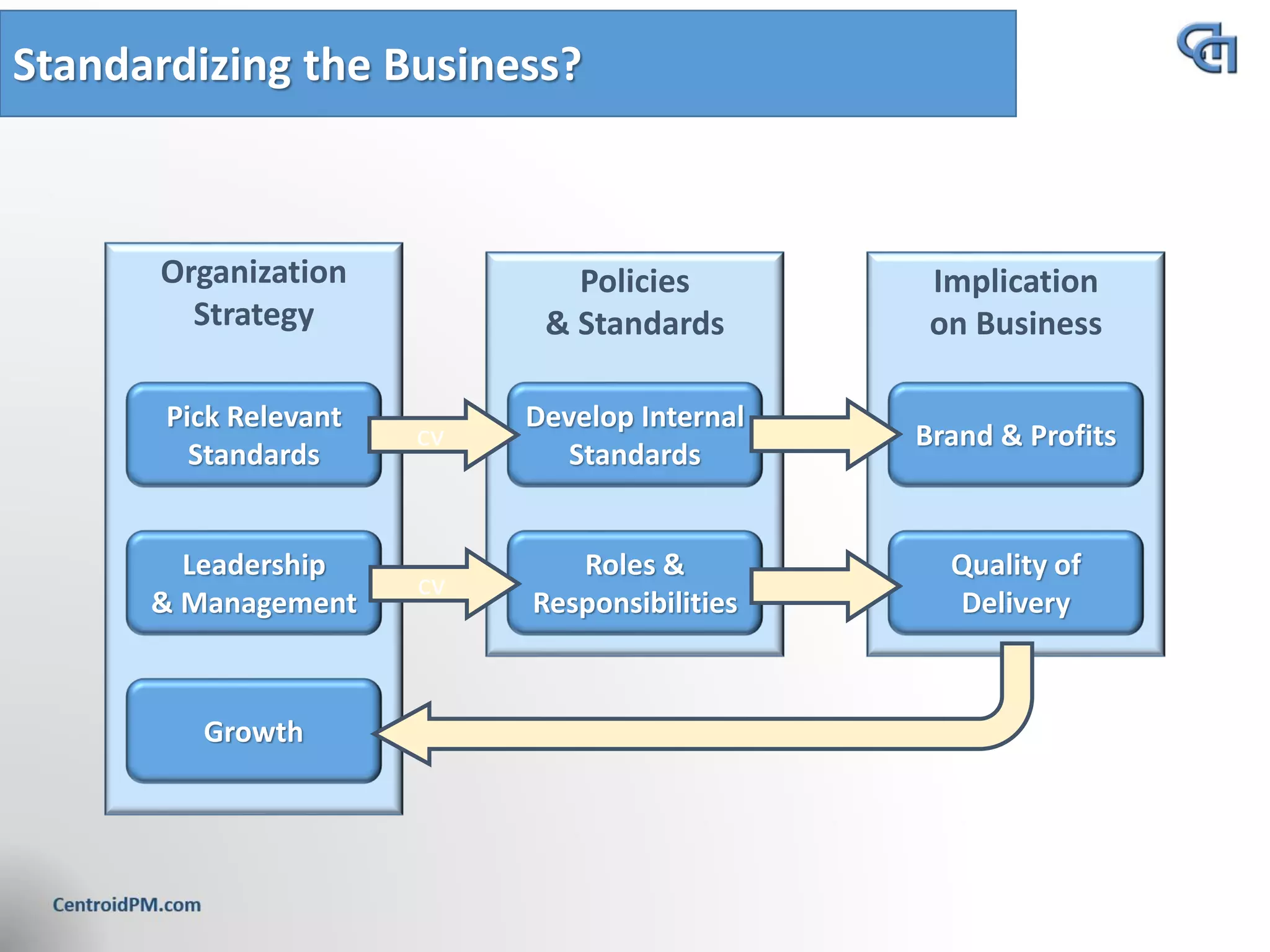
Standardizing the Business?
Policies
& Standards
Develop Internal
Standards
Roles &
Responsibilities
Organization
Strategy
Pick Relevant
Standards
Leadership
& Management
Growth
Implication
on Business
Brand & Profits
Quality of
Delivery
cv
cv
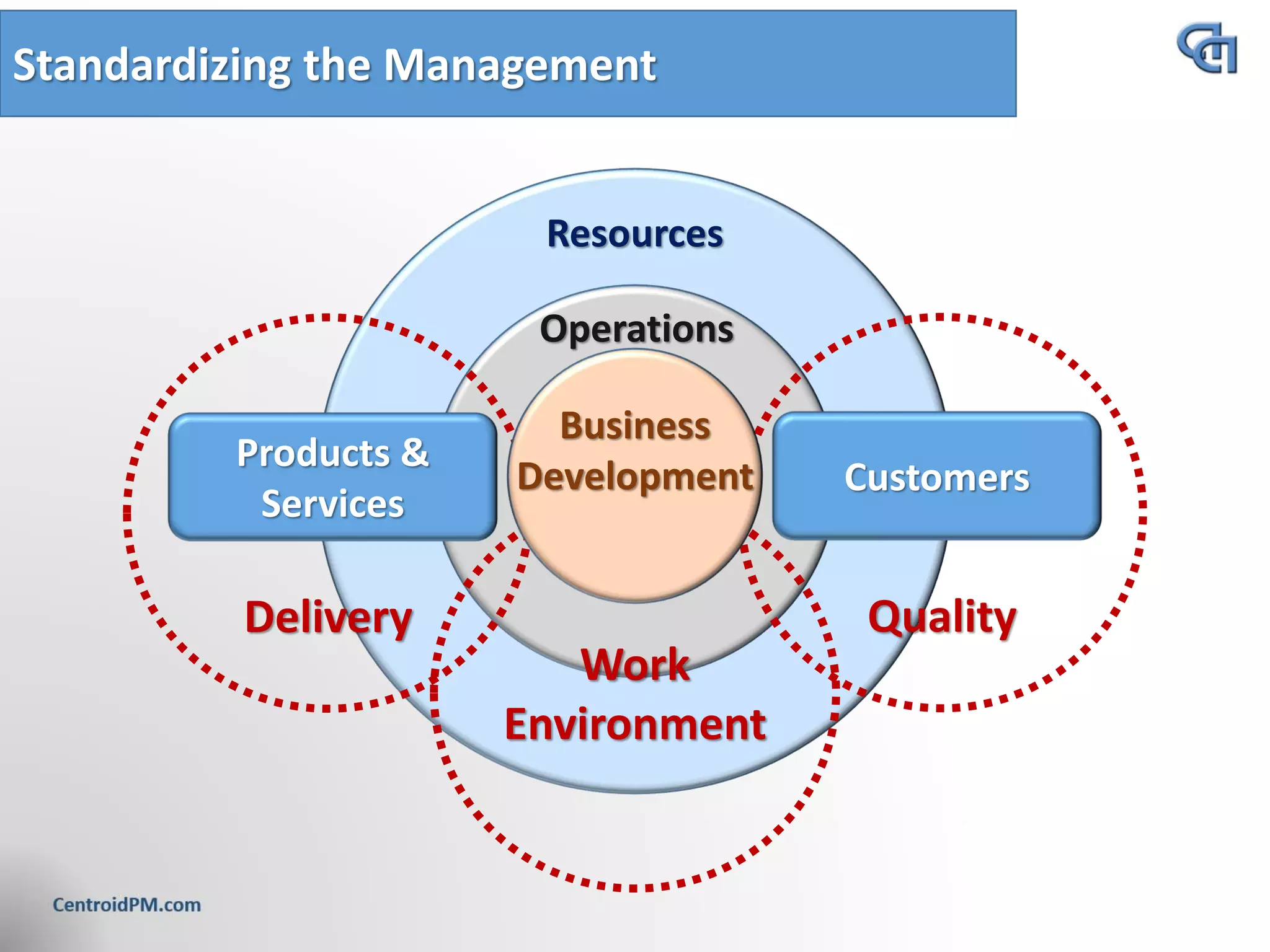
Standardizing the Management
Operations
Resources
Products &
Services
Customers
QualityDelivery
Work
Environment
Business
Development
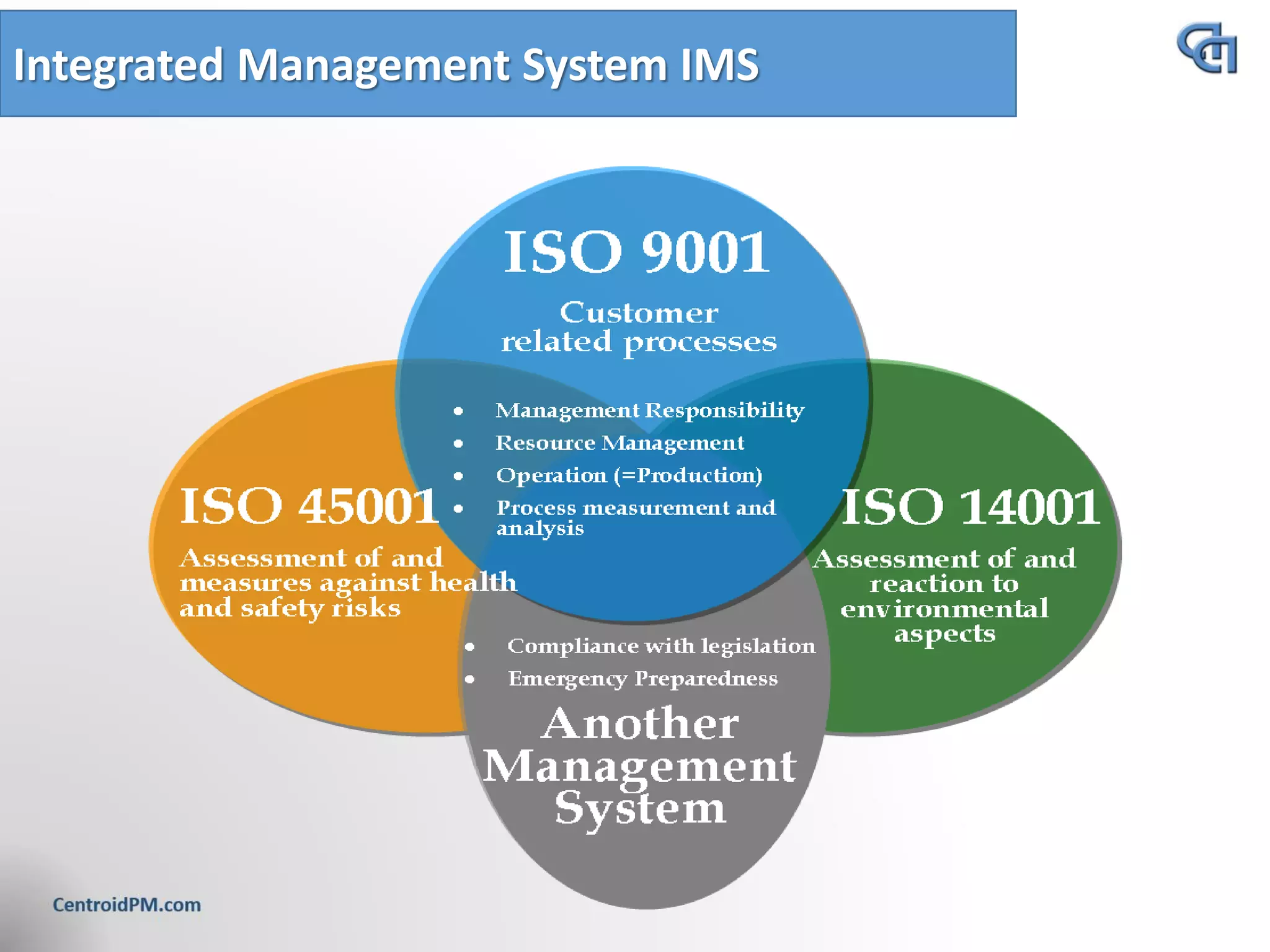
Integrated Management System IMS
Non-Generic Clauses
# Clause Why not IMS ?
1 Scope
Varies as per Organization Mandate
and the chosen Business Specialty
2 Normative References
Benchmarking of the Line on
Business is never singular, based on
Appetite, Competences, Innovation
and Facilitations
3 Terms & Definitions
All necessary interpretation of
literature to align the mindset of
management, Employees and
Resources
Annex Structural Level Framework
# Clause Sub-1 Sub-2 Sub-3 Sub-4 Sub-5
4
Organization
Context
Understanding
Organization
Needs &
Expectations
Scope of Mgmt
System
Management
System
5 Leadership
Leadership &
Commitment
Policy
Roles &
Responsibilities
6 Planning
Risks &
Opportunities
Legal &
Requirements
Mgmt System
Objectives
7 Support
Resources
(Contractors)
Competences
(Training)
Awareness
(Employees)
Communication
(meetings)
Documented
Information
8 Operations Marketing
Sales &
Partnering
Suppliers
Evaluation
Health & Safety
Accidents
Incidents
Employee
Participation
Emergency
Planning H&S
Environmental
Env. Incident
Investigation
Emergency
Planning Env
9
Performance
Evaluation
Monitoring &
Evaluation
Internal Audit
Management
Review
10 Improvement
Corrective
Actions
Continual
Improvement
Internal Audit
ISO Standards
Manuals
Key Words for
Questions
Extracted
Recommendations
Organization
Policies
& Documents
Evidence of
Implementation
Corrective
Actions
Internal Audit
Audit Plan
Discussions
With Auditees
Examination
Clauses & Subs
cv
Gap Analysis
Identifying NCRs
cv cv
cv
cv
Roadmap for IMS Certification
Awareness Training1
Policy & Objectives2
Internal Gap Analysis3
Documentation / Process Design4
Documentation / Process Implementation5
Internal Audit6
Organize a Management System7
Thorough Gap Analysis of the System8
Corrective Actions9
Final Certification Audit10
Getting the Staff Ready
Develop Organization’s
Initial Review by Managers
Develop Process Catalogue
Improve Process by Practice
Conduct by Impartial Party
Collaboration on Org Level
Defining the non-compliant
Plan and Execute Corrections
By a Certification Authority
ISO IMS

ISO IMS

  • 1.
    Integrated Management System IMS& Internal Audit Adil Abdalla 2019
  • 2.
    Disclaimer This presentation documentcontains information which is proprietary to CentroidPM; and is (and is intended to remain) confidential, being provided for the exclusive use of the intended addressee and may be legally privileged. If you have reason to believe you are not the intended addressee(s); disclosing, copying, disseminating or otherwise taking any action in connection with this document or the information in; it is prohibited and may be unlawful. If you have reason to believe you have accessed this document in error, please notify CentroidPM; comply with the foregoing warning and delete this document from your system. This document shall not constitute binding legal obligation with the company.
  • 3.
    What Are theStandards Like a symphony, it takes a lot of people working together to develop a standard. ISO’s role is similar to that of a conductor, while the orchestra is made up of independent technical experts. ISO creates documents that provide requirements, specifications, guidelines or characteristics that can be used consistently to ensure that materials, products, processes and services are fit for their purpose. So far, ISO had published 22,654 International Standards Certification – the provision by an independent body of written assurance (a certificate) that the product, service or system in question meets specific requirements. Accreditation – the formal recognition by an independent body, generally known as an accreditation body, that a certification body operates according to international standards.
  • 4.
  • 5.
    International Classifications StandardsICS The ICS (International Classification for Standards) is intended to serve as a structure for catalogues of international, regional and national standards and other normative documents, and as a basis for standing-order systems for international, regional and national standards. It may also be used for classifying standards and normative documents in databases, libraries, etc. The ICS should facilitate the harmonization of information and ordering tools such as catalogues, selective lists, bibliographies, and databases on magnetic and optical media, thus promoting the world-wide dissemination of international, regional and national standards and other normative documents.
  • 6.
    Standardizing the Business? Policies &Standards Develop Internal Standards Roles & Responsibilities Organization Strategy Pick Relevant Standards Leadership & Management Growth Implication on Business Brand & Profits Quality of Delivery cv cv
  • 7.
    Standardizing the Management Operations Resources Products& Services Customers QualityDelivery Work Environment Business Development
  • 8.
  • 9.
    Non-Generic Clauses # ClauseWhy not IMS ? 1 Scope Varies as per Organization Mandate and the chosen Business Specialty 2 Normative References Benchmarking of the Line on Business is never singular, based on Appetite, Competences, Innovation and Facilitations 3 Terms & Definitions All necessary interpretation of literature to align the mindset of management, Employees and Resources
  • 10.
    Annex Structural LevelFramework # Clause Sub-1 Sub-2 Sub-3 Sub-4 Sub-5 4 Organization Context Understanding Organization Needs & Expectations Scope of Mgmt System Management System 5 Leadership Leadership & Commitment Policy Roles & Responsibilities 6 Planning Risks & Opportunities Legal & Requirements Mgmt System Objectives 7 Support Resources (Contractors) Competences (Training) Awareness (Employees) Communication (meetings) Documented Information 8 Operations Marketing Sales & Partnering Suppliers Evaluation Health & Safety Accidents Incidents Employee Participation Emergency Planning H&S Environmental Env. Incident Investigation Emergency Planning Env 9 Performance Evaluation Monitoring & Evaluation Internal Audit Management Review 10 Improvement Corrective Actions Continual Improvement
  • 11.
    Internal Audit ISO Standards Manuals KeyWords for Questions Extracted Recommendations Organization Policies & Documents Evidence of Implementation Corrective Actions Internal Audit Audit Plan Discussions With Auditees Examination Clauses & Subs cv Gap Analysis Identifying NCRs cv cv cv cv
  • 12.
    Roadmap for IMSCertification Awareness Training1 Policy & Objectives2 Internal Gap Analysis3 Documentation / Process Design4 Documentation / Process Implementation5 Internal Audit6 Organize a Management System7 Thorough Gap Analysis of the System8 Corrective Actions9 Final Certification Audit10 Getting the Staff Ready Develop Organization’s Initial Review by Managers Develop Process Catalogue Improve Process by Practice Conduct by Impartial Party Collaboration on Org Level Defining the non-compliant Plan and Execute Corrections By a Certification Authority