Making sense of Institutions
How do we make sense out of them?
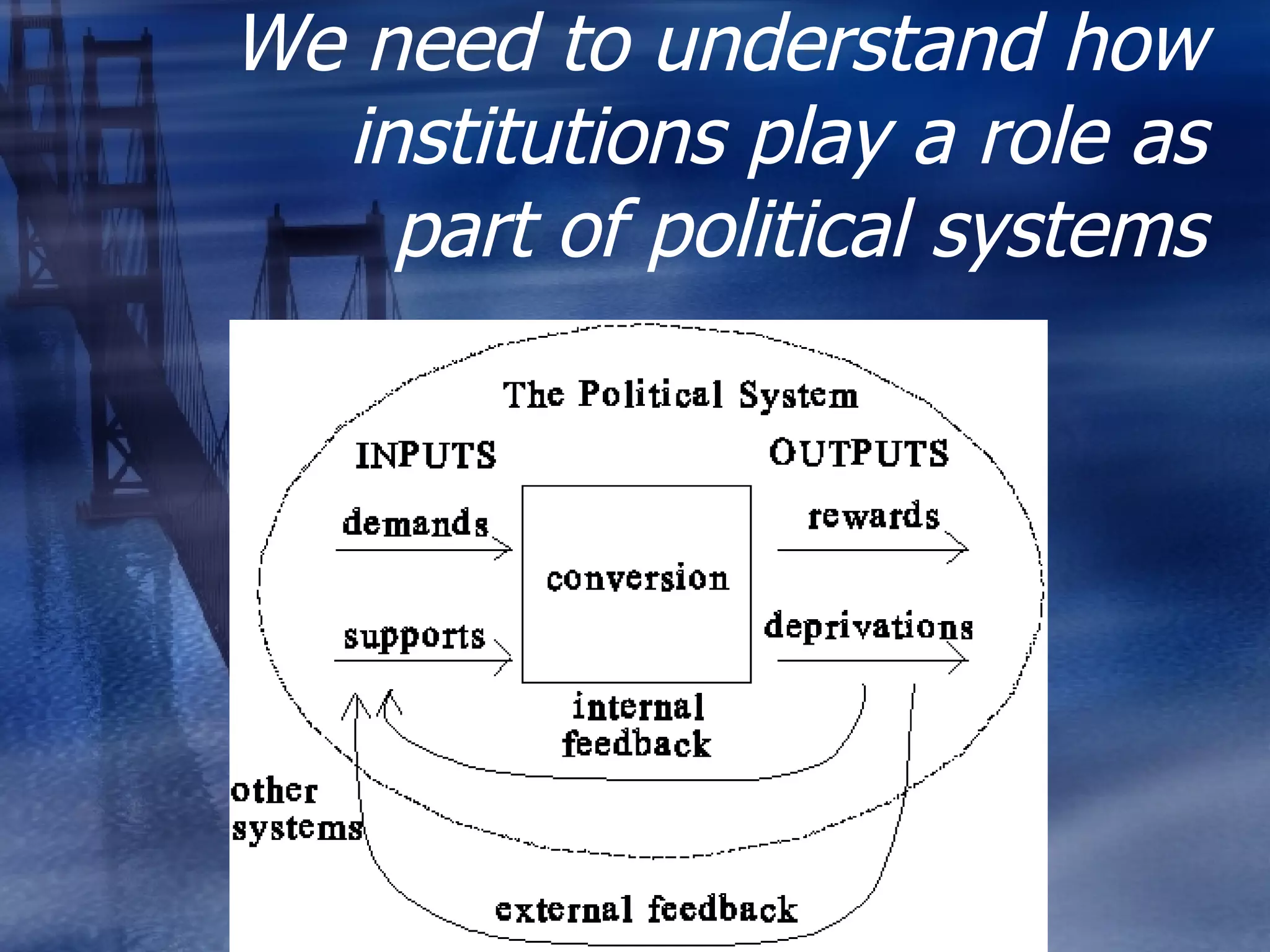
We need to understand how institutions play a role as part of political systems
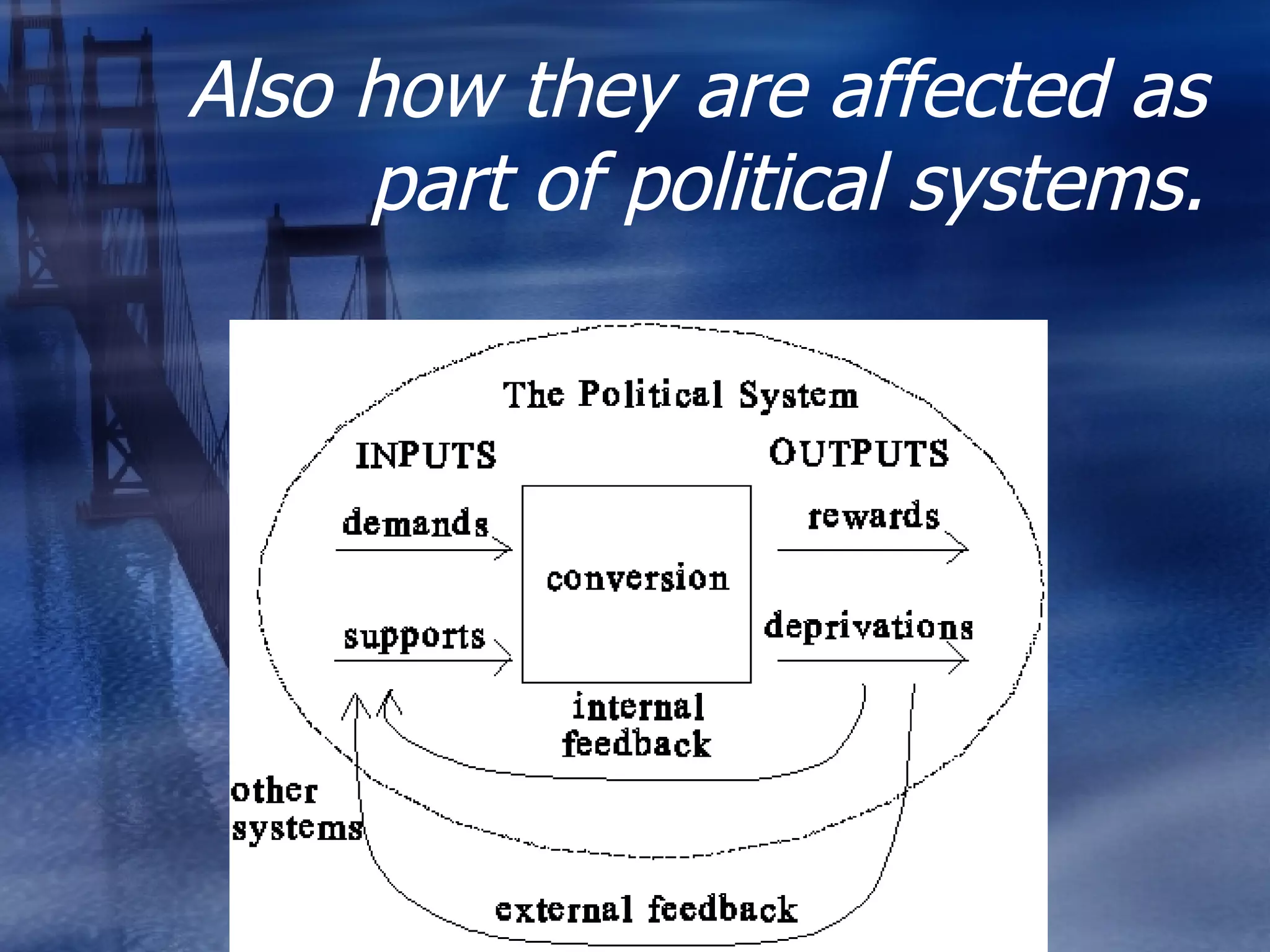
Also how they are affected as part of political systems.
They call this approach INSTITUTIONALISM
But first.
What are institutions? Institutions
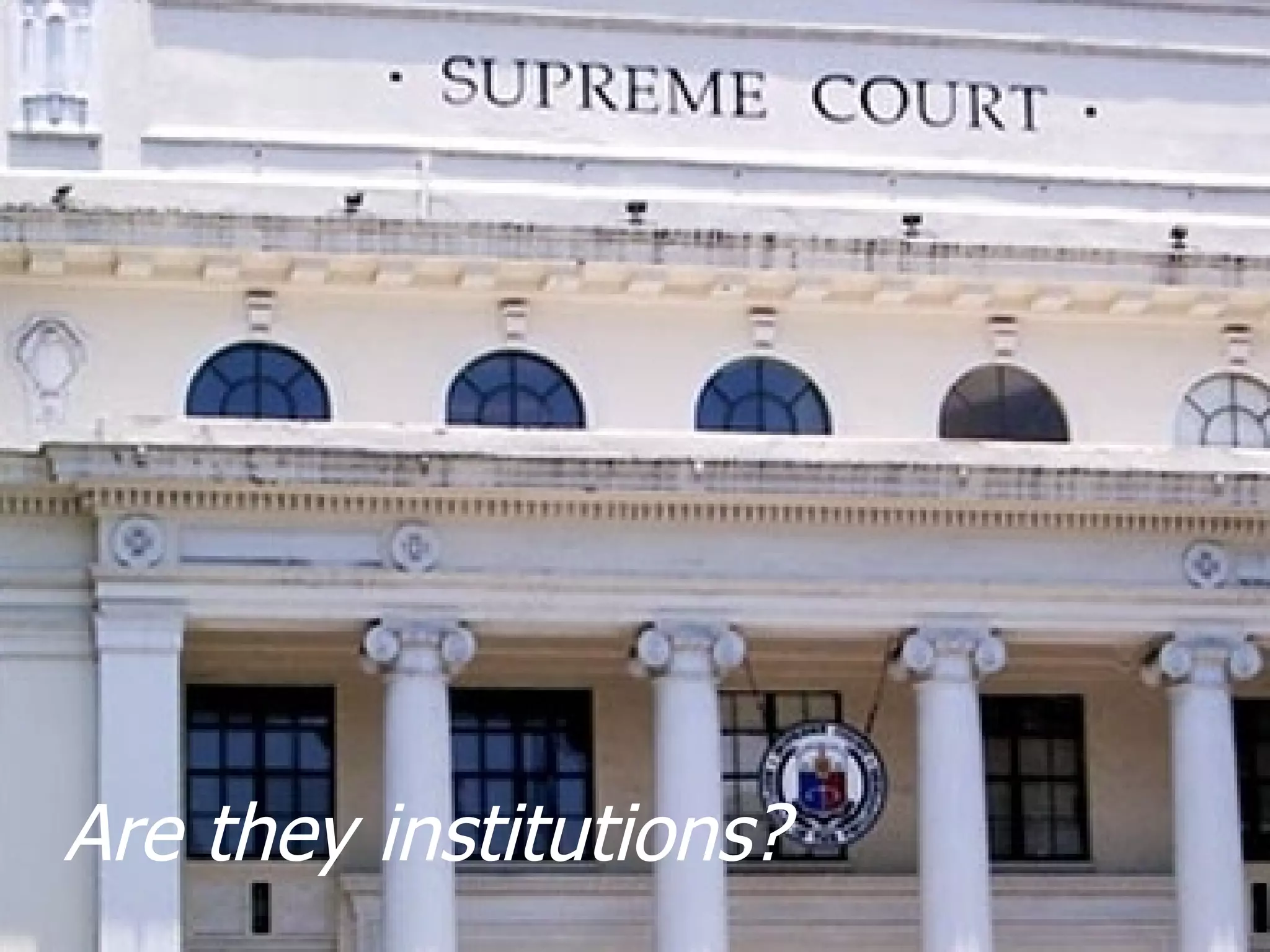
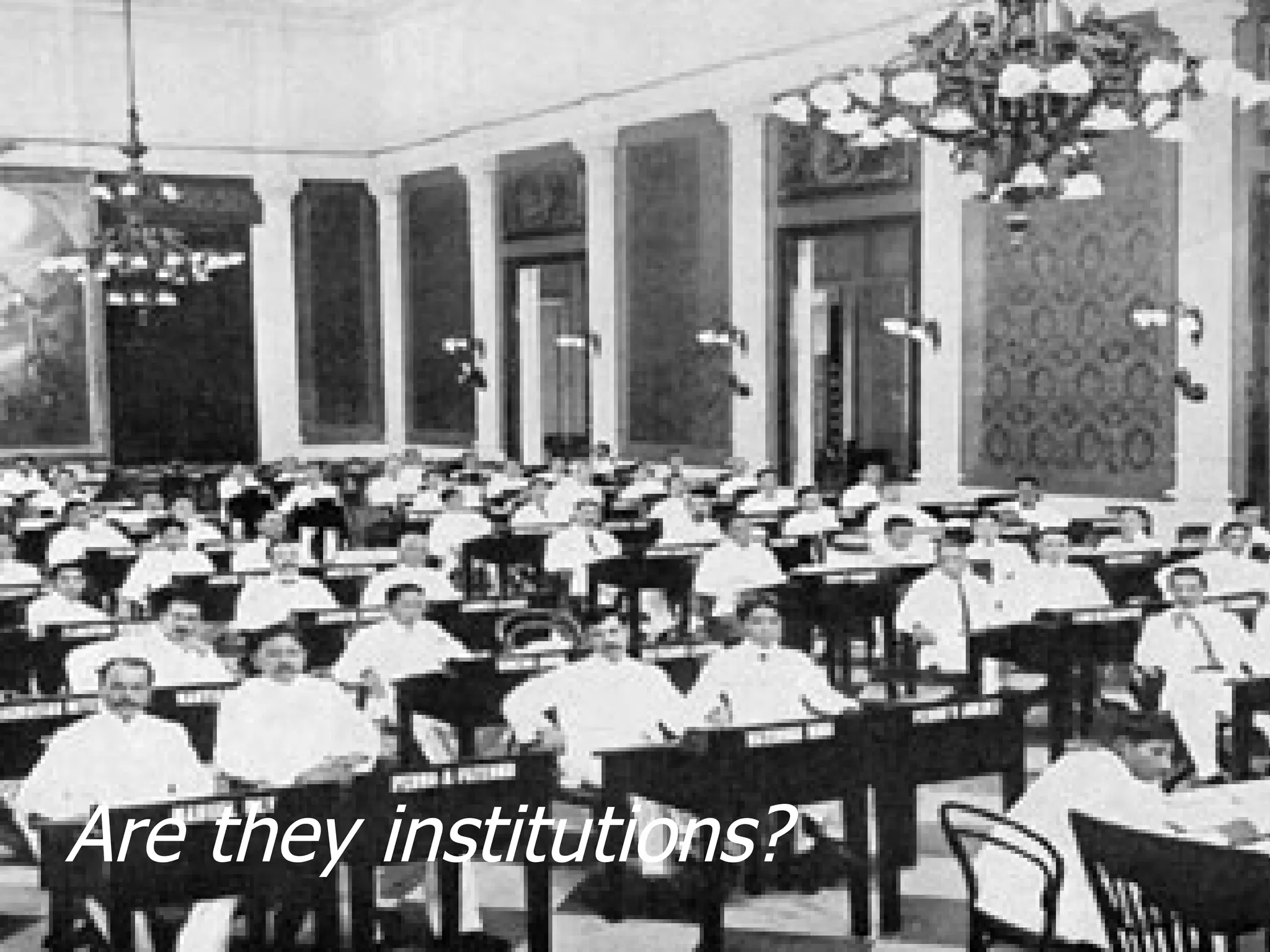
Are they institutions?
They are institutions.
Institutions are Formal and informal structures that can influence social behavior
They can: Constrain / Empower Prevent / Enable
For Institutionalism Independent Variables – I(d)V Values Ideals Norms Institutions are:
Intervening Variables – I(t)V Less visible rules, routines and practices,  but important ones .
Dependent Variables – DV Characteristics Outcomes
Institutionalism sounds easy, right. NOT!
Like everything else, it’s a matter of perspective. There are more ways than one at looking at things.
RATIONAL CHOICE INSTITUTIONALISM
Theoretical Perspective HUMAN ACTION – the cornerstone of any social scientific explanation
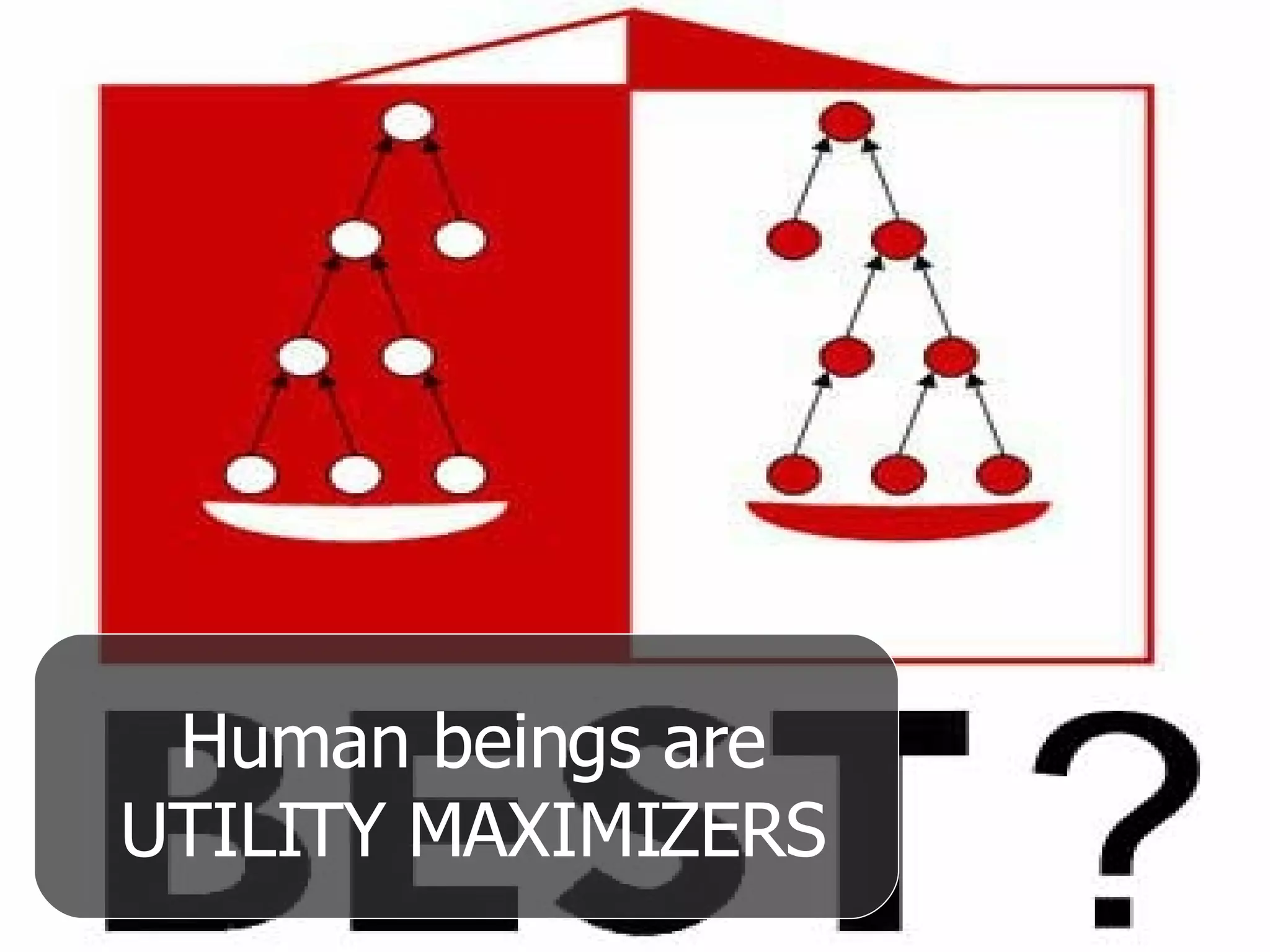
Human beings are UTILITY MAXIMIZERS
Actors are INDEPENDENT OF CONTEXT
What are Agents and Institutions?
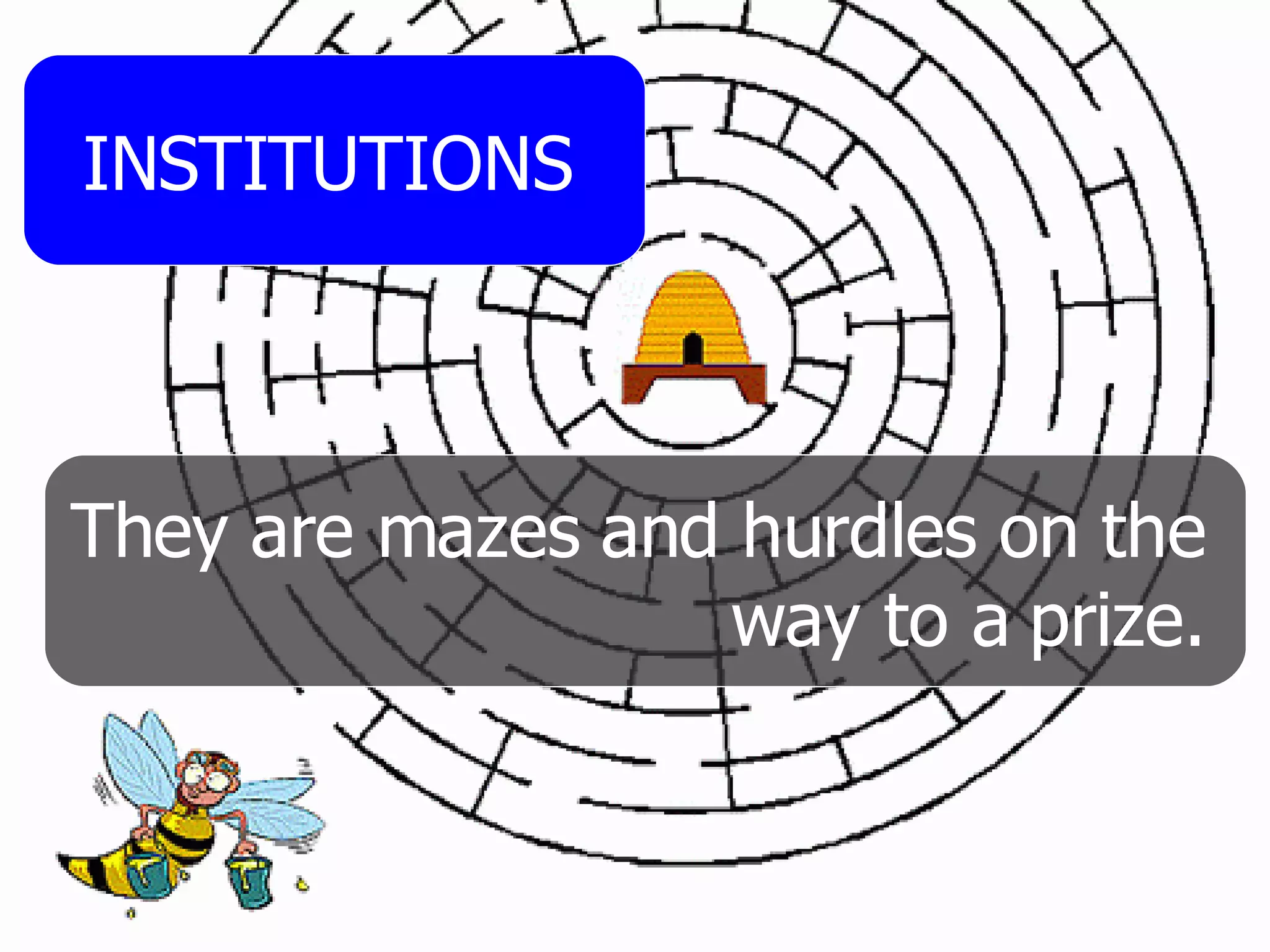
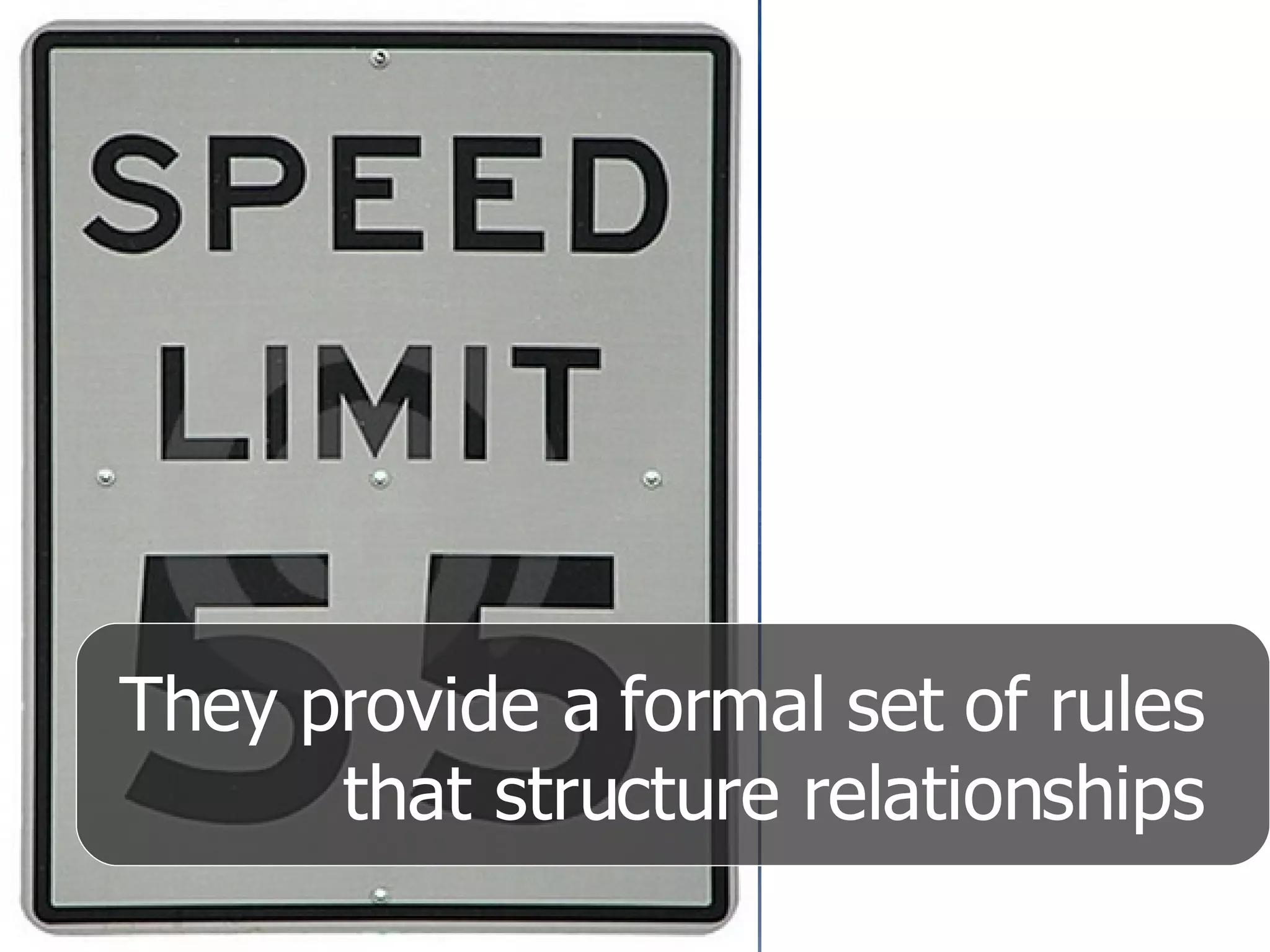
INSTITUTIONS They are mazes and hurdles on the way to a prize.
They provide a formal set of rules that structure relationships
AGENTS They are actors who negotiate with the rules.
They adapt to the rules and use them strategically.
How do Institutions change?
COST - BENEFIT Do we need to change the system?
Can we do it?
Can it be done?
SOCIOLOGICAL INSTITUTIONALISM
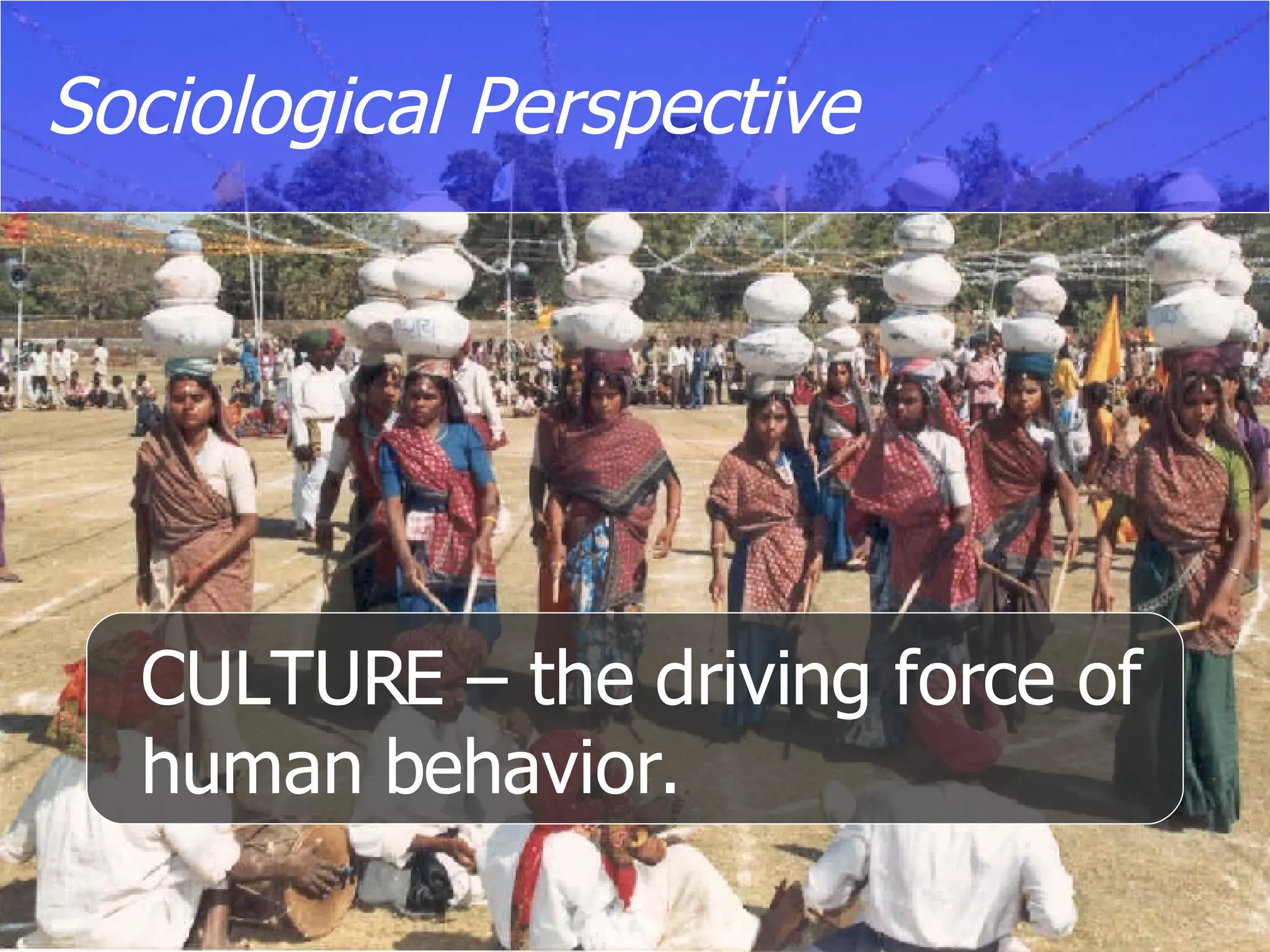
Sociological Perspective CULTURE – the driving force of human behavior.
Looking at how institutions emerge from social interactions. duties obligations norms
CULTURE = INSTITUTIONS
What are Agents and Institutions? INSTITUTIONS They are:  internal subconscious pre-rational
They don’t constrain options THEY MAKE THEM.
Agents and Structure can’t be separated.
Remember Marx? The world is where you are.
How are changes explained? Is change appropriate? Is it legitimate?
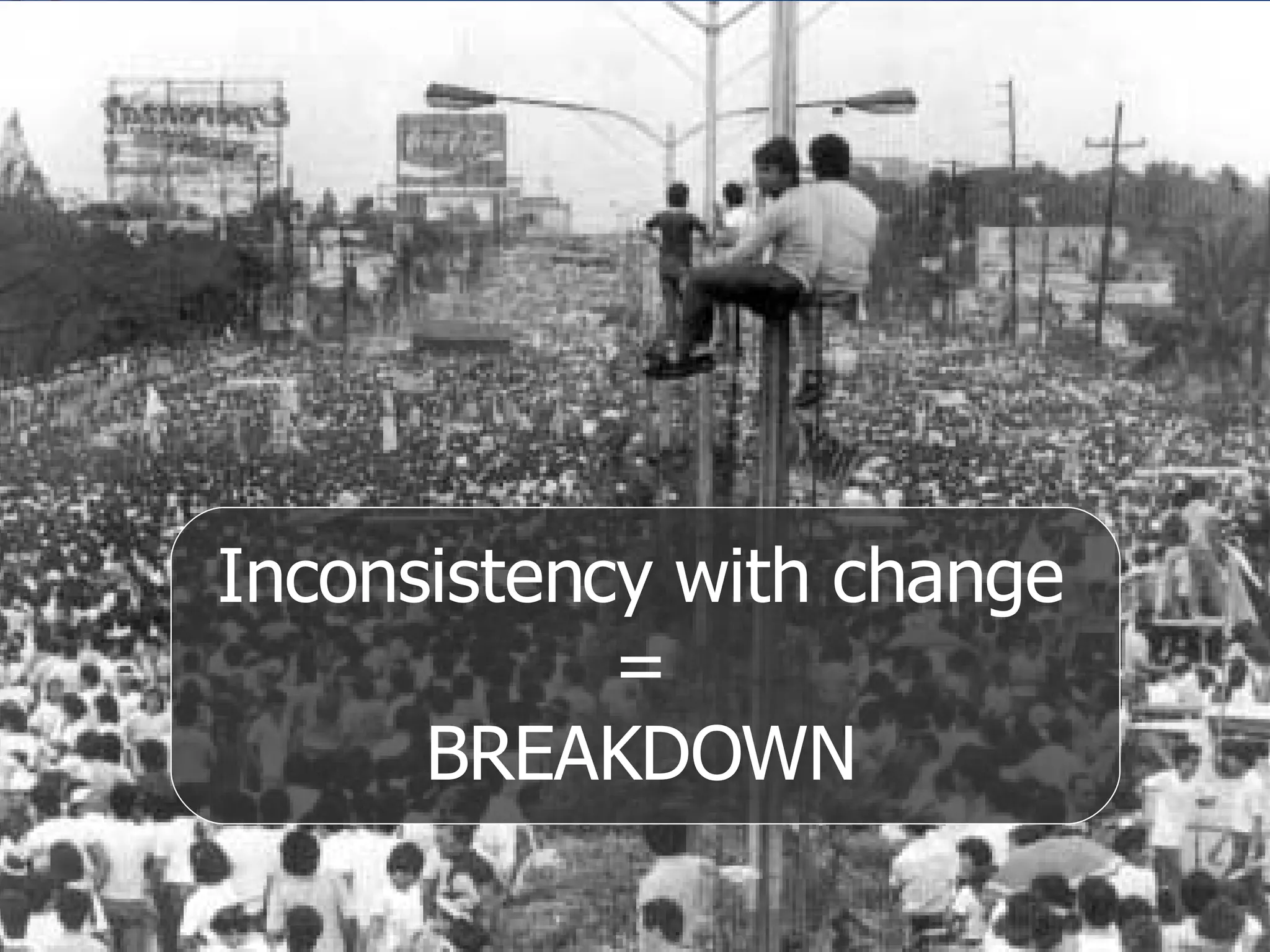
Inconsistency with change = BREAKDOWN
HISTORICAL INSTITUTIONALISM
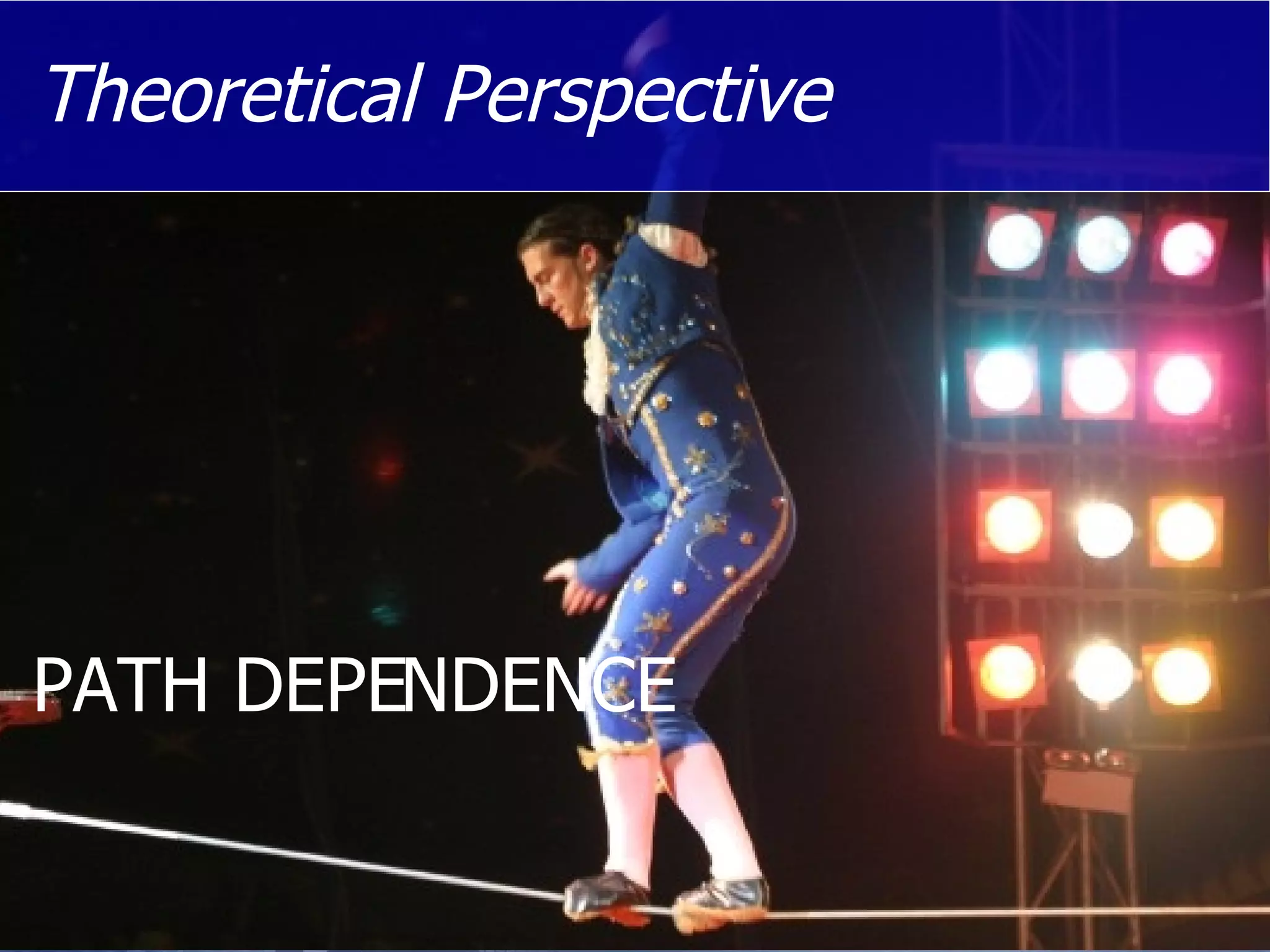
Theoretical Perspective PATH DEPENDENCE
Institutions reflect past models.
Role of Agents and Institutions: INSTITUTIONS shape the strategies and goals actors pursue.
They shape inputs and outputs.
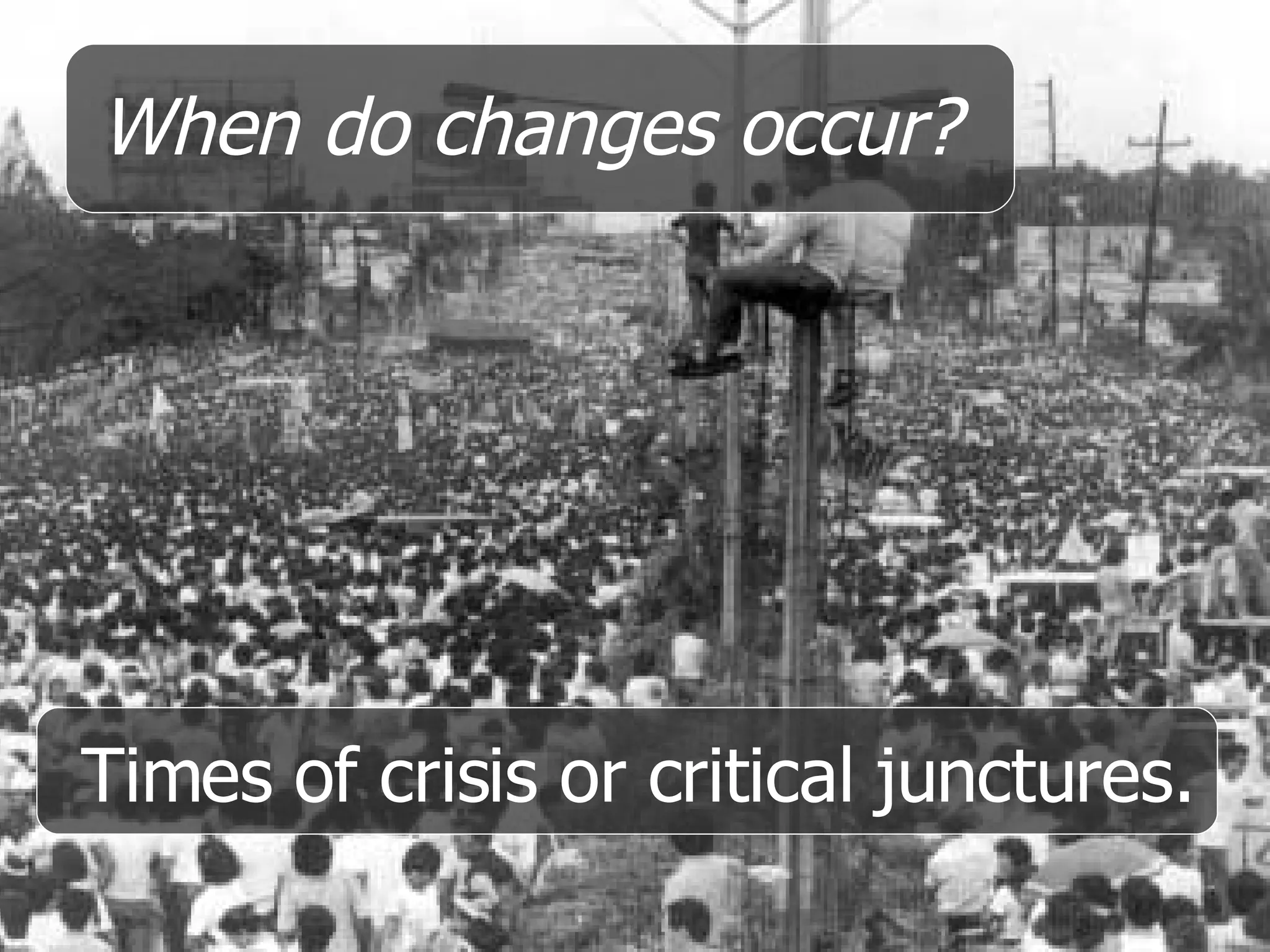
When do changes occur? Times of crisis or critical junctures.
Institutions create new institutions.
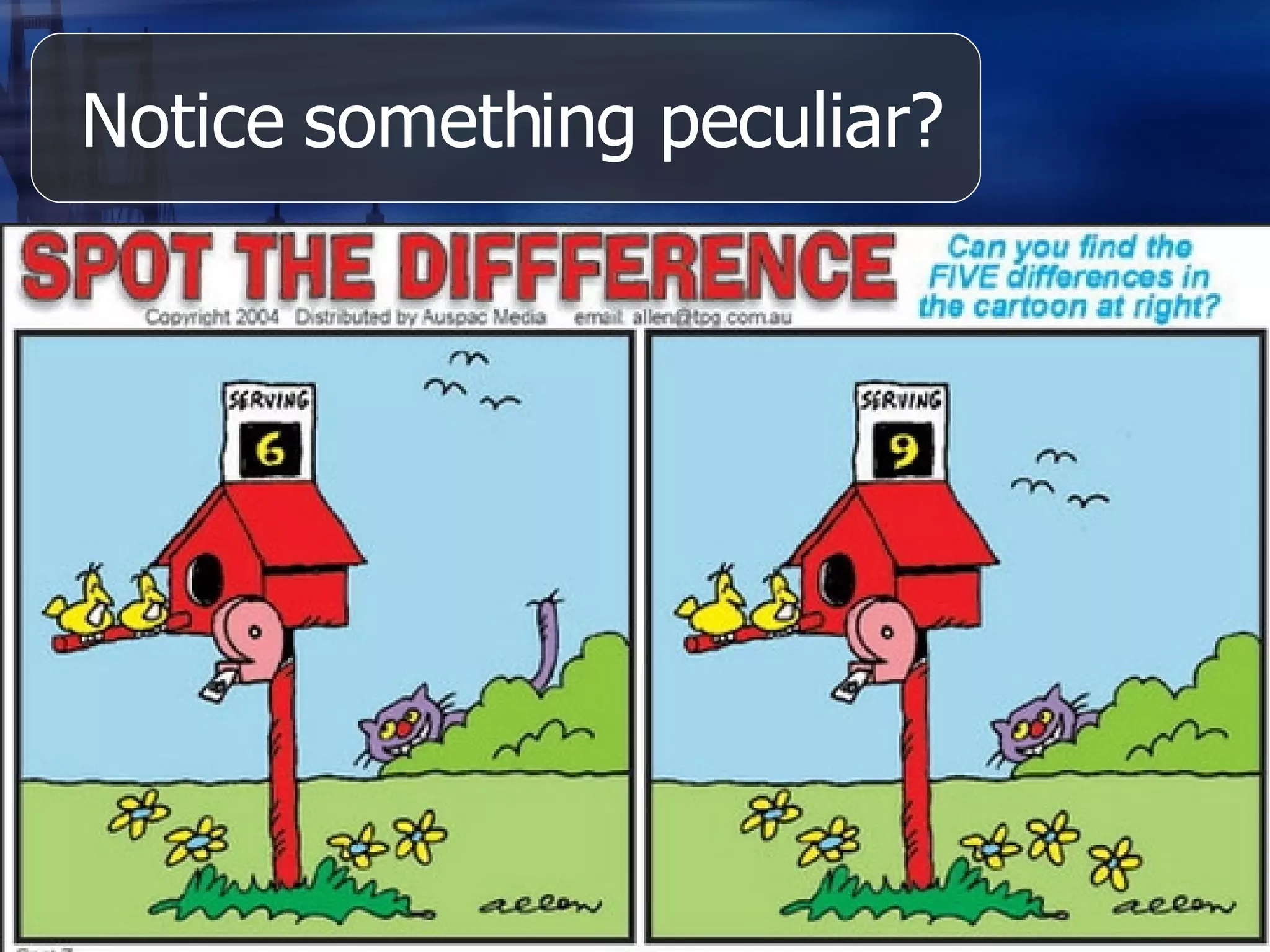
Notice something peculiar?
Historical analysis and sociological analysis  are in many ways related.
Institutions are very important. They dictate human choices and options.
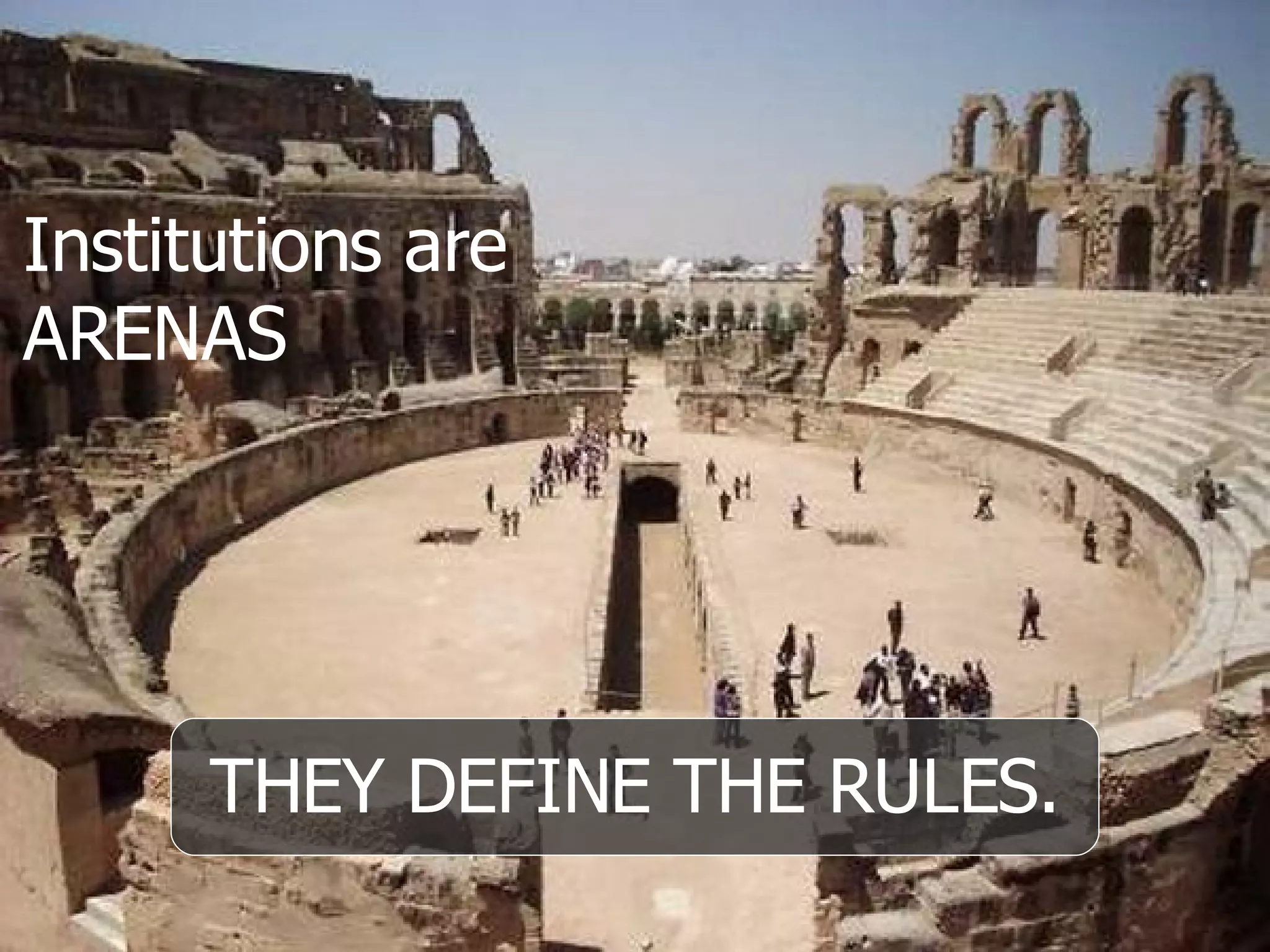
Institutions are ARENAS THEY DEFINE THE RULES.
Common experience lowers the costs towards agreement.
When the context changes, preferences also change.
Meanwhile, Rational choice analysis differs much from the two.
Institutions are still arenas. but,  actors are a little more independent from context.
Three views, different looks. Which one is right?
OR, what’s wrong with each?
criticisms
Rational Choice Same event, different interpretations NO EMPIRICAL EVIDENCE.
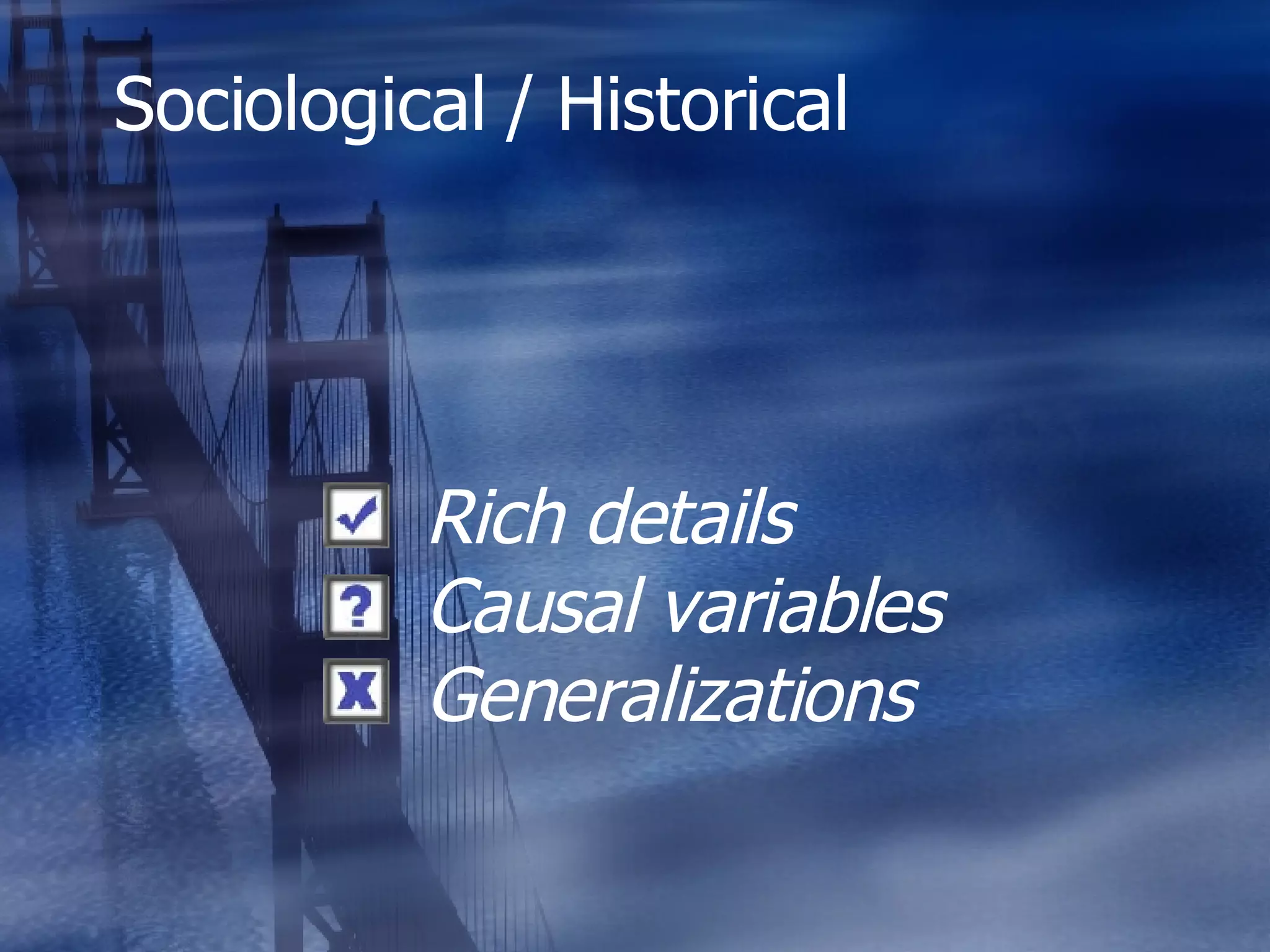
Sociological / Historical Rich details Causal variables Generalizations
Whew! That’s already a lot of information
Why are we doing this again?
We do comparative analysis ( or any study of social science ) BECAUSE…
We need to: Gain knowledge through empirical research Search for patterns
To deal with uncertainty and make  descriptive, explanatory, causal  inferences.
To establish workable models.
That’s about it. THANK YOU!

Making Sense of Institutions