SCIENTIFIC
MANAGEMENT
*Maria Tiara Fatima F. Galang
MPA 505 – Organization and Management
Objectives:
1. Understand the
principles of scientific
management
2. Identify the proponents
of scientific management
and their respective
contributions
3. Determine the
limitations of
scientific management
Objectives:
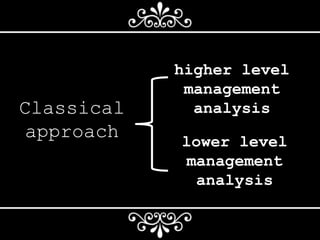
Classical
approach
higher level
management
analysis
lower level
management
analysis
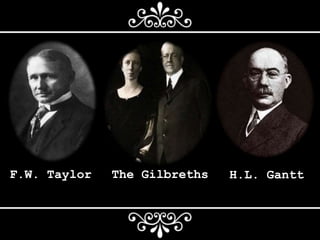
F.W. Taylor The Gilbreths H.L. Gantt
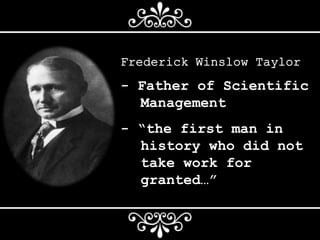
Frederick Winslow Taylor
- Father of Scientific
Management
- “the first man in
history who did not
take work for
granted…”
Principles of
Scientific
Management
1. Develop a scientific
approach for each element
of an individual’s work
to replace rule-of-thumb
guidelines
2. Scientifically
select, train,
teach and develop
each worker
3. Be cooperative with
workers to ensure that
the job matches plans
and principles
4. Ensure equal division
of work and
responsibility between
managers and workers
Taylor’s
experience in
three companies
Midvale Steel:
- “soldiering” of workers
was observed
- differential rate
system
Bethlehem Steel
Company:
- improved the efficiency
of the company yard
gang
Simonds Rolling
Machine Company:
- improved productivity,
quality, worker morale
and wages
o Job analysis
o Time-and-motion studies
o Standardization of
processes
o Piece-rate method
o Motivation by monetary
considerations
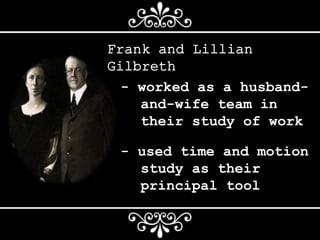
Frank and Lillian
Gilbreth
- worked as a husband-
and-wife team in
their study of work
- used time and motion
study as their
principal tool
Frank Gilbreth
- studied bricklaying and
changed the structure
of such task
- They labeled their
work as therbligs.
- The Gilbreths are
also known for their
child-rearing
practices.
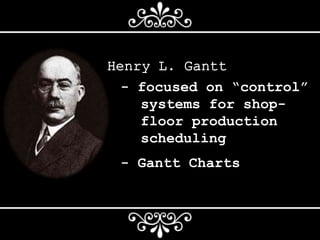
Henry L. Gantt
- focused on “control”
systems for shop-
floor production
scheduling
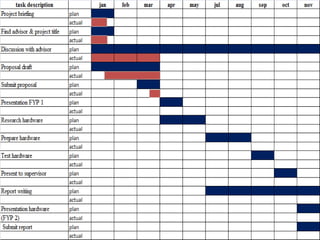
- Gantt Charts
- He established quota
systems and bonuses
systems for workers
(gainsharing)
- social responsibility
Scientific
Management and
the Model-T
Limitations of
Scientific
Management
- simplistic
motivational
assumptions
- workers were
viewed as part
of a machine
- excluded
senior (top)
management
tasks
Conclusion:
Scientific management helped
organizations in achieving
productivity and efficiency using
scientific methods and techniques.
This is through employing various work
analysis techniques such as time and
motion study. Through such, a “one
best way” of doing tasks had been
developed to eliminate unnecessary and
time-killing movements.
Conclusion:
Ultimately, scientific management
had been an essential body of
knowledge in improving work. Such
theory, although considered classical,
is still applied among established
organizations today.

Scientific Management