Jody Ranck, DrPH UNECA Workshop, Addis Ababa, Dec. 4-5, 2008
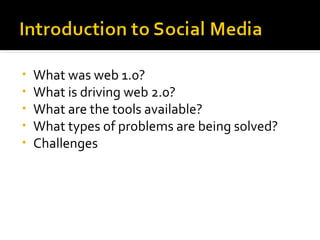
What was web 1.0? What is driving web 2.0? What are the tools available? What types of problems are being solved? Challenges
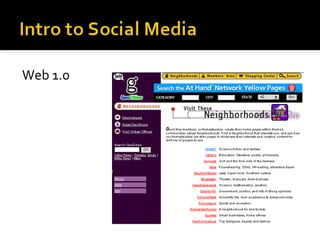
Web 1.0
 
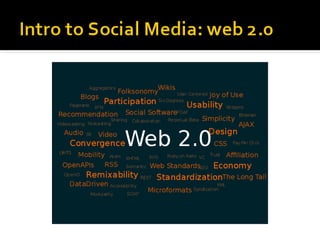
User-generated content Self-publishing Peer-to-peer interactions Many-to-many Swarm behavior/crowdsourcing Cooperation


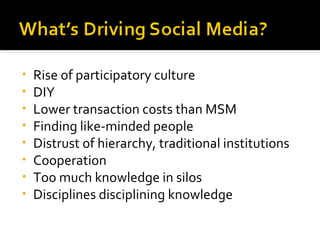
Rise of participatory culture DIY Lower transaction costs than MSM Finding like-minded people Distrust of hierarchy, traditional institutions Cooperation Too much knowledge in silos Disciplines disciplining knowledge
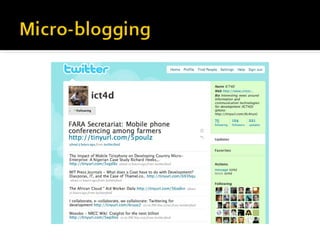
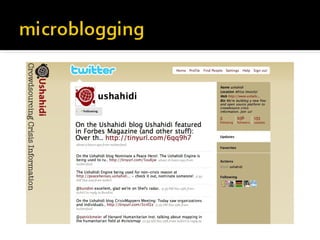
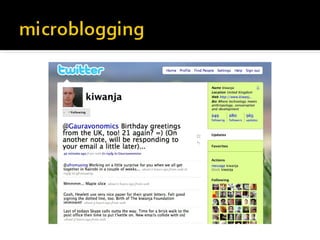
RSS Micro-blogging Social Tagging Podcasting Solution finding vs. Problem Solving
 
Broadcasting Updating Sharing
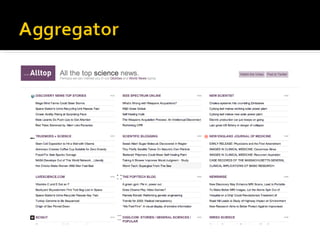
Google Reader, NewsGator, AfriGator Time Saver Personalized Newspapers Social Filters, eg. Friend Feed


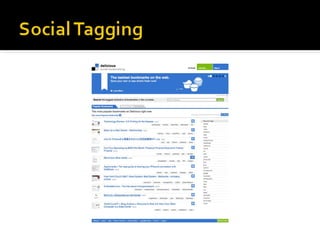
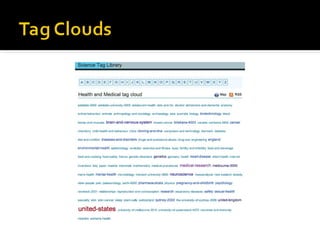
Folksonomies Sharing Research/developments Can make feeds to aggregators


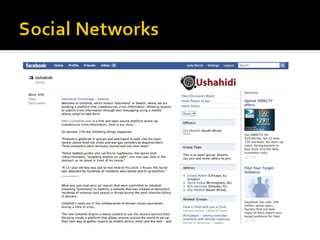
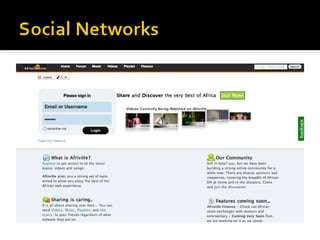
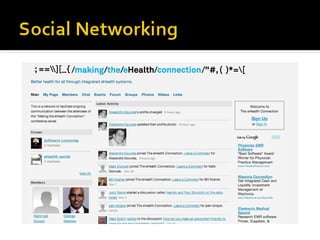
Finding like-minded people Finding out who is doing what Where are people going online? How are they building communities? Sharing ideas and interests Organizing collective action Open policy-making/government 2.0


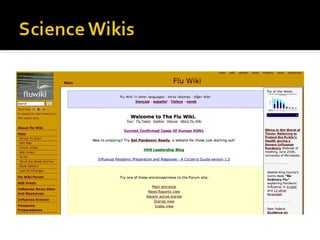
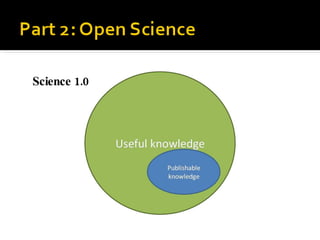
Science   1.0
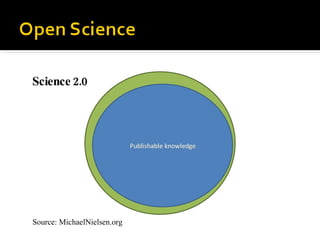
Science   2.0 Source: MichaelNielsen.org
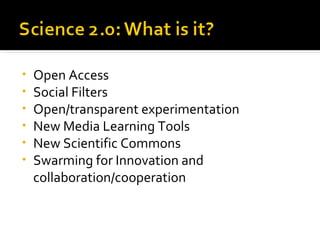
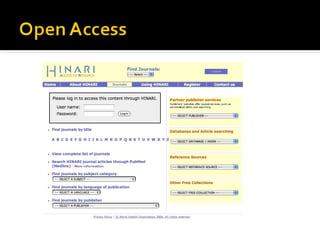
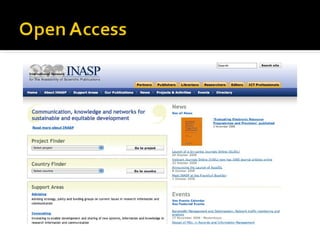
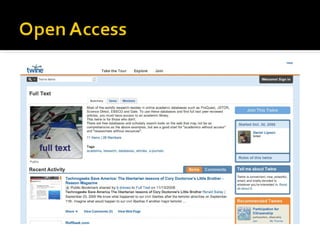
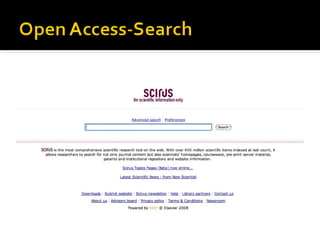
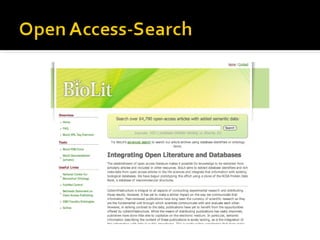
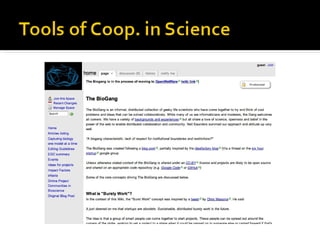
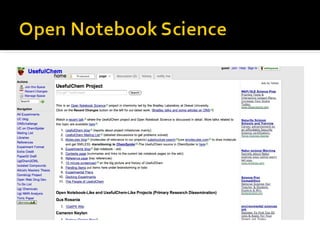
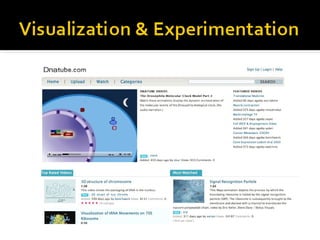
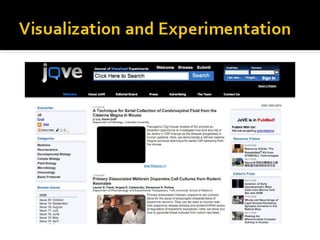
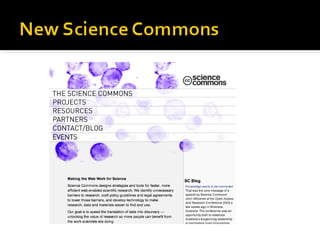
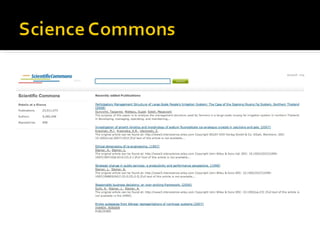
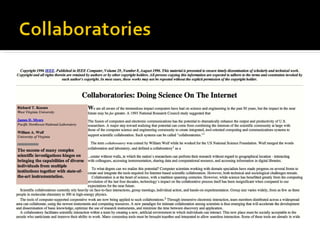
Open Access Social Filters Open/transparent experimentation New Media Learning Tools New Scientific Commons Swarming for Innovation and collaboration/cooperation


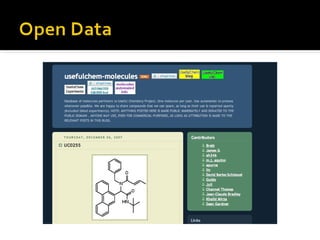
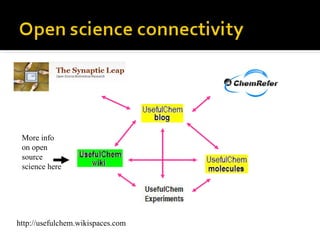
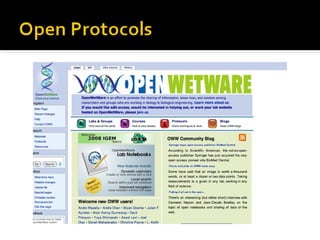
More info on open source science here http://usefulchem.wikispaces.com
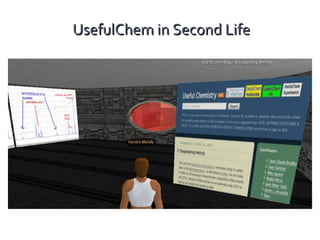
UsefulChem in Second Life


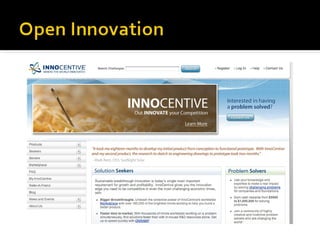
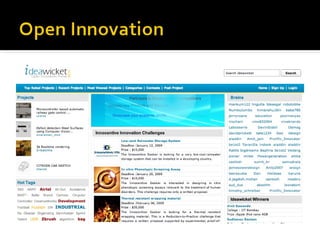
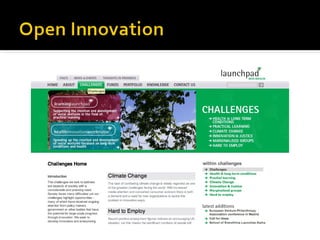
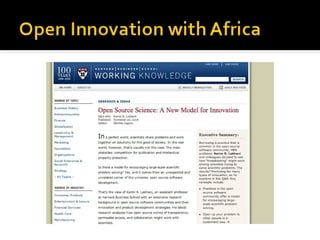
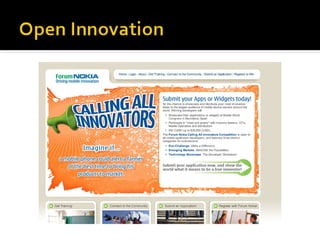
Innovation! Swarm behavior around particular problems Often the answer is already out there—is just in a silo, another discipline Therefore, how do we pull info out of silos and push it to the right people? Communities of Innovators: Science with Africa 2.0!


Which scientific communities?  Do they overlap? What are their priority needs around collaboration?  Innovation?  Which groups are the most important? What would success look like? Who decides? Who will be the community gardner? Resources?  Outreach?
CIO policies often prohibit social networking/cooperation tools Interfaces may need to be adapted to African bandwidth Culture of science is often closed Can they be taken into the field, ie. mobile
Recognition Sense of Community-new relationships Decreased isolation Feedback on work/more publishing Self-publishing Find Solutions
Agility Extract knowledge from the edges/external Uncover hidden practices/insights Synergies with other institutions Reduce costs Locate experts
Trust Open Access to everyone Transparency Learning Network Easy to contribute-SIMPLICITY Rewards for contributing Flexible platforms for changing needs Content is king Connections to offline activities
Science with Africa 2.0

  • 1.
    Jody Ranck, DrPHUNECA Workshop, Addis Ababa, Dec. 4-5, 2008
  • 2.
    What was web1.0? What is driving web 2.0? What are the tools available? What types of problems are being solved? Challenges
  • 3.
  • 4.
  • 5.
    User-generated content Self-publishingPeer-to-peer interactions Many-to-many Swarm behavior/crowdsourcing Cooperation
  • 6.
  • 7.
  • 8.
  • 9.
  • 10.
  • 11.
  • 12.
    Rise of participatoryculture DIY Lower transaction costs than MSM Finding like-minded people Distrust of hierarchy, traditional institutions Cooperation Too much knowledge in silos Disciplines disciplining knowledge
  • 13.
    RSS Micro-blogging SocialTagging Podcasting Solution finding vs. Problem Solving
  • 14.
  • 15.
  • 16.
    Google Reader, NewsGator,AfriGator Time Saver Personalized Newspapers Social Filters, eg. Friend Feed
  • 17.
  • 18.
  • 19.
  • 20.
    Folksonomies Sharing Research/developmentsCan make feeds to aggregators
  • 21.
  • 22.
  • 23.
  • 24.
    Finding like-minded peopleFinding out who is doing what Where are people going online? How are they building communities? Sharing ideas and interests Organizing collective action Open policy-making/government 2.0
  • 25.
  • 26.
  • 27.
  • 28.
  • 29.
  • 30.
  • 31.
  • 32.
  • 33.
  • 34.
  • 35.
    Science 2.0 Source: MichaelNielsen.org
  • 36.
    Open Access SocialFilters Open/transparent experimentation New Media Learning Tools New Scientific Commons Swarming for Innovation and collaboration/cooperation
  • 37.
  • 38.
  • 39.
  • 40.
  • 41.
  • 42.
  • 43.
  • 44.
  • 45.
  • 46.
  • 47.
  • 48.
  • 49.
    More info onopen source science here http://usefulchem.wikispaces.com
  • 50.
  • 51.
  • 52.
  • 53.
  • 54.
  • 55.
  • 56.
  • 57.
  • 58.
    Innovation! Swarm behavioraround particular problems Often the answer is already out there—is just in a silo, another discipline Therefore, how do we pull info out of silos and push it to the right people? Communities of Innovators: Science with Africa 2.0!
  • 59.
  • 60.
  • 61.
  • 62.
  • 63.
  • 64.
    Which scientific communities? Do they overlap? What are their priority needs around collaboration? Innovation? Which groups are the most important? What would success look like? Who decides? Who will be the community gardner? Resources? Outreach?
  • 65.
    CIO policies oftenprohibit social networking/cooperation tools Interfaces may need to be adapted to African bandwidth Culture of science is often closed Can they be taken into the field, ie. mobile
  • 66.
    Recognition Sense ofCommunity-new relationships Decreased isolation Feedback on work/more publishing Self-publishing Find Solutions
  • 67.
    Agility Extract knowledgefrom the edges/external Uncover hidden practices/insights Synergies with other institutions Reduce costs Locate experts
  • 68.
    Trust Open Accessto everyone Transparency Learning Network Easy to contribute-SIMPLICITY Rewards for contributing Flexible platforms for changing needs Content is king Connections to offline activities