Re-mixing Public Health: A walk (long) through Open Health & the Emerging Social Mediascape Jody Ranck, DrPH Principal Investigator, Public Health Institute July 2009
Why Re-Mixing? Because it sounds trendy? Borrow and steal from already existing tools, disciplines Recombinant innovation Making the invisible visible and changing behaviors and policies—the mash-up is an important metaphor Complexity of our problems—demands solutions coming from multiple sectors, geographies, etc.
Why should Public Health Care about social media? New types of communities/knowledge systems emerging Socio-techological change: not a question of WHETHER social media will change how we think, behave, etc. but rather, it is a question of HOW? Complexity of health issues requires new thinking New modes of governance & citizenship Ways of delivering healthcare changing Luddites will become irrelevant in many areas
Public Health Challenges From command-control systems to distibuted systems and production System built on 1910 Flexner Report Health Society: expansion of territory of health  health is no longer just about health systems Health outcomes linked as much to other sectors as health sector—perfect multi-sectoral issue, but many silos Health competes with many other issues Behavioralist paradigms-dated, not producing outcomes Socio-technological change: health innovations change societies, social change changes innovation systems:  New Meanings of Health AND Innovation!!!!!
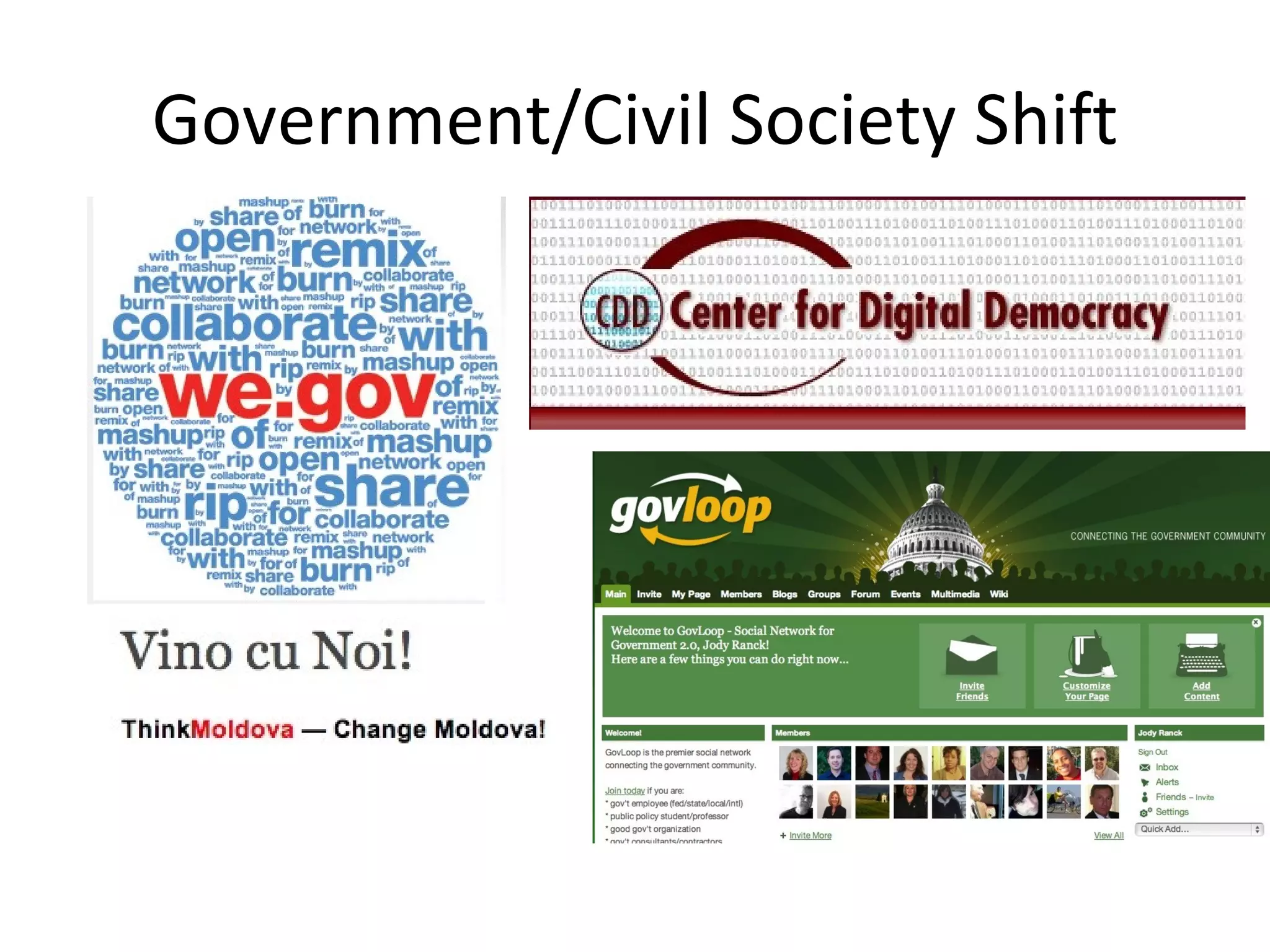
Government/Civil Society Shift
Section 1: Social Media and Public Health Introduction to Social Media Tools Medicine 2.0 Health 2.0 How do we get to Public Health 2.0 and beyond?  Why should we care about social media?
How do we respond: Social Media Blogs, wikis, vlogs Podcasts, photo-sharing Social Networking Platforms YouTube RSS Social Tagging, eg. Delicious Microblogging: Twitter Data Visualization/Infographics Enterprise 2.0 Platforms New and Old media ecosystems together
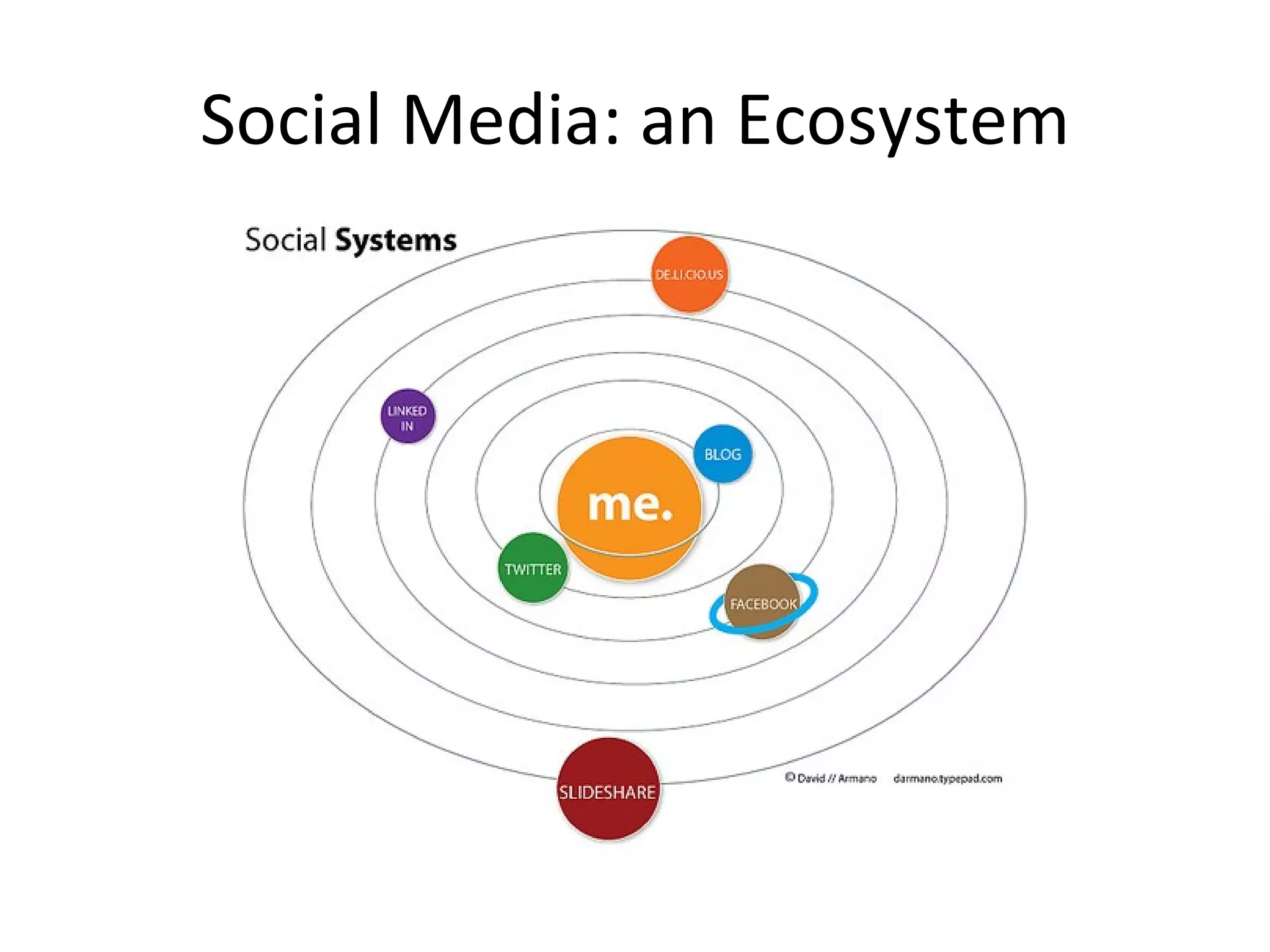
Social Media: an Ecosystem
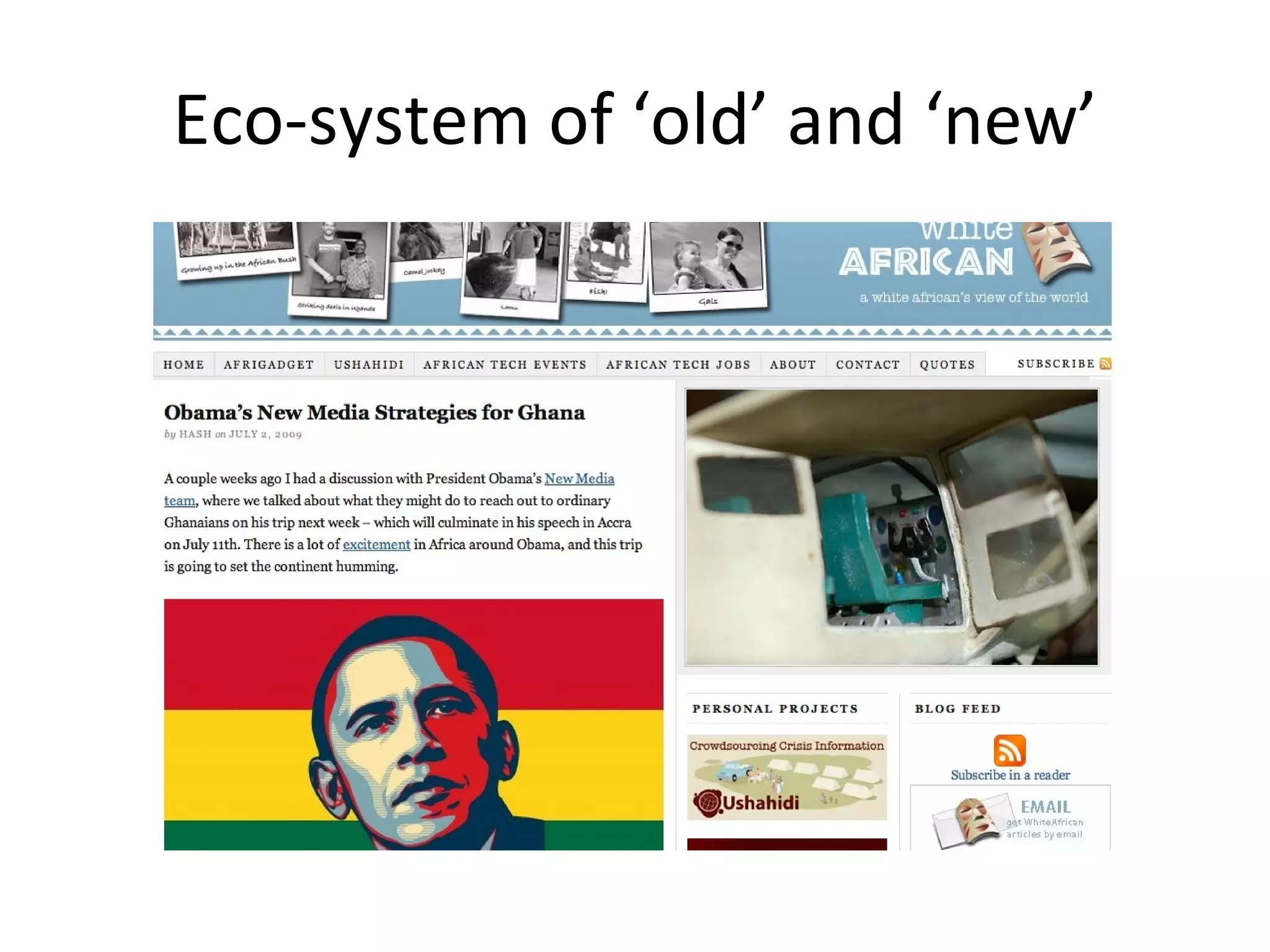
Eco-system of ‘old’ and ‘new’
Convergence of old and new Old media reporting on stories from social media, eg. Iran election & CNN Campaigns that use social media to drive broader media strategy, eg. Obama campaign In developing world use of mobiles and radio in agriculture and health Online video growing rapidly, eg. Hulu I’m sick of the word “new”
Public Health 2.0 Social Media Architecture of Participation Open Innovation Crowdsourcing Citizen Engagement through social media Mobiles Urban Informatics Cloud Computing Design Thinking
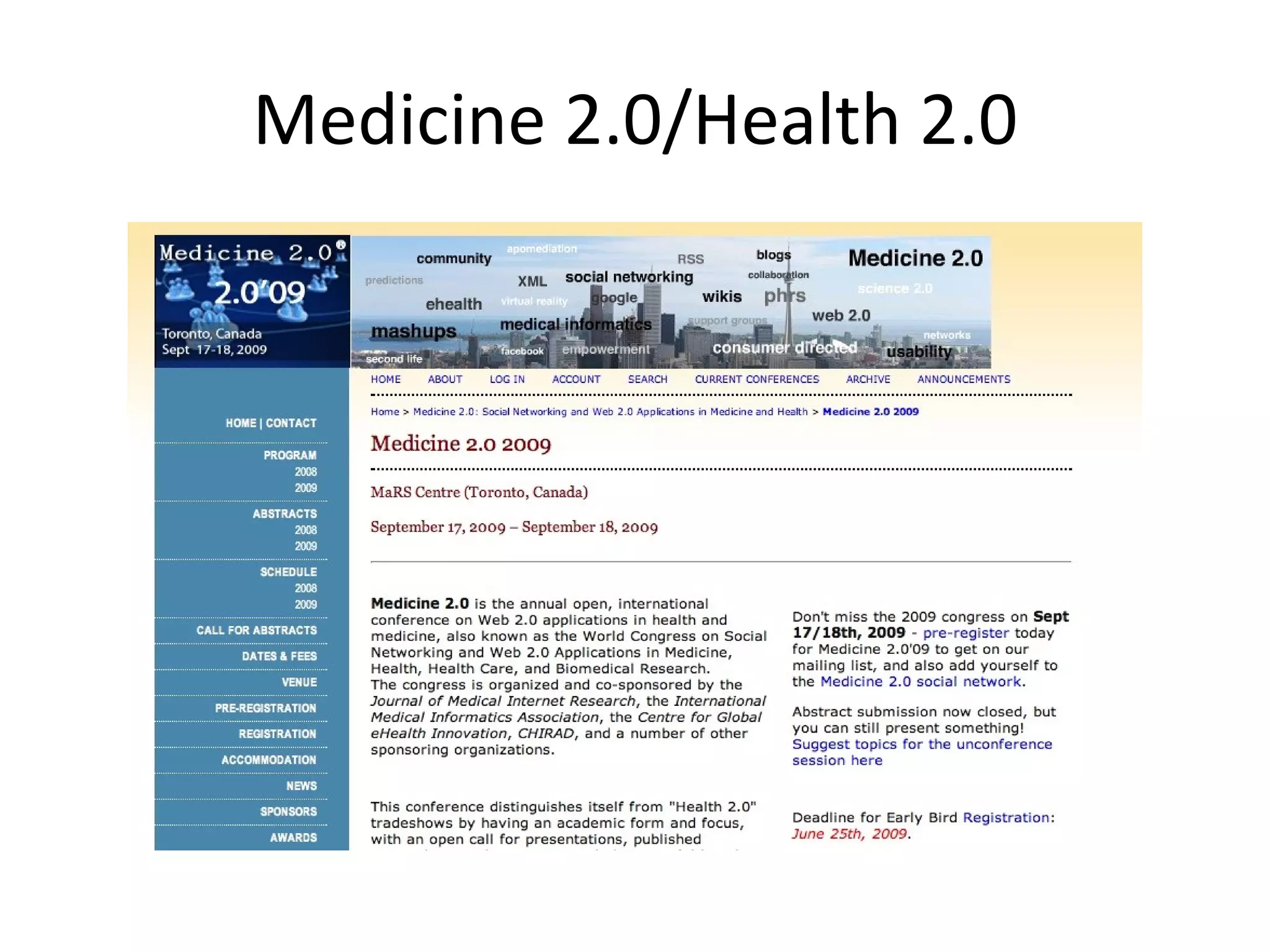
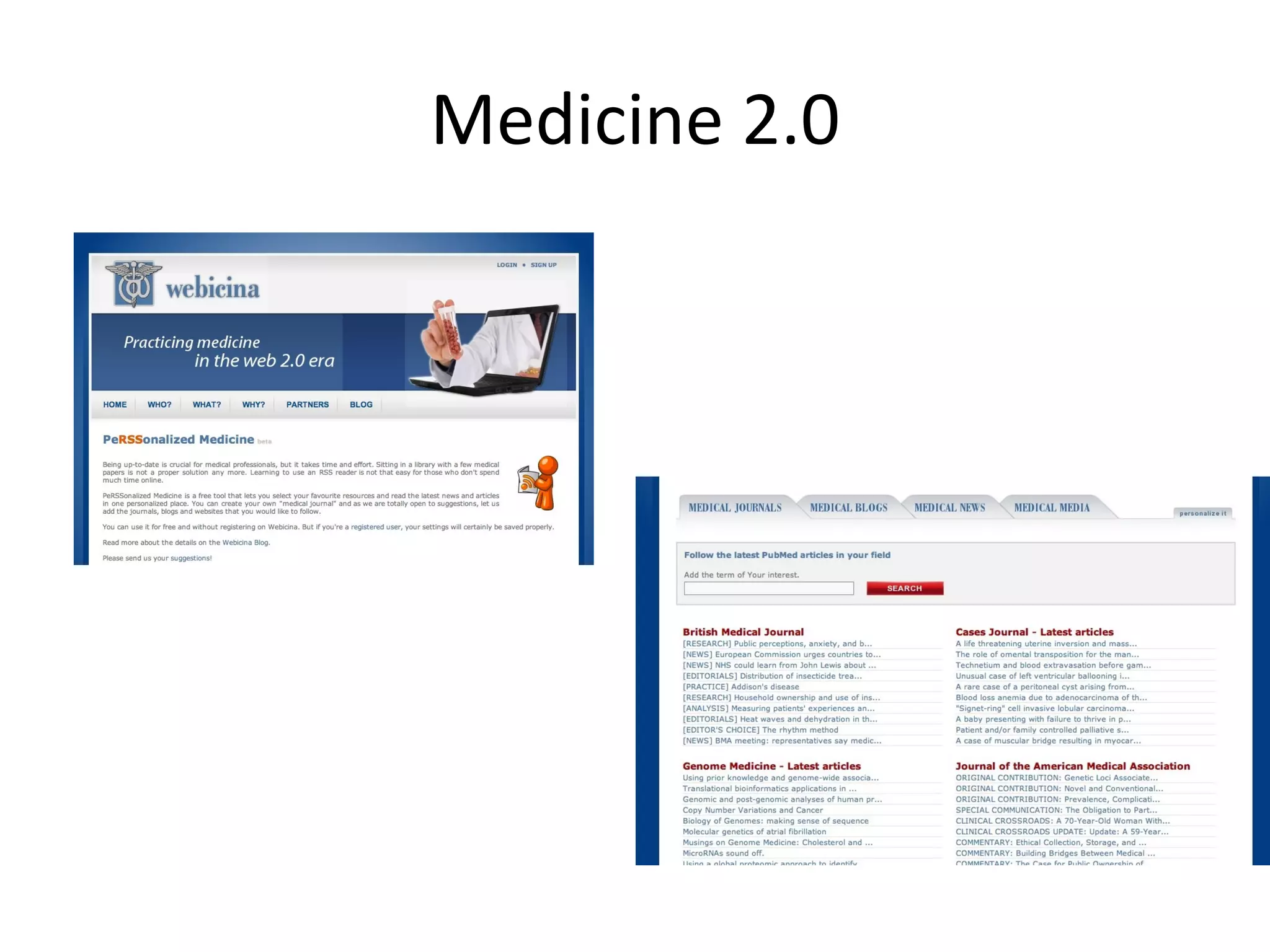
Medicine 2.0/Health 2.0
Medicine 2.0
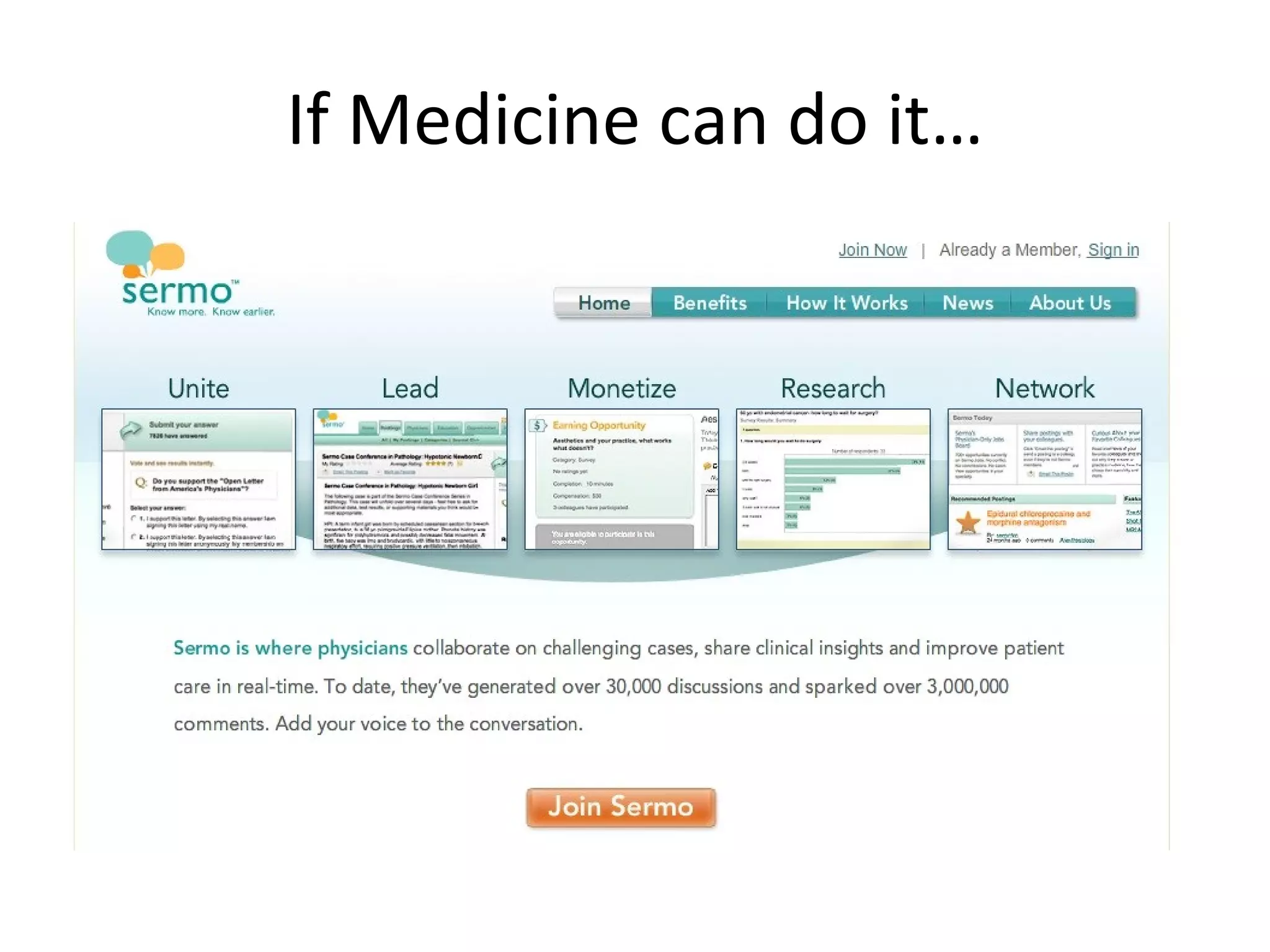
If Medicine can do it…
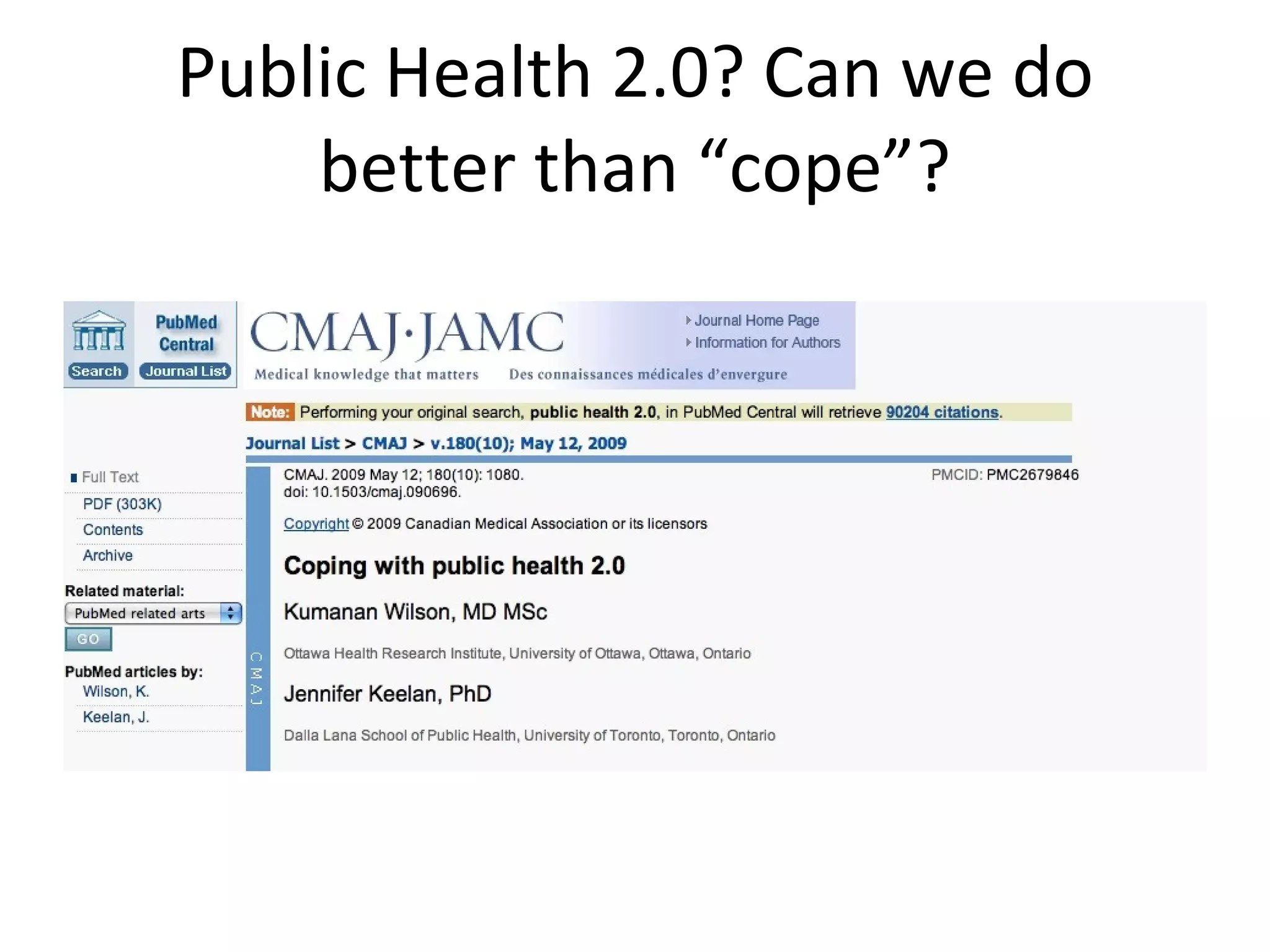
Public Health 2.0? Can we do better than “cope”?
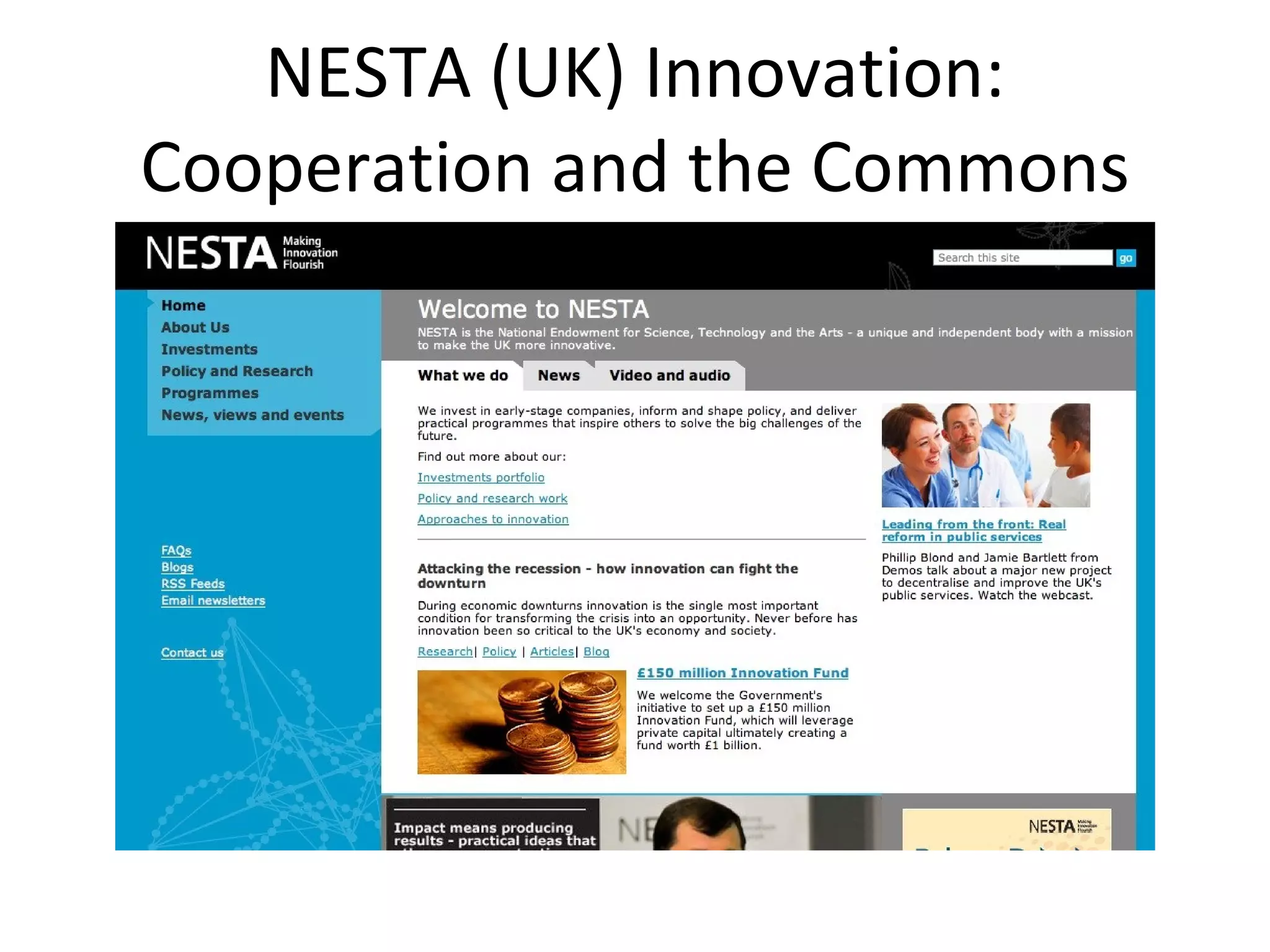
Why does it matter? A new type of web: mobile, participatory Demands for transparency, eg. Recovery.gov Non-profit sector is adopting & innovating rapidly in the social media space Convergence of old and new media: it’s not just about teens on MySpace anymore! New forms of sociality emerging: biocitizenship and social networks in health Ethos of cooperation New commons   Health commons   New public health + spirit of innovation
Section 2: What do we do with Social Media? Content Community Collaboration Collective Action
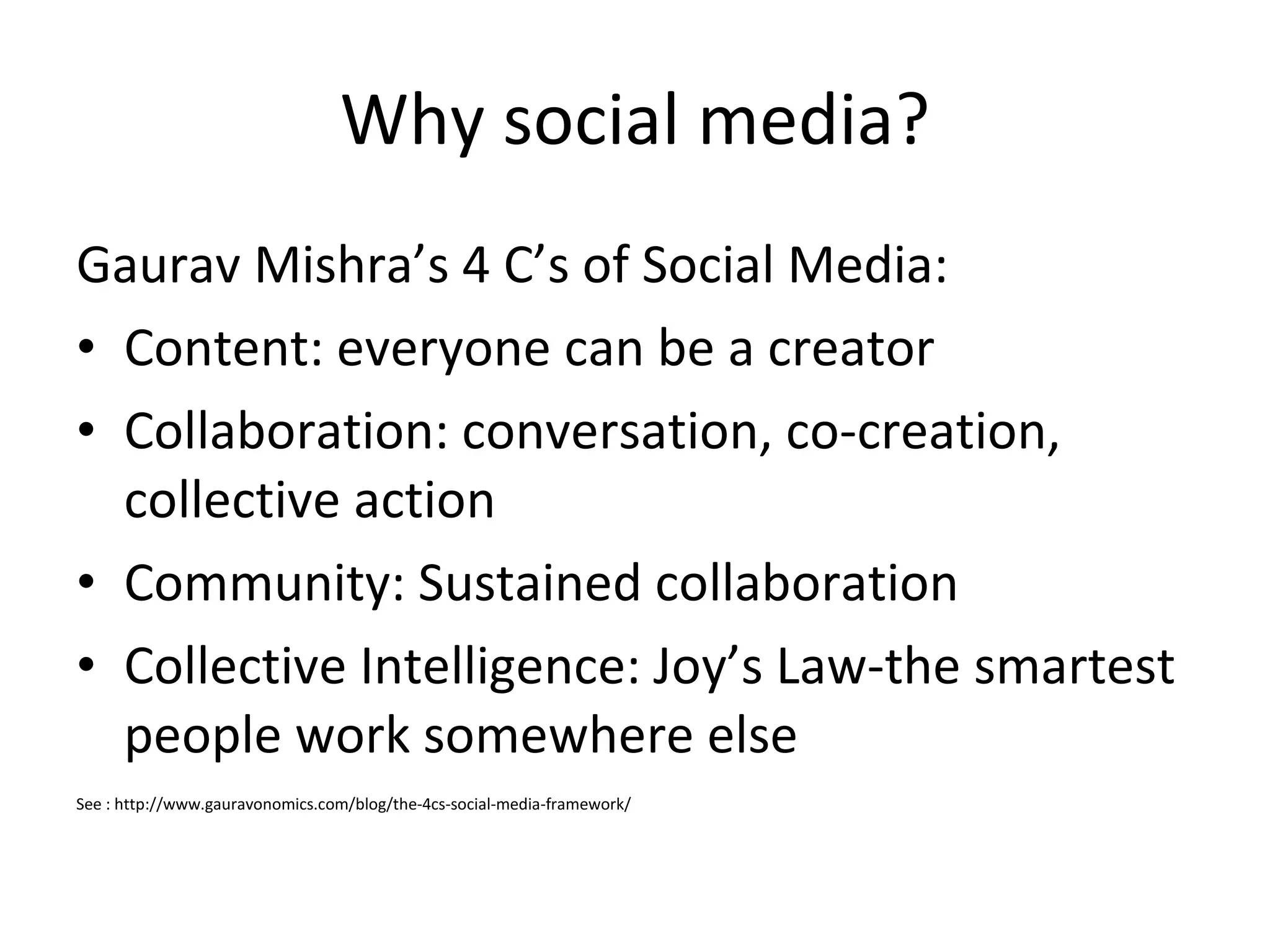
Why social media? Gaurav Mishra’s 4 C’s of Social Media: Content: everyone can be a creator Collaboration: conversation, co-creation, collective action Community: Sustained collaboration Collective Intelligence: Joy’s Law-the smartest people work somewhere else See : http://www.gauravonomics.com/blog/the-4cs-social-media-framework/
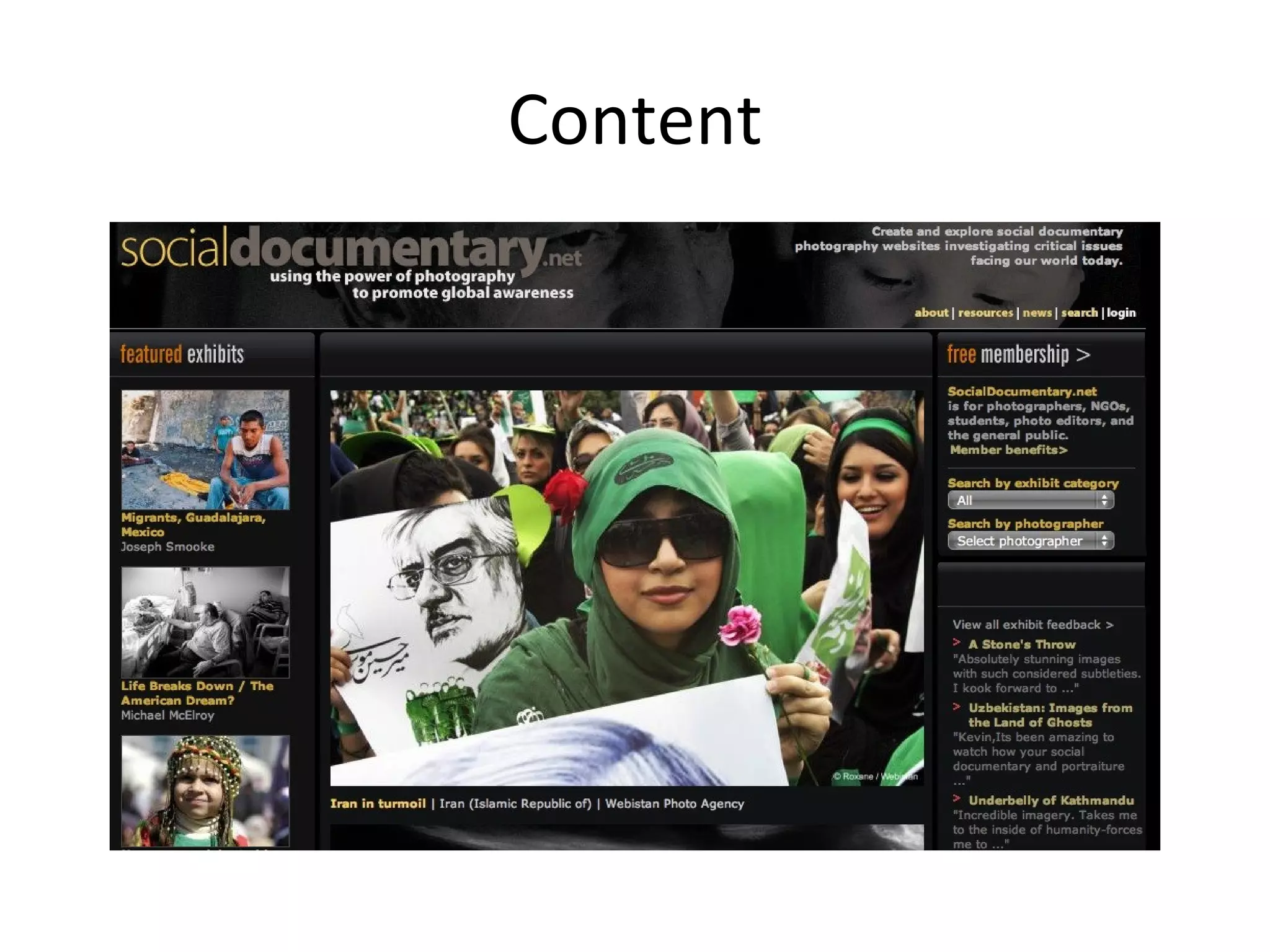
Content
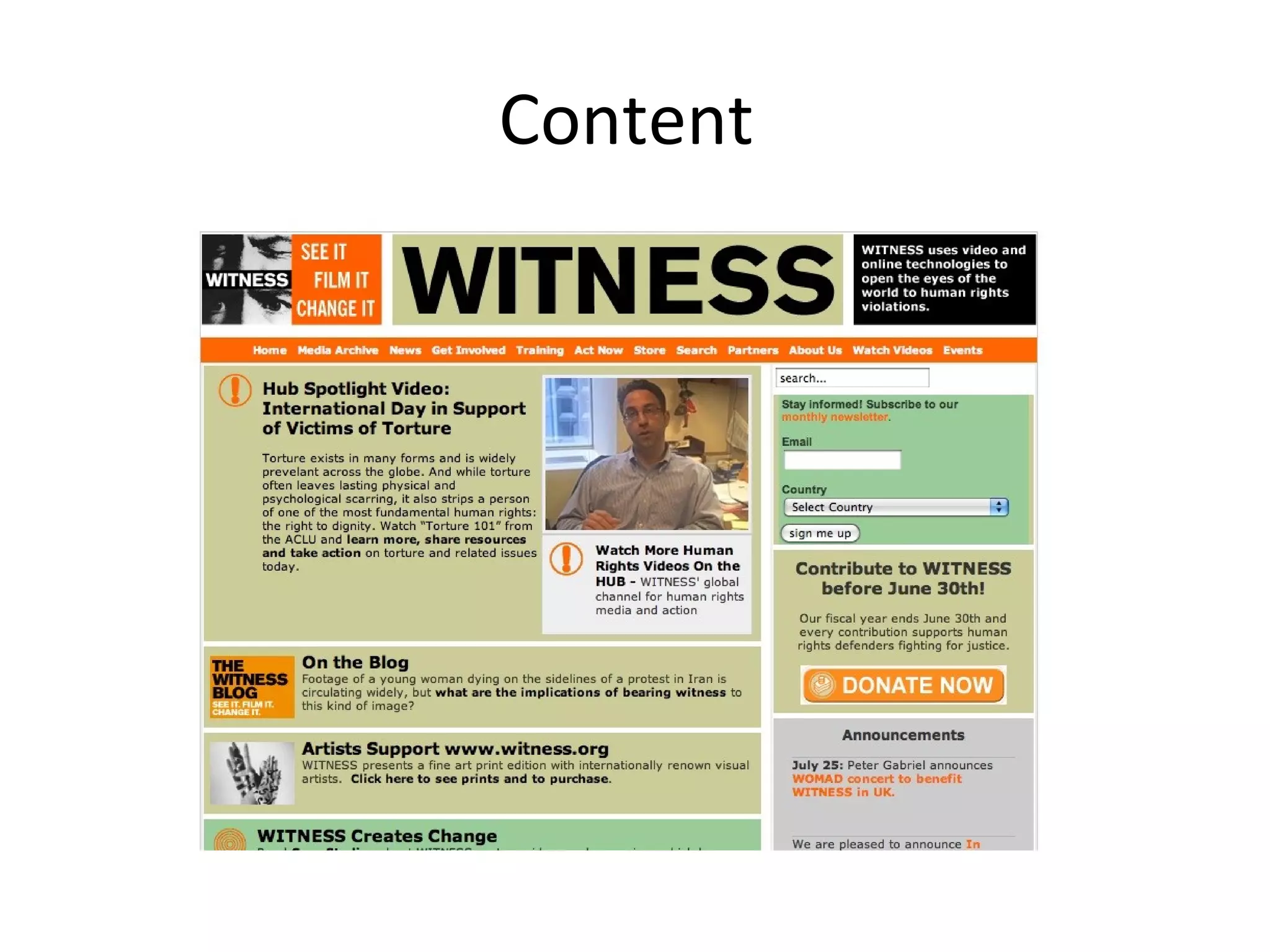
Content
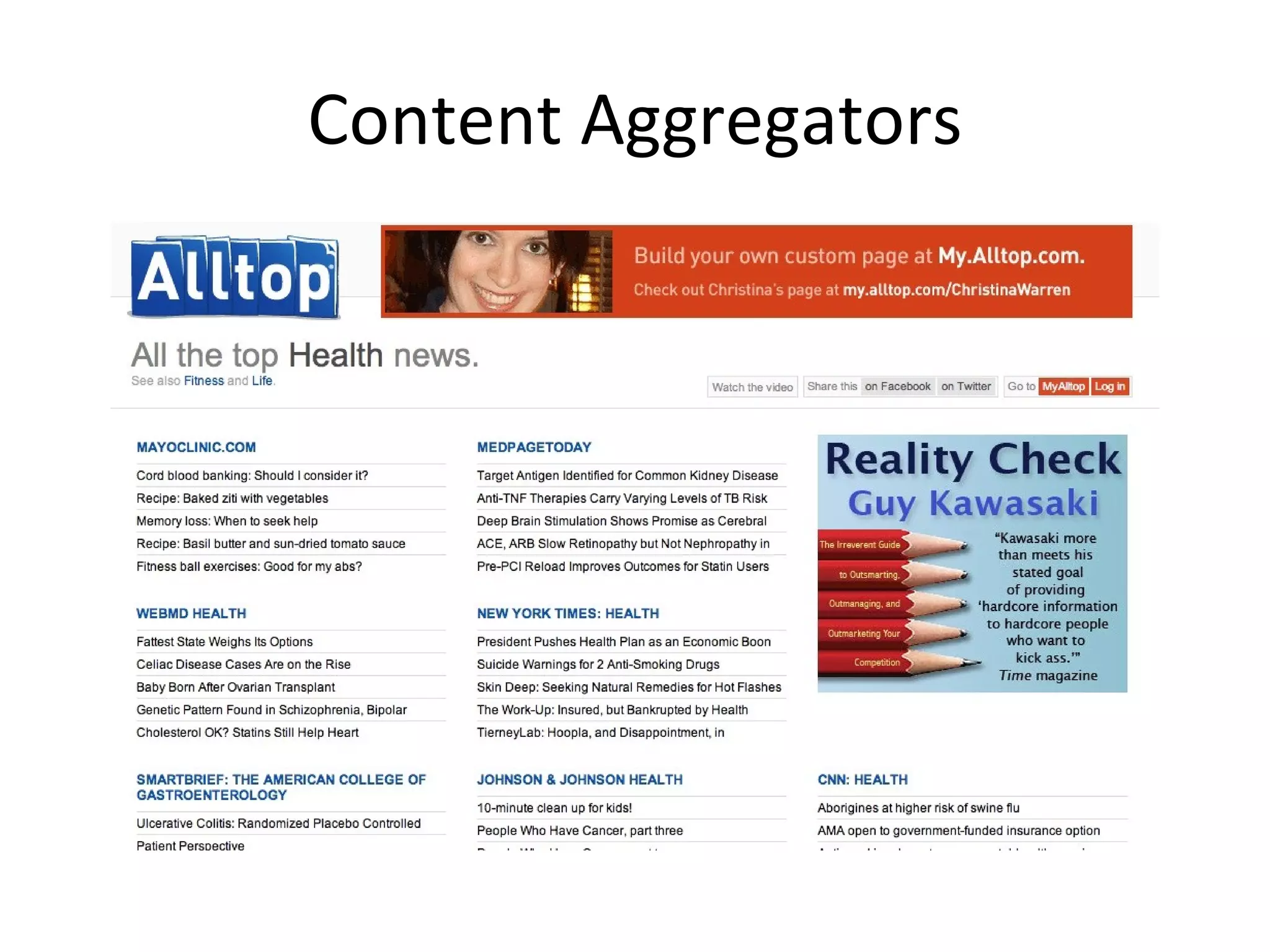
Content Aggregators
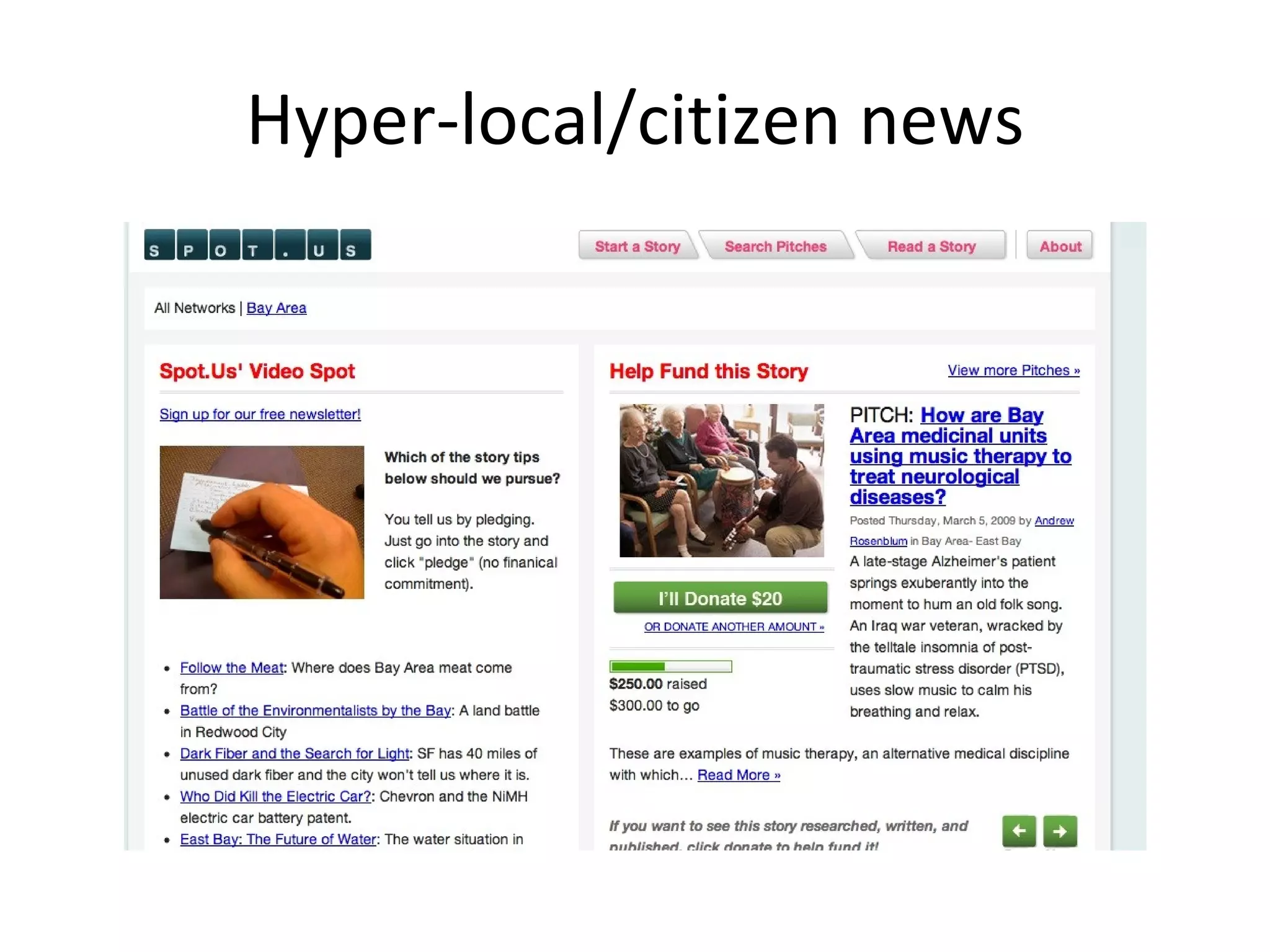
Hyper-local/citizen news
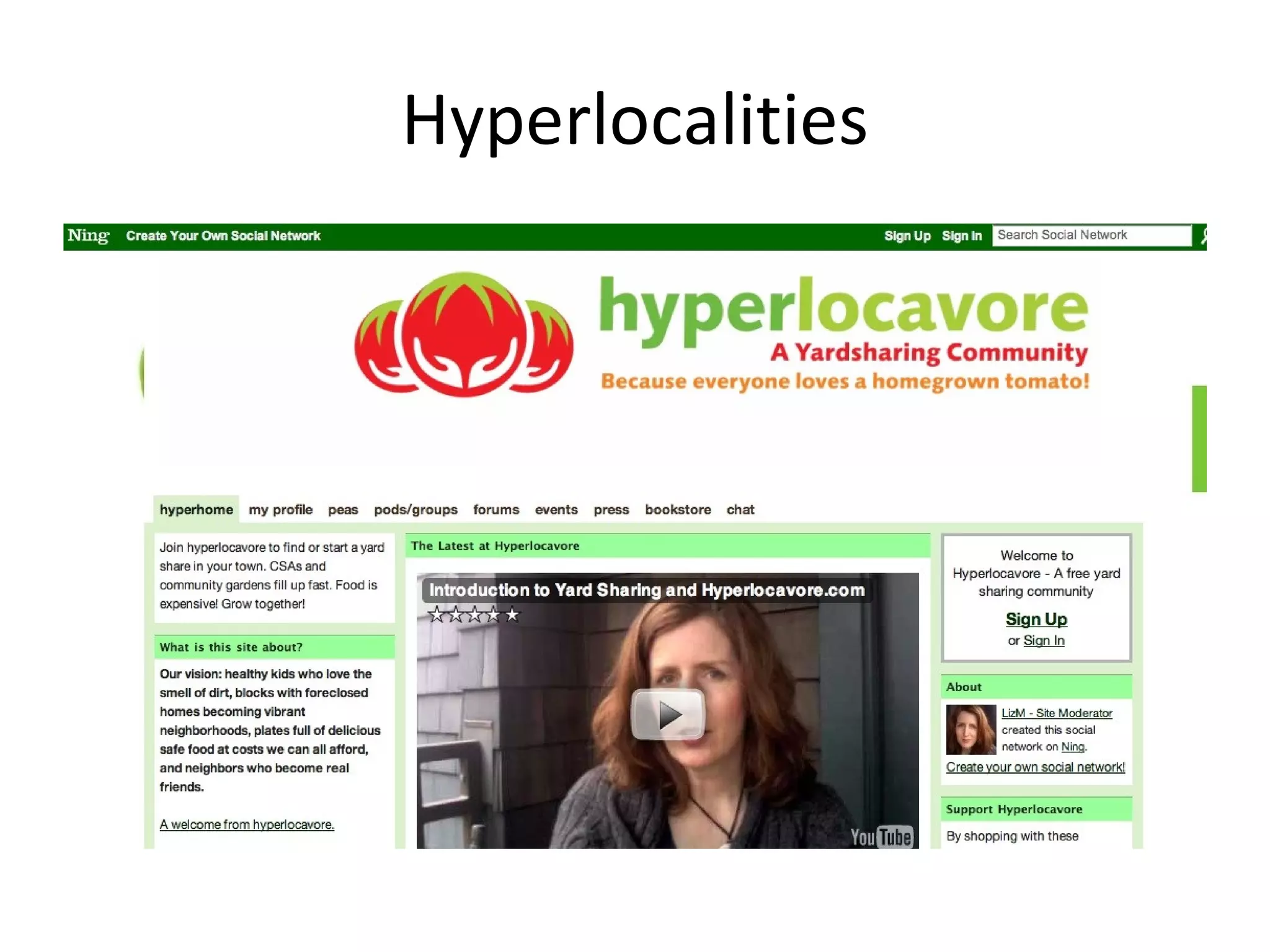
Hyperlocalities
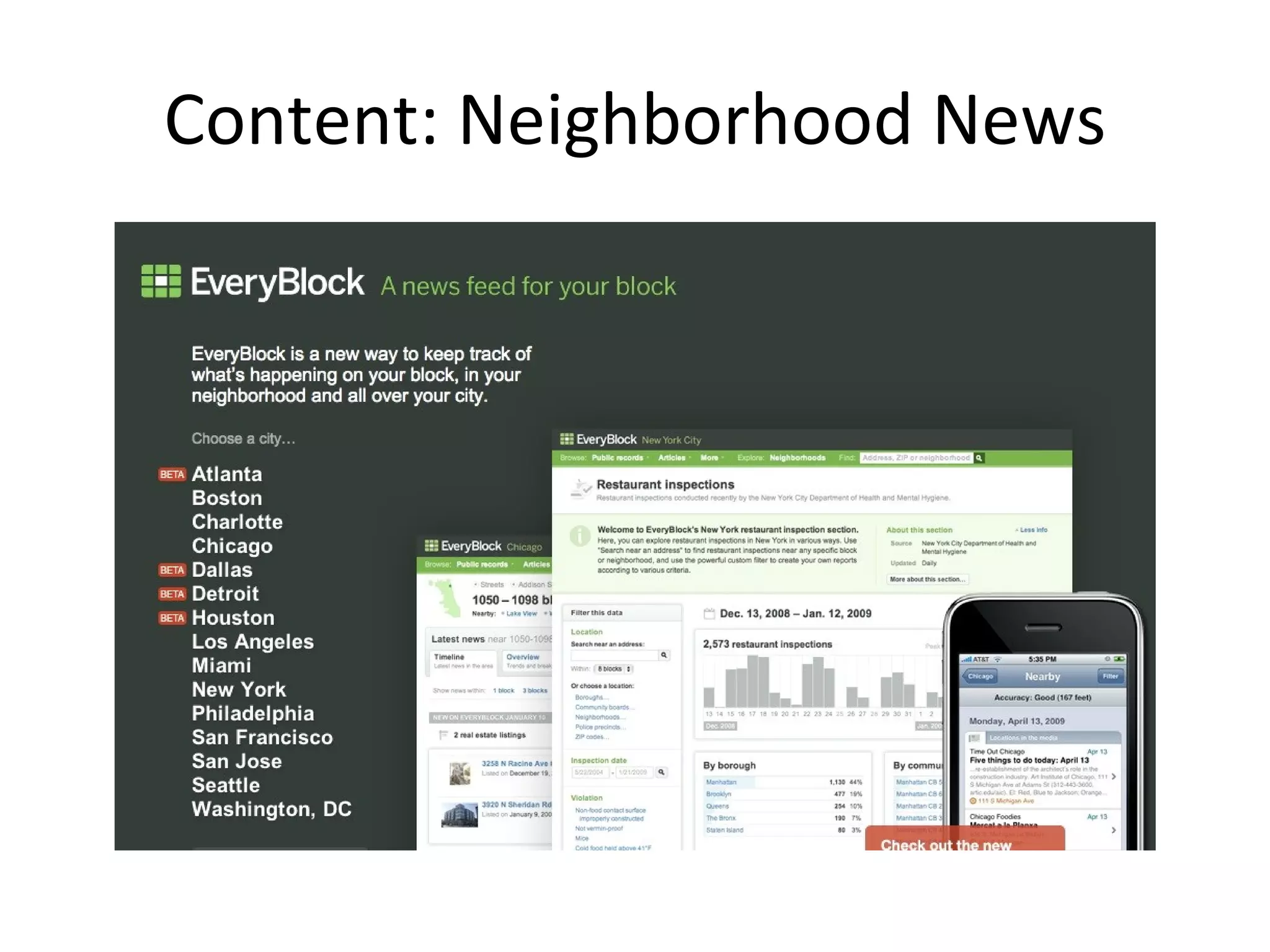
Content: Neighborhood News
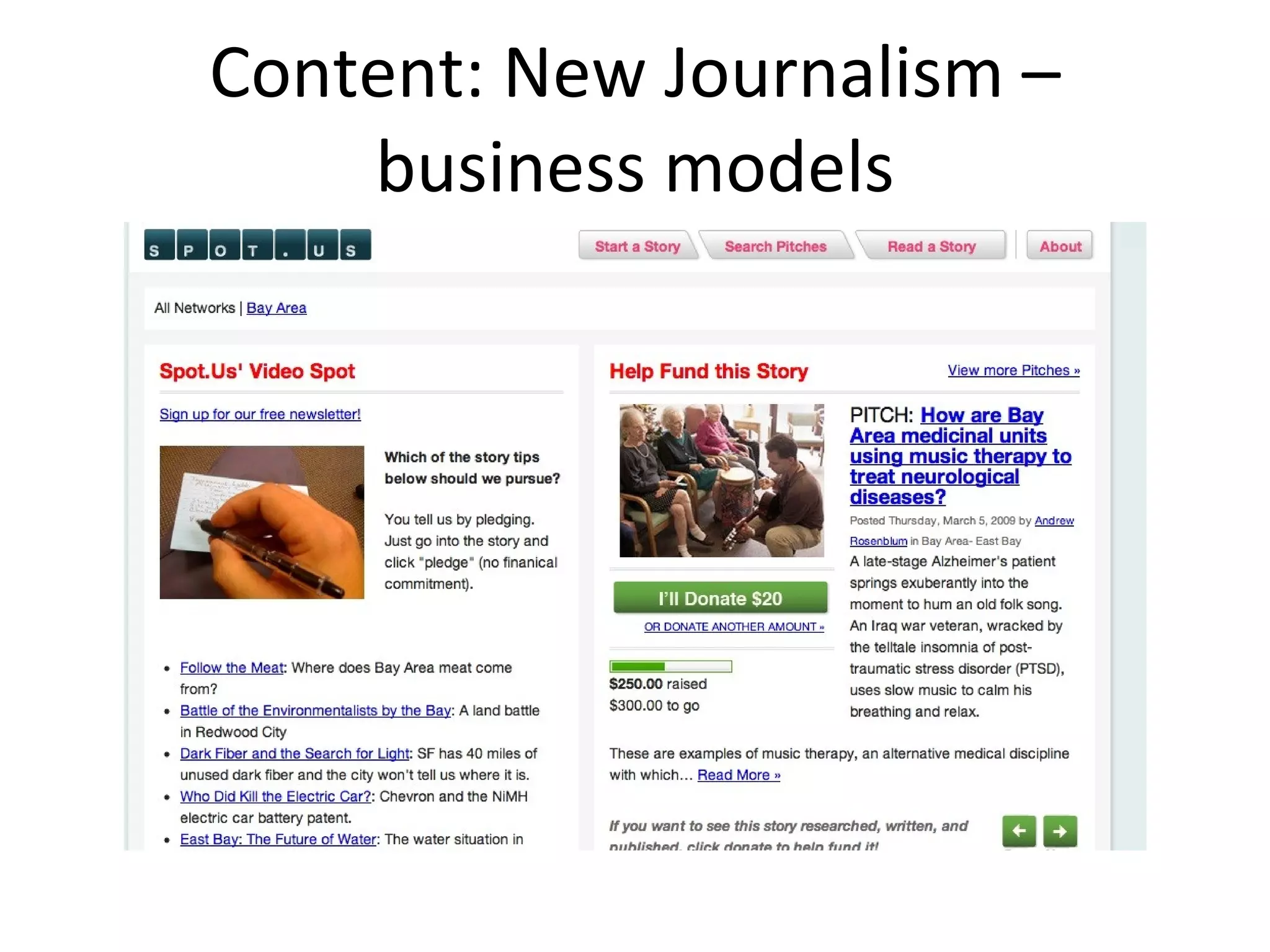
Content: New Journalism –business models
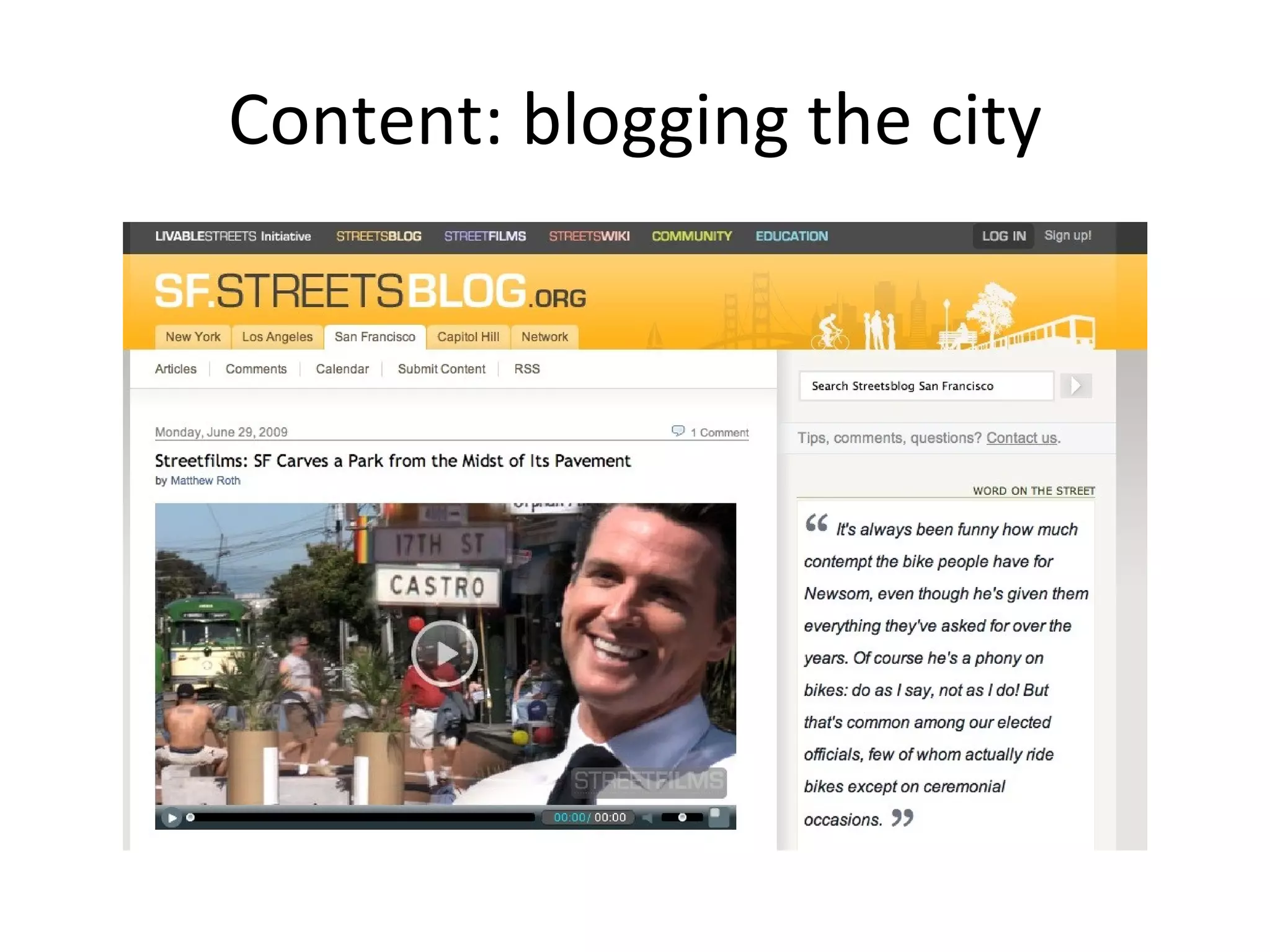
Content: blogging the city
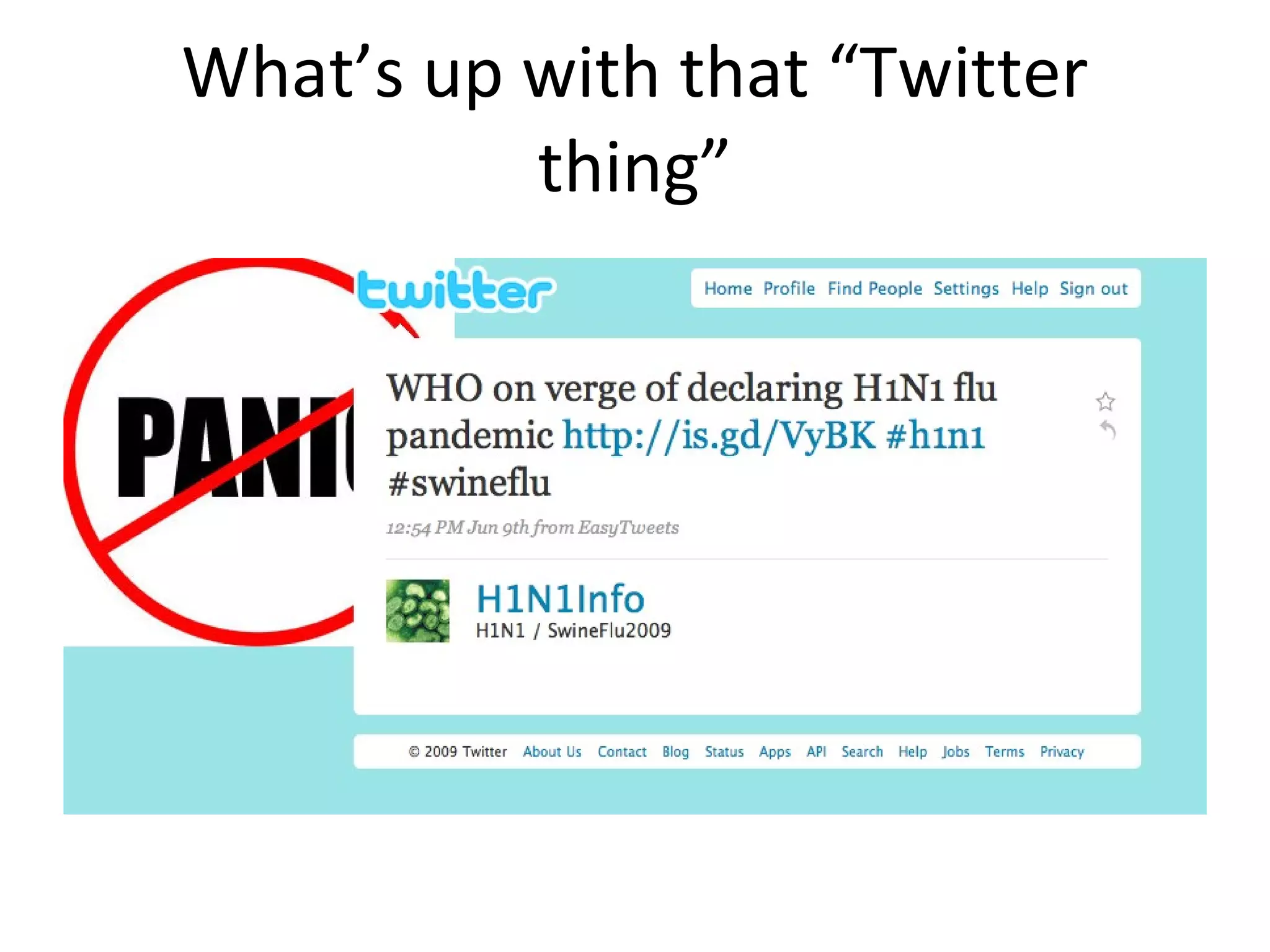
What’s up with that “Twitter thing”
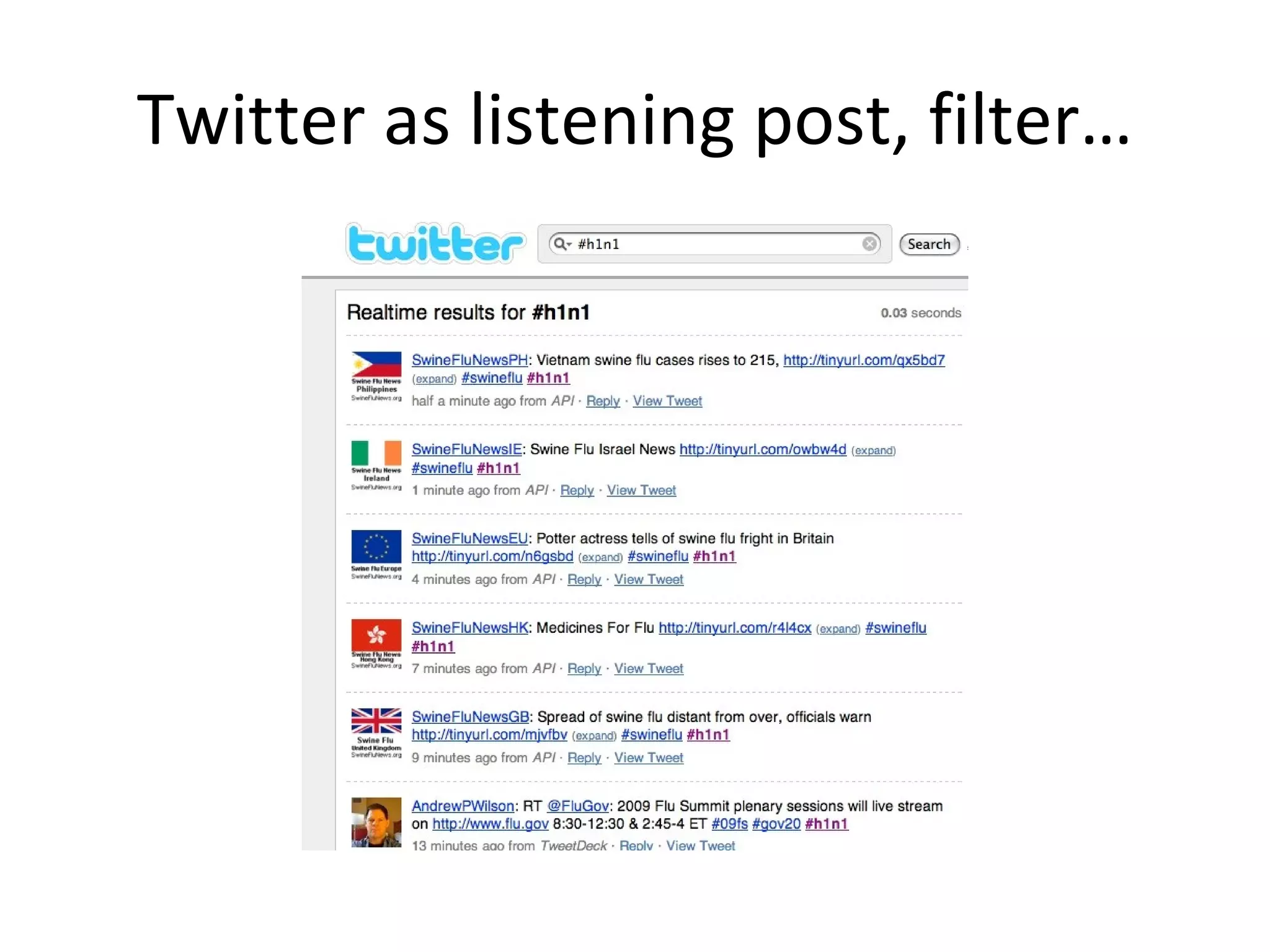
Twitter as listening post, filter…
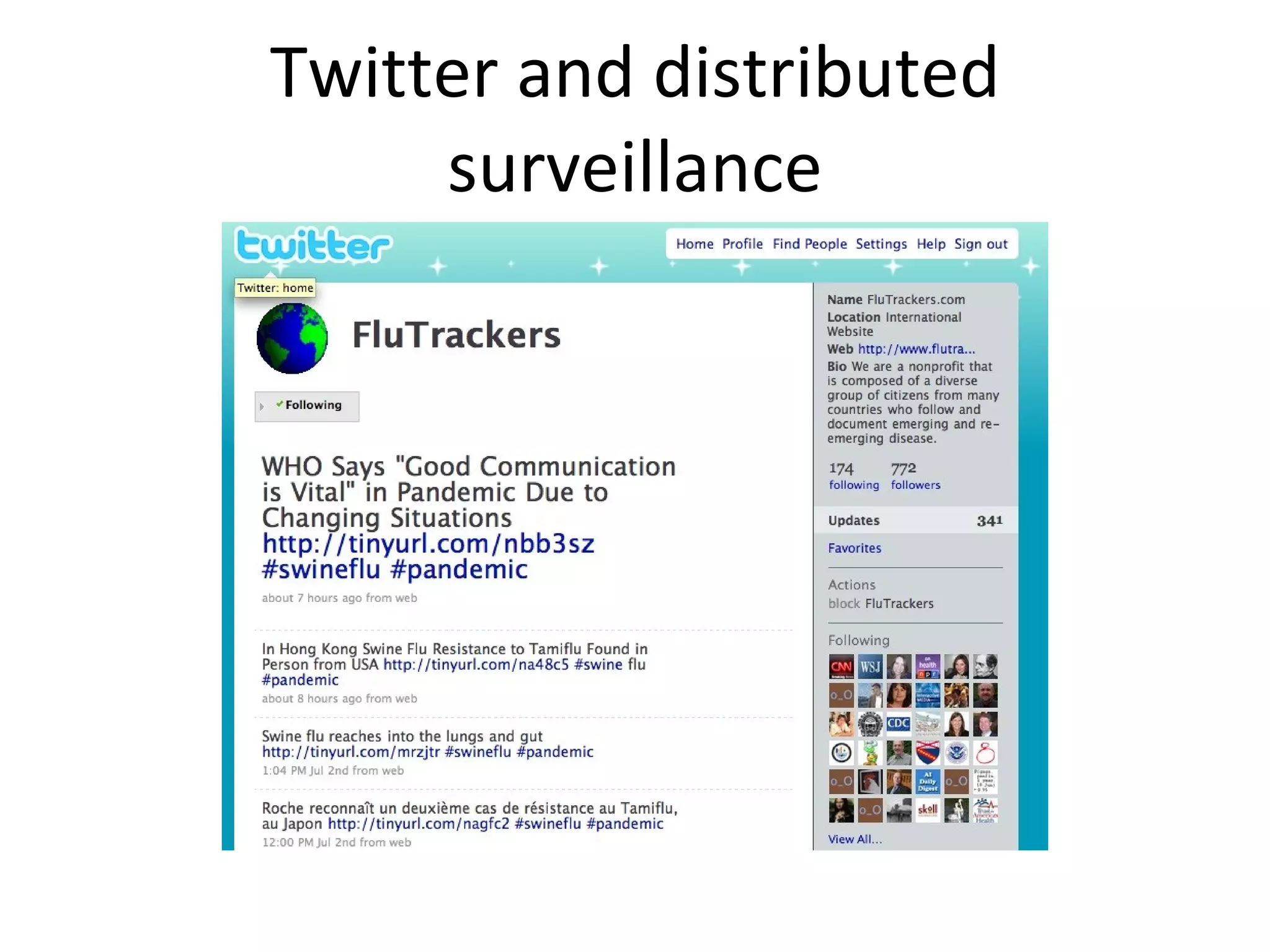
Twitter and distributed surveillance
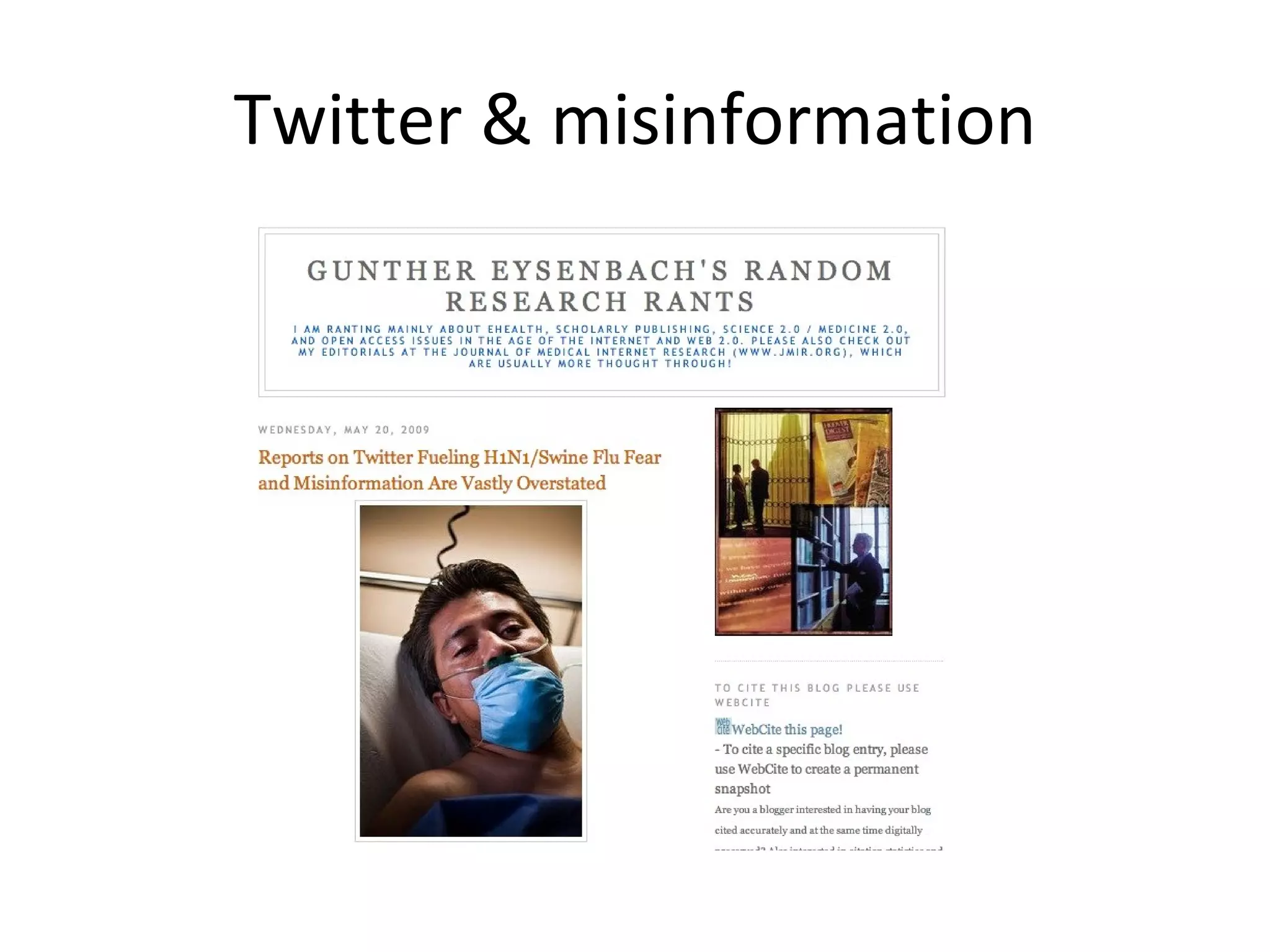
Twitter & misinformation
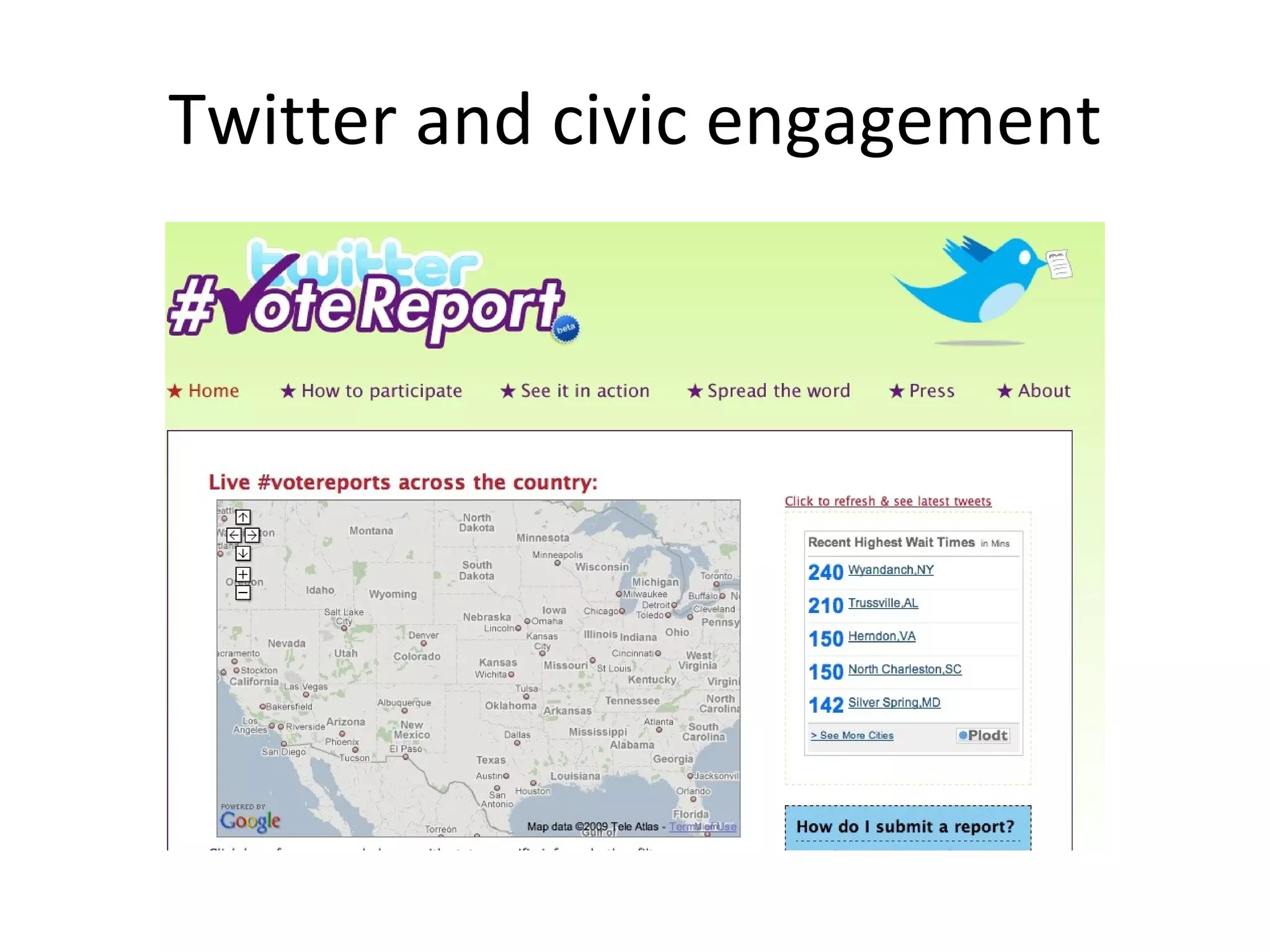
Twitter and civic engagement
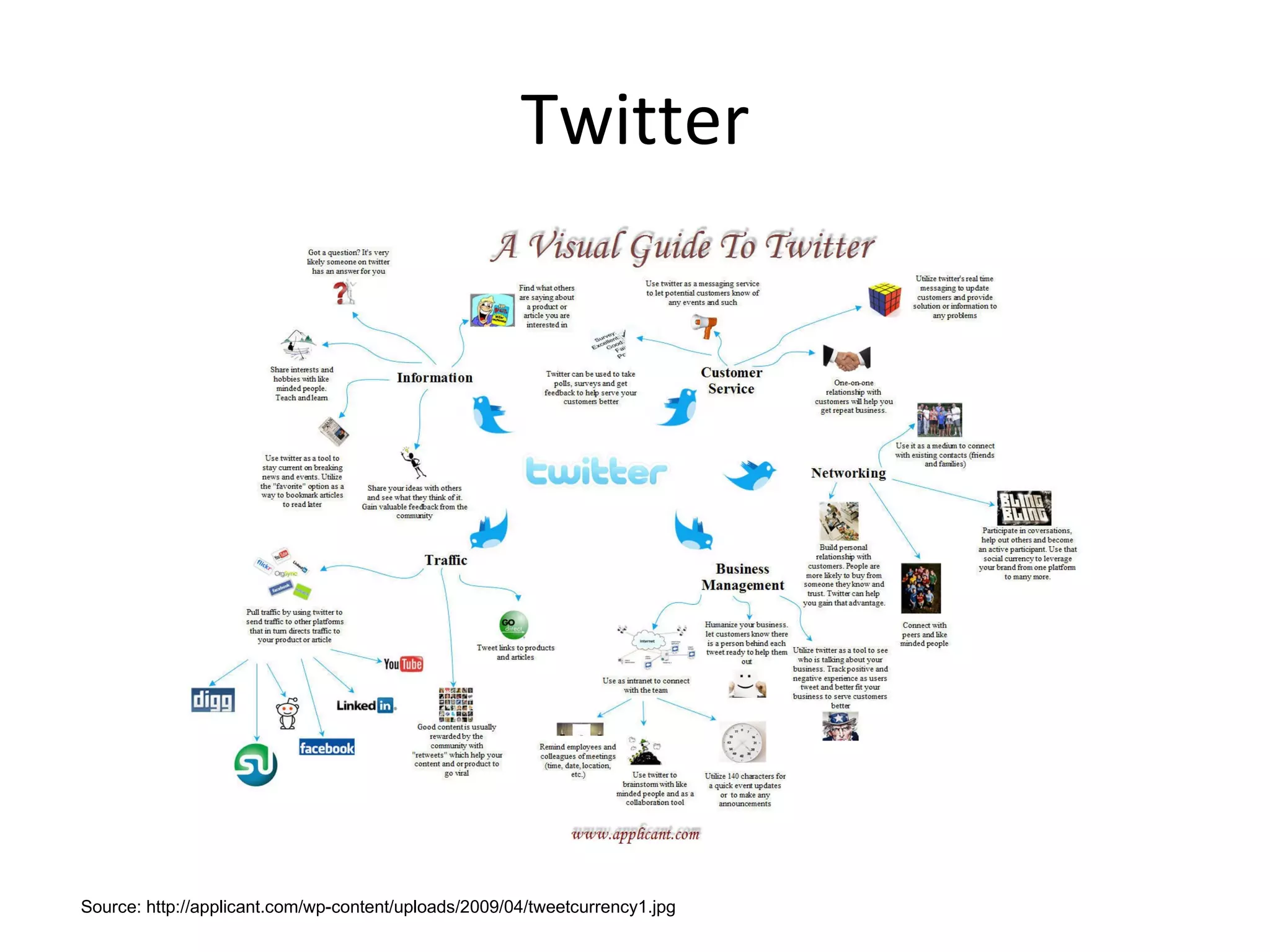
Twitter Source: http://applicant.com/wp-content/uploads/2009/04/tweetcurrency1.jpg
Twitter for Public Health Find interesting minds: @mindofandre, @AndrewPWilson, @bloodandmilk, etc. Follow conferences, legislative updates, reports from field Pool/aggregate data Suite of Twitter tools Social News Campaigns: podcast, blog, etc.
Content in summary: Public Health 2.0 Citizenry as co-creators of content Need for deeper listening to what matters Use of social filters to highlight what is important Experts are often poor prognosticators Yet, we need to move beyond populist rhetoric of the crowd New forms of biological/technological citizenship emerging-people can find like-minded people on social media platforms and build, curate content, eg. Blogs, wikis, Twitter hashtags (eg. #H1N1)
Collaboration Content become center of conversations Curation of aggregate content At what point does content and conversation convert to meaningful collaboration? How can you break problems down into modular, workable pieces that engage community?
Types of collaboration Defining or framing a problem Debate about strategies Moving across silos/sectors Filling in holes in data Ongoing conversations around issues Rapid response to emerging issues
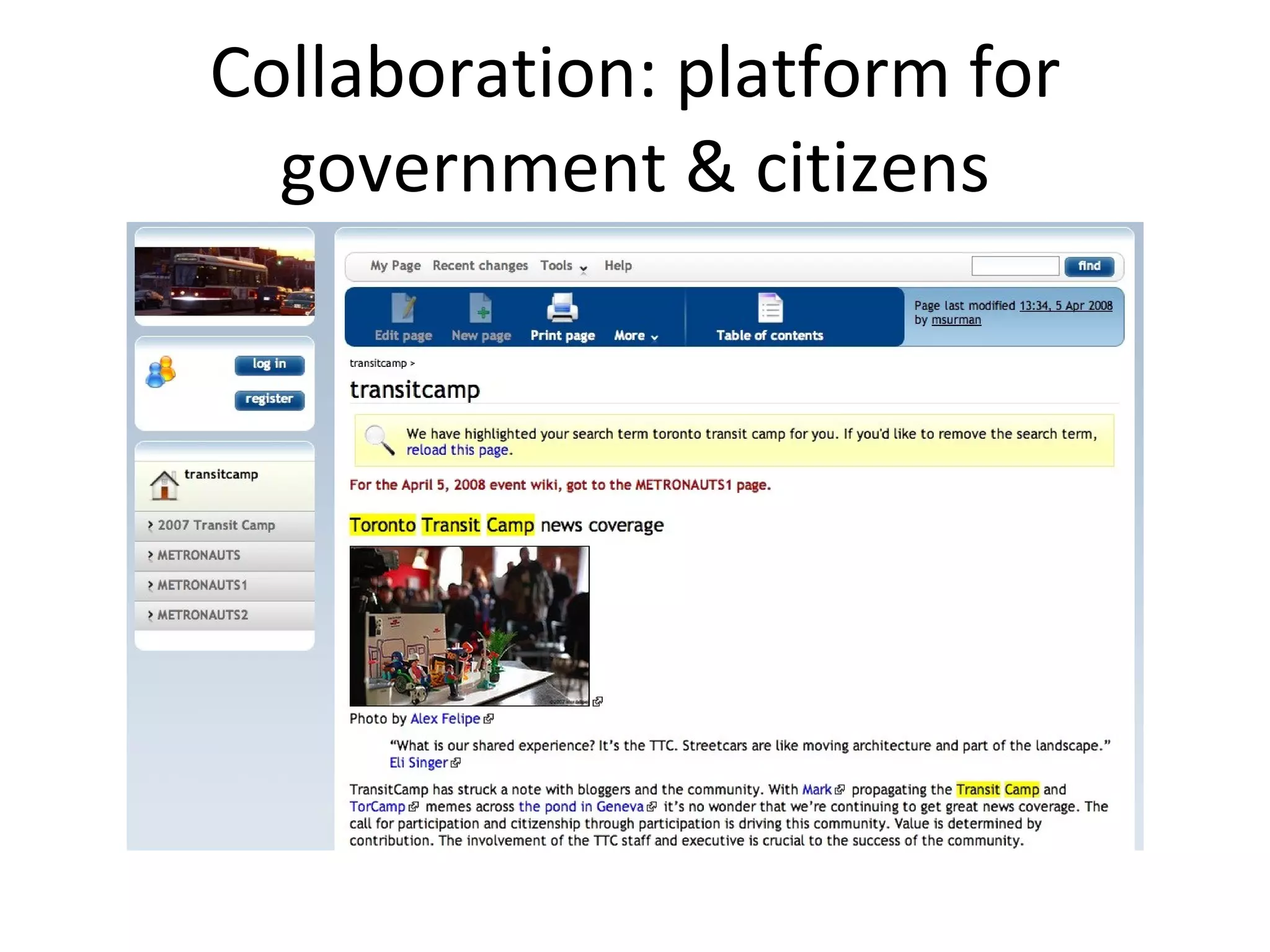
Collaboration: platform for government & citizens
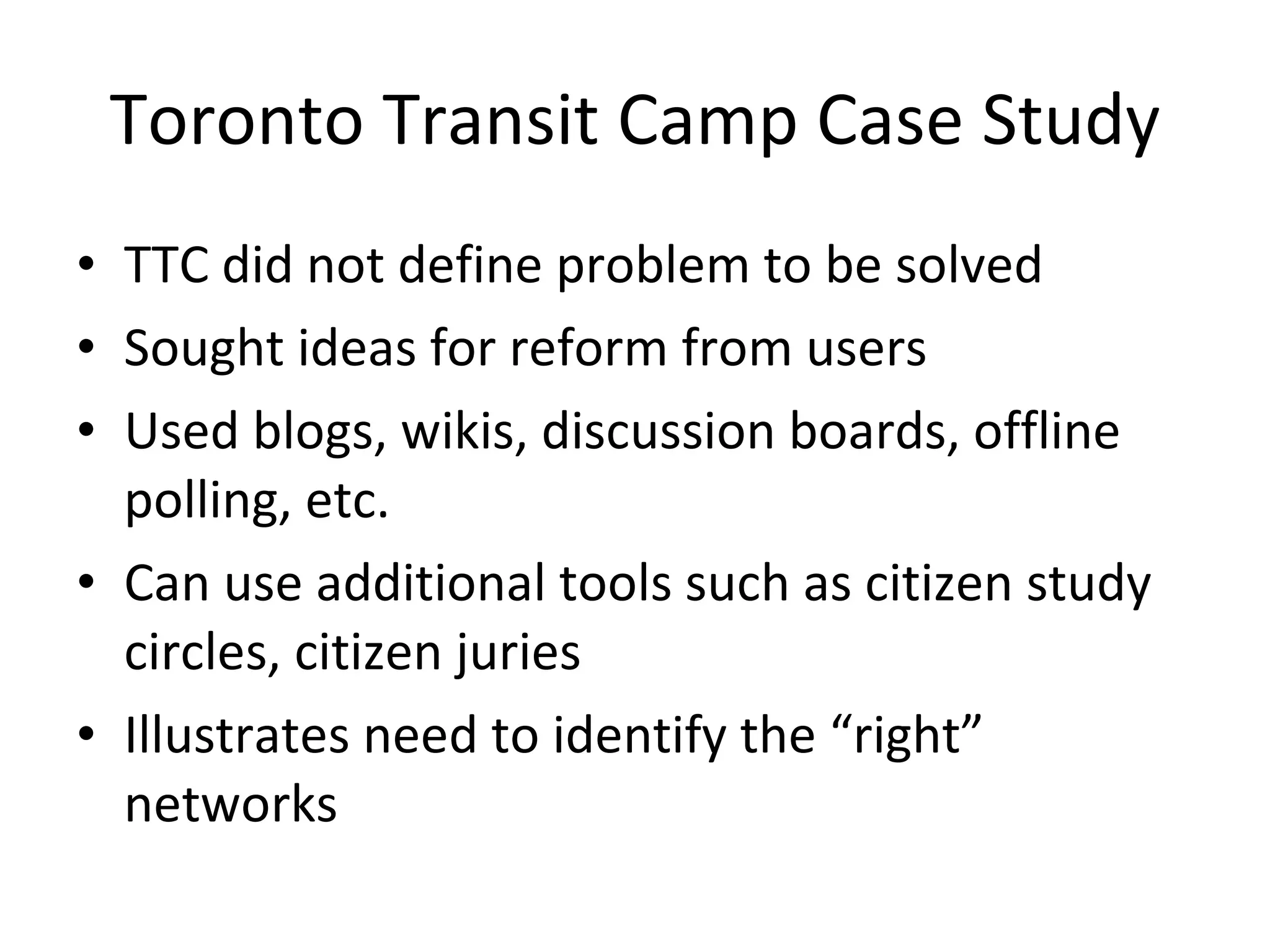
Toronto Transit Camp Case Study TTC did not define problem to be solved Sought ideas for reform from users Used blogs, wikis, discussion boards, offline polling, etc. Can use additional tools such as citizen study circles, citizen juries Illustrates need to identify the “right” networks
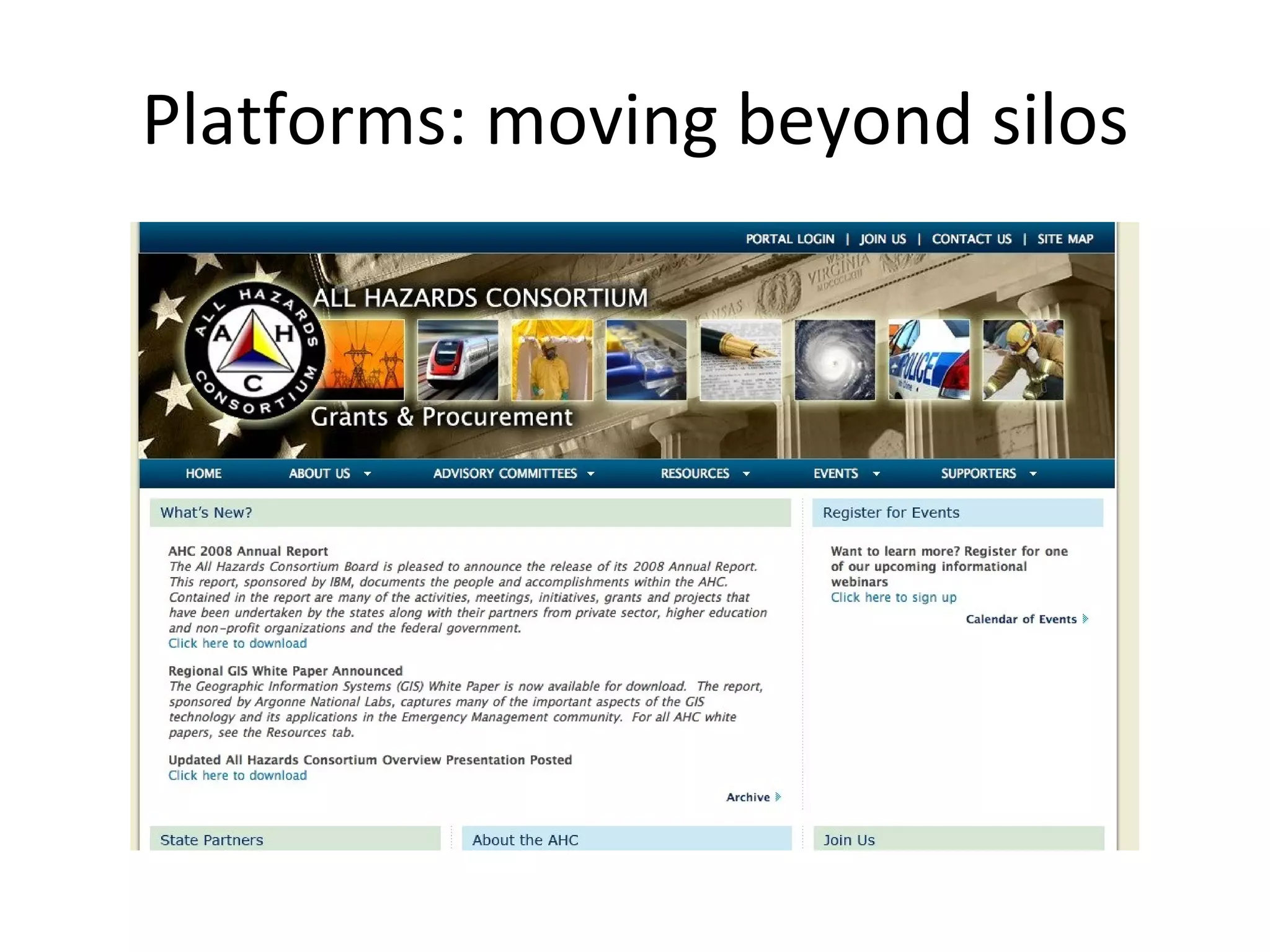
Platforms: moving beyond silos
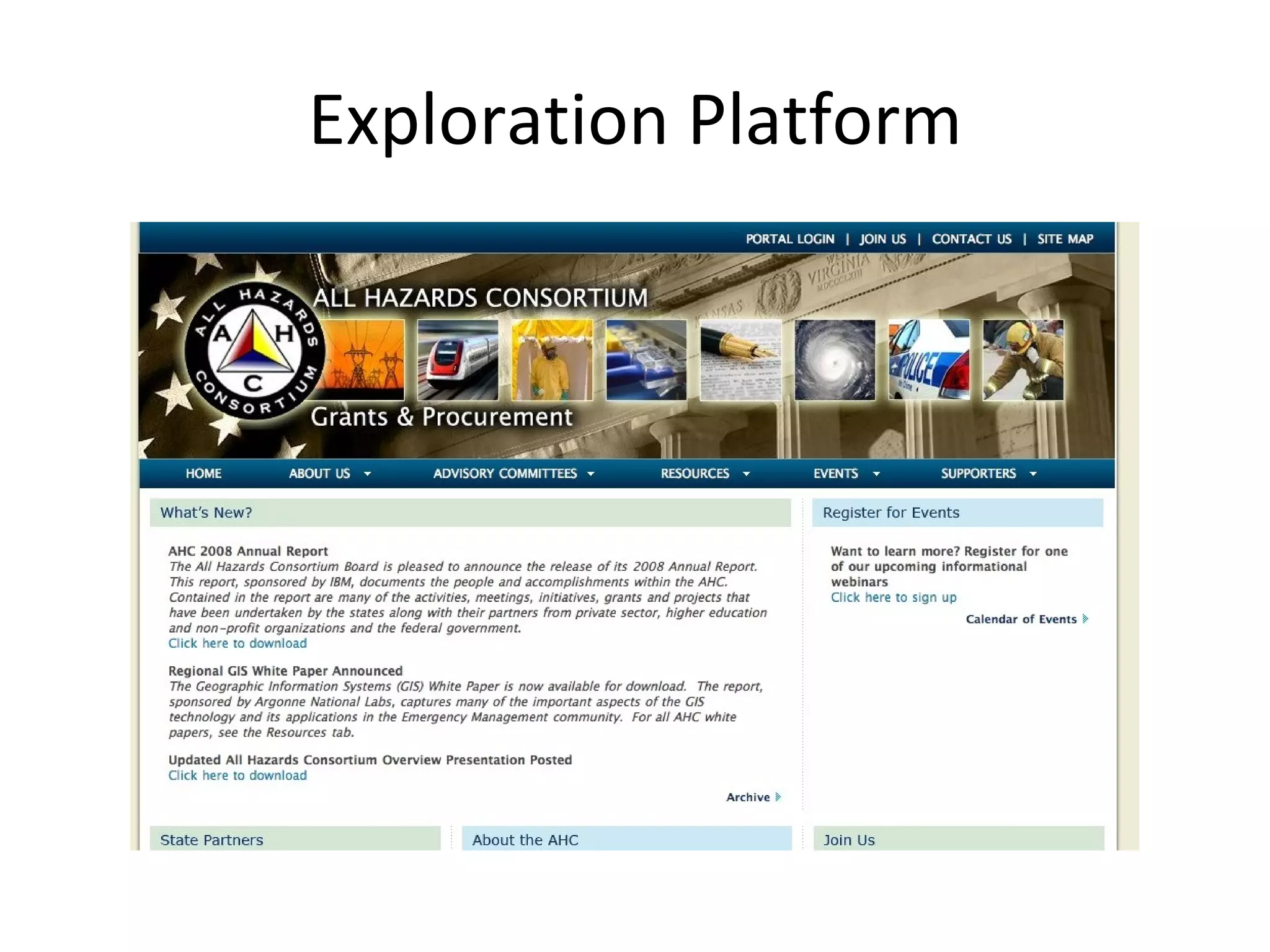
All Hazards Consortium Case Study Involved VA, MD, DC Brought together private sector, non-profits, universities, citizens, govt agencies Govt Agencies are the “innovation champions” in the network: create collaborative environment Govt role is about controlling the process Govt creates infrastructure for social knowledge creation
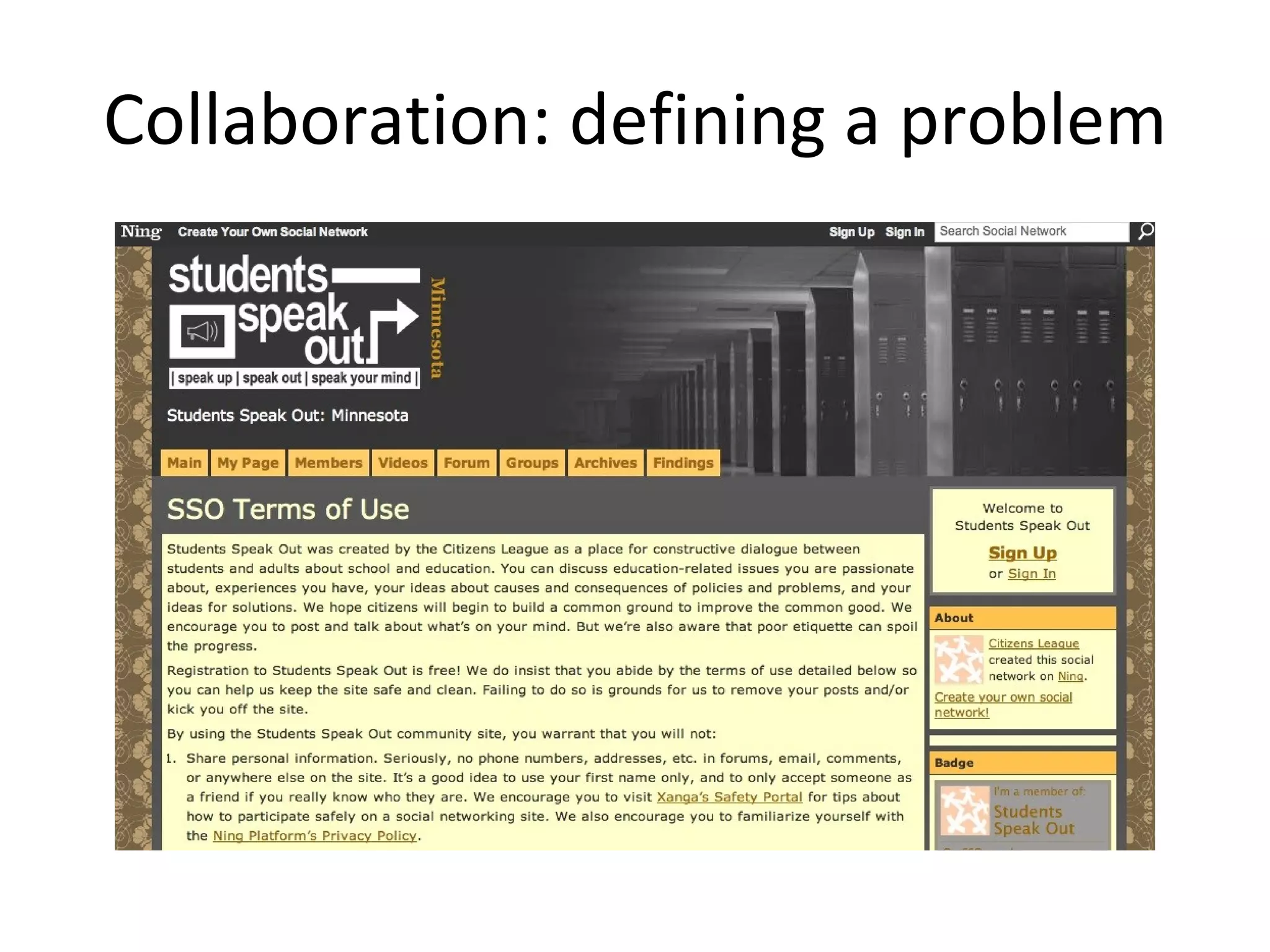
Collaboration: defining a problem
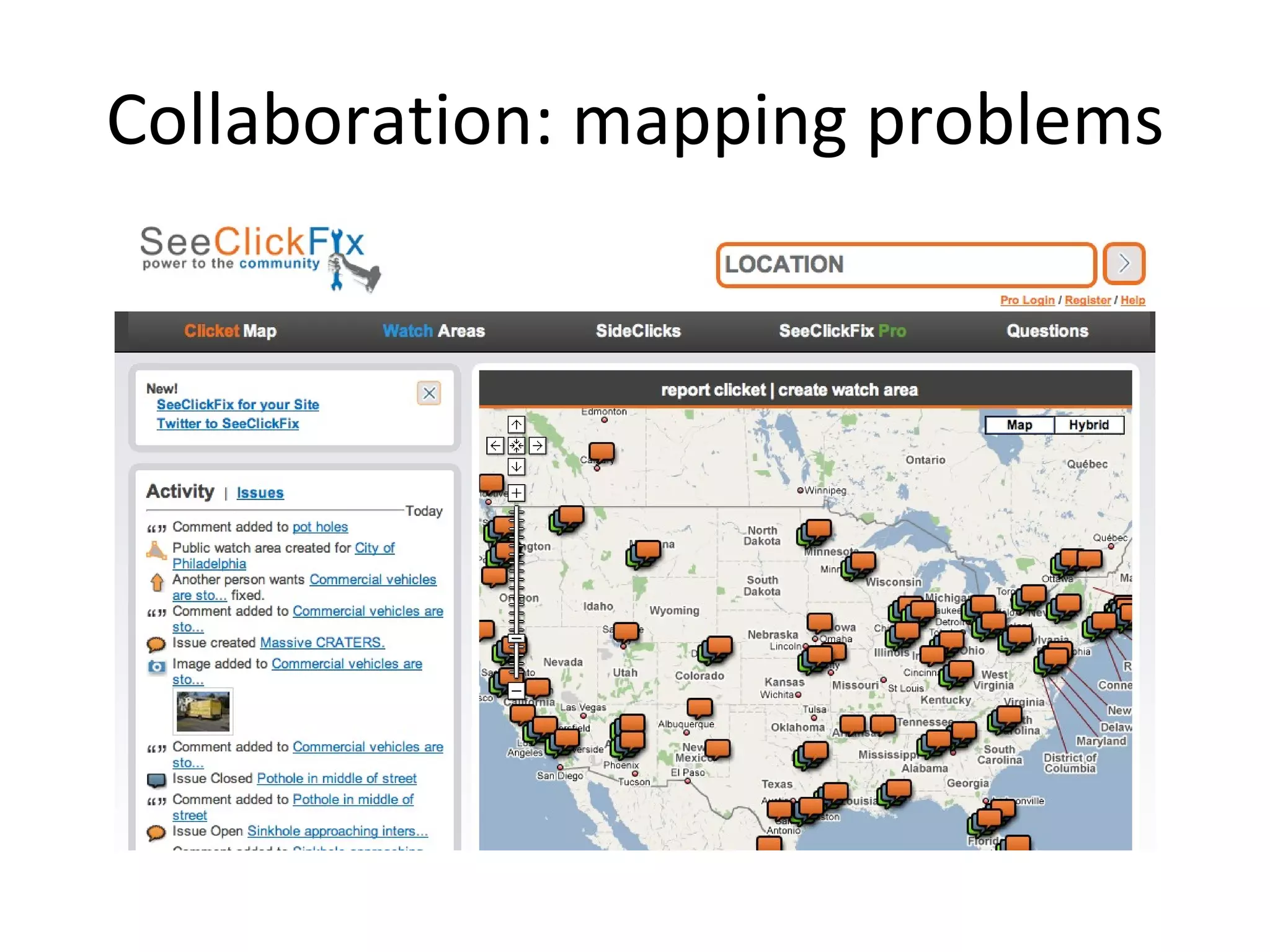
Collaboration: mapping problems
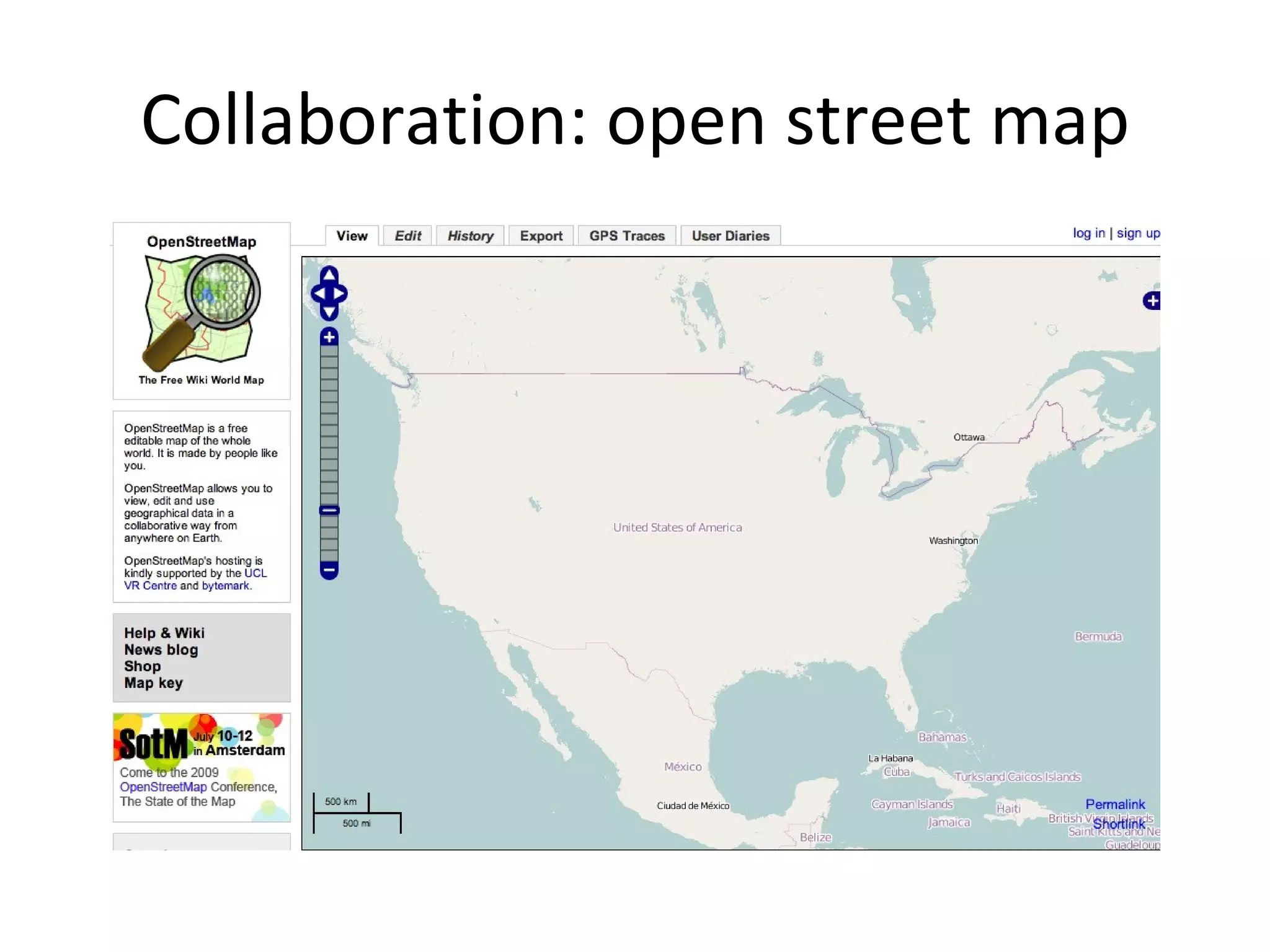
Collaboration: open street map
Open Street Map: telling stories
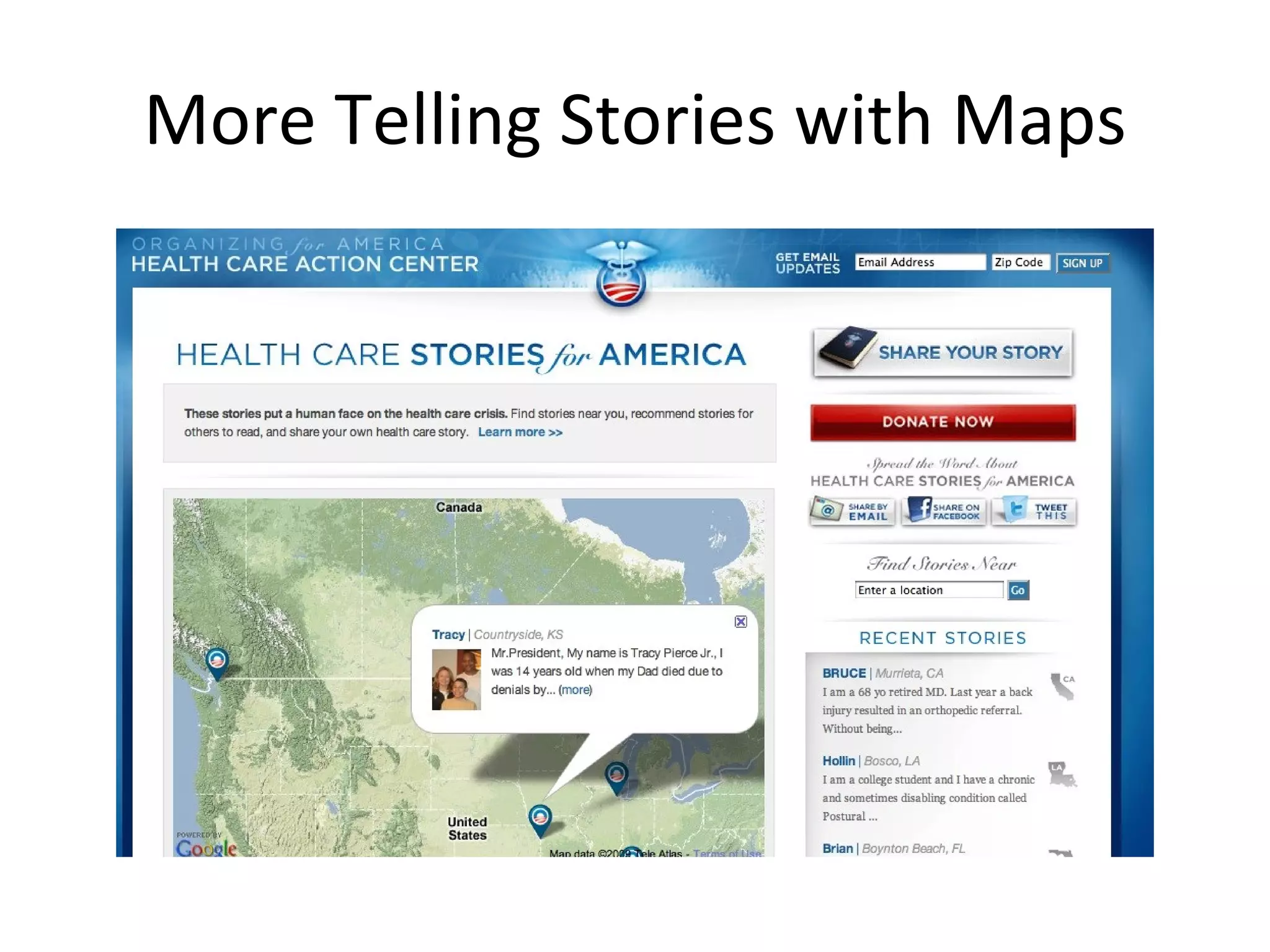
More Telling Stories with Maps
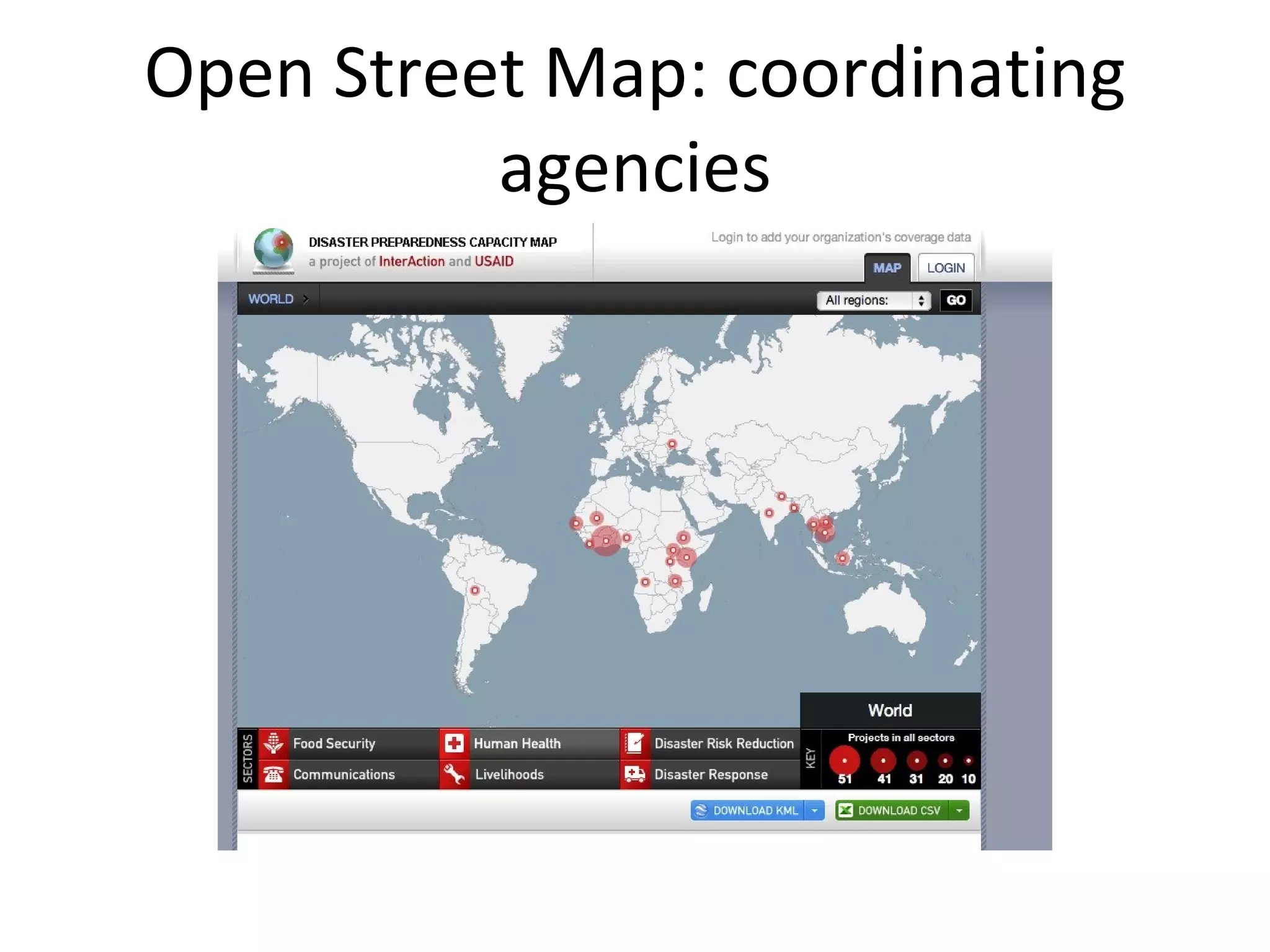
Open Street Map: coordinating agencies
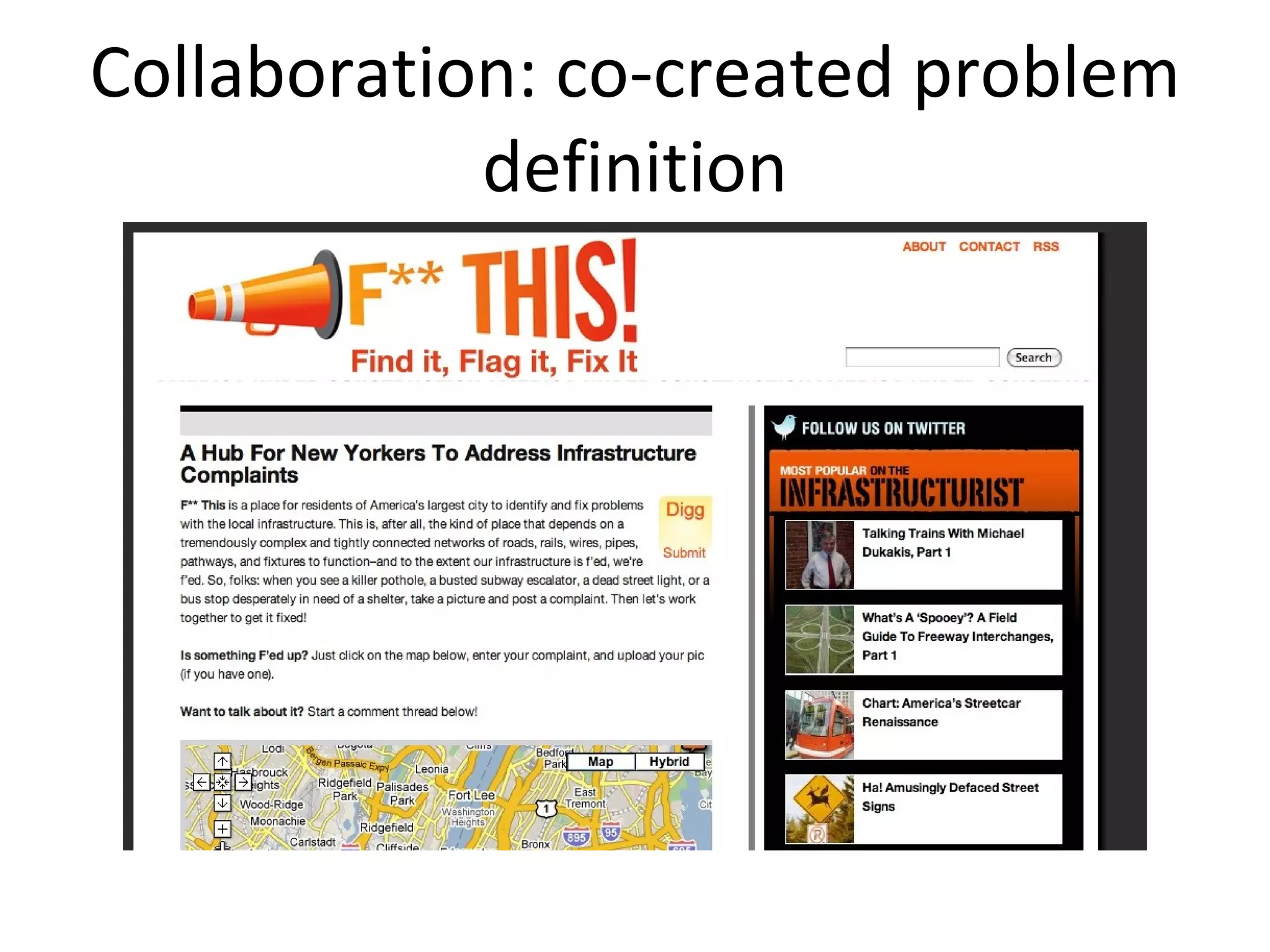
Collaboration: co-created problem definition
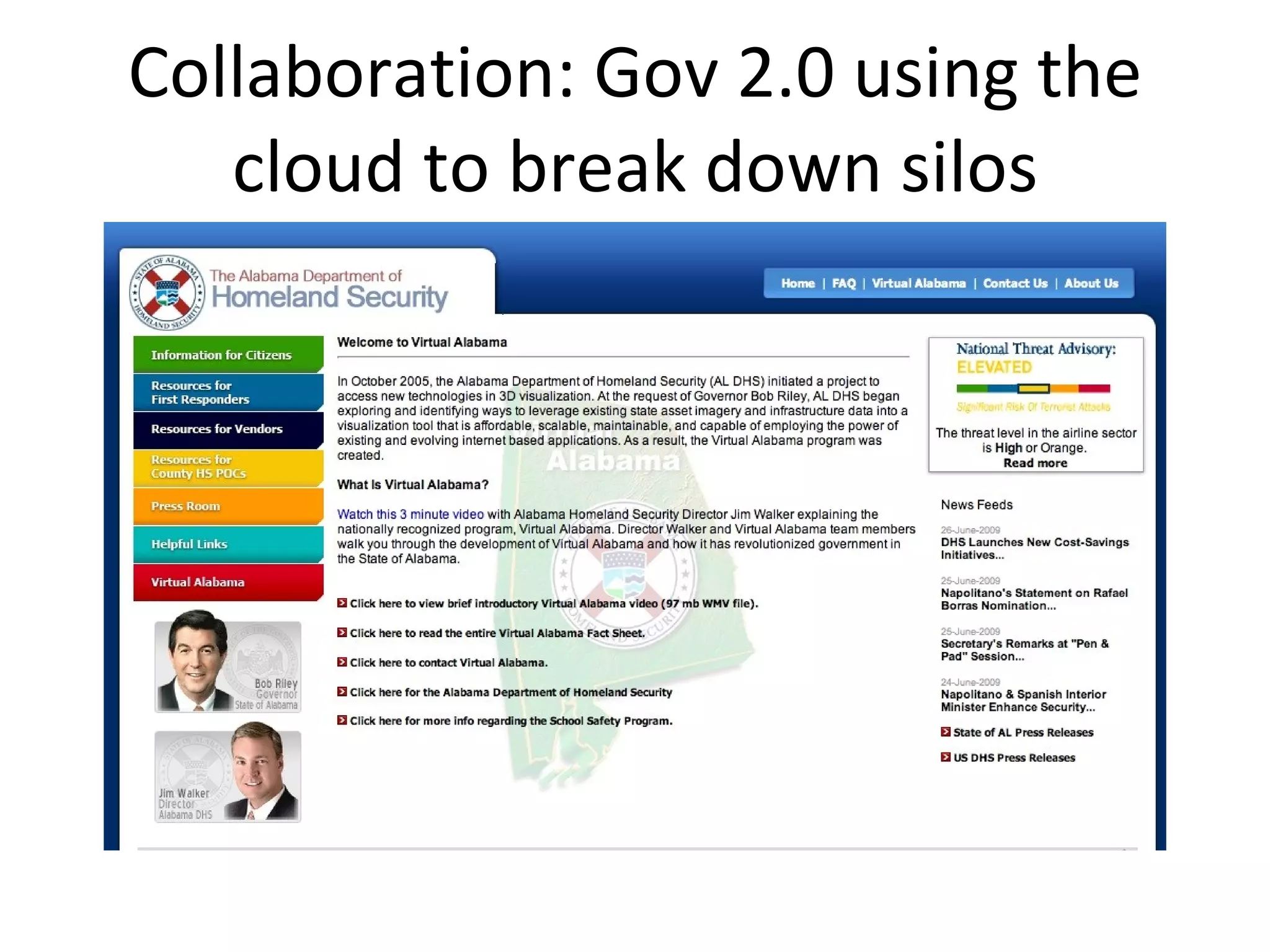
Collaboration: Gov 2.0 using the cloud to break down silos
Virtual Alabama Platform Results $150,000 to build 10 days to create Can now share data in the cloud across government sectors  The cloud is growing in importance—public health needs to be part of the discussion! But more on that later….
Collaboration Lessons Sourcing knowledge from edges Learn from outside of the health field Collaborate with other sectors in more robust manner Co-creation of knowledge with users We’re often our own worst enemies: silos, blinders Our value networks are more complex: need more debate, discussion to deal with complex ecosystem of partners We deal with PUBLICS not a public Collaborative problem-solving is central yet not typically funded by foundations
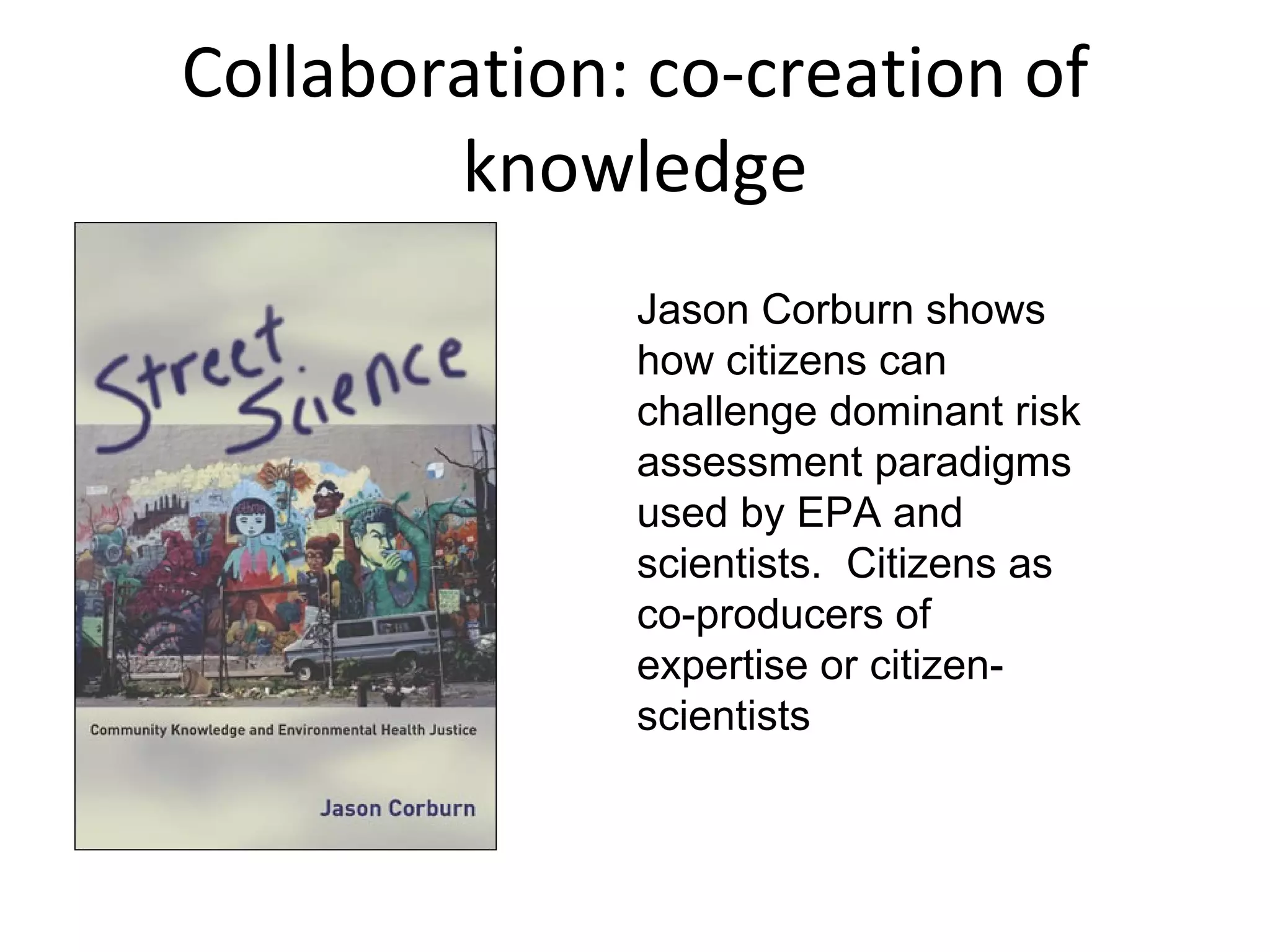
Collaboration: co-creation of knowledge Jason Corburn shows how citizens can challenge dominant risk assessment paradigms used by EPA and scientists.  Citizens as  co-producers of expertise or citizen-scientists
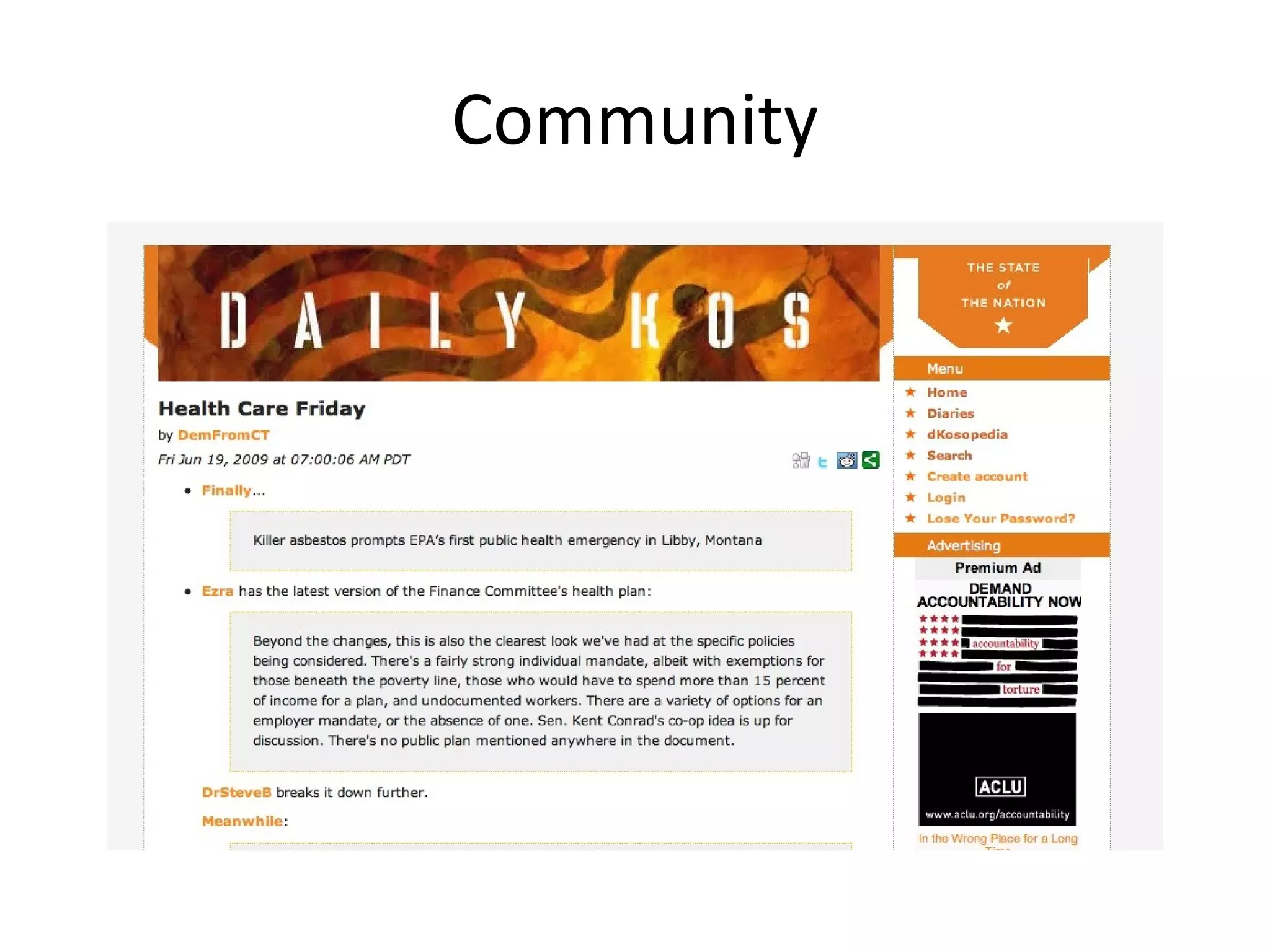
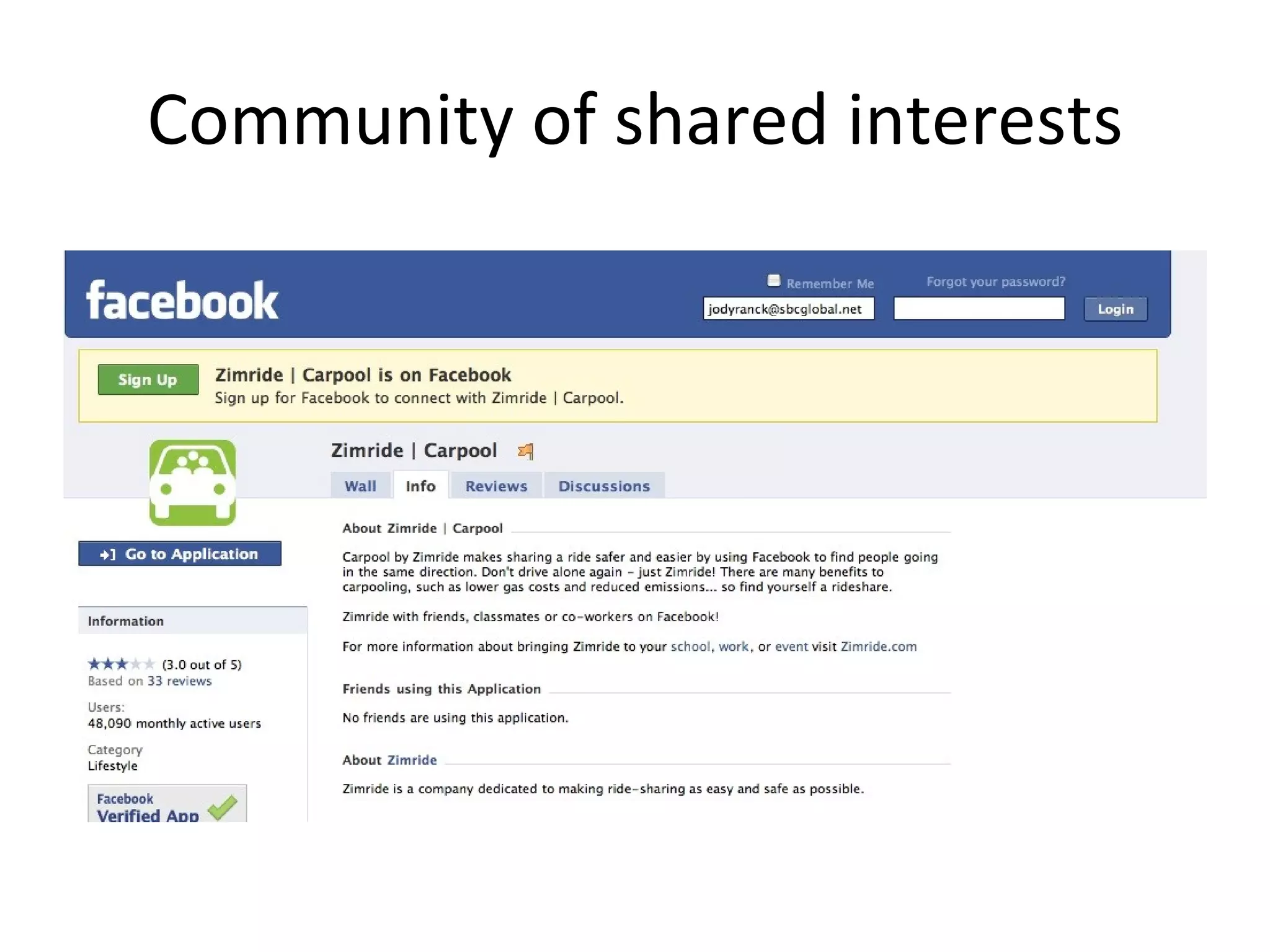
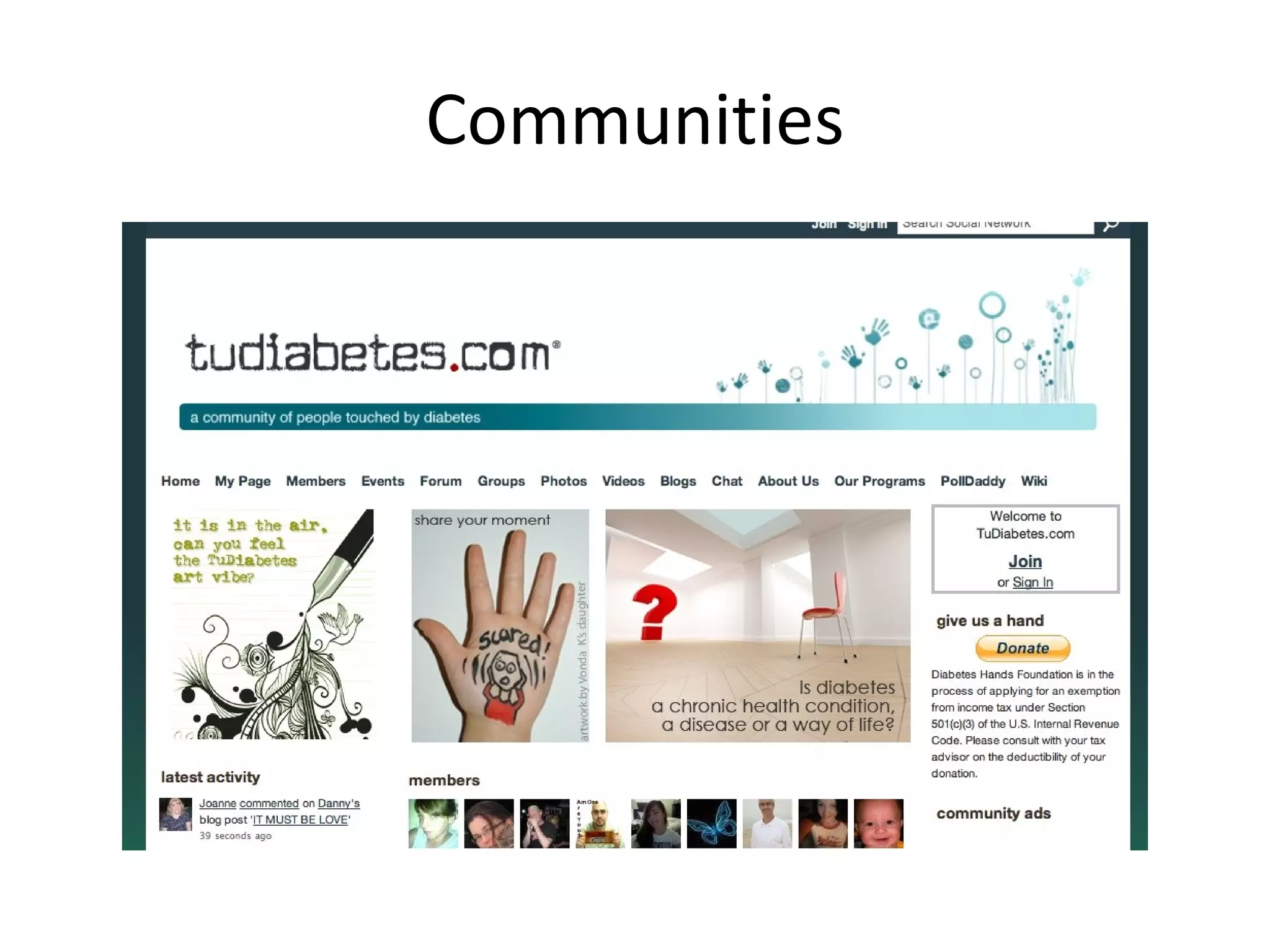
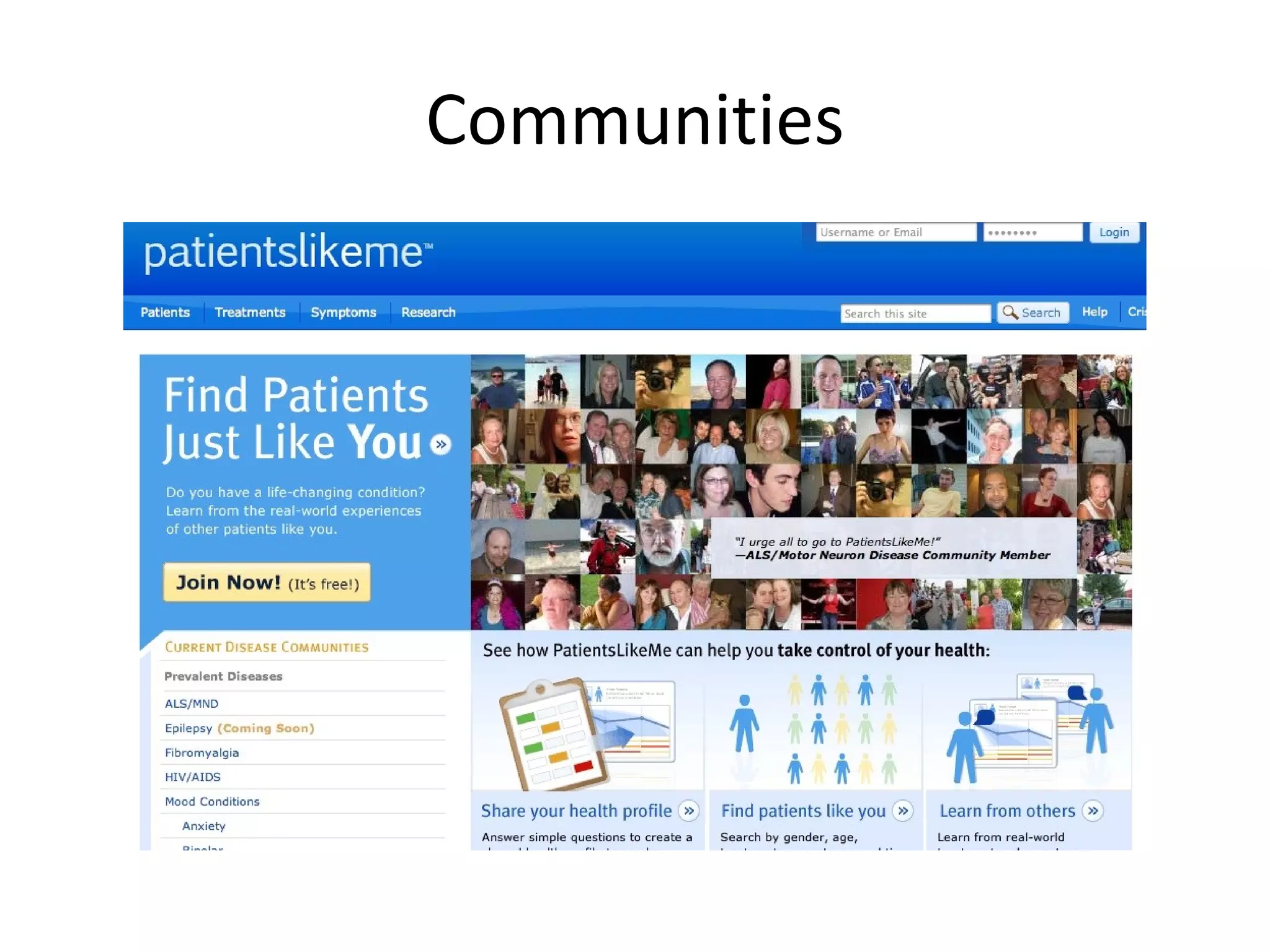
Community Difficult to sustain engaged community MyBarackObama, DailyKos, etc. But we see PatientslikeMe.com with diverse patient communities TuDiabetes  Sharing, aggregating, conversing-  Translation into Collective Action
Community
Communities
Community of shared interests
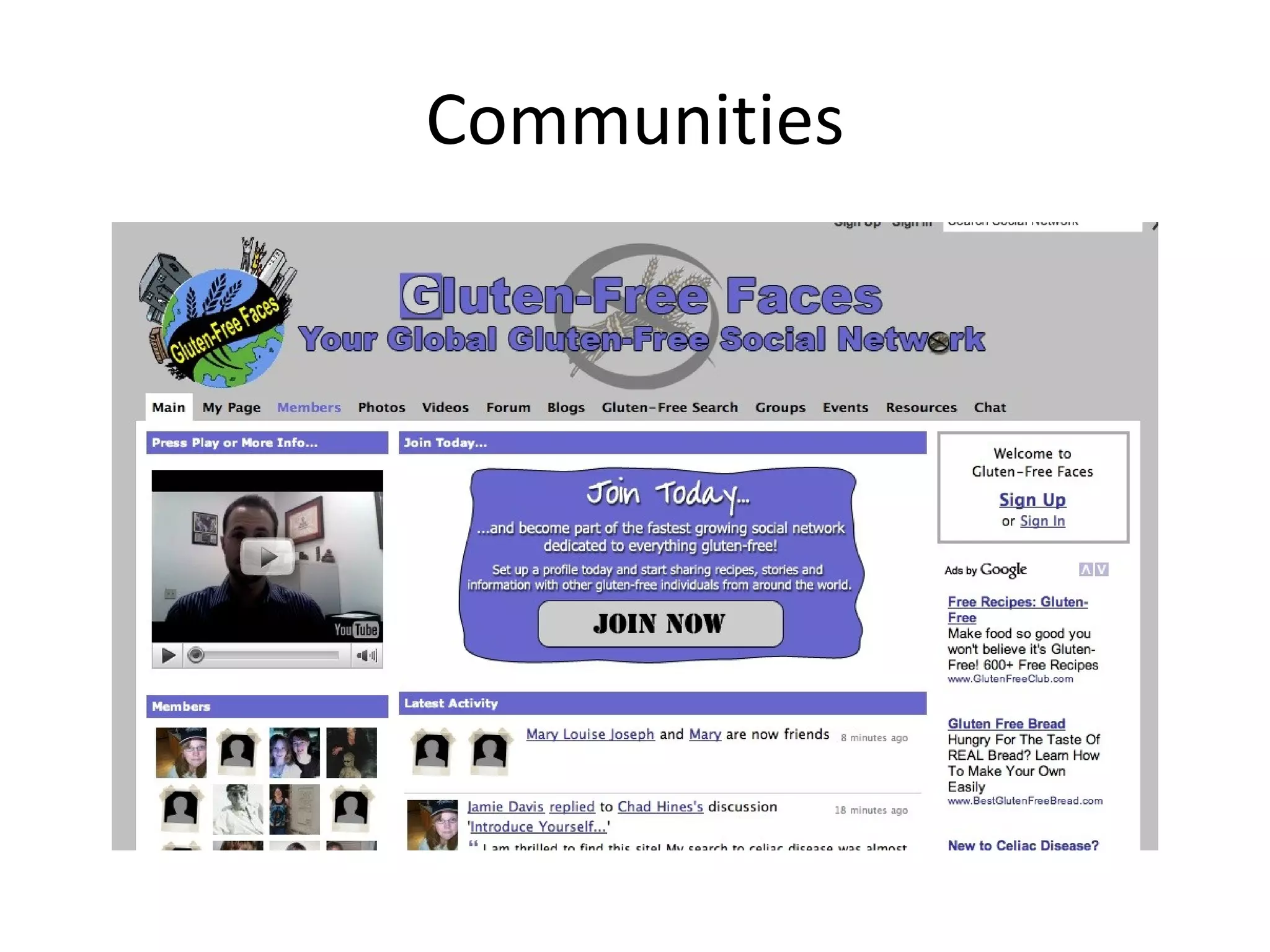
Communities
Communities
Communities
Communities
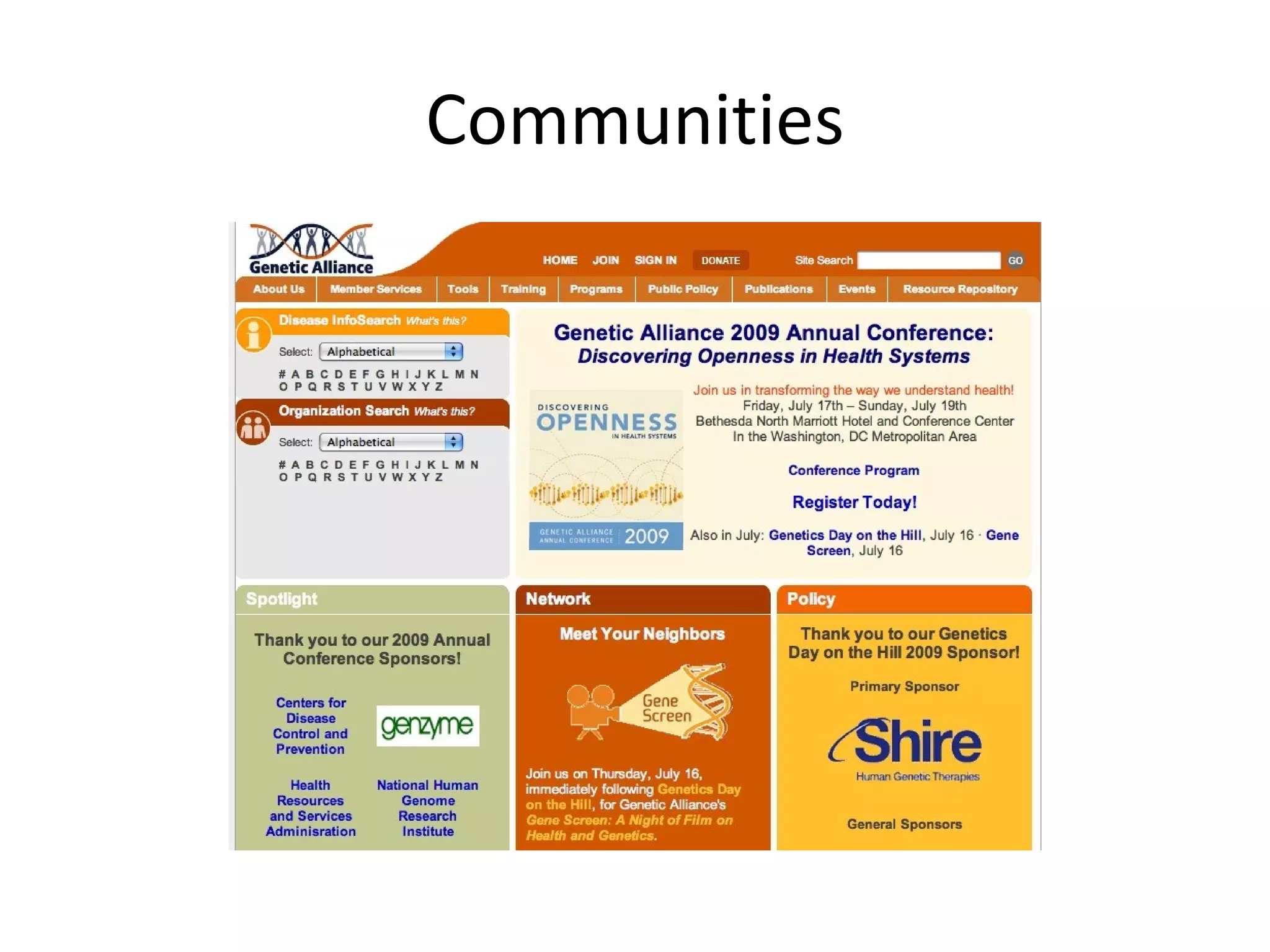
Genetic Alliance Information portal Policy Advocacy WikiGenetics, WikiAdvocacy Resource Repository Good Example of emerging bio-sociality & biocitizenship in action
Health 2.0 Communities Communities around micro-macro issues User-generated content, filters Information  knowledge  new power relationships in clinical encounter Platforms for fundraising, policy, advocacy Data aggregators that move beyond HIPAA constraints We’ve yet to see substantial movement in power structures of health & medicine But they’re still potent “issue networks” and signal of new form of bio-sociality that has potential to shift health politics
Where does Public Health fit in? Need to move from top-down approaches Less control, democratization of expertise-we are no longer the privileged experts all the time: listen, engage Think critically about populist hubris in social mediasphere without resorting back to PH knows best ethos Who speaks for communities? Beyond bioethics to somatic ethics and relationships online How can we cultivate democratic ethos of public health in social mediasphere? Organizational design: how to incentivize collaboration and community building rather than maintenance of silos?
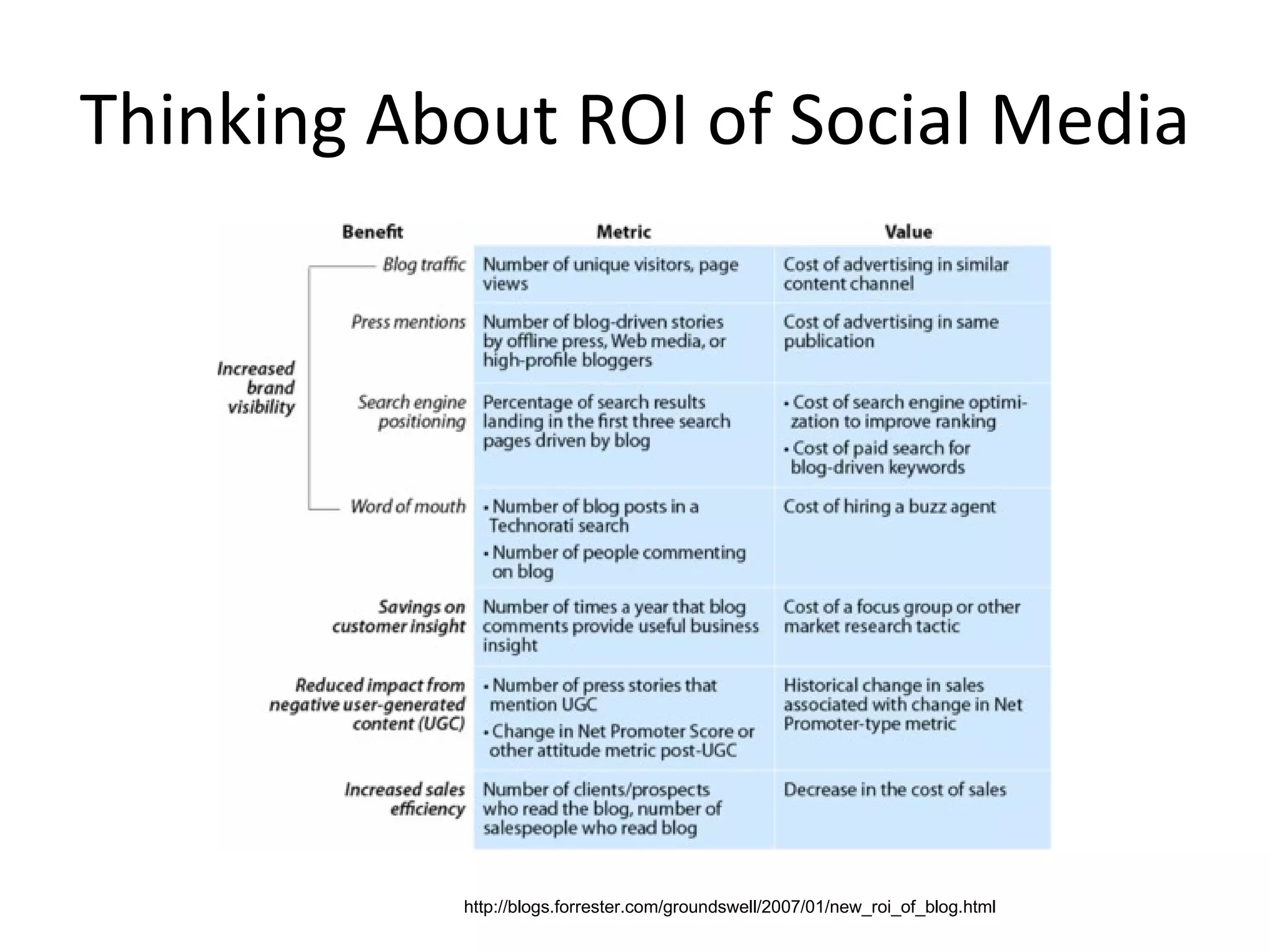
Thinking About ROI of Social Media http://blogs.forrester.com/groundswell/2007/01/new_roi_of_blog.html
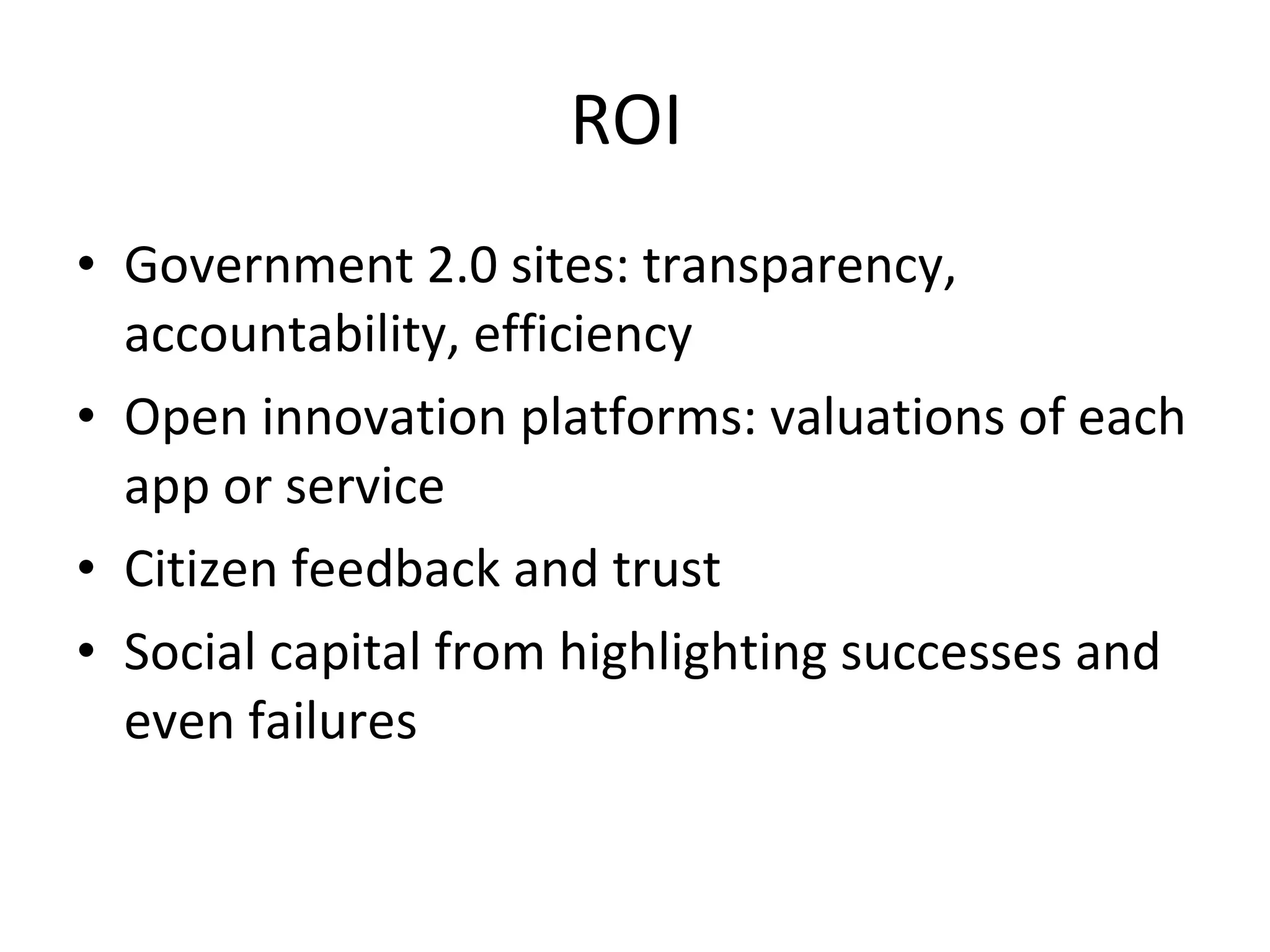
ROI  Government 2.0 sites: transparency, accountability, efficiency Open innovation platforms: valuations of each app or service Citizen feedback and trust Social capital from highlighting successes and even failures
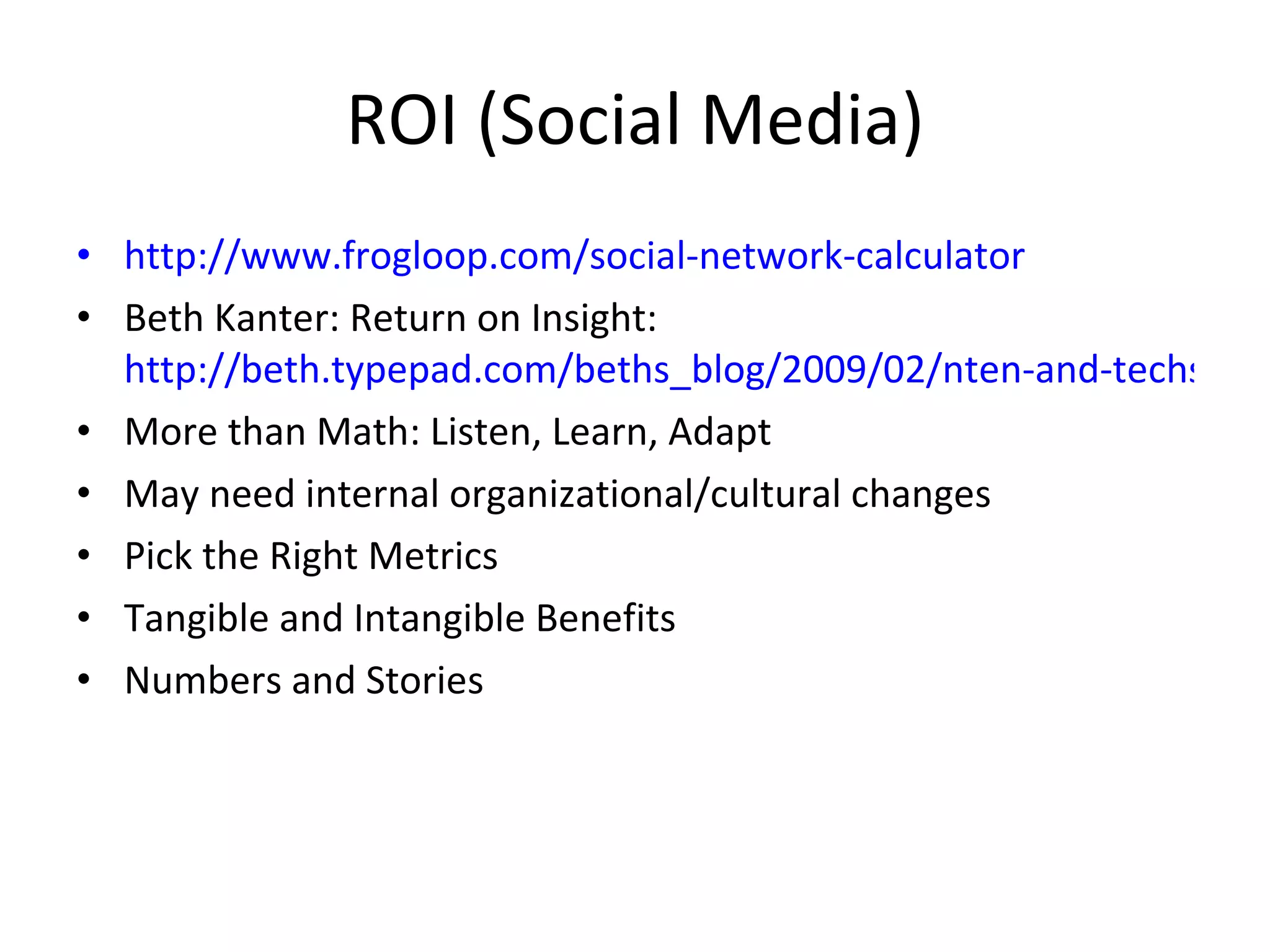
ROI (Social Media) http://www.frogloop.com/social-network-calculator Beth Kanter: Return on Insight:  http://beth.typepad.com/beths_blog/2009/02/nten-and-techsoup-webinar-share-your-story-roi-and-social-media-slides-and-notes.html More than Math: Listen, Learn, Adapt May need internal organizational/cultural changes Pick the Right Metrics Tangible and Intangible Benefits Numbers and Stories
Section 3: Social Media Platforms Collaboration: digging deeper Typologies of collaborative platforms What problem are you solving for? What are some characteristics of collaborative organizations? Network Organizations and Public Health
Collaborative Platforms: Some lessons from Satish Nambisan Exploration: Defining a problem where dissensus exists Experimentation: Testing out solutions Execution: Disseminating solutions Each of these is a form of crowdsourcing See: Satish Nambisan (2009). Platforms for Collaboration. Stanford Social Innovation Review, Summer, Vol. 7, No. 3.
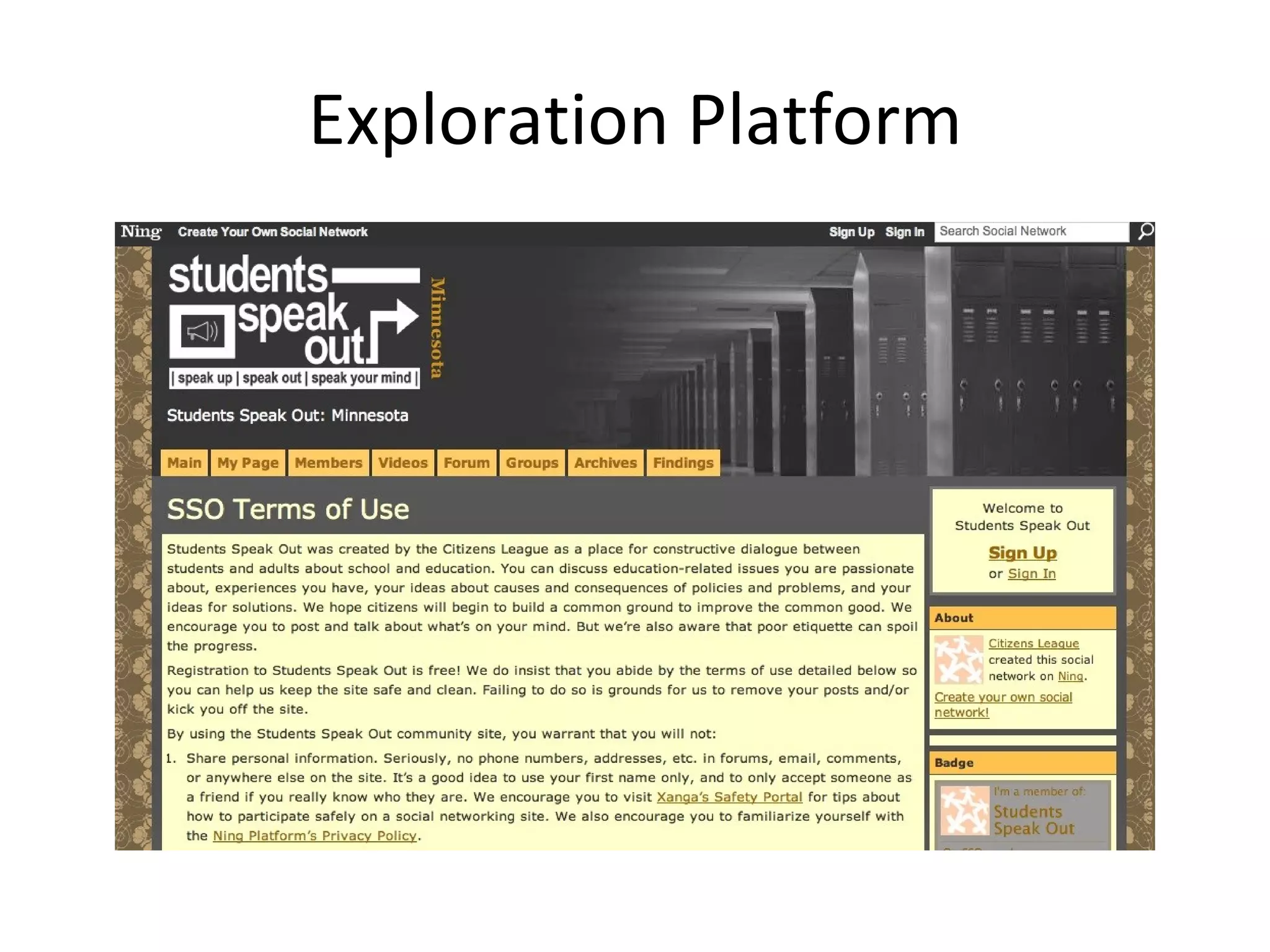
Exploration Platform
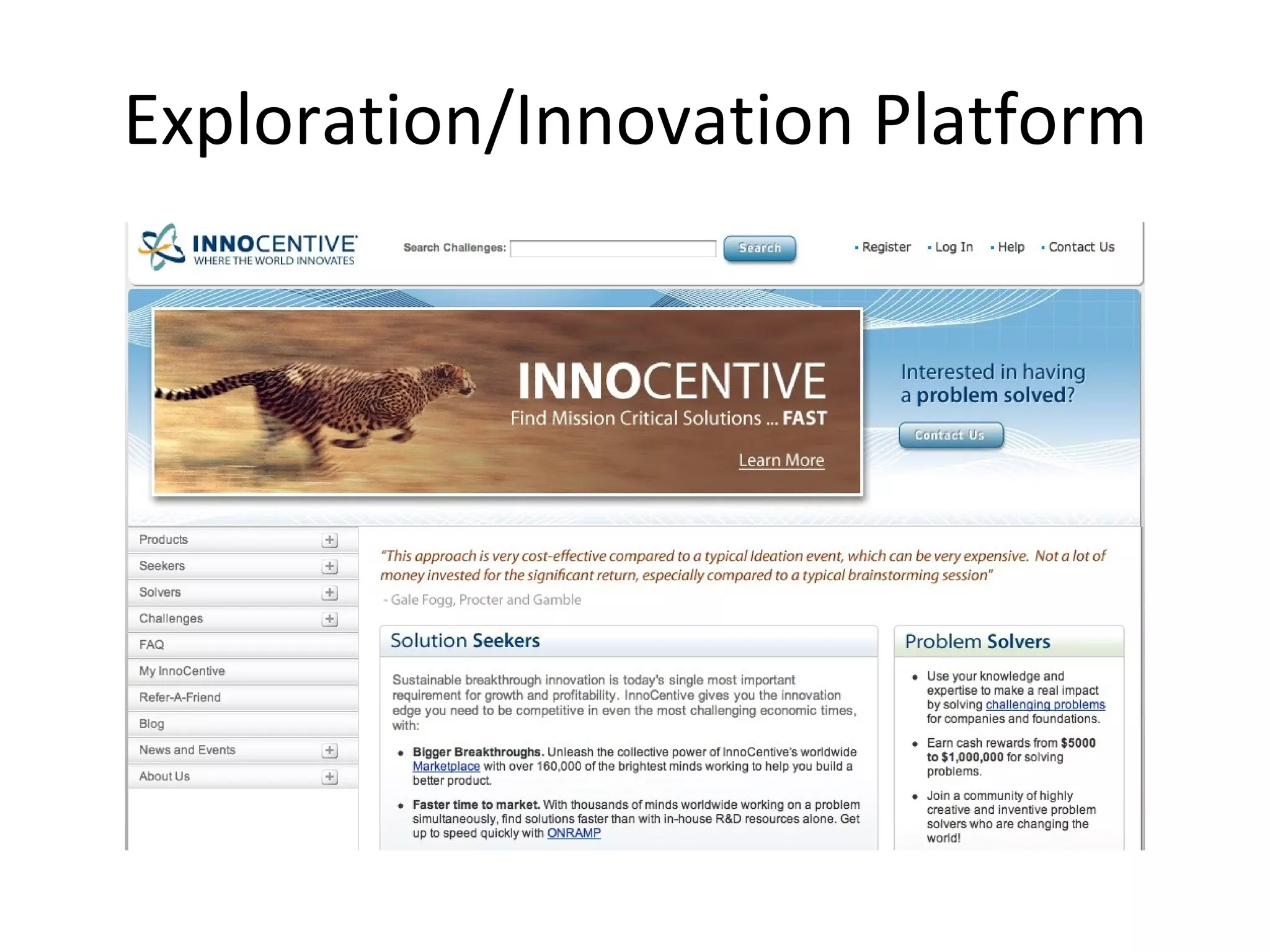
Exploration/Innovation Platform
Exploration Platforms Used to help frame issues Create communities around different aspects of a problem—modular approach Science of asking the right question Used to build consensus around vision, strategy, approaches Participants need to know what they’re being asked to accomplish
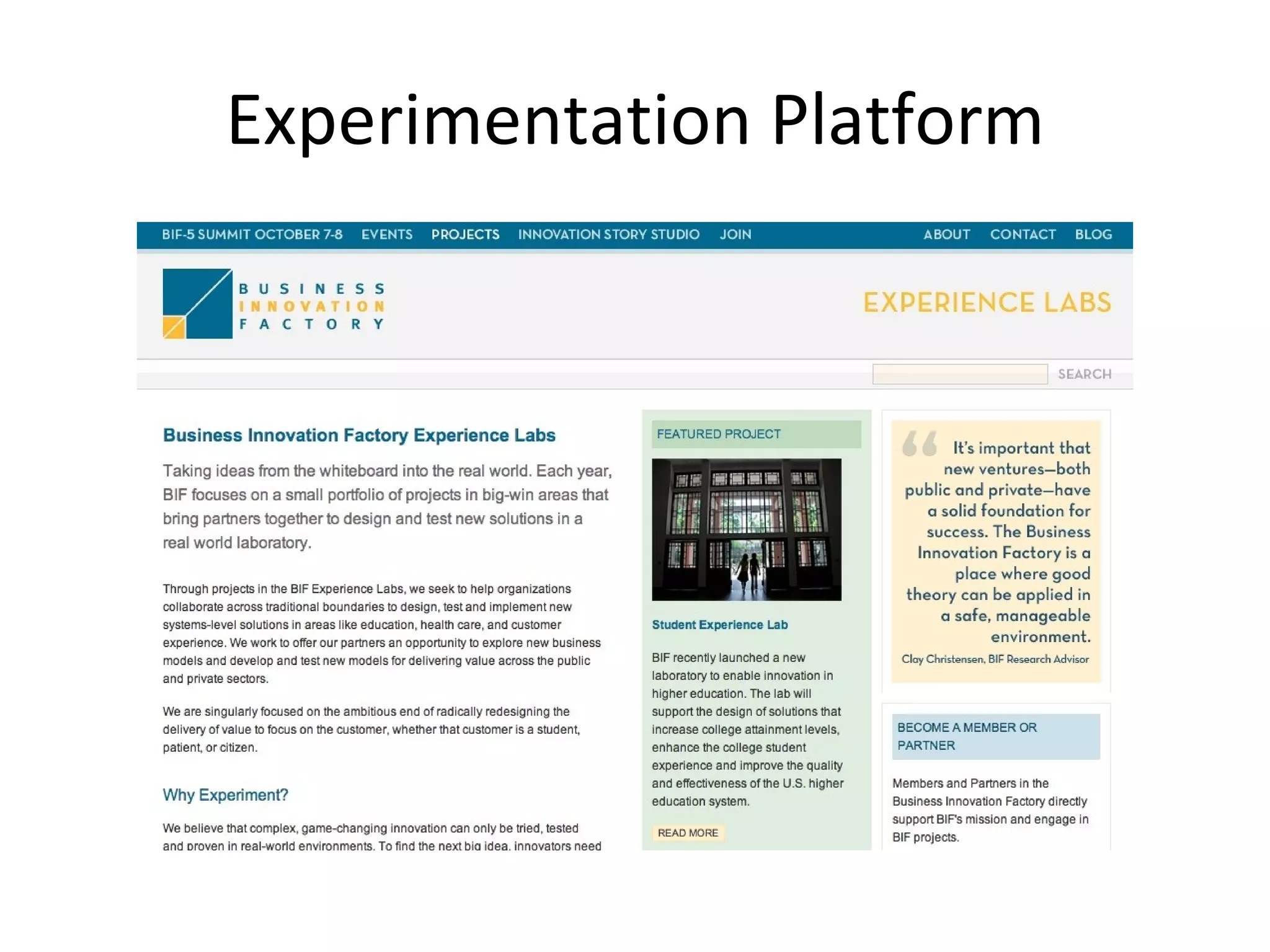
Experimentation Platform
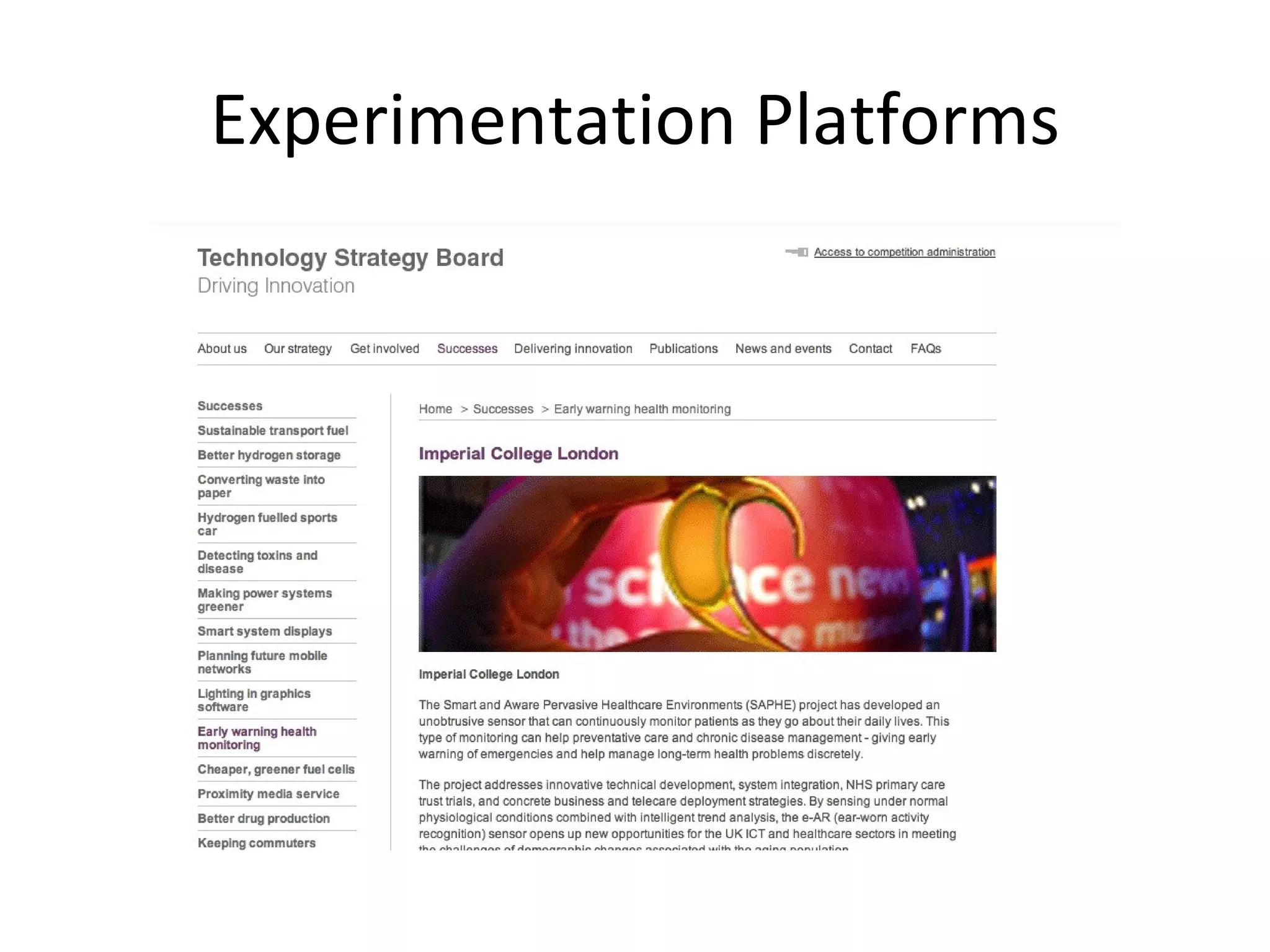
Experimentation Platforms
Experimentation Platforms Too many organizations go from idea to implementation without testing idea Neutral environments for testing things out—rapid prototypying Virtual innovation labs: Y Combinator Need agreement on success metrics Uncover implementation challenges
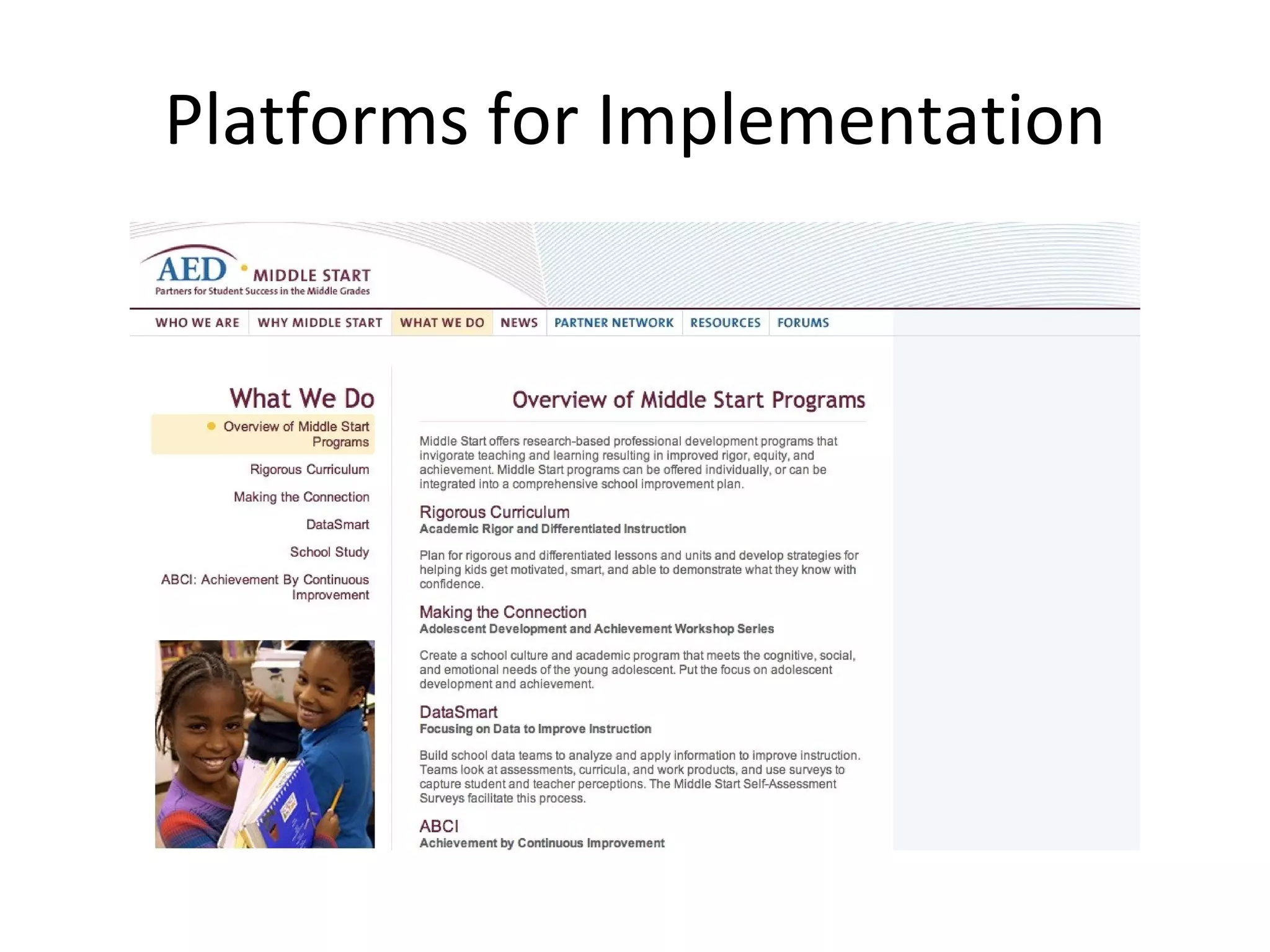
Platforms for Implementation
Implementation Platforms Used for rolling out findings Create and distribute templates to assist replication Coordinate efforts of those in network Connected to offline sessions for sharing information, experiences
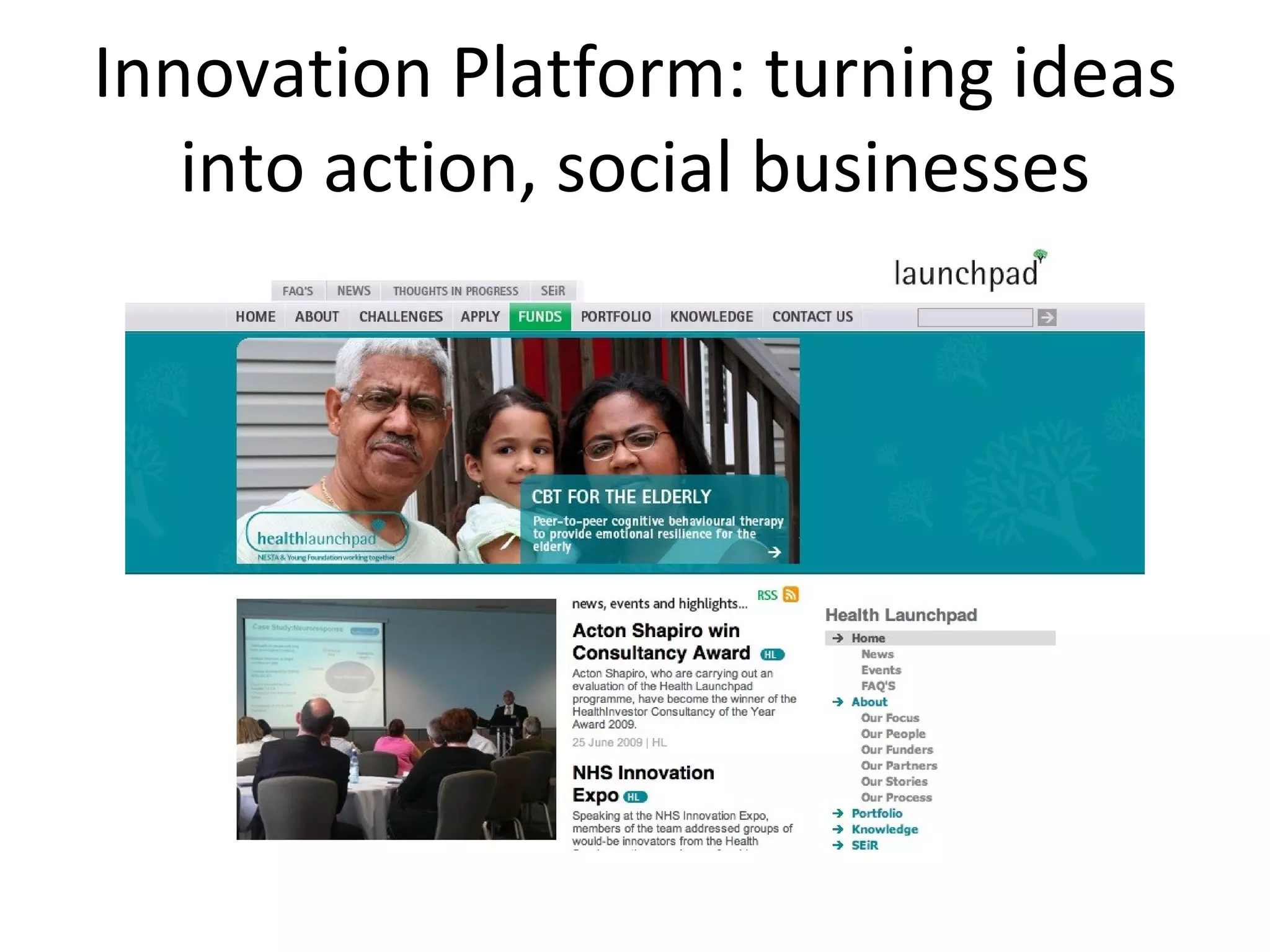
Innovation Platform: turning ideas into action, social businesses
Sambisan’s Ingredients for Platforms Need a Network Perspective: embrace non-traditional partners Modular or Plug-and-Play Expertise: agile Portfolio of Success Metrics Ability to dismantle barriers between government, business, non-profits
Networked Public Health Different types of networks: loosely coupled, centralized, distributed, etc. Partnerships and Networks are not the same thing Rather than broad social movements-see more micro-movement Coordination and Control of Networks—governance Designing Networks: building relationships, managing in less hierarchical domains, interdependencies, roles and accountability What would the PHR for public health look like: collaborative platform that enables citizens to build, share, use data
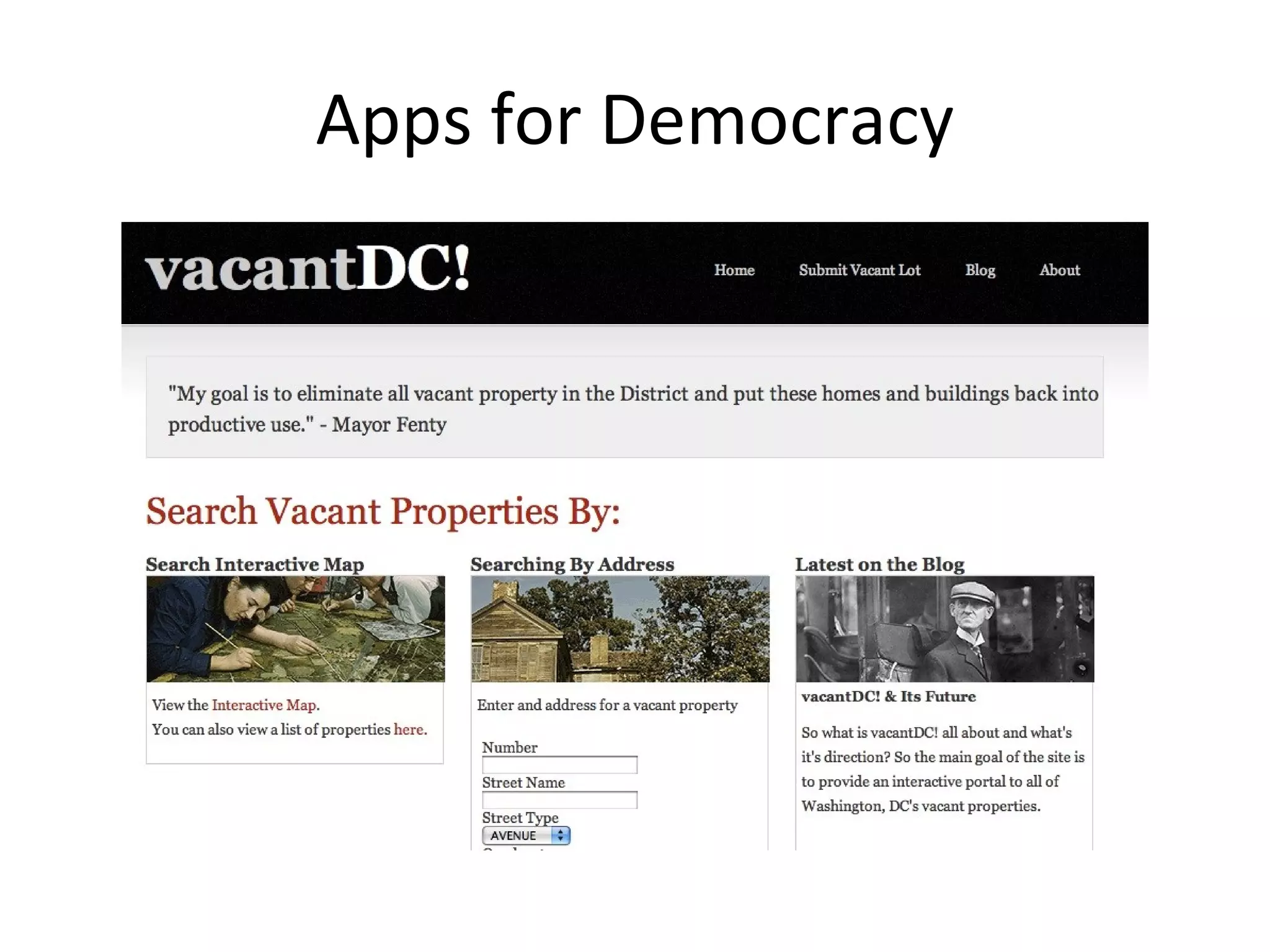
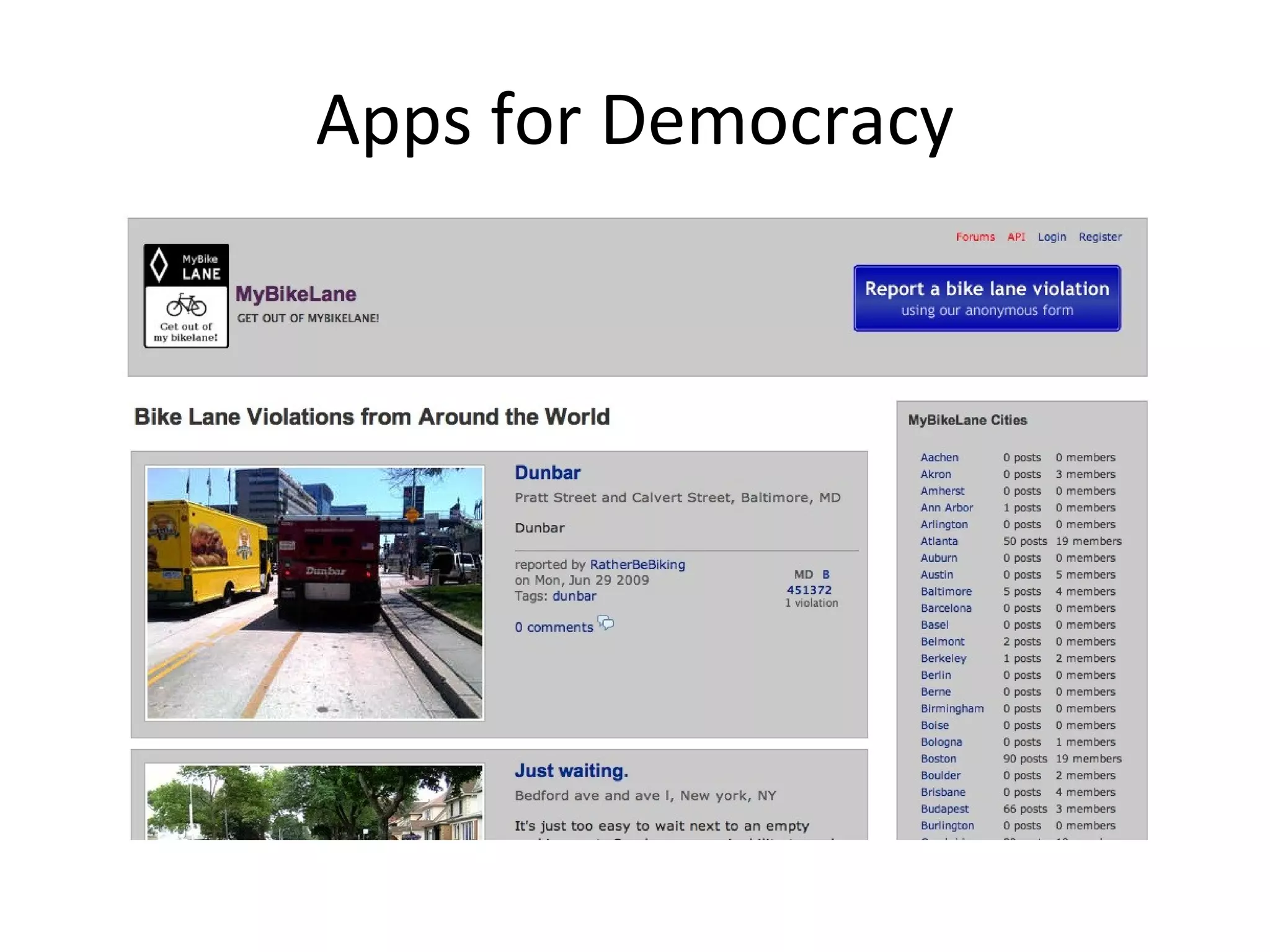
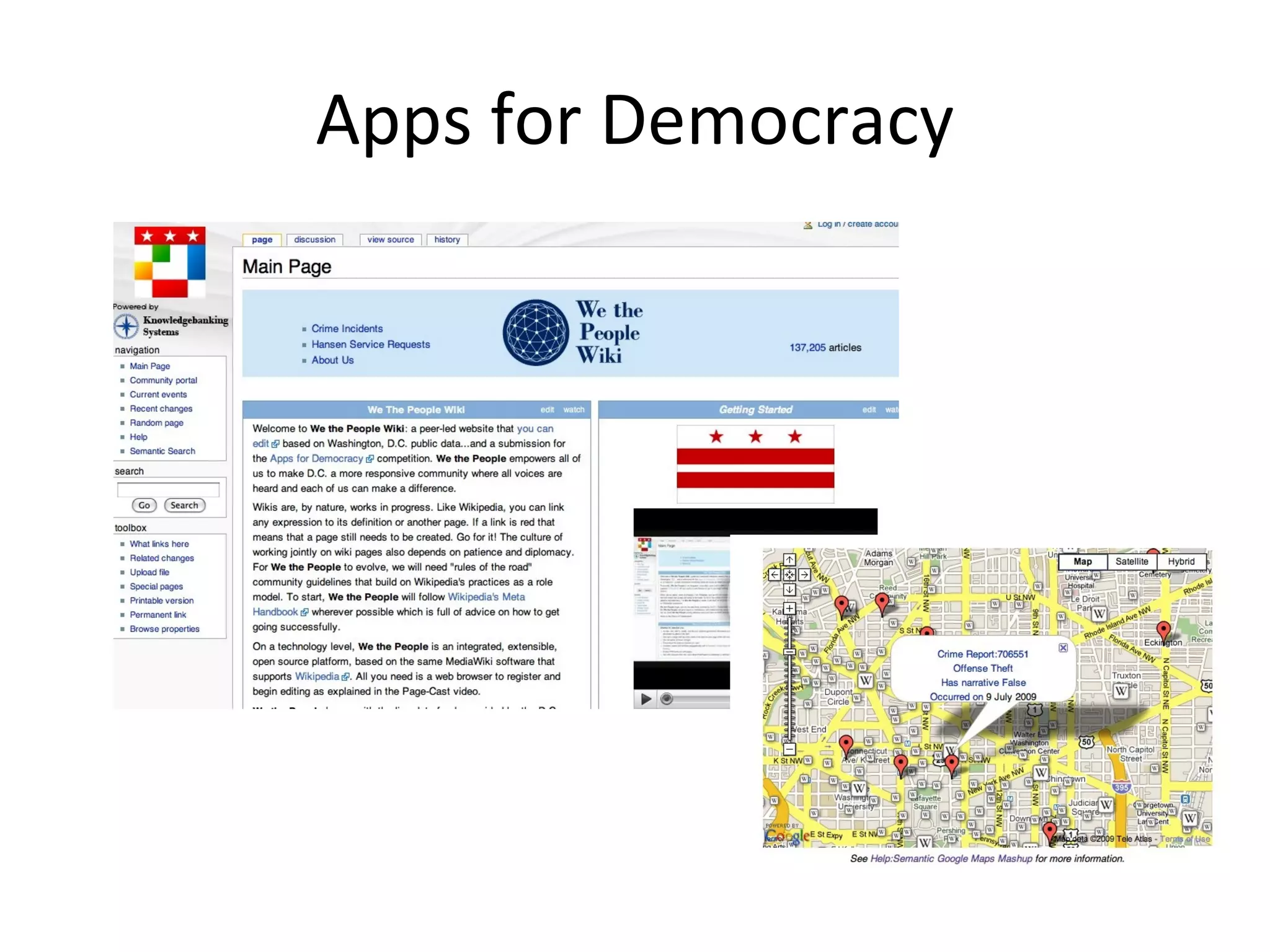
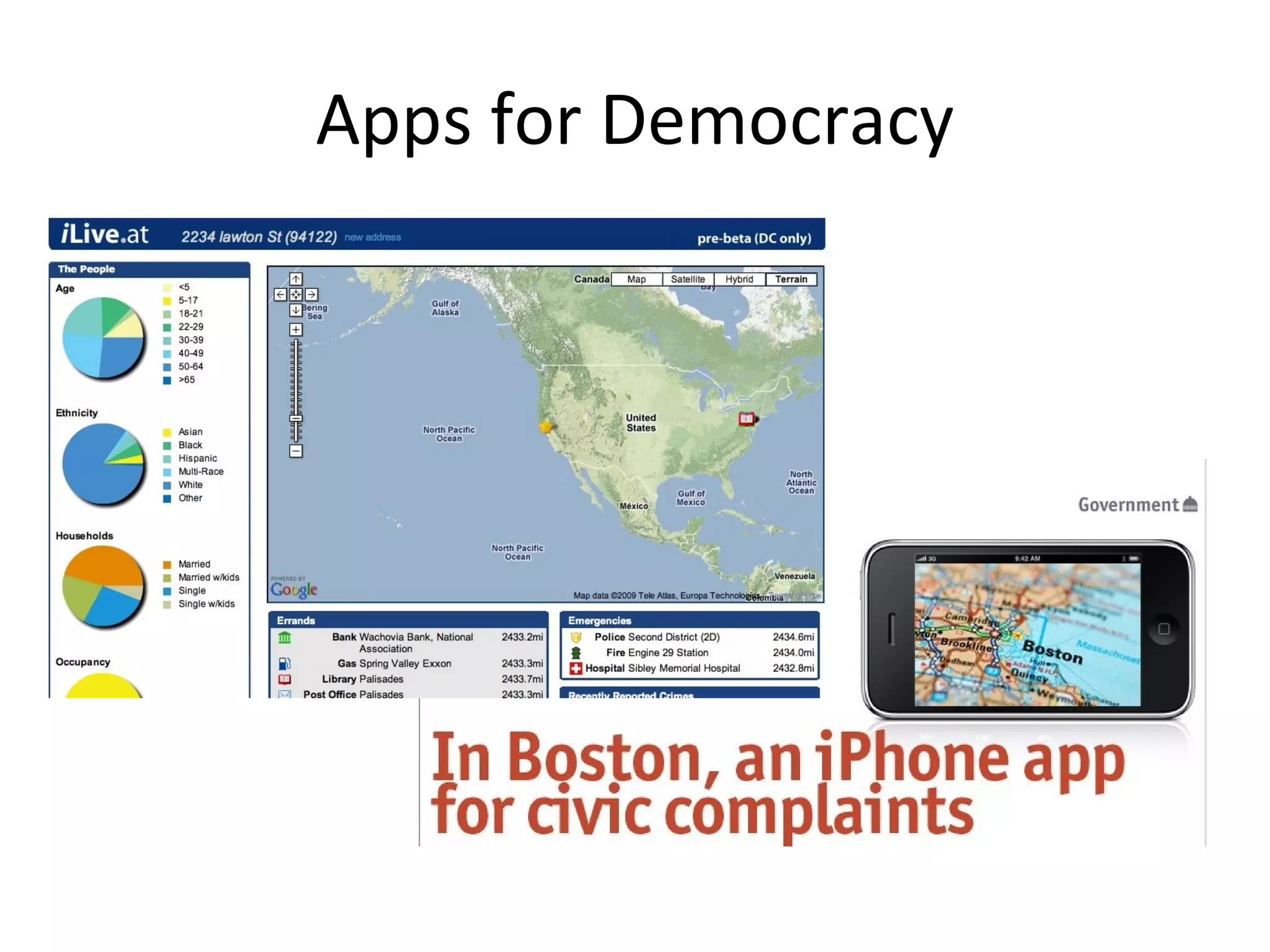
Section 4: Apps for Democracy Example New way of driving innovation through engagement with citizenry Democratizing data Improving the quality of data Building platforms for win-wins for gov/citizens What can we learn from this for public health?
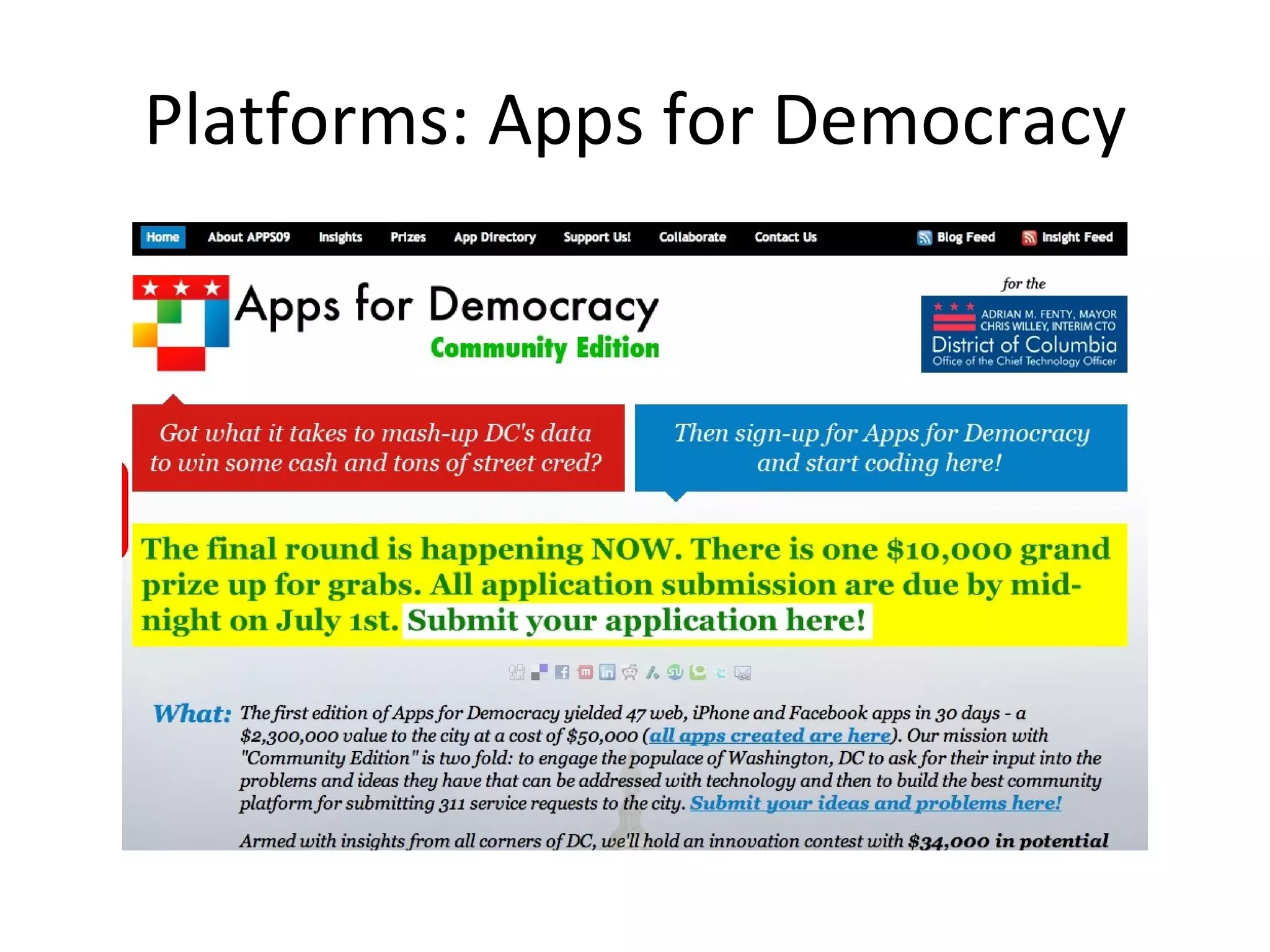
Platforms: Apps for Democracy
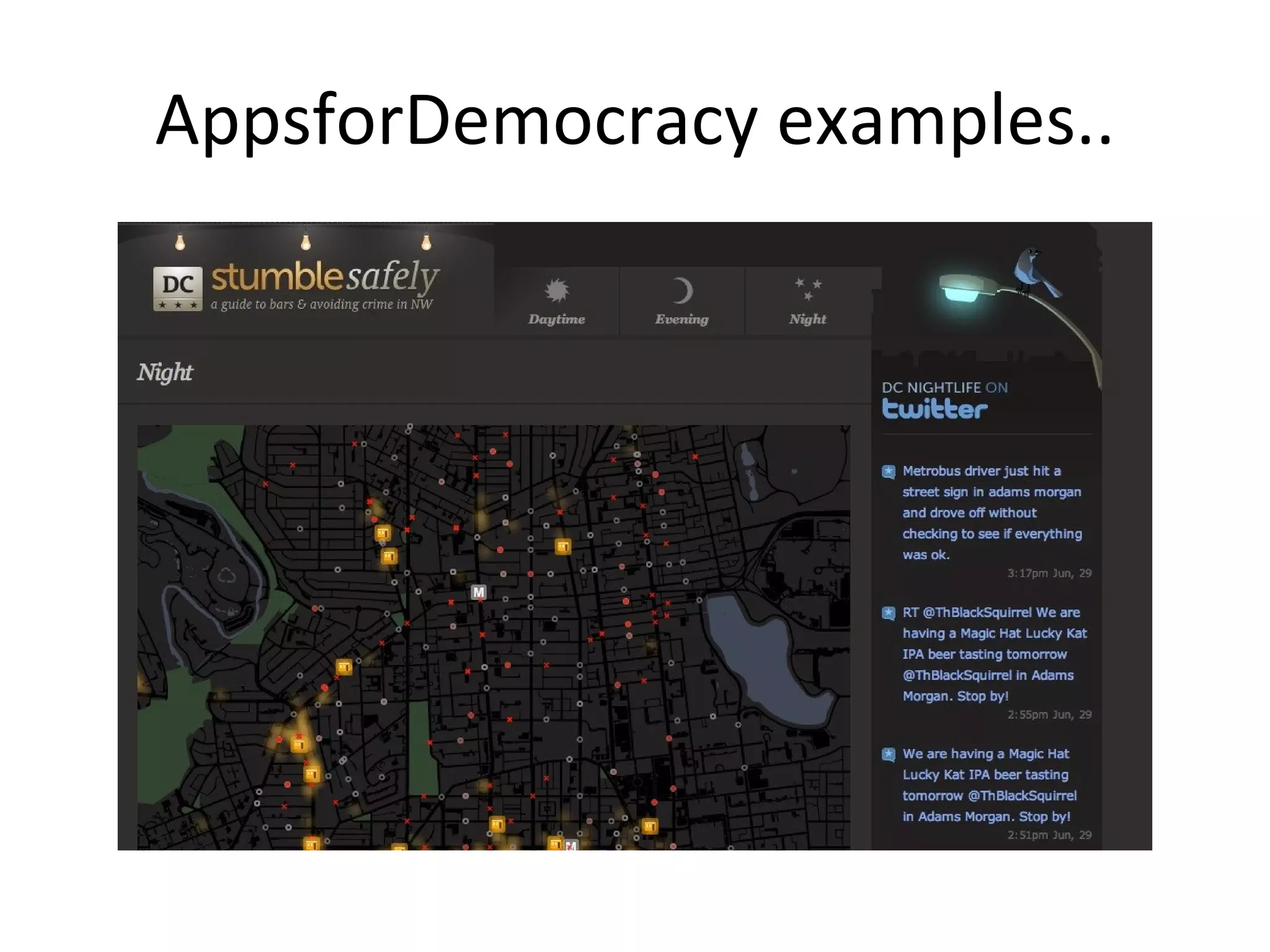
AppsforDemocracy examples..
Apps for Democracy
Apps for Democracy
Apps for Democracy
Apps for Democracy
Apps for Democracy
Apps for Democracy Lessons How can we do more with less? Some initial apps may appear trivial, incentivize for quality Helps move out of silos, command/control structures that hinder civic engagement Many agencies will resist change and not release data—incentives? What are costs for non-engagement? Opening up data creates conditions for innovation, better data Respond to citizens, not customers
Apps for Health? Crowdsourcing new tools for citizen engagement in public health Multiple rounds on different themes A way to drive innovation in tough economic climate Apps for Healthy Cities 2.0? Highlight neglected public health issues Incentivize multi-sectoral collaboration
Challenges for AppsForHealth Privacy issues with health data Development of open standards Apps for individuals vs. community health outcomes: difficult translation Lack of good behavioral change models: crowdsource alternative paradigms? Complexity of chronic diseases vs. simplicity of apps
Section 5: The City and Public Health as Platform City as Platform Open Innovation Platform Tools to think with
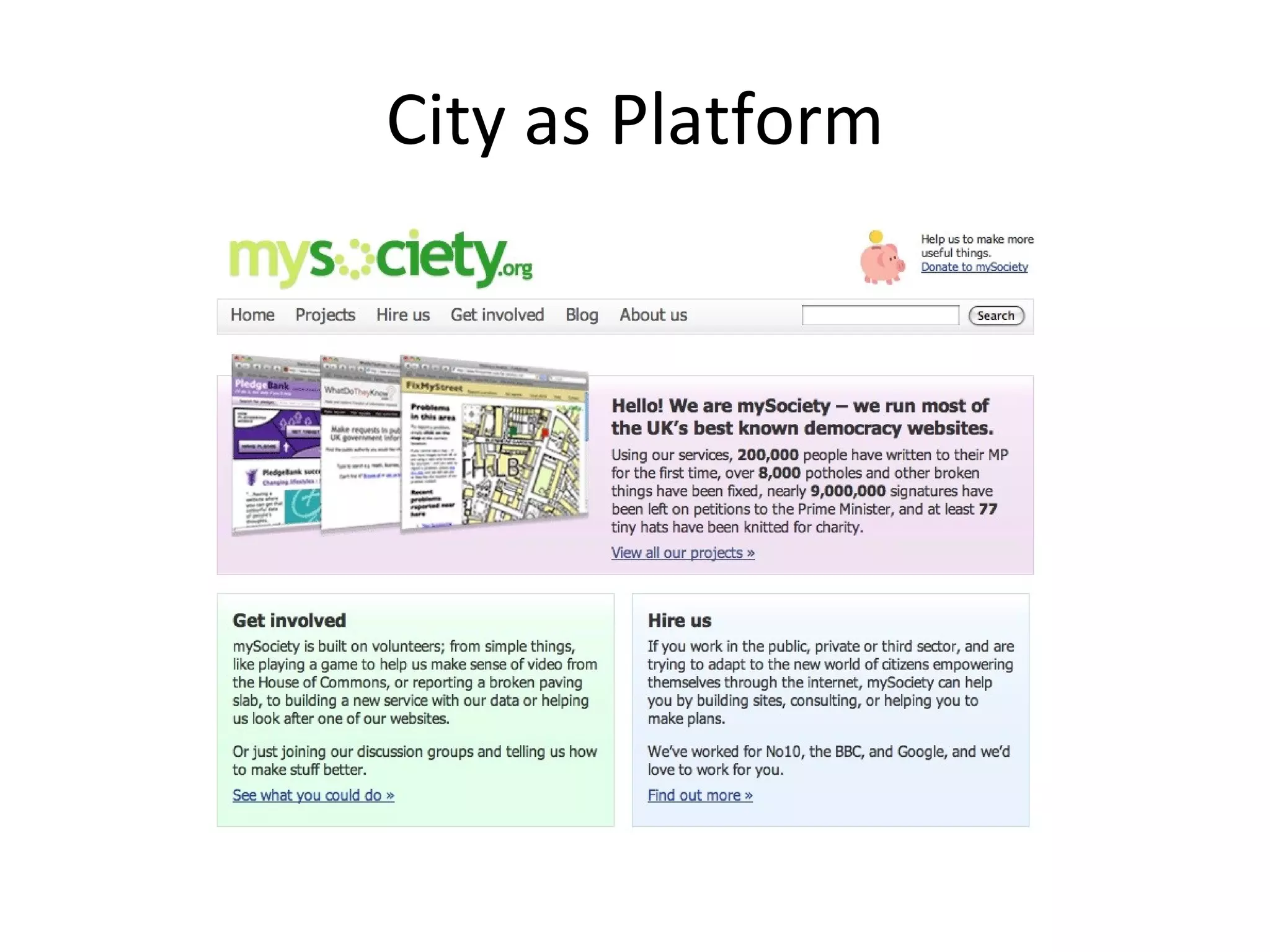
City as Platform
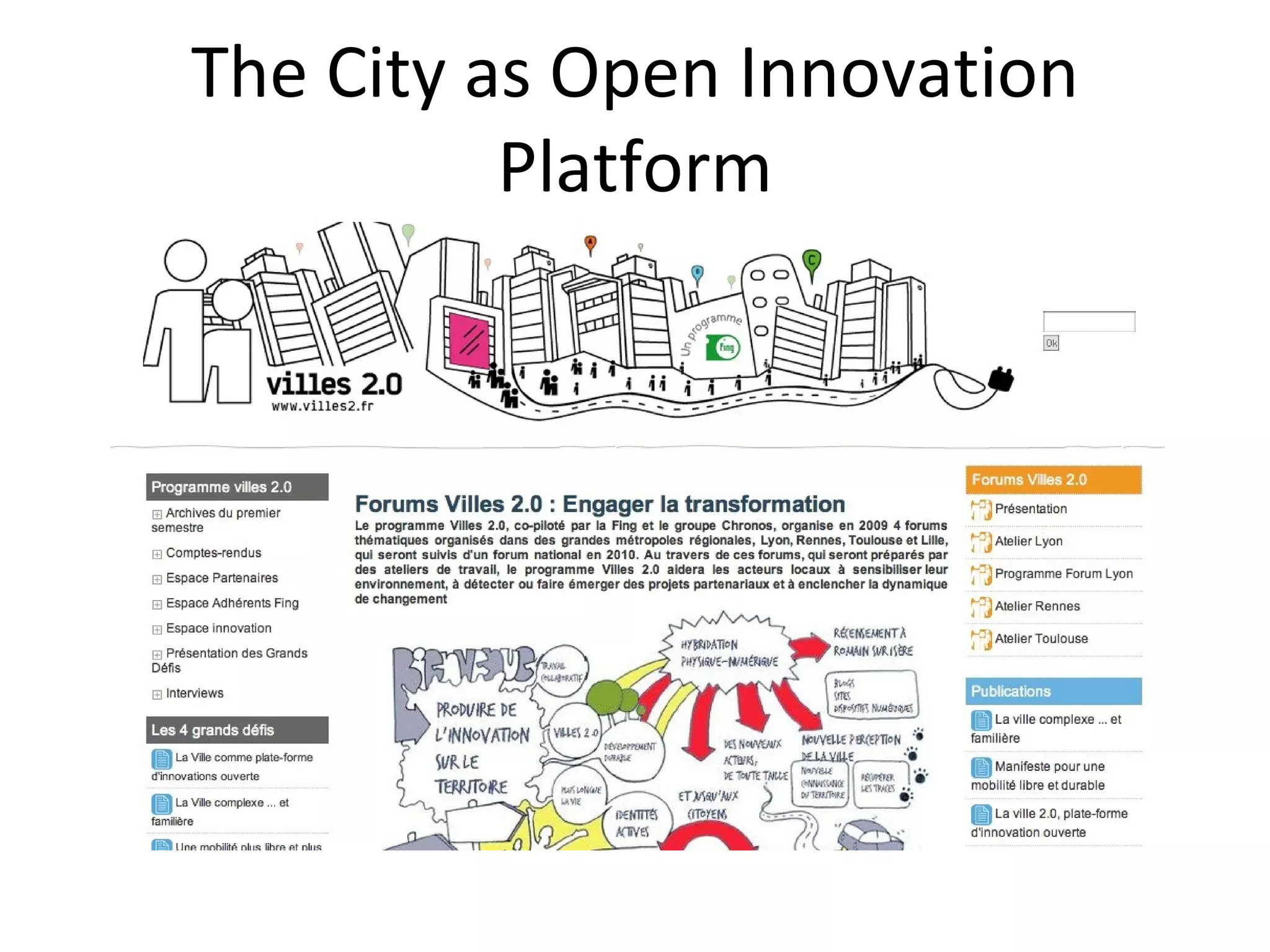
The City as Open Innovation Platform
Villes 2.0 Can the city be re-imagined as a platform that can be modified by its users? What resources can be shared and mobilized for re-thinking the city? The suite of web 2.0 tools available can be used to re-fashion urban services, make user-friendly New Ethos embodied in Apps for Democracy
Government-Citizen Cooperation
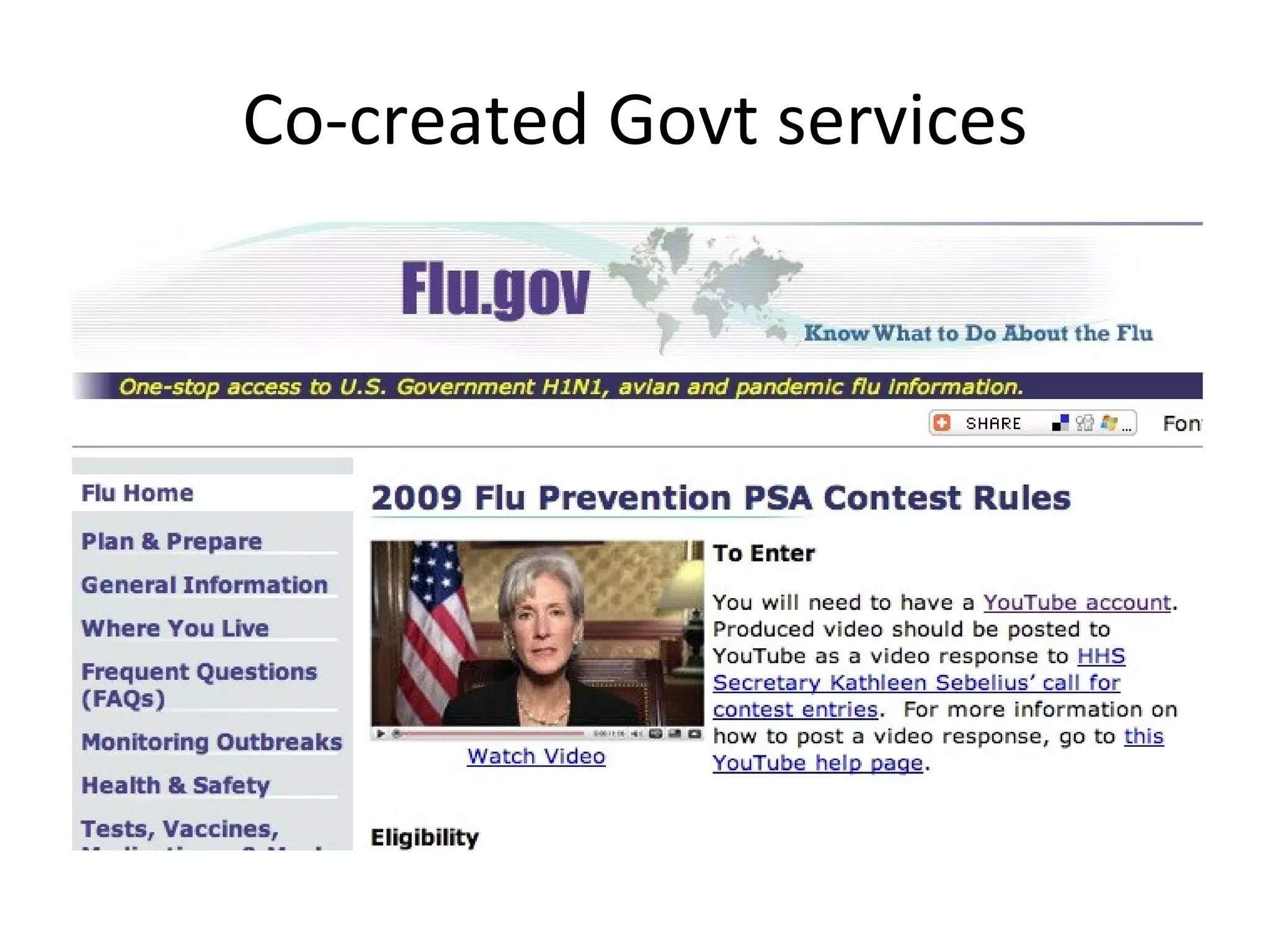
Co-created Govt services
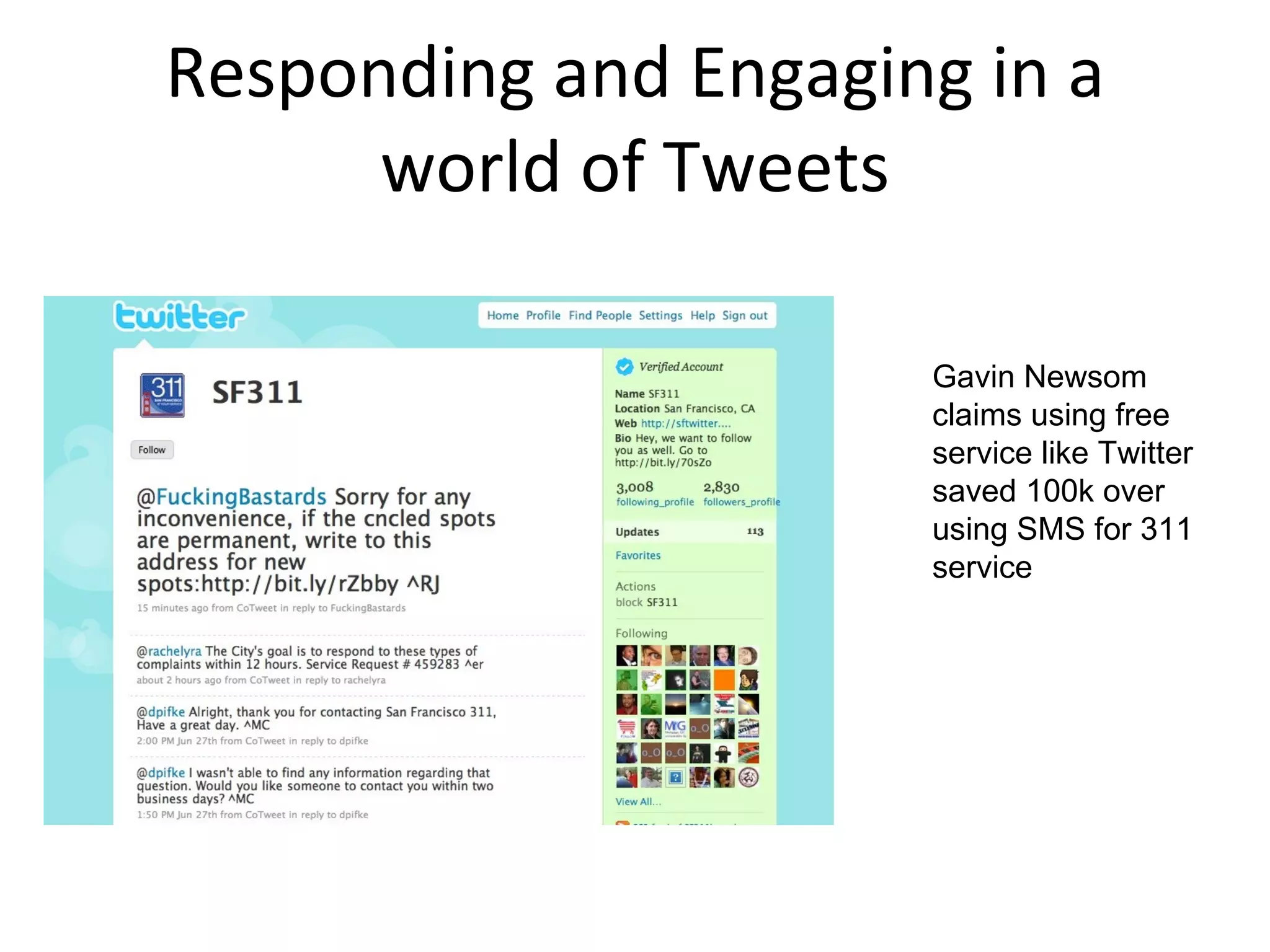
Responding and Engaging in a world of Tweets Gavin Newsom claims using free service like Twitter saved 100k over using SMS for 311 service
Disaster planning Use of social media platforms to cross silos and help build more resilient infrastructures—avoiding future Hurricane Katrinas
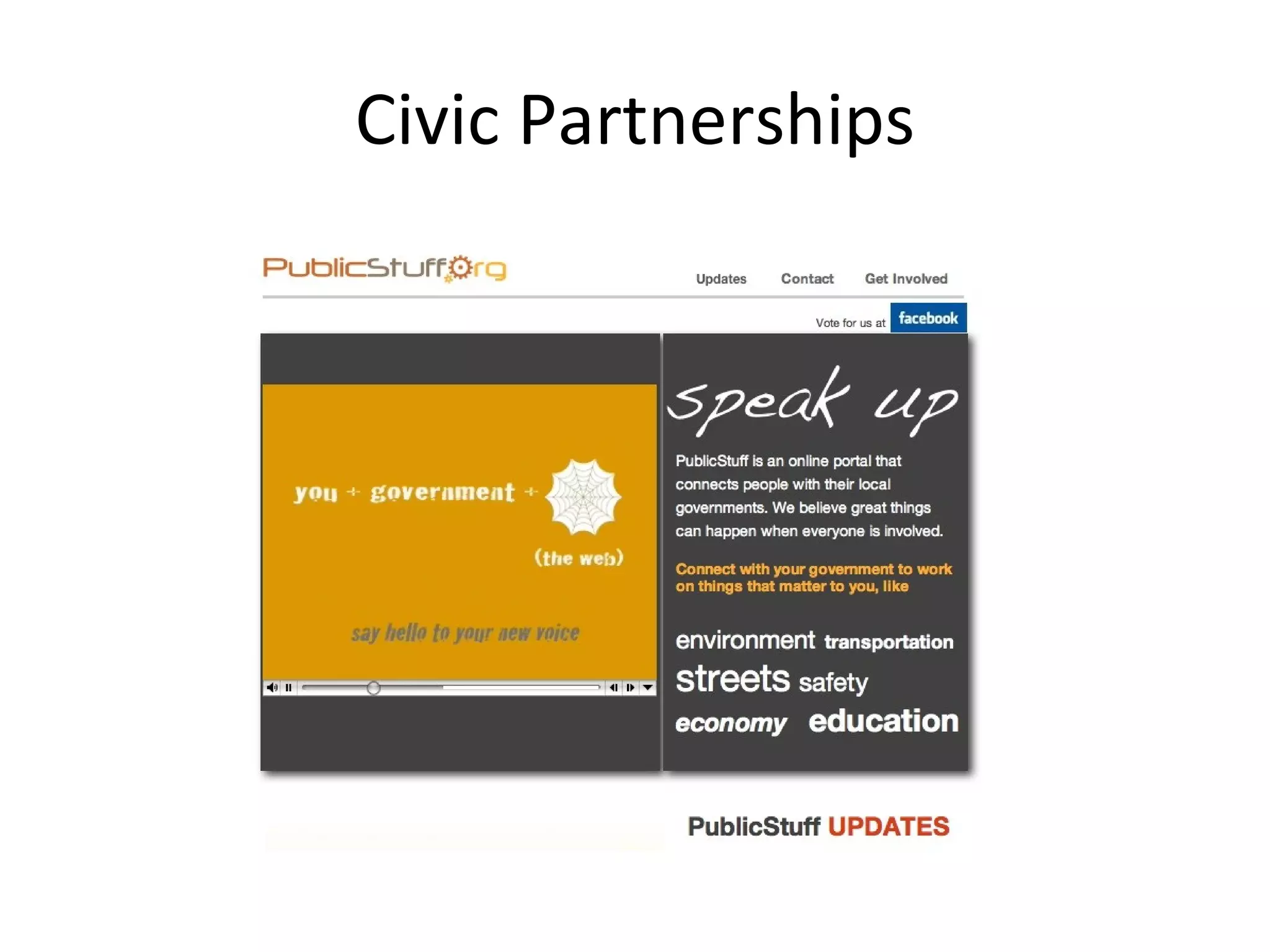
Civic Partnerships
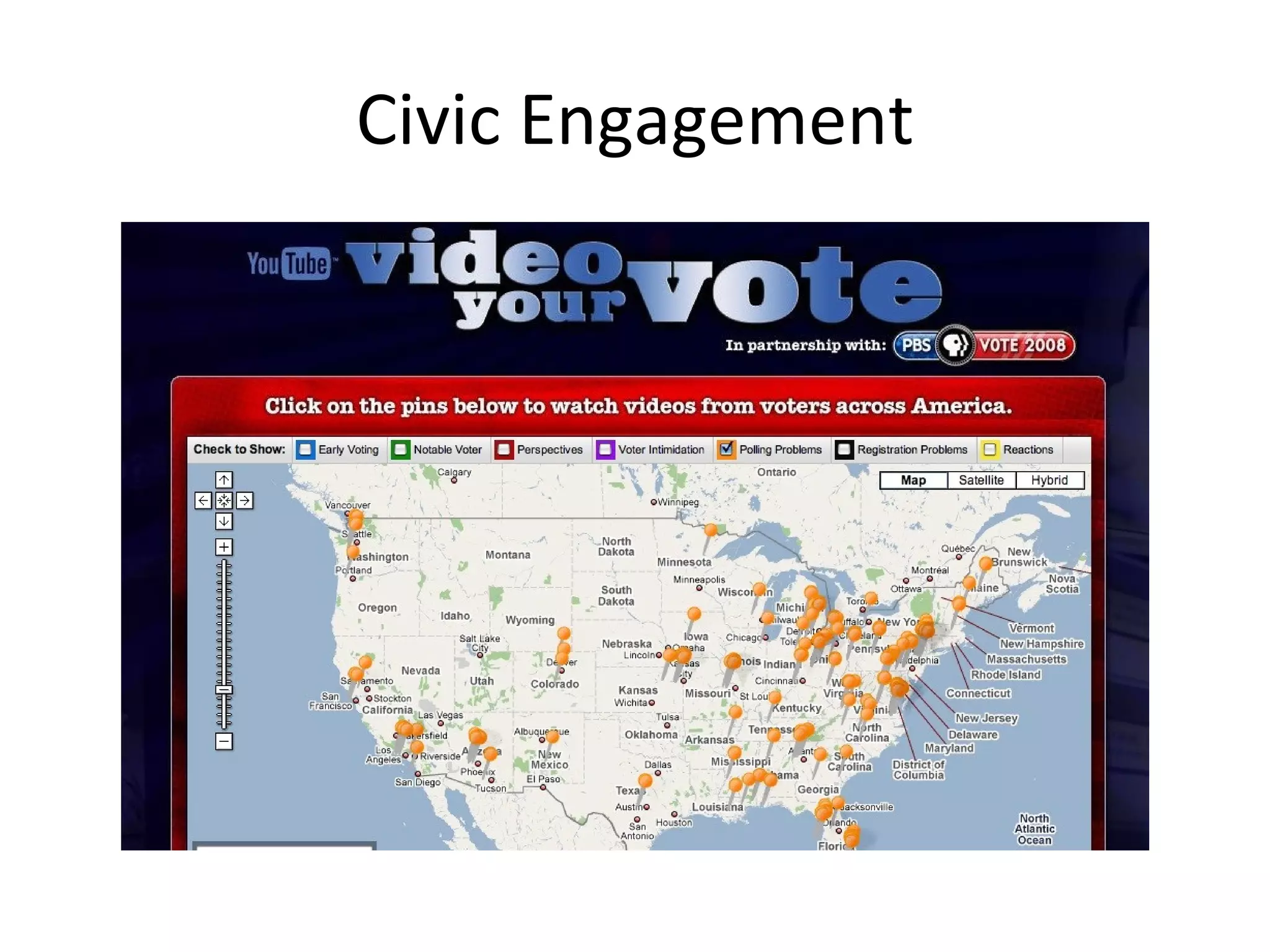
Civic Engagement
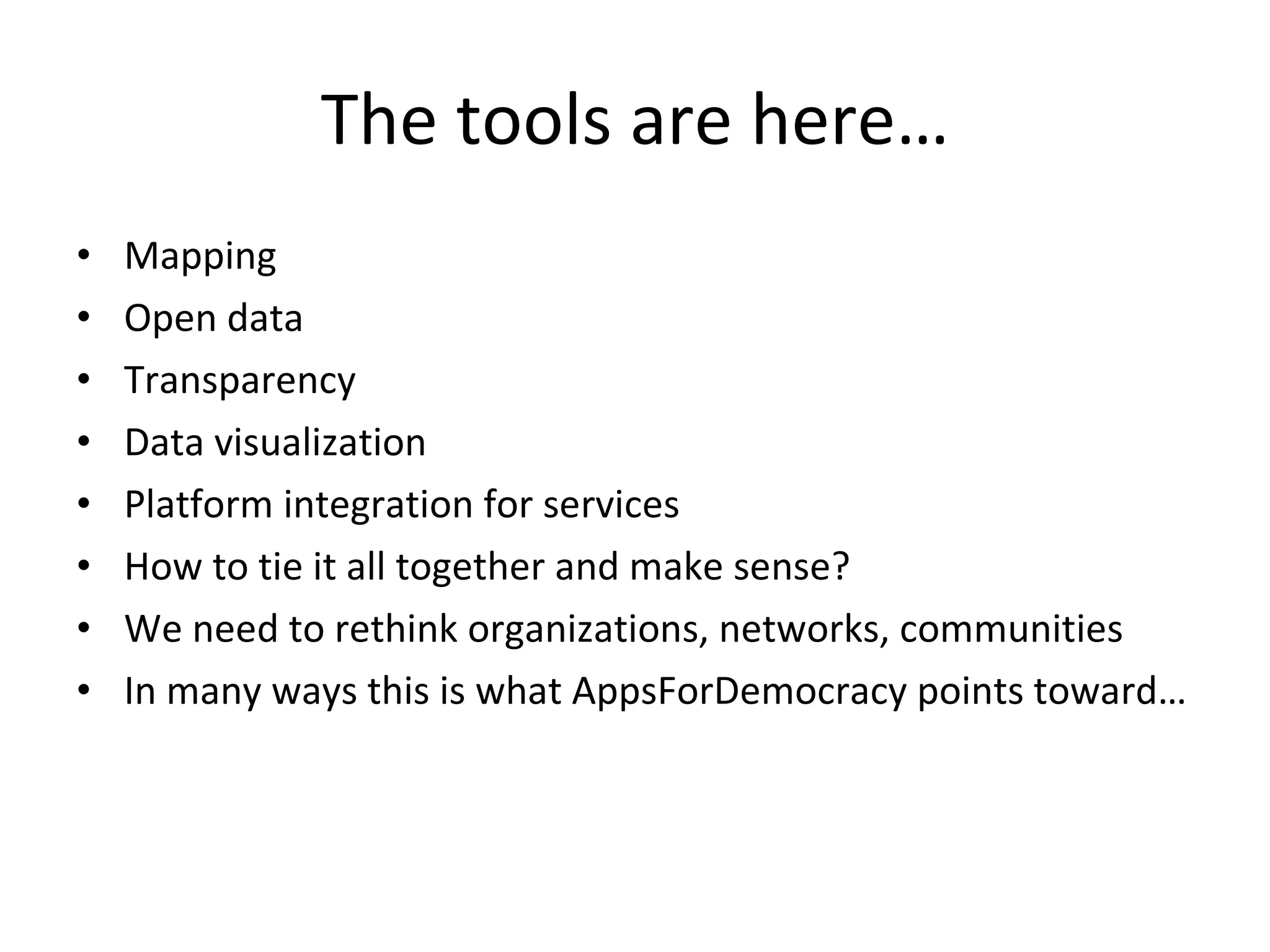
The tools are here… Mapping Open data Transparency Data visualization Platform integration for services How to tie it all together and make sense? We need to rethink organizations, networks, communities In many ways this is what AppsForDemocracy points toward…
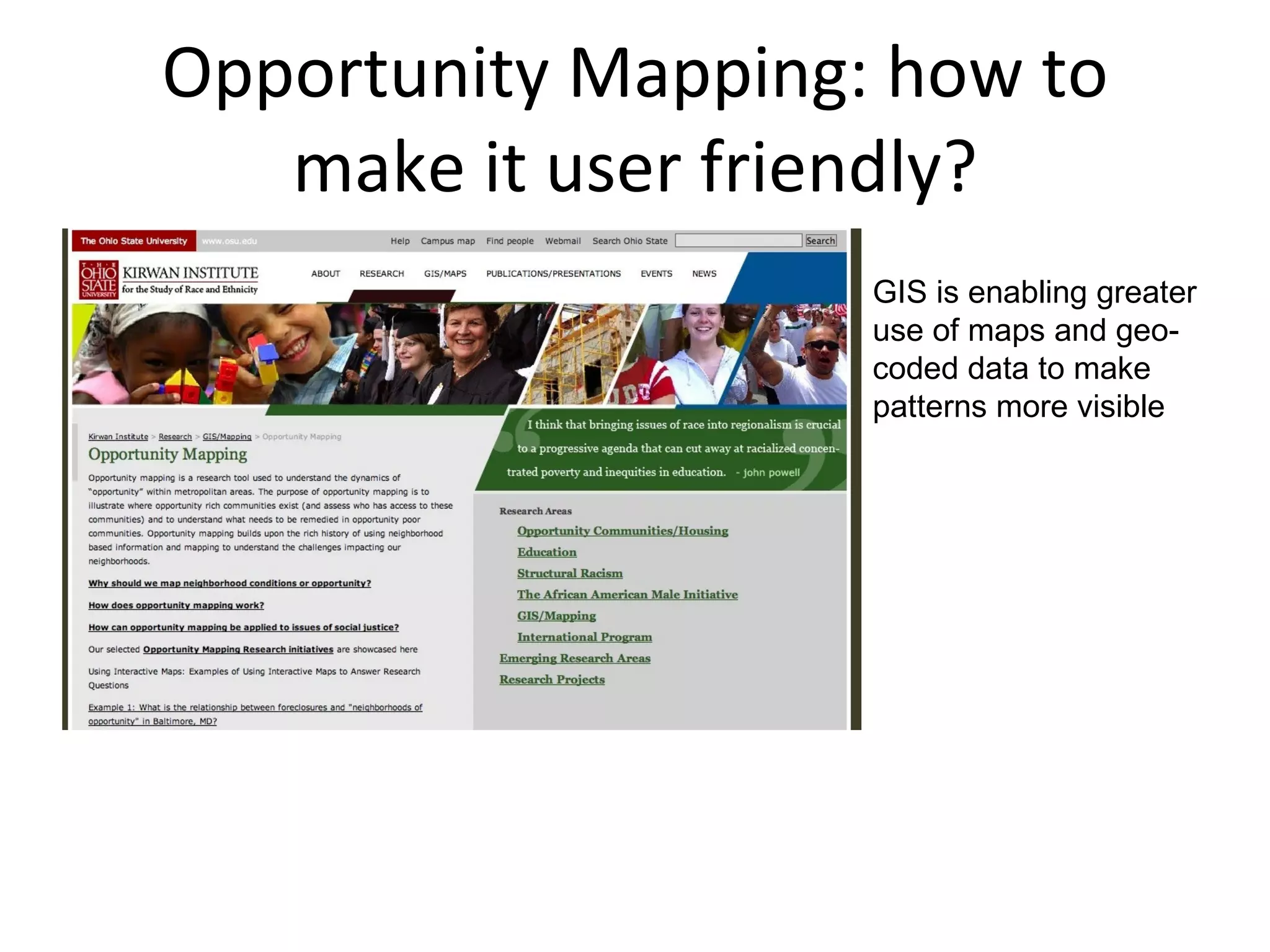
Opportunity Mapping: how to make it user friendly? GIS is enabling greater use of maps and geo-coded data to make patterns more visible
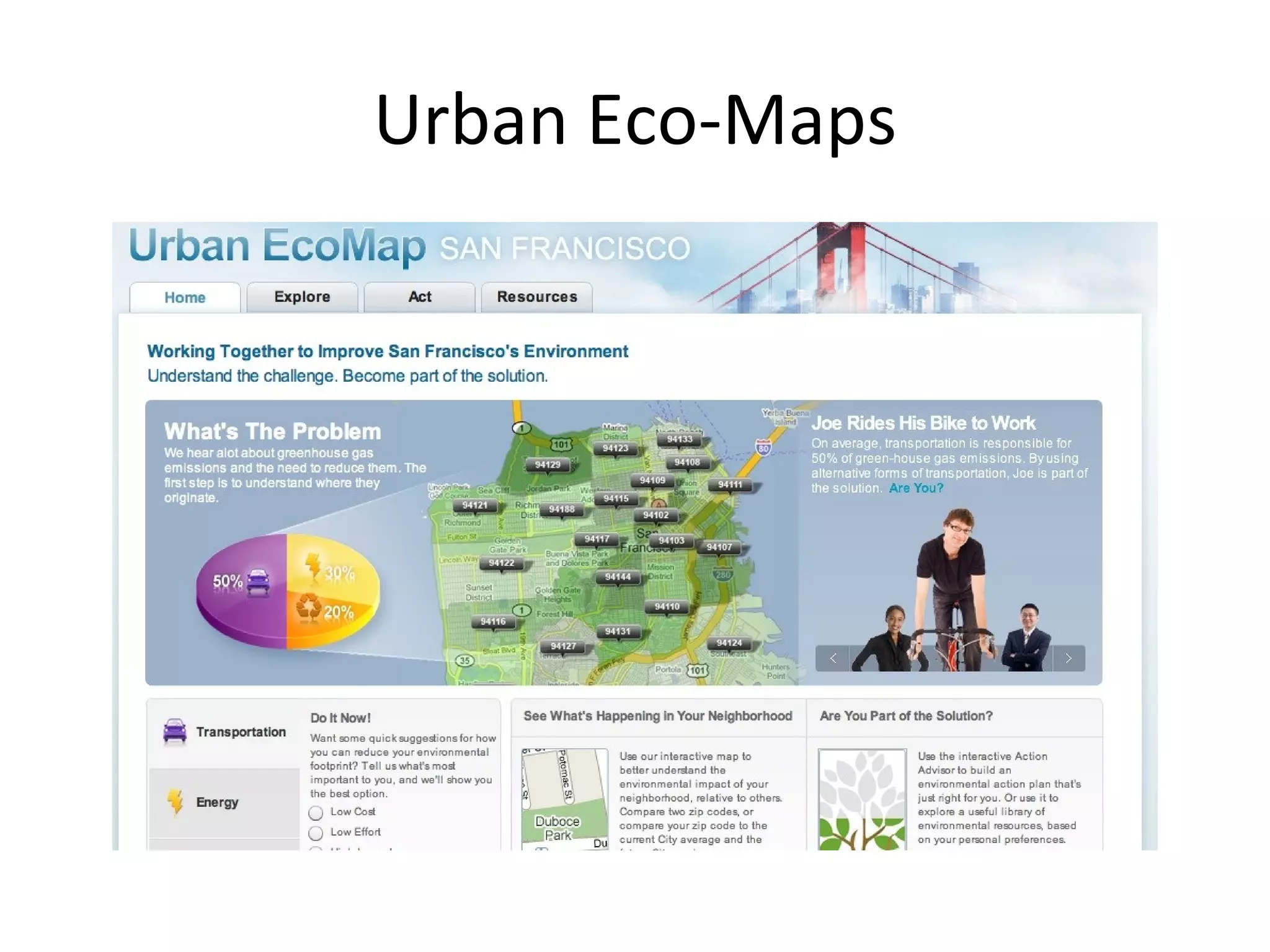
Urban Eco-Maps
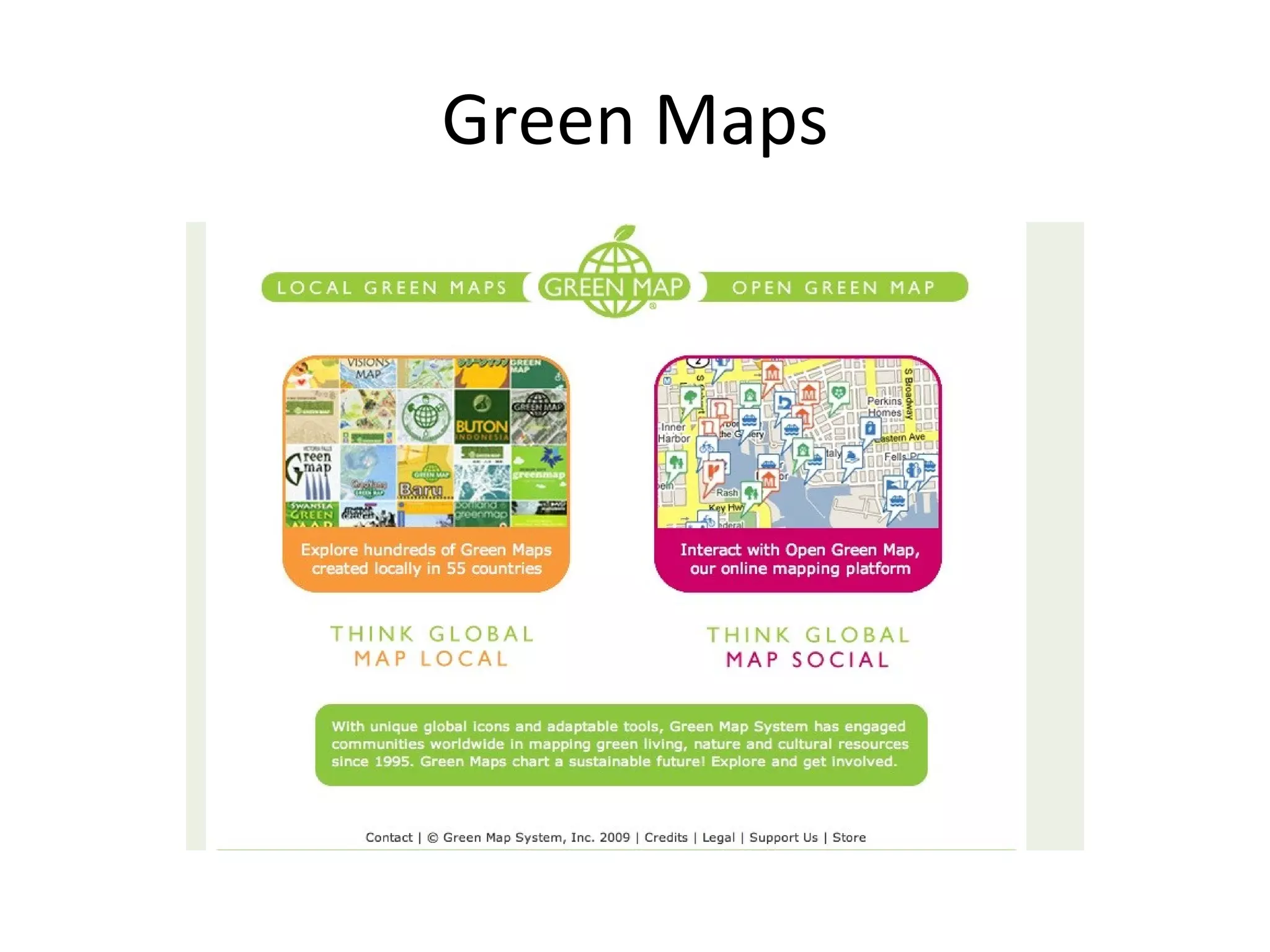
Green Maps
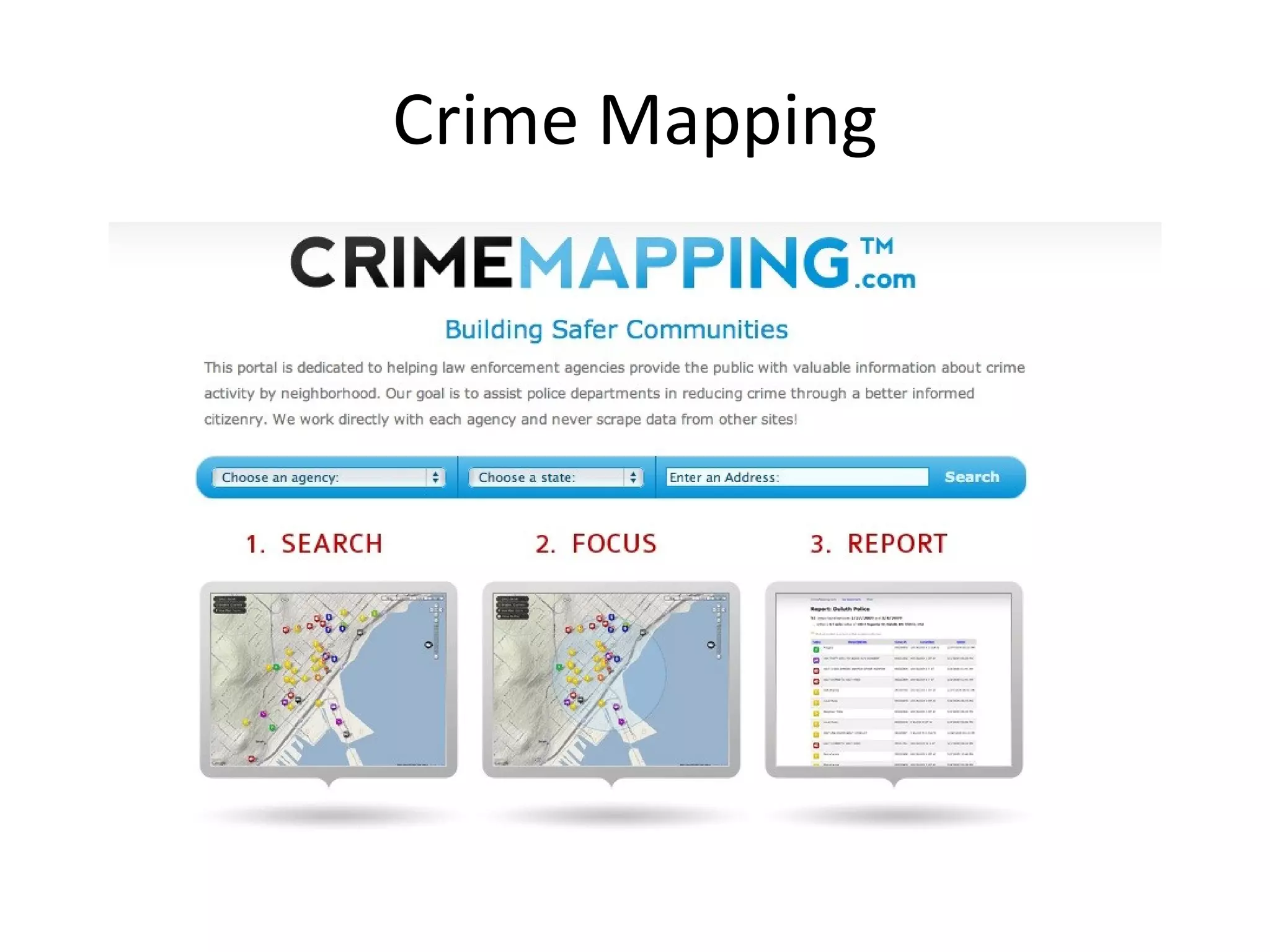
Crime Mapping
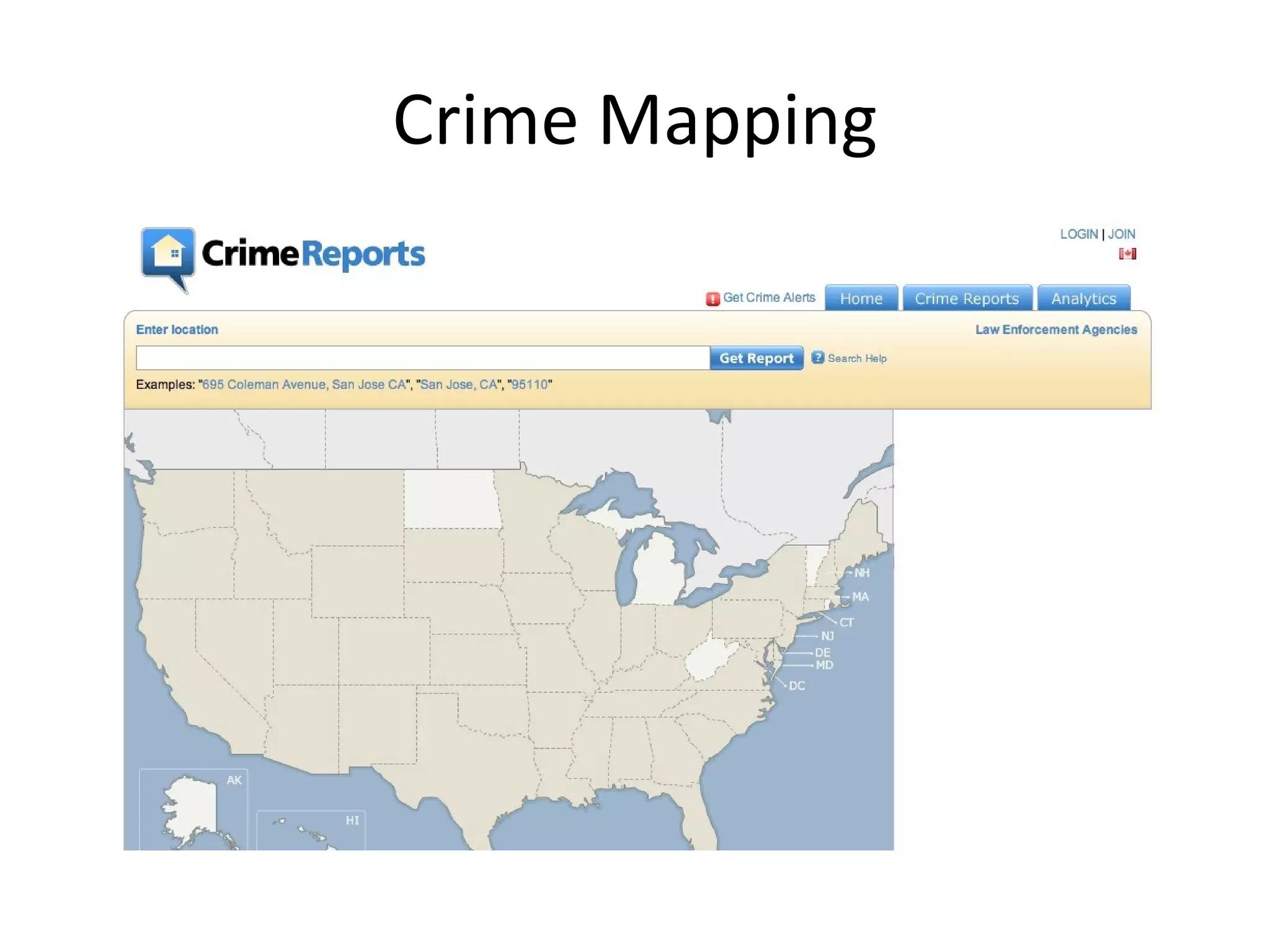
Crime Mapping
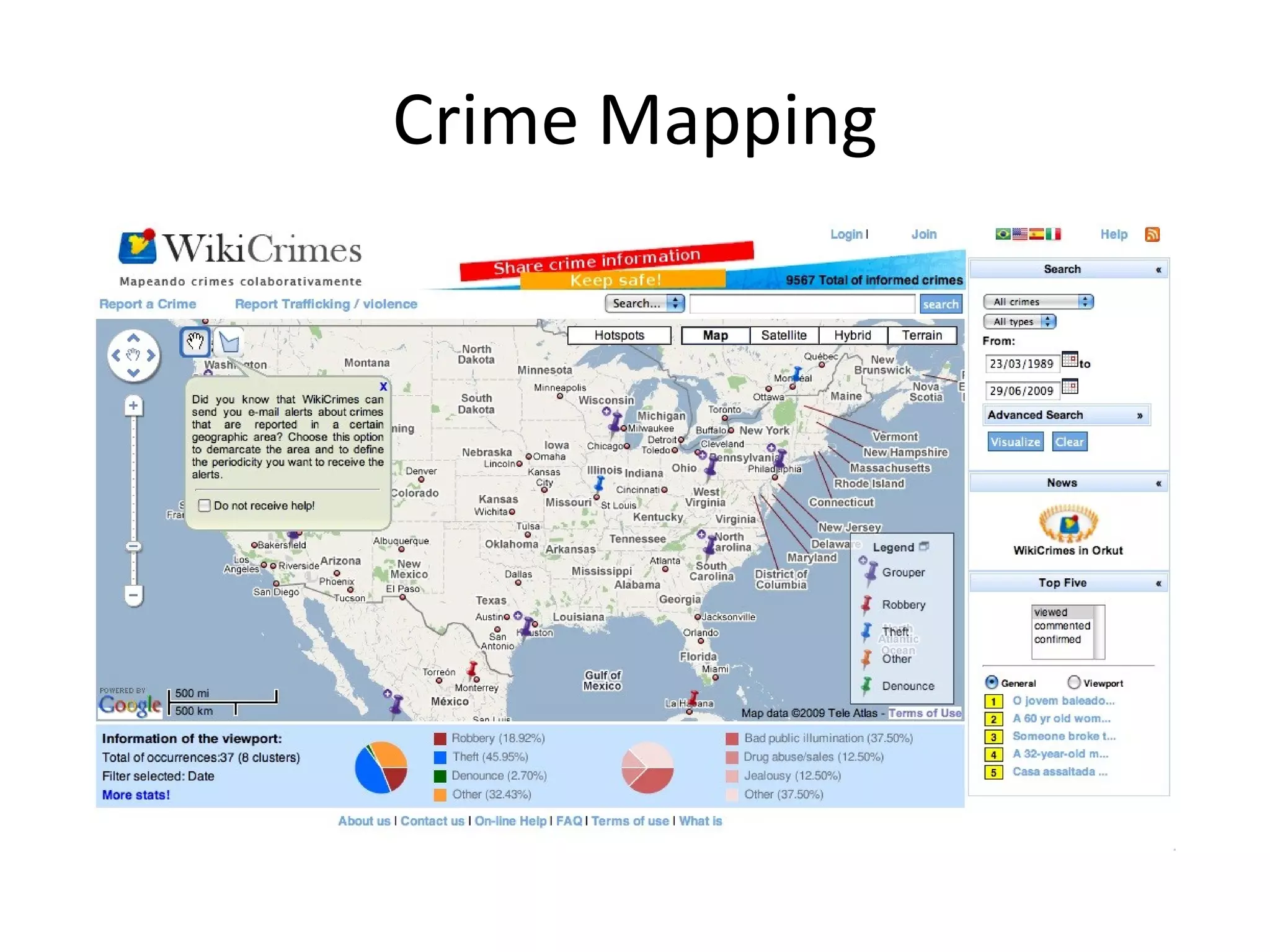
Crime Mapping
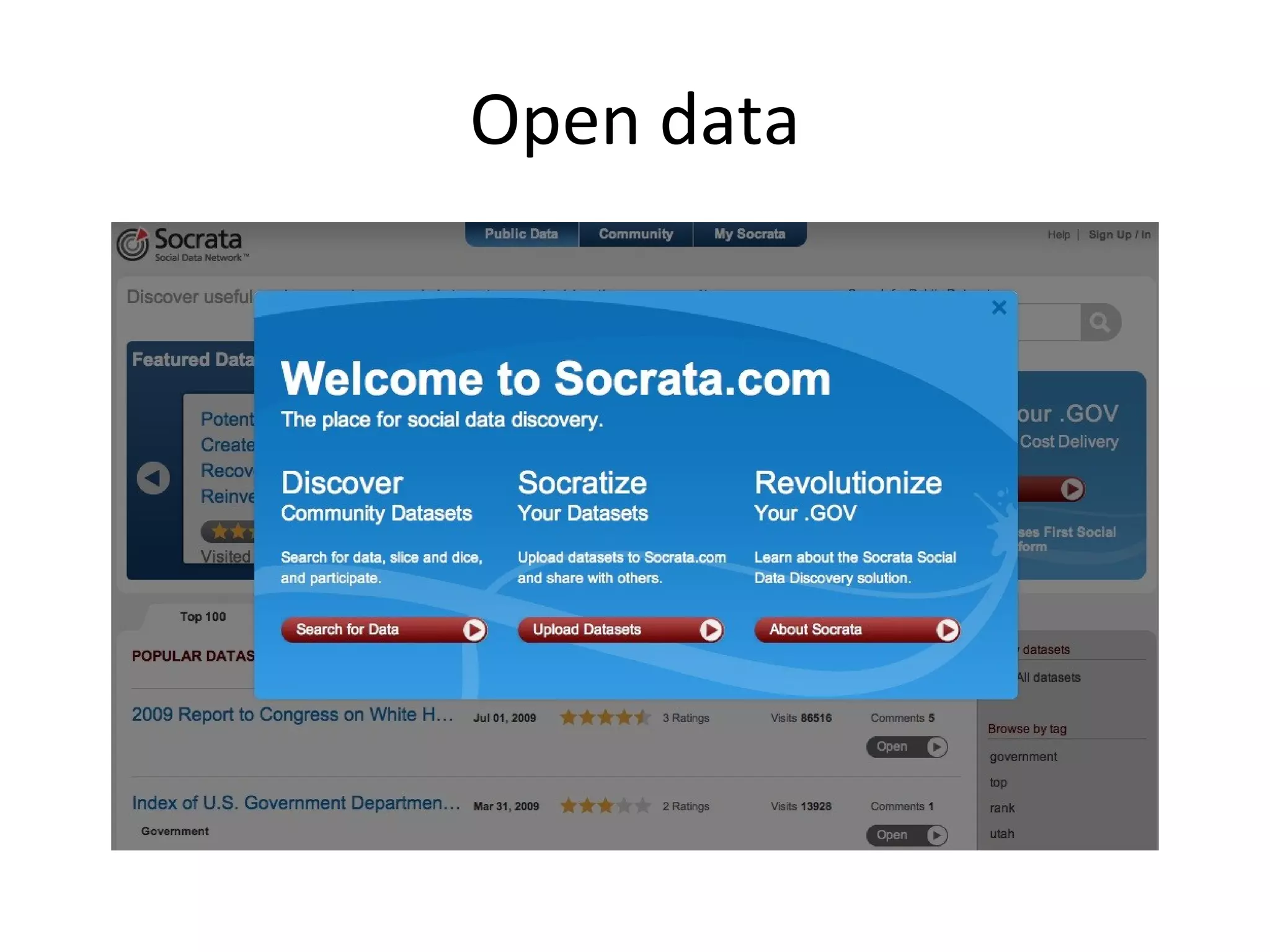
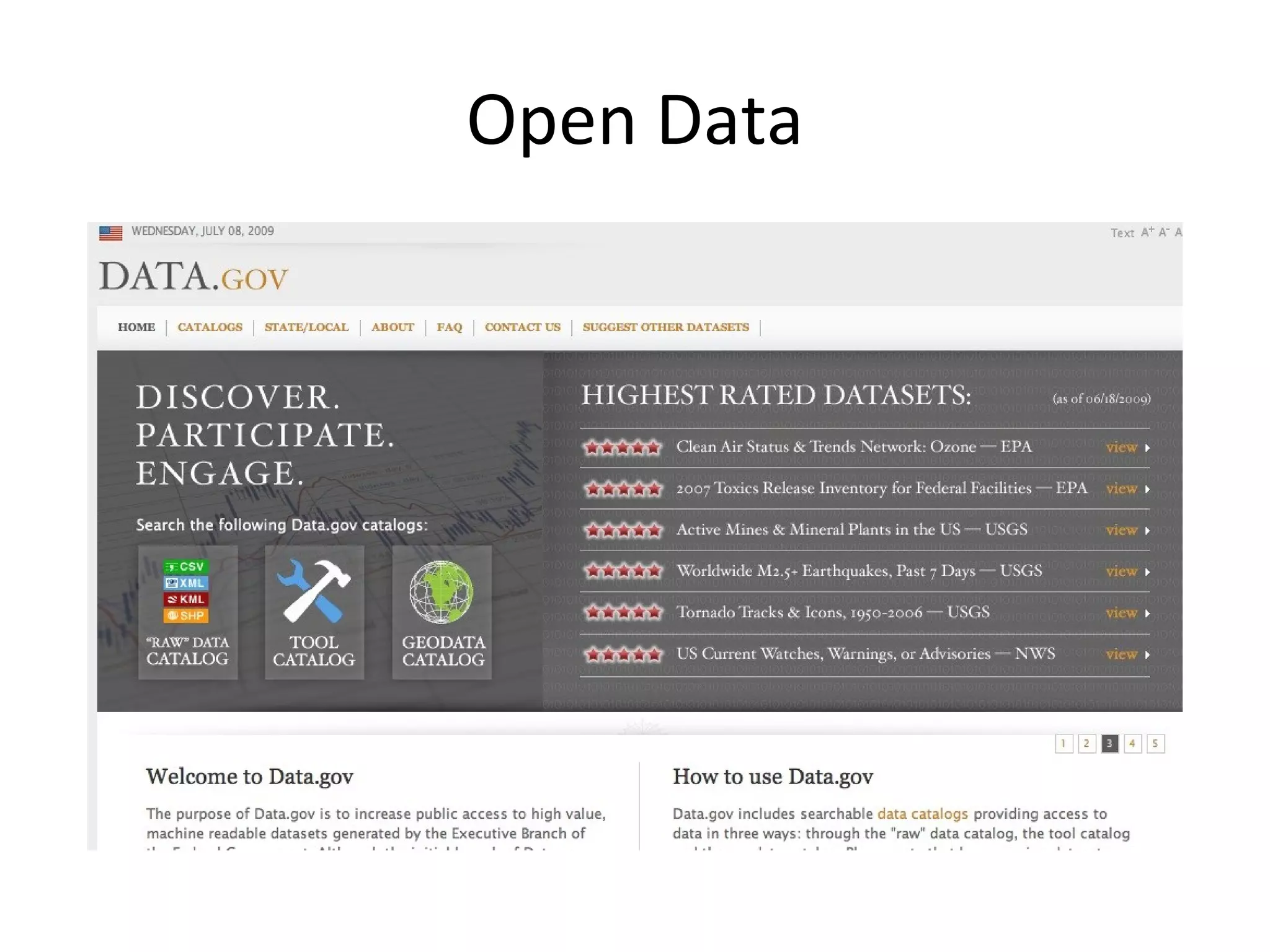
Open data
Open Data
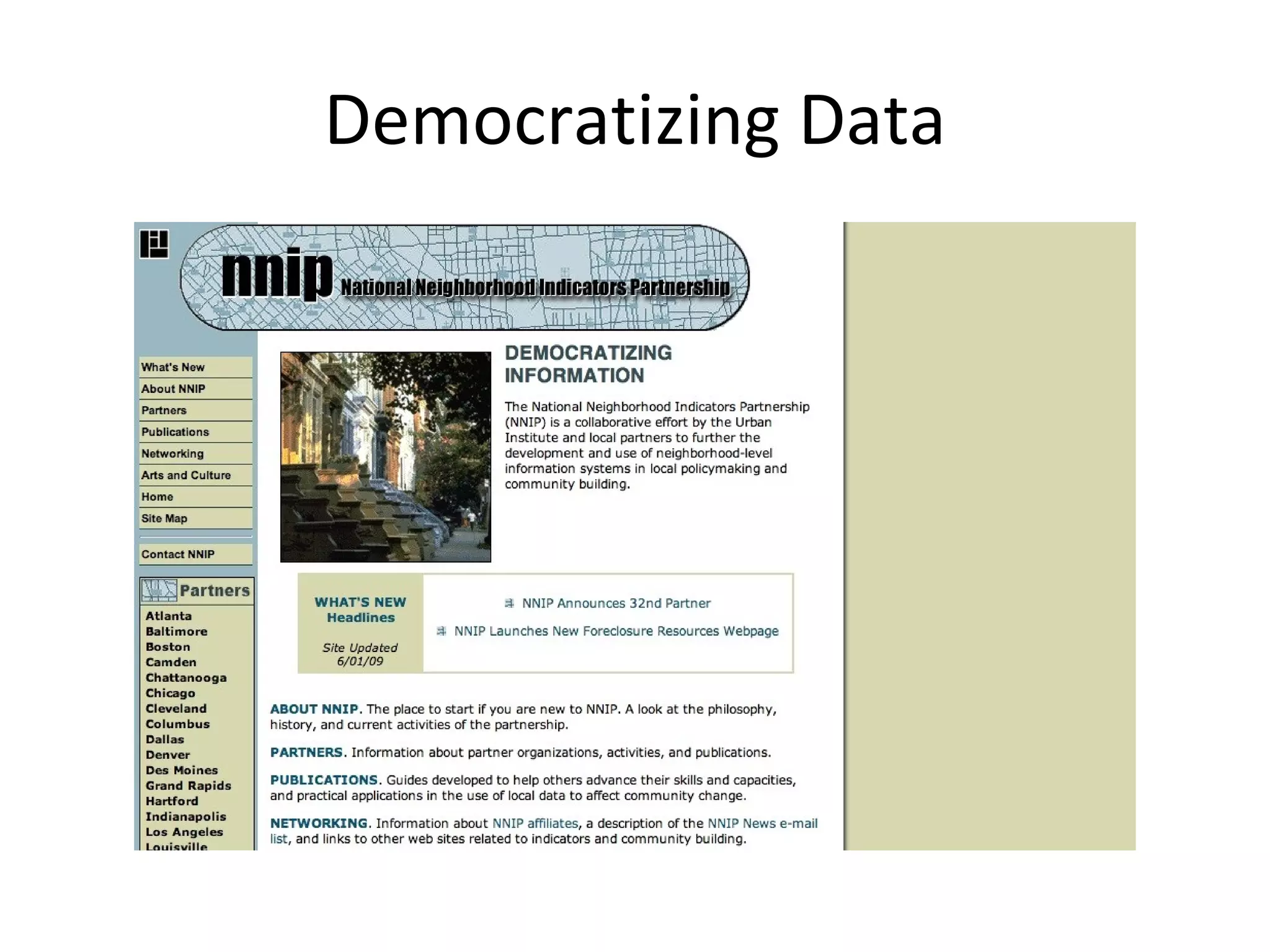
Democratizing Data
DBpedia
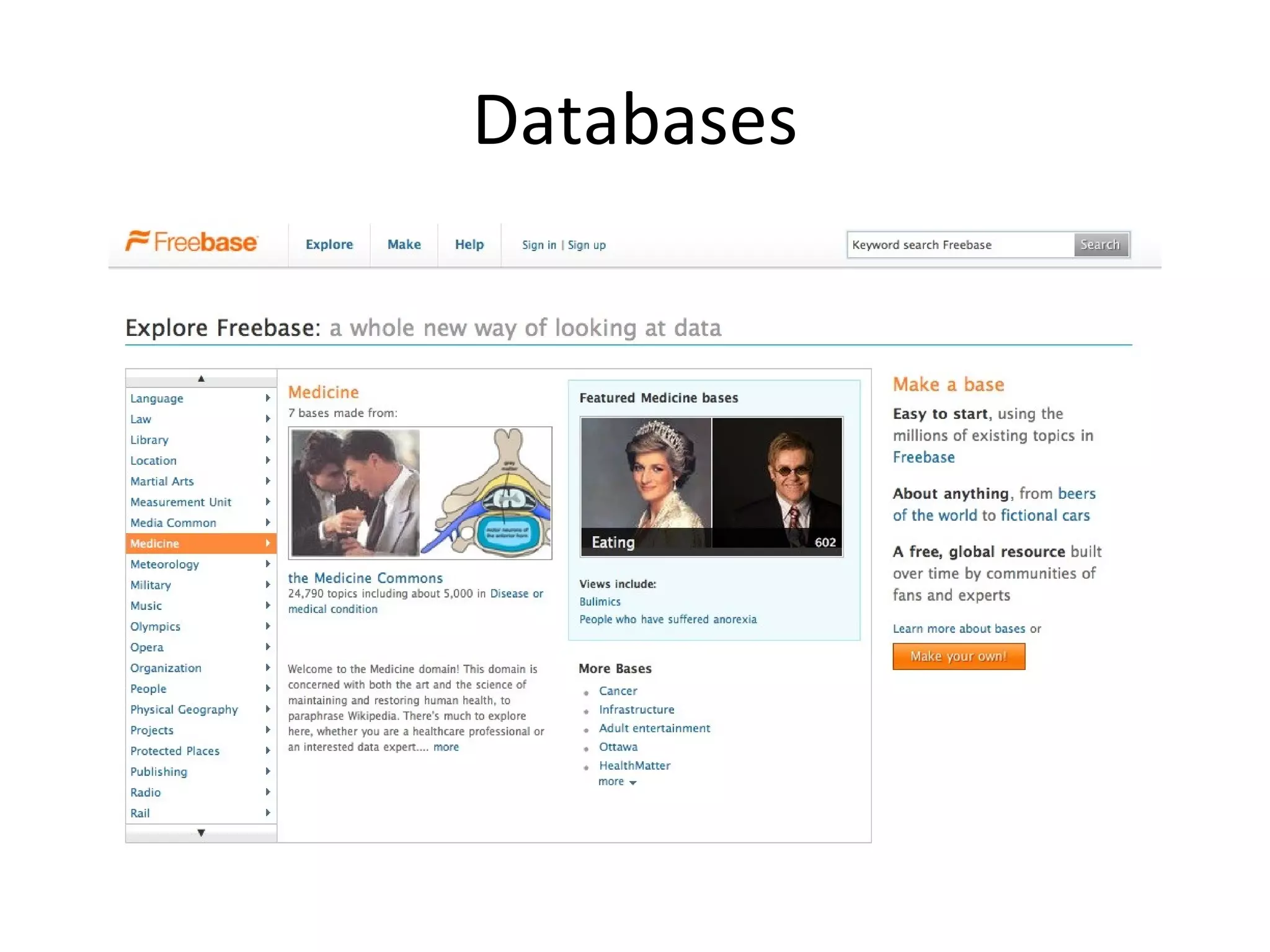
Databases
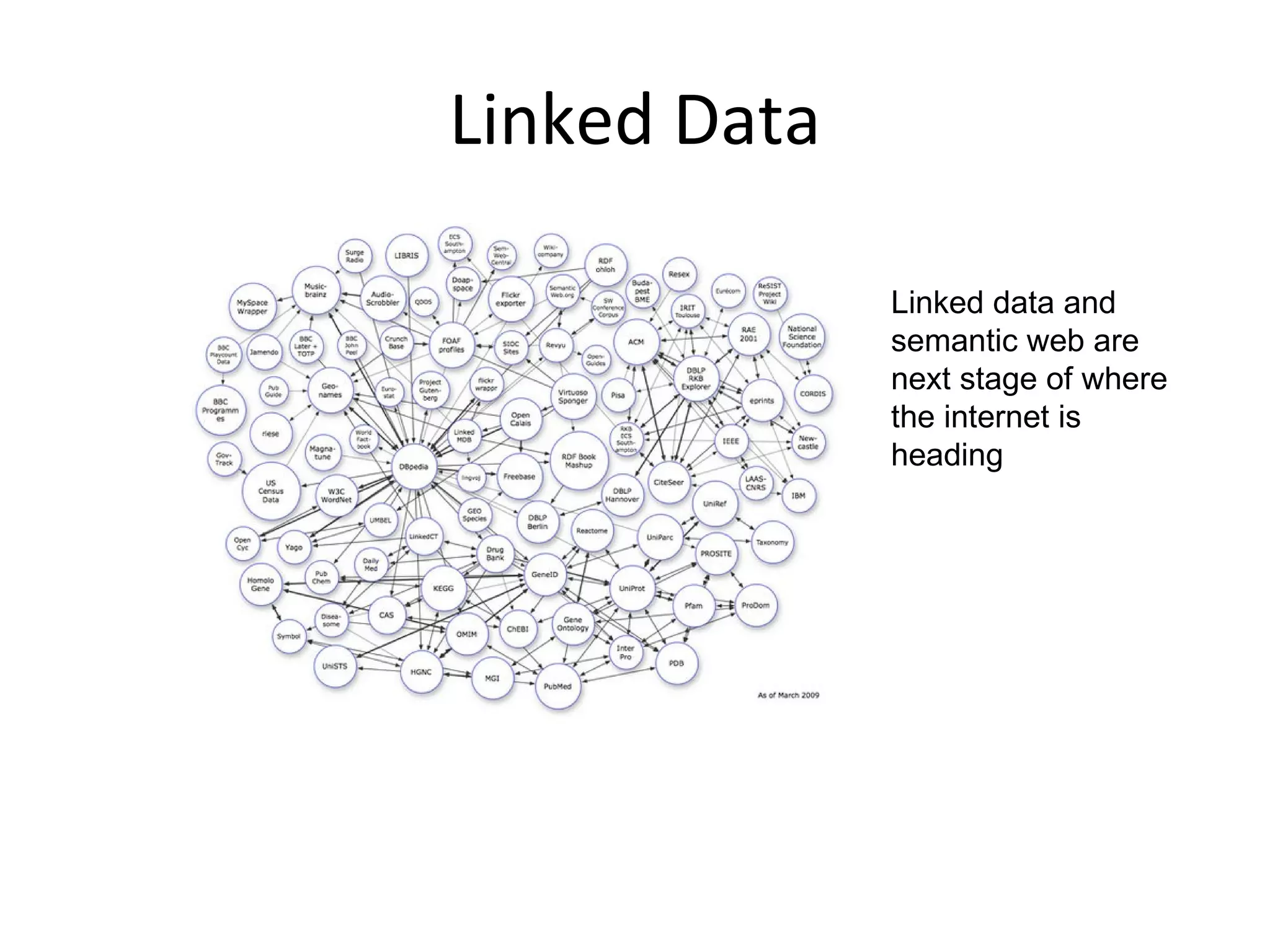
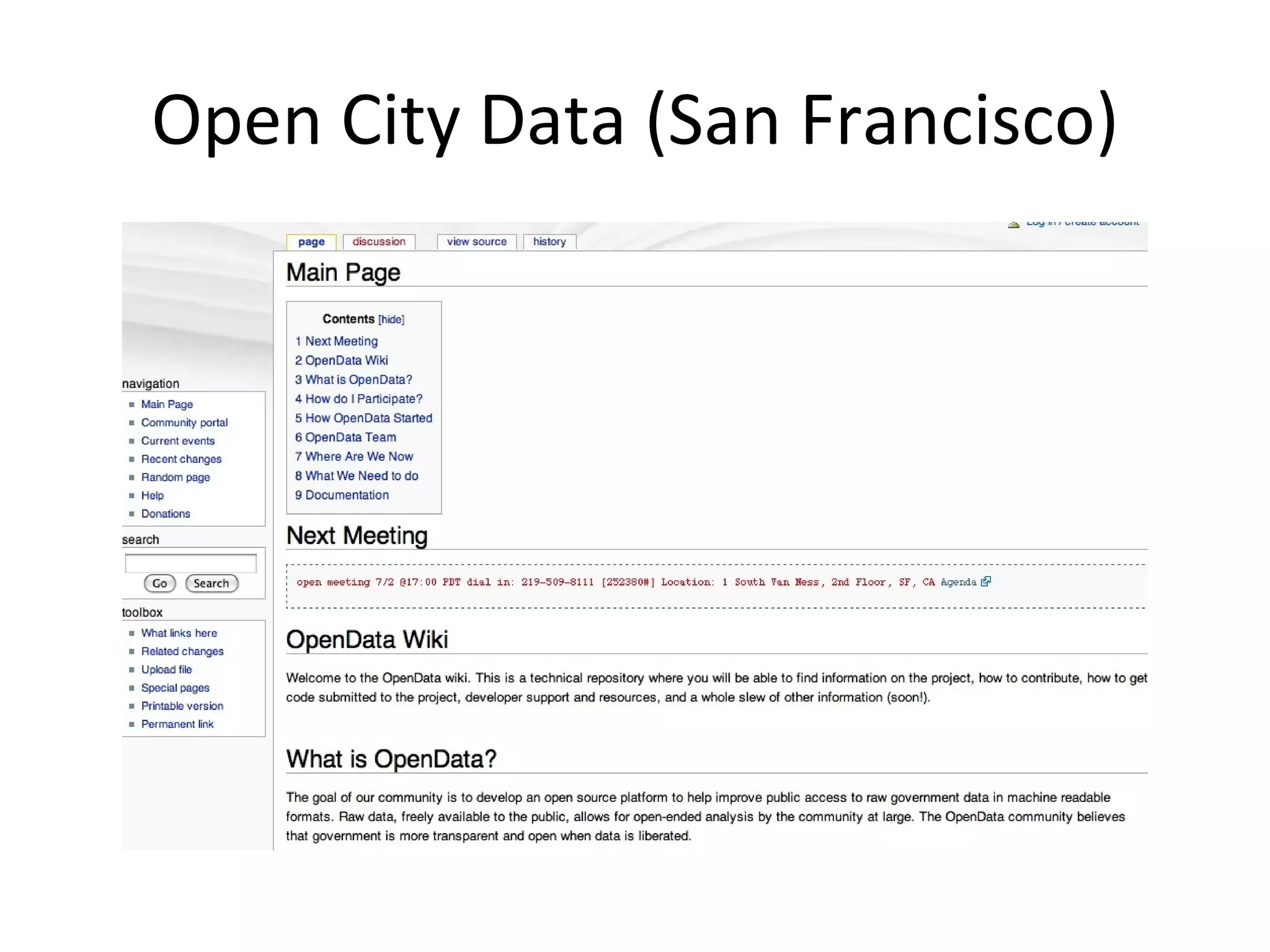
Linked Data Linked data and semantic web are next stage of where the internet is heading
Open City Data (San Francisco)
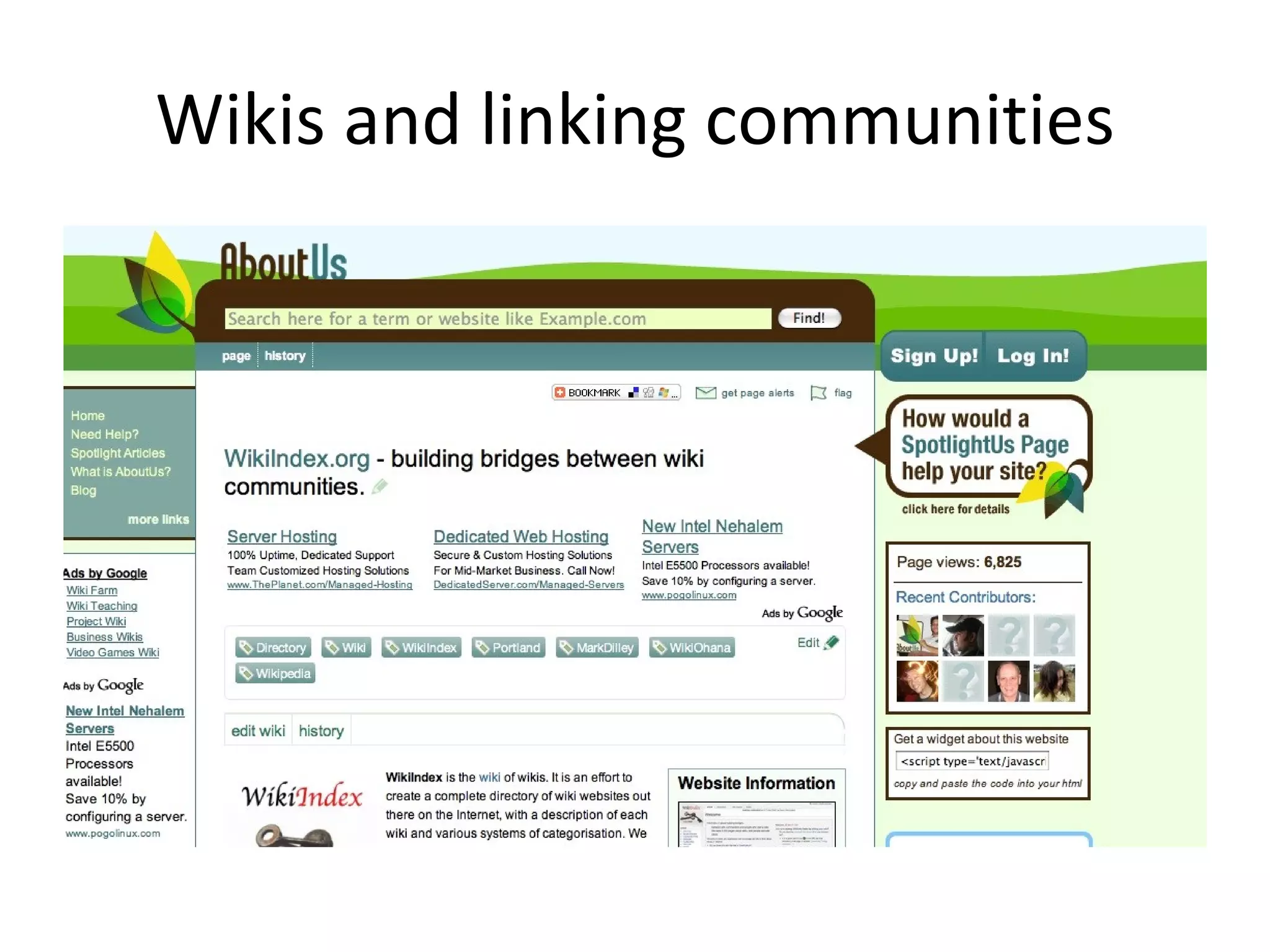
Wikis and linking communities
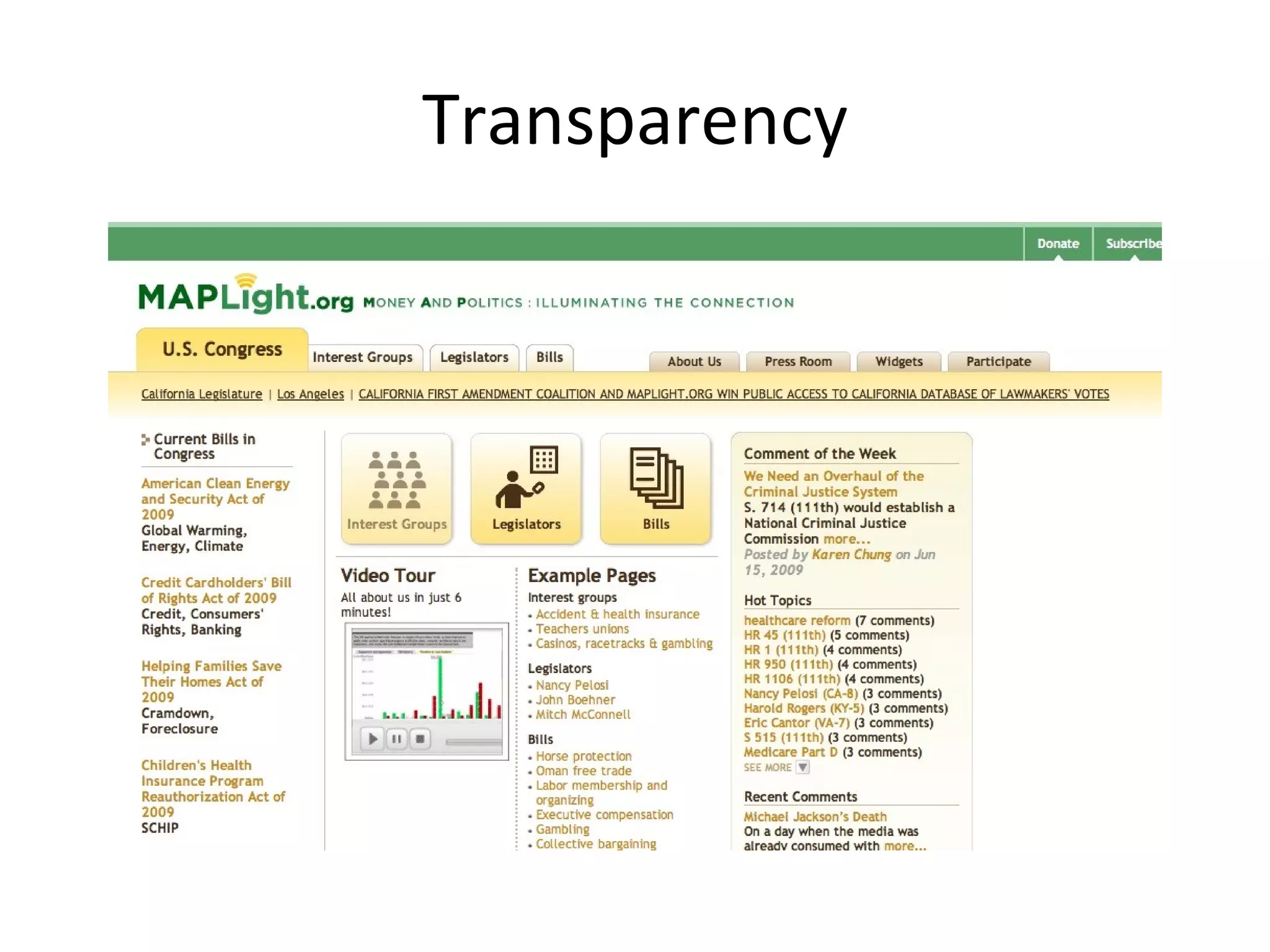
Transparency
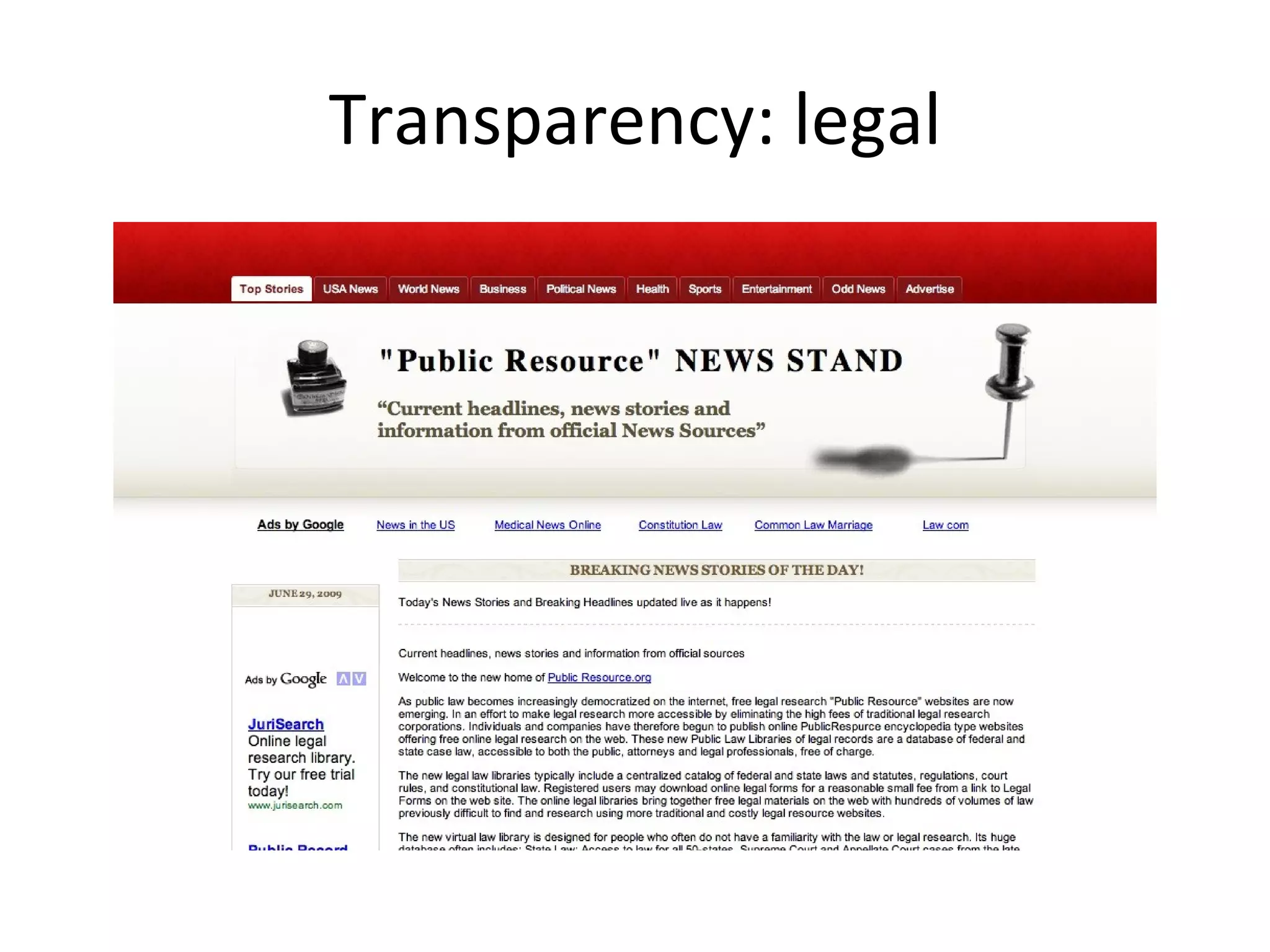
Transparency: legal
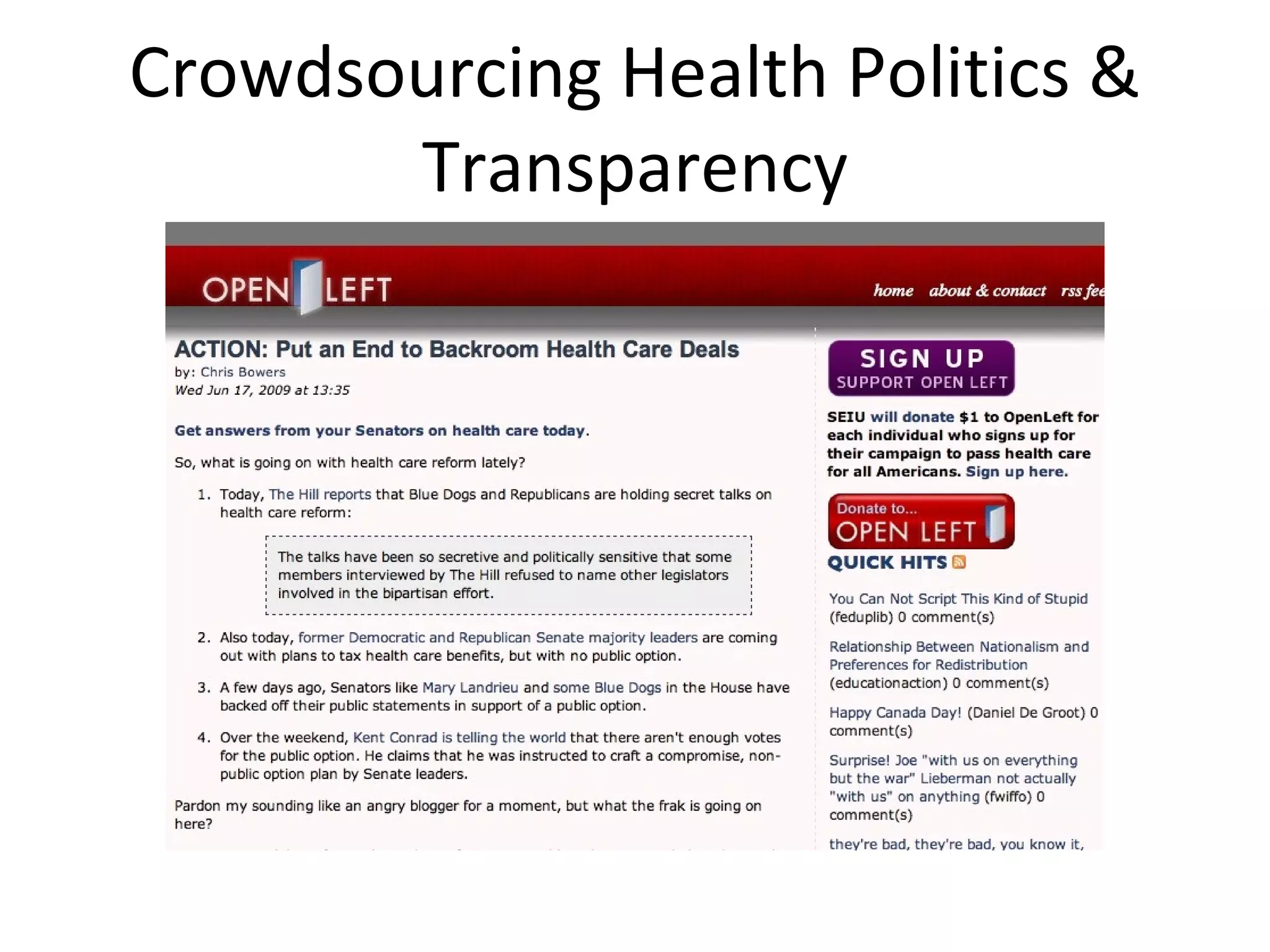
Crowdsourcing Health Politics & Transparency
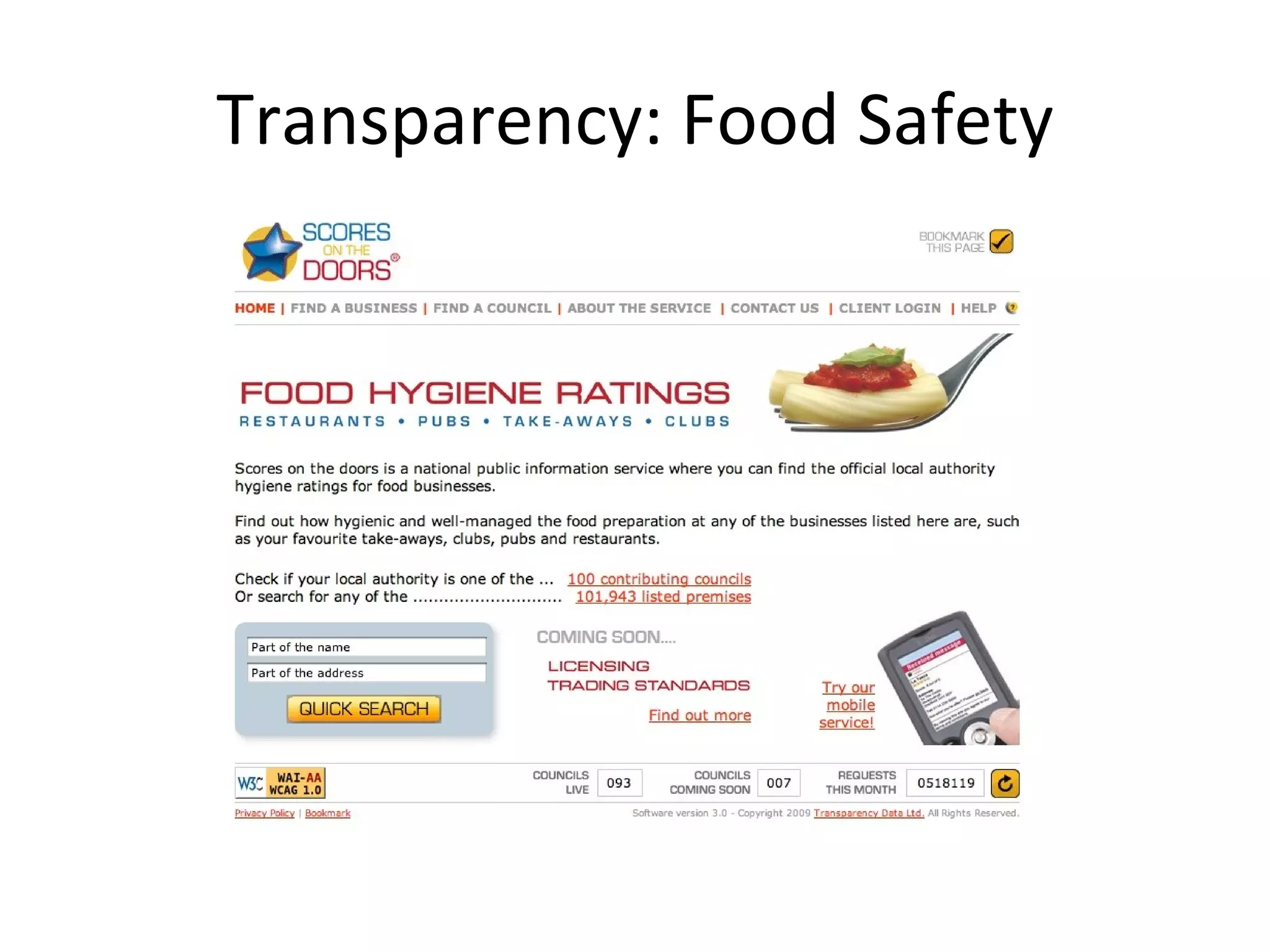
Transparency: Food Safety
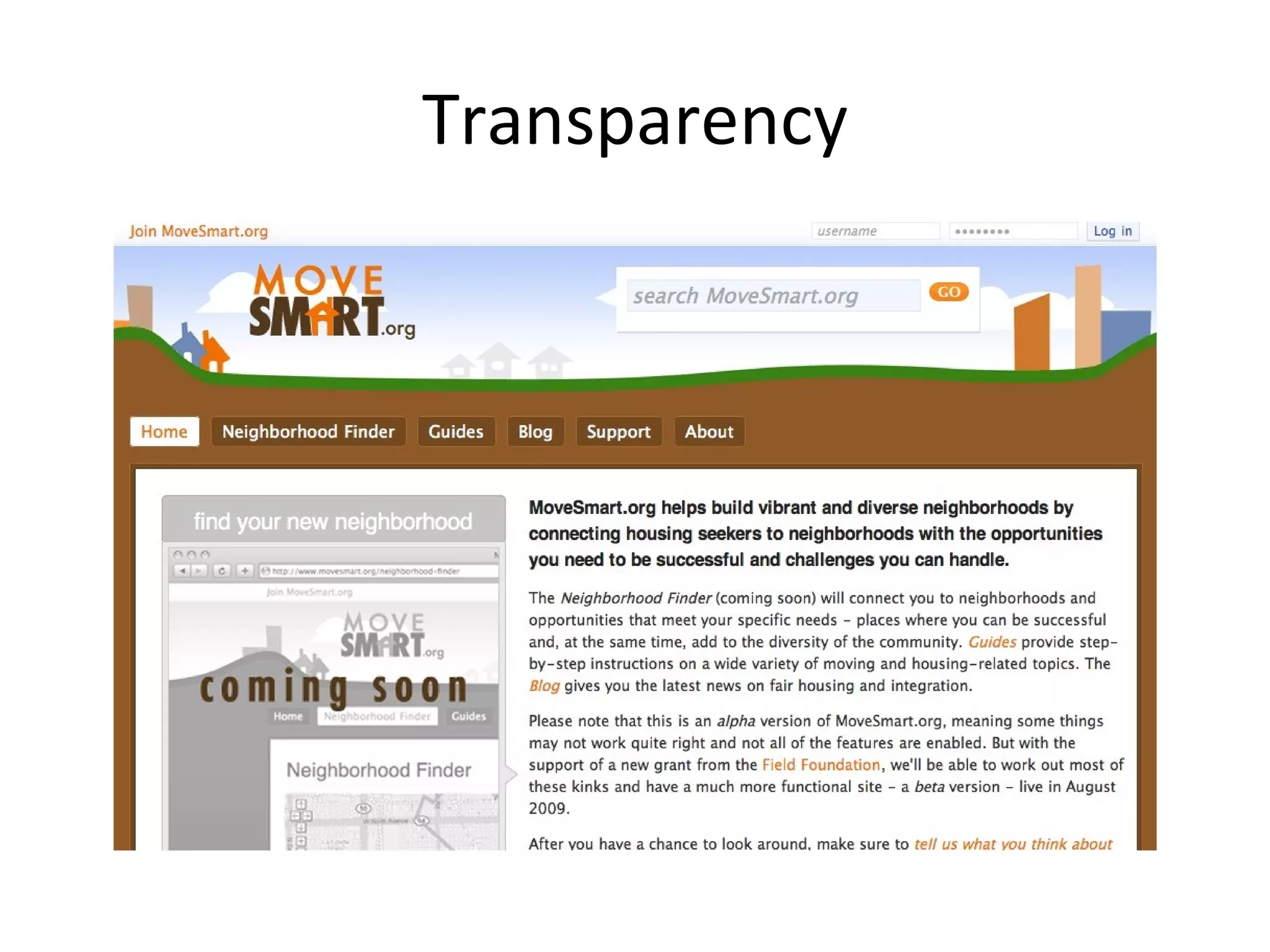
Transparency
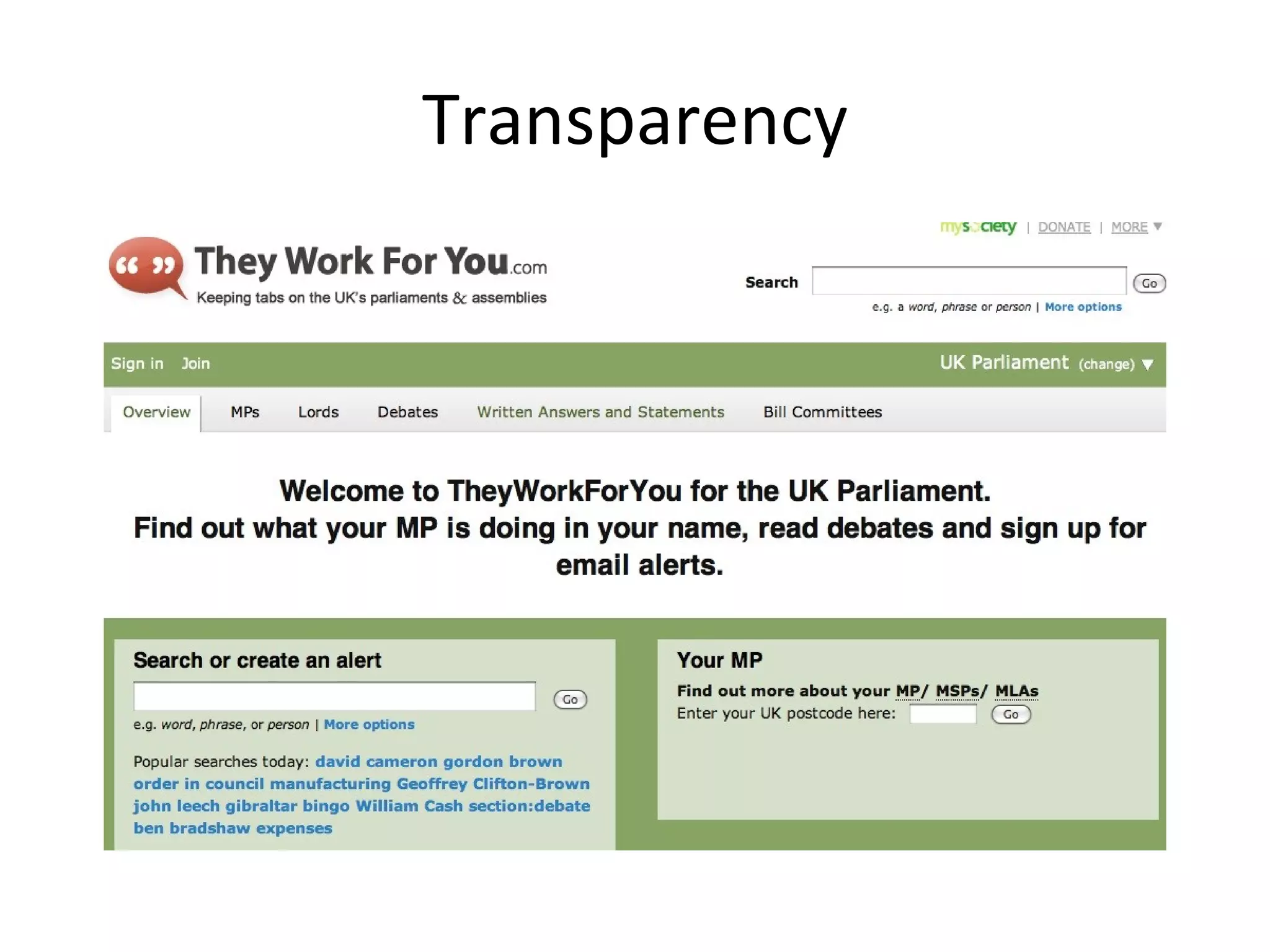
Transparency
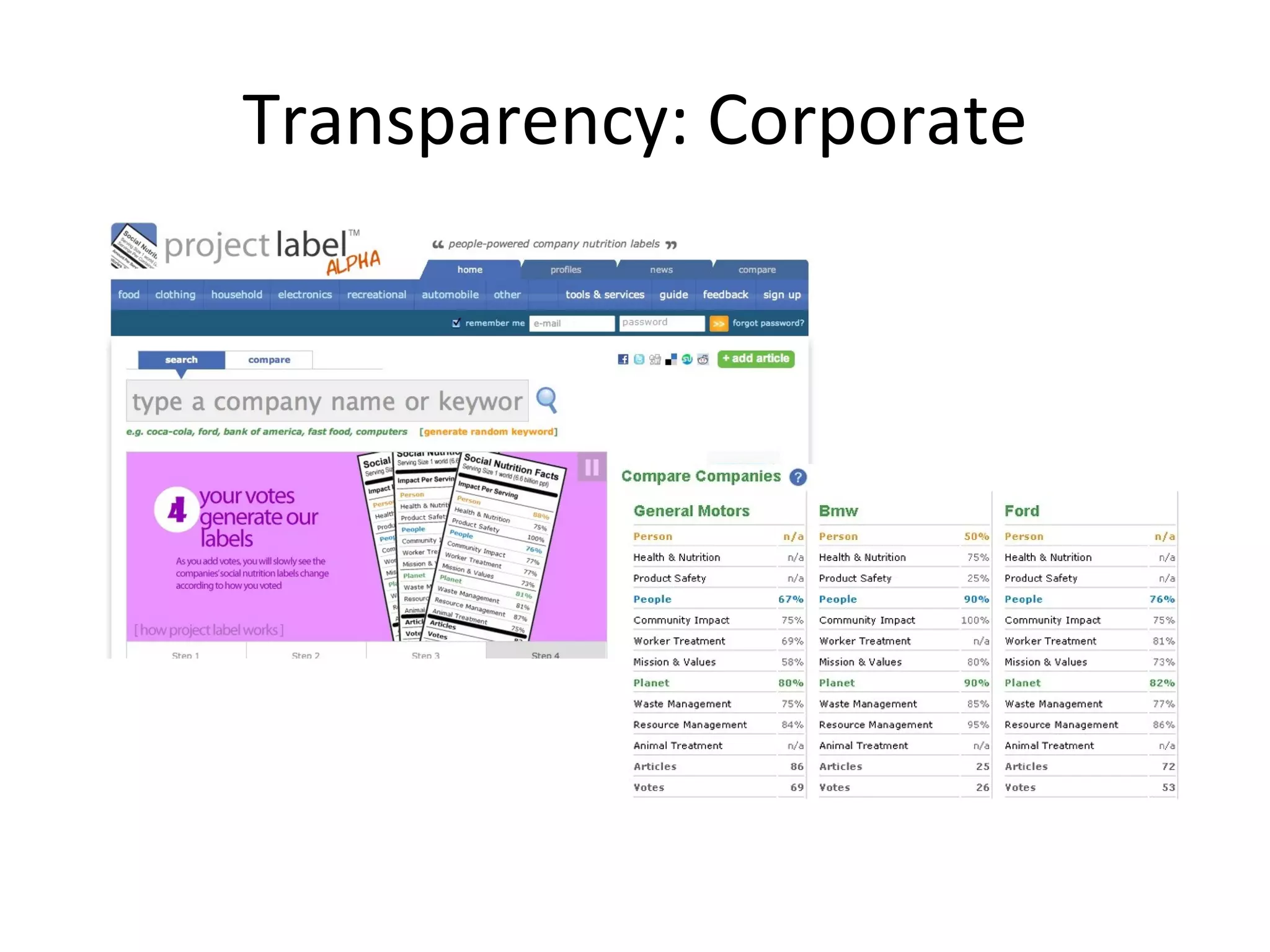
Transparency: Corporate
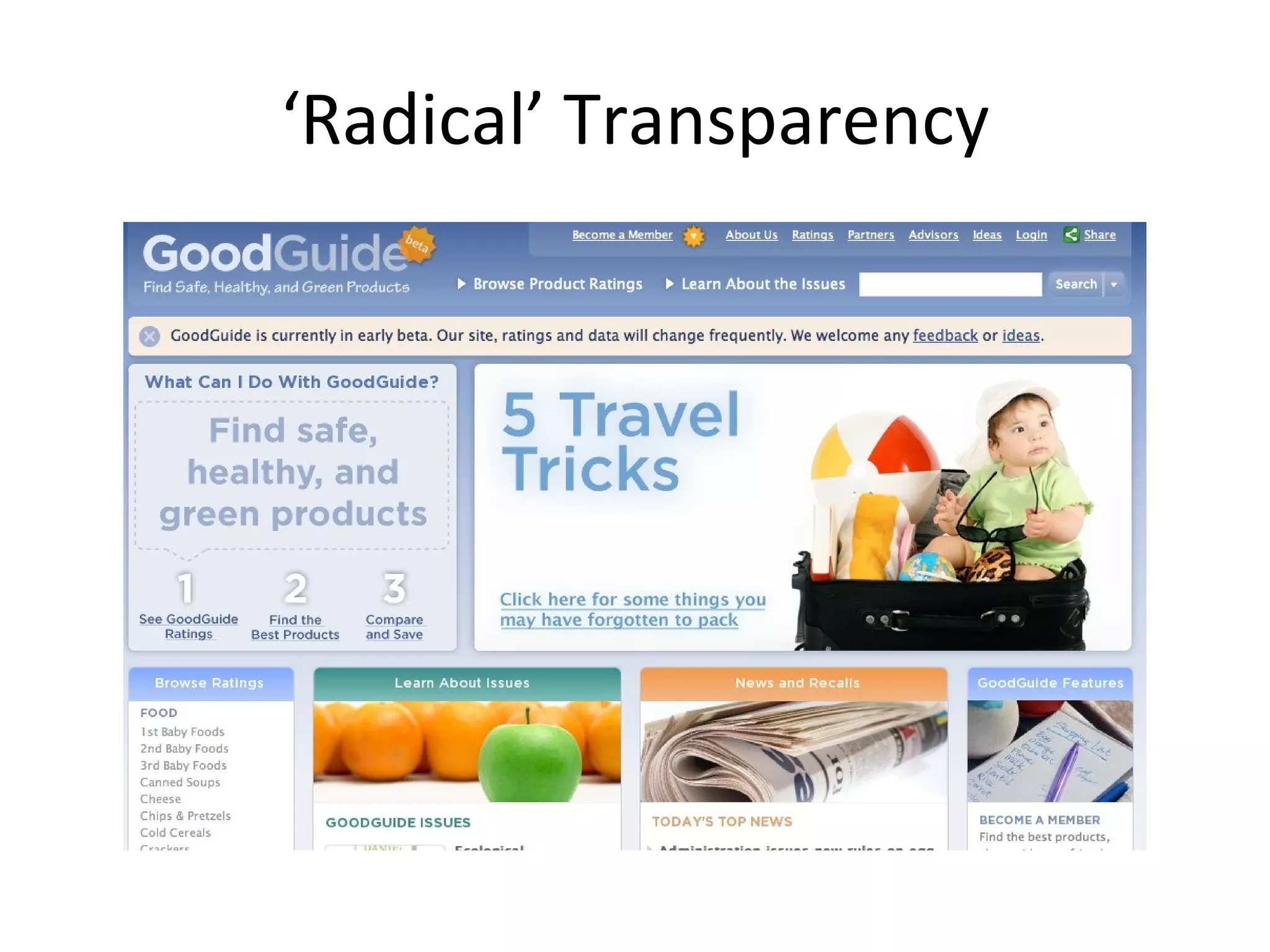
‘ Radical’ Transparency
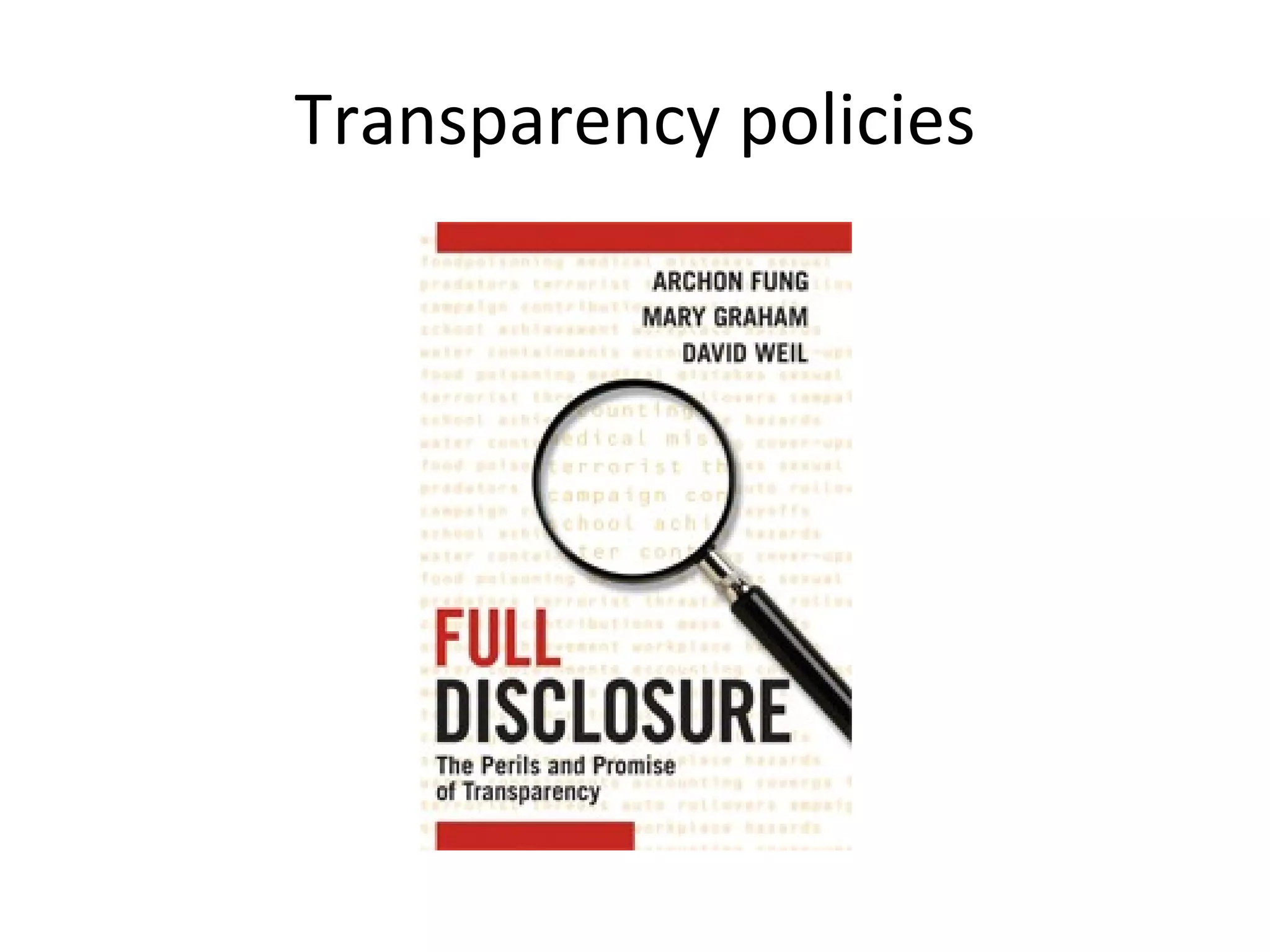
Transparency policies
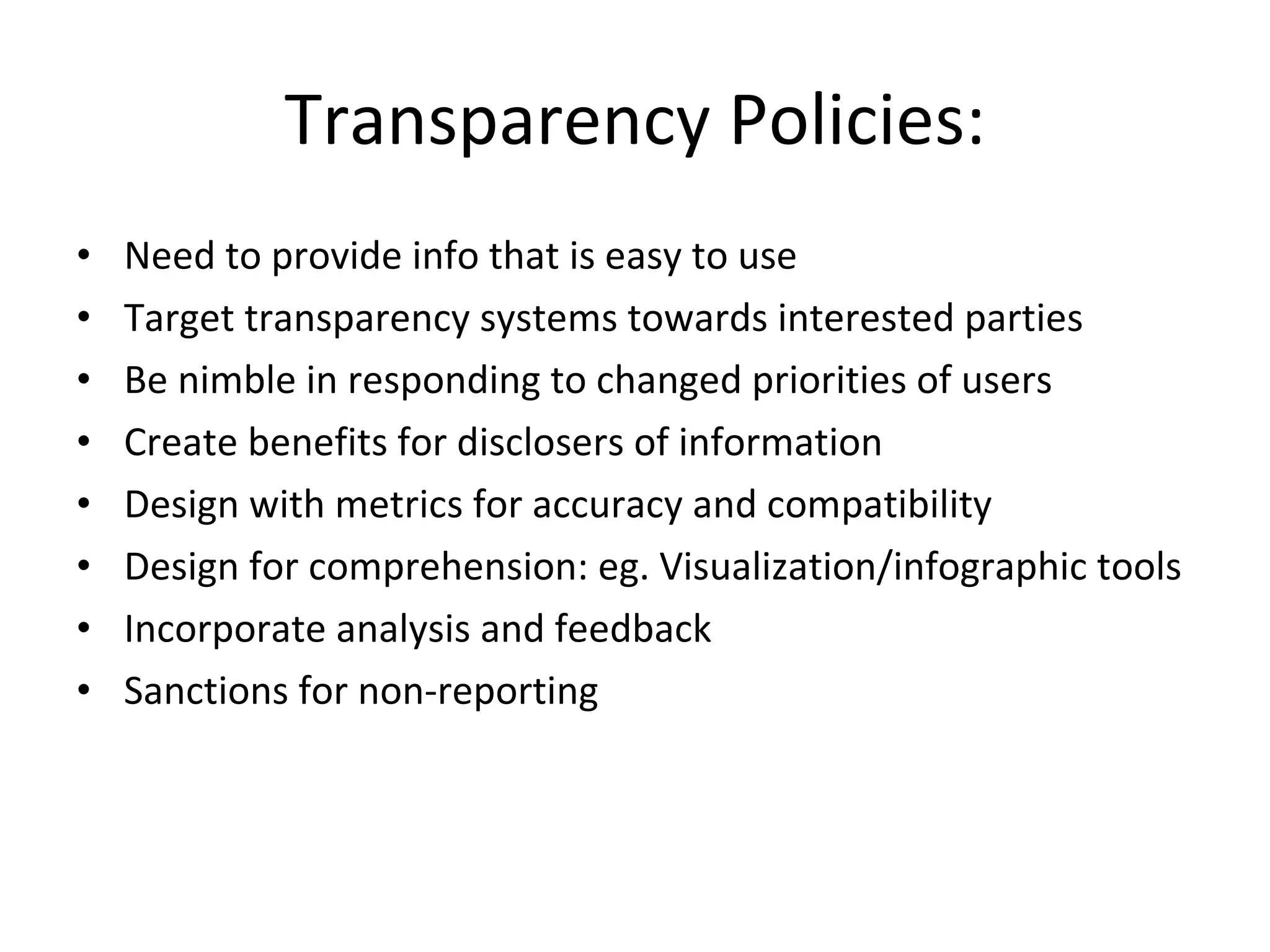
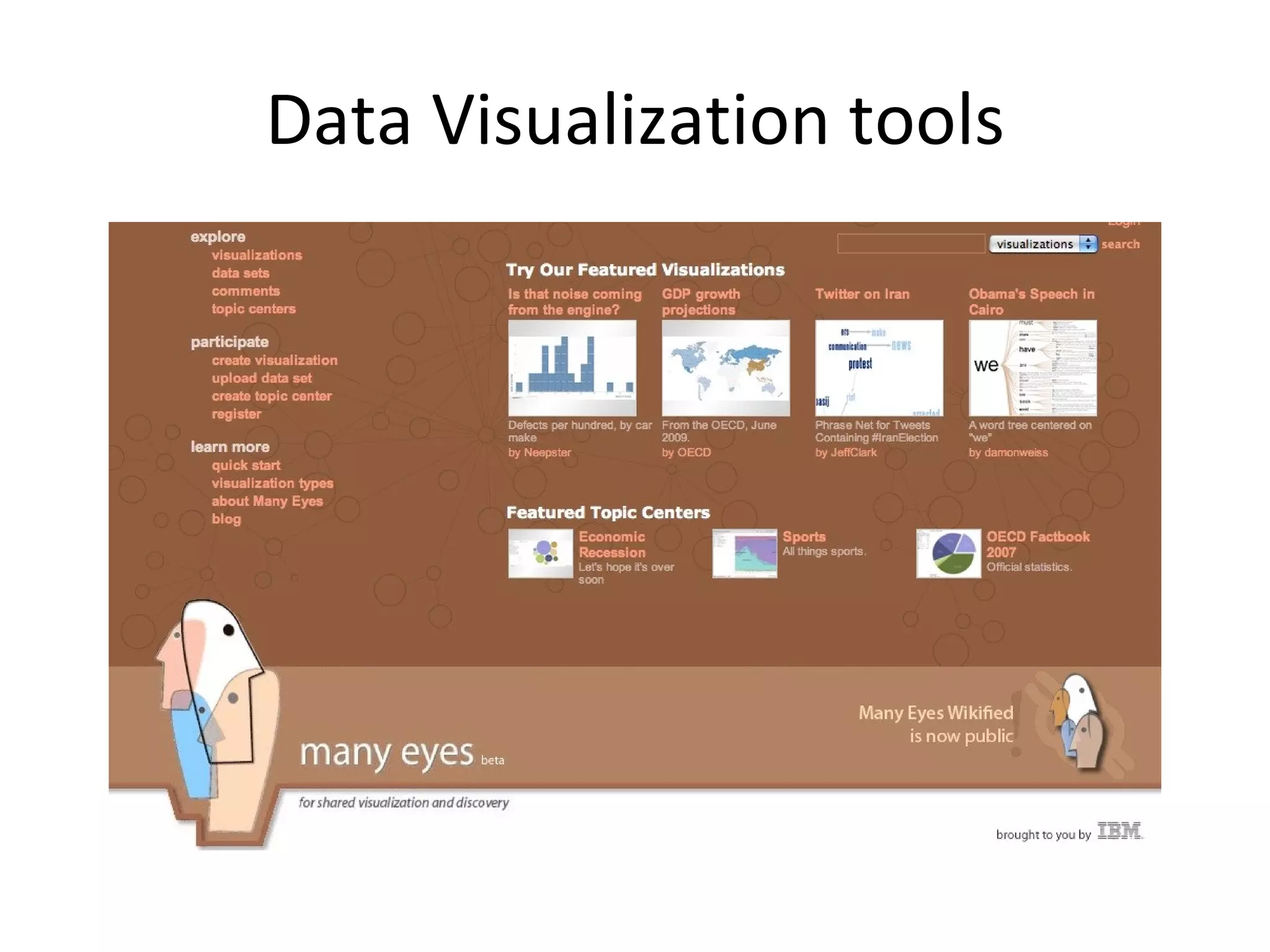
Transparency Policies: Need to provide info that is easy to use Target transparency systems towards interested parties Be nimble in responding to changed priorities of users Create benefits for disclosers of information Design with metrics for accuracy and compatibility Design for comprehension: eg. Visualization/infographic tools Incorporate analysis and feedback Sanctions for non-reporting
Data Visualization tools
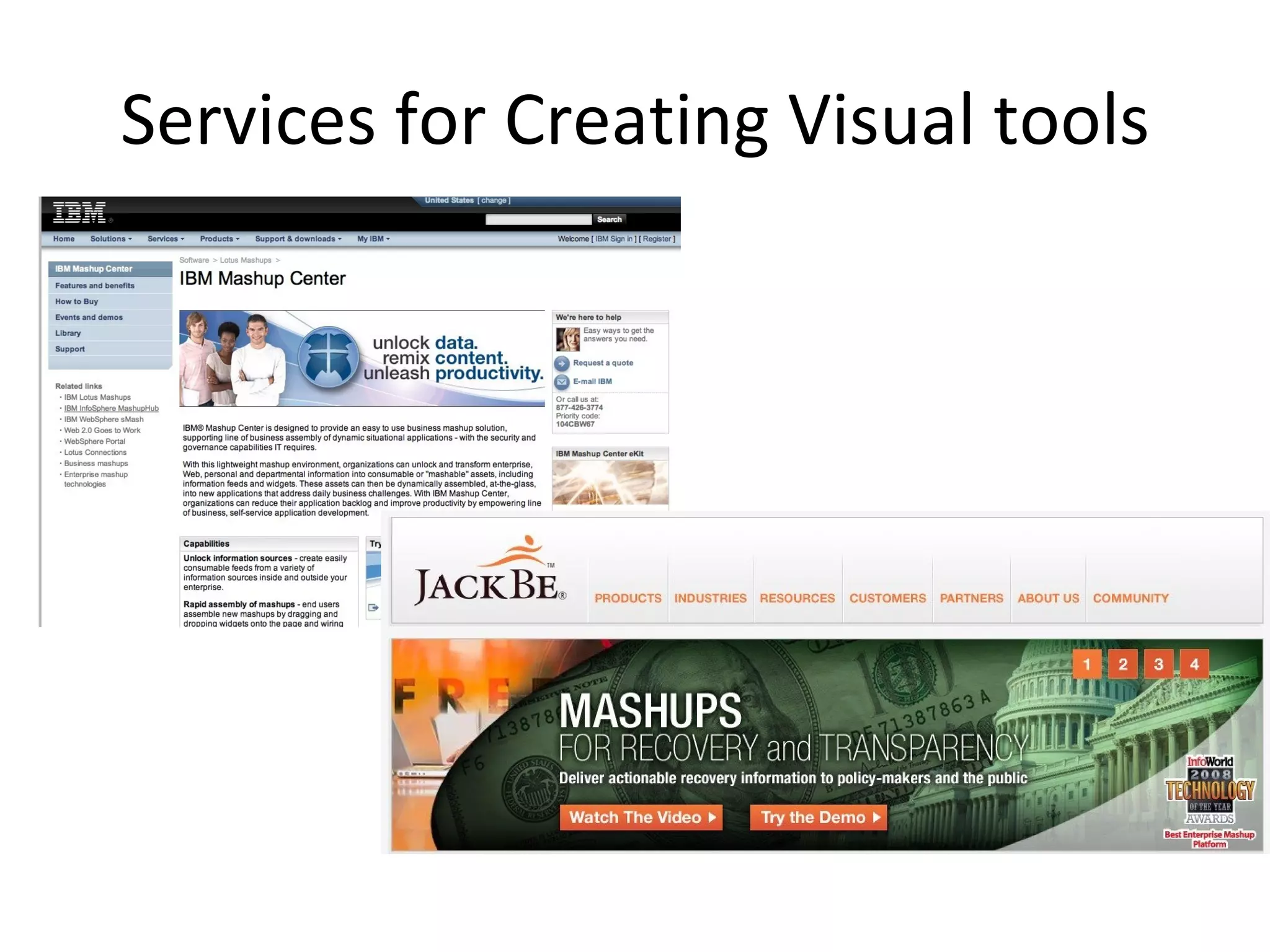
Services for Creating Visual tools
Data Visualization
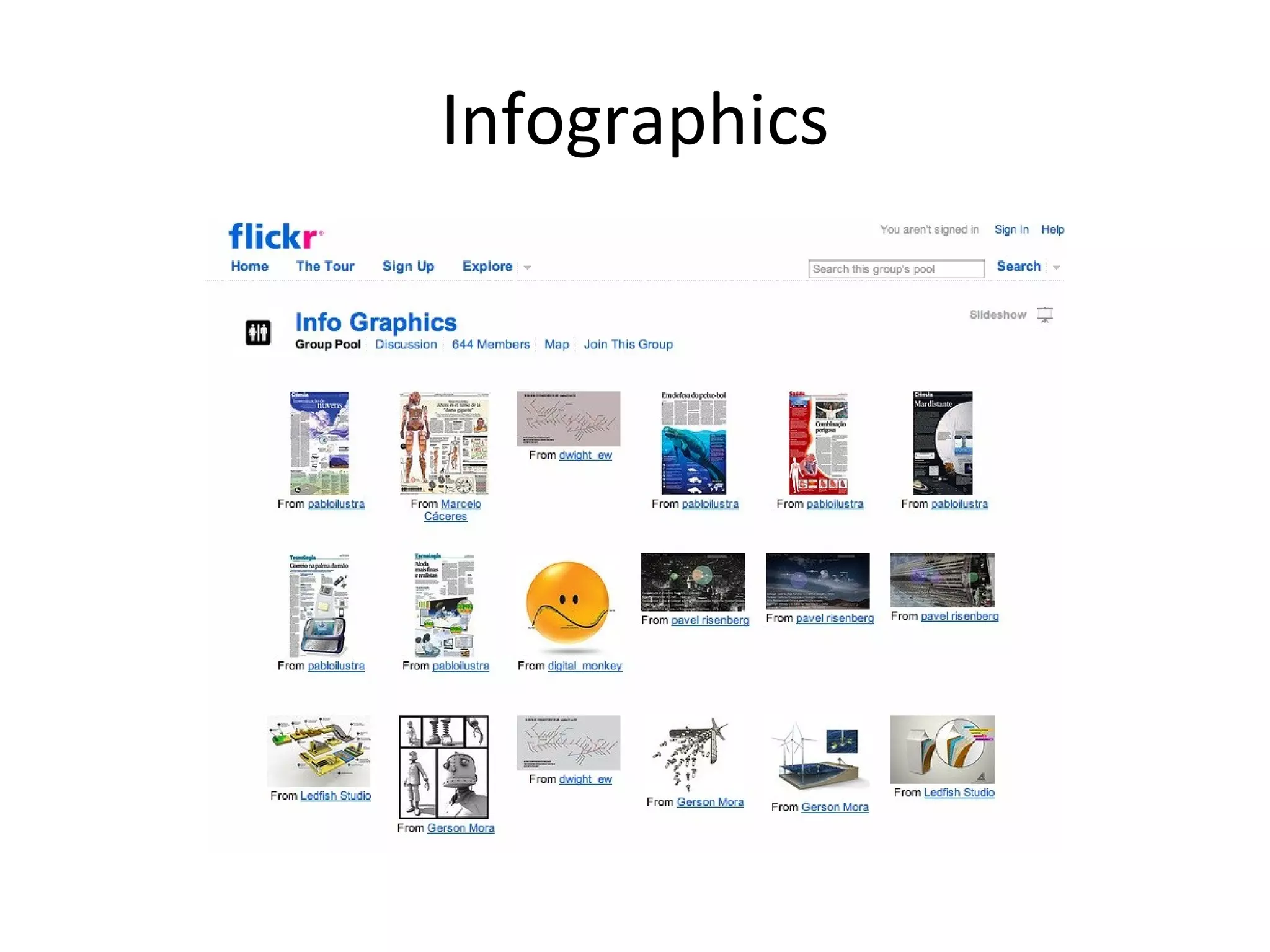
Infographics
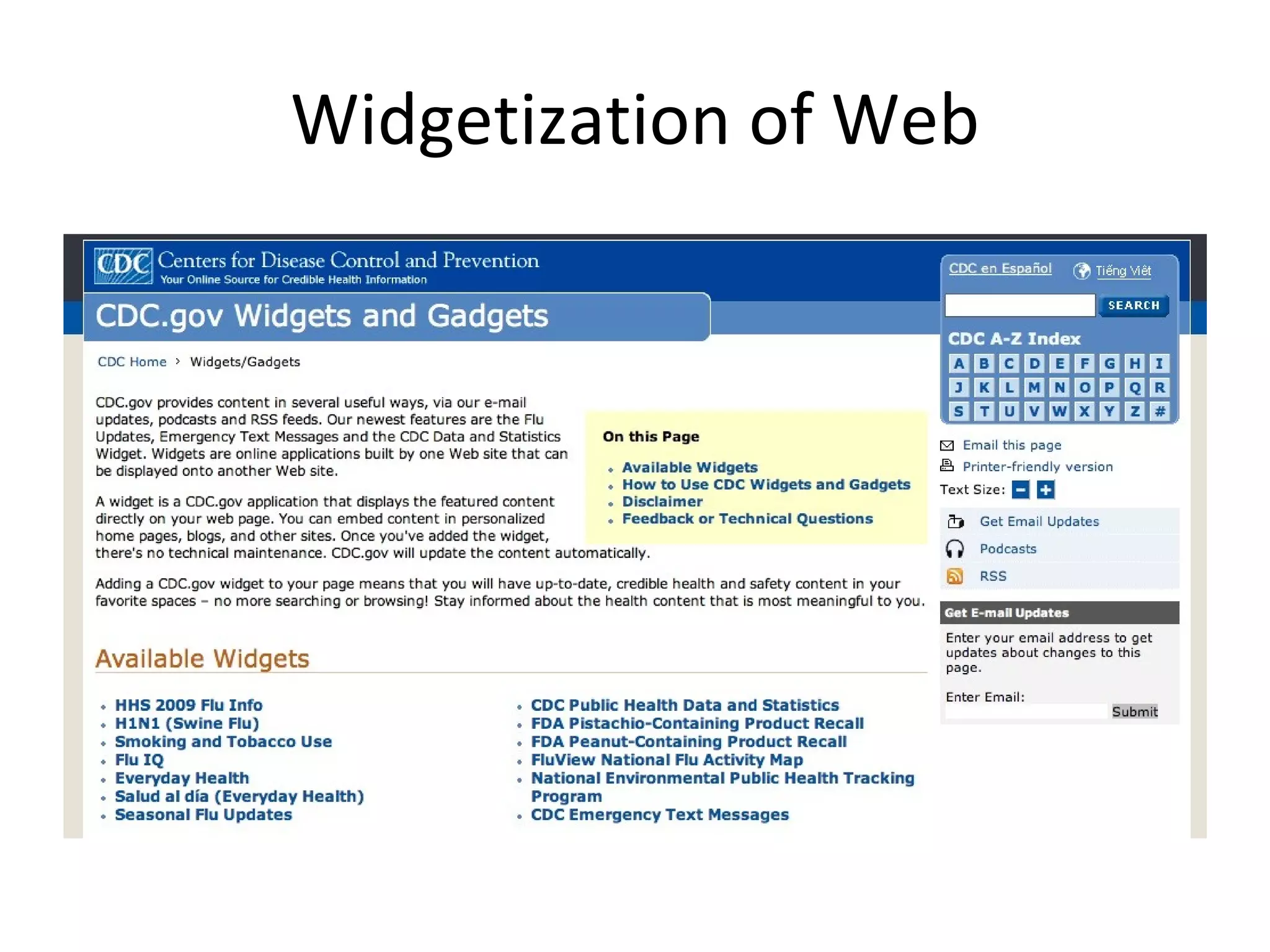
Widgetization of Web
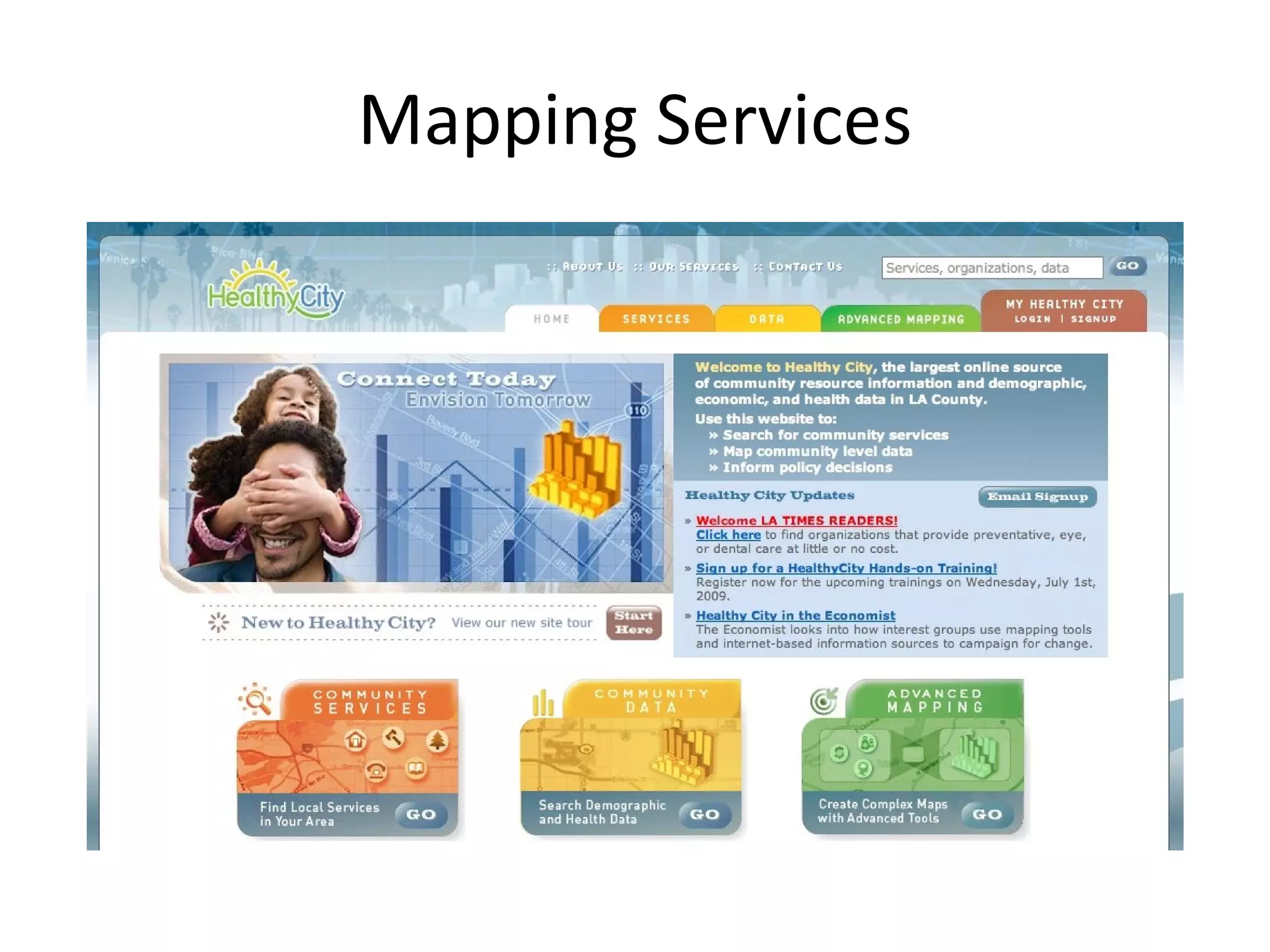
Mapping Services
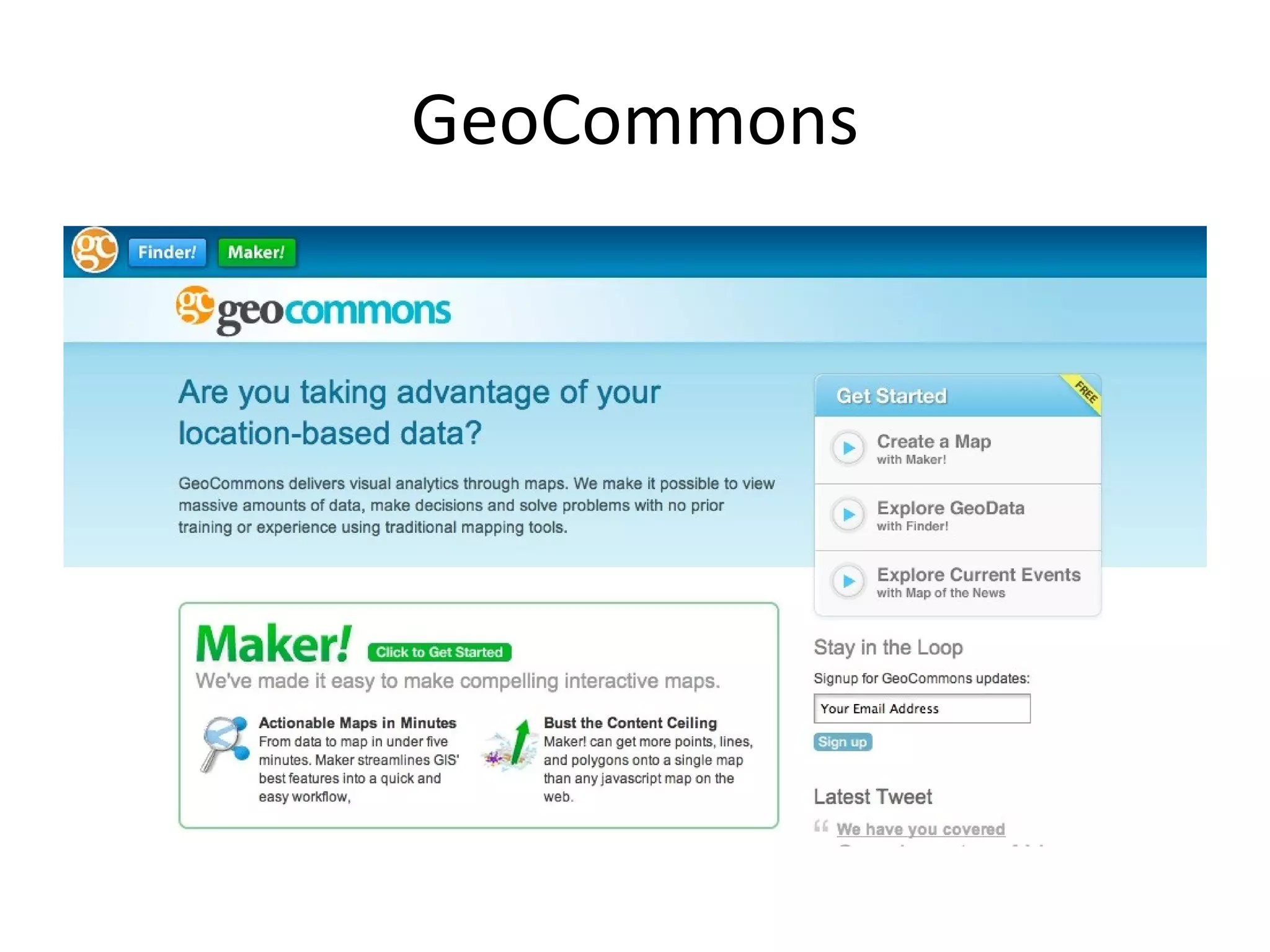
GeoCommons
Geoweb More data are geocoded, web-based and mobile Growth in use of Google maps, etc. GIS becoming more ubiquitous, user-friendly Peer-to-peer geo-based services on iPhone More bottom-up, co-created maps Power of place and information in policies Participatory mapping and planning
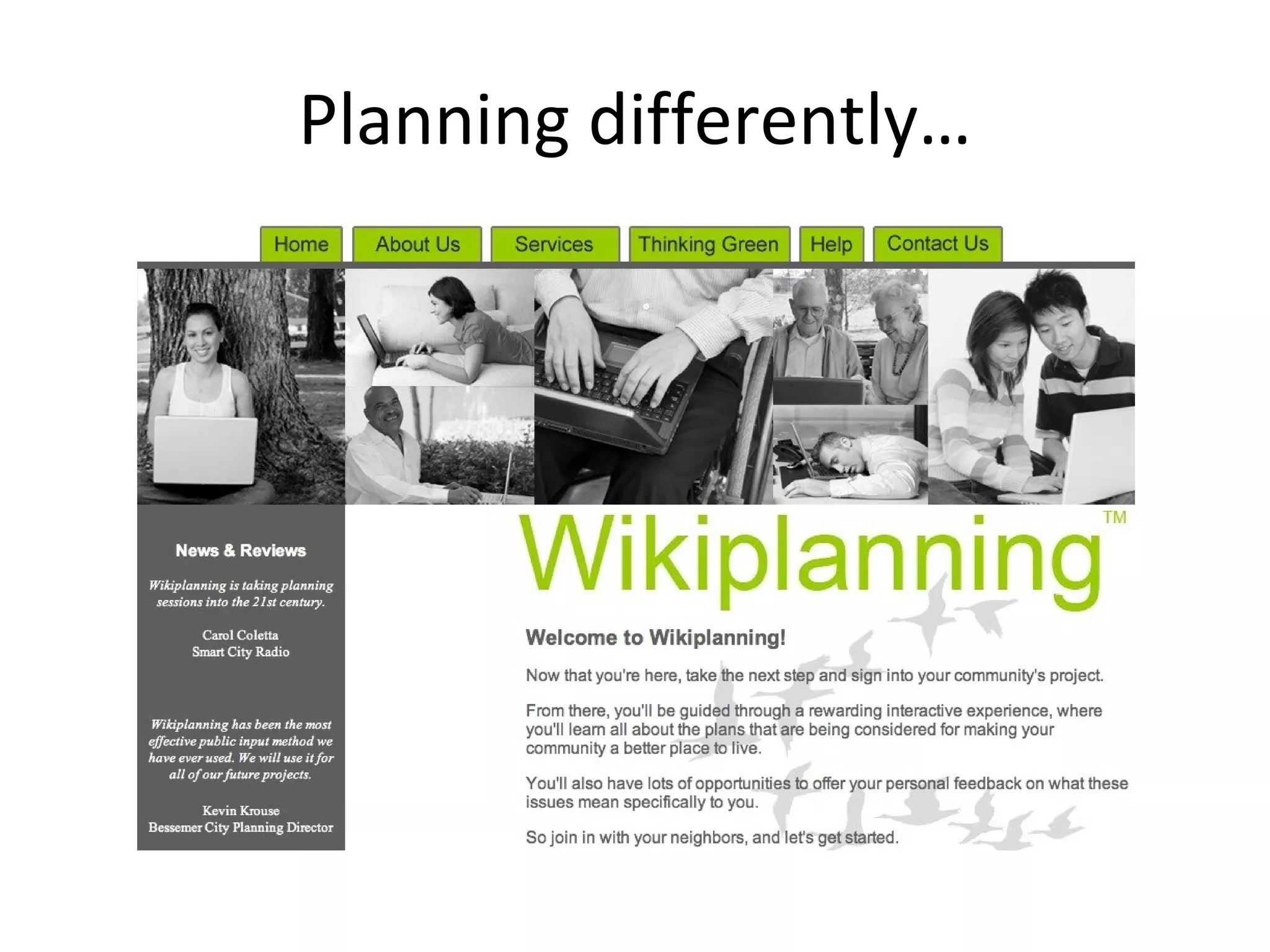
Planning differently…
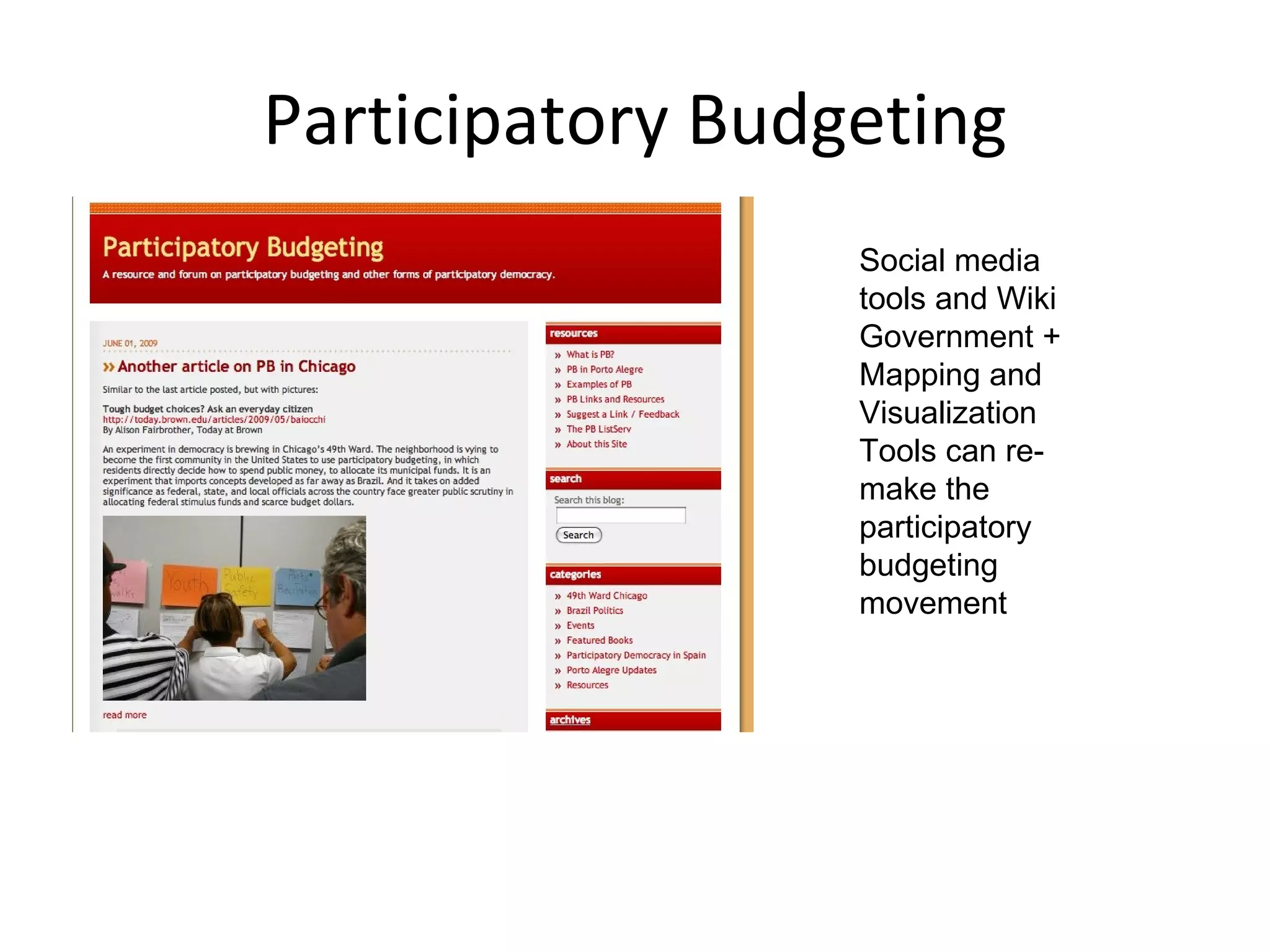
Participatory Budgeting Social media tools and Wiki Government + Mapping and Visualization Tools can re-make the participatory budgeting movement
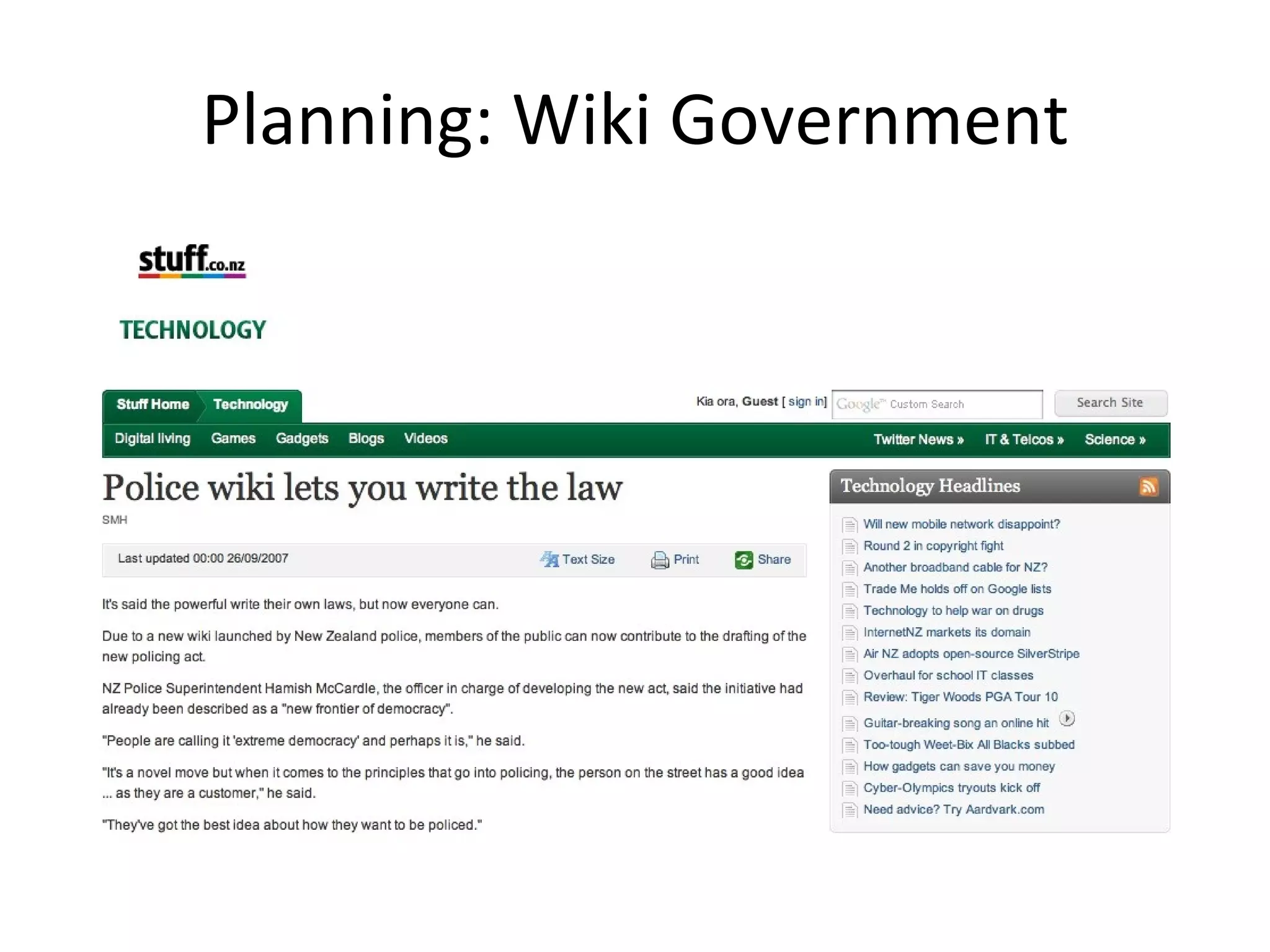
Planning: Wiki Government
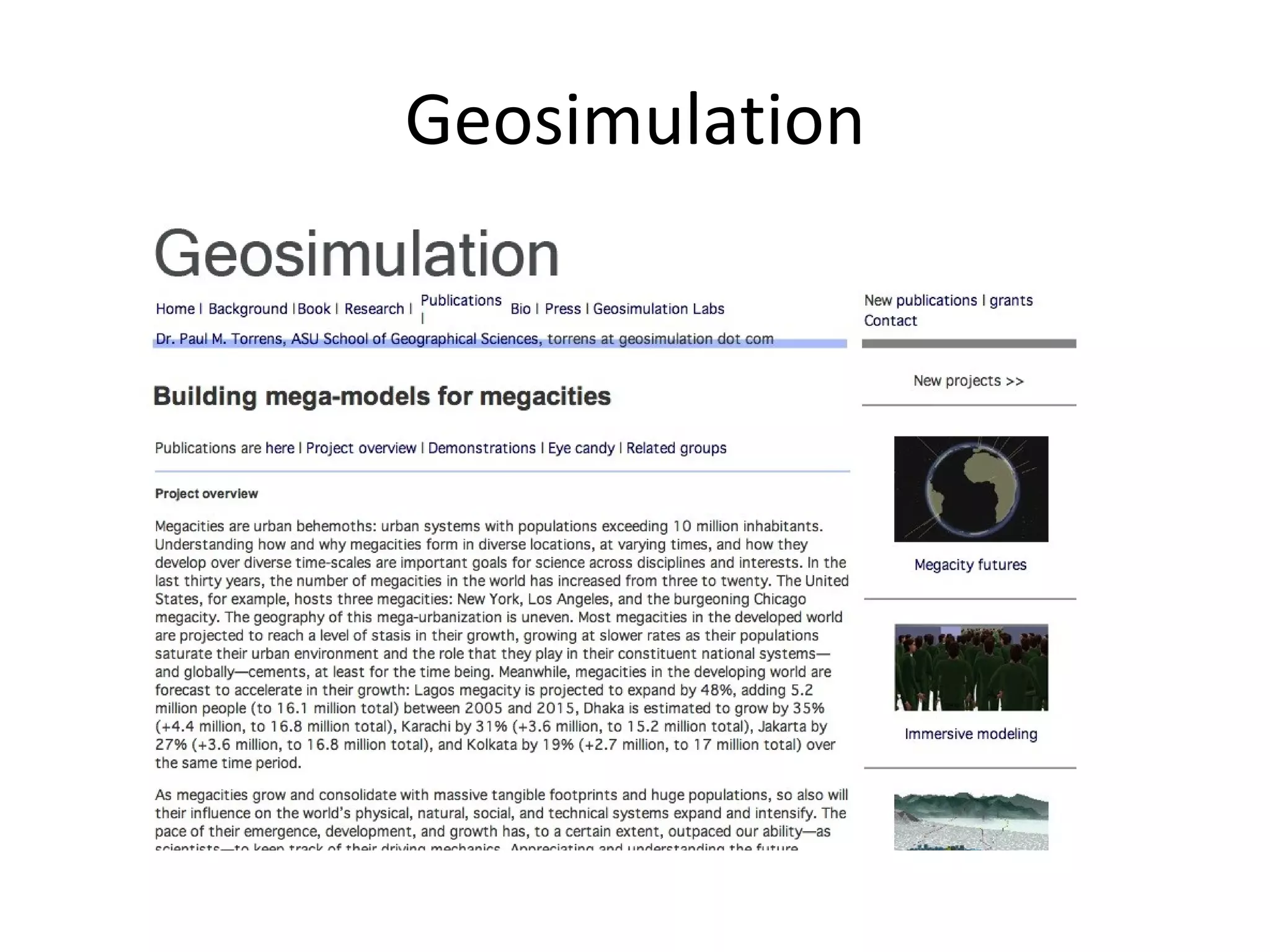
Geosimulation
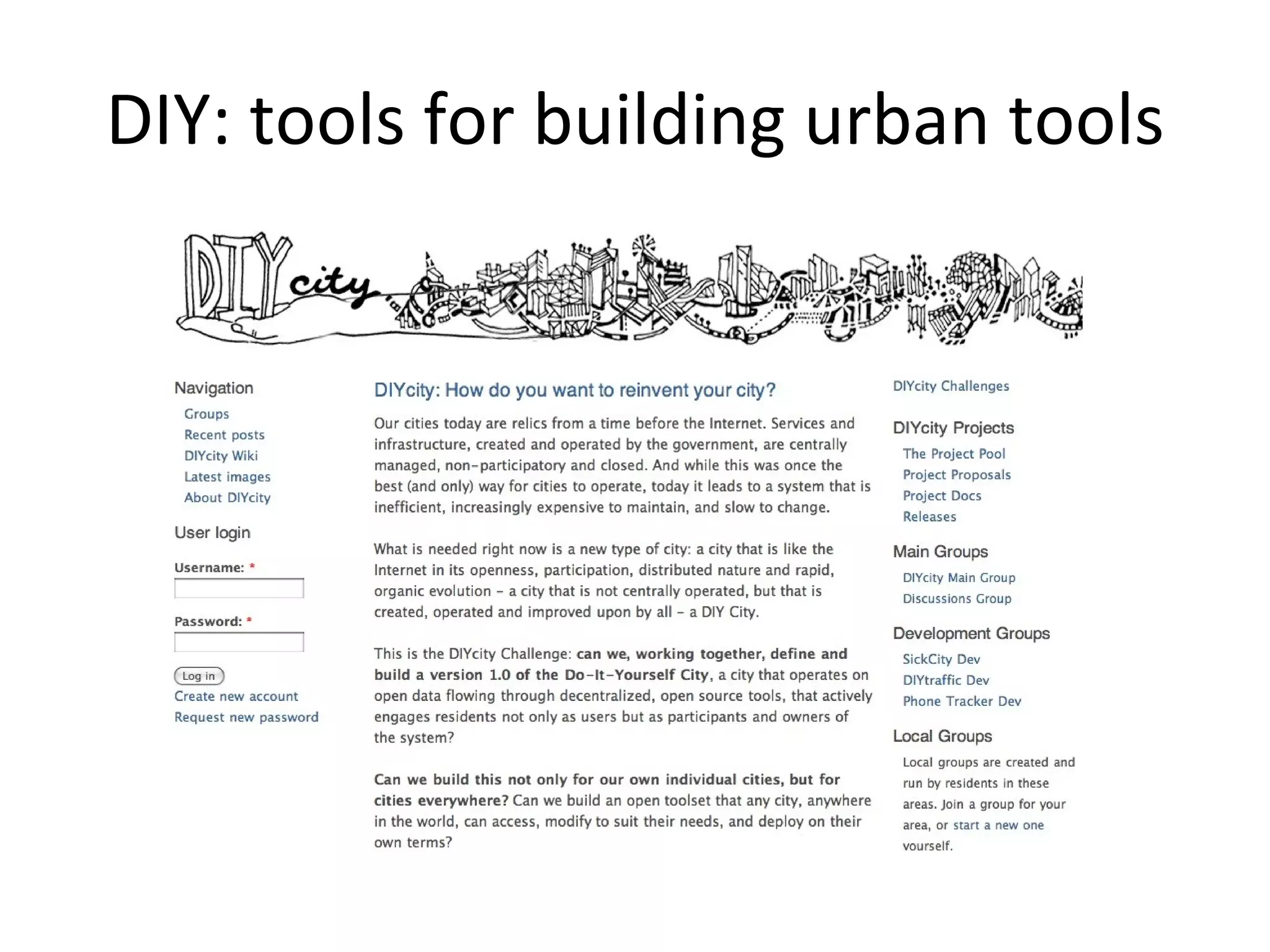
DIY: tools for building urban tools
Section 6: More tools and signals Making the Invisible Visible Mobiles and Urban computing Persuasive Technologies and Games
Tools for making the invisible visible Low cost diagnostics Sensors Visual Tools Augmented Reality Mash-ups Mobiles =Tools for Collective Action on Health Issues
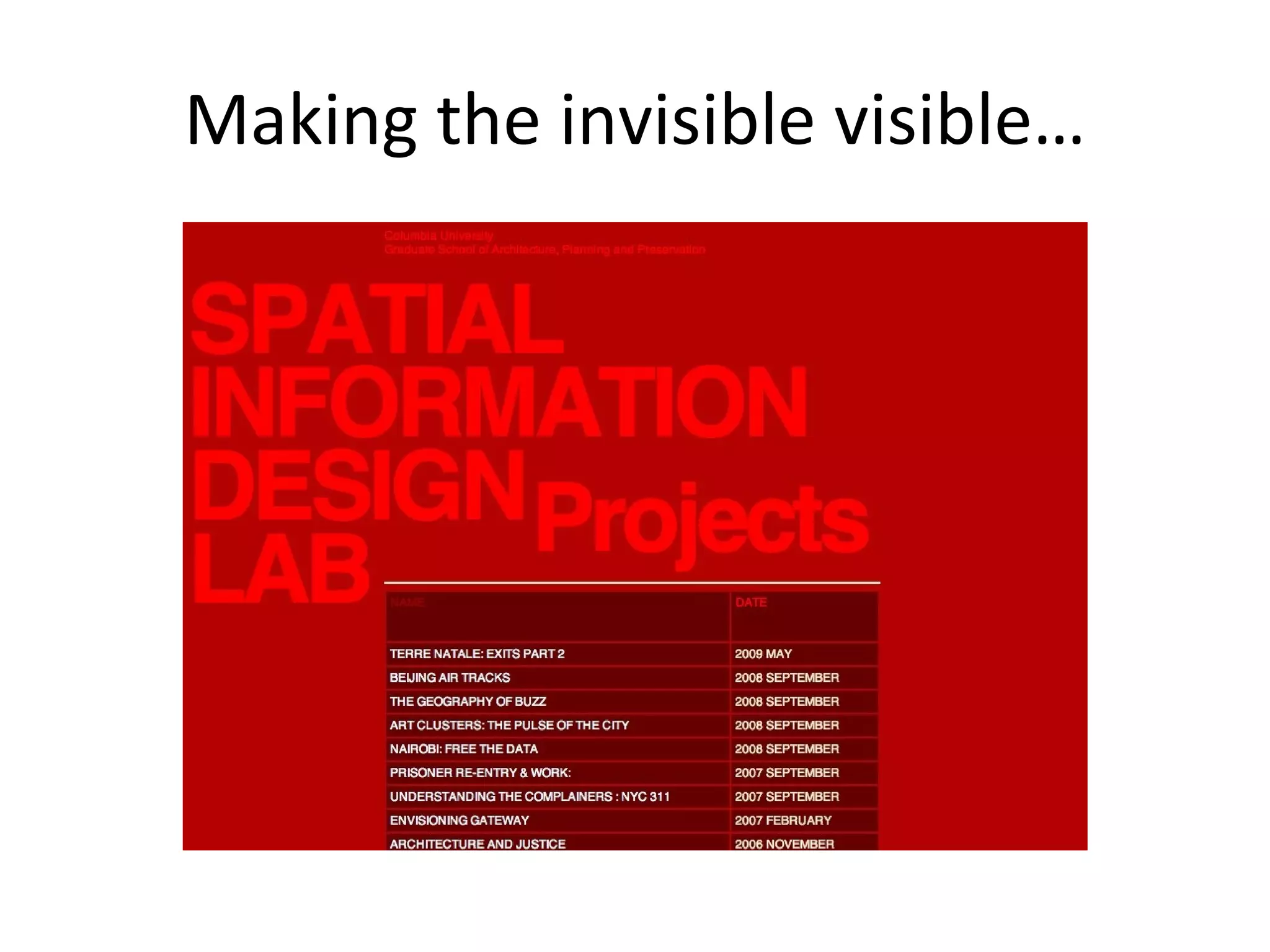
Making the invisible visible…
Spatial Information Design Lab
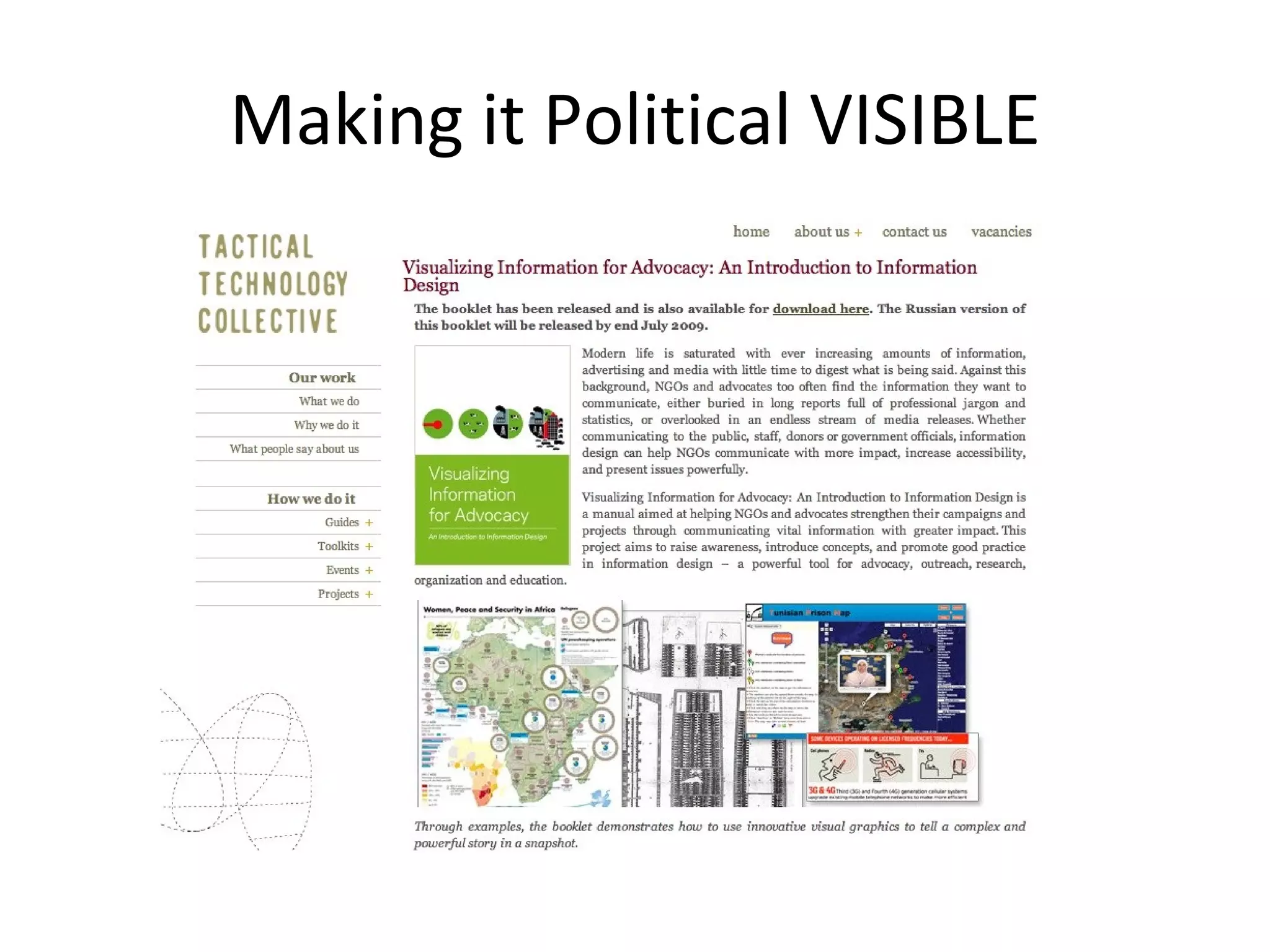
Making it Political VISIBLE
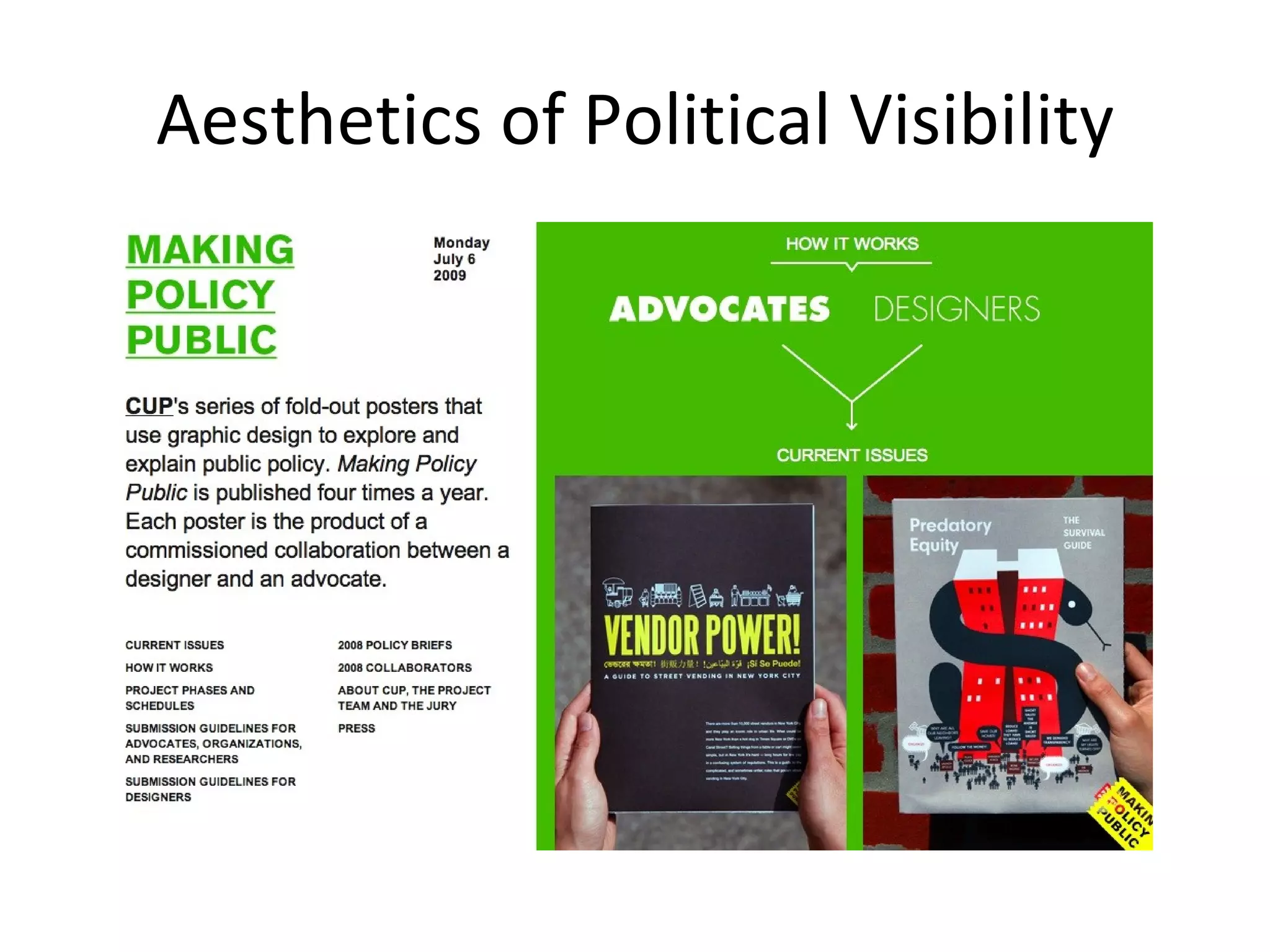
Aesthetics of Political Visibility
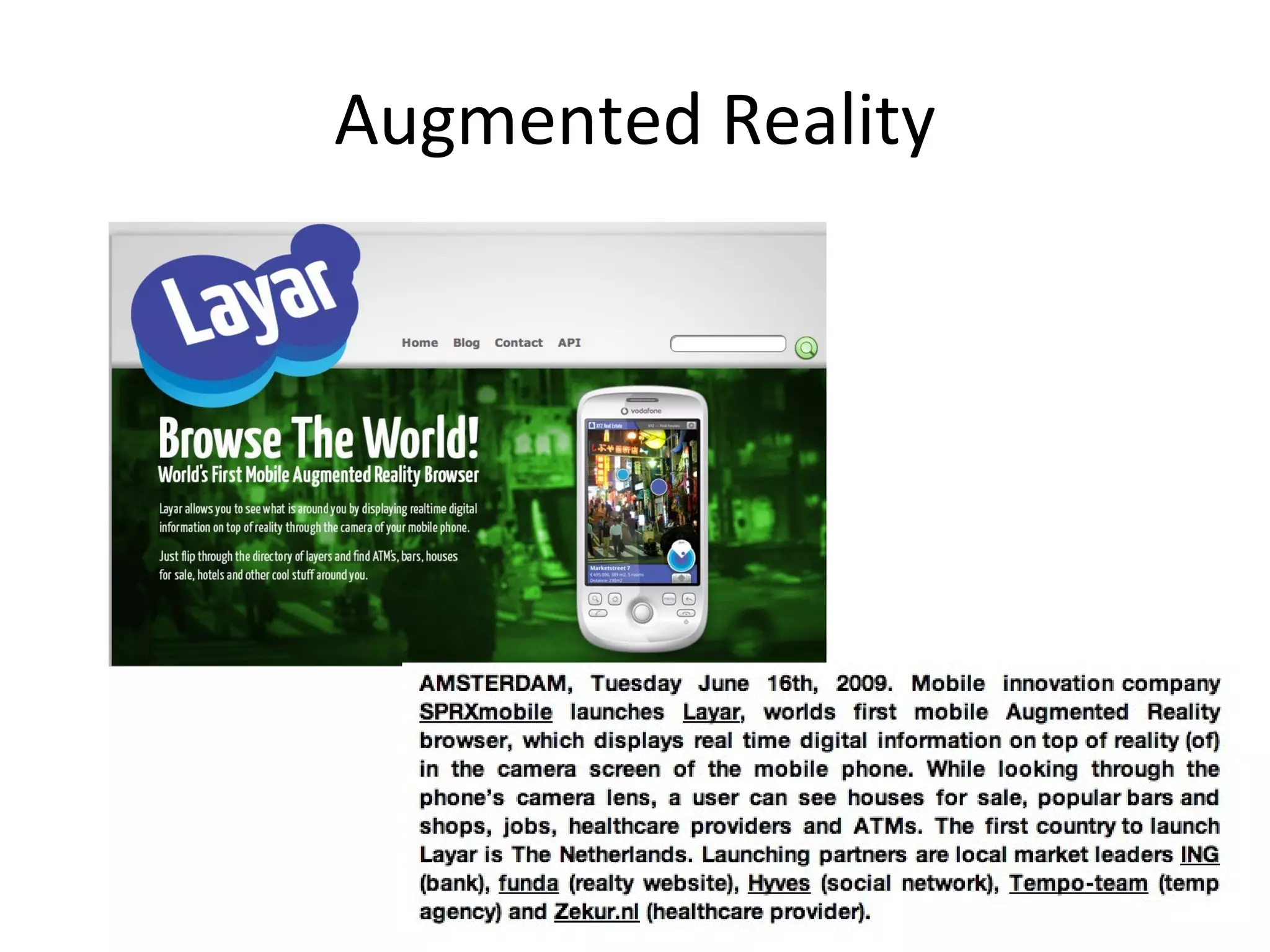
Augmented Reality
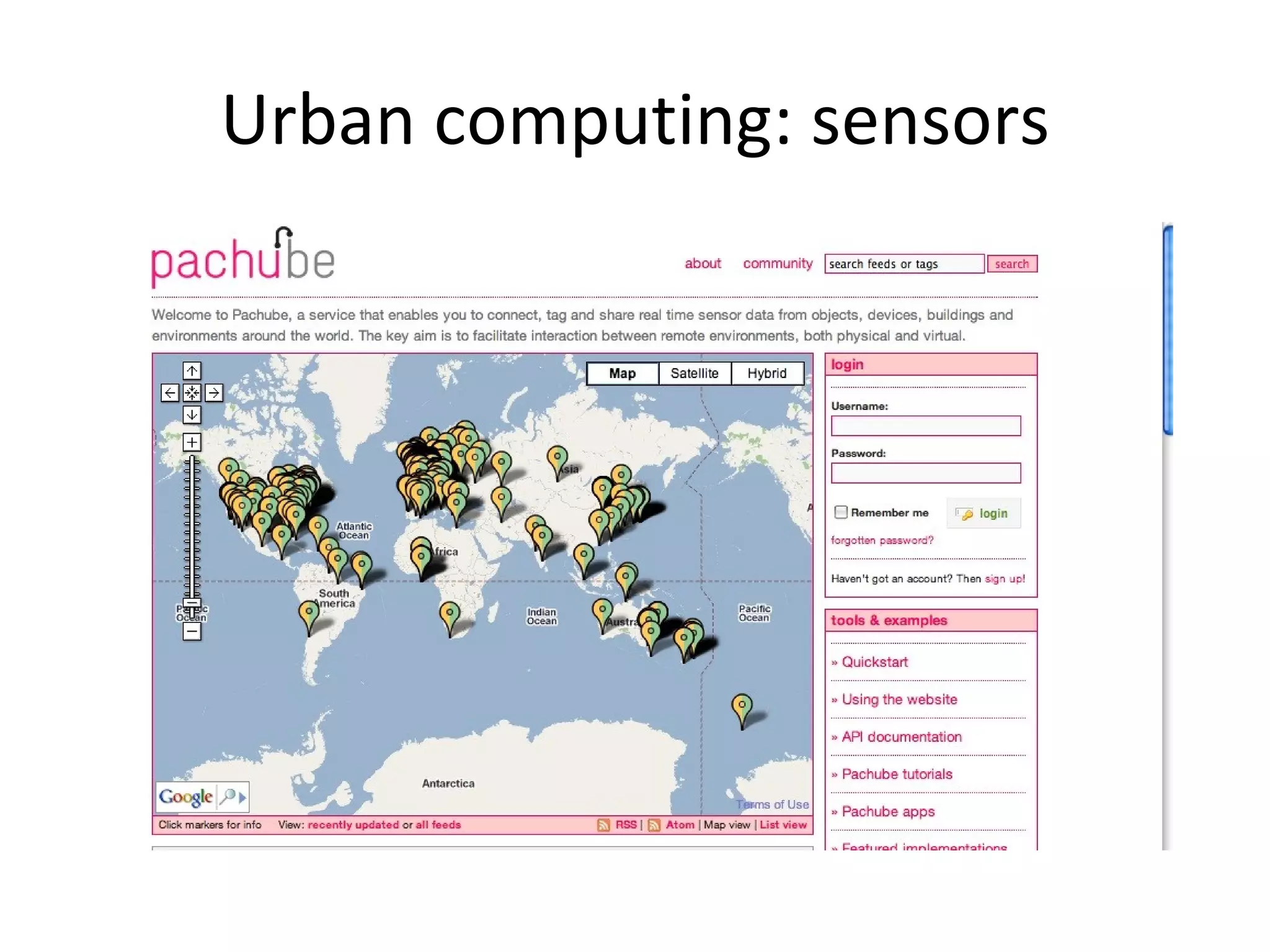
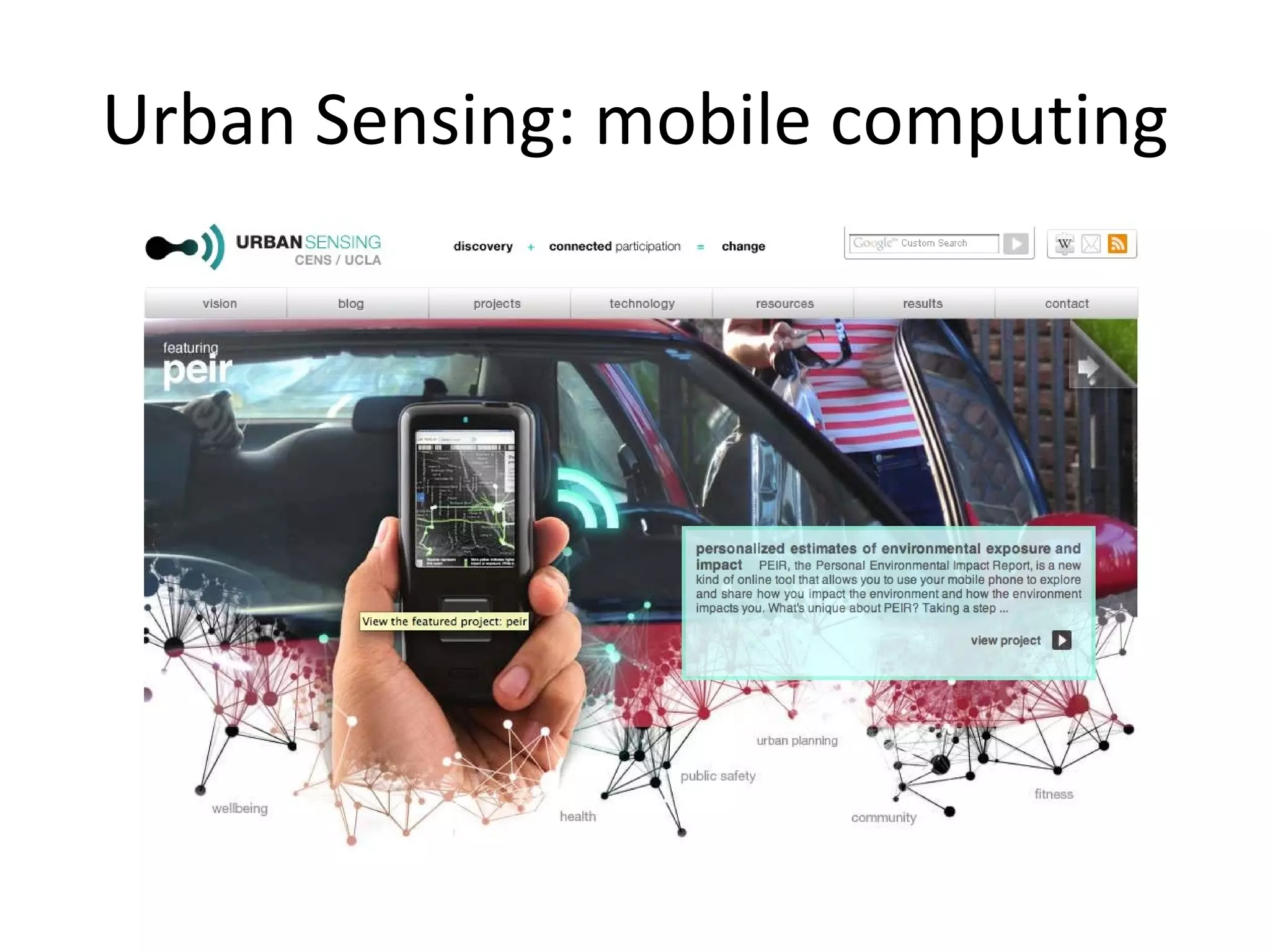
Urban Computing Urban infrastructures Maps, traffic info Sense of place Mobile devices, sensors Social computing/networking: familiar strangers City info, open data Augmented Reality—now on mobiles
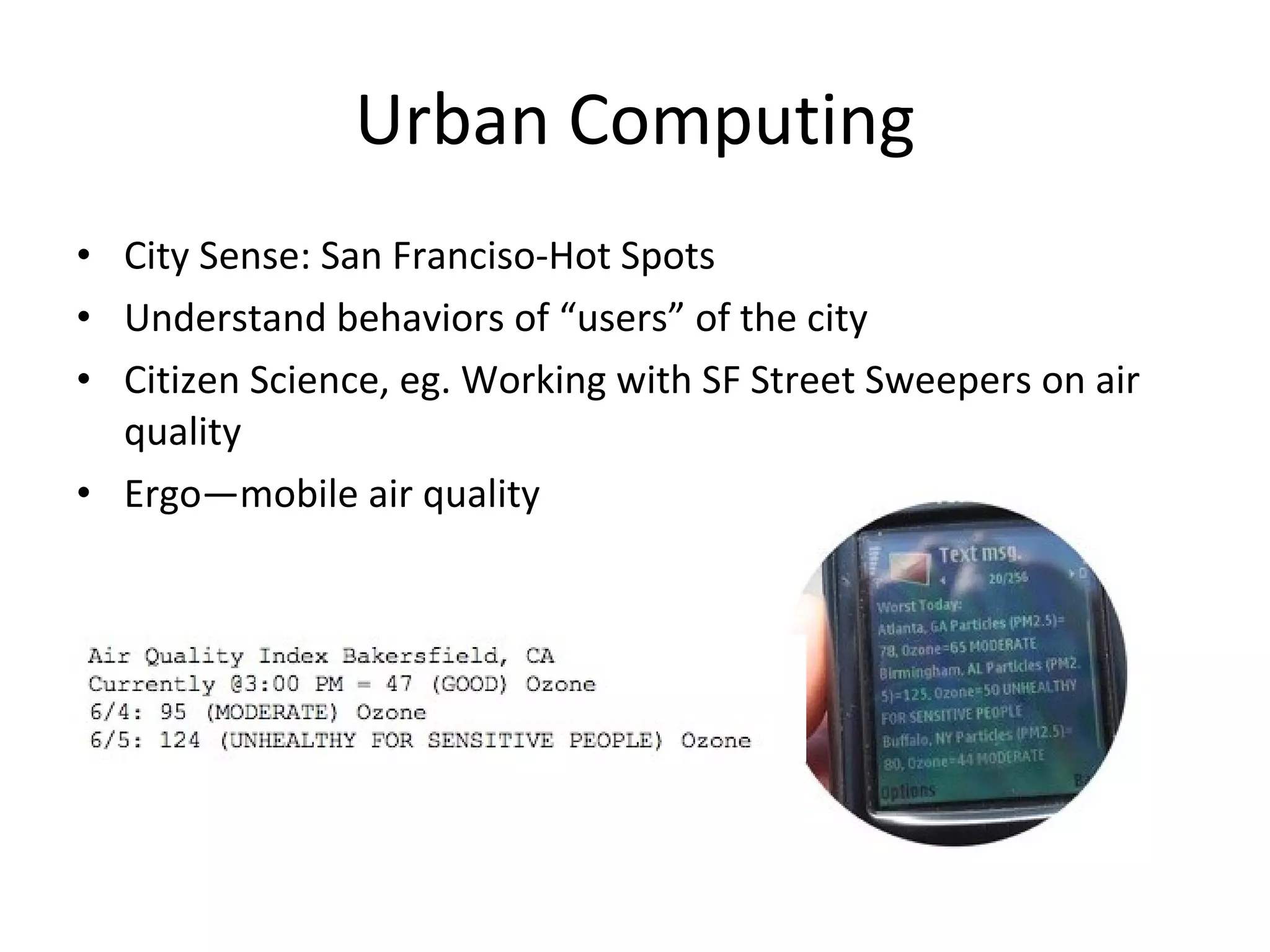
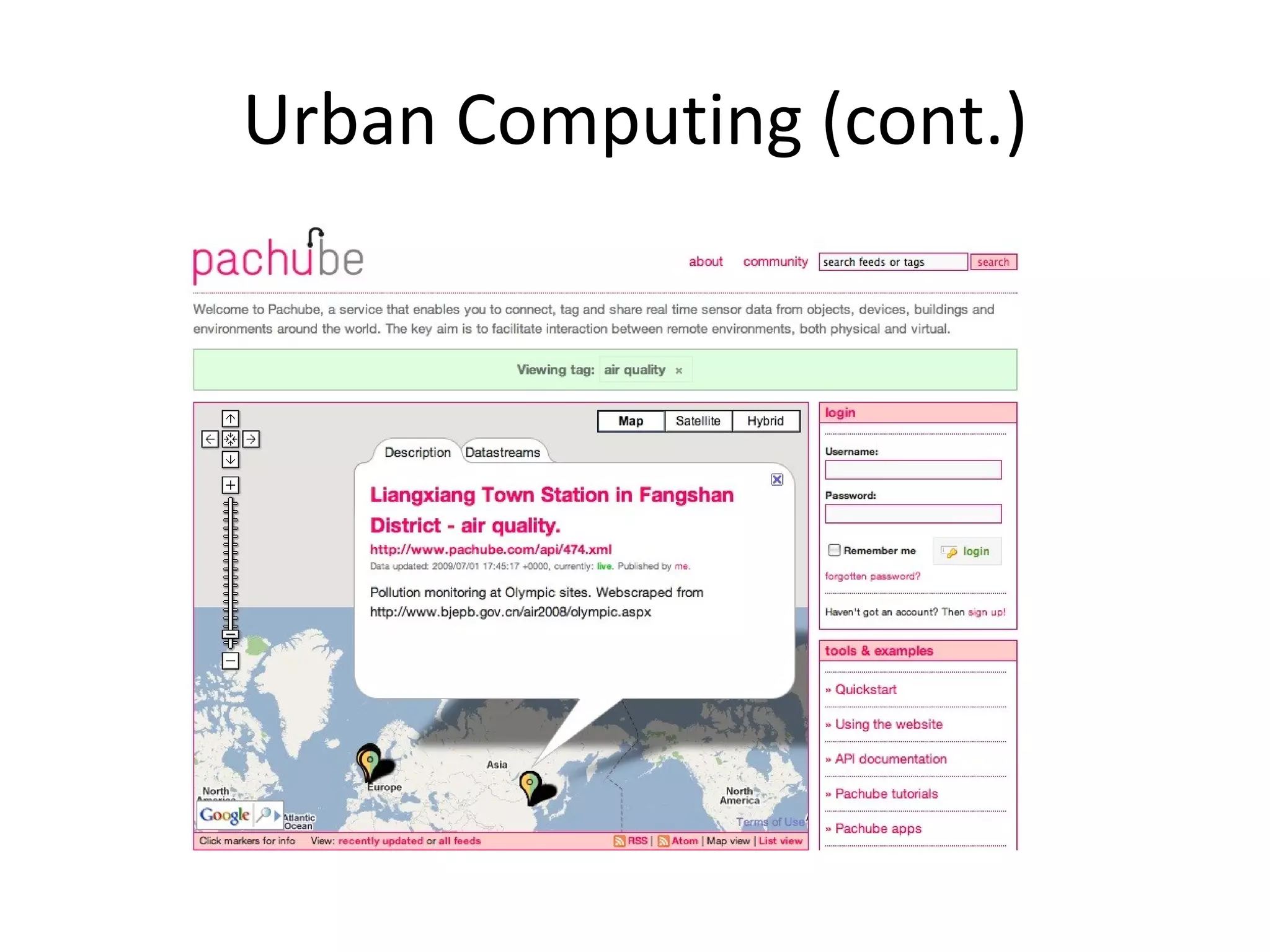
Urban Computing City Sense: San Franciso-Hot Spots Understand behaviors of “users” of the city Citizen Science, eg. Working with SF Street Sweepers on air quality Ergo—mobile air quality
Urban computing: sensors
Urban Computing (cont.)
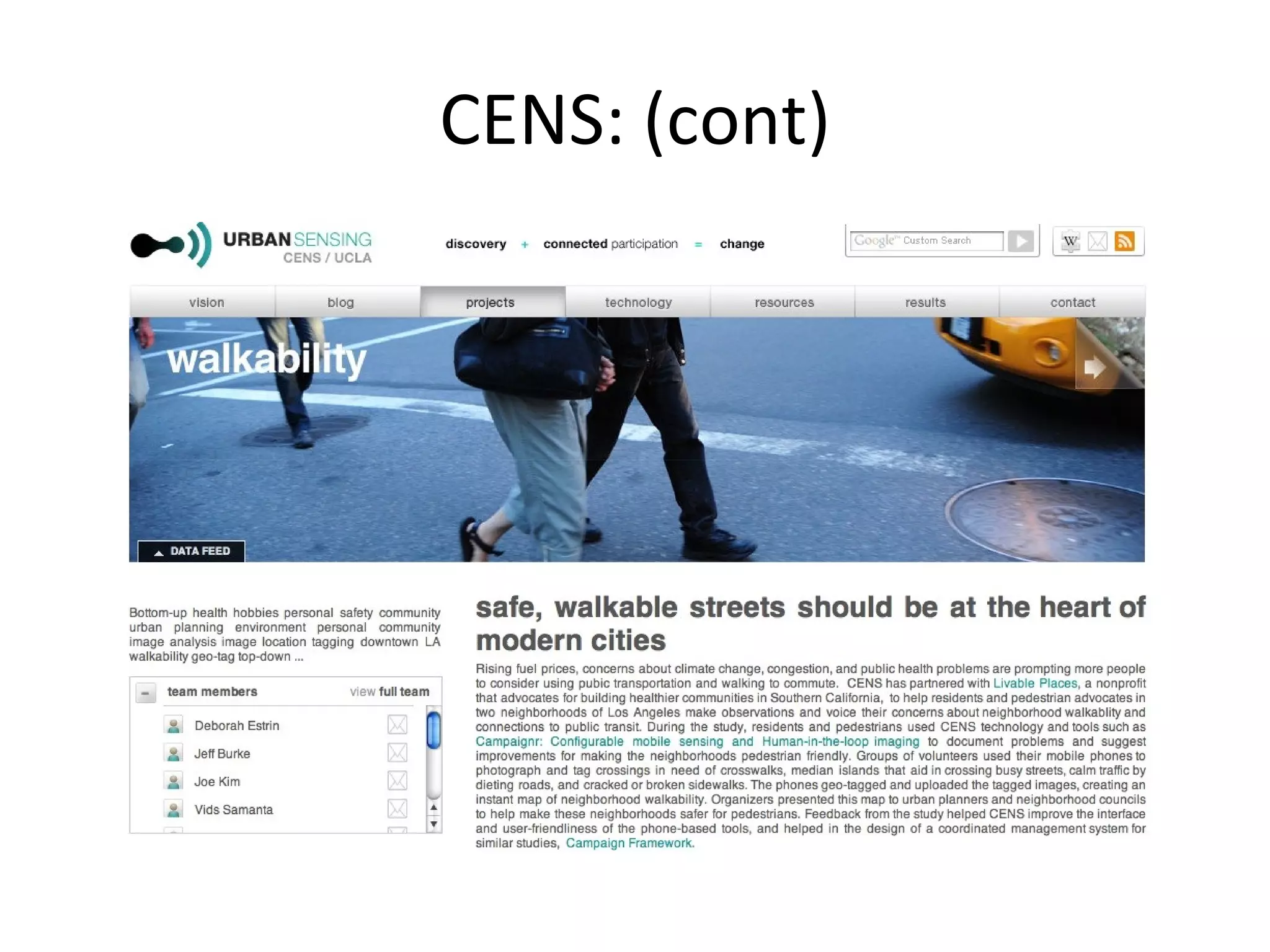
Urban Sensing: mobile computing
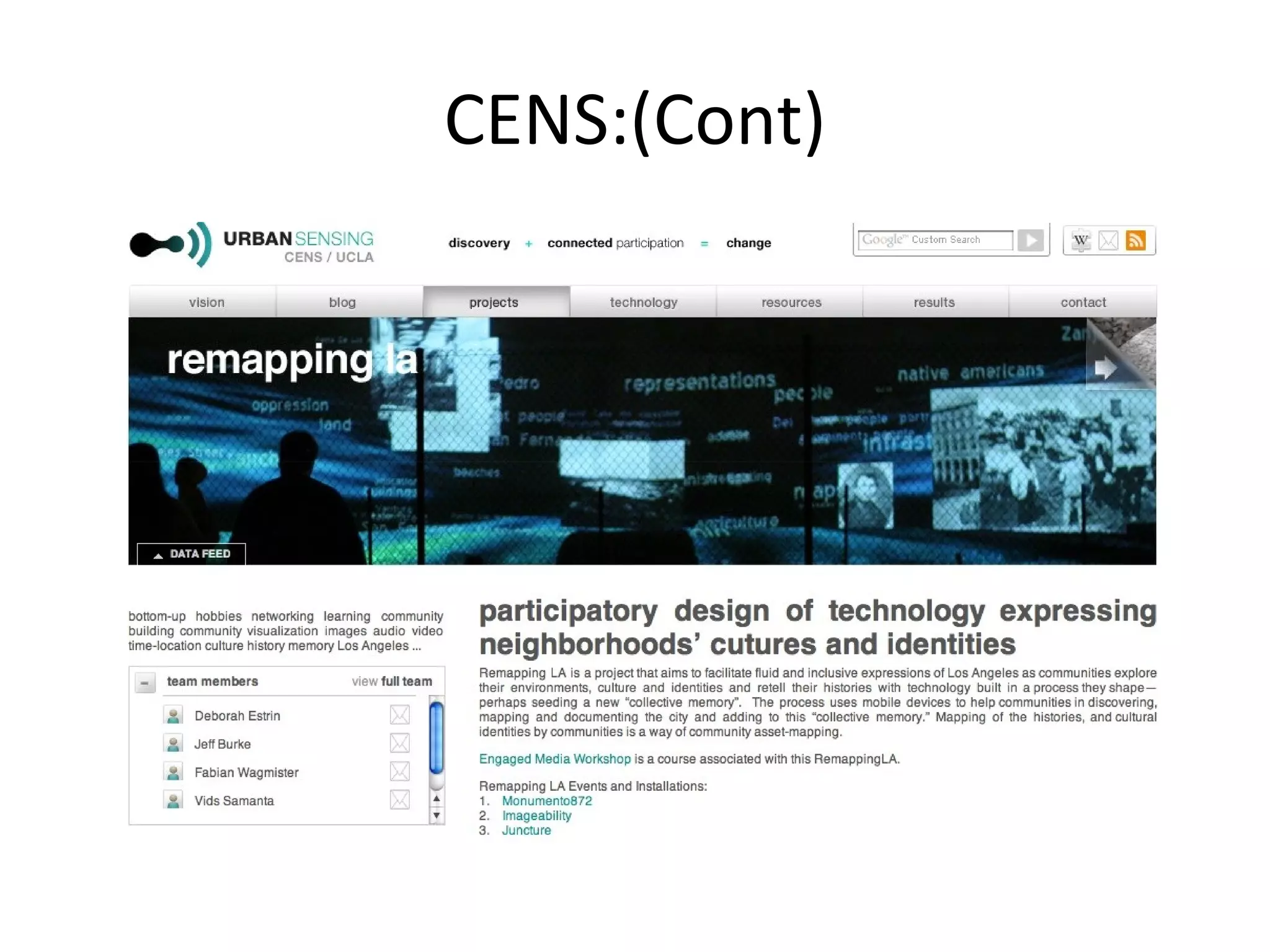
CENS:(Cont)
CENS: (cont)
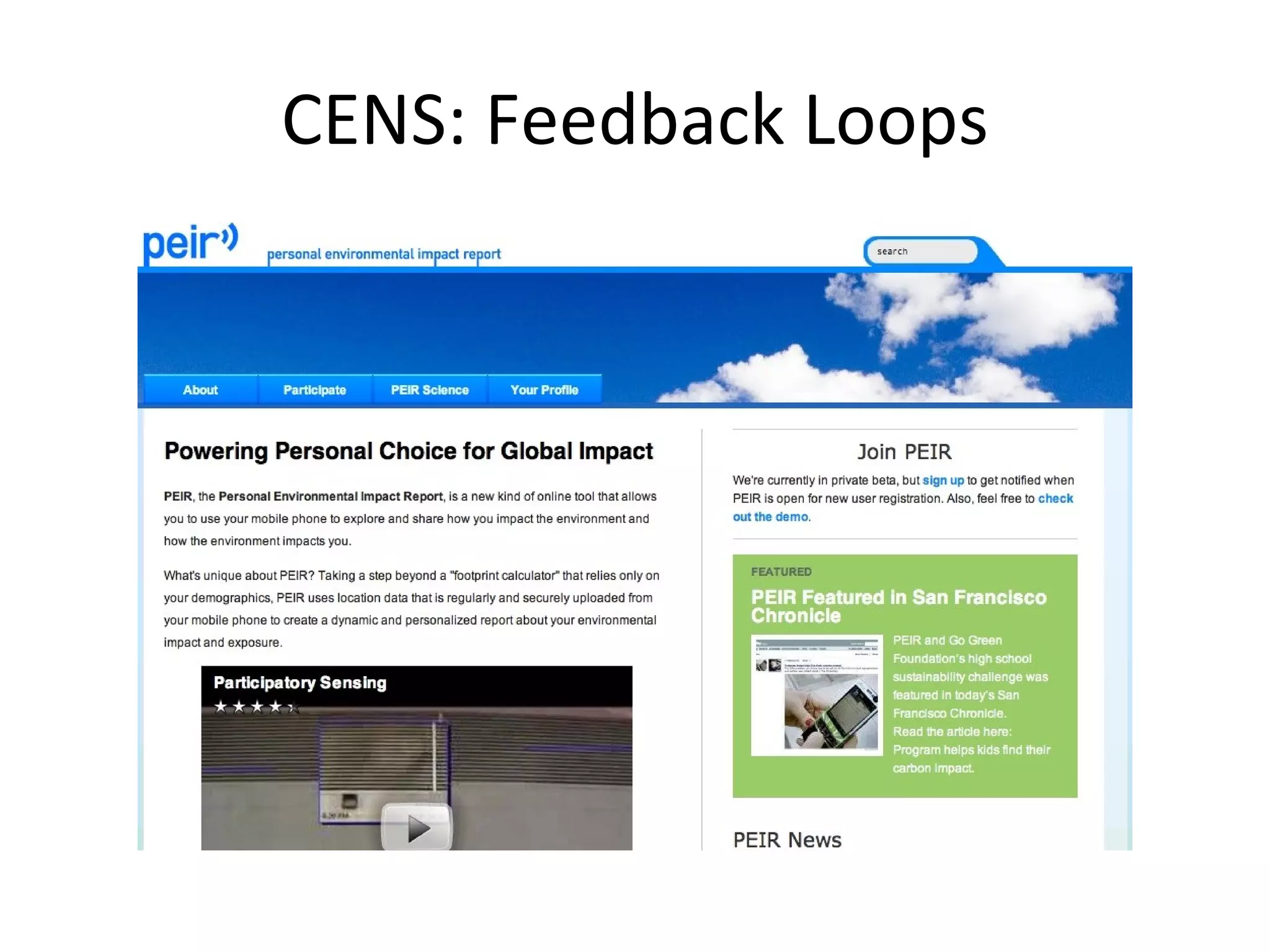
CENS: Feedback Loops
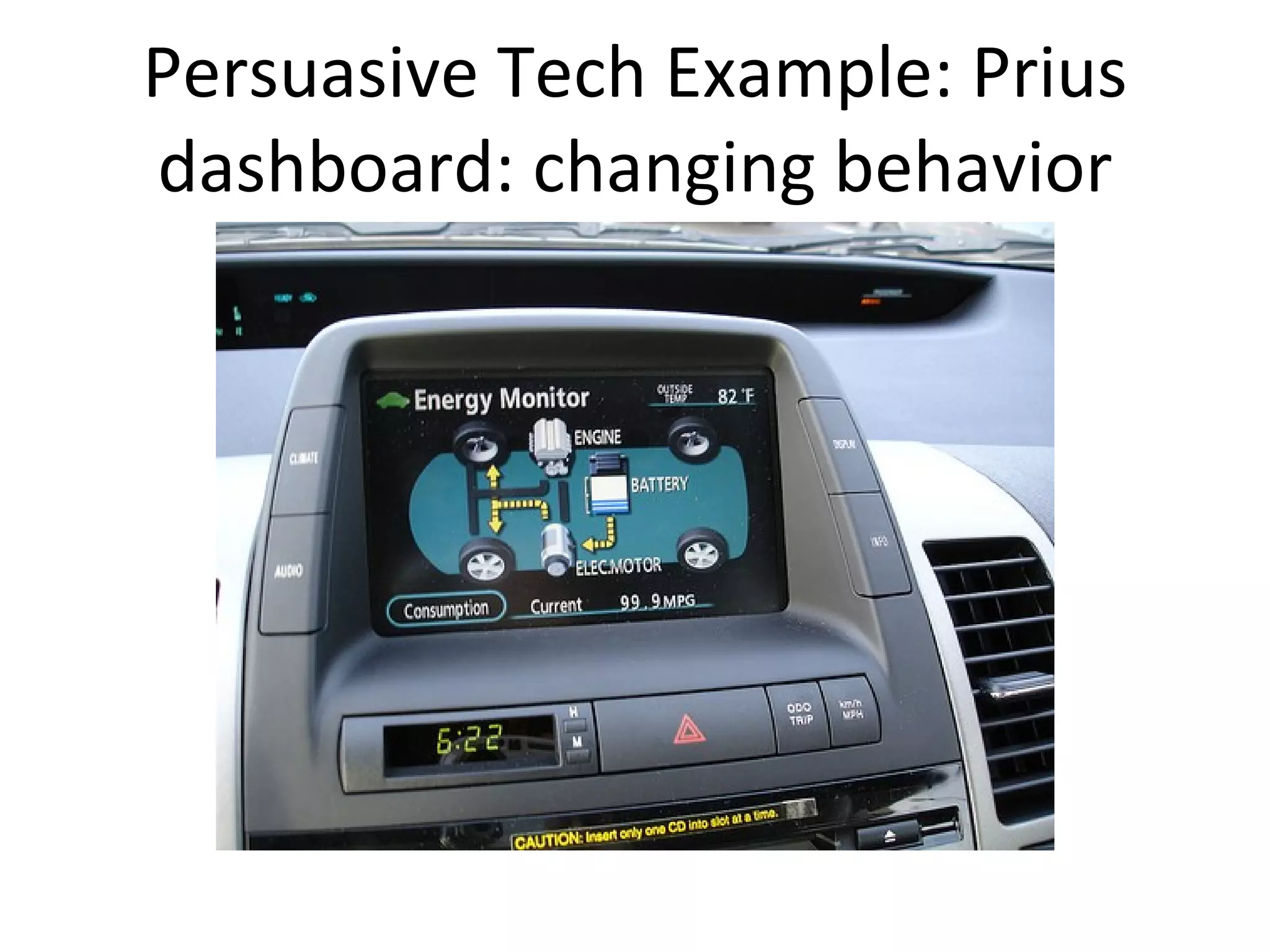
Persuasive Tech Example: Prius dashboard: changing behavior
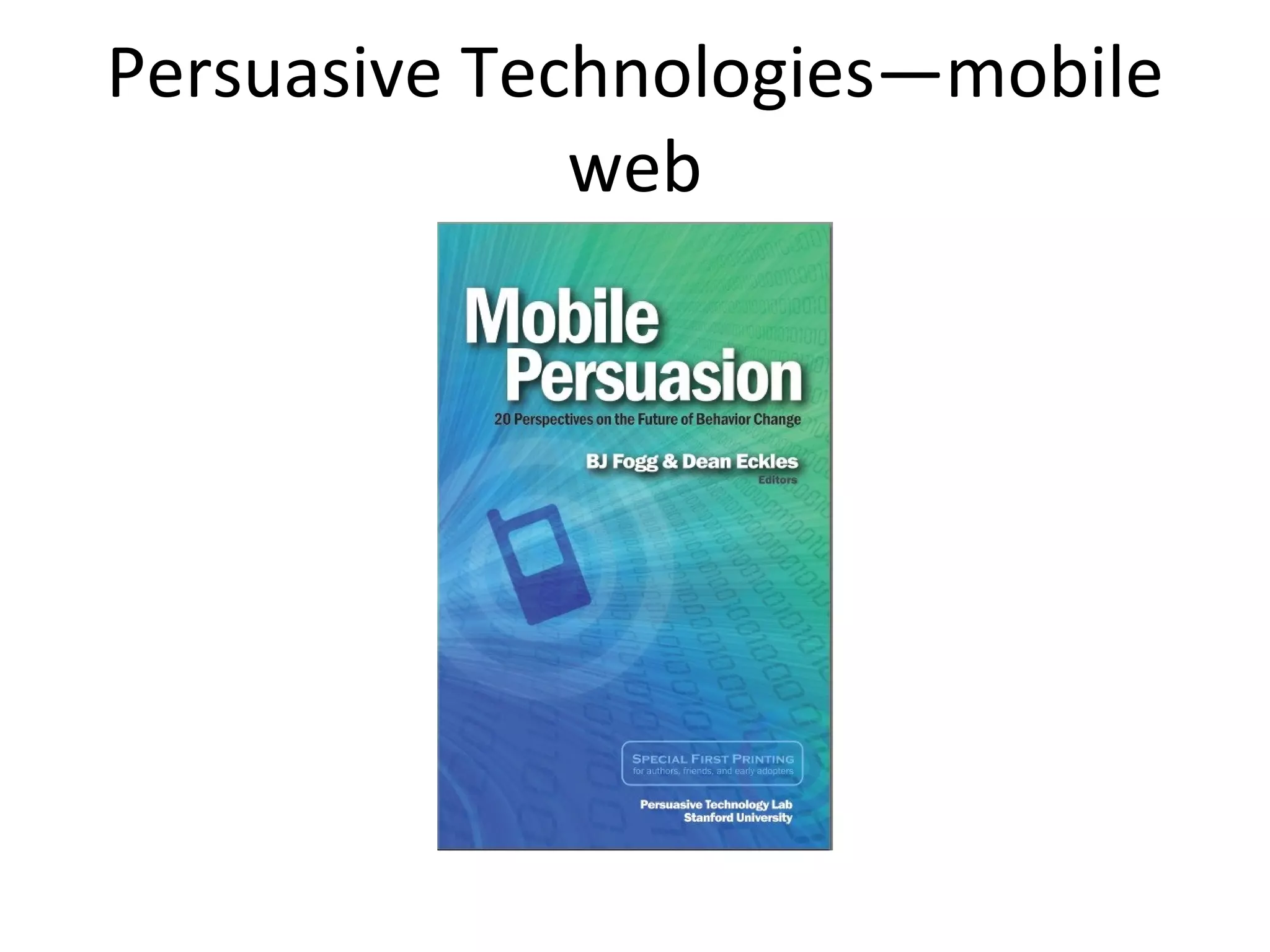
Persuasive Technologies—mobile web
Persuasive Technologies: BJ Fogg Captology:  computers as persuasive tech About intentions of designers of products persuading user: goal focused Less concerned with altering framing  of perception that user has already developed
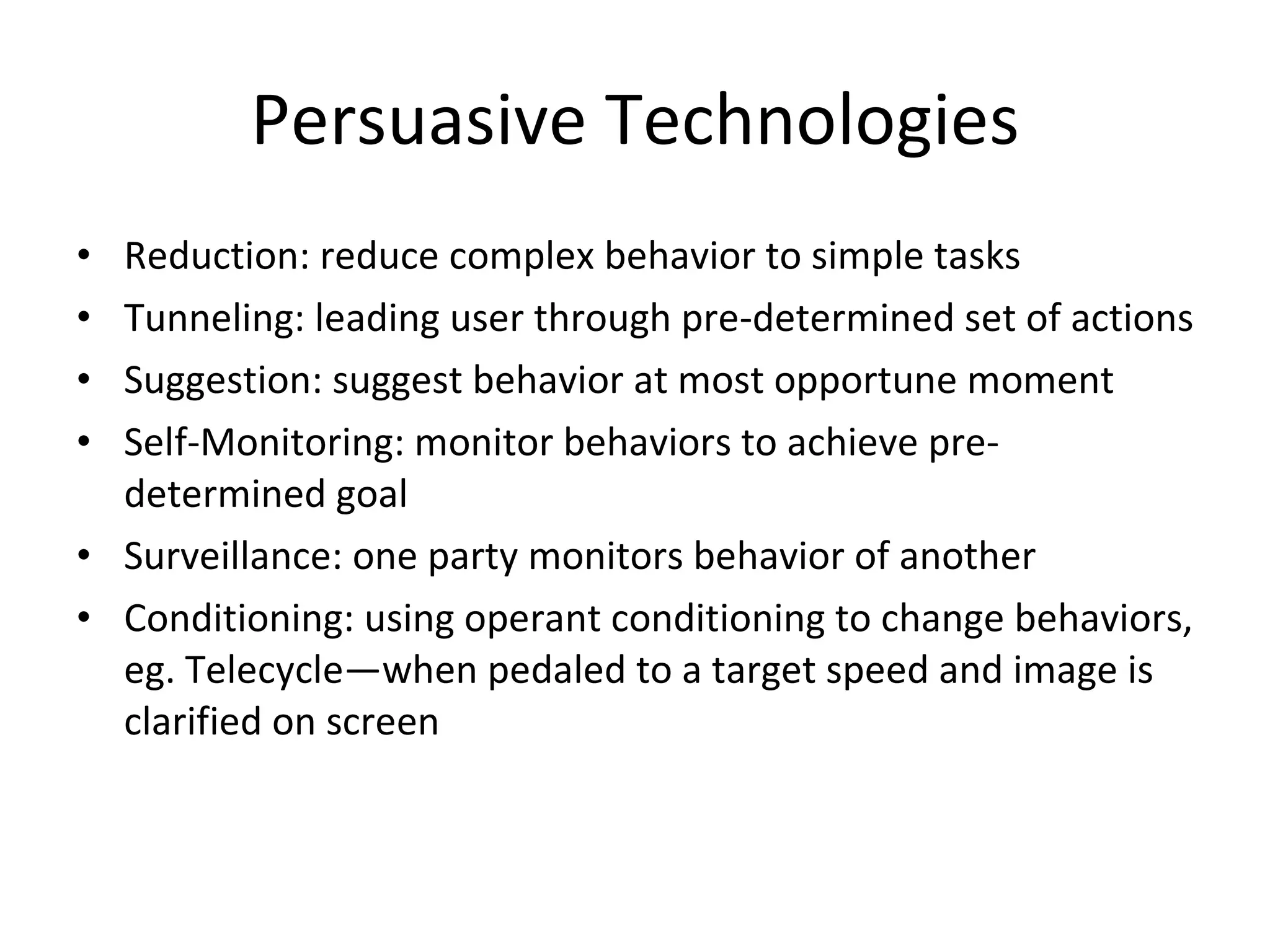
Persuasive Technologies Reduction: reduce complex behavior to simple tasks Tunneling: leading user through pre-determined set of actions Suggestion: suggest behavior at most opportune moment Self-Monitoring: monitor behaviors to achieve pre-determined goal Surveillance: one party monitors behavior of another Conditioning: using operant conditioning to change behaviors, eg. Telecycle—when pedaled to a target speed and image is clarified on screen
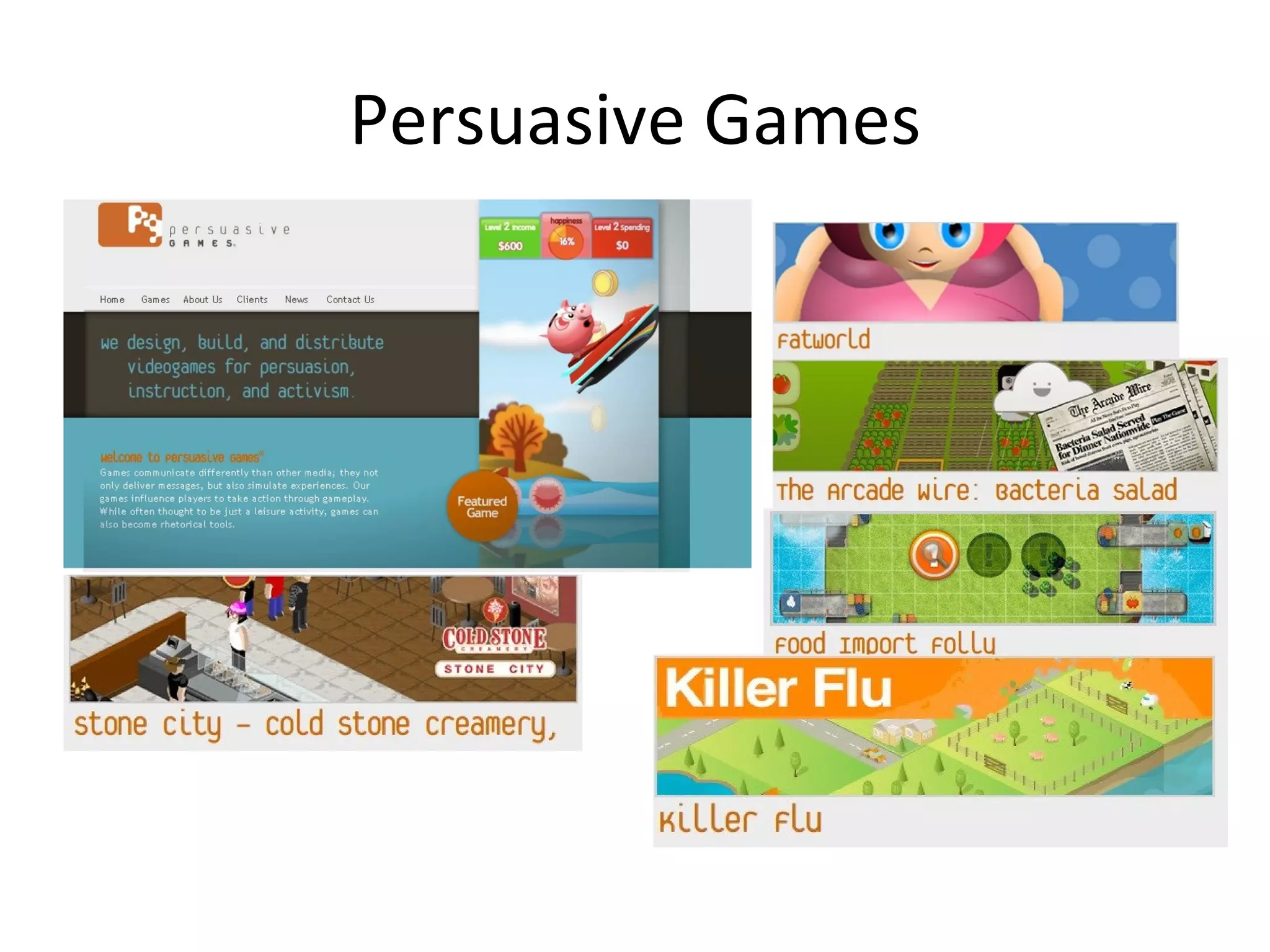
Persuasive Games
Persuasive Games: Ian Bogost More focused on using rhetoric to engage user in a discourse about behavior itself, more reflexive Does not accept as a given that user understands or accepts the larger reason for a behavior Persuasive Tech is largely framed around psychology, Persuasive Games around rhetoric
Persuasive Games Stimulate critical thinking: not the same as “serious games” that do not question established norms “ Killer Flu”: helps to understand how pandemic flus mutate and the geographical contingencies of the epidemiology “ Fat World”: politics of Nutrition “ Food Import Folly”: interrogates role of FDA, in collaboration with NY Times “ Bacteria Salad”: on agri-business, food safety “ Stone City: Cold Stone Creamery”: on portion size and profits
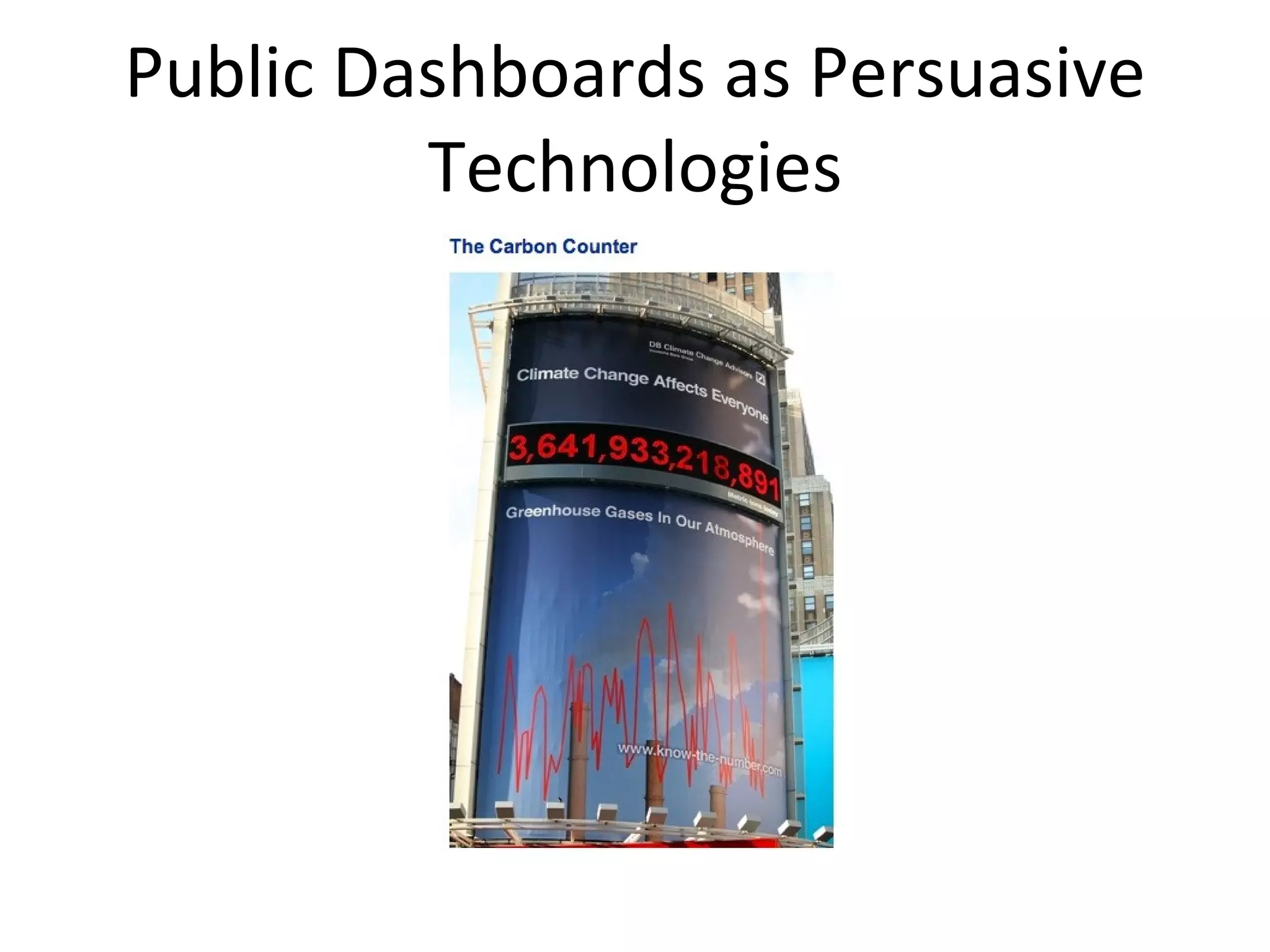
Public Dashboards as Persuasive Technologies
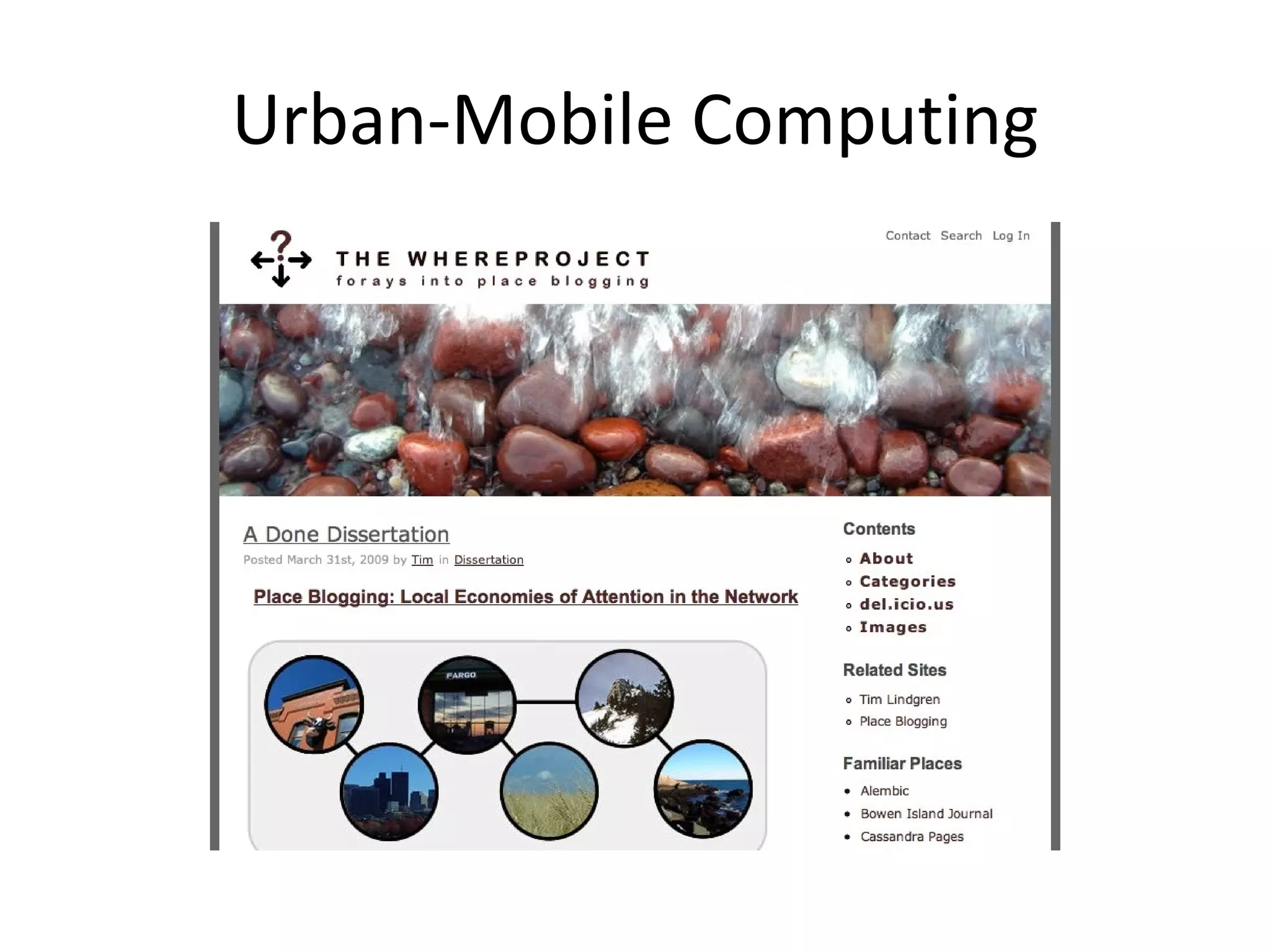
Urban-Mobile Computing
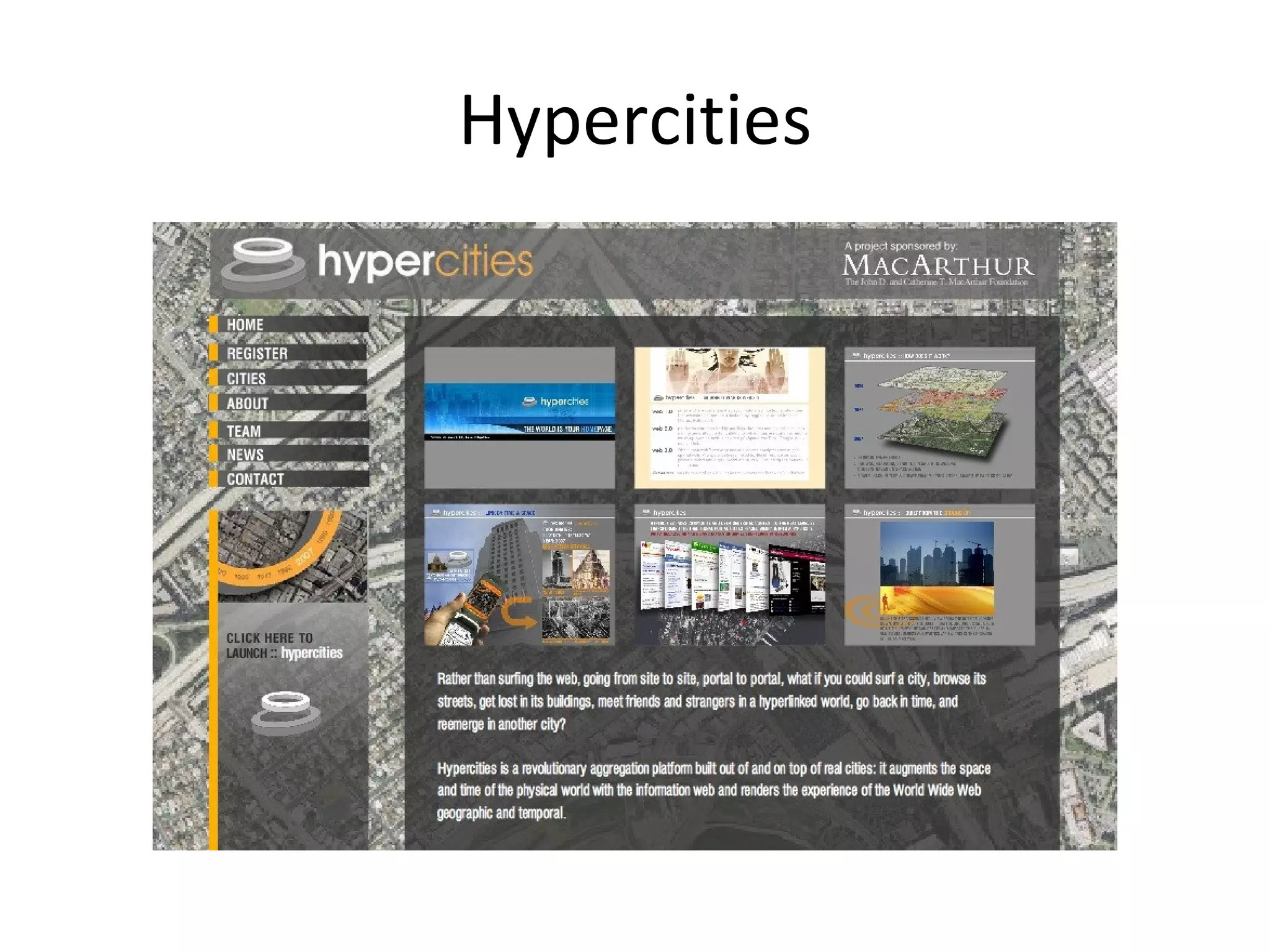
Hypercities
Hypercities Layers of historical information about cities Puts the archives of cultural histories and diverse communities on the web Encourages exploration of the history and layers of the city Goal is to change the way we interact with information on the city and with each other
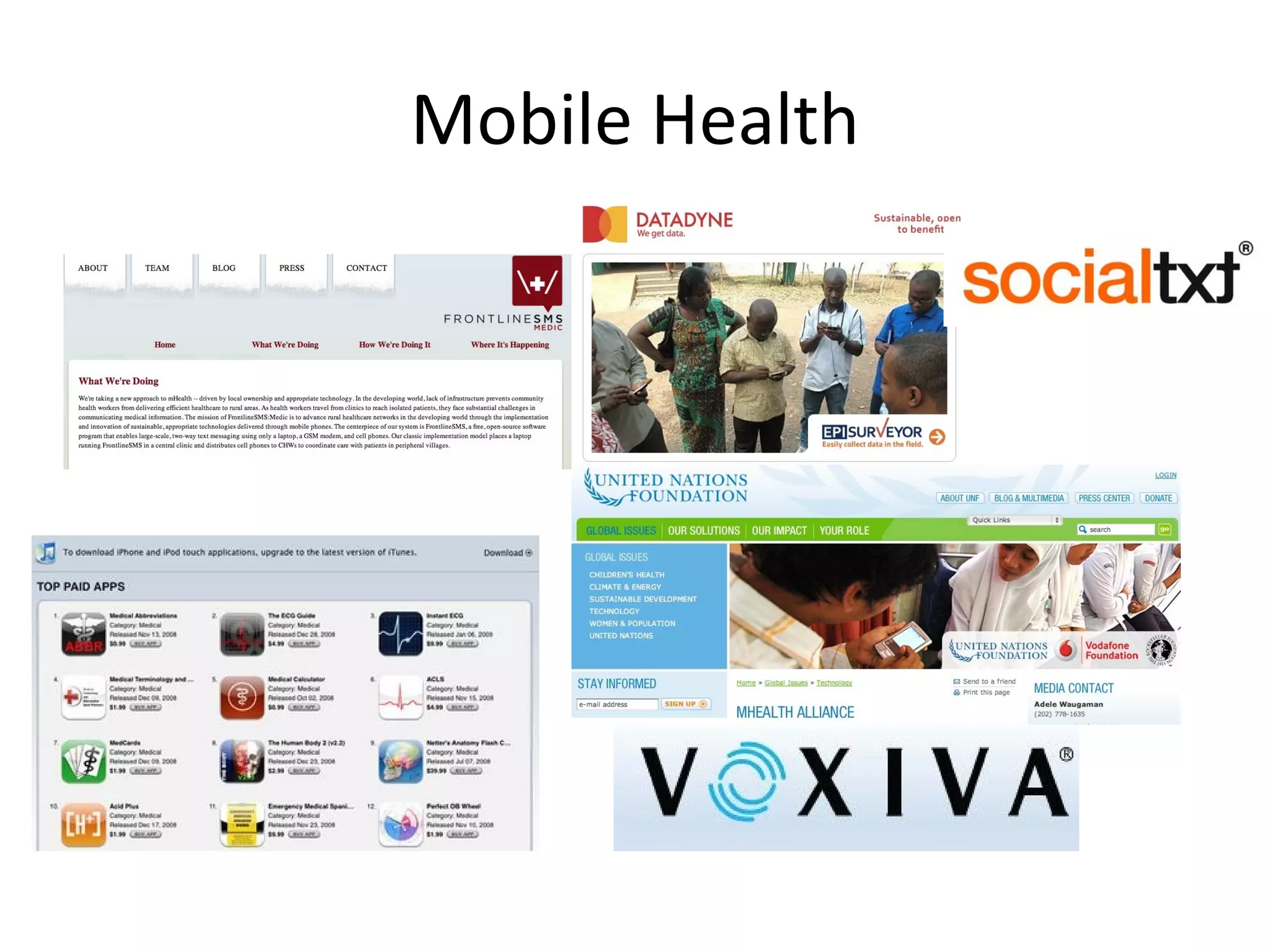
Mobile Health
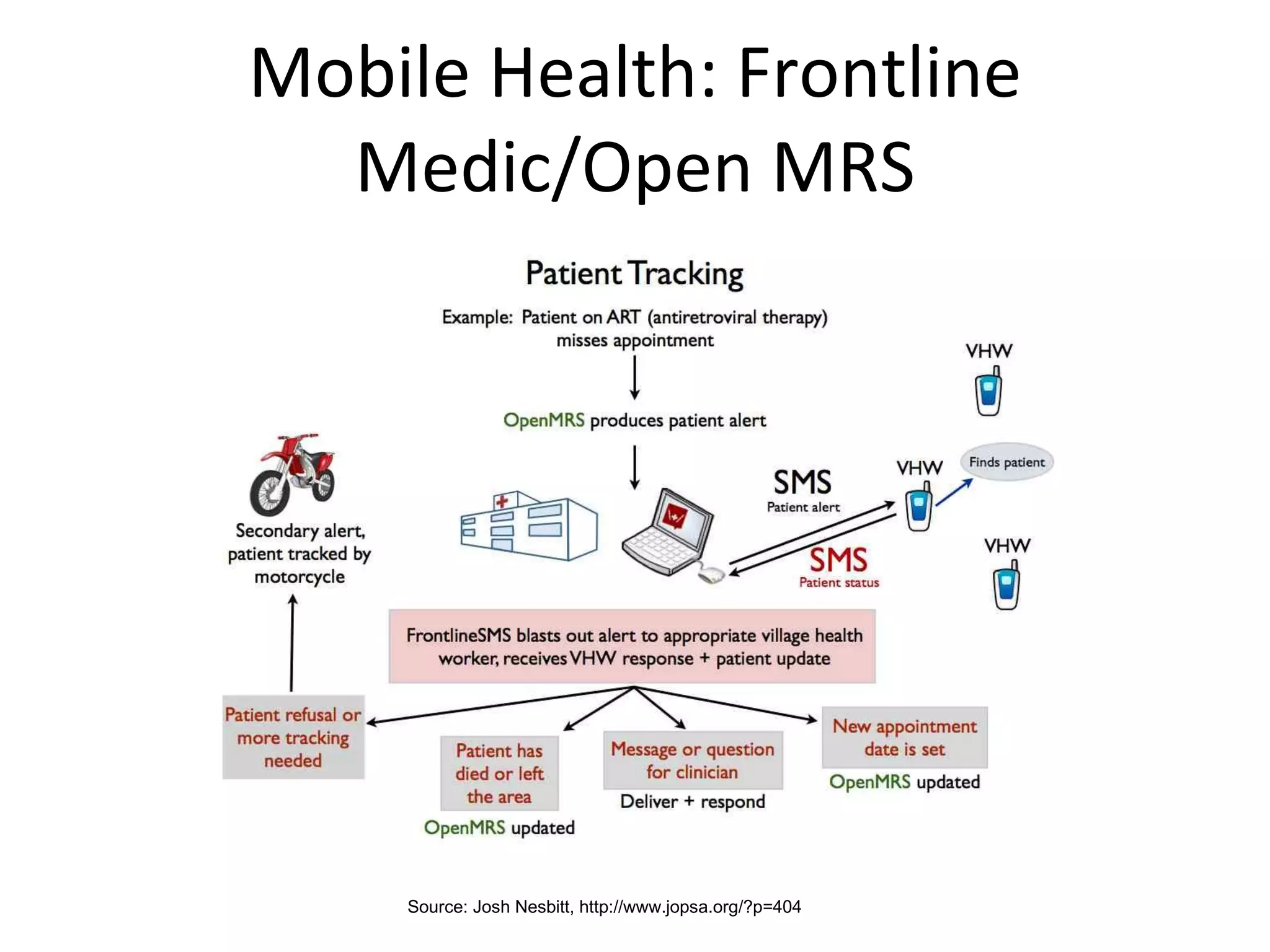
Mobile Health: Frontline Medic/Open MRS Source: Josh Nesbitt, http://www.jopsa.org/?p=404
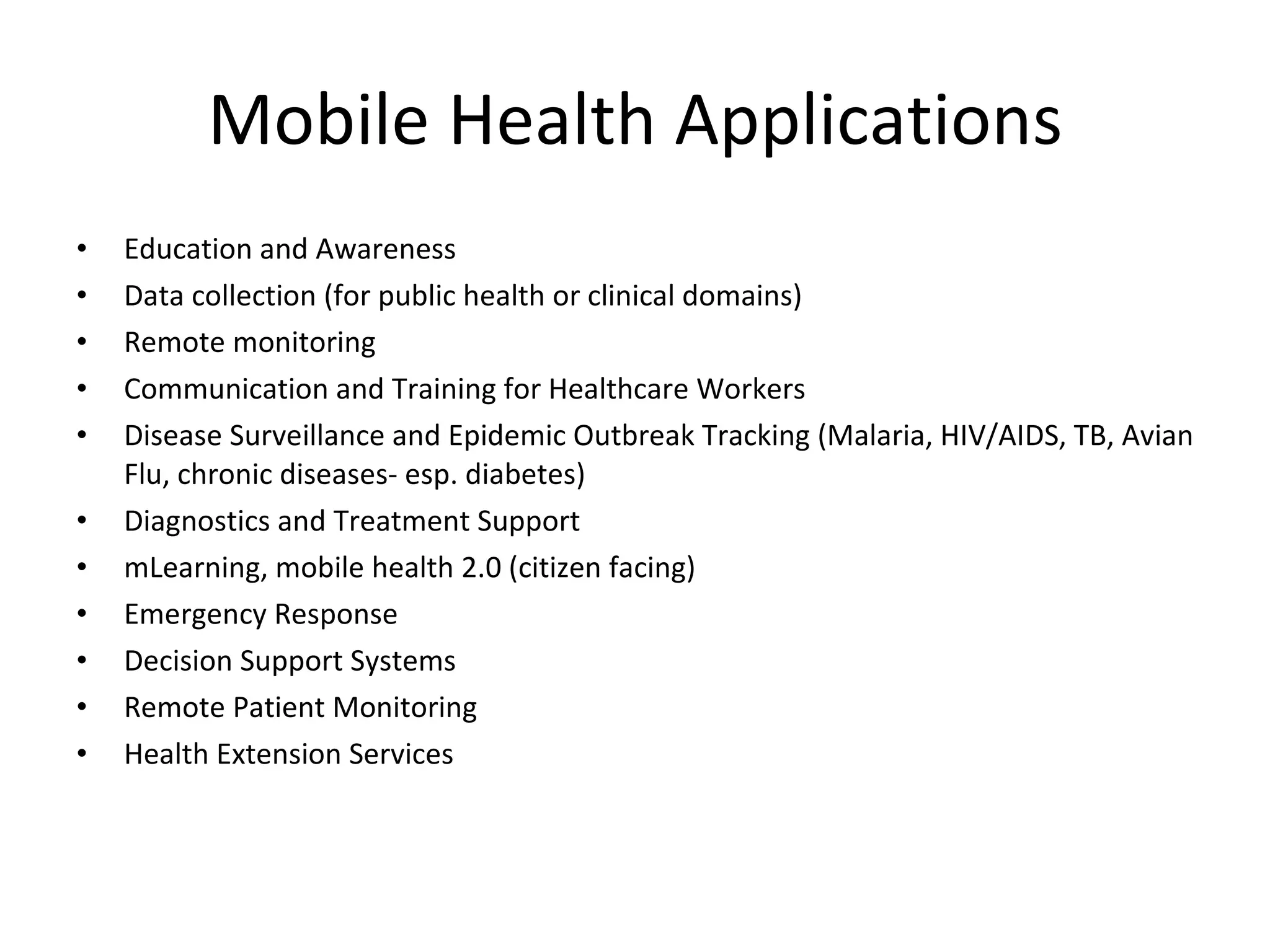
Mobile Health Applications Education and Awareness Data collection (for public health or clinical domains) Remote monitoring Communication and Training for Healthcare Workers Disease Surveillance and Epidemic Outbreak Tracking (Malaria, HIV/AIDS, TB, Avian Flu, chronic diseases- esp. diabetes) Diagnostics and Treatment Support mLearning, mobile health 2.0 (citizen facing) Emergency Response Decision Support Systems Remote Patient Monitoring Health Extension Services
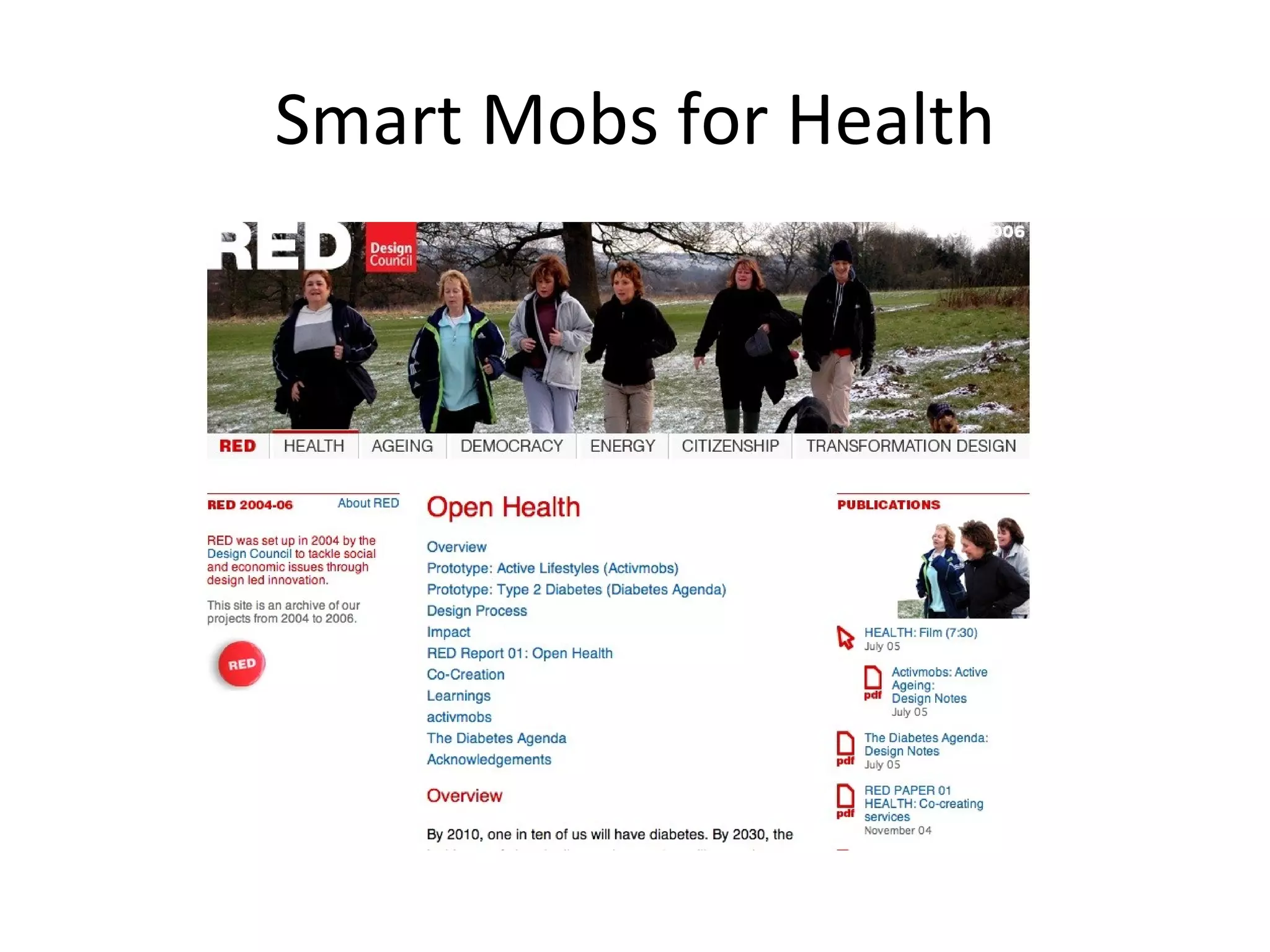
Smart Mobs for Health
RED: Open Health Design: don’t improve existing services but design for desired outcomes Design begins with point of view of individual, not the system Co-creation Smart Mobs in Health=ActivMobs Redesign the patient-professional relationship Use this ethos for designing next gen mHealth ?
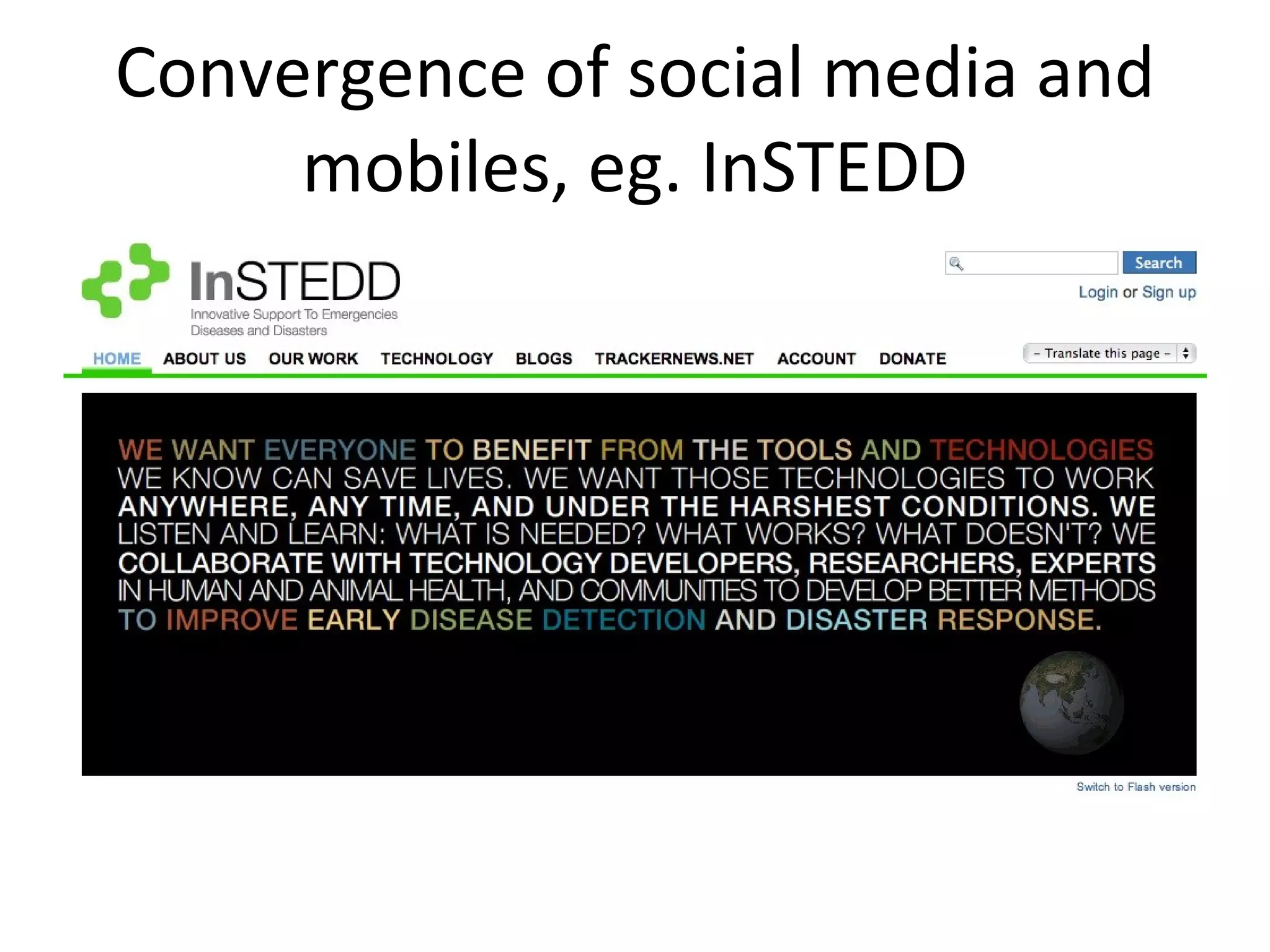
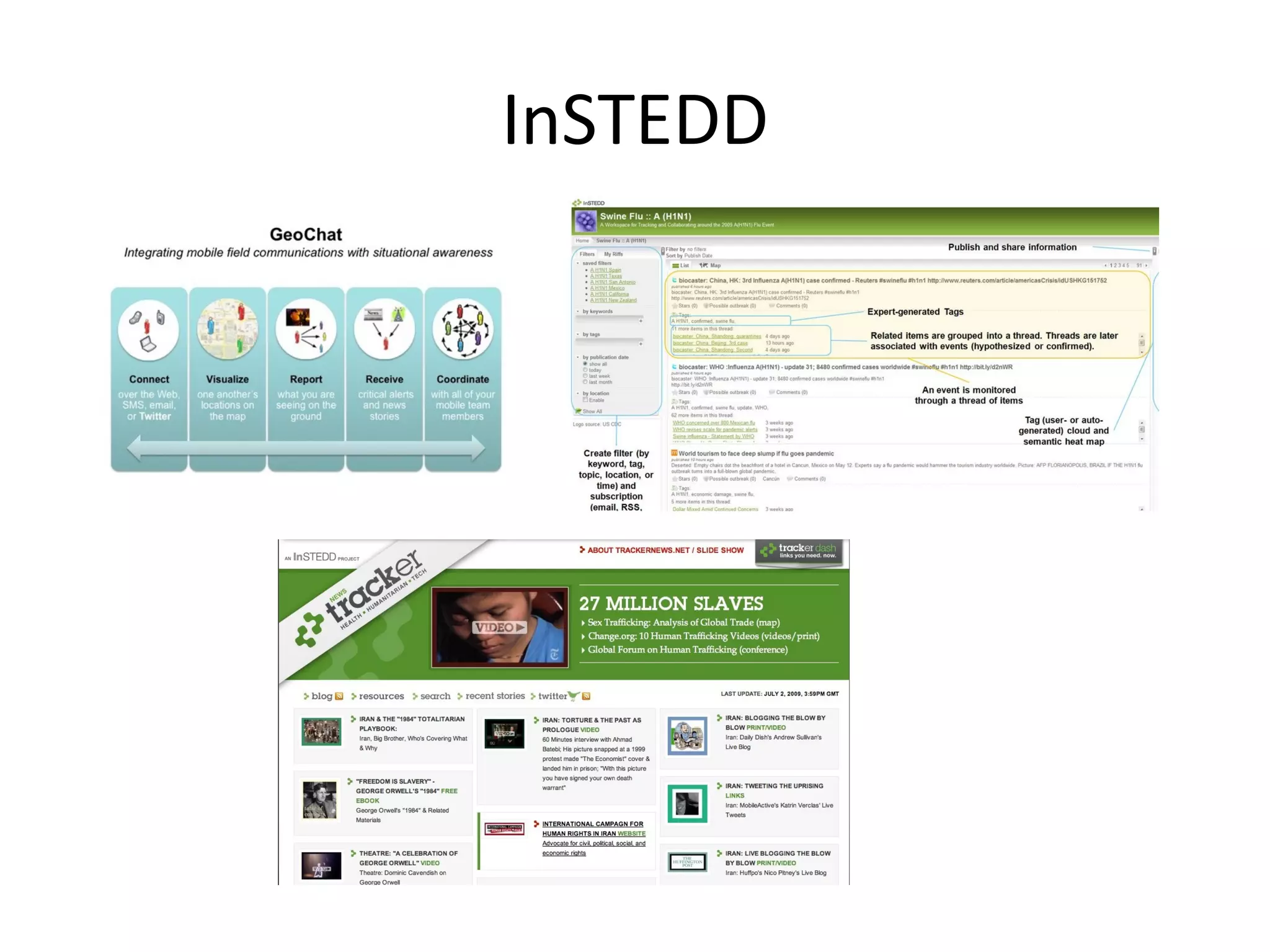
Convergence of social media and mobiles, eg. InSTEDD
InSTEDD
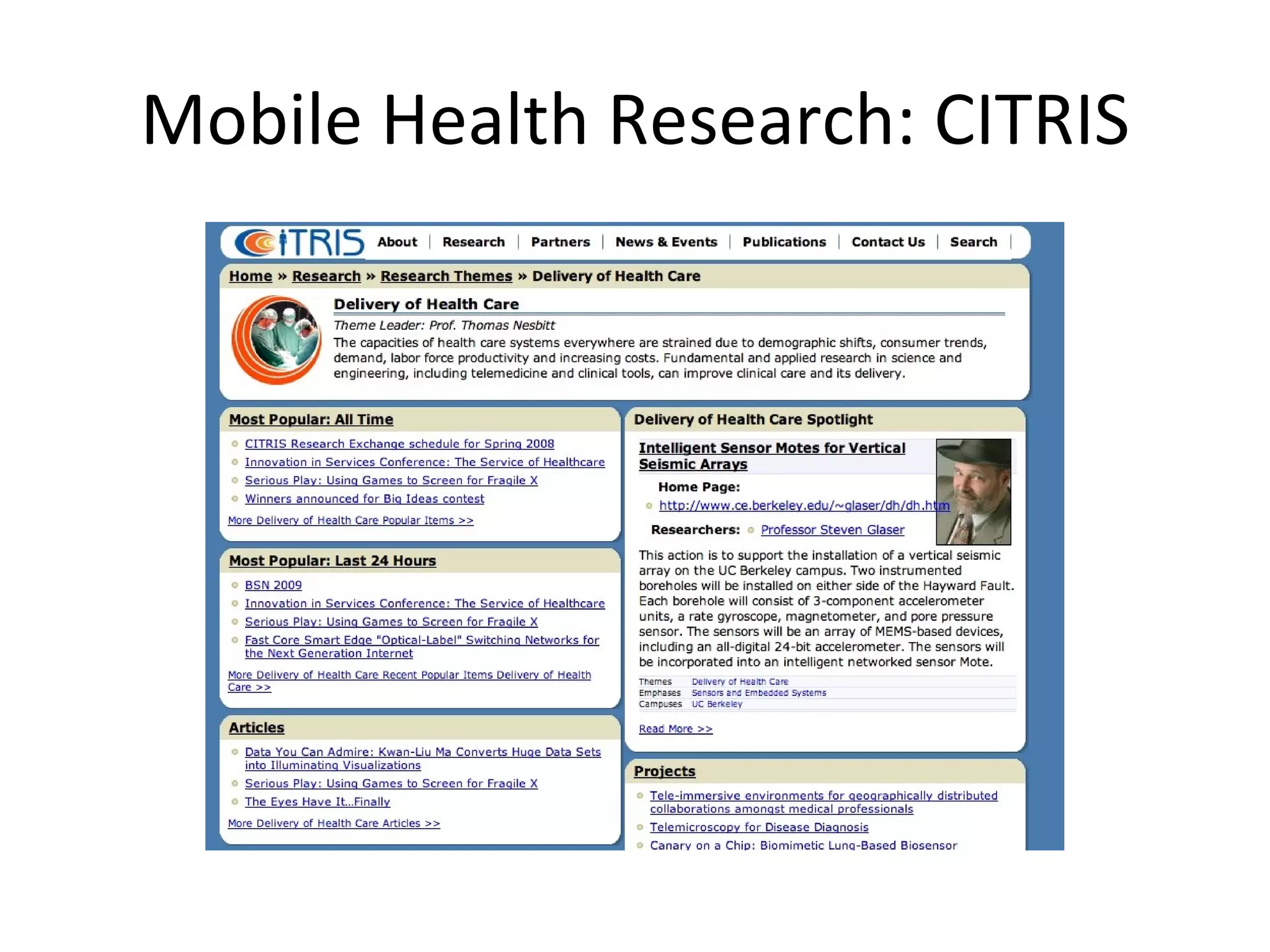
Mobile Health Research: CITRIS
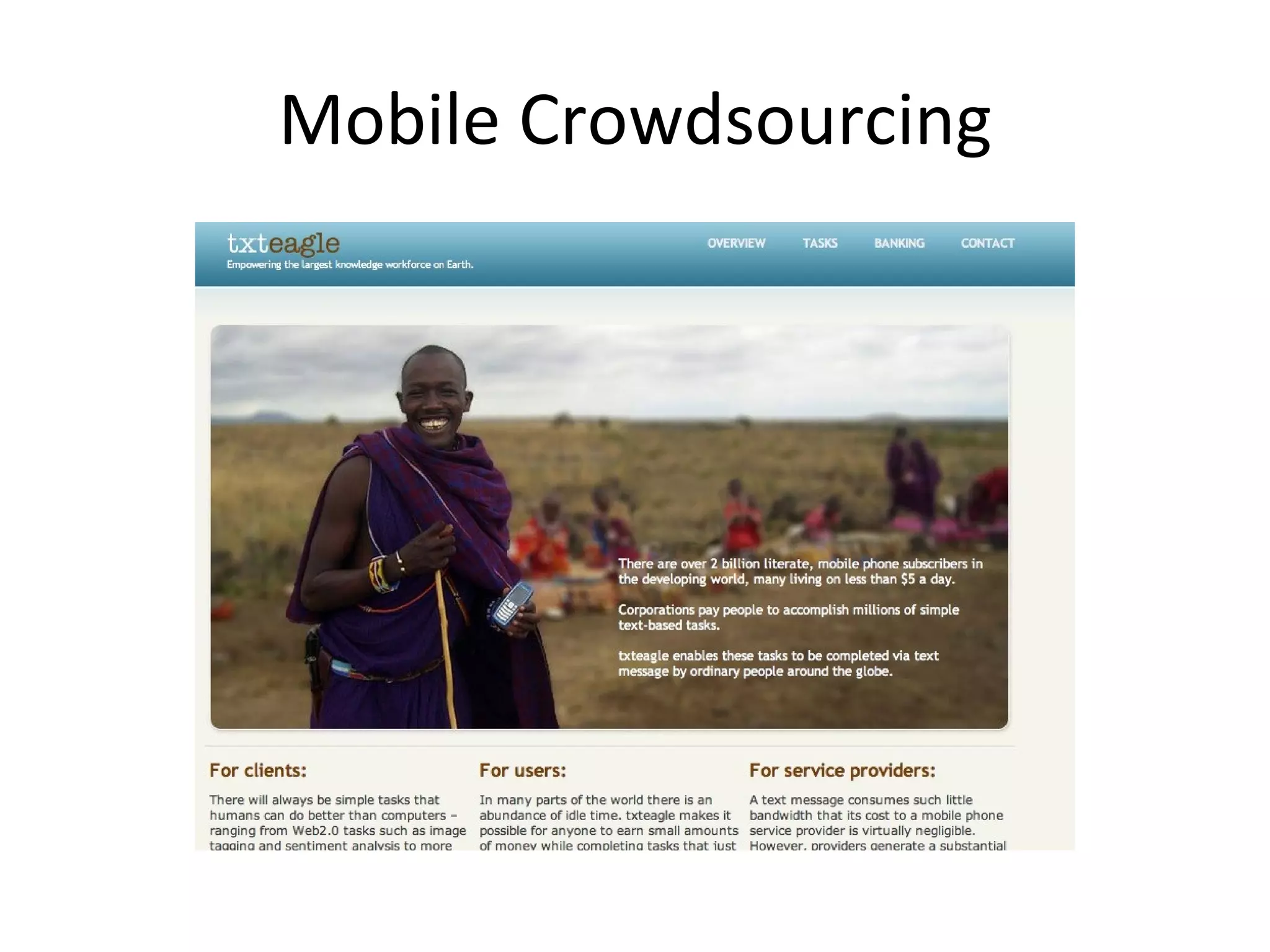
Mobile Crowdsourcing
Mobile crowdsourcing: micro-volunteering
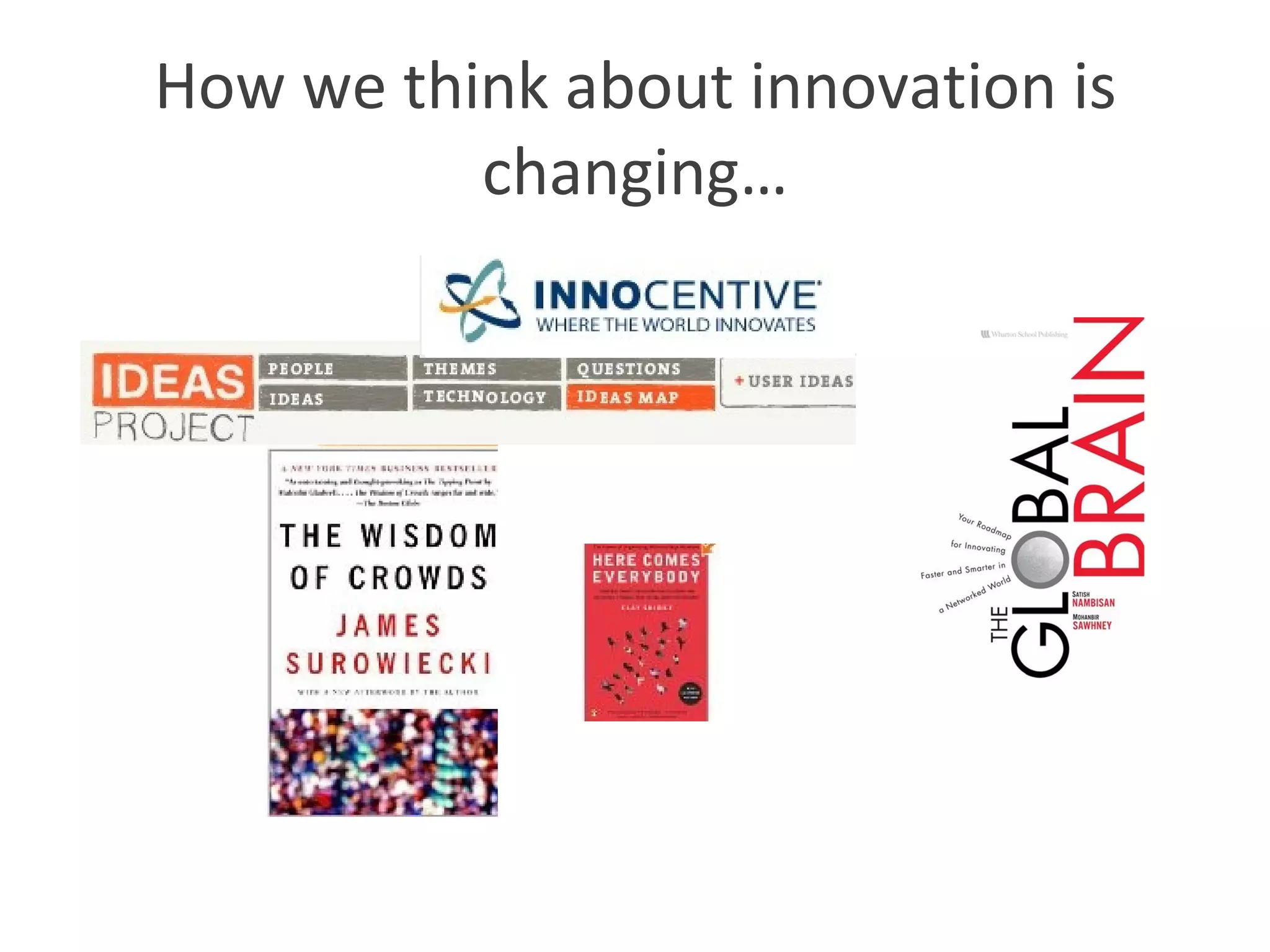
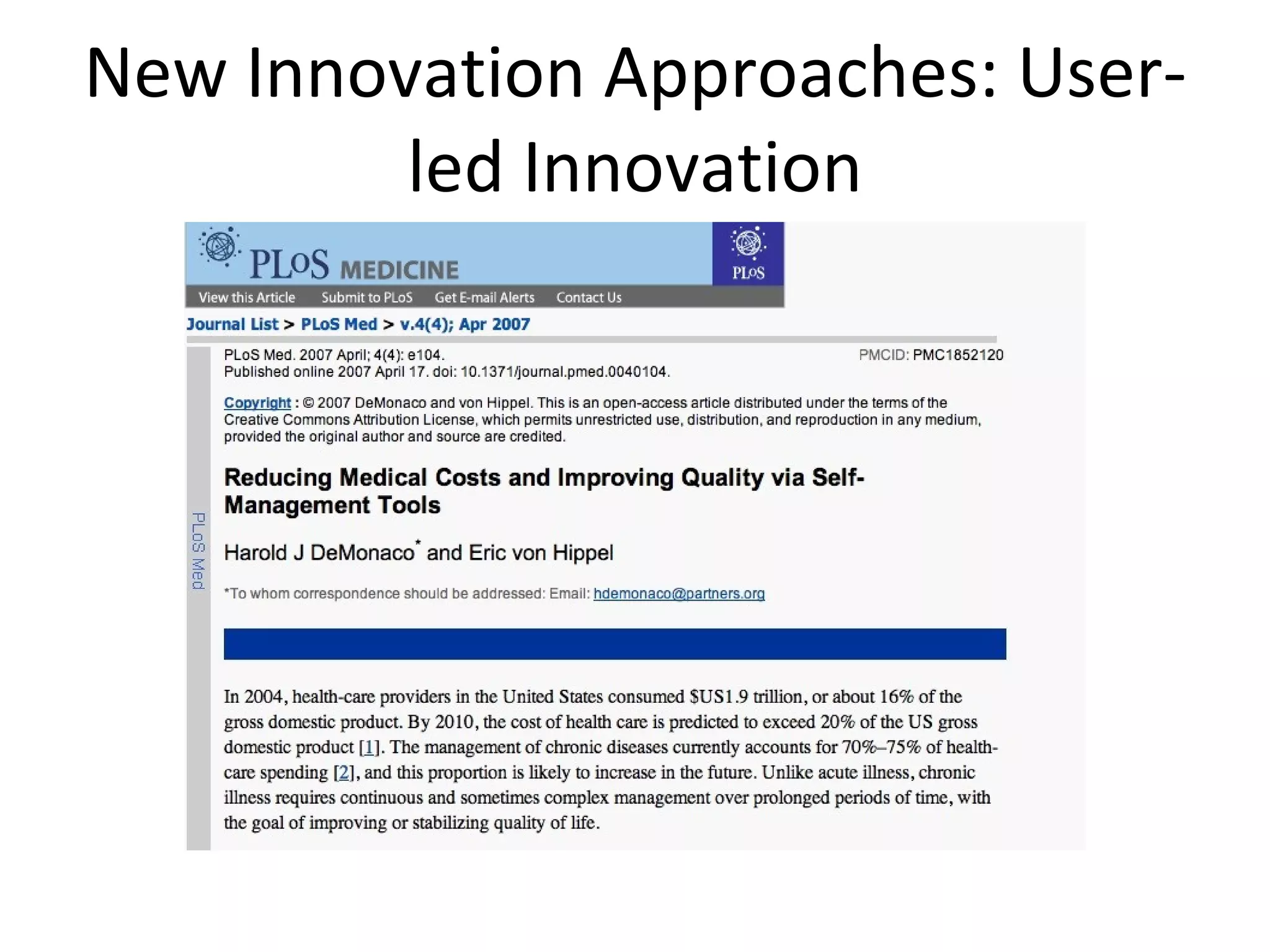
Section 7: Innovation Systems and Public Health Open Innovation User-led Innovation Peer-to-Peer New Commons Prevention Economies Design Thinking Forecasting
How we think about innovation is changing…
NESTA (UK) Innovation: Cooperation and the Commons
New Innovation Approaches: User-led Innovation
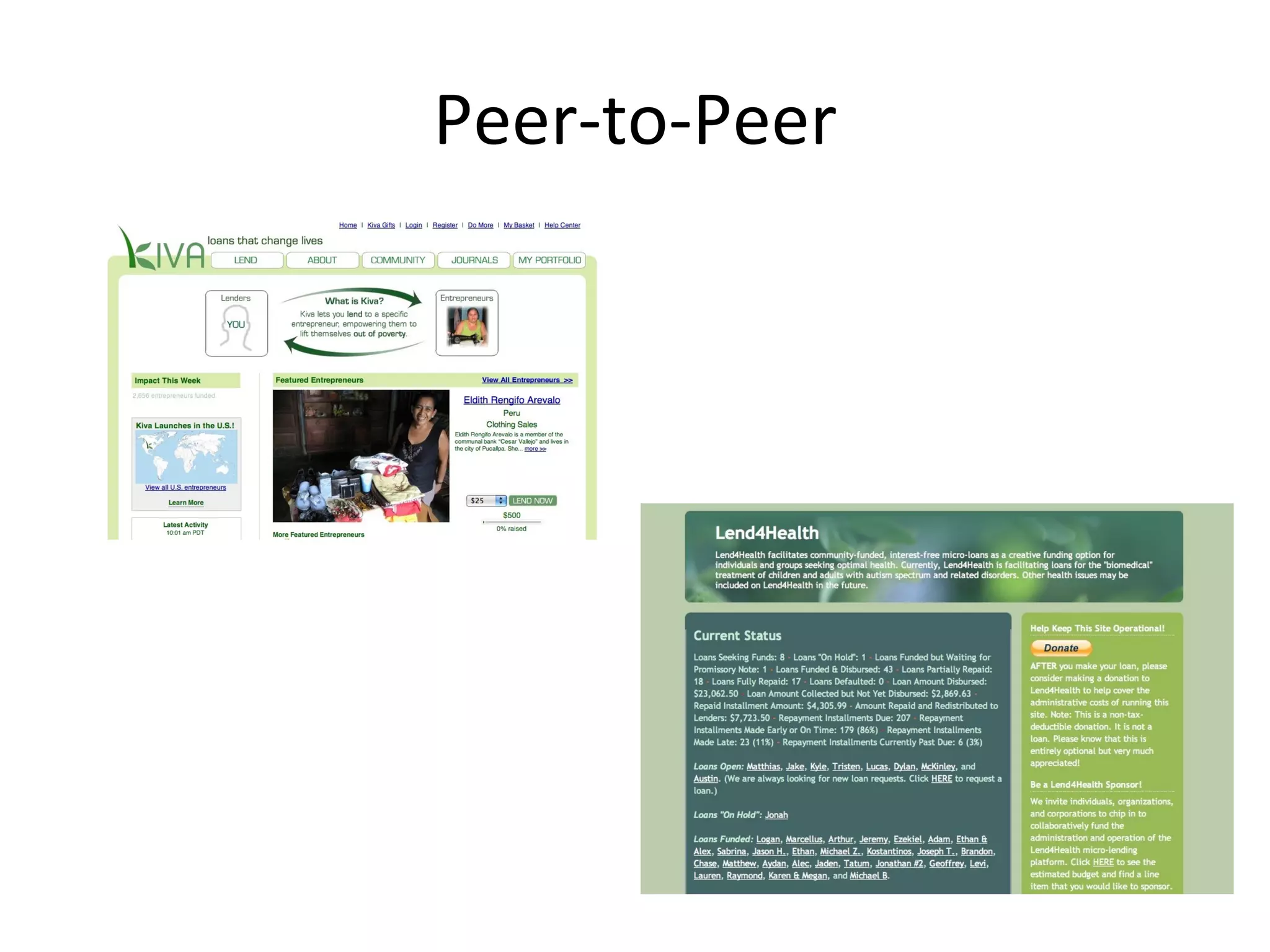
Peer-to-Peer
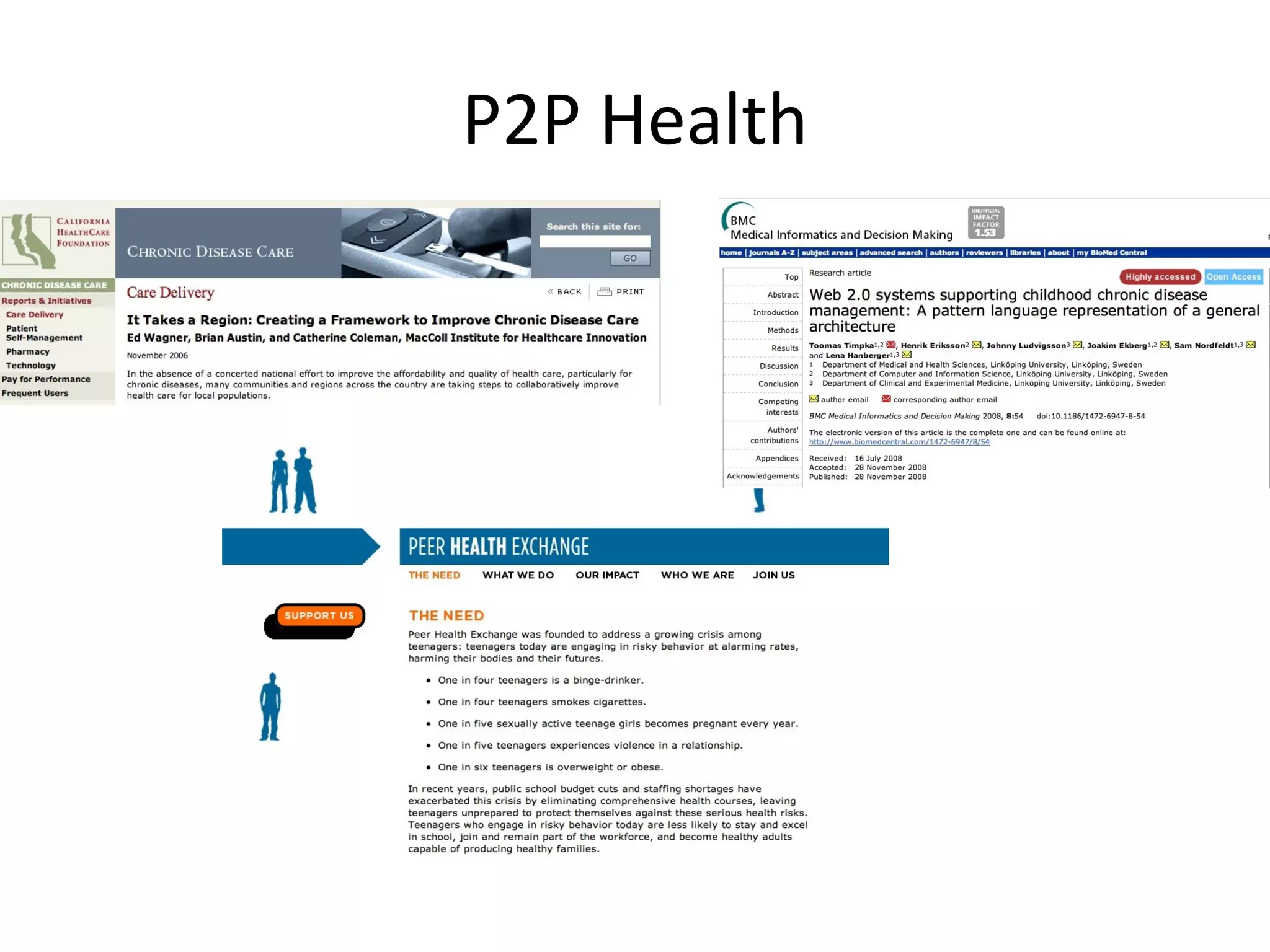
P2P Health
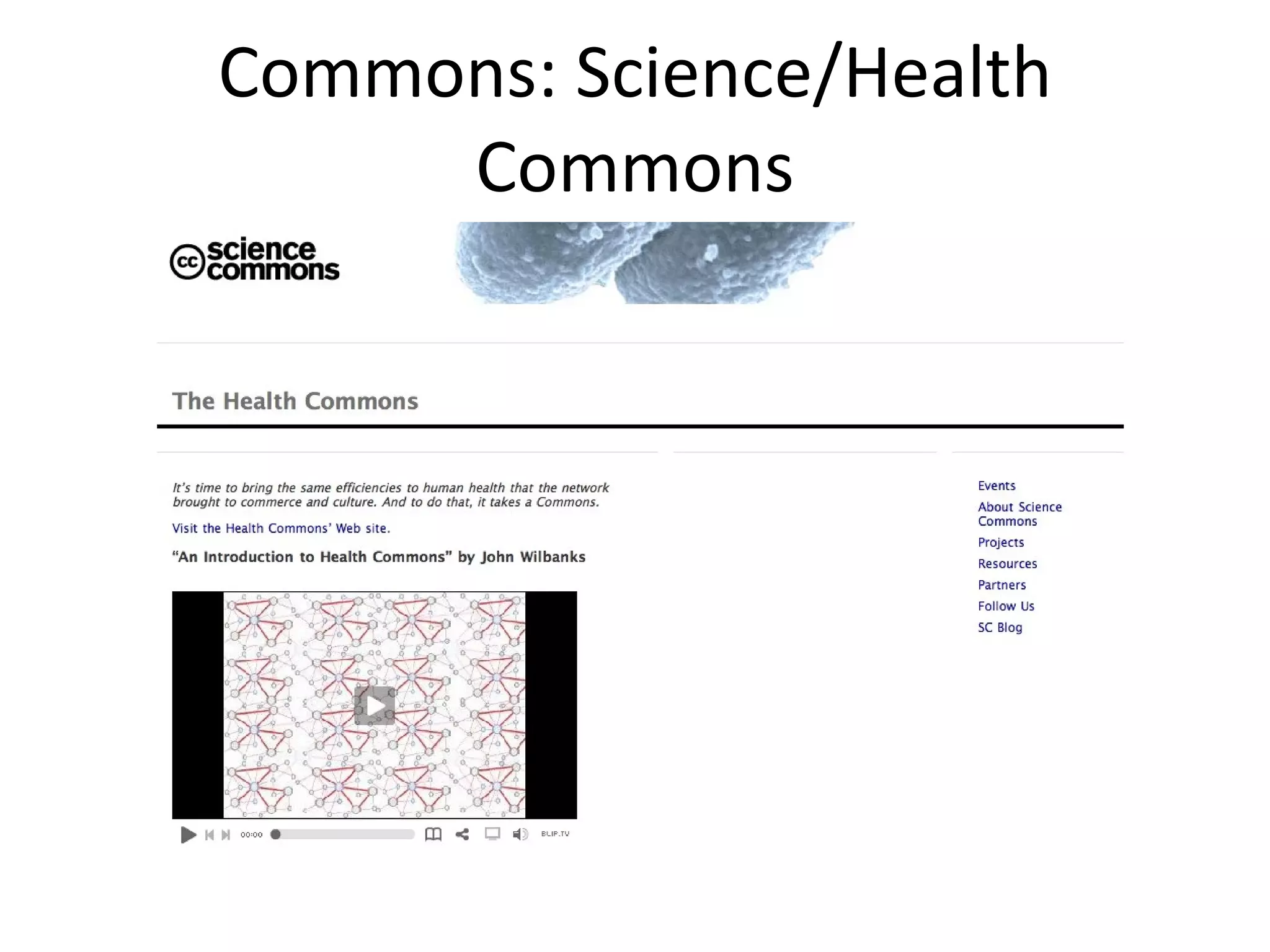
Commons: Science/Health Commons
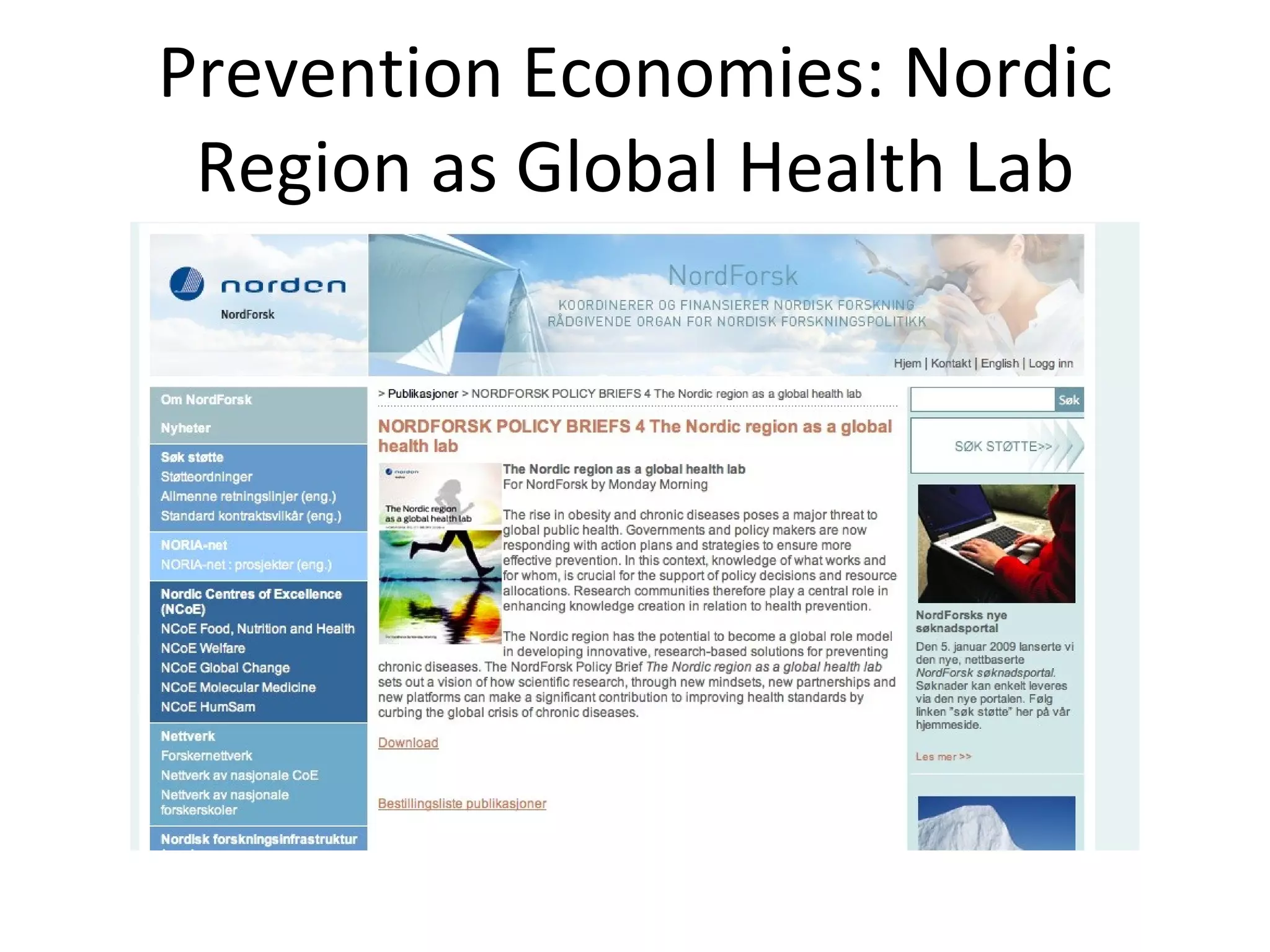
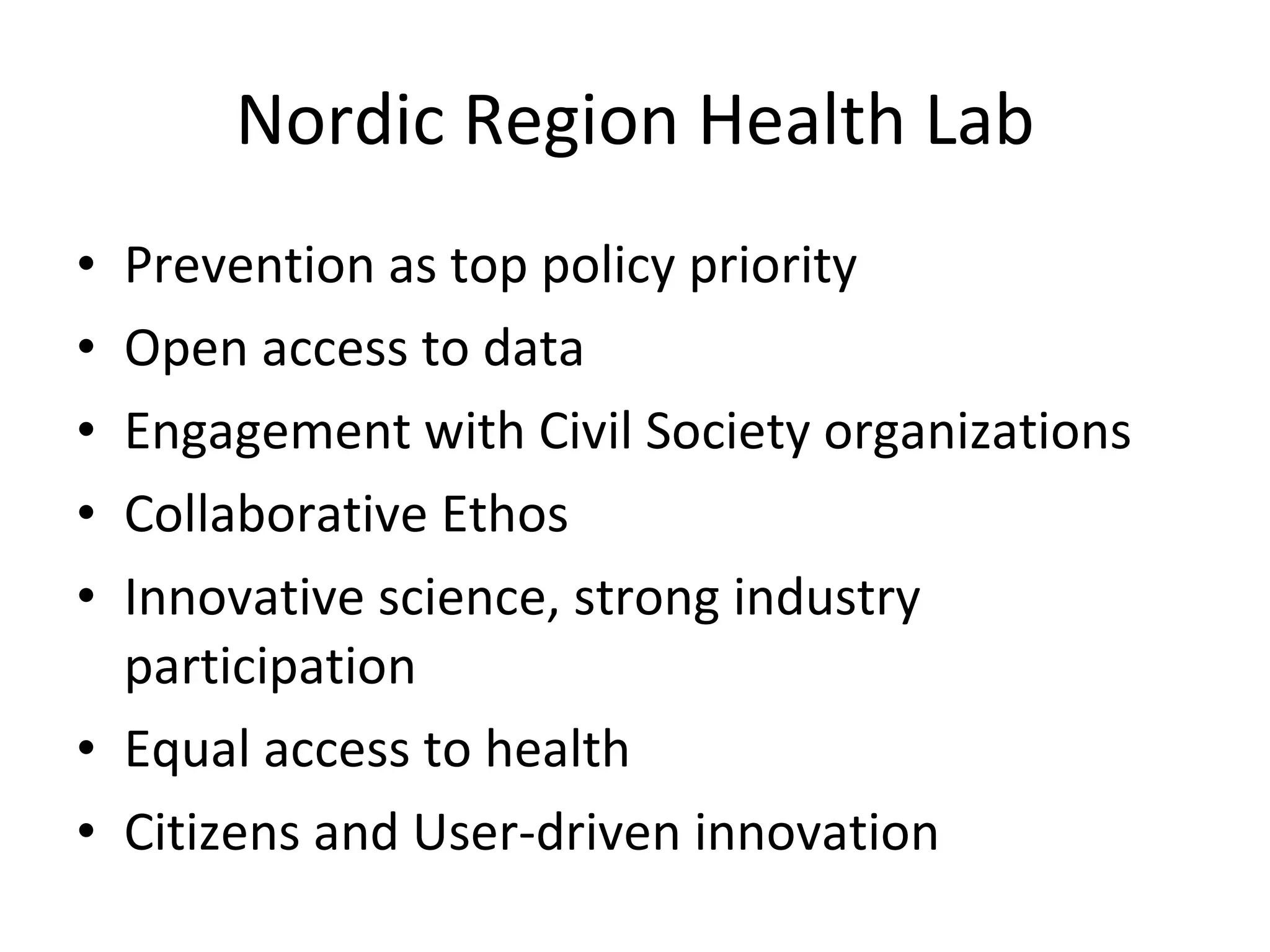
Prevention Economies: Nordic Region as Global Health Lab
Nordic Region Health Lab Prevention as top policy priority Open access to data Engagement with Civil Society organizations Collaborative Ethos Innovative science, strong industry participation Equal access to health Citizens and User-driven innovation
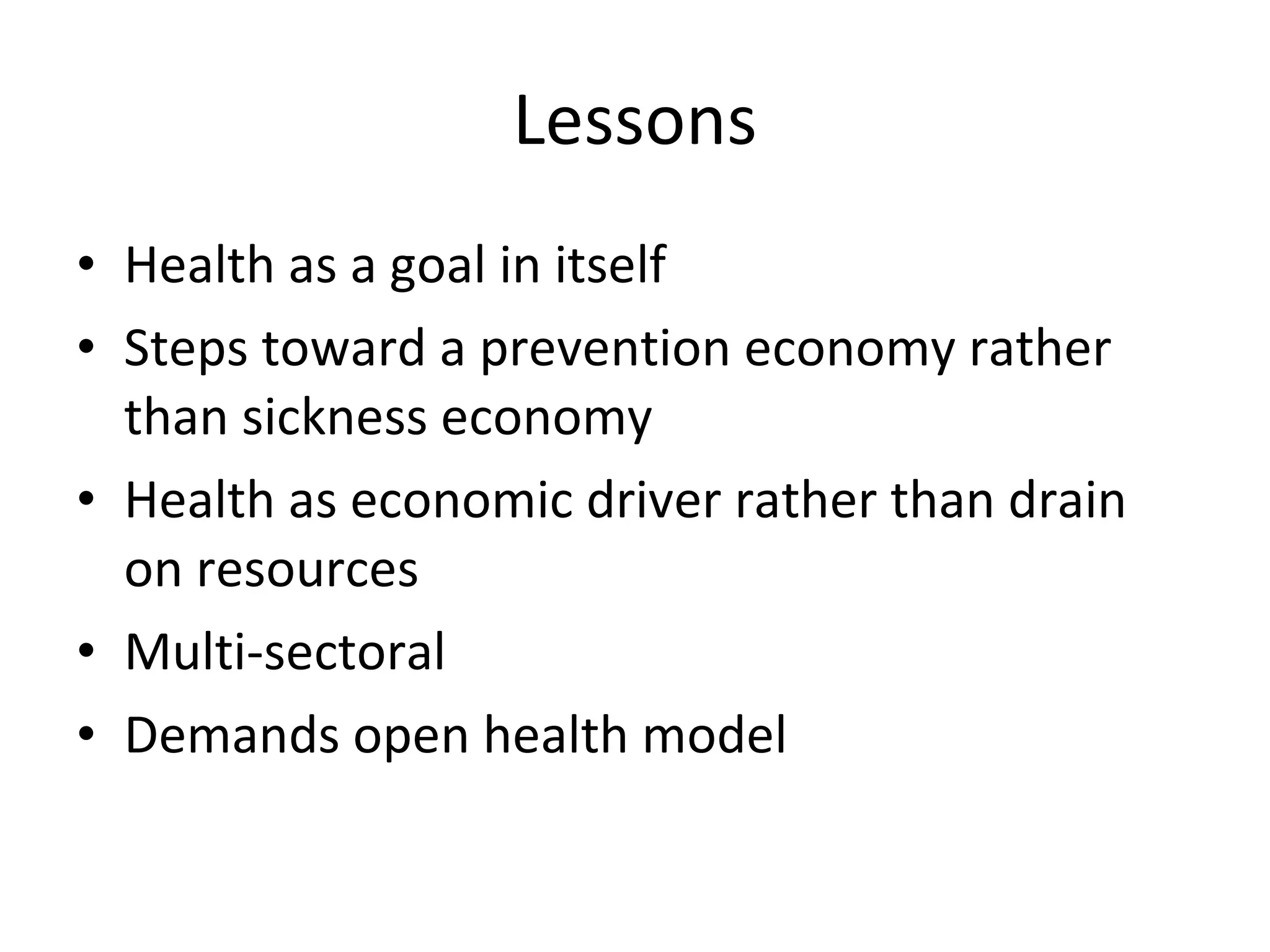
Lessons Health as a goal in itself Steps toward a prevention economy rather than sickness economy Health as economic driver rather than drain on resources Multi-sectoral Demands open health model
New Innovation Architectures Clayton Christensen’s “Network Facilitation Model” Need to move beyond single slice, blockbuster product or service Cooperative models with Health Commons Public Health as the Platform for “plug and play” Enabler of innovation
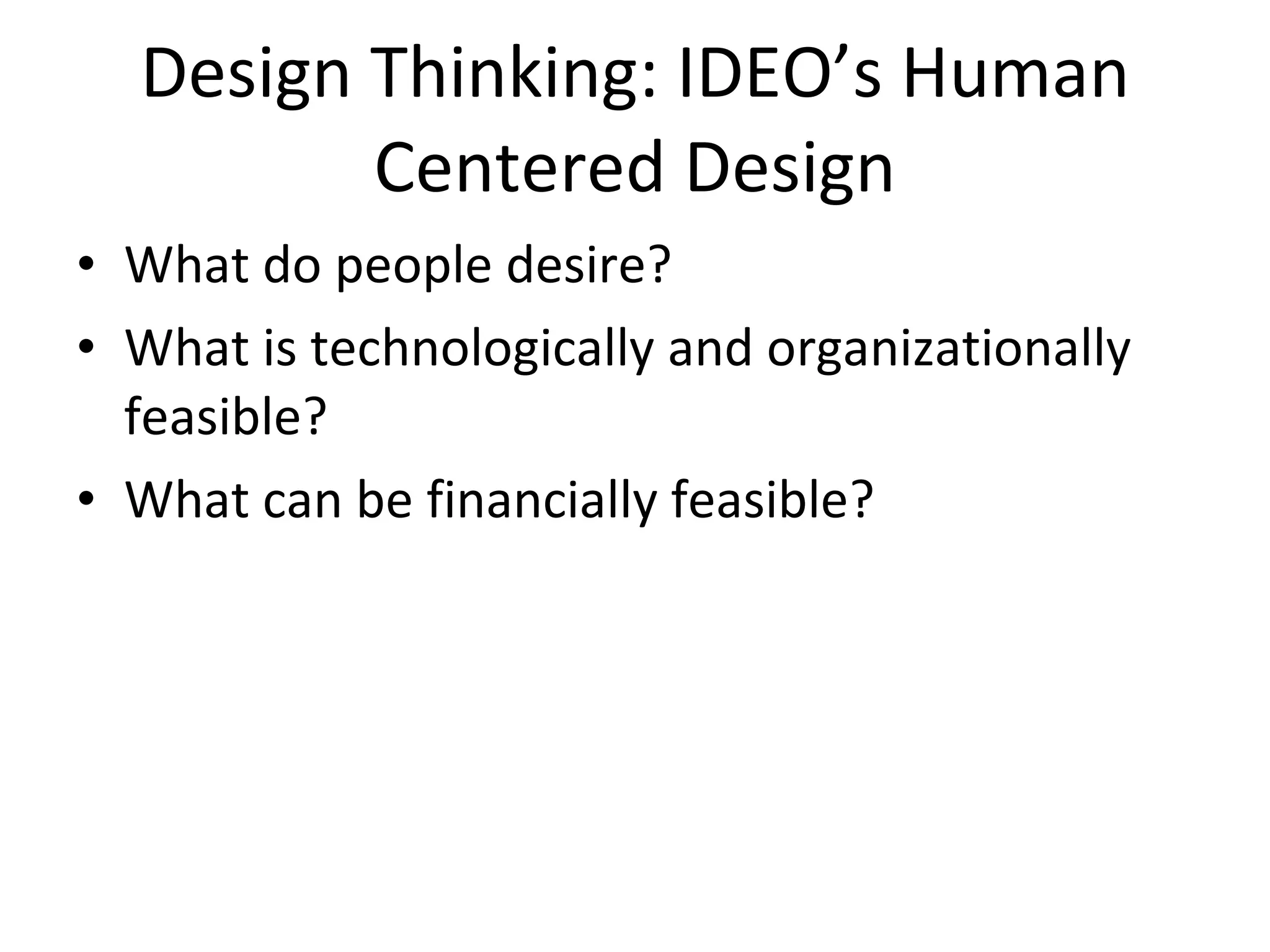
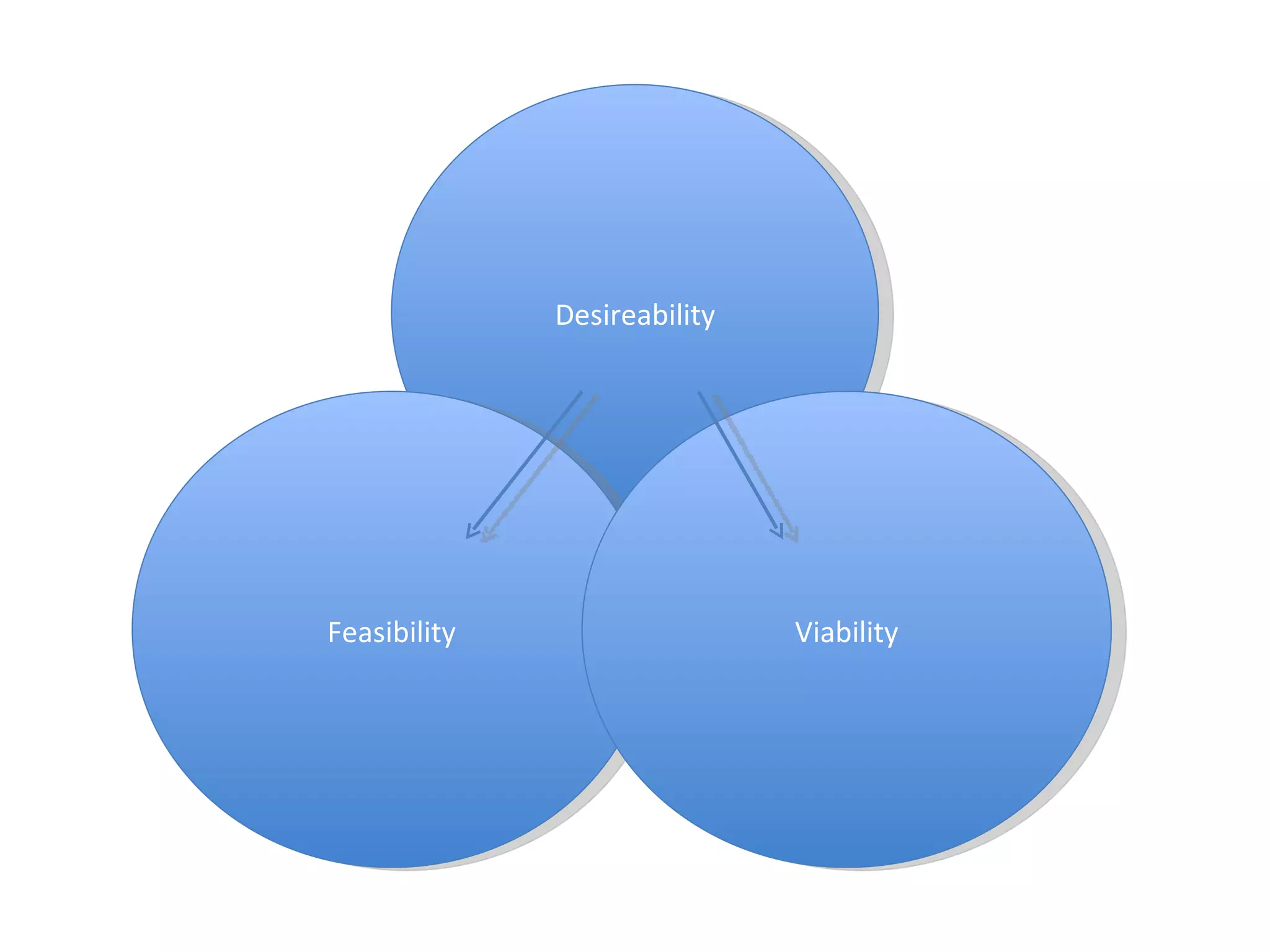
Design Thinking: IDEO’s Human Centered Design What do people desire? What is technologically and organizationally feasible? What can be financially feasible?
Desireability Feasibility Viability
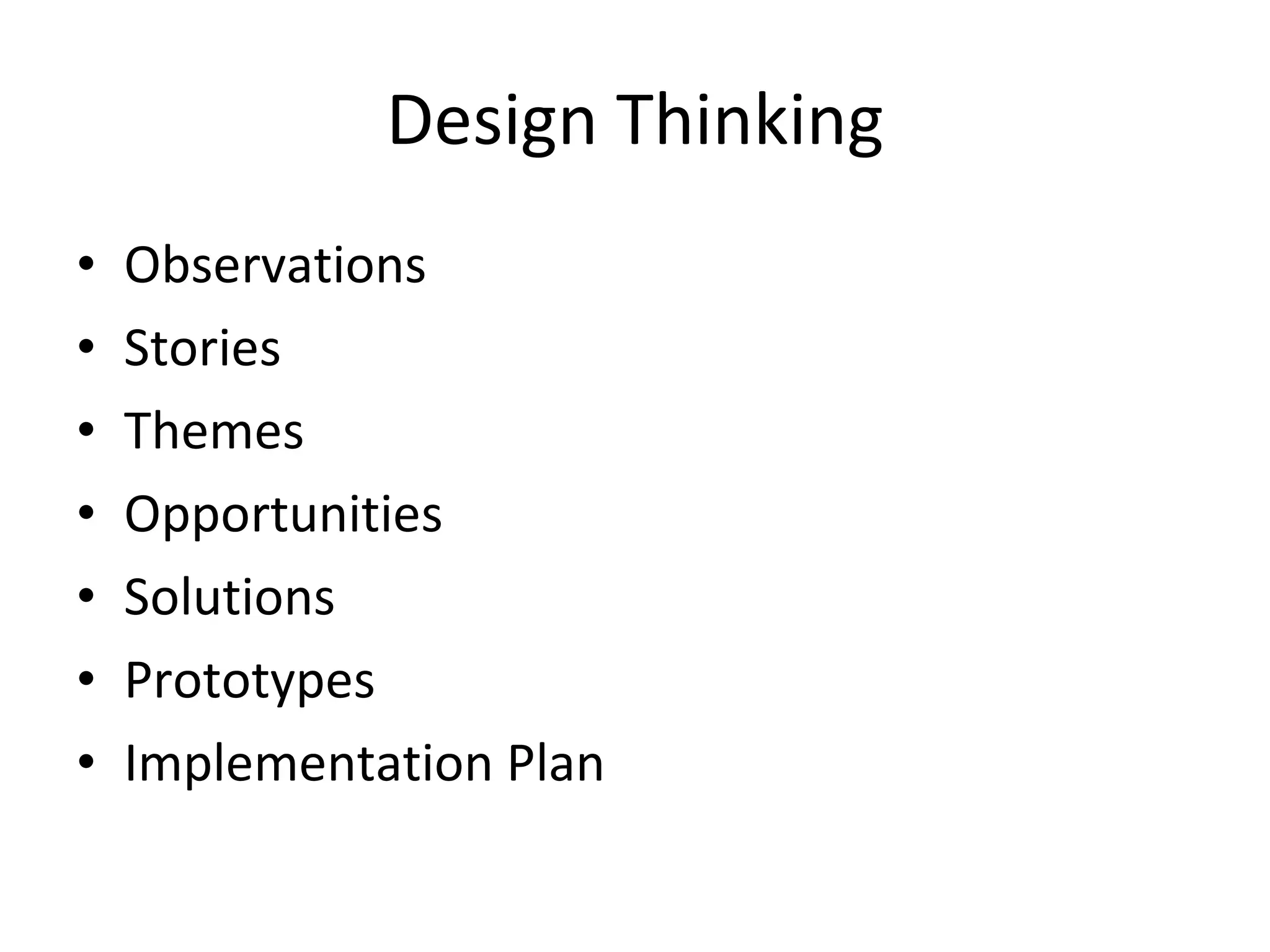
Design Thinking Observations Stories Themes Opportunities Solutions Prototypes Implementation Plan
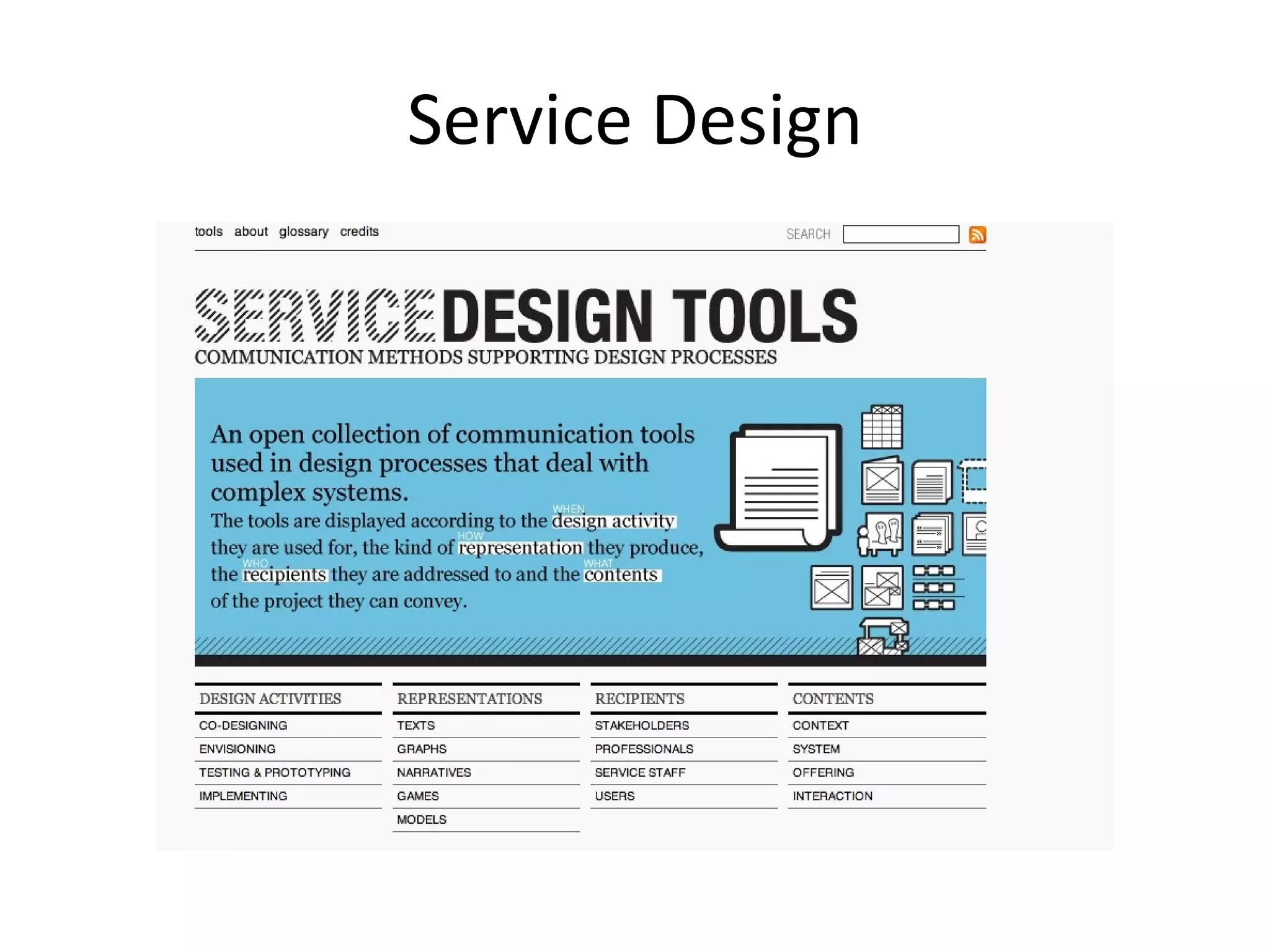
Service Design
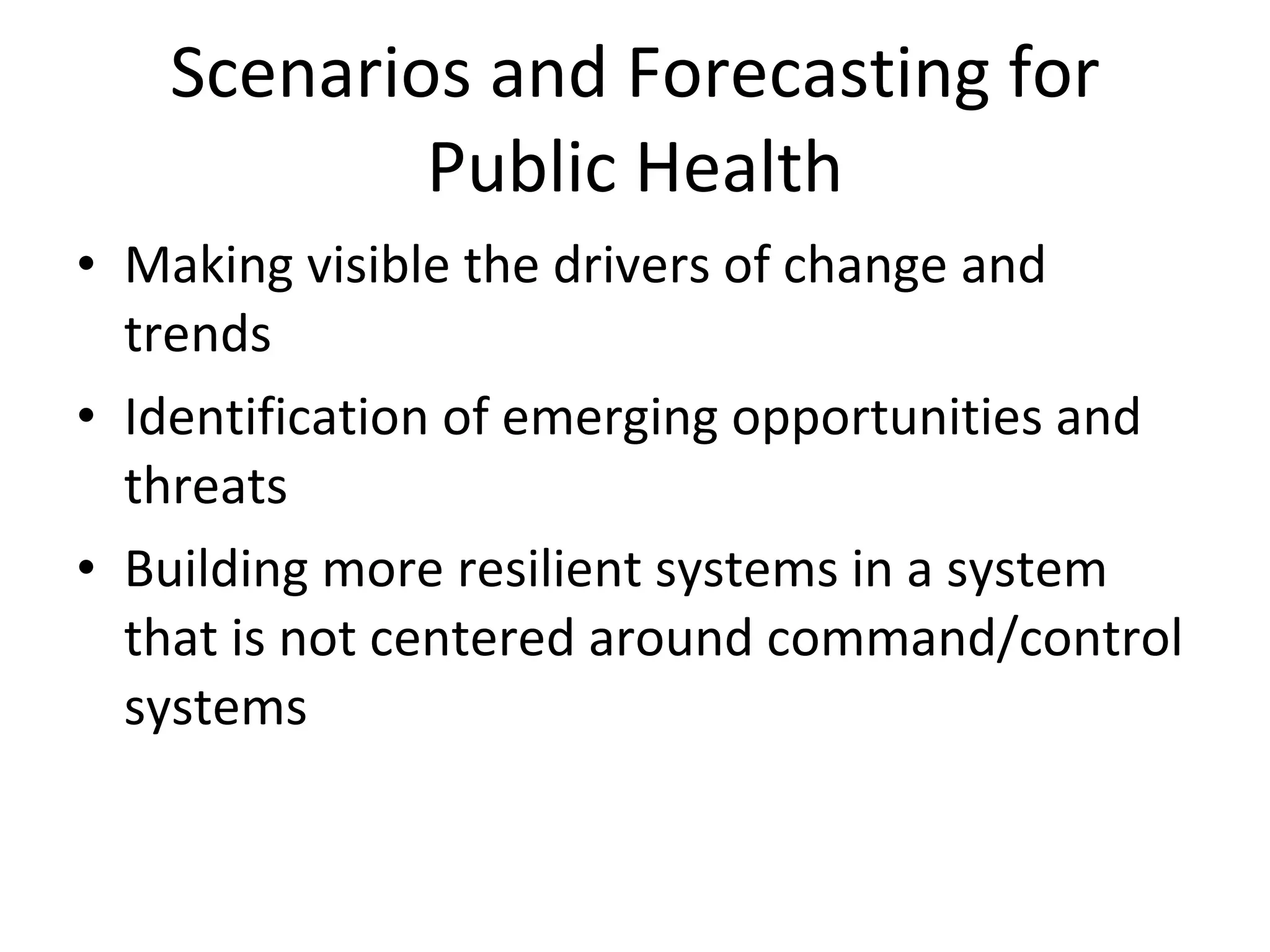
Scenarios and Forecasting for Public Health Making visible the drivers of change and trends Identification of emerging opportunities and threats Building more resilient systems in a system that is not centered around command/control systems
Innovation, Risk & Failure Woody Allen: If you’re not failing every now and again, it’s a sign you’re not doing anything very innovative
Wikipedia of Failures as Innovation Platform Failure as forgotten data point But understanding why things fail can help drive innovation Rapid (Slow) prototyping in Public Health Take risks, learn, rethink and innovate
Section 8: Future Issues Cloud Computing and Identities Technological Citizenship Resilience Public Health Platforms in the Cloud
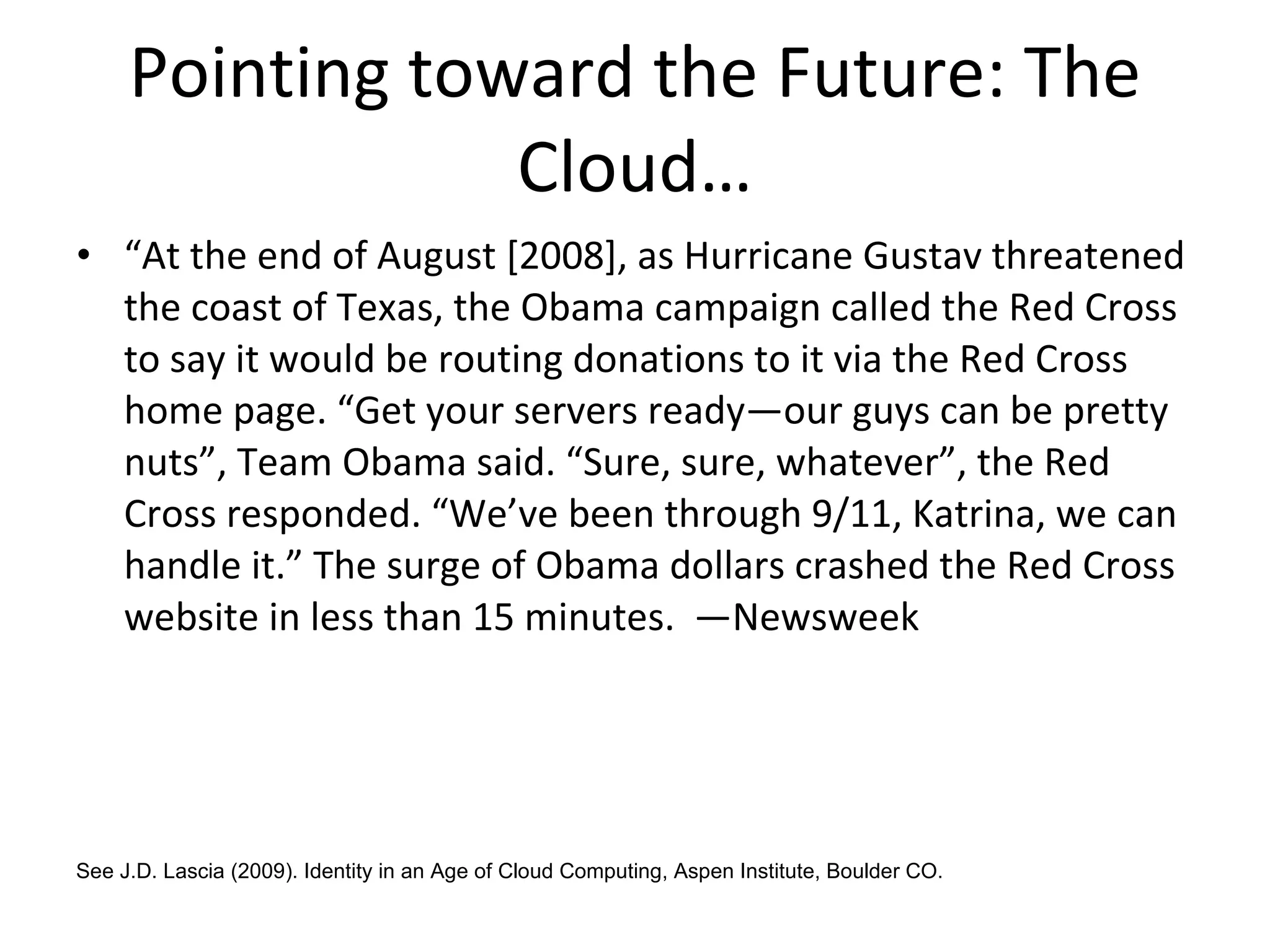
Pointing toward the Future: The Cloud… “ At the end of August [2008], as Hurricane Gustav threatened the coast of Texas, the Obama campaign called the Red Cross to say it would be routing donations to it via the Red Cross home page. “Get your servers ready—our guys can be pretty nuts”, Team Obama said. “Sure, sure, whatever”, the Red Cross responded. “We’ve been through 9/11, Katrina, we can handle it.” The surge of Obama dollars crashed the Red Cross website in less than 15 minutes.  —Newsweek See J.D. Lascia (2009). Identity in an Age of Cloud Computing, Aspen Institute, Boulder CO.
Cloud Computing Virtual Platform, eg. SalesForce, web mail, Delicious, YouTube Transition from self-generated power to the grid (transition we’re going through now) Software as a Service (SaaS), eg. Amazon Web Services Enables greater customization Can lower the carbon footprint of IT for orgs
Cloud Computing Now, you use cloud computing at home, but your CTO doesn’t allow you to use it at work But we may have “inter-clouds” between orgs to facilitate cooperation, eg. Virtual Alabama Therefore, public and private identities emerging Boundaries as socio-cultural constructs How can public health take advantage of cloud? What are the risks? We need to start a discussion
Cloud Computing & Identities Management of multiple identities, eg. Biz identity, health identity, friend profiles Open identities that reveal just enough data So this cloud is a mash-up of lots of social objects with different rules And markets are becoming cooperative ecosystems, not zero-sum competitive markets
Cloud Eco-systems Drive for open identities and equalities comes up against old biz models  conflict Privacy and security mean different things to different people  HIPAA = blunt instrument, regulatory regimes are not the final word… Reputation systems/management not decentralized  digital footprints Reputation as value
Cloud Computing and Innovation Greater customization Reduced barriers to entry Combinatorial innovation Benefits of scope may outweigh scale Greater organizational complexity and info transparency—more distributed, collaborative approaches Rapid proliferation of best practices and change Innovation models themselves will change Move from marketing push to customer (citizen) pull But have to deal with risks as well
Risks of the Cloud Security of data Reliability and backup systems Data interoperability Compliance and liability PHRs and privacy in the cloud Crime mapping  Broader privacy politics in context(s)
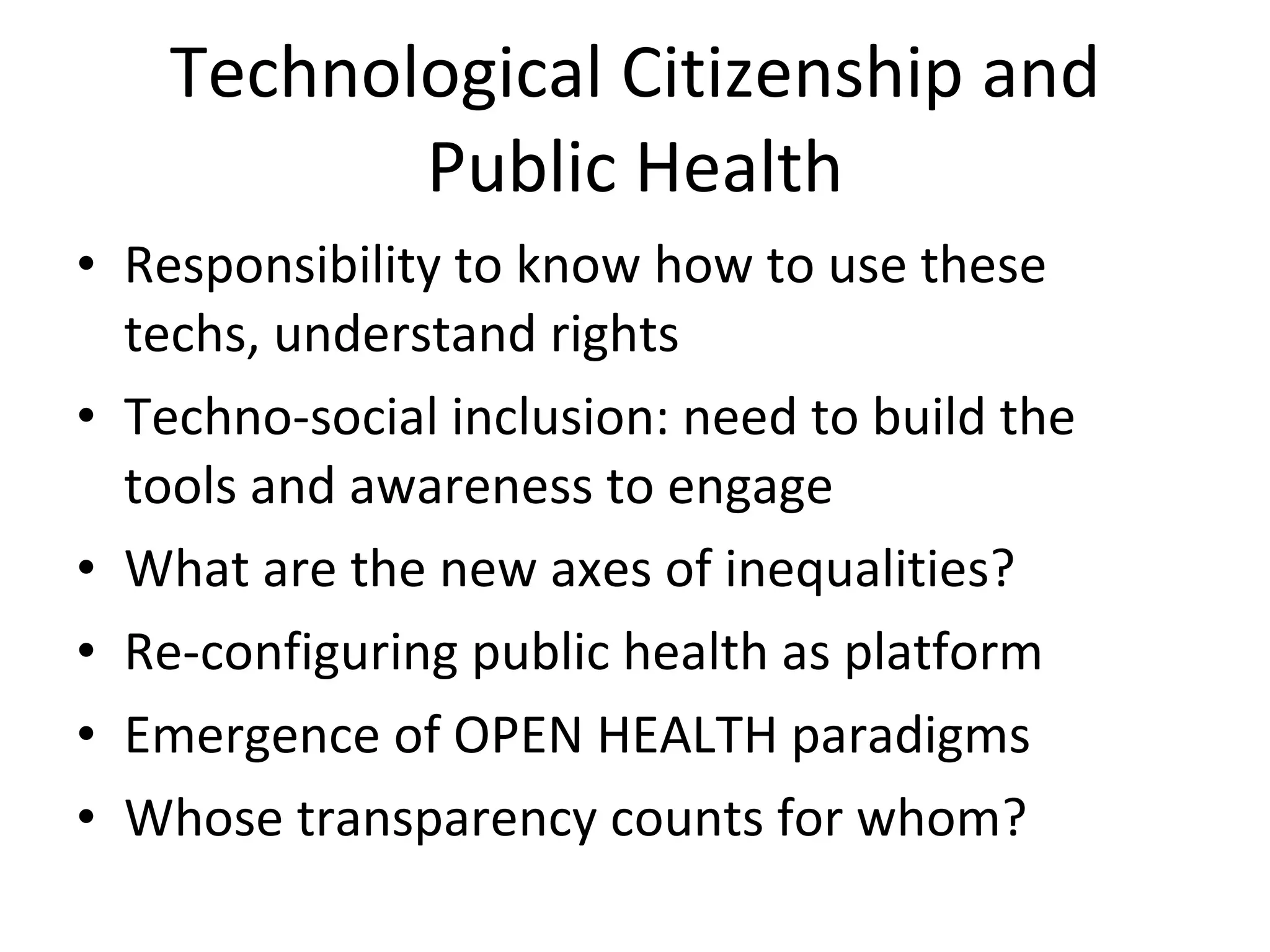
Technological Citizenship and Public Health Responsibility to know how to use these techs, understand rights Techno-social inclusion: need to build the tools and awareness to engage What are the new axes of inequalities? Re-configuring public health as platform Emergence of OPEN HEALTH paradigms Whose transparency counts for whom?
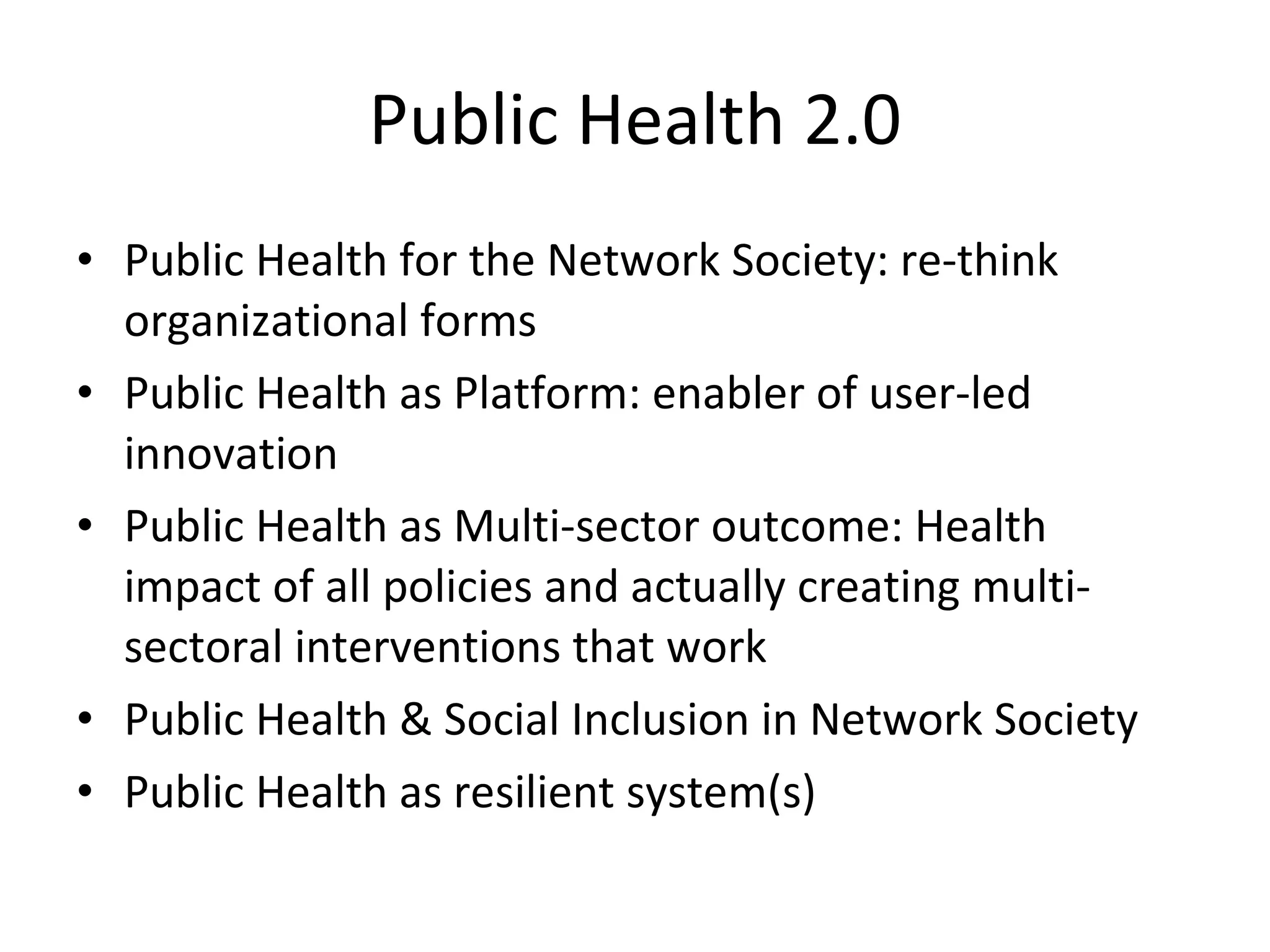
Public Health 2.0 Public Health for the Network Society: re-think organizational forms Public Health as Platform: enabler of user-led innovation Public Health as Multi-sector outcome: Health impact of all policies and actually creating multi-sectoral interventions that work Public Health & Social Inclusion in Network Society Public Health as resilient system(s)
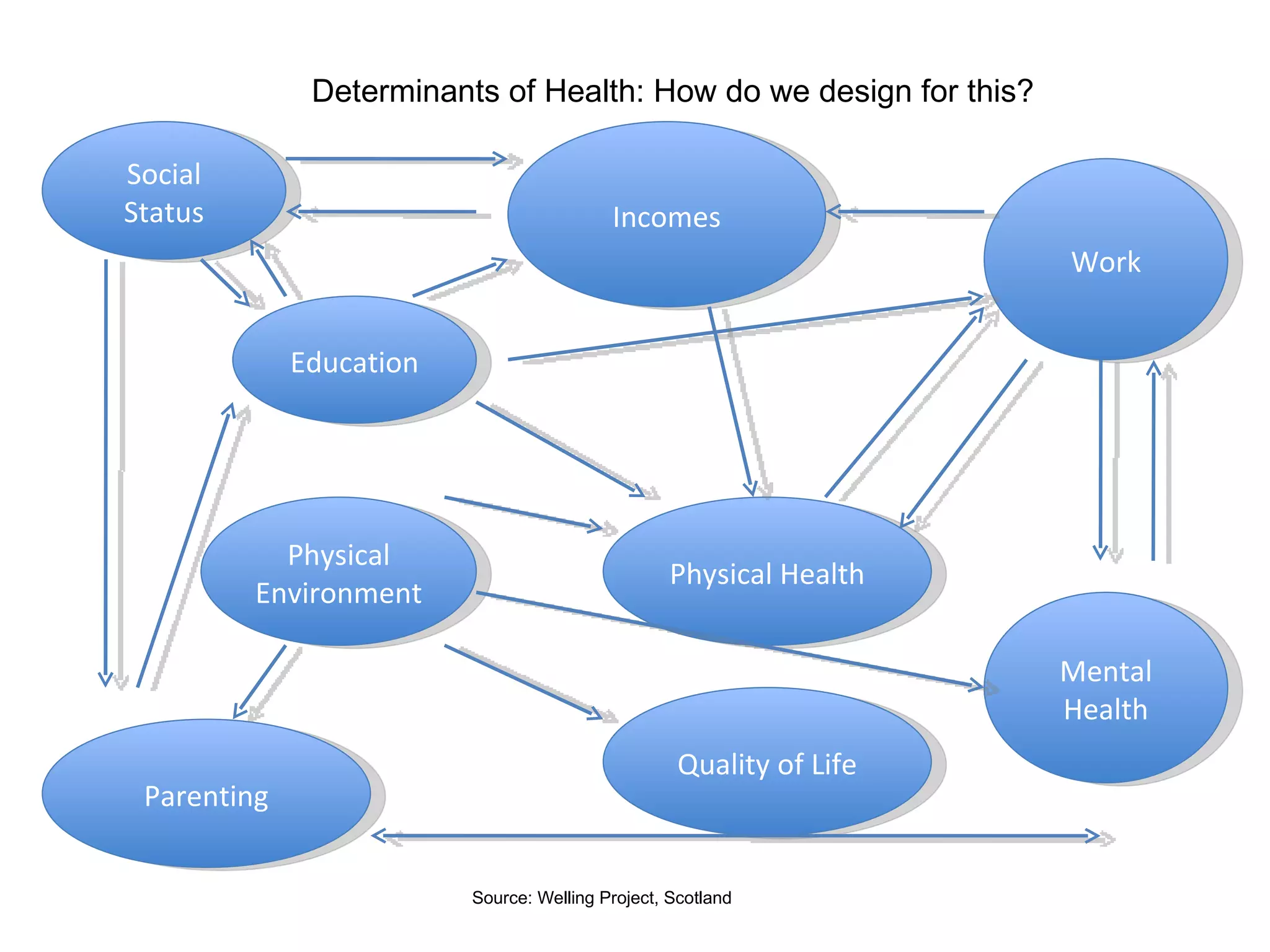
Social Status Education Physical Environment Parenting Quality of Life Physical Health Incomes Work Mental Health Determinants of Health: How do we design for this? Source: Welling Project, Scotland
 
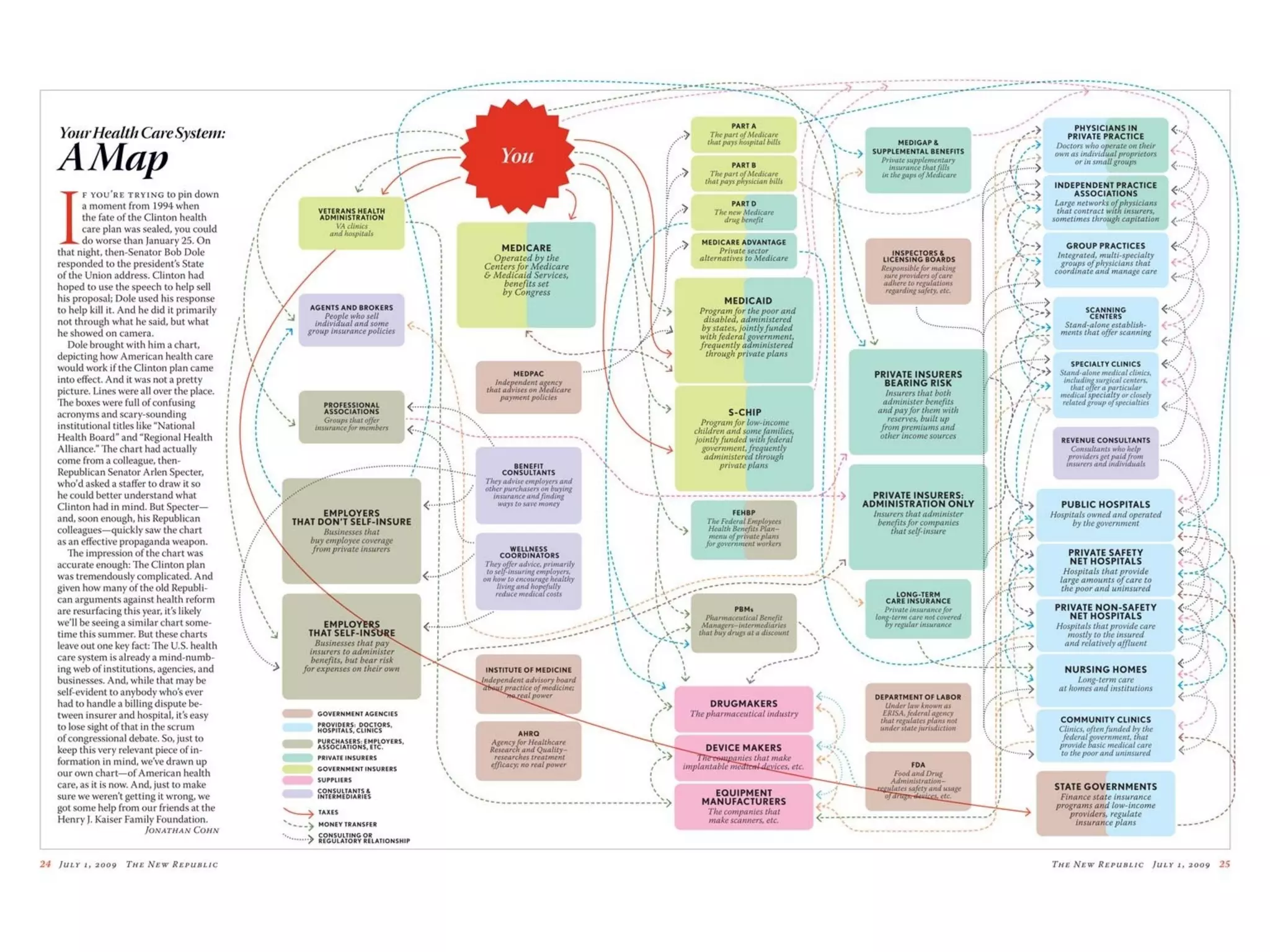
Resilience and Public Health Resilience from the non-system called the health system Substantive reform unlikely to come from federal govt Multiple layers of sustainability: ecological, financial Sense, learn, create, re-organize (Andrea Saveri) Design platforms for managing complexity Increase ability of organizations to absorb threats (pandemics, State of California dysfunctional system, etc.) The tools for doing this are already available
How can we respond to this vision of health? From PHRs to ePHIS ePHIS= personal health information systems as open platform for community-driven innovation Data + networking/communication Connected to tools and platforms presented throughout this presentation Eg. Portugal created i-Citizen project for rural diabetic community
Public Health Innovation Not just new products & services Prevention is rarely more than 2.9% of overall health budget: need policy innovation Will have to be open innovation: open health Network governance, new partnerships, taking social determinants seriously Become experts at building and maintaining open systems, ie. open health, cooperation, managing new health commons, city as platform See KickBusch, ed. (2008), Policy Innovation for Health
Challenges Dynamics of network organizations? New governance models How to manage the commons formed through interdependencies? Moving from innovation being about tech to innovation concerned with knowledge that creates value PPP-P: the extra P = People
The tools are here… Social networks and new governance Participatory approaches Co-created, peer-to-peer, sharing economies Maps, data, platforms Mobiles as platform but need more than just mobile talk—policies, strategies Need new approaches to behavior, communications, health politics We lack coherent strategies and platforms in public health Mindset shift towards innovation, open approaches, prevention, decentering expertise
Resources Us Now documentary:  http://www.vimeo.com/4489849 Wiki Government, by Beth Simone Noveck http://www.gauravonomics.com/blog/ Full Disclosure, by Archon Fung et al. Investing in Democracy by Carmen Sirianni Platforms for Collaboration by Satish Nambisan, Stanford Social Innovation Review, Summer 2009 Smart Mobs by Howard Rheingold https://www.taik.fi/kirjakauppa/product_info.php?cPath=11&products_id=134 Policy Innovation for Health ed. By Ilona Kickbusch IDEO Human Centered Design Handbook Here Comes Everybody by Clay Shirky

Remixing Public Health: Tools for Public Health Innovation

  • 1.
    Re-mixing Public Health:A walk (long) through Open Health & the Emerging Social Mediascape Jody Ranck, DrPH Principal Investigator, Public Health Institute July 2009
  • 2.
    Why Re-Mixing? Becauseit sounds trendy? Borrow and steal from already existing tools, disciplines Recombinant innovation Making the invisible visible and changing behaviors and policies—the mash-up is an important metaphor Complexity of our problems—demands solutions coming from multiple sectors, geographies, etc.
  • 3.
    Why should PublicHealth Care about social media? New types of communities/knowledge systems emerging Socio-techological change: not a question of WHETHER social media will change how we think, behave, etc. but rather, it is a question of HOW? Complexity of health issues requires new thinking New modes of governance & citizenship Ways of delivering healthcare changing Luddites will become irrelevant in many areas
  • 4.
    Public Health ChallengesFrom command-control systems to distibuted systems and production System built on 1910 Flexner Report Health Society: expansion of territory of health  health is no longer just about health systems Health outcomes linked as much to other sectors as health sector—perfect multi-sectoral issue, but many silos Health competes with many other issues Behavioralist paradigms-dated, not producing outcomes Socio-technological change: health innovations change societies, social change changes innovation systems: New Meanings of Health AND Innovation!!!!!
  • 5.
  • 6.
    Section 1: SocialMedia and Public Health Introduction to Social Media Tools Medicine 2.0 Health 2.0 How do we get to Public Health 2.0 and beyond? Why should we care about social media?
  • 7.
    How do werespond: Social Media Blogs, wikis, vlogs Podcasts, photo-sharing Social Networking Platforms YouTube RSS Social Tagging, eg. Delicious Microblogging: Twitter Data Visualization/Infographics Enterprise 2.0 Platforms New and Old media ecosystems together
  • 8.
  • 9.
  • 10.
    Convergence of oldand new Old media reporting on stories from social media, eg. Iran election & CNN Campaigns that use social media to drive broader media strategy, eg. Obama campaign In developing world use of mobiles and radio in agriculture and health Online video growing rapidly, eg. Hulu I’m sick of the word “new”
  • 11.
    Public Health 2.0Social Media Architecture of Participation Open Innovation Crowdsourcing Citizen Engagement through social media Mobiles Urban Informatics Cloud Computing Design Thinking
  • 12.
  • 13.
  • 14.
  • 15.
    Public Health 2.0?Can we do better than “cope”?
  • 16.
    Why does itmatter? A new type of web: mobile, participatory Demands for transparency, eg. Recovery.gov Non-profit sector is adopting & innovating rapidly in the social media space Convergence of old and new media: it’s not just about teens on MySpace anymore! New forms of sociality emerging: biocitizenship and social networks in health Ethos of cooperation New commons  Health commons  New public health + spirit of innovation
  • 17.
    Section 2: Whatdo we do with Social Media? Content Community Collaboration Collective Action
  • 18.
    Why social media?Gaurav Mishra’s 4 C’s of Social Media: Content: everyone can be a creator Collaboration: conversation, co-creation, collective action Community: Sustained collaboration Collective Intelligence: Joy’s Law-the smartest people work somewhere else See : http://www.gauravonomics.com/blog/the-4cs-social-media-framework/
  • 19.
  • 20.
  • 21.
  • 22.
  • 23.
  • 24.
  • 25.
    Content: New Journalism–business models
  • 26.
  • 27.
    What’s up withthat “Twitter thing”
  • 28.
    Twitter as listeningpost, filter…
  • 29.
  • 30.
  • 31.
  • 32.
  • 33.
    Twitter for PublicHealth Find interesting minds: @mindofandre, @AndrewPWilson, @bloodandmilk, etc. Follow conferences, legislative updates, reports from field Pool/aggregate data Suite of Twitter tools Social News Campaigns: podcast, blog, etc.
  • 34.
    Content in summary:Public Health 2.0 Citizenry as co-creators of content Need for deeper listening to what matters Use of social filters to highlight what is important Experts are often poor prognosticators Yet, we need to move beyond populist rhetoric of the crowd New forms of biological/technological citizenship emerging-people can find like-minded people on social media platforms and build, curate content, eg. Blogs, wikis, Twitter hashtags (eg. #H1N1)
  • 35.
    Collaboration Content becomecenter of conversations Curation of aggregate content At what point does content and conversation convert to meaningful collaboration? How can you break problems down into modular, workable pieces that engage community?
  • 36.
    Types of collaborationDefining or framing a problem Debate about strategies Moving across silos/sectors Filling in holes in data Ongoing conversations around issues Rapid response to emerging issues
  • 37.
    Collaboration: platform forgovernment & citizens
  • 38.
    Toronto Transit CampCase Study TTC did not define problem to be solved Sought ideas for reform from users Used blogs, wikis, discussion boards, offline polling, etc. Can use additional tools such as citizen study circles, citizen juries Illustrates need to identify the “right” networks
  • 39.
  • 40.
    All Hazards ConsortiumCase Study Involved VA, MD, DC Brought together private sector, non-profits, universities, citizens, govt agencies Govt Agencies are the “innovation champions” in the network: create collaborative environment Govt role is about controlling the process Govt creates infrastructure for social knowledge creation
  • 41.
  • 42.
  • 43.
  • 44.
    Open Street Map:telling stories
  • 45.
  • 46.
    Open Street Map:coordinating agencies
  • 47.
  • 48.
    Collaboration: Gov 2.0using the cloud to break down silos
  • 49.
    Virtual Alabama PlatformResults $150,000 to build 10 days to create Can now share data in the cloud across government sectors The cloud is growing in importance—public health needs to be part of the discussion! But more on that later….
  • 50.
    Collaboration Lessons Sourcingknowledge from edges Learn from outside of the health field Collaborate with other sectors in more robust manner Co-creation of knowledge with users We’re often our own worst enemies: silos, blinders Our value networks are more complex: need more debate, discussion to deal with complex ecosystem of partners We deal with PUBLICS not a public Collaborative problem-solving is central yet not typically funded by foundations
  • 51.
    Collaboration: co-creation ofknowledge Jason Corburn shows how citizens can challenge dominant risk assessment paradigms used by EPA and scientists. Citizens as co-producers of expertise or citizen-scientists
  • 52.
    Community Difficult tosustain engaged community MyBarackObama, DailyKos, etc. But we see PatientslikeMe.com with diverse patient communities TuDiabetes Sharing, aggregating, conversing-  Translation into Collective Action
  • 53.
  • 54.
  • 55.
  • 56.
  • 57.
  • 58.
  • 59.
  • 60.
    Genetic Alliance Informationportal Policy Advocacy WikiGenetics, WikiAdvocacy Resource Repository Good Example of emerging bio-sociality & biocitizenship in action
  • 61.
    Health 2.0 CommunitiesCommunities around micro-macro issues User-generated content, filters Information  knowledge  new power relationships in clinical encounter Platforms for fundraising, policy, advocacy Data aggregators that move beyond HIPAA constraints We’ve yet to see substantial movement in power structures of health & medicine But they’re still potent “issue networks” and signal of new form of bio-sociality that has potential to shift health politics
  • 62.
    Where does PublicHealth fit in? Need to move from top-down approaches Less control, democratization of expertise-we are no longer the privileged experts all the time: listen, engage Think critically about populist hubris in social mediasphere without resorting back to PH knows best ethos Who speaks for communities? Beyond bioethics to somatic ethics and relationships online How can we cultivate democratic ethos of public health in social mediasphere? Organizational design: how to incentivize collaboration and community building rather than maintenance of silos?
  • 63.
    Thinking About ROIof Social Media http://blogs.forrester.com/groundswell/2007/01/new_roi_of_blog.html
  • 64.
    ROI Government2.0 sites: transparency, accountability, efficiency Open innovation platforms: valuations of each app or service Citizen feedback and trust Social capital from highlighting successes and even failures
  • 65.
    ROI (Social Media)http://www.frogloop.com/social-network-calculator Beth Kanter: Return on Insight: http://beth.typepad.com/beths_blog/2009/02/nten-and-techsoup-webinar-share-your-story-roi-and-social-media-slides-and-notes.html More than Math: Listen, Learn, Adapt May need internal organizational/cultural changes Pick the Right Metrics Tangible and Intangible Benefits Numbers and Stories
  • 66.
    Section 3: SocialMedia Platforms Collaboration: digging deeper Typologies of collaborative platforms What problem are you solving for? What are some characteristics of collaborative organizations? Network Organizations and Public Health
  • 67.
    Collaborative Platforms: Somelessons from Satish Nambisan Exploration: Defining a problem where dissensus exists Experimentation: Testing out solutions Execution: Disseminating solutions Each of these is a form of crowdsourcing See: Satish Nambisan (2009). Platforms for Collaboration. Stanford Social Innovation Review, Summer, Vol. 7, No. 3.
  • 68.
  • 69.
  • 70.
  • 71.
    Exploration Platforms Usedto help frame issues Create communities around different aspects of a problem—modular approach Science of asking the right question Used to build consensus around vision, strategy, approaches Participants need to know what they’re being asked to accomplish
  • 72.
  • 73.
  • 74.
    Experimentation Platforms Toomany organizations go from idea to implementation without testing idea Neutral environments for testing things out—rapid prototypying Virtual innovation labs: Y Combinator Need agreement on success metrics Uncover implementation challenges
  • 75.
  • 76.
    Implementation Platforms Usedfor rolling out findings Create and distribute templates to assist replication Coordinate efforts of those in network Connected to offline sessions for sharing information, experiences
  • 77.
    Innovation Platform: turningideas into action, social businesses
  • 78.
    Sambisan’s Ingredients forPlatforms Need a Network Perspective: embrace non-traditional partners Modular or Plug-and-Play Expertise: agile Portfolio of Success Metrics Ability to dismantle barriers between government, business, non-profits
  • 79.
    Networked Public HealthDifferent types of networks: loosely coupled, centralized, distributed, etc. Partnerships and Networks are not the same thing Rather than broad social movements-see more micro-movement Coordination and Control of Networks—governance Designing Networks: building relationships, managing in less hierarchical domains, interdependencies, roles and accountability What would the PHR for public health look like: collaborative platform that enables citizens to build, share, use data
  • 80.
    Section 4: Appsfor Democracy Example New way of driving innovation through engagement with citizenry Democratizing data Improving the quality of data Building platforms for win-wins for gov/citizens What can we learn from this for public health?
  • 81.
  • 82.
  • 83.
  • 84.
  • 85.
  • 86.
  • 87.
  • 88.
    Apps for DemocracyLessons How can we do more with less? Some initial apps may appear trivial, incentivize for quality Helps move out of silos, command/control structures that hinder civic engagement Many agencies will resist change and not release data—incentives? What are costs for non-engagement? Opening up data creates conditions for innovation, better data Respond to citizens, not customers
  • 89.
    Apps for Health?Crowdsourcing new tools for citizen engagement in public health Multiple rounds on different themes A way to drive innovation in tough economic climate Apps for Healthy Cities 2.0? Highlight neglected public health issues Incentivize multi-sectoral collaboration
  • 90.
    Challenges for AppsForHealthPrivacy issues with health data Development of open standards Apps for individuals vs. community health outcomes: difficult translation Lack of good behavioral change models: crowdsource alternative paradigms? Complexity of chronic diseases vs. simplicity of apps
  • 91.
    Section 5: TheCity and Public Health as Platform City as Platform Open Innovation Platform Tools to think with
  • 92.
  • 93.
    The City asOpen Innovation Platform
  • 94.
    Villes 2.0 Canthe city be re-imagined as a platform that can be modified by its users? What resources can be shared and mobilized for re-thinking the city? The suite of web 2.0 tools available can be used to re-fashion urban services, make user-friendly New Ethos embodied in Apps for Democracy
  • 95.
  • 96.
  • 97.
    Responding and Engagingin a world of Tweets Gavin Newsom claims using free service like Twitter saved 100k over using SMS for 311 service
  • 98.
    Disaster planning Useof social media platforms to cross silos and help build more resilient infrastructures—avoiding future Hurricane Katrinas
  • 99.
  • 100.
  • 101.
    The tools arehere… Mapping Open data Transparency Data visualization Platform integration for services How to tie it all together and make sense? We need to rethink organizations, networks, communities In many ways this is what AppsForDemocracy points toward…
  • 102.
    Opportunity Mapping: howto make it user friendly? GIS is enabling greater use of maps and geo-coded data to make patterns more visible
  • 103.
  • 104.
  • 105.
  • 106.
  • 107.
  • 108.
  • 109.
  • 110.
  • 111.
  • 112.
  • 113.
    Linked Data Linkeddata and semantic web are next stage of where the internet is heading
  • 114.
    Open City Data(San Francisco)
  • 115.
    Wikis and linkingcommunities
  • 116.
  • 117.
  • 118.
  • 119.
  • 120.
  • 121.
  • 122.
  • 123.
  • 124.
  • 125.
    Transparency Policies: Needto provide info that is easy to use Target transparency systems towards interested parties Be nimble in responding to changed priorities of users Create benefits for disclosers of information Design with metrics for accuracy and compatibility Design for comprehension: eg. Visualization/infographic tools Incorporate analysis and feedback Sanctions for non-reporting
  • 126.
  • 127.
  • 128.
  • 129.
  • 130.
  • 131.
  • 132.
  • 133.
  • 134.
    Geoweb More dataare geocoded, web-based and mobile Growth in use of Google maps, etc. GIS becoming more ubiquitous, user-friendly Peer-to-peer geo-based services on iPhone More bottom-up, co-created maps Power of place and information in policies Participatory mapping and planning
  • 135.
  • 136.
    Participatory Budgeting Socialmedia tools and Wiki Government + Mapping and Visualization Tools can re-make the participatory budgeting movement
  • 137.
  • 138.
  • 139.
    DIY: tools forbuilding urban tools
  • 140.
    Section 6: Moretools and signals Making the Invisible Visible Mobiles and Urban computing Persuasive Technologies and Games
  • 141.
    Tools for makingthe invisible visible Low cost diagnostics Sensors Visual Tools Augmented Reality Mash-ups Mobiles =Tools for Collective Action on Health Issues
  • 142.
  • 143.
  • 144.
  • 145.
  • 146.
  • 147.
    Urban Computing Urbaninfrastructures Maps, traffic info Sense of place Mobile devices, sensors Social computing/networking: familiar strangers City info, open data Augmented Reality—now on mobiles
  • 148.
    Urban Computing CitySense: San Franciso-Hot Spots Understand behaviors of “users” of the city Citizen Science, eg. Working with SF Street Sweepers on air quality Ergo—mobile air quality
  • 149.
  • 150.
  • 151.
  • 152.
  • 153.
  • 154.
  • 155.
    Persuasive Tech Example:Prius dashboard: changing behavior
  • 156.
  • 157.
    Persuasive Technologies: BJFogg Captology: computers as persuasive tech About intentions of designers of products persuading user: goal focused Less concerned with altering framing of perception that user has already developed
  • 158.
    Persuasive Technologies Reduction:reduce complex behavior to simple tasks Tunneling: leading user through pre-determined set of actions Suggestion: suggest behavior at most opportune moment Self-Monitoring: monitor behaviors to achieve pre-determined goal Surveillance: one party monitors behavior of another Conditioning: using operant conditioning to change behaviors, eg. Telecycle—when pedaled to a target speed and image is clarified on screen
  • 159.
  • 160.
    Persuasive Games: IanBogost More focused on using rhetoric to engage user in a discourse about behavior itself, more reflexive Does not accept as a given that user understands or accepts the larger reason for a behavior Persuasive Tech is largely framed around psychology, Persuasive Games around rhetoric
  • 161.
    Persuasive Games Stimulatecritical thinking: not the same as “serious games” that do not question established norms “ Killer Flu”: helps to understand how pandemic flus mutate and the geographical contingencies of the epidemiology “ Fat World”: politics of Nutrition “ Food Import Folly”: interrogates role of FDA, in collaboration with NY Times “ Bacteria Salad”: on agri-business, food safety “ Stone City: Cold Stone Creamery”: on portion size and profits
  • 162.
    Public Dashboards asPersuasive Technologies
  • 163.
  • 164.
  • 165.
    Hypercities Layers ofhistorical information about cities Puts the archives of cultural histories and diverse communities on the web Encourages exploration of the history and layers of the city Goal is to change the way we interact with information on the city and with each other
  • 166.
  • 167.
    Mobile Health: FrontlineMedic/Open MRS Source: Josh Nesbitt, http://www.jopsa.org/?p=404
  • 168.
    Mobile Health ApplicationsEducation and Awareness Data collection (for public health or clinical domains) Remote monitoring Communication and Training for Healthcare Workers Disease Surveillance and Epidemic Outbreak Tracking (Malaria, HIV/AIDS, TB, Avian Flu, chronic diseases- esp. diabetes) Diagnostics and Treatment Support mLearning, mobile health 2.0 (citizen facing) Emergency Response Decision Support Systems Remote Patient Monitoring Health Extension Services
  • 169.
  • 170.
    RED: Open HealthDesign: don’t improve existing services but design for desired outcomes Design begins with point of view of individual, not the system Co-creation Smart Mobs in Health=ActivMobs Redesign the patient-professional relationship Use this ethos for designing next gen mHealth ?
  • 171.
    Convergence of socialmedia and mobiles, eg. InSTEDD
  • 172.
  • 173.
  • 174.
  • 175.
  • 176.
    Section 7: InnovationSystems and Public Health Open Innovation User-led Innovation Peer-to-Peer New Commons Prevention Economies Design Thinking Forecasting
  • 177.
    How we thinkabout innovation is changing…
  • 178.
    NESTA (UK) Innovation:Cooperation and the Commons
  • 179.
    New Innovation Approaches:User-led Innovation
  • 180.
  • 181.
  • 182.
  • 183.
    Prevention Economies: NordicRegion as Global Health Lab
  • 184.
    Nordic Region HealthLab Prevention as top policy priority Open access to data Engagement with Civil Society organizations Collaborative Ethos Innovative science, strong industry participation Equal access to health Citizens and User-driven innovation
  • 185.
    Lessons Health asa goal in itself Steps toward a prevention economy rather than sickness economy Health as economic driver rather than drain on resources Multi-sectoral Demands open health model
  • 186.
    New Innovation ArchitecturesClayton Christensen’s “Network Facilitation Model” Need to move beyond single slice, blockbuster product or service Cooperative models with Health Commons Public Health as the Platform for “plug and play” Enabler of innovation
  • 187.
    Design Thinking: IDEO’sHuman Centered Design What do people desire? What is technologically and organizationally feasible? What can be financially feasible?
  • 188.
  • 189.
    Design Thinking ObservationsStories Themes Opportunities Solutions Prototypes Implementation Plan
  • 190.
  • 191.
    Scenarios and Forecastingfor Public Health Making visible the drivers of change and trends Identification of emerging opportunities and threats Building more resilient systems in a system that is not centered around command/control systems
  • 192.
    Innovation, Risk &Failure Woody Allen: If you’re not failing every now and again, it’s a sign you’re not doing anything very innovative
  • 193.
    Wikipedia of Failuresas Innovation Platform Failure as forgotten data point But understanding why things fail can help drive innovation Rapid (Slow) prototyping in Public Health Take risks, learn, rethink and innovate
  • 194.
    Section 8: FutureIssues Cloud Computing and Identities Technological Citizenship Resilience Public Health Platforms in the Cloud
  • 195.
    Pointing toward theFuture: The Cloud… “ At the end of August [2008], as Hurricane Gustav threatened the coast of Texas, the Obama campaign called the Red Cross to say it would be routing donations to it via the Red Cross home page. “Get your servers ready—our guys can be pretty nuts”, Team Obama said. “Sure, sure, whatever”, the Red Cross responded. “We’ve been through 9/11, Katrina, we can handle it.” The surge of Obama dollars crashed the Red Cross website in less than 15 minutes. —Newsweek See J.D. Lascia (2009). Identity in an Age of Cloud Computing, Aspen Institute, Boulder CO.
  • 196.
    Cloud Computing VirtualPlatform, eg. SalesForce, web mail, Delicious, YouTube Transition from self-generated power to the grid (transition we’re going through now) Software as a Service (SaaS), eg. Amazon Web Services Enables greater customization Can lower the carbon footprint of IT for orgs
  • 197.
    Cloud Computing Now,you use cloud computing at home, but your CTO doesn’t allow you to use it at work But we may have “inter-clouds” between orgs to facilitate cooperation, eg. Virtual Alabama Therefore, public and private identities emerging Boundaries as socio-cultural constructs How can public health take advantage of cloud? What are the risks? We need to start a discussion
  • 198.
    Cloud Computing &Identities Management of multiple identities, eg. Biz identity, health identity, friend profiles Open identities that reveal just enough data So this cloud is a mash-up of lots of social objects with different rules And markets are becoming cooperative ecosystems, not zero-sum competitive markets
  • 199.
    Cloud Eco-systems Drivefor open identities and equalities comes up against old biz models  conflict Privacy and security mean different things to different people  HIPAA = blunt instrument, regulatory regimes are not the final word… Reputation systems/management not decentralized  digital footprints Reputation as value
  • 200.
    Cloud Computing andInnovation Greater customization Reduced barriers to entry Combinatorial innovation Benefits of scope may outweigh scale Greater organizational complexity and info transparency—more distributed, collaborative approaches Rapid proliferation of best practices and change Innovation models themselves will change Move from marketing push to customer (citizen) pull But have to deal with risks as well
  • 201.
    Risks of theCloud Security of data Reliability and backup systems Data interoperability Compliance and liability PHRs and privacy in the cloud Crime mapping Broader privacy politics in context(s)
  • 202.
    Technological Citizenship andPublic Health Responsibility to know how to use these techs, understand rights Techno-social inclusion: need to build the tools and awareness to engage What are the new axes of inequalities? Re-configuring public health as platform Emergence of OPEN HEALTH paradigms Whose transparency counts for whom?
  • 203.
    Public Health 2.0Public Health for the Network Society: re-think organizational forms Public Health as Platform: enabler of user-led innovation Public Health as Multi-sector outcome: Health impact of all policies and actually creating multi-sectoral interventions that work Public Health & Social Inclusion in Network Society Public Health as resilient system(s)
  • 204.
    Social Status EducationPhysical Environment Parenting Quality of Life Physical Health Incomes Work Mental Health Determinants of Health: How do we design for this? Source: Welling Project, Scotland
  • 205.
  • 206.
    Resilience and PublicHealth Resilience from the non-system called the health system Substantive reform unlikely to come from federal govt Multiple layers of sustainability: ecological, financial Sense, learn, create, re-organize (Andrea Saveri) Design platforms for managing complexity Increase ability of organizations to absorb threats (pandemics, State of California dysfunctional system, etc.) The tools for doing this are already available
  • 207.
    How can werespond to this vision of health? From PHRs to ePHIS ePHIS= personal health information systems as open platform for community-driven innovation Data + networking/communication Connected to tools and platforms presented throughout this presentation Eg. Portugal created i-Citizen project for rural diabetic community
  • 208.
    Public Health InnovationNot just new products & services Prevention is rarely more than 2.9% of overall health budget: need policy innovation Will have to be open innovation: open health Network governance, new partnerships, taking social determinants seriously Become experts at building and maintaining open systems, ie. open health, cooperation, managing new health commons, city as platform See KickBusch, ed. (2008), Policy Innovation for Health
  • 209.
    Challenges Dynamics ofnetwork organizations? New governance models How to manage the commons formed through interdependencies? Moving from innovation being about tech to innovation concerned with knowledge that creates value PPP-P: the extra P = People
  • 210.
    The tools arehere… Social networks and new governance Participatory approaches Co-created, peer-to-peer, sharing economies Maps, data, platforms Mobiles as platform but need more than just mobile talk—policies, strategies Need new approaches to behavior, communications, health politics We lack coherent strategies and platforms in public health Mindset shift towards innovation, open approaches, prevention, decentering expertise
  • 211.
    Resources Us Nowdocumentary: http://www.vimeo.com/4489849 Wiki Government, by Beth Simone Noveck http://www.gauravonomics.com/blog/ Full Disclosure, by Archon Fung et al. Investing in Democracy by Carmen Sirianni Platforms for Collaboration by Satish Nambisan, Stanford Social Innovation Review, Summer 2009 Smart Mobs by Howard Rheingold https://www.taik.fi/kirjakauppa/product_info.php?cPath=11&products_id=134 Policy Innovation for Health ed. By Ilona Kickbusch IDEO Human Centered Design Handbook Here Comes Everybody by Clay Shirky