School Wellness Policies
Katherine Pike, RDN, CD
Nutrition Program Consultant
katherine.pike@dpi.wi.gov
(608) 266-2410
Healthy, Hunger Free Kids Act
Local School Wellness Policies (LWP)
• Retains requirement that each local educational agency
(LEA) participating in the National School Lunch Program
and School Breakfast Program establish a LWP
• Incorporates new requirements for LWP content
• Proposed Rule will be issued in Fall 2013
• Final Rule coming in 2014
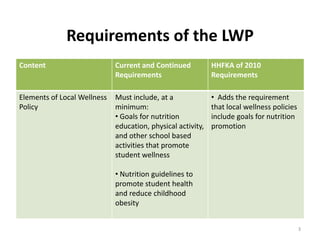
Requirements of the LWP
Content Current and Continued
Requirements
HHFKA of 2010
Requirements
Elements of Local Wellness
Policy
Must include, at a
minimum:
• Goals for nutrition
education, physical activity,
and other school based
activities that promote
student wellness
• Nutrition guidelines to
promote student health
and reduce childhood
obesity
• Adds the requirement
that local wellness policies
include goals for nutrition
promotion
3
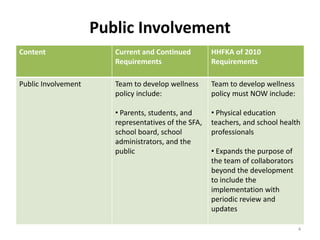
Public Involvement
Content Current and Continued
Requirements
HHFKA of 2010
Requirements
Public Involvement Team to develop wellness
policy include:
• Parents, students, and
representatives of the SFA,
school board, school
administrators, and the
public
Team to develop wellness
policy must NOW include:
• Physical education
teachers, and school health
professionals
• Expands the purpose of
the team of collaborators
beyond the development
to include the
implementation with
periodic review and
updates
4
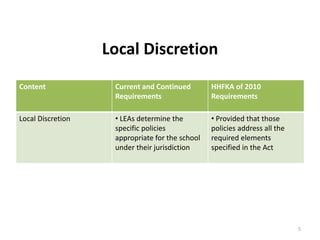
Local Discretion
Content Current and Continued
Requirements
HHFKA of 2010
Requirements
Local Discretion • LEAs determine the
specific policies
appropriate for the school
under their jurisdiction
• Provided that those
policies address all the
required elements
specified in the Act
5
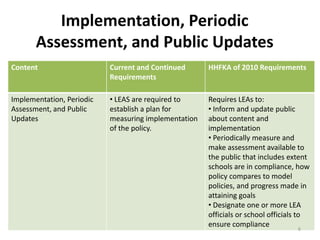
Implementation, Periodic
Assessment, and Public Updates
Content Current and Continued
Requirements
HHFKA of 2010 Requirements
Implementation, Periodic
Assessment, and Public
Updates
• LEAS are required to
establish a plan for
measuring implementation
of the policy.
Requires LEAs to:
• Inform and update public
about content and
implementation
• Periodically measure and
make assessment available to
the public that includes extent
schools are in compliance, how
policy compares to model
policies, and progress made in
attaining goals
• Designate one or more LEA
officials or school officials to
ensure compliance
6
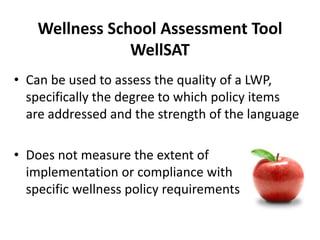
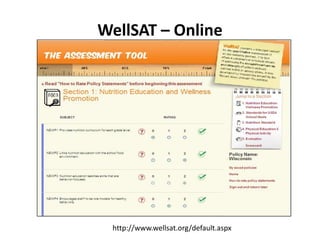
Wellness School Assessment Tool
WellSAT
• Can be used to assess the quality of a LWP,
specifically the degree to which policy items
are addressed and the strength of the language
• Does not measure the extent of
implementation or compliance with
specific wellness policy requirements
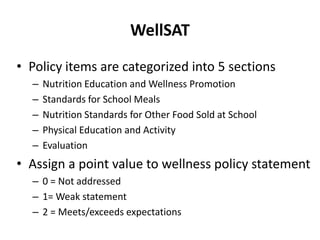
WellSAT
• Policy items are categorized into 5 sections
– Nutrition Education and Wellness Promotion
– Standards for School Meals
– Nutrition Standards for Other Food Sold at School
– Physical Education and Activity
– Evaluation
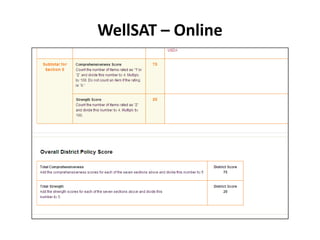
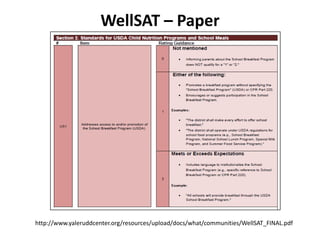
• Assign a point value to wellness policy statement
– 0 = Not addressed
– 1= Weak statement
– 2 = Meets/exceeds expectations
WellSAT – Online
http://www.wellsat.org/default.aspx
WellSAT – Online
WellSAT – Paper
http://www.yaleruddcenter.org/resources/upload/docs/what/communities/WellSAT_FINAL.pdf
Other Resources
• School Nutrition Team
– http://dpi.wi.gov/fns/wellnessplcy.html
• USDA Team Nutrition
– http://www.fns.usda.gov/tn/healthy/wellnesspolicy.html
• Action for Healthy Kids
– http://www.actionforhealthykids.org/
• Alliance for a Healthier Generation
– http://www.healthiergeneration.org/
• CDC
– http://www.cdc.gov/healthyyouth/npao/wellness.htm
Questions
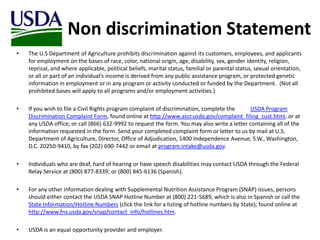
Non discrimination Statement
• The U.S Department of Agriculture prohibits discrimination against its customers, employees, and applicants
for employment on the bases of race, color, national origin, age, disability, sex, gender identity, religion,
reprisal, and where applicable, political beliefs, marital status, familial or parental status, sexual orientation,
or all or part of an individual’s income is derived from any public assistance program, or protected genetic
information in employment or in any program or activity conducted or funded by the Department. (Not all
prohibited bases will apply to all programs and/or employment activities.)
• If you wish to file a Civil Rights program complaint of discrimination, complete the USDA Program
Discrimination Complaint Form, found online at http://www.ascr.usda.gov/complaint_filing_cust.html, or at
any USDA office, or call (866) 632-9992 to request the form. You may also write a letter containing all of the
information requested in the form. Send your completed complaint form or letter to us by mail at U.S.
Department of Agriculture, Director, Office of Adjudication, 1400 Independence Avenue, S.W., Washington,
D.C. 20250-9410, by fax (202) 690-7442 or email at program.intake@usda.gov.
• Individuals who are deaf, hard of hearing or have speech disabilities may contact USDA through the Federal
Relay Service at (800) 877-8339; or (800) 845-6136 (Spanish).
• For any other information dealing with Supplemental Nutrition Assistance Program (SNAP) issues, persons
should either contact the USDA SNAP Hotline Number at (800) 221-5689, which is also in Spanish or call the
State Information/Hotline Numbers (click the link for a listing of hotline numbers by State); found online at
http://www.fns.usda.gov/snap/contact_info/hotlines.htm.
• USDA is an equal opportunity provider and employer.

School wellness policies

  • 1.
    School Wellness Policies KatherinePike, RDN, CD Nutrition Program Consultant katherine.pike@dpi.wi.gov (608) 266-2410
  • 2.
    Healthy, Hunger FreeKids Act Local School Wellness Policies (LWP) • Retains requirement that each local educational agency (LEA) participating in the National School Lunch Program and School Breakfast Program establish a LWP • Incorporates new requirements for LWP content • Proposed Rule will be issued in Fall 2013 • Final Rule coming in 2014
  • 3.
    Requirements of theLWP Content Current and Continued Requirements HHFKA of 2010 Requirements Elements of Local Wellness Policy Must include, at a minimum: • Goals for nutrition education, physical activity, and other school based activities that promote student wellness • Nutrition guidelines to promote student health and reduce childhood obesity • Adds the requirement that local wellness policies include goals for nutrition promotion 3
  • 4.
    Public Involvement Content Currentand Continued Requirements HHFKA of 2010 Requirements Public Involvement Team to develop wellness policy include: • Parents, students, and representatives of the SFA, school board, school administrators, and the public Team to develop wellness policy must NOW include: • Physical education teachers, and school health professionals • Expands the purpose of the team of collaborators beyond the development to include the implementation with periodic review and updates 4
  • 5.
    Local Discretion Content Currentand Continued Requirements HHFKA of 2010 Requirements Local Discretion • LEAs determine the specific policies appropriate for the school under their jurisdiction • Provided that those policies address all the required elements specified in the Act 5
  • 6.
    Implementation, Periodic Assessment, andPublic Updates Content Current and Continued Requirements HHFKA of 2010 Requirements Implementation, Periodic Assessment, and Public Updates • LEAS are required to establish a plan for measuring implementation of the policy. Requires LEAs to: • Inform and update public about content and implementation • Periodically measure and make assessment available to the public that includes extent schools are in compliance, how policy compares to model policies, and progress made in attaining goals • Designate one or more LEA officials or school officials to ensure compliance 6
  • 7.
    Wellness School AssessmentTool WellSAT • Can be used to assess the quality of a LWP, specifically the degree to which policy items are addressed and the strength of the language • Does not measure the extent of implementation or compliance with specific wellness policy requirements
  • 8.
    WellSAT • Policy itemsare categorized into 5 sections – Nutrition Education and Wellness Promotion – Standards for School Meals – Nutrition Standards for Other Food Sold at School – Physical Education and Activity – Evaluation • Assign a point value to wellness policy statement – 0 = Not addressed – 1= Weak statement – 2 = Meets/exceeds expectations
  • 9.
  • 10.
  • 11.
  • 12.
    Other Resources • SchoolNutrition Team – http://dpi.wi.gov/fns/wellnessplcy.html • USDA Team Nutrition – http://www.fns.usda.gov/tn/healthy/wellnesspolicy.html • Action for Healthy Kids – http://www.actionforhealthykids.org/ • Alliance for a Healthier Generation – http://www.healthiergeneration.org/ • CDC – http://www.cdc.gov/healthyyouth/npao/wellness.htm
  • 13.
  • 14.
    Non discrimination Statement •The U.S Department of Agriculture prohibits discrimination against its customers, employees, and applicants for employment on the bases of race, color, national origin, age, disability, sex, gender identity, religion, reprisal, and where applicable, political beliefs, marital status, familial or parental status, sexual orientation, or all or part of an individual’s income is derived from any public assistance program, or protected genetic information in employment or in any program or activity conducted or funded by the Department. (Not all prohibited bases will apply to all programs and/or employment activities.) • If you wish to file a Civil Rights program complaint of discrimination, complete the USDA Program Discrimination Complaint Form, found online at http://www.ascr.usda.gov/complaint_filing_cust.html, or at any USDA office, or call (866) 632-9992 to request the form. You may also write a letter containing all of the information requested in the form. Send your completed complaint form or letter to us by mail at U.S. Department of Agriculture, Director, Office of Adjudication, 1400 Independence Avenue, S.W., Washington, D.C. 20250-9410, by fax (202) 690-7442 or email at program.intake@usda.gov. • Individuals who are deaf, hard of hearing or have speech disabilities may contact USDA through the Federal Relay Service at (800) 877-8339; or (800) 845-6136 (Spanish). • For any other information dealing with Supplemental Nutrition Assistance Program (SNAP) issues, persons should either contact the USDA SNAP Hotline Number at (800) 221-5689, which is also in Spanish or call the State Information/Hotline Numbers (click the link for a listing of hotline numbers by State); found online at http://www.fns.usda.gov/snap/contact_info/hotlines.htm. • USDA is an equal opportunity provider and employer.