Ashland & Bayfield Counties
Wisconsin Nutrition
Education Program
History
WNEP has been serving the families in Ashland
and Bayfield Counties since 1996.
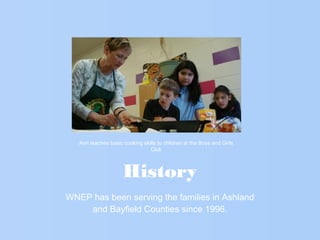
Ann teaches basic cooking skills to children at the Boys and Girls
Club
Education
We provide cooking, preservation, and nutrition
education classes in multiple settings
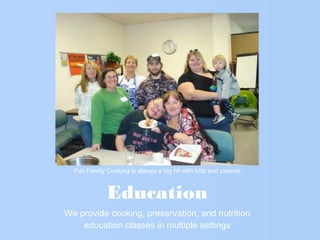
Fun Family Cooking is always a big hit with kids and parents
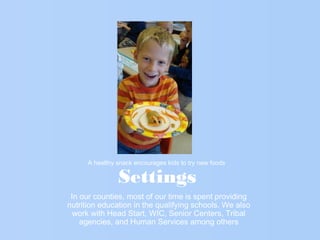
Settings
In our counties, most of our time is spent providing
nutrition education in the qualifying schools. We also
work with Head Start, WIC, Senior Centers, Tribal
agencies, and Human Services among others
A healthy snack encourages kids to try new foods
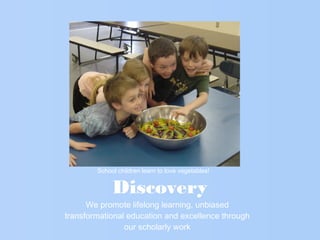
Discovery
We promote lifelong learning, unbiased
transformational education and excellence through
our scholarly work
School children learn to love vegetables!
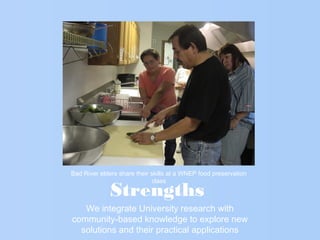
Strengths
We integrate University research with
community-based knowledge to explore new
solutions and their practical applications
Bad River elders share their skills at a WNEP food preservation
class
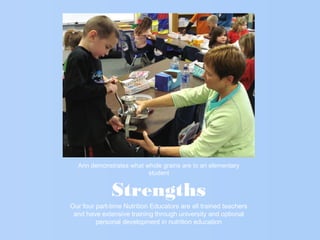
Strengths
Our four part-time Nutrition Educators are all trained teachers
and have extensive training through university and optional
personal development in nutrition education
Ann demonstrates what whole grains are to an elementary
student
Audiences
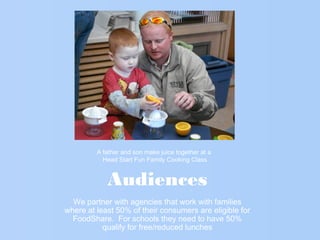
We partner with agencies that work with families
where at least 50% of their consumers are eligible for
FoodShare. For schools they need to have 50%
qualify for free/reduced lunches
A father and son make juice together at a
Head Start Fun Family Cooking Class
Audiences
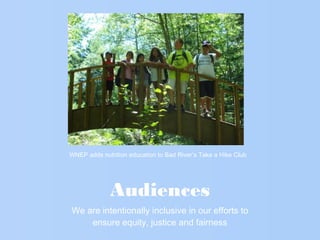
We are intentionally inclusive in our efforts to
ensure equity, justice and fairness
WNEP adds nutrition education to Bad River’s Take a Hike Club
Limitations of
WNEP
• We are limited in time. The need is great
and our work is limited in schools.
Each classroom receives between 4 and 6
nutrition education lessons per year
• We may provide nutrition education around a
garden, but may not participate actively in
gardening with students
Limitations
lead us to
COLLABORATIO
N
Collaboration
We support Farm to School locally by providing
introductions to school and community members, helping
new workers navigate the relationships
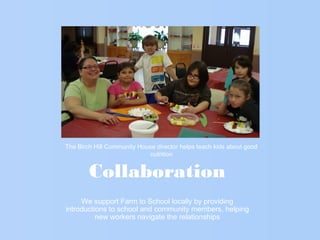
The Birch Hill Community House director helps teach kids about good
nutrition
Collaboration
We meet regularly with Farm to School workers,
so they can connect with one another and
learn what nutrition education is currently
being done at schools
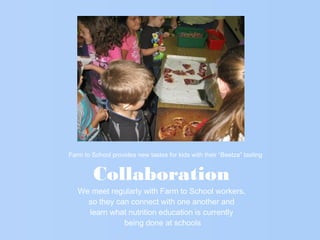
Farm to School provides new tastes for kids with their “Beetza” tasting
Collaboration
We provide Farm-to-School with resources
so they have current, research-based
materials for their nutrition education
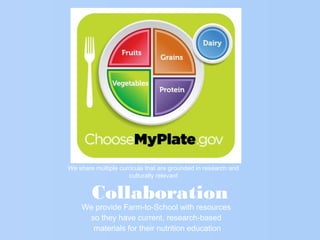
We share multiple curricula that are grounded in research and
culturally relevant
Collaboration
We share knowledge of our local cultures,
so that Farm to School can meaningfully
connect with their students
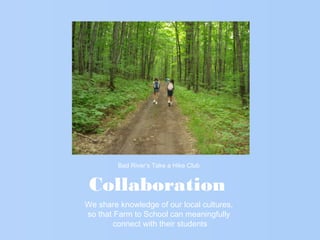
Bad River’s Take a Hike Club
Collaboration
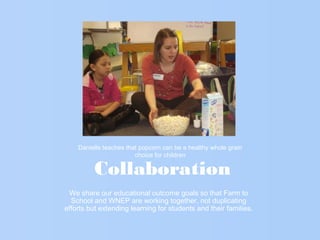
We share our educational outcome goals so that Farm to
School and WNEP are working together, not duplicating
efforts but extending learning for students and their families.
Danielle teaches that popcorn can be a healthy whole grain
choice for children
Collaboration
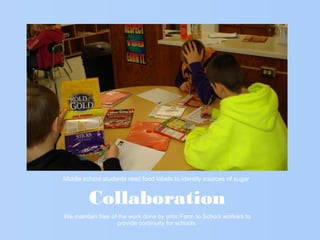
We maintain files of the work done by prior Farm to School workers to
provide continuity for schools.
Middle school students read food labels to identify sources of sugar
Collaboration
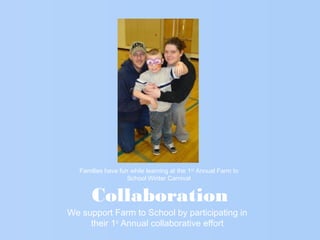
We support Farm to School by participating in
their 1st
Annual collaborative effort
Families have fun while learning at the 1st
Annual Farm to
School Winter Carnival
How to Build Collaboration with
WNEP
• Meet with your local UW-Extension Family
Living Agent and/or WNEP Coordinator
• Find out what schools they serve
• Ask how they have collaborated in the past
and if there are opportunities moving
forward
• Ask for insights about community needs
and possible supports for your program
• Build on existing nutrition education efforts
and themes
WNEP Ashland/Bayfield
Counties
is:
Kathy Beeksma, WNEP Coordinator
Ann Christensen, WNEP Educator
Dan Corning, WNEP Educator
Donna Ganson, WNEP Educator
Danielle Vanderscheuren, WNEP Educator
Support Staff: Amy Tromberg and Becky
Yoshikane

Wisconsin nutrition education program (WNEP)

  • 1.
    Ashland & BayfieldCounties Wisconsin Nutrition Education Program
  • 2.
    History WNEP has beenserving the families in Ashland and Bayfield Counties since 1996. Ann teaches basic cooking skills to children at the Boys and Girls Club
  • 3.
    Education We provide cooking,preservation, and nutrition education classes in multiple settings Fun Family Cooking is always a big hit with kids and parents
  • 4.
    Settings In our counties,most of our time is spent providing nutrition education in the qualifying schools. We also work with Head Start, WIC, Senior Centers, Tribal agencies, and Human Services among others A healthy snack encourages kids to try new foods
  • 5.
    Discovery We promote lifelonglearning, unbiased transformational education and excellence through our scholarly work School children learn to love vegetables!
  • 6.
    Strengths We integrate Universityresearch with community-based knowledge to explore new solutions and their practical applications Bad River elders share their skills at a WNEP food preservation class
  • 7.
    Strengths Our four part-timeNutrition Educators are all trained teachers and have extensive training through university and optional personal development in nutrition education Ann demonstrates what whole grains are to an elementary student
  • 8.
    Audiences We partner withagencies that work with families where at least 50% of their consumers are eligible for FoodShare. For schools they need to have 50% qualify for free/reduced lunches A father and son make juice together at a Head Start Fun Family Cooking Class
  • 9.
    Audiences We are intentionallyinclusive in our efforts to ensure equity, justice and fairness WNEP adds nutrition education to Bad River’s Take a Hike Club
  • 10.
    Limitations of WNEP • Weare limited in time. The need is great and our work is limited in schools. Each classroom receives between 4 and 6 nutrition education lessons per year • We may provide nutrition education around a garden, but may not participate actively in gardening with students
  • 11.
  • 12.
    Collaboration We support Farmto School locally by providing introductions to school and community members, helping new workers navigate the relationships The Birch Hill Community House director helps teach kids about good nutrition
  • 13.
    Collaboration We meet regularlywith Farm to School workers, so they can connect with one another and learn what nutrition education is currently being done at schools Farm to School provides new tastes for kids with their “Beetza” tasting
  • 14.
    Collaboration We provide Farm-to-Schoolwith resources so they have current, research-based materials for their nutrition education We share multiple curricula that are grounded in research and culturally relevant
  • 15.
    Collaboration We share knowledgeof our local cultures, so that Farm to School can meaningfully connect with their students Bad River’s Take a Hike Club
  • 16.
    Collaboration We share oureducational outcome goals so that Farm to School and WNEP are working together, not duplicating efforts but extending learning for students and their families. Danielle teaches that popcorn can be a healthy whole grain choice for children
  • 17.
    Collaboration We maintain filesof the work done by prior Farm to School workers to provide continuity for schools. Middle school students read food labels to identify sources of sugar
  • 18.
    Collaboration We support Farmto School by participating in their 1st Annual collaborative effort Families have fun while learning at the 1st Annual Farm to School Winter Carnival
  • 19.
    How to BuildCollaboration with WNEP • Meet with your local UW-Extension Family Living Agent and/or WNEP Coordinator • Find out what schools they serve • Ask how they have collaborated in the past and if there are opportunities moving forward • Ask for insights about community needs and possible supports for your program • Build on existing nutrition education efforts and themes
  • 20.
    WNEP Ashland/Bayfield Counties is: Kathy Beeksma,WNEP Coordinator Ann Christensen, WNEP Educator Dan Corning, WNEP Educator Donna Ganson, WNEP Educator Danielle Vanderscheuren, WNEP Educator Support Staff: Amy Tromberg and Becky Yoshikane